
Why Hail Damage Threatens Your Kentuckiana Home
Kentuckiana sits squarely in a climate zone where severe hailstorms arrive without warning. Spring and early summer bring thunderstorms capable of producing hail the size of golf balls, and when those stones strike your roof, the damage can be catastrophic. Your roofing material makes the difference between a roof that sheds hail with minimal impact and one that suffers costly punctures, cracks, and leaks.
We’ve spent over three decades helping homeowners and commercial property managers across Louisville and the surrounding area protect their investments with roofing materials engineered to withstand our region’s worst weather. This guide walks you through the hail-resistant options available, what makes them effective, and how proper installation amplifies their protective benefits.
Hail damage isn’t always obvious at first glance. A large hailstone traveling at 50+ mph can crack or dent traditional asphalt shingles without creating a visible hole, but that damage compromises the material’s water-shedding ability. Over time, those weakened spots become entry points for moisture, leading to wood rot, mold, and structural decay.
The cost of ignoring hail damage escalates quickly. A single compromised area can eventually require a full roof replacement rather than a localized repair. Insurance claims become more complex when damage goes unreported and secondary water damage develops. Property values drop when buyers discover roof issues during inspection.
Kentuckiana’s geography makes hail strikes inevitable rather than exceptional. Our location near the convergence of warm, moist air from the Gulf and cool air from Canada creates ideal conditions for severe thunderstorm development. Between May and July especially, we see multiple hail-producing storms each season. Choosing materials built to withstand this threat is a smart investment that protects both your home’s structural integrity and your peace of mind.
Understanding Impact Ratings and Roofing Classification Systems
When evaluating hail-resistant roofing materials, impact rating systems provide objective standards for comparing durability. The most widely recognized measure is the Underwriters Laboratories (UL) Impact Resistance Rating, which classifies materials from Class 1 (least impact resistant) to Class 4 (most impact resistant).
Class 4 materials represent the gold standard for hail protection. These products withstand impacts from 2-inch steel balls dropped from 20 feet without cracking, puncturing, or separating from the substrate. Think of it as passing the toughest real-world test available.
Another important metric is the Impact Resistant Rating (IRR), which some manufacturers use to denote their own testing standards. Always verify which testing authority certifies the product and whether it meets UL Class 4 standards, as this ensures consistent quality across different brands.
Insurance companies recognize the value of Class 4 rated materials. Many insurers offer premium discounts ranging from 10 to 30 percent for homes protected by certified impact-resistant roofing. This financial incentive effectively reduces your long-term roofing costs while providing superior storm protection. When shopping for materials, always ask your contractor which products carry Class 4 certification and which insurance carriers offer discounts for installation.
Top Hail-Resistant Materials We Install for Maximum Protection
We focus our residential and commercial recommendations on three primary categories of hail-resistant roofing: architectural shingles, metal roofing, and composite alternatives. Each offers distinct advantages depending on your home’s aesthetics, budget, and long-term goals.
Architectural shingles (also called dimensional or laminated shingles) dominate the residential market because they combine affordability with proven impact resistance. Metal roofing stands out for maximum durability and lifespan, appealing to owners willing to invest upfront for 40+ year protection. Composite materials offer emerging technology options that blend benefits of traditional and modern approaches.
The best choice depends on your priorities: architectural shingles work well for homeowners prioritizing value; metal roofing suits those planning to age in place; composites appeal to environmentally conscious owners seeking alternatives to petroleum-based products.
Architectural Shingles: Our Preferred Choice for Local Homes
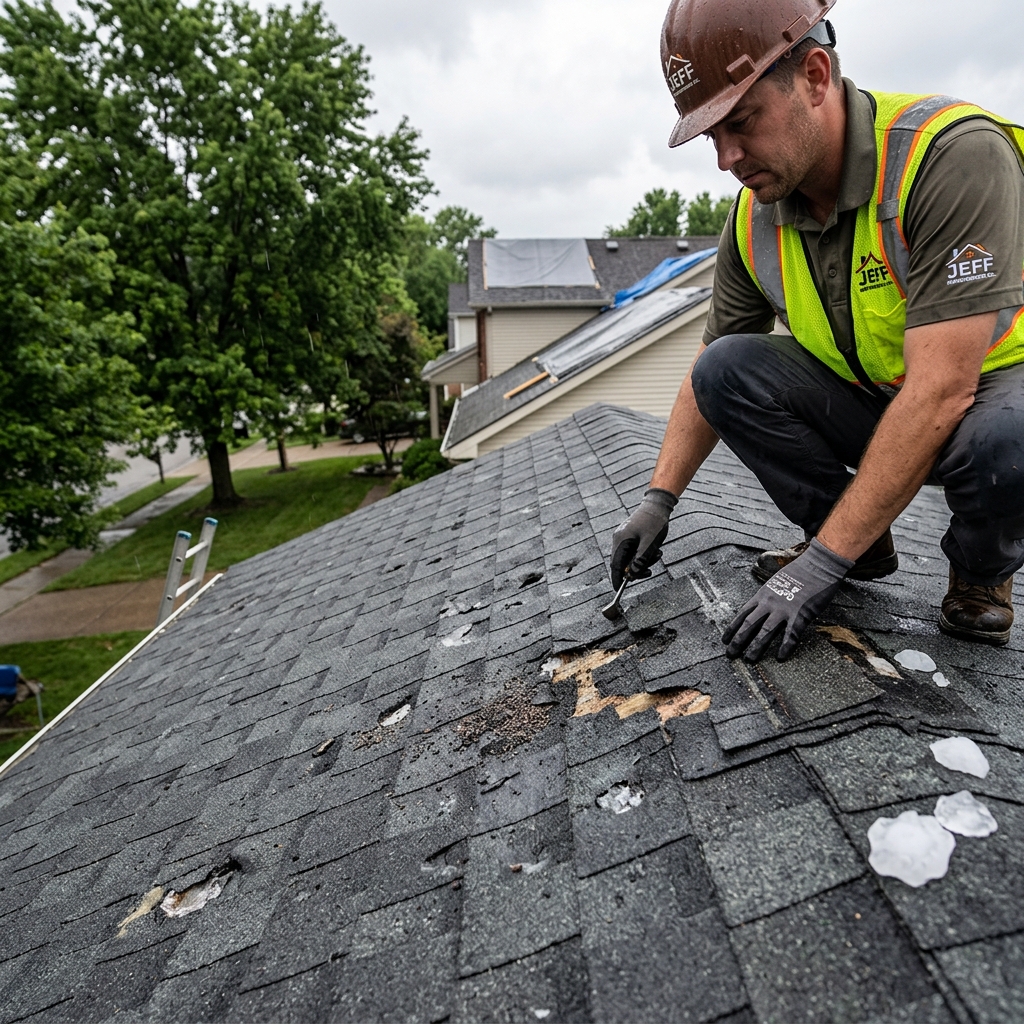
Architectural shingles remain our most common recommendation for Kentuckiana homes. These multi-layer shingles combine a durable fiberglass mat base with asphalt and mineral granules, creating a product that resists hail better than traditional three-tab shingles while maintaining attractive visual depth that enhances curb appeal.
Premium architectural shingles from manufacturers like Owens Corning (we’re a certified Owens Corning Platinum Preferred Contractor) achieve Class 4 impact ratings through engineered formulations and thicker construction. The granule composition and adhesive systems are specifically designed to absorb impact energy without cracking.
Key advantages of architectural shingles for hail protection include:
- Class 4 impact rating available from leading manufacturers
- 25-30 year lifespan, balancing durability with economics
- Immediate visual appeal, no special finishes or aging period required
- Installation familiarity, ensuring quality work from any certified contractor
- Cost efficiency, typically 30-40% less expensive than metal alternatives
A typical installation lasts through multiple hail seasons without degradation. We’ve inspected roofs we installed a decade ago still showing minimal granule loss and no stress cracks on homes that experienced several significant hailstorms. That track record gives homeowners confidence in their investment.
When selecting architectural shingles, confirm the manufacturer’s Class 4 certification and ask whether the specific product line includes enhanced adhesive systems rated for impact resistance. Not all architectural shingles meet Class 4 standards, so verification at purchase protects your interests.
Metal Roofing: The Premium Solution for Storm Protection
Metal roofing represents the ultimate investment in hail protection for homeowners planning decades-long occupancy or building significant equity in their property. Standing seam and metal shingle products offer unmatched durability, with many products surviving 50+ years and multiple major storms without meaningful degradation.
Modern metal roofing systems come in several formats:
- Standing seam panels (vertical ribs with concealed fasteners) offer sleek aesthetics and superior water management
- Metal shingles (shaped like traditional asphalt shingles but fabricated from aluminum or steel) provide familiar styling with metal durability
- Corrugated panels (most economical option) work well for commercial applications and agricultural structures
Hail impact on metal roofing rarely causes structural failure. Aluminum and steel naturally absorb impact energy without cracking. While denting can occur during extreme hail events, dented metal roofing continues shedding water effectively and protects the structure underneath. Cosmetic dents don’t require repair unless aesthetics become a priority concern.
Metal roofing advantages for Kentuckiana properties:
- 50+ year lifespan, potentially outlasting the structure itself
- Superior hail resistance, with Class 4 impact ratings standard on premium products
- Energy efficiency, reflecting solar heat and reducing cooling costs
- Minimal maintenance, requiring only occasional gutter cleaning and inspection
- High insurance discounts, often 35-40% from carriers recognizing reduced claim likelihood
The primary drawback is upfront cost. Metal roofing typically runs 2-3 times the price of architectural shingles. However, the math changes dramatically when you factor 50-year lifespan, avoided replacement costs, insurance savings, and energy efficiency. Many owners find metal roofing becomes economical over their ownership period.
Installation quality matters significantly with metal roofing. Improper fastener spacing, inadequate flashing detail, or incorrect panel alignment compromises water management despite the material’s inherent durability. Working with experienced contractors familiar with metal roofing prevents costly installation mistakes.
Composite Shingles and Alternative Materials Worth Considering
Composite roofing materials blend traditional construction with modern engineering, offering alternatives that appeal to environmentally conscious homeowners or those seeking unique aesthetics.
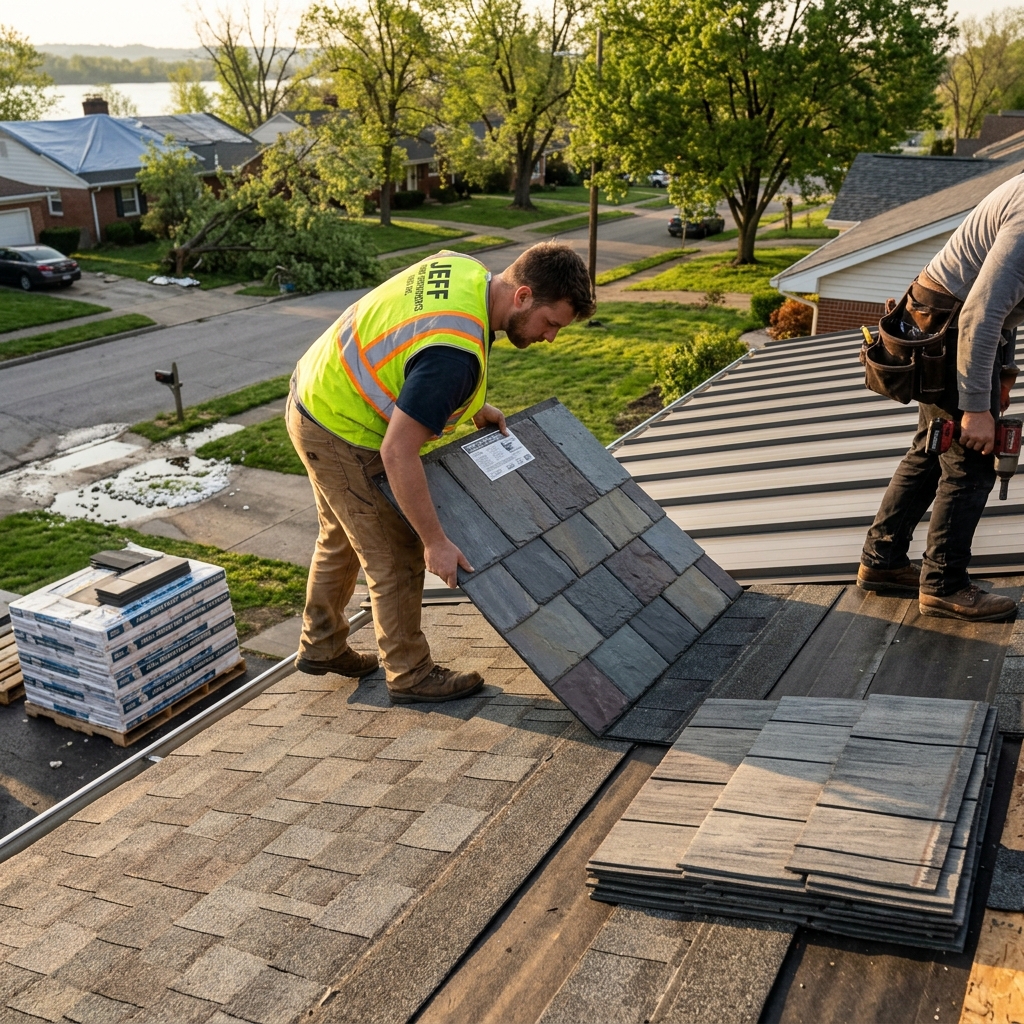
Synthetic slate and shake composites recreate historic materials using synthetic polymers or recycled content. These products typically achieve Class 4 impact ratings while weighing significantly less than genuine slate, eliminating structural reinforcement costs required for authentic slate roofing. They cost more than architectural shingles but less than true slate, positioning them as a middle-ground option for aesthetic preferences.
Recycled polymer and rubber shingles incorporate post-consumer waste materials, appealing to owners prioritizing environmental impact. These products offer good impact resistance and durability, though independent testing for Class 4 certification varies by manufacturer. Always verify independent UL certification rather than relying on manufacturer claims alone.
Composite materials shine when:
- Distinctive architectural aesthetics matter (historic homes, high-visibility structures)
- Environmental values influence purchasing decisions
- Budget allows moderate premiums above standard shingles
- Long-term durability justifies higher upfront investment
Before selecting composites, research product-specific insurance discounts and verify warranty terms. Some insurers apply higher discounts to composites than traditional materials, while others maintain standard schedules. Understanding insurance implications prevents surprises during claims processing.
How Our Installation Process Maximizes Your Material Performance
Choosing impact-resistant materials represents only half the equation. Installation quality determines whether those materials deliver their rated performance or fall short during actual hailstorms.
We follow manufacturer specifications precisely, understanding that shortcuts at installation erode the protective benefits built into premium materials. Proper deck preparation, ventilation management, fastener placement, and flashing detail all contribute to system performance under hail impact.
Our installation approach includes:
Deck inspection and repair: We identify and correct underlying structural issues before installing new roofing. Soft spots, rot, and previous damage compromises new material performance.
Ventilation optimization: Proper attic airflow extends roof lifespan by reducing heat buildup and moisture accumulation. We ensure soffit, ridge, and gable vents work together effectively.
Fastener precision: Nails driven at precise spacing and angle, hitting solid substrate, prevent shingle blow-off in high winds and improve hail impact distribution across the system.
Flashing excellence: Valleys, penetrations, and edges receive careful waterproofing detail that prevents leaks even after hail damage. Poor flashing negates material benefits.
Cleanup and debris removal: We remove old materials responsibly and ensure the finished site is clear of debris and fasteners that create hazards.
Quality installation extends material lifespan significantly. We’ve observed architectural shingles lasting 15+ years beyond manufacturer ratings when installed carefully, and metal roofing performing flawlessly through decades of storms when properly fastened and sealed.
Insurance Benefits of Choosing Impact-Resistant Roofing
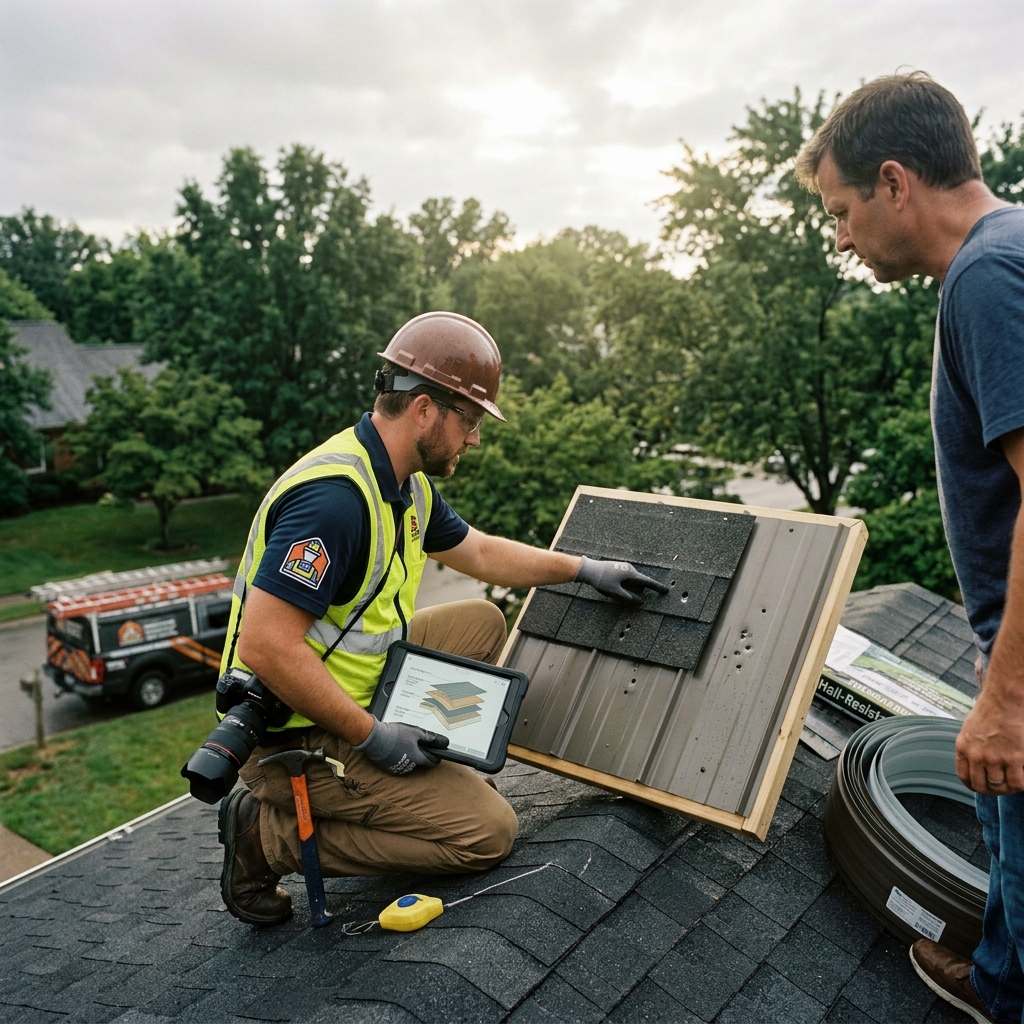
Insurance companies actively encourage hail-resistant roofing installation because it reduces claim frequency and severity. This economic incentive translates directly into premium discounts for homeowners.
Most Kentucky insurers offer discounts structured around impact rating levels:
- Class 3 rated materials: 10-15% discount
- Class 4 rated materials: 20-30% discount
- Metal roofing: 25-40% discount
- Combined improvements: Discounts stack when installing hail-resistant roofing alongside storm-resistant windows or reinforced garage doors
A typical Kentuckiana home with a $120,000 roof replacement might see annual premium reduction of $1,200-$3,600 from impact-resistant material installation. Over 25 years, that accumulates to $30,000-$90,000 in cumulative savings, often exceeding the material upgrade cost.
Document your installation with manufacturer’s certification and the contractor’s completion photos. Provide this documentation to your insurance agent before the next policy renewal. Some carriers require formal notification and inspection before applying discounts, so proactive communication ensures you receive all available savings.
After major hail events, your Class 4 rated materials become evidence supporting claim disputes. Insurers more readily approve full replacement when impact-resistant materials fail after significant hail, versus denying claims for standard materials that perform “as expected.”
Protecting Your Investment Through Maintenance and Inspections
Even Class 4 impact-resistant roofing requires periodic inspection and maintenance to sustain peak performance. Weather exposure, debris accumulation, and minor damage from non-hail causes gradually compromise roofing systems if left unaddressed.
We recommend annual inspections, with additional inspections scheduled shortly after significant hailstorms. Timely inspections catch problems when repairs remain possible, preventing expensive total replacement.
Routine maintenance tasks include:
- Gutter and downspout cleaning (twice yearly), preventing water backup and ice dam formation
- Debris removal, especially tree branches and leaves that trap moisture
- Flashing inspection, checking for separation or corrosion that creates leak paths
- Granule loss monitoring, indicating shingle aging (normal wear vs. impact damage)
- Professional inspection every 5 years, identifying issues before they become problems
We provide virtual consultations and instant estimates for inspection and maintenance work. After hailstorms, homeowners can submit photos through our consultation platform, and we identify whether visible damage requires professional repair or insurance claims attention.
Tree management around your home extends roofing life by reducing debris contact and branch damage risk. Trimming trees to create clearance prevents needless impact stress and improves roofing system performance.
Get Your Free Virtual Estimate for Hail-Resistant Solutions
Protecting your Kentuckiana home from hail damage starts with choosing the right materials and installer. We’ve helped thousands of homeowners and commercial property managers navigate material selection, maximize insurance benefits, and install systems that perform when storms arrive.
Jeff Home Improvements offers complimentary virtual consultations where we review your current roof condition, discuss hail-resistant options matching your budget and aesthetics, and provide instant estimates for comparison shopping. As an Owens Corning Platinum Preferred Contractor, we specialize in high-performance materials backed by manufacturer warranties and our own craftsmanship guarantee.
Reach out today to discuss your roofing protection needs. Whether you’re planning a proactive upgrade before spring storm season or addressing recent hail damage, we’ll guide you toward solutions that protect your investment for years to come.




 INDIANA
 KENTUCKY