
Why Hailstorm Damage Requires Immediate Professional Assessment
A hailstorm hits the Louisville area, and within hours, homeowners are climbing onto roofs or peering through attics, searching for damage. The damage might be obvious: shingles cracked and granules stripped away. Or it might be subtle enough that you miss it entirely until leaks appear weeks later. Either way, choosing the right Louisville roofing contractor becomes urgent, and the stakes are high. You’re not just hiring someone to fix a roof; you’re making a decision that affects your home’s integrity, your insurance claim, and your peace of mind.
We’ve been serving the Kentuckiana community since 1989, handling thousands of storm damage claims and roof replacements. In that time, we’ve seen homeowners make smart choices and costly ones. The difference usually comes down to five critical factors. Understanding them now will help you avoid the pitfalls and find a contractor who truly delivers.
Hail creates a specific type of damage that’s easy to overlook. Unlike wind damage that tears shingles clean off or water damage that shows obvious staining, hail dimples and bruises shingles in ways that may not leak for months or even years. That dormant damage accelerates deterioration, shortening your roof’s life and creating openings for water infiltration.
The timing of your assessment matters enormously. Insurance companies understand this and typically honor claims filed within 30 days of a storm event. Once that window closes, proving the damage was storm-related becomes far harder. We recommend scheduling a professional inspection within 48 to 72 hours of significant hail.
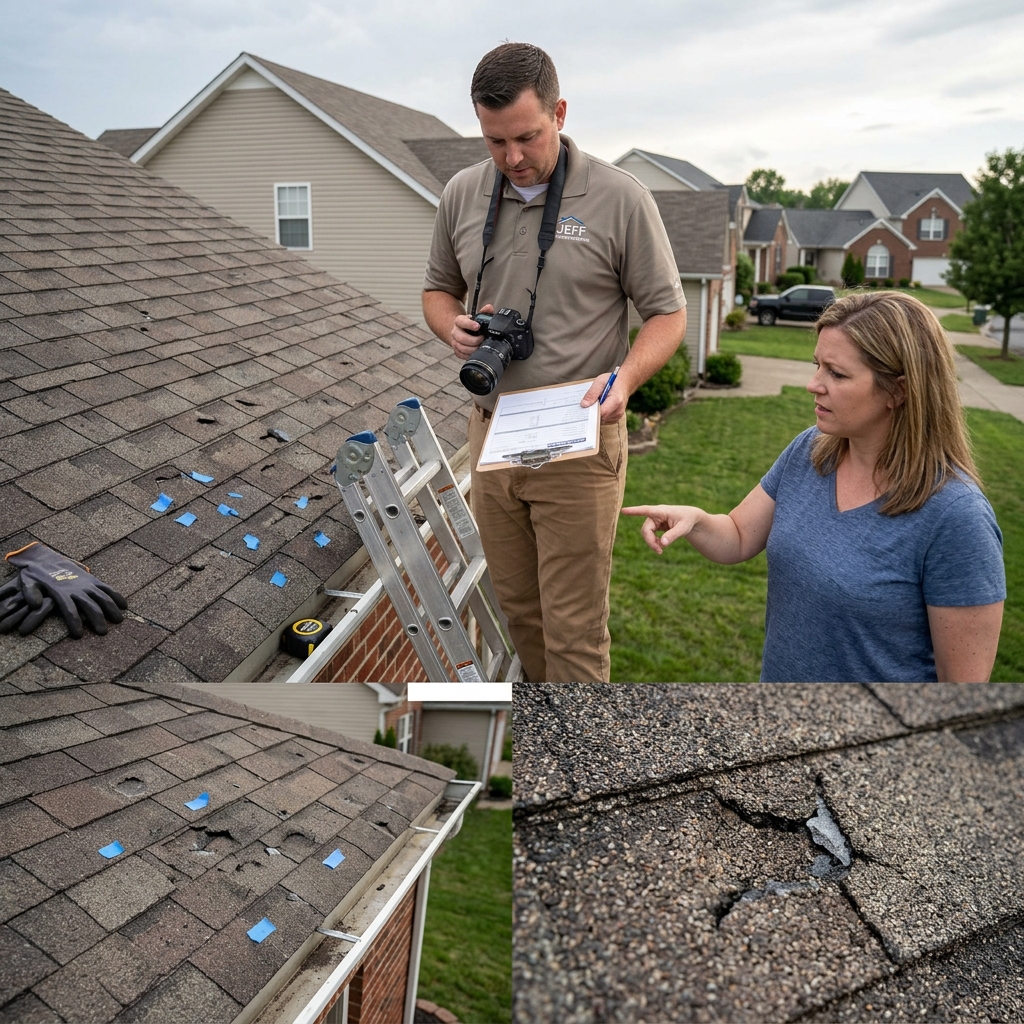
During an assessment, a qualified contractor evaluates:
- Shingle surface condition (dimpling, cracking, granule loss)
- Flashing integrity around chimneys, vents, and skylights
- Gutter condition and attachment security
- Soffit and fascia damage
- Underlying wood structure for saturation or rot
What makes this assessment valuable is the documentation it creates. Professional photos and detailed reports give your insurance adjuster clear evidence and provide you with a concrete baseline. Many homeowners skip this step thinking they’ll save money, only to face denials later when they file claims.
Next step: Contact a certified contractor for a damage assessment within three days of the storm. Ask whether they provide free inspections and whether they document findings with photos and written reports.
Verify Proper Licensing and Owens Corning Certification Status
Kentucky requires roofing contractors to be licensed, but not all states enforce this equally. Before hiring anyone, verify their license status through the Kentucky Cabinet for Economic Development. You want confirmation that your contractor holds a valid roofing license, maintains insurance, and has no unresolved complaints.
Licensure alone isn’t enough, though. We’re Owens Corning Platinum Preferred Contractors, a distinction that goes beyond basic credentials. This certification means we’ve met rigorous standards for installation quality, customer service, warranty knowledge, and ongoing training. Owens Corning Platinum contractors must demonstrate excellence consistently, not just once.
Ask any contractor for:
- Current Kentucky roofing license number (verify it yourself)
- General liability insurance documentation
- Workers’ compensation coverage proof
- Owens Corning or other major manufacturer certifications
- References to recent projects they’ve completed
Manufacturer certifications matter because they often unlock extended warranties. A standard asphalt shingle warranty might last 20 years, but some Owens Corning products come with extended coverage when installed by certified contractors. That’s protection that pays for itself if you ever need a warranty claim.
Red flags include contractors who won’t provide license information, claim they’re “too small” for insurance, or pressure you to avoid filing insurance claims. Trust your instincts. A reputable contractor is transparent about credentials and actively welcomes verification.
Actionable tip: Before scheduling a consultation, spend 10 minutes calling the Kentucky Cabinet or checking their online license verification system. This one step filters out unlicensed or problem contractors immediately.
Confirm Experience with Storm Damage and Insurance Claims
Storm damage work is different from routine maintenance roofing. It involves understanding insurance processes, working with adjusters, coordinating with multiple parties, and often dealing with structural complications that emerge during the job. A contractor experienced with storm claims knows how to navigate these complexities and help you maximize your coverage.
Experience shows up in practical ways. When we arrive for a storm damage assessment, we know which details insurance adjusters scrutinize. We photograph damage from angles and distances that create clear documentation. We understand what qualifies as covered damage versus normal wear. We’ve learned, through hundreds of claims, how to present findings in ways that support approval.
That experience also extends to the unexpected. Storm damage often reveals pre-existing issues: rotted wood decking under damaged shingles, undersized gutters, or structural settling that now affects the roof’s pitch. An experienced contractor knows how to identify these complications early, communicate them to you and your adjuster, and provide cost estimates that account for them.
Ask contractors:
- How many storm damage claims have they handled in the past three years?
- Do they work directly with insurance adjusters?
- Can they provide references from past storm damage clients?
- What happens if damage is more extensive than initial estimates suggested?
A contractor with deep storm damage experience will answer these questions comfortably and provide specific examples. They’ll also explain their process for scope creep: how they handle additional damage discovered during removal and whether they communicate with your insurer before proceeding.
What to do next: Request case studies or references specifically from storm damage projects. Talk to past clients about how the contractor handled the insurance process and whether the final cost matched the estimate.
Review Our Track Record in the Kentuckiana Area
We’ve built our reputation over more than 35 years by consistently delivering on promises. That history matters when you’re trusting someone with your home. Our portfolio includes residential roof replacements across Louisville and surrounding communities, commercial roofing projects for industrial and retail properties, and countless storm damage restorations.
The Kentuckiana area encompasses Louisville, Lexington, southern Indiana, and beyond. We know the regional climate patterns: the spring hail season, summer thunderstorms, and winter ice dams. We understand local building codes and permit requirements. We’ve worked with regional insurance companies and know their specific claim processes. That local knowledge accelerates your project and reduces complications.
Our experience shows up in finished work. Drive through Louisville neighborhoods, and you’ll find roofs we installed years ago, still performing flawlessly. That longevity happens because we specify quality materials, install with precision, and stand behind our work.
When evaluating any contractor’s track record, look for:
- How long they’ve been in business (10+ years shows staying power)
- Google reviews and Better Business Bureau ratings
- Before-and-after photos of completed projects
- Willingness to provide client references you can contact
- Membership in industry associations (like the National Roofing Contractors Association)
Local presence matters more than you might think. A contractor with deep roots in the community has skin in the game. They care about reputation because they live here, work here, and want repeat business and referrals. A fly-by-night contractor has no such incentive.
Take action: Search online for reviews of any contractor you’re considering. Call or email 2-3 references and ask specific questions about their experience: Was the project completed on time? Did the contractor address unexpected issues professionally? Would they hire them again?
Evaluate Transparent Estimates and Detailed Project Timelines
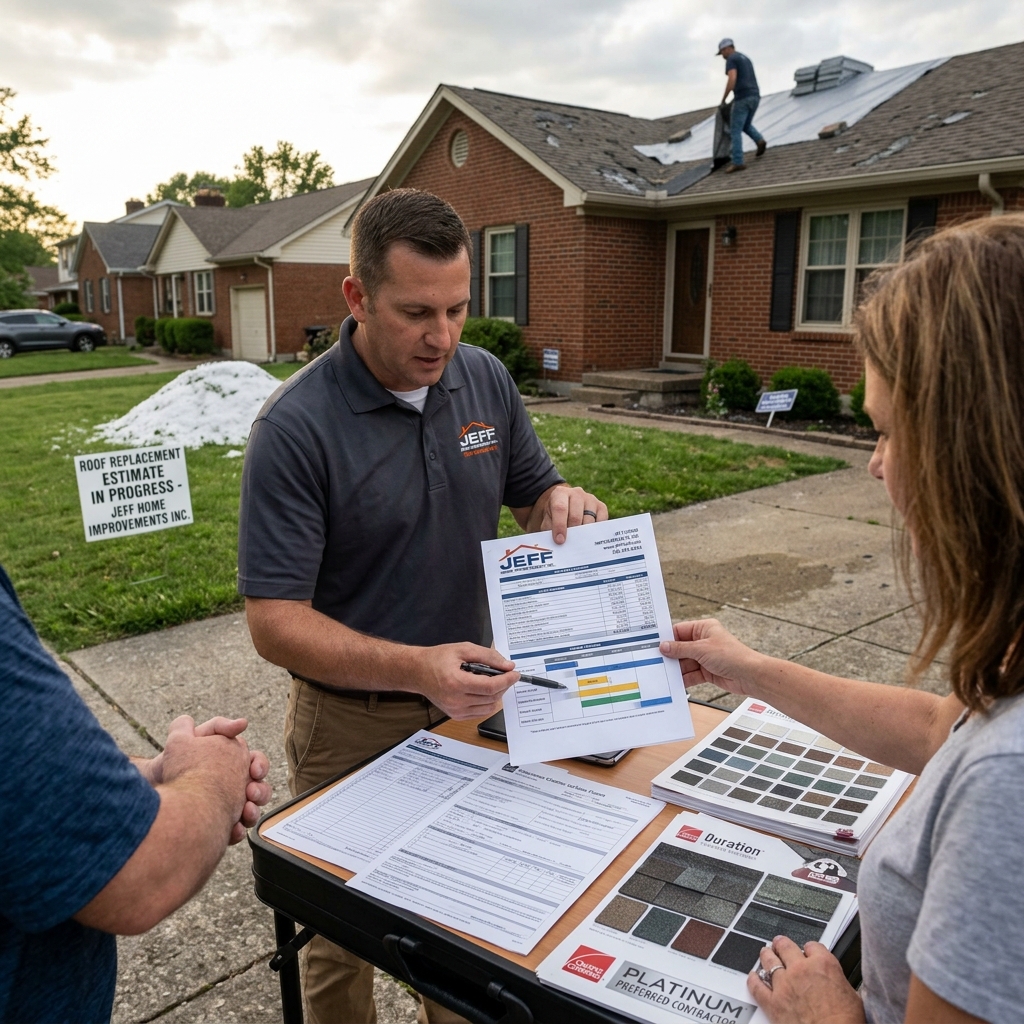
After we complete an assessment, you should receive a written estimate that explains what’s being repaired or replaced, what materials will be used, labor costs, and timeline. Vague estimates like “labor $2,000” tell you nothing. Detailed ones break down the scope clearly.
A solid estimate specifies:
- Exact shingle type and grade (e.g., Owens Corning Duration Shingles, Weatherwood)
- Square footage of roofing to be replaced or repaired
- Flashing and trim details
- Gutter work or gutter guard installation, if applicable
- Timeline: when work starts, how many days it typically takes
- Weather contingencies (roofing work halts in rain)
- Cleanup and debris removal details
- Warranty terms and what they cover
The estimate should also explain how insurance coverage factors in. If your insurer covers $X and you’re responsible for the deductible plus any damage beyond coverage, your estimate should clarify this. A transparent contractor helps you understand what your insurer will pay and what you’ll owe out of pocket.
Timelines deserve special attention. Most roof replacements take 3-5 days depending on size and complexity. A contractor who promises completion in one day should raise concerns. Rushed work leads to mistakes: missed shingles, improper nailing, debris left in gutters.
Compare estimates from multiple contractors, but don’t choose based on price alone. A bid that’s 30% lower than others might reflect lower-quality materials or inexperienced labor. Instead, compare scope: Are all contractors specifying the same materials and process? If not, understand the differences before deciding.
Next step: Request written estimates from at least two contractors. Review them line-by-line and don’t hesitate to ask questions about anything unclear. The contractor who patiently explains every detail is worth the time investment.
Why We Provide Virtual Consultations for Your Convenience
Scheduling roof inspections used to mean taking time off work to meet a contractor at your home. We’ve streamlined this process by offering virtual consultations via photo and video. Here’s how it works: You photograph your roof, take a few images of damaged areas, and share them with us. We review the images, ask clarifying questions via email or phone, and provide initial guidance. If needed, we schedule an in-person assessment.
Virtual consultations are particularly valuable after storms when your time is precious. You’re dealing with insurance paperwork, managing cleanup, and often managing multiple home repairs. A quick virtual call gets you preliminary answers without requiring a contractor to travel to your home for initial evaluation.
We also provide instant estimates through our online platform. Upload your roof photos and property details, and our system generates a preliminary cost range within minutes. This gives you a ballpark figure before committing to a detailed inspection.
The convenience extends to the actual work as well. We provide detailed progress updates, allowing you to track the project even if you can’t be home during installation. For busy commercial property managers overseeing multiple buildings, this transparency is invaluable.
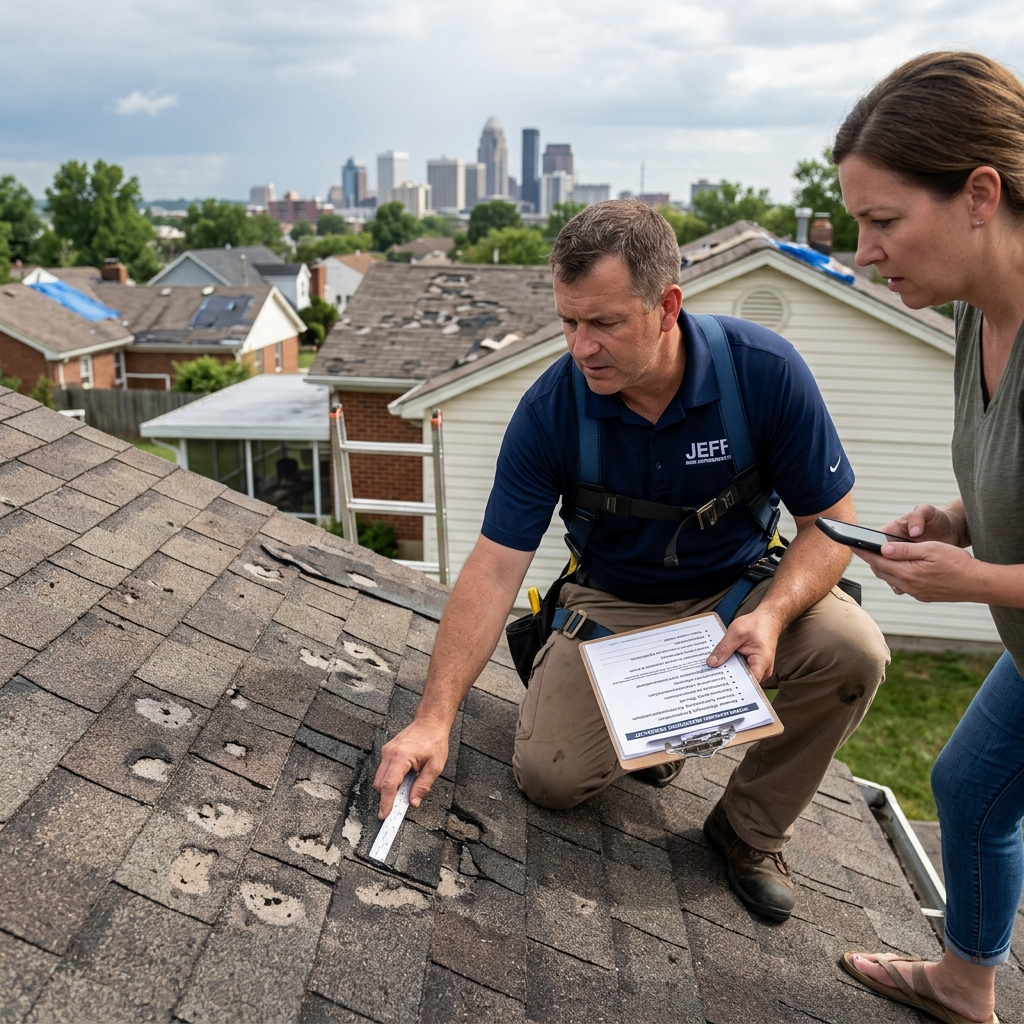
Virtual consultations don’t replace in-person assessments for complex jobs, but they serve an important function: they answer basic questions, let you evaluate our professionalism, and help you schedule more efficiently.
Action item: Schedule a virtual consultation for initial guidance. You’ll save time and get a sense of how responsive and helpful a contractor is before moving forward.
Understanding Our Comprehensive Roof Replacement Process
When hail damage warrants roof replacement rather than spot repairs, our process unfolds in clear stages. Understanding these stages helps you know what to expect and when.
Stage one involves removal. We carefully extract damaged shingles, flashing, and any compromised underlayment. We inspect the roof deck for rot, water damage, or structural issues that need addressing. This is where surprises often emerge: a section of wood that’s softer than it should be, or roof penetrations that weren’t visible before removal. We document findings and communicate them to you immediately, along with any cost implications.
Stage two addresses preparations. We install new underlayment for water protection, replace any damaged deck sections, and ensure proper ventilation. Inadequate ventilation leads to premature shingle failure, so this step isn’t cosmetic; it’s foundational. We also prepare flashing around chimneys, vents, and skylights for installation.
Stage three is shingle installation. We use Owens Corning shingles and apply them according to manufacturer specifications: proper nailing patterns, correct overlap, and precise alignment. This precision matters because improper installation voids warranties and leads to early failure. We specify the exact product you’re getting, so you understand what protection and longevity you’re purchasing.
Stage four covers finishing work. We install flashing, edge trim, and gutters or gutter guards. We clean the entire site, removing all debris and old materials. We photograph the completed work for your records.
Throughout this process, you receive updates. We explain what’s happening, answer questions, and address concerns immediately. This communication prevents surprises and keeps you informed about your investment.
What to expect: Ask any contractor to walk you through their replacement process step-by-step. The level of detail they provide tells you how professionally they approach the work.
Protect Your Home with Our Storm Damage Expertise
Hail damage to your roof isn’t just a cosmetic problem or something you can defer. It accelerates shingle deterioration, compromises your home’s weather protection, and ultimately costs you significantly more if left unaddressed. The choice of contractor determines whether you receive quality restoration that protects your home for decades or substandard work that leads to further damage.
We’re equipped to handle every aspect of storm damage restoration. Our team includes experienced roofers trained in Owens Corning installation standards. We carry all necessary licenses and certifications. We work seamlessly with insurance adjusters, and we’ve completed thousands of storm damage projects across the Kentuckiana region. We also understand that this process can feel overwhelming, so we take care of the details while keeping you informed every step.
Your home withstood the hailstorm. Now let us help it recover fully. Contact us for a free damage assessment and detailed estimate. We’ll document the damage professionally, explain your options, and guide you through the repair or replacement process. Whether your claim covers the entire cost or just a portion, we’ll help you understand what comes next and deliver the quality work your roof deserves.
The right contractor makes this stressful process manageable and ensures your home emerges stronger than before. We’re ready to be that contractor for you.
Contact us today for a free in home, no obligation quote on your roof




 INDIANA
 KENTUCKY