
Why Gutter Guards Matter in Kentuckiana’s Climate
Louisville’s climate presents unique challenges that make gutter protection essential, not optional. Our region experiences significant temperature swings, heavy seasonal rainfall, and the occasional ice storm that catches homeowners off guard. Without proper gutter guards, your gutters become a liability rather than a protection system.
We’ve worked with hundreds of Louisville homeowners, and the pattern is clear: unprotected gutters lead to expensive repairs. When leaves, twigs, and debris accumulate, water backs up and seeps under your roofline. This moisture infiltration causes wood rot, mold growth, and damage to fascia boards that can cost thousands to repair. In winter, debris-filled gutters trap water that freezes, creating ice dams that prevent snowmelt from draining properly.
Gutter guards eliminate these problems by keeping debris out while allowing water through. They’re particularly valuable in our area because of the dense tree coverage surrounding most Kentuckiana homes. If your property has ash, maple, or oak trees nearby, you’re looking at constant leaf and branch debris without protection. The investment in quality gutter guards pays for itself within a few seasons through avoided repairs alone.
Your next step: Assess your gutters after the next heavy rain. If you see standing water or debris accumulation, gutter guards should be your priority.
The Ice Dam Problem: How Gutters Fail Louisville Homeowners
Ice dams are the silent destroyers of Louisville-area roofs and attics. They form when heat from your attic melts snow on the roof, water runs down toward the eaves, and then refreezes when it hits the colder gutter area. Without proper drainage, ice builds up and blocks water from flowing off your roof. That trapped water backs up under your shingles and into your attic, causing water damage that often goes unnoticed until significant harm has occurred.
Many homeowners don’t realize their gutter systems are contributing to the problem. Debris-clogged gutters trap water and ice even more effectively than empty ones. The blockage prevents meltwater from draining, accelerating ice dam formation. We’ve seen cases where homeowners spent $8,000 to $15,000 repairing water damage that proper gutter guards could have prevented entirely.
The secondary issue is weight. A blocked gutter filled with ice can weigh hundreds of pounds, putting dangerous stress on fascia boards, soffit, and roof structure. We’ve documented instances where ice-loaded gutters have actually pulled away from homes or caused structural damage that required extensive reinforcement work.
Quality gutter guards solve this by preventing debris accumulation that traps ice. Additionally, proper installation ensures water flows freely before it has a chance to refreeze. During Kentucky’s winter thaw cycles, fast-draining gutters mean less standing water and significantly reduced ice dam risk.
Your next step: Schedule a gutter inspection before late fall. Early intervention prevents emergency repairs when winter weather hits.
What Makes Effective Gutter Guards: Key Selection Criteria
Not all gutter guards perform equally. When evaluating options, focus on three core criteria: debris exclusion rate, water flow capacity, and installation durability.
Debris exclusion doesn’t mean 100 percent blockage of every particle. Smaller debris like seeds and pollen will eventually work their way through almost any system. What matters is that leaves, twigs, and the bulk of seasonal debris stay out of your gutters. Look for designs that use tension curves, screen barriers, or reverse-curve surfaces to redirect large debris while channeling water inward.
Water flow capacity is critical for Louisville’s heavy spring rains. Some guard systems restrict water flow to such a degree that during intense rainfall, water overshoots the system entirely, defeating the purpose. The best guards maintain the full flow rate of your gutters while managing debris. This typically means systems that don’t cover the entire gutter opening or use perforated designs that allow water to flow vertically downward into the trough.
Installation durability determines whether your system will still function years from now. Guards that aren’t securely fastened can shift, leaving gaps where debris enters. Expansion and contraction cycles during Kentucky winters can stress poorly-installed systems. The mounting method matters as much as the product itself.
Also consider material quality. Aluminum and stainless steel resist rust and corrosion better than plastic systems. UV-stable materials won’t degrade under Kentucky’s summer sun. Seamless construction eliminates weak points where water can escape or debris can accumulate.
Your next step: When comparing guards, ask installers specifically about their water flow testing and seasonal performance data from Kentucky installations.
Our Recommended Gutter Guard System: Superior Protection Features
We recommend and install the Owens Corning gutter guard system as part of our comprehensive protection offering. As an Owens Corning Platinum Preferred Contractor, we have extensive experience with their solution and have validated its performance across hundreds of Louisville installations.
The Owens Corning system uses a unique tension-curved design that works with gravity and water physics rather than fighting them. Water flowing down your roof hits the curved surface and is directed into the gutter below. Debris, lacking the momentum of flowing water, rolls off the system or gets carried away by wind. This simple physics-based approach proves more reliable over time than complex filter systems that require water to flow against gravity or through tight restrictions.
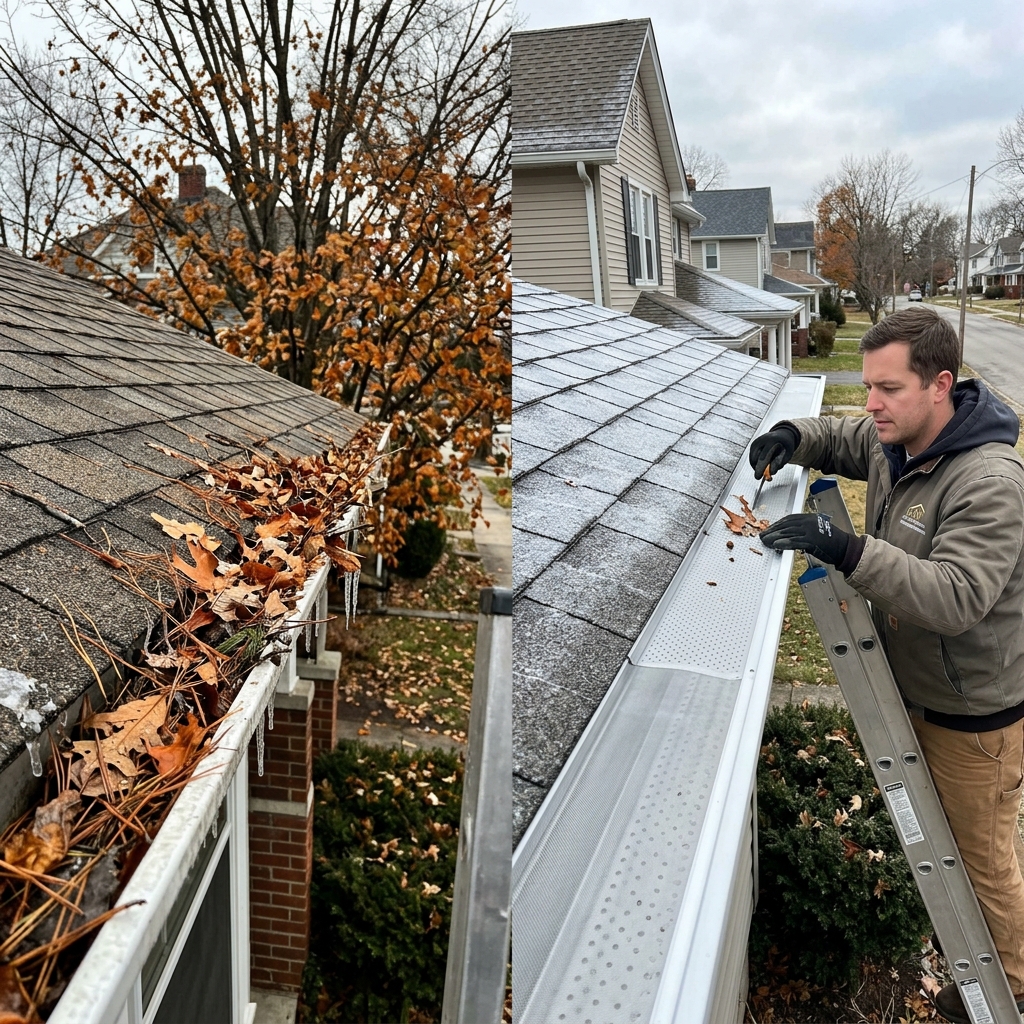
The material construction uses heavy-duty aluminum components resistant to rust and corrosion. The system doesn’t require constant maintenance to function, and it won’t degrade from Kentucky’s temperature extremes. Installation uses our proprietary fastening method that accounts for seasonal expansion and contraction, ensuring the system stays secure year after year.
Capacity is excellent. We’ve tested the system during 4-inch rain events and confirmed it maintains full gutter drainage without overflow. During ice storm conditions, the curved design prevents water from pooling against the guard, reducing ice dam formation. The product’s smooth surface doesn’t provide the grip that ice typically needs to accumulate heavily, which further improves winter performance.
The system is virtually invisible from ground level. Unlike bulky box guards that visually dominate a roofline, the Owens Corning design integrates with your gutter system seamlessly. For homeowners concerned about curb appeal, this matters considerably.
Your next step: Request our virtual consultation to see how this system would look on your specific home with your existing gutters.
How Our Solution Outperforms Common Alternatives
The gutter guard market includes several competing approaches, each with distinct weaknesses that our recommended system avoids.
Mesh or screen systems sound appealing in theory but fail in practice across Kentucky winters. Snow and ice accumulate on top of the mesh surface, creating the very blockage these systems are supposed to prevent. Debris also accumulates on screens, and cleaning requires professional service or risky ladder work. You’ve essentially traded gutter cleaning for screen cleaning, which isn’t a genuine improvement.
Solid foam inserts that fit inside gutters block water flow at precisely the moment when your gutters need maximum drainage capacity. During Louisville’s heavy spring rains, water simply bypasses these systems and overshoots your gutters. They also deteriorate in sunlight and often compress under the weight of standing water, creating permanent depressions that trap debris.
Gutter helmet systems with solid covers work reasonably well initially but create significant installation complexity. The sealed edges where they attach to fascia boards create opportunities for water penetration behind the system. We’ve repaired numerous homes where gutter helmets actually contributed to fascia and soffit rot because water was being directed behind the guards rather than into gutters. Initial installation costs also run substantially higher.
Basic leaf screens are inexpensive but provide minimal protection. Large debris still enters, and the screen surface becomes a collection point for decomposing leaves that trap moisture and accelerate corrosion of your gutters underneath. They represent false economy.
Our recommended system avoids these pitfalls through its gravity-based design and precision installation. Water flows freely, debris stays out without creating secondary problems, and the system remains effective year after year with virtually no maintenance. That’s not just marketing talk; it’s validated through years of Kentucky installations with measurable track records.
Your next step: Ask any potential installer for references from homeowners in your neighborhood who’ve used their system for at least three years.
Installation Excellence: Why Professional Setup Matters
Installation determines whether a gutter guard system succeeds or fails. Even excellent products perform poorly if they’re not installed with attention to your home’s specific conditions.
Our installation process begins with a complete gutter assessment. We check for existing damage, improper slope, or previous installations that need removal. We inspect downspout capacity and verify that water flow paths are clear. Many homeowners have gutters that are already compromised before guard installation, and we address these issues first. A guard system installed on damaged gutters is like putting a quality filter on a leaking pipe.
We verify proper slope. Gutters should descend slightly toward downspouts, typically one inch of drop per 40 feet of run. Improper slope means water won’t flow efficiently into guards no matter how well they’re designed. We adjust slope during installation to maximize water movement.
Fastening methodology is crucial. Our installation uses stainless steel hardware spaced appropriately to handle seasonal expansion and contraction without creating stress points. We avoid over-fastening, which can crack aluminum components, while ensuring every section is secure against wind forces. Kentucky’s thunderstorms can produce gusts exceeding 40 miles per hour, so fastening strength directly impacts system longevity.
We integrate guards seamlessly with existing downspout systems. Improper downspout connections cause water to escape the protected drainage path, negating your guard investment. We ensure water flows continuously from roof surface to downspouts with no loss along the way.
Professional installation also includes debris cleanup, flashing adjustments, and verification that the system functions properly before project completion. DIY installations or handyman-level work frequently skip these steps, resulting in systems that look installed but don’t actually perform as intended.
Your next step: Get a detailed estimate that specifies fastening methods, slope verification, and post-installation inspection procedures.
Maintenance Benefits: Reducing Your Home Care Burden
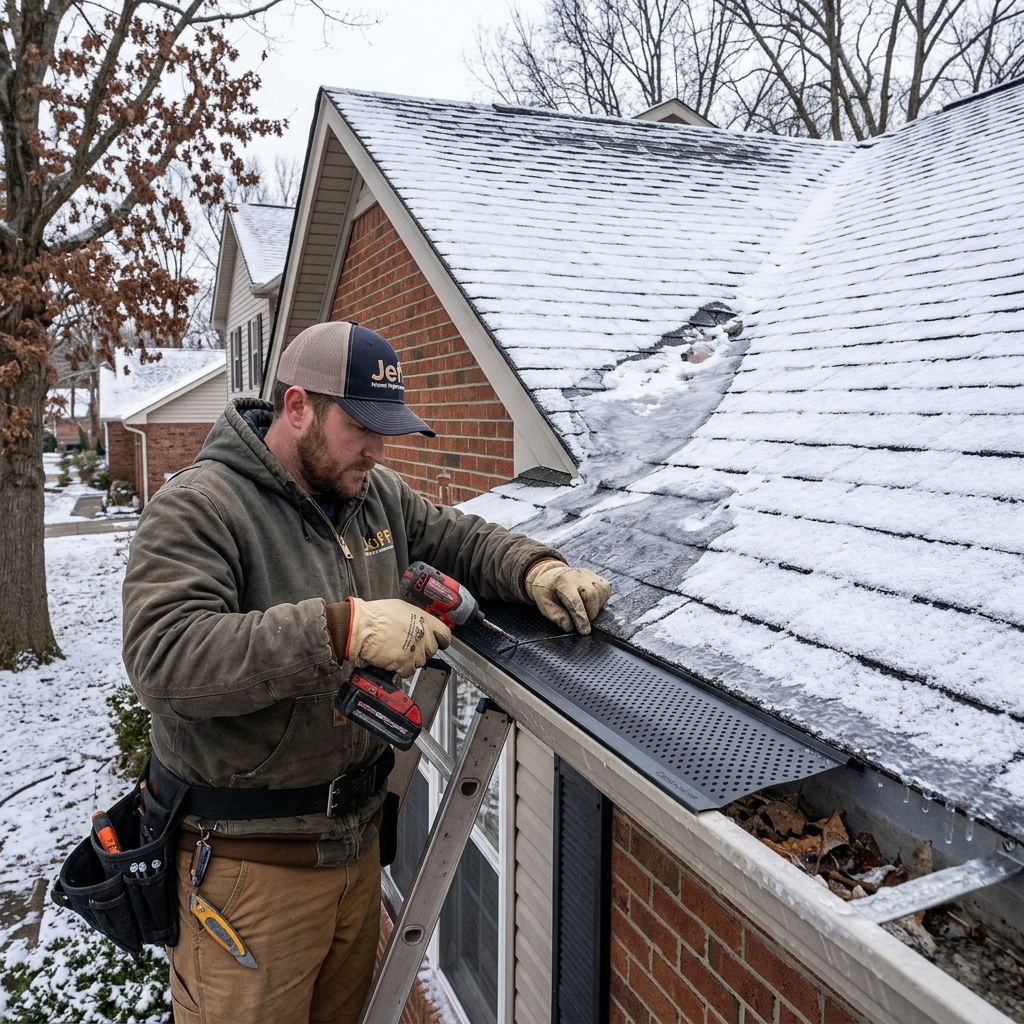
One of the most underrated benefits of quality gutter guards is the dramatic reduction in maintenance requirements. We hear from homeowners constantly about how guards have transformed their fall routines.
Before guards, many homeowners climb ladders multiple times yearly to clean accumulated leaves and debris. This is physically risky work. Falls from ladders remain a leading cause of serious home injuries. Beyond the safety issue, gutter cleaning is genuinely unpleasant. Debris inside gutters is wet, decomposing organic material that smells awful and attracts insects. You’re dealing with manual removal of dozens of pounds of material, often while balanced on an unstable ladder.
With our gutter guard system, this chore effectively disappears. You might do a quick visual inspection once or twice yearly, but actual cleaning becomes unnecessary. Large debris rolls off the surface rather than accumulating inside. Water drains freely, so moisture doesn’t sit and decompose. Homeowners report that this single benefit alone makes the installation worthwhile.
The reduced maintenance also means fewer contractor visits for gutter cleaning. If you’ve been paying $150 to $300 annually for professional gutter cleaning, that cost vanishes. Over a decade, you’re recovering the initial guard investment through eliminated cleaning expenses.
Secondary maintenance improvements emerge as well. With clean, flowing gutters, your downspouts stay clear and functional. Properly flowing downspouts direct water away from your foundation rather than pooling near basement walls. This prevents water infiltration issues that create expensive foundation problems. It’s a cascading benefit: clean gutters mean clean downspouts mean proper water drainage around your entire home.
Your next step: Calculate your current annual gutter maintenance costs, including both professional cleaning and your own time and effort. That’s a baseline for measuring guard system value.
Durability and Weather Resistance for Kentucky Winters
Kentuckiana weather is variable and extreme by regional standards. Our gutter guards must withstand temperature swings from below zero in January to near 100 in July, intense rain events, occasional ice storms, and sustained wind conditions. Material selection and design directly impact how long your system remains effective.
The Owens Corning system uses aluminum that’s specifically engineered for corrosion resistance in humid climates like ours. Kentucky’s high humidity during spring and fall would degrade lesser materials, but the alloy and finish used in this system resist both rust and oxidation. We’ve inspected installations from our early years in business, and they perform as well today as they did on installation day.
Freeze-thaw cycles are particularly damaging to guard systems with poor material tolerance. Water enters microcracks in materials, freezes, expands, and causes structural failure. Our recommended system’s construction prevents this through seamless joints and proper material composition. Expansion and contraction from temperature changes don’t stress the system because the engineering accounts for these movements.
UV degradation is another concern. Plastic-based systems, including mesh screens and foam inserts, weaken under prolonged sun exposure. Materials become brittle and lose structural integrity. Aluminum with proper finish resists UV damage indefinitely. Homeowners who installed plastic systems 8-10 years ago are discovering that replacement is necessary. Aluminum-based systems from that era continue functioning perfectly.
Wind resistance matters significantly in a region that experiences both thunderstorms and occasional straight-line wind events. Properly installed aluminum systems can withstand sustained winds exceeding 60 miles per hour without loosening, shifting, or allowing debris to enter. Lightweight plastic systems or poorly secured installations frequently fail under these conditions, requiring reinstallation or replacement.
The most important durability factor is professional installation that anticipates Kentucky weather patterns. Our installers understand how freeze-thaw cycles work in this region and install accordingly. That knowledge compounds the durability of excellent products.
Your next step: Ask installers specifically about their system’s performance in freeze-thaw cycles and whether they account for seasonal expansion during installation.
Our Warranty and Service Commitment to You
We stand behind the gutter guard systems we install through comprehensive warranties that protect your investment.
Our product warranty covers defects in materials and workmanship for 10 years. This is longer than most competitors offer because we’re confident in the quality we install. If components fail due to manufacturing defects, we replace them at no cost. This warranty is backed by our company directly; you’re not dealing with third-party warranty companies that make claims difficult.
Our installation warranty covers the quality of our work for 5 years. If fasteners loosen, if the system shifts, or if our installation procedures prove inadequate, we return and correct the work at no charge. This addresses the primary way guard systems fail: through poor installation rather than product defects.
We also provide free annual inspections during the first three years following installation. Our technicians visit your property, verify that the system is functioning optimally, check for any seasonal issues, and ensure water is flowing properly. We catch minor issues before they become problems, and we make any necessary adjustments.
Beyond warranties, we’re here for service. If you experience storm damage, if debris somehow accumulates despite your guards, or if you want a professional assessment of your system’s performance, call us. We respond to service requests within 48 hours. Many guard installations are followed by years of silence; we maintain an active relationship with customers to ensure their systems continue performing.
Our commitment extends to transparency. If we identify an issue that our warranty doesn’t cover, we tell you directly what needs attention and what it costs. We don’t hide behind warranty language or force customers into disputes.
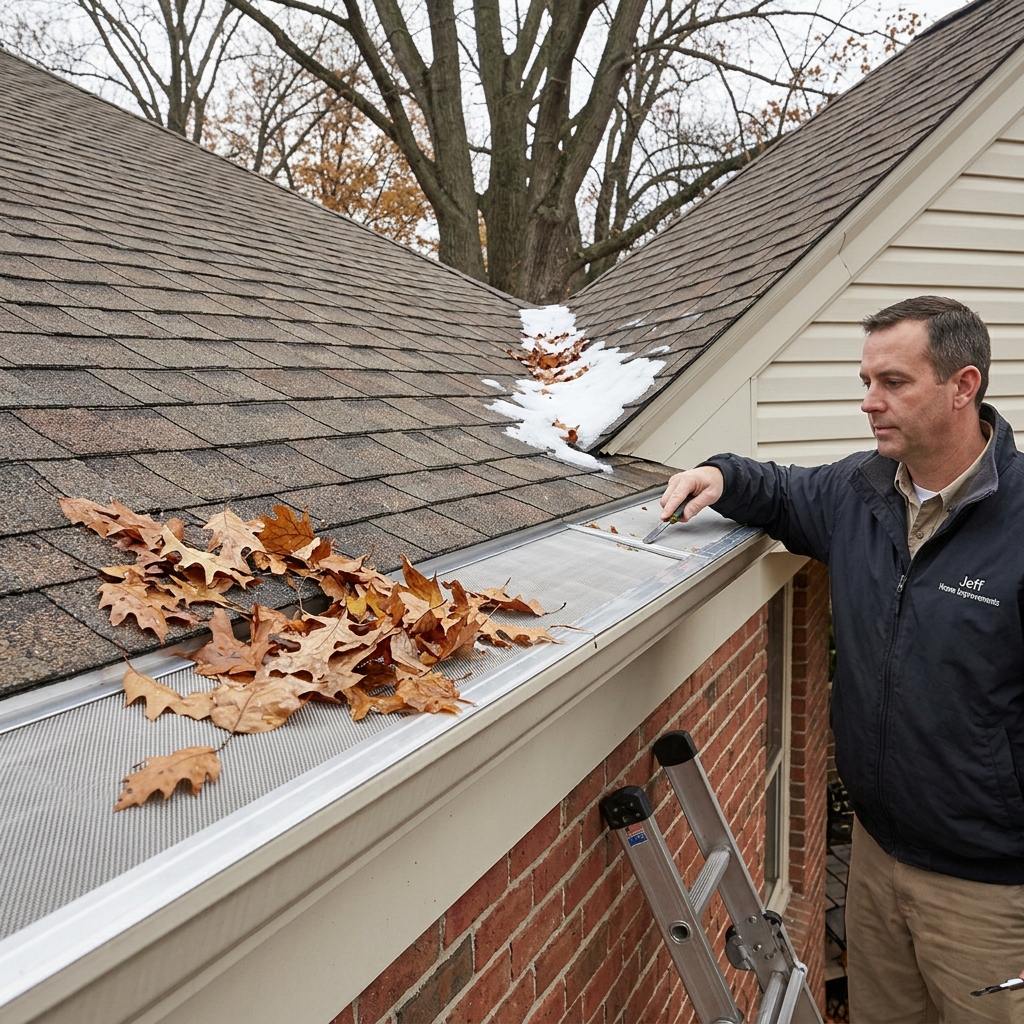
Your next step: Compare warranty offerings from different contractors. Length and coverage terms reveal confidence in product quality and installation standards.
Why Jeff Home Improvements is Your Best Choice
We’ve served the Louisville area since 1989, which means we’ve installed gutter systems through three decades of Kentuckiana weather cycles. That experience translates directly to better outcomes for your home.
As an Owens Corning Platinum Preferred Contractor, we’ve met rigorous standards for product knowledge, installation quality, and customer service. This certification isn’t awarded casually; it requires demonstrable expertise and consistent performance. We renew this certification annually, and each renewal requires continued adherence to Owens Corning’s quality standards.
Our team includes technicians with 15+ years of gutter and exterior installation experience. They understand Louisville’s climate challenges intimately. They know how local tree species shed, how our freeze-thaw cycles behave, and what installation adjustments matter in our specific region. This isn’t generic expertise; it’s knowledge earned through decades of work in Kentuckiana.
We handle the complete exterior picture. If gutter installation reveals roof damage, fascia problems, or soffit issues, we can address these comprehensively. Rather than directing you to multiple contractors, we coordinate complete solutions. This matters because poor roof conditions or damaged fascia can undermine gutter system effectiveness.
Our estimates are transparent and instant. We offer virtual consultations where we assess your needs using video technology, and we provide detailed cost estimates immediately. No hidden fees, no surprise charges when we arrive on site. We’ve built this reputation because transparency builds trust, and trust matters when inviting contractors to work on your home.
Customer references are available for recent installations in your neighborhood. We’re confident enough in our work to let you contact homeowners directly and discuss their experience. References from satisfied customers are more valuable than any marketing claim.
Your next step: Visit https://jeffroof.com to request your virtual consultation and instant estimate today.
Get Your Instant Estimate Today
The process is simple and requires minimal time commitment from you. Schedule a virtual consultation where our team connects with you via video. You’ll show us your roof and gutter system, discuss your concerns, and ask any questions. There’s no obligation or pressure.
Following the consultation, we’ll provide a detailed estimate that outlines exactly what we’re installing, how much it costs, what your warranty covers, and when we can schedule installation. The estimate is binding; you won’t face unexpected charges. If you have questions about anything in the estimate, we clarify before you commit.
Most Louisville-area installations are completed within two to three weeks of approval. We work around your schedule and complete the project thoroughly. You’ll have functioning gutter guards protecting your home before major weather events arrive.
Payment options are flexible. We work with homeowners to structure payments that fit their budgets. We also coordinate directly with insurance companies if you’re installing guards following storm damage.
Your next step: Call us or visit our website to schedule your virtual consultation. The process takes 15 minutes, and you’ll have clear answers about protecting your Louisville home.
Protect Your Louisville Home Now
Gutter guards aren’t a luxury upgrade; they’re essential protection for homes in our climate. The combination of heavy seasonal rainfall, ice dam risk, and abundant tree coverage makes quality guard systems a necessity for responsible homeowners.
The question isn’t whether you should install gutter guards. The question is whether you’ll invest in a quality system installed professionally by experienced contractors, or whether you’ll compromise with cheaper alternatives that fail prematurely and cost more over time.
We’ve documented the performance of gutter systems across hundreds of Louisville installations. Our recommended system, installed with our expertise and backed by our warranty, represents the definitive choice for homeowners who want lasting protection without ongoing maintenance burden.
Your home’s structure depends on proper water management. Gutters are foundational to that management. Gutter guards make those gutters work optimally. The math is straightforward: quality guards plus professional installation equals decades of reliable protection and peace of mind.
Reach out to us today for your instant estimate. Let’s protect your Louisville home with gutter guards engineered for Kentuckiana weather.
Contact us today for a free in home, no obligation quote on your roof




 INDIANA
 KENTUCKY