
The Hidden Cost of Ignoring Attic Ventilation and Insulation Balance
Your roof’s lifespan depends on far more than shingles and flashing. The systems working silently above your ceiling—ventilation and insulation—determine whether your roof reaches its expected 20-30 year life or fails years early. At Jeff Home Improvements Inc., we’ve spent decades watching homeowners in Louisville and Kentuckiana discover this the hard way. The good news: understanding how these systems interact can save you tens of thousands in premature replacement costs.
Most homeowners focus on visible roof damage: missing shingles, leaks, or storm damage. But the real culprit behind deteriorating roofs often hides in the attic. When ventilation and insulation aren’t properly balanced, your roof slowly decays from the inside out.
Here’s what happens: inadequate insulation lets conditioned air escape into the attic during winter. Meanwhile, poor ventilation traps warm, moist air under your roof deck. The combination creates a perfect storm of wood rot, shingle deterioration, and premature failure. We’ve pulled back attics where homeowners thought they had a 10-year-old roof only to find structural damage that cut the actual remaining life to 2-3 years.
The financial impact extends beyond roof replacement. Trapped moisture leads to mold growth, compromised structural integrity, and higher energy bills as your heating and cooling systems work overtime. A homeowner spending $800 annually on electricity could save $200-300 yearly with properly balanced attic systems. Over 20 years, that’s $4,000-6,000 in energy savings alone.
What to do next: Schedule a professional attic inspection. Many contractors assess only the roof itself. We evaluate your attic’s ventilation pattern, insulation R-value, and moisture levels to identify imbalances before they become expensive problems.
How Poor Ventilation Damages Your Roof Before Its Time
Ventilation removes hot air, moisture, and odors from your attic space. Without it, heat builds up. During summer in Kentucky, attic temperatures can exceed 160 degrees Fahrenheit, even when outdoor temps hover around 90. That extreme heat accelerates shingle degradation, drying out the asphalt binders that hold granules in place.
Poor ventilation also traps moisture year-round. In winter, warm air from your living spaces rises into the attic. When it hits cold roof decking, it condenses into liquid water. This moisture settles on wood framing, encouraging mold and rot. Nails rust. Structural beams weaken. The roof deck loses integrity. Shingles that seemed fine at eye level suddenly buckle or curl because the foundation beneath them has softened.
We’ve seen ice dams form more severely in poorly ventilated attics. Trapped heat melts snow unevenly on the roof edge. Water backs up under shingles and seeps into your home. Worse, the water pools inside the attic before dripping into walls and ceilings. That’s not just a roof problem—it becomes a structural and mold problem.
Inadequate ventilation also creates pressure imbalances. Soffit vents pull air in. Ridge vents should release it. When this pathway is blocked, obstructed, or improperly sized, air swirls unpredictably. Some areas become stagnant pockets of warm, humid air while others experience temperature swings that stress roofing materials.
What to do next: Walk your attic on a calm day and feel for airflow near soffits and ridge vents. If you detect little to no movement, ventilation is likely compromised. Look for blocked soffits, improper insulation piling against vents, or flashing that restricts airflow.
The Science Behind Ventilation and Insulation Working Together
Ventilation and insulation aren’t enemies—they’re partners with specific roles. Insulation slows heat transfer between your living space and the attic. Ventilation removes excess heat and moisture from the attic itself. Both need to work properly for your roof to thrive.
Think of the airflow pattern as a complete system. Air enters through soffit vents (intake) running along your eaves. It travels across the attic floor and exits through ridge vents (exhaust) at the peak. This continuous flow prevents heat and moisture accumulation. Insulation sits below this air pathway—typically on the attic floor or between rafters. It doesn’t block ventilation; it occupies the space below the ventilation channel.
The ideal scenario: insulation keeps your living spaces comfortable and reduces energy demand. Ventilation removes the small amount of heat and moisture that naturally occurs from daily living. Together, they create an attic that stays cool, dry, and protected.
The math matters too. Building codes specify minimum ventilation requirements: typically 1 square foot of net free area per 150 square feet of attic space. So a 1,500-square-foot attic needs at least 10 square feet of combined intake and exhaust ventilation. Insulation R-values range from R-19 to R-60 depending on your climate zone and ceiling type. Kentucky generally calls for R-30 to R-38 in the upper range.
When these elements align, roofing materials experience minimal thermal stress, moisture stays controlled, and structural integrity is preserved. Your roof can reach or exceed its designed lifespan.
What to do next: Check your current attic insulation level by measuring rafter cavity depth and comparing R-value recommendations for your zip code. Compare that to your actual insulation thickness. If you’re significantly underinsulated, ventilation alone won’t protect your roof.
Why Our Roofing Assessments Include Ventilation Analysis
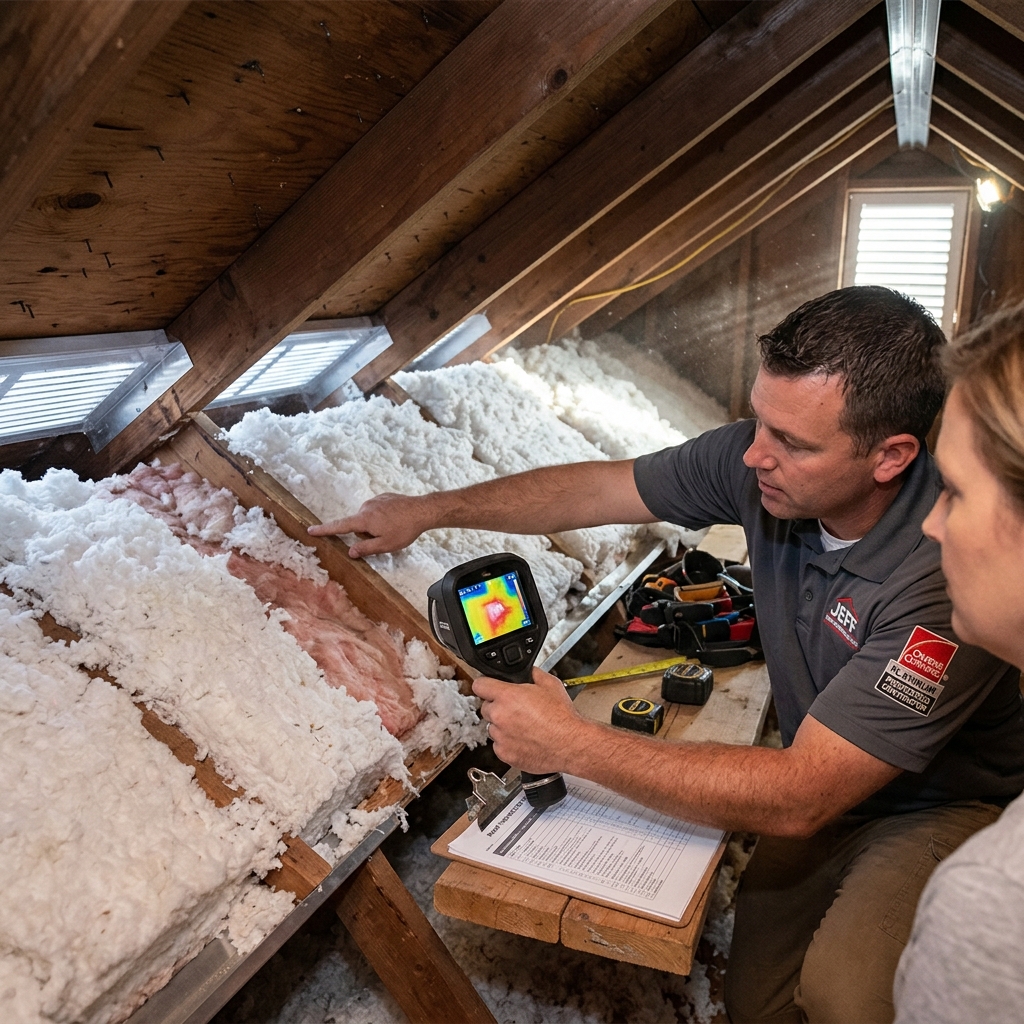
When we perform a roofing inspection, we don’t stop at the shingles. We climb into your attic and evaluate the complete system because roof failures rarely happen in isolation. A roof under excessive heat stress fails faster. Moisture-laden rafters weaken. Poor drainage leads to ponding and leaks.
Our process includes measuring soffit and ridge vent opening sizes, checking for blockages, identifying insulation placement issues, and assessing moisture levels. We photograph conditions and explain findings in terms homeowners understand. Is your ridge vent actually open? Are soffit vents covered by siding or fascia repairs? Is insulation piled against vents, restricting airflow? These details determine roof longevity far more than the shingle grade.
We also evaluate the interaction between your roof pitch, attic size, and climate exposure. A north-facing slope in a humid microclimate needs stronger ventilation than a south-facing slope in a drier area. Our assessments account for these variables rather than applying one-size-fits-all solutions.
This thorough approach means we often identify problems other contractors miss. A homeowner might receive a quote for a $15,000 roof replacement when a $3,000 ventilation improvement would extend their current roof by 10+ years. We believe in honest assessment and long-term value.
What to do next: Request a roofing contractor services estimate that includes attic evaluation. If a contractor only inspects from the ground, you’re getting an incomplete picture.
The Energy Efficiency Connection: Lower Bills Through Proper Ventilation
Your HVAC system works harder when attic conditions are misbalanced. In summer, a poorly ventilated attic can reach 160-180 degrees. Your air conditioning runs continuously trying to cool a home with heat radiating through the ceiling. In winter, trapped humidity forces your furnace to work longer because moisture in air is harder to heat than dry air.
Proper ventilation reduces attic temperatures significantly. Studies show a well-ventilated attic stays 20-30 degrees cooler than a poorly ventilated one on hot summer days. That translates directly to lower cooling costs. Your thermostat doesn’t need to call for air conditioning as often. Compressors cycle less. Energy consumption drops.
Insulation complements this by creating a thermal barrier. If your insulation is inadequate, adding ventilation alone won’t help much because heat still leaks through. If insulation is good but ventilation is blocked, heat and moisture still accumulate. Both must work in tandem.
A Kentucky homeowner with balanced attic systems typically saves 10-20% on annual heating and cooling costs compared to someone with poor ventilation or insufficient insulation. For a home with a $1,200 annual energy bill, that’s $120-240 yearly. Over a roof’s 25-year lifespan, the savings compound significantly while also extending that roof’s actual usable years.
What to do next: Review your last 12 months of utility bills. Compare your heating and cooling costs to regional averages for your home size. If you’re running consistently higher, attic ventilation or insulation imbalances could be the culprit.
Moisture Control and Roof Longevity in Kentucky’s Climate
Kentucky’s climate presents unique challenges. Our humid summers and cold winters create conditions where moisture moves constantly. During winter, warm interior air wants to rise into the attic. During summer, outdoor humidity can be 80% or higher. Without proper ventilation and insulation balance, that moisture accumulates where it damages everything.
Wood framing begins rotting when moisture content exceeds 20%. Mold thrives in humid, dark spaces above 60% relative humidity. Metal fasteners rust. Roof decking softens. Shingles lose their granule adhesion as moisture moves through the underlayment. All these failures accelerate in Kentucky’s climate without proper moisture control.
We’ve inspected attics where homeowners installed excellent insulation without understanding ventilation. The insulation blocked air from the living space, which was good. But it also partially blocked the air pathway meant to remove moisture from the attic itself. Moisture accumulated above the insulation. By the time the homeowner noticed a problem, structural damage had already begun.
Conversely, oversized ventilation without adequate insulation wastes energy and fails to prevent heat buildup. The moisture that does form can’t be managed effectively because air movement alone doesn’t extract moisture that’s already condensed into liquid.
Kentucky requires this balanced approach more than drier climates. Our spring rains and summer humidity demand that every component of your attic system work together. Moisture sensors in our inspections show us exactly what’s happening and help us tailor solutions to your specific situation.
What to do next: During humid months, check your attic for visible condensation or water staining on framing. If you find moisture, improper ventilation or insulation balance is almost certainly the cause.
What Happens When Ventilation and Insulation Are Misaligned
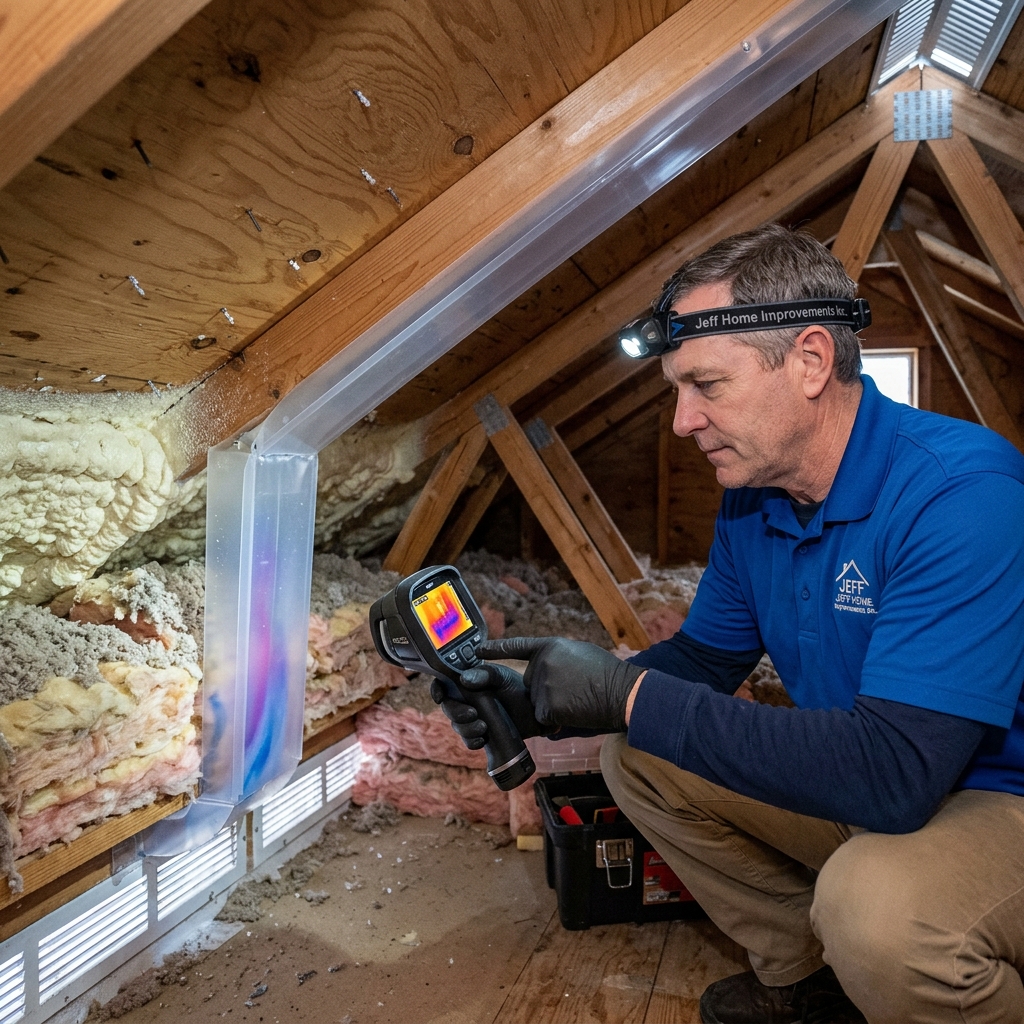
Misaligned systems create cascading problems that compound over years. Consider a common scenario: a homeowner adds insulation to improve energy efficiency but doesn’t adjust ventilation. Soffit vents remain the same size. Airflow slows. Heat and moisture build up. The new insulation actually traps warm, moist air more effectively, making the problem worse than before. The roof fails faster despite the investment in insulation.
Another scenario: excessive ventilation without adequate insulation. In winter, the attic stays cold (which seems good), but your ceiling isn’t well-insulated, so you lose heat to the attic anyway. Your furnace works harder. You pay more for heating. In summer, continuous airflow can actually introduce hot outside air, negating the cooling benefit. Energy costs remain high.
Perhaps most problematic is partial ventilation blockage combined with aging insulation. An ice dam creates a leak. Water stains appear. A contractor installs new insulation directly against soffit vents, thinking it helps energy efficiency. It doesn’t. Ventilation drops by 40%. Three years later, moisture damage has progressed significantly. Roof replacement becomes unavoidable at $18,000+ when the original roof had 10+ years of life remaining.
We’ve also seen misalignment where attic access is poor, so homeowners never maintain ventilation openings. Soffit vents get covered by siding repairs. Gutter debris backs up into eaves, blocking intake air. Ridge vent caps get covered by roof-mounted solar installations or satellite dishes. Each obstruction reduces system effectiveness. The roof ages prematurely despite adequate insulation.
What to do next: If you’ve recently made attic changes (added insulation, installed skylights, had siding work), have your ventilation system re-evaluated. Many upgrades inadvertently disrupt airflow patterns.
Our Complete Ventilation and Roofing Solutions for Kentuckiana Homes
We approach every roofing project with a complete systems perspective. Rather than just replacing shingles, we evaluate and improve the entire attic ecosystem. Our solutions typically include:
Ventilation assessment and repair. We clear blocked soffit and ridge vents, install properly sized vents where missing, and ensure airflow patterns are optimized. We use passive ventilation systems (ridge vents, soffit vents, gable vents) as the foundation and recommend powered ventilation only when passive systems can’t meet your home’s requirements.
Insulation evaluation and upgrade. If your insulation is inadequate, we recommend the proper R-value for your roof system and climate. We ensure insulation is installed correctly without blocking ventilation pathways. We also remove damaged or settled insulation and replace it with modern materials that maintain their R-value over time.
Roof replacement done right. When replacement is necessary, we install proper underlayment and ventilation components that work together. Our crew understands that quality shingles on a poorly ventilated, inadequately insulated roof will fail prematurely. We coordinate all systems to maximize roof life.
Gutter and drainage solutions. Standing water accelerates all roofing problems. Our gutter and gutter guard protection services keep water flowing away from fascia and soffits, protecting the very vents that keep your attic healthy.
Storm damage restoration. Severe weather often damages ventilation components (soffit vents, ridge caps, vent flashing). We address both the obvious roof damage and the ventilation system impacts to ensure your attic remains protected during repairs.
What to do next: Contact us for a comprehensive attic evaluation. We’ll assess your current ventilation and insulation balance, identify any misalignment, and recommend integrated solutions rather than piecemeal repairs.
Signs Your Attic Needs Ventilation and Insulation Improvements
Several visible and non-visible signs indicate problems with your attic systems. Watch for these red flags:
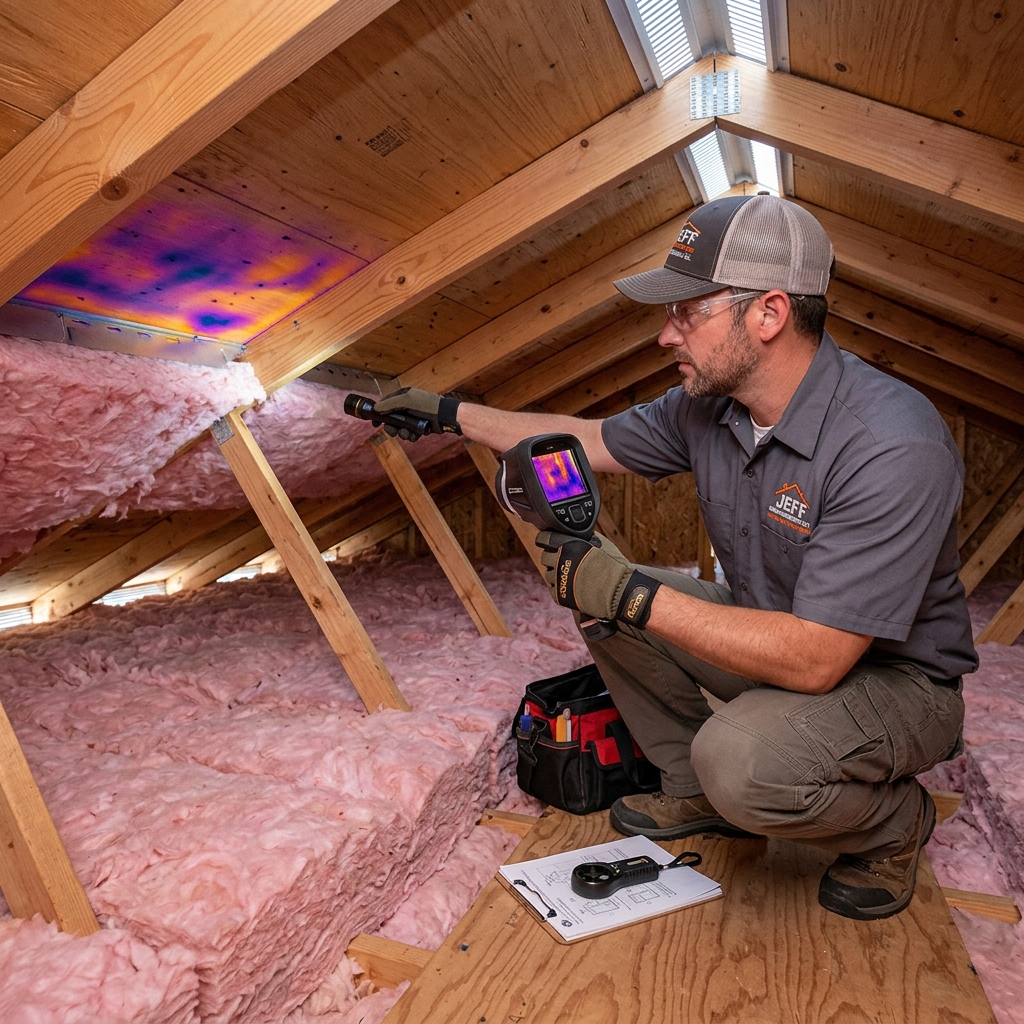
Shingle deterioration that seems premature. If your roof is only 10-15 years old but shingles are already curling, losing granules, or cracking, excessive heat is likely the culprit. That points to ventilation problems.
Ice dams in winter, especially if they’re asymmetrical (worse on one side of the roof). This indicates uneven melting caused by heat escaping unevenly through poor insulation or ventilation.
Visible mold or water staining on attic framing. This is a clear sign moisture is accumulating. Ventilation and/or insulation are out of balance.
Higher-than-average utility bills despite efficient HVAC systems. If your energy costs are climbing while equipment is relatively new, attic system imbalance is a likely suspect.
Visible gaps or damage in soffit vents, ridge vents, or fascia. If vents are deteriorated or visibly blocked, airflow is compromised.
Attic temperatures that feel extreme (very hot in summer, very cold in winter). Proper ventilation should moderate attic temperatures. Extreme swings indicate poor airflow.
Sagging or wet insulation. Insulation that’s compressed, waterlogged, or deteriorated has lost its R-value and may indicate ventilation problems.
Musty or moldy smells in your attic. This points to moisture accumulation that proper ventilation should prevent.
What to do next: Climb into your attic on a mild day and check for at least three of these signs. If you find more than one, ventilation and insulation evaluation is worth the investment.
Year-Round Benefits: Summer Cooling and Winter Protection
A properly balanced attic system delivers benefits throughout every season. In summer, continuous airflow removes heat before it penetrates your living spaces. Ridge vents release the hottest air continuously. Soffit vents pull cooler air from shaded eaves. Your attic stays 20-30 degrees cooler than an improperly ventilated one. That means your air conditioning runs less, cooling costs drop, and your roof experiences less thermal stress.
In winter, adequate insulation keeps warm air in your living spaces rather than leaking into the attic. Ventilation removes any moisture that does accumulate from cooking, showers, and normal humidity. Wood framing stays dry. Nails don’t rust. Structural integrity is preserved. Even during freezing temperatures, your attic remains dry enough to prevent condensation and ice dam formation.
Spring and fall benefit from balanced systems too. Rapid temperature swings stress building materials. Roofing and framing that are dry and not experiencing extreme heat fluctuations handle these transitions better. Mold spores don’t find the warm, moist conditions they need to proliferate. Pests find the attic less hospitable because it’s drier and less humid.
The cumulative effect is a roof that ages gracefully rather than degrading prematurely. A 25-year roof with properly balanced ventilation and insulation might genuinely last 25 years or longer. The same roof with poor ventilation and insulation might fail at 15 years. That’s a difference of $15,000-25,000 in premature replacement costs, plus energy bills that run 10-20% higher annually.
What to do next: Have your system inspected during different seasons if possible. Temperature and humidity readings taken in summer versus winter reveal how well your ventilation and insulation are actually performing in real conditions.
Protecting Your Investment: Why We Recommend Integrated Systems
Your roof is one of your home’s largest investments and most critical protective systems. Protecting that investment means treating it as an integrated system rather than isolated components. A shingle replacement without addressing ventilation or insulation problems is like patching a tire on a car with three other flats. The new component fails quickly while underlying issues remain.
We recommend thinking about your roof, attic ventilation, insulation, gutters, and drainage as one unified system. Each component affects the others. Upgrade one without considering the others and you create imbalances that lead to failure.
Our approach has consistently delivered better outcomes for Kentuckiana homeowners. We don’t recommend a $20,000 roof replacement if a $4,000 ventilation and insulation improvement can extend your current roof by another decade. Conversely, we don’t skimp on proper ventilation and insulation when replacement is truly necessary. We build roofs to last.
This integrated thinking also means we catch problems early. During routine inspections, we identify ventilation restrictions before they cause moisture damage. We notice insulation settling before it significantly reduces R-value. We spot early signs of mold before it requires expensive remediation. Early intervention costs less and prevents bigger problems.
Our experience since 1989 as a family-owned business has taught us that the homes we built with the strongest integrated systems are the ones that need fewer emergency calls and expensive repairs years later. Those are the ones where owners feel confident their investment is protected.
What to do next: Request a comprehensive attic systems evaluation. Let’s assess your specific situation and recommend solutions designed to maximize your roof’s lifespan while improving energy efficiency and comfort. The small investment in professional evaluation now can save thousands in premature repairs and replacement later.
Contact us today for a free in home, no obligation quote on your roof




 INDIANA
 KENTUCKY