
Why Choosing the Right Contractor Matters for Your Home
When a roof leak appears or storm damage threatens your home, the impulse to hire the first contractor who answers the phone is strong. But rushing into a roofing project without vetting your contractor properly can cost you thousands in repairs, delays, and poor workmanship. The questions you ask now determine whether you get a quality installation that lasts decades or a botched job that creates bigger problems.
Your roof is one of the most critical components protecting your family and investment. A roof replacement can run $8,000 to $15,000 or more depending on your home’s size and material choice. Storm damage repairs often involve coordination with insurance companies, structural assessments, and precise timeline management. The contractor you choose directly affects whether your project stays on budget, completes on schedule, and actually solves your roofing problem.
Poor contractor selection leads to preventable headaches. We’ve seen homeowners deal with incomplete work, surprise billing, missing permits, and roofing materials installed incorrectly that void warranties. When you hire someone without proper credentials or insurance, you’re also exposing yourself to liability if someone gets injured on your property. The right questions upfront protect both your property and your wallet.
Taking time to evaluate multiple contractors isn’t just being cautious, it’s standard practice in the industry. Most homeowners should expect to spend a few hours comparing three to four qualified contractors before signing anything. This vetting process weeds out the unprofessional operators and highlights the contractors who take their work seriously.
Credentials and Licensing: What You Need to Verify
Kentucky requires roofing contractors to be licensed. Ask any contractor for their Kentucky license number and verify it independently through the Kentucky Department of Housing, Buildings and Construction. Don’t accept a verbal confirmation or a business card claim, check the state database yourself. A legitimate contractor welcomes this verification because it proves legitimacy.
Beyond basic licensing, look for certifications from material manufacturers. We’re proud to be an Owens Corning Platinum Preferred Contractor, a designation that requires ongoing training, rigorous quality standards, and proven customer satisfaction. Ask what certifications your contractor holds and what ongoing education they pursue. Contractors who invest in training stay current with installation best practices and material innovations.
Ask about business registration and whether the contractor operates as a sole proprietor, LLC, or corporation. Each structure has different implications for accountability and legal protection. A contractor operating legitimately has consistent business documentation and can explain their business structure clearly. You should also confirm they maintain an active business license with the local city or county where they operate.
Action step: Before your consultation, run the contractor’s license number through the state database. Create a simple spreadsheet tracking license status, certifications, and years in business for each contractor you’re evaluating.
Insurance Coverage and Bonding Requirements
Never hire an uninsured roofing contractor under any circumstance. This is non-negotiable. Ask for proof of general liability insurance (minimum $1 million coverage) and workers’ compensation insurance. Request they provide a certificate of insurance naming you as an additional insured. You need evidence that their policy is current, not just a promise that they’re covered.
The difference between a contractor with insurance and one without becomes catastrophic if someone gets injured. If a worker falls off your roof and lacks workers’ comp coverage, you could be liable for their medical bills and lost wages. General liability insurance protects you if the contractor’s work damages your property or causes injury to a neighbor. No discount is worth risking this exposure.
Bonding is separate from insurance and equally important. A performance bond guarantees the contractor completes the work as specified. A payment bond guarantees they pay their suppliers and subcontractors. Ask whether they carry a surety bond for roofing projects. While not all states require bonding, responsible contractors maintain bonds to demonstrate financial stability and commitment to completing projects.
Verify the insurance independently by calling the contractor’s insurance agent or requesting a certificate of insurance directly from their carrier. Don’t accept photocopies or verbal assurances. Professional contractors have this documentation readily available and consider it routine.
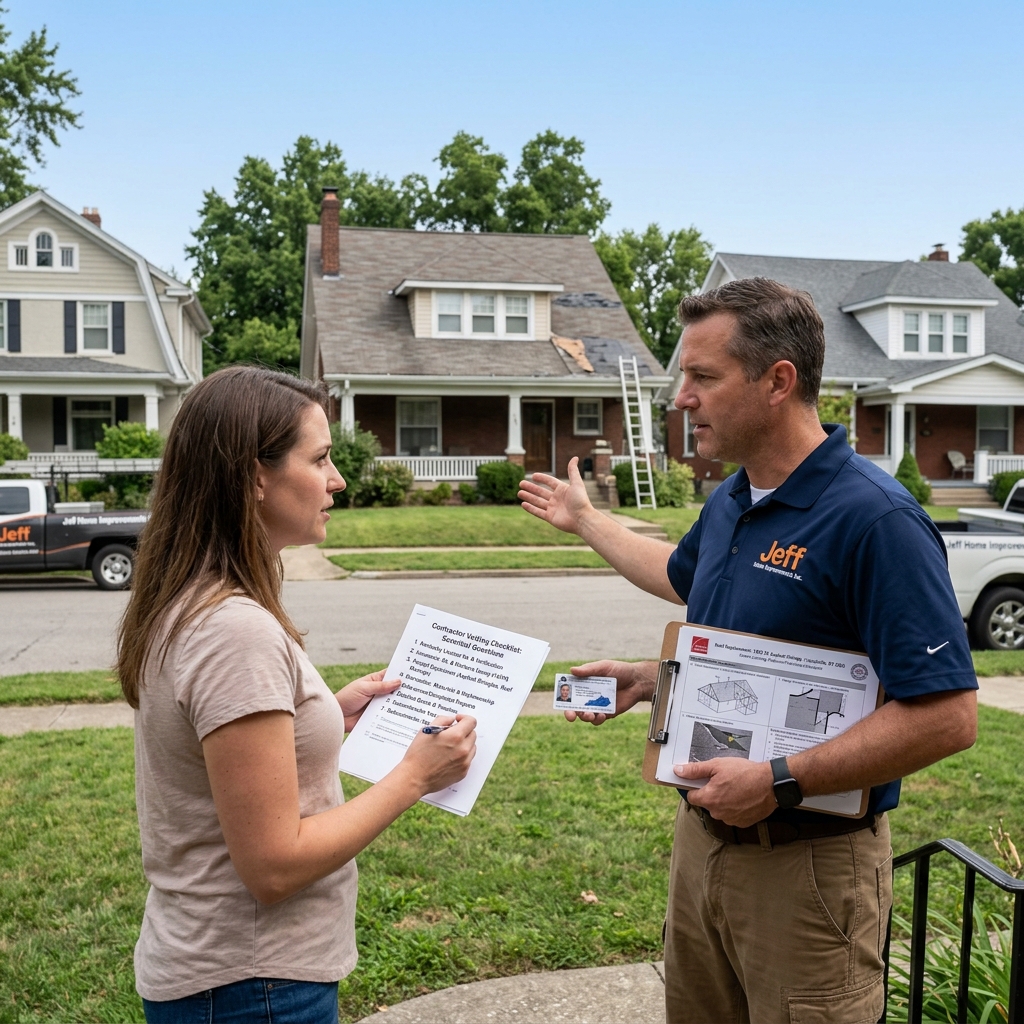
Experience with Your Specific Project Type
Roofing includes multiple specializations: asphalt shingle replacement, metal roofing installation, flat roof repairs, storm damage assessment, commercial versus residential work. Ask contractors specifically about their experience with your project type. A contractor with 15 years repairing residential asphalt shingles might lack expertise in commercial flat roofing or specialty metal installations.
Inquire about recent projects matching yours. “When did you last complete a roof replacement similar to mine?” If they mention a job from five years ago, that raises questions about current workload or specialty focus. Ask how many similar projects they’ve completed in the last year. A busy, reputable contractor should have several recent examples.
Storm damage assessment and insurance claim coordination requires specialized knowledge separate from standard roof replacement. If you’re dealing with damage from a hail or wind event, ask whether the contractor regularly works with insurance adjusters and can guide you through the claims process. Some contractors even help file claims on your behalf, which saves significant time and effort.
For commercial properties, ask about their experience with commercial roofing systems, building codes specific to commercial structures, and whether they’ve managed projects with coordinated contractor schedules and building access restrictions. Commercial and residential roofing differ substantially in complexity and compliance requirements.
Action step: Create a description of your specific project (roof replacement, storm damage repair, metal roofing, etc.) and ask each contractor directly about their most recent similar project. Request specific dates and project locations.
References and Completed Project Examples
Ask for at least three to five references from projects completed in the last two years. Don’t settle for a list of names. Specifically request references from projects matching yours in scope and complexity. A roof replacement reference tells you more than a gutter installation reference.
When calling references, ask detailed questions: Did the project stay on budget and timeline? Was the work area kept clean during the project? Did the contractor communicate clearly about any issues that arose? Would you hire them again? Listen for hesitation or qualified answers. Someone saying “yes, but…” might indicate unresolved concerns.
Ask to see completed projects in person or through photos. Legitimate contractors have photo documentation of finished work and can show comparable projects. Some contractors display their work on a website or through a portfolio app. Professional photography of completed jobs indicates they take pride in their work and track quality across projects.
In-person project tours carry added weight. If a contractor is willing to take you to a completed project in your neighborhood, you can see actual workmanship, quality of materials, and how they handle property restoration. Many homeowners also remember clearly whether a contractor treated their property with respect and minimized disruption.
Ask specifically about timeline accuracy. Did projects typically finish on the promised date? What happens if weather delays work? Understanding their contingency planning helps you set realistic expectations.
Warranty and Guarantee Details
Roofing warranties come in multiple layers, and understanding them protects your investment long-term. The manufacturer provides a material warranty (typically 25 to 50 years depending on materials), which covers defects in the roofing product itself. This warranty exists whether you use us or another contractor, but you need the correct paperwork to claim it.
Contractor workmanship warranty is separate and varies significantly. Some contractors offer one-year guarantees, others five years or longer. Ask exactly what’s covered: labor for repairs, replacement of failed materials, sealing failures, flashing issues. Get the warranty in writing with specific terms, duration, and coverage details. A verbal promise of a warranty has zero legal standing.
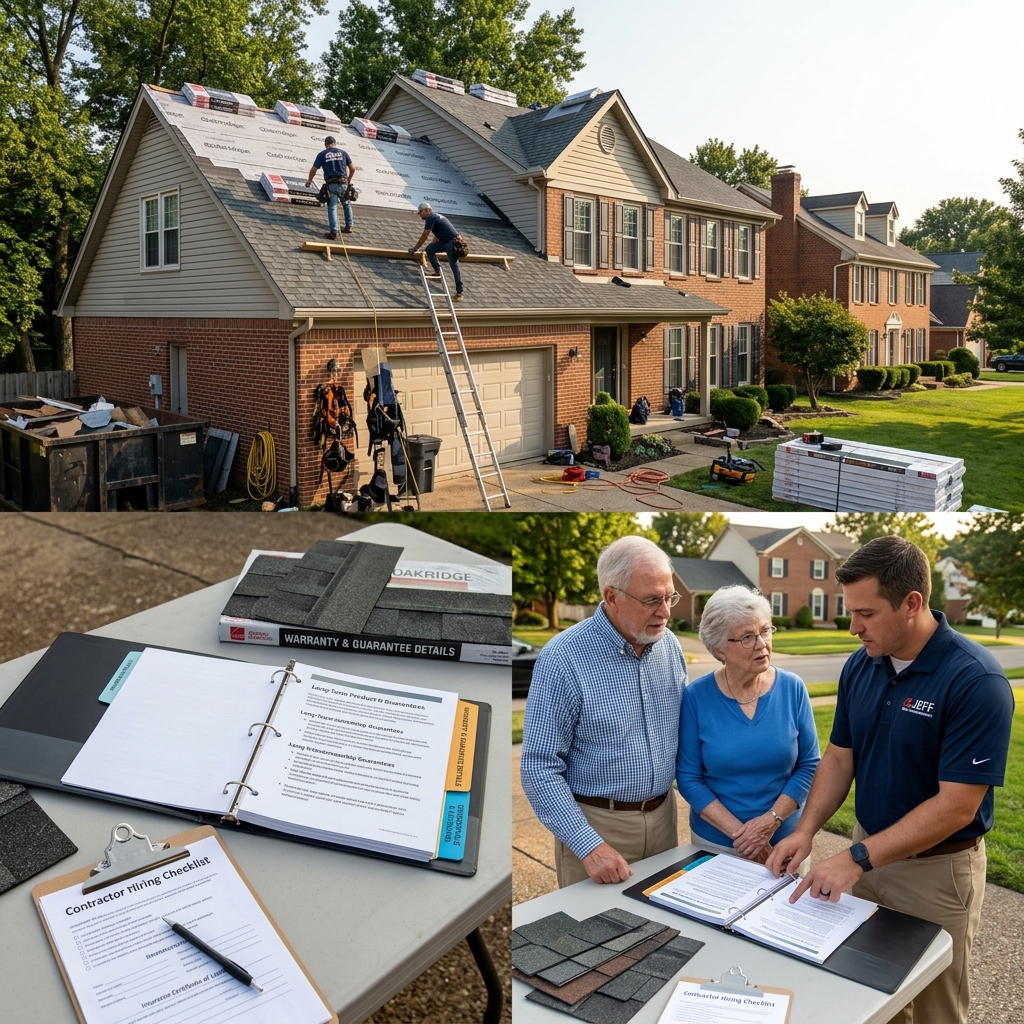
Ask whether the warranty transfers to subsequent homeowners if you sell. Some warranties are tied to the original purchaser only. If you plan to sell your home within 5-10 years, transferable warranty adds resale value and appeals to buyers.
Understand the exclusions. Does the warranty cover damage from extreme weather, or only defects in installation? Does it require annual maintenance inspections to remain valid? Some warranties become void if you don’t follow specific maintenance procedures. These details matter significantly when claims arise.
Clarify the claims process. When a problem emerges, can you simply call the contractor, or must you provide extensive documentation? How quickly do they respond to warranty claims? A contractor standing behind their work makes warranty claims straightforward.
Timeline, Costs, and Payment Terms
A roofing project typically requires 2-5 days depending on your roof’s size and complexity. Storm damage repairs might extend to 1-2 weeks if significant structural damage requires assessment and insurance coordination. Ask for a realistic timeline and what factors might extend the schedule. Weather delays are inevitable, so discuss how they’re handled and communicated.
Request an itemized written estimate before work begins, not a verbal quote. The estimate should break down materials, labor costs, removal and disposal of old roofing, any necessary repairs discovered during installation, permits, and applicable taxes. Vague estimates like “labor and materials” don’t protect you if disputes arise.
Compare estimates from multiple contractors, but avoid assuming the lowest bid is best. A significantly lower estimate might reflect lower-quality materials, inexperienced labor, or corners cut on proper installation techniques. Mid-range pricing usually reflects standard-quality installation. Premium pricing often indicates premium materials or specialized expertise.
Discuss payment terms clearly. Most roofing contractors require a deposit (typically 25-50% of the total cost) before work begins, with the final balance due upon completion. Avoid contractors demanding full payment upfront. Legitimate contractors structure payments tied to project milestones, not their cash flow needs.
Ask about financing options if the full cost is difficult to manage immediately. Many reputable contractors offer payment plans or financing partnerships that spread costs over 12-36 months with reasonable terms.
Action step: Get written estimates from three contractors in the exact same format. Create a comparison spreadsheet noting timeline, specific materials, costs, warranty terms, and payment structure side by side.
How We Stand Out as Your Trusted Partner
At Jeff Home Improvements Inc., we’ve served the Louisville and Kentuckiana area since 1989. Our experience across residential and commercial roofing, storm damage restoration, vinyl siding, window installation, and gutter protection means we understand the full scope of exterior home needs and how they interconnect.
We’re an Owens Corning Platinum Preferred Contractor, which reflects our commitment to quality installation, continuous training, and customer satisfaction that exceeds industry standards. This designation isn’t automatic; it requires demonstrated excellence across multiple performance metrics and ongoing adherence to rigorous standards.
Our virtual consultation and instant estimate process removes friction from the vetting stage. You don’t need to be home during multiple contractor visits. We provide transparent pricing quickly so you can compare options without prolonged delays. This efficiency respects your time while ensuring you have the information needed to make confident decisions.
We also specialize in navigating insurance claims for storm damage. If hail or wind damages your roof, we can work directly with your insurance adjuster, help document the damage, and coordinate the repair process. Many homeowners are surprised by how manageable insurance claims become with contractor guidance.
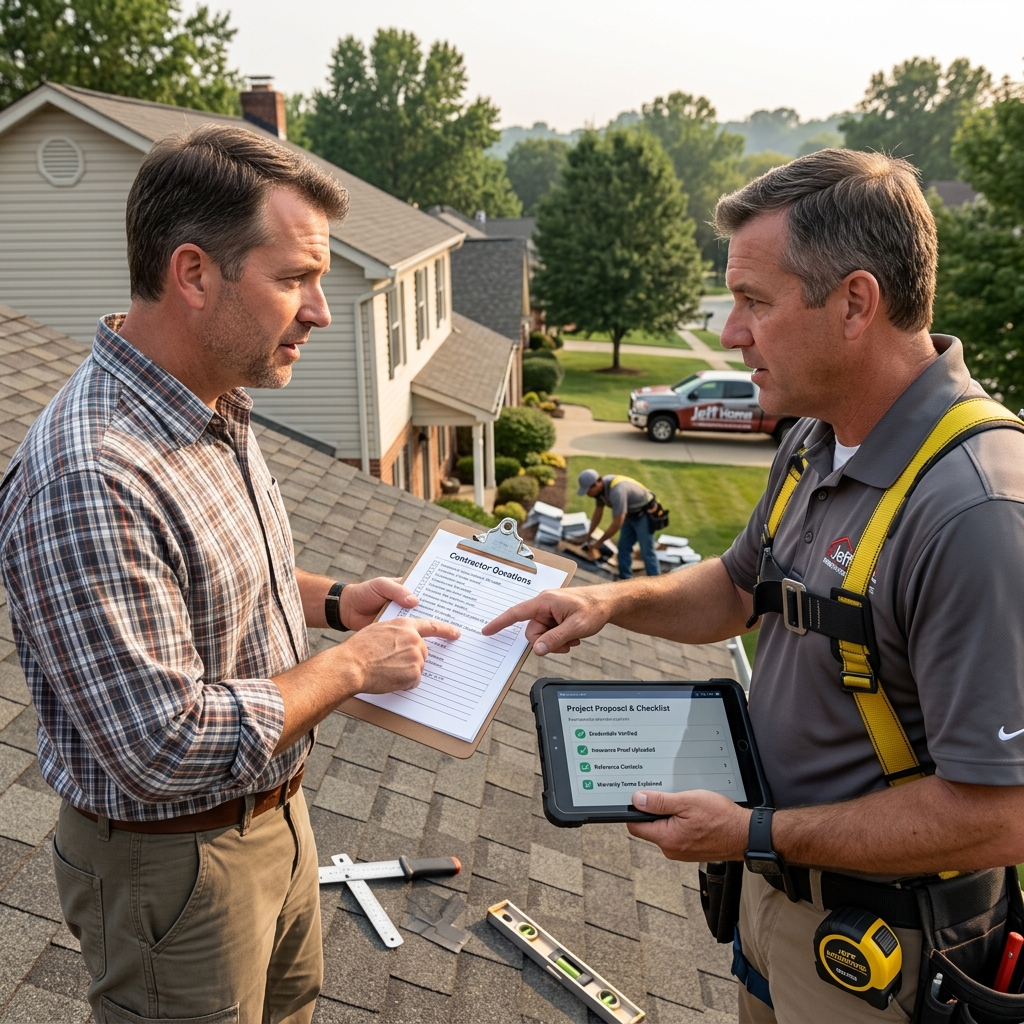
Beyond roofing, we offer comprehensive exterior services including siding replacement, window upgrades, and gutter systems with guards. This one-contractor approach simplifies coordination if multiple projects make sense for your home, and we can batch work to minimize overall disruption.
Red Flags to Watch During the Vetting Process
A contractor pressuring you to sign immediately or claiming a limited-time discount is creating artificial urgency. Roofing prices don’t fluctuate dramatically week to week. Legitimate contractors have steady pricing and don’t need high-pressure tactics to fill their schedule.
Hesitation or evasiveness about licensing, insurance, or references is a major red flag. Reputable contractors answer these questions routinely without defensiveness. If someone seems bothered by your questions about credentials, trust that instinct and move on.
Contractors offering estimates without examining your roof physically demonstrate insufficient professionalism. Every roof differs in pitch, configuration, material condition, and underlying structure. A responsible estimate requires in-person assessment.
Cash-only payment arrangements raise concerns. Professional contractors accept checks, credit cards, and electronic payments because they operate legitimate businesses with documented income. Cash-only requests suggest tax evasion or difficulty maintaining business accounts.
Extremely low pricing compared to other estimates warrants investigation. Ask specifically where the cost savings come from. Substandard materials, inexperienced labor, or skipped installation steps create false savings that cost you later. There’s rarely such a thing as a bargain roof replacement.
Contractors who don’t provide written estimates or contracts are inviting disputes. Everything agreed upon should be documented before work starts. Verbal agreements provide no protection if expectations diverge during the project.
Getting Your Free Estimate and Consultation
When you’re ready to move forward, contact us for a free virtual consultation and instant estimate. We’ll discuss your specific project needs, answer questions about materials and timeline, and provide transparent pricing without obligation. This consultation accomplishes several things: you see whether our communication style matches your preferences, understand our approach to your specific project, and have accurate cost information for comparison.
Prepare for your estimate conversation by having photos of your roof if possible, information about any previous roof work or damage, and clarity about your budget and timeline. If you have insurance documentation from storm damage, having that available helps us understand the full scope.
After you’ve reviewed estimates from multiple contractors, compare not just price but the total package: credentials and certifications, insurance and bonding clarity, experience with your specific project type, references and completed examples, warranty terms, timeline reliability, and the communication style you experienced during the vetting process.
The contractor you hire should instill confidence through professional communication, clear documentation, and willingness to answer thorough questions. You deserve a Louisville roofing contractor who treats your project with the same care they’d give their own home.
Your roof protects everything you own and everyone you love. Taking two or three hours to ask the right questions and evaluate contractors properly is a small investment that yields years of peace of mind and a roof that performs its critical job reliably.
Contact us today for a free in home, no obligation quote on your roof




 INDIANA
 KENTUCKY