
1. Immediate Roof Damage Assessment and Documentation
When a severe storm rolls through the Kentuckiana area, the aftermath can leave homeowners feeling overwhelmed. Hail, high winds, and falling debris can cause serious roof damage that threatens your home’s structural integrity and interior spaces. Without proper assessment and repair, a damaged roof can lead to water intrusion, mold growth, and costly secondary damage that insurance may not cover.
The difference between a quick patch and a genuine restoration comes down to expertise, documentation, and coordination with your insurance company. We’ve spent over three decades helping Louisville property owners navigate storm damage claims and secure the professional repairs their homes deserve. This guide walks you through each critical step, from initial damage assessment to final restoration, so you understand what to expect and why quality matters.
Your first 48 hours after a storm are crucial. Before filing a claim, you need clear evidence of what the storm damaged and how extensively. This is where professional documentation becomes your strongest asset.
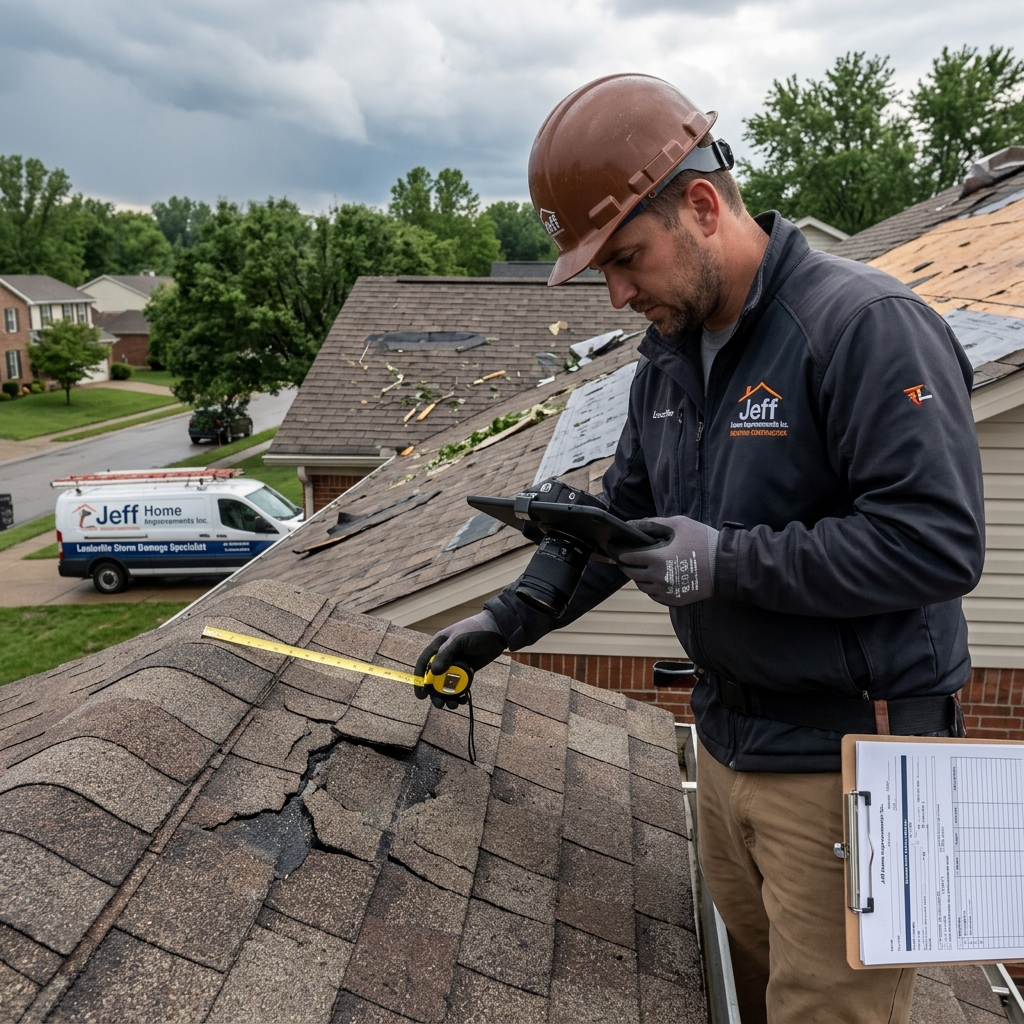
We recommend scheduling a thorough inspection immediately after severe weather passes. A trained eye can spot damage that homeowners often miss, including broken shingles, compromised flashing, dented gutters, and structural concerns that develop internally. Photographs and written notes create the foundation for your insurance claim, so this step directly influences whether you’ll receive full coverage for repairs.
During assessment, we document:
- Visible shingle damage, curling, or missing sections
- Flashing integrity around chimneys, vents, and skylights
- Gutter system condition and separation points
- Evidence of water intrusion or interior staining
- Structural weakening or sagging areas
- Manufacturer defects versus storm damage
This documentation becomes your insurance adjuster’s reference point. Clear, time-stamped photos and detailed descriptions remove ambiguity and strengthen your claim. Without proper documentation, adjusters may dispute the extent of damage or deny portions of your claim.
Action item: After any significant storm, request a professional roof inspection within 24-48 hours. Do not climb onto your roof yourself, as wet or damaged surfaces are hazardous.
2. Insurance Claim Support and Adjuster Coordination
Filing a roof damage insurance claim involves coordination between you, your insurance company, and your contractor. Many homeowners underestimate the complexity here, which leads to incomplete claims or delayed repairs.
We work directly with insurance adjusters on your behalf. This partnership ensures your adjuster understands the full scope of damage and the necessary repairs to restore your roof properly. When we identify issues that weren’t initially apparent, we provide supplemental documentation to support claim adjustments.
Here’s how the process typically unfolds:
Report the claim immediately. Contact your insurer within days of the damage. Delays can complicate coverage eligibility or limit investigation windows.
Schedule adjuster inspection. Your insurance company sends an adjuster to assess damage and determine payout amounts. This inspection heavily influences your final settlement.
Obtain contractor estimates. Professional repair estimates provide the adjuster with objective pricing and scope. Our estimates detail labor, materials, and timeline so there’s no confusion about costs.
Submit supplemental claims if needed. Storm damage often reveals secondary issues once work begins. Interior water damage, attic rot, or structural compromises may not be visible during initial inspection. We document these discoveries and submit them to your adjuster for coverage consideration.
Many contractors simply accept the adjuster’s initial estimate without advocating for comprehensive repairs. We take the opposite approach, ensuring your claim reflects the full scope of necessary work. If the initial settlement falls short, we provide detailed supplemental documentation to support additional coverage.
Action item: Keep all insurance communications and contractor estimates in one folder. When supplemental damage is discovered, report it to your adjuster immediately with supporting photos.
3. Professional Leak Detection and Water Damage Prevention
Storm damage doesn’t always announce itself loudly. A roof can appear intact while allowing slow, silent water intrusion that damages insulation, framing, and interior finishes. Detecting and preventing these leaks prevents exponential damage costs.
Professional leak detection uses systematic methods to trace water entry points. We inspect the entire roof surface, checking for obvious damage, but we also follow water stain patterns inside the attic or interior walls to identify where water originally entered. This detective work prevents contractors from simply patching the obvious hole while leaving a secondary leak unaddressed.
Prevention strategies we implement:
- Seal all penetration points (vents, pipes, chimneys) with weather-tight flashing
- Replace damaged underlayment that channels water away from sheathing
- Install proper attic ventilation to prevent moisture accumulation
- Apply ice and water shield in vulnerable valleys and eave areas
- Clear gutters and install gutter guards to maintain proper drainage
Water damage compounds quickly in humid climates like Kentucky’s. What starts as a small leak can create mold within weeks, causing health concerns and structural deterioration. Our prevention-first approach stops water before it enters your home.
Action item: After repairs are complete, schedule a follow-up inspection during the next rain to confirm no water entry occurs. This verification provides peace of mind and documents successful repair.
4. Structural Integrity Evaluation and Safety Inspection
Storm damage sometimes reveals hidden structural compromises. High winds can loosen connections, hail can fracture wood, and water intrusion can weaken framing over time. A complete restoration must address structural integrity, not just roof surface repairs.
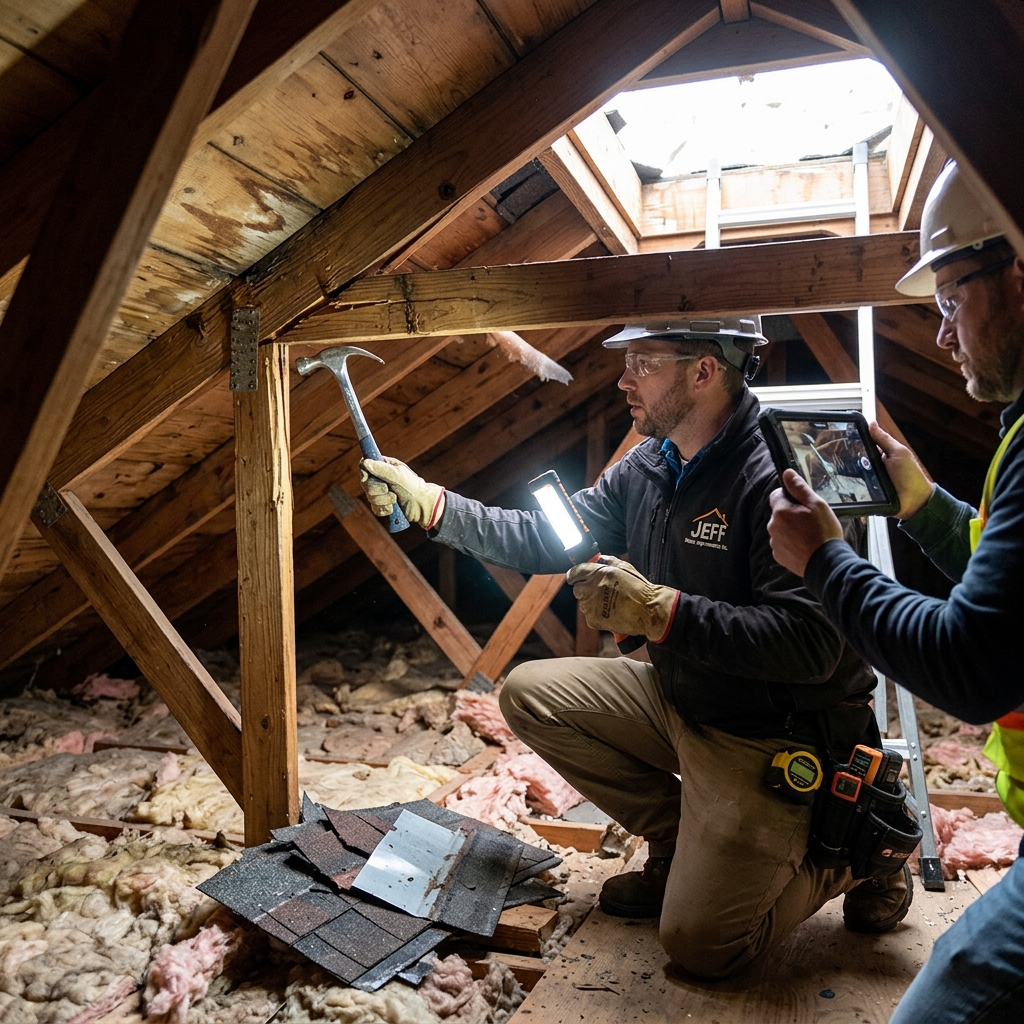
Our safety inspections evaluate the roof’s structural system, looking for problems that threaten long-term stability. We assess:
- Roof decking condition (rotted or weakened wood)
- Rafter and truss stability
- Proper fastening and connection integrity
- Load-bearing capacity and sag indicators
- Foundation or wall settling that stresses roof systems
Missing this evaluation means you might have repairs that fail prematurely under future weather stress. Structural issues also create insurance complications, as some damage may only be covered if discovered and documented during the initial claim process.
We provide detailed structural reports that protect both your insurance claim and your home’s long-term safety. If significant structural work is required, we explain recommendations clearly and provide separate estimates so you can budget appropriately.
Action item: Request a structural engineer’s assessment if any decay, separation, or sagging is discovered. This documentation strengthens insurance claims for comprehensive repairs.
5. High-Quality Material Selection for Storm-Damaged Repairs
The materials you choose for storm repairs directly impact durability, appearance, and insurance coverage. Many contractors use the cheapest available materials to maximize profit margins, leaving homeowners with repairs that fail during the next storm or look mismatched with existing roofing.
We’re an Owens Corning Platinum Preferred Contractor, meaning we specify premium materials that exceed standard requirements. These aren’t cosmetic upgrades, they’re investments in durability and weather resistance.
Material considerations for storm repairs:
- Shingle quality: Premium shingles with enhanced wind resistance and impact rating withstand future storms better than budget alternatives
- Manufacturer matching: Exact color and style matching ensures your repaired sections don’t age differently than existing roof areas
- Underlayment durability: High-quality underlayment protects against secondary water intrusion during the repair process and provides long-term backup protection
- Flashing materials: Galvanized, copper, or aluminum flashing resists corrosion and seals more reliably than lower-grade alternatives
Insurance claims typically cover materials necessary to restore your roof to pre-damage condition. Using quality materials ensures your settlement covers appropriate products, not cheap substitutes that fail prematurely.
Action item: When you receive contractor estimates, verify what materials each contractor specifies. Request samples to match your existing roof’s appearance, and confirm all materials carry manufacturer warranties.
6. Expert Installation with Manufacturer Warranties
Professional installation determines whether quality materials perform as designed. Poor installation technique voids warranties, creates premature failures, and can be more expensive to correct than getting it right the first time.
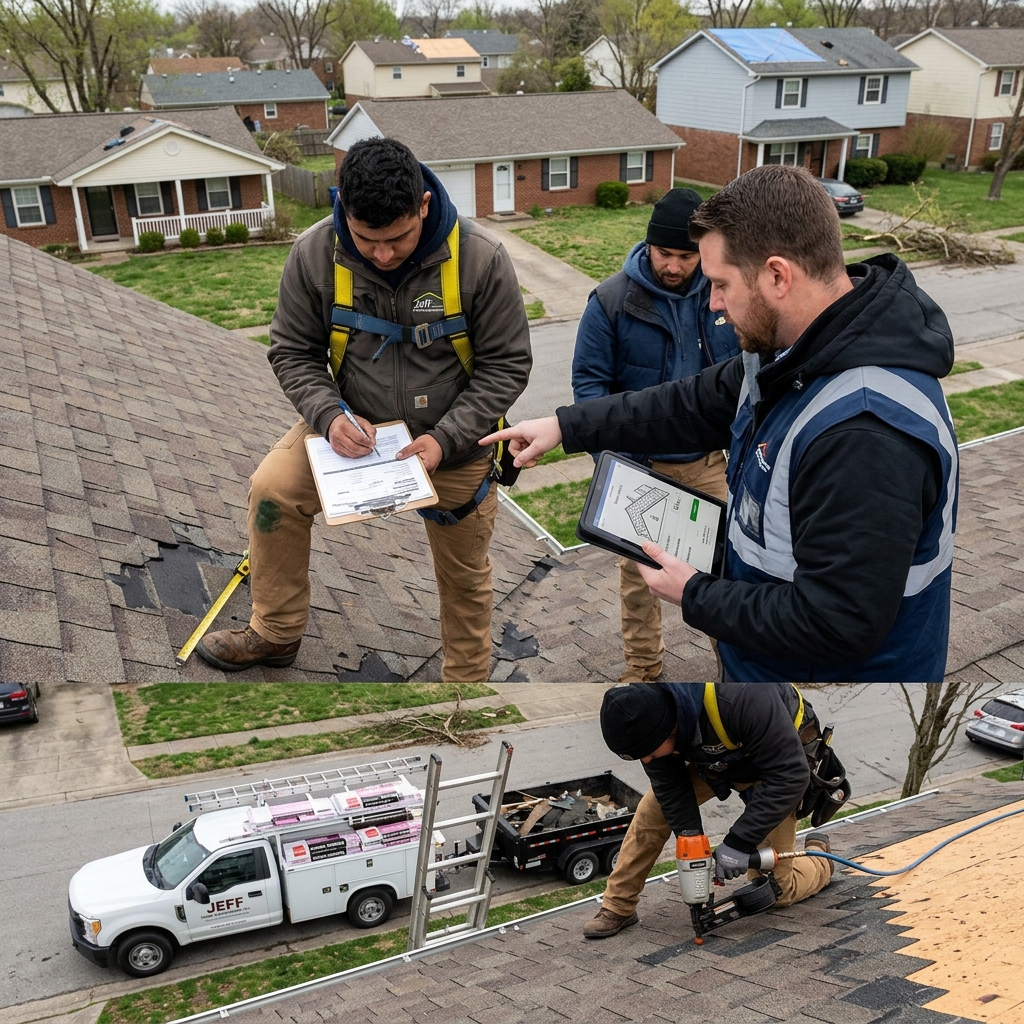
Our installation process follows manufacturer specifications precisely. Shingles are fastened at exact locations with correct fastener types, valleys are sealed with proper methods, and transitions are handled without shortcuts. This attention to detail ensures your warranty coverage remains valid and your repair lasts for decades.
Warranty protection matters significantly:
- Material warranties: Owens Corning products come with manufacturer protection against defects, covering replacement costs if materials fail
- Workmanship warranties: Our installation warranty covers labor and ensures repairs are corrected if issues arise from installation defects
- Insurance documentation: Proper installation with valid warranties supports insurance coverage for any future weather damage
Contractors cutting corners might complete repairs faster, but their installations often fail to meet manufacturer standards, which voids coverage. We invest the time in proper technique because it protects your investment and our reputation.
Action item: After installation, request copies of all warranty documentation. Keep these with your insurance records, as they’re valuable if future damage occurs.
7. Comprehensive Restoration Beyond Surface Repairs
Storm damage restoration extends beyond replacing damaged shingles. Complete restoration addresses cosmetic damage, integrates repairs seamlessly with existing structures, and restores your home’s full protective envelope.
Many quick-fix contractors view their job as finished once the obvious roof damage is patched. We see restoration differently. Your home’s exterior is an integrated system, and storm damage often affects siding, gutters, windows, and fascia simultaneously. Addressing only the roof leaves your home partially vulnerable.
Our comprehensive approach includes:
- Roof replacement or repair with exact material matching
- Gutter system restoration or replacement with seamless protection
- Vinyl siding repair or replacement where storm debris caused damage
- Window and frame assessment for seal integrity
- Fascia and soffit restoration for complete weather protection
- Landscaping debris removal and site cleanup
A Louisville roofing contractor offering true restoration coordinates all these elements into a single project timeline, minimizing disruption and ensuring cohesive results. You receive one warranty covering the entire exterior system, simplifying future maintenance and claims.
Action item: Request a comprehensive exterior assessment alongside your roof repair estimate. Addressing related damage during the same project saves time and ensures consistent quality standards across all repairs.
—
Storm damage to your Louisville home deserves professional restoration that protects your investment and simplifies insurance coordination. We’ve guided thousands of Kentuckiana homeowners through this process, combining meticulous documentation, insurance expertise, and master-level craftsmanship. Whether your damage is extensive or localized, our approach ensures complete restoration that lasts. Contact us for a professional assessment and instant estimate, and let us handle the complexity while you focus on getting your home back to normal.
Contact us today for a free in home, no obligation quote on your roof




 INDIANA
 KENTUCKY