
When a Storm Strikes Your Roof: Understanding Your Coverage Gap
A severe thunderstorm rolls through Kentuckiana and leaves hail damage across dozens of roofs in your neighborhood. You file a claim with your insurance company, assuming the process will be straightforward. Then reality sets in: the adjuster’s estimate seems low, communication stalls, and you’re uncertain whether your roof truly needs replacement or if repairs will suffice.
This coverage gap exists because most homeowners don’t understand what their policy actually covers or how insurance companies assess storm damage. Your homeowners policy typically covers sudden, accidental damage from wind, hail, or fallen trees. But “covered” doesn’t mean “fully reimbursed at replacement cost.” Insurance adjusters work within specific guidelines and may miss damage that a roofing expert would catch immediately.
We’ve worked with thousands of Louisville-area property owners navigating this exact situation since 1989. The difference between a claim that gets denied, underpaid, or fully approved often comes down to documentation and having the right contractor in your corner. When a storm damages your roof, you’re not just dealing with weather damage—you’re managing a parallel negotiation with your insurance company.
Understanding your policy limits, deductibles, and what triggers full replacement versus partial repair is essential. Most standard homeowners policies include a wind and hail deductible that’s separate from your regular deductible. That means you might owe $2,500 or more out of pocket before insurance kicks in. Knowing this upfront helps you make realistic financial decisions about your repairs.
Action item: Locate your homeowners policy documents and review the declarations page. Note your deductible amounts, coverage limits, and any endorsements related to wind or hail damage.
Why Most Louisville Homeowners Struggle with Storm Damage Claims
The storm damage claim process trips up homeowners for several predictable reasons. First, most people lack the technical knowledge to identify all the damage a storm has caused. From the ground, a roof looks fine even when shingles are cracked, flashing is torn, or structural damage exists underneath. An insurance adjuster may spend 15 minutes on your roof during a brief inspection, missing issues that become apparent during a thorough assessment.
Second, homeowners often don’t realize they have leverage in the claim process. Insurance companies employ adjusters to assess damage fairly, but their primary obligation is to manage claim costs. If you accept their initial estimate without expert input, you may leave thousands of dollars on the table. This isn’t about being adversarial—it’s about ensuring your roof is properly restored rather than patched with a band-aid approach.
Third, many property owners delay getting professional evaluation because they’re uncertain about next steps. After a major storm, your roof becomes a pressing concern, but you might not know whether to call a contractor first or wait for the insurance inspection. This confusion often leads to further damage as rain or wind compounds the initial problem.
Communication breakdown is another common issue. Your insurance company may not clearly explain what’s covered, what the timeline looks like, or what documentation you need to provide. You’re left juggling calls between your adjuster, your contractor, and your insurance agent without a clear point person managing the process.
Finally, homeowners in Louisville sometimes assume their previous insurance history or credit rating affects claim approval. In reality, homeowners insurance claim approvals are based on policy language and documented damage, not on whether you’ve filed claims before. Understanding this removes unnecessary anxiety from the process.
Action item: After filing a storm claim, request a copy of the adjuster’s written estimate and ask them to specifically identify all damage they found. If anything seems unclear, ask for clarification before accepting their assessment.
How We Coordinate with Your Insurance Company from Start to Finish
Our role in the storm damage process goes well beyond simply fixing your roof. We become the bridge between you and your insurance company, ensuring nothing falls through the cracks and that your claim reflects the true scope of damage.
Here’s how we structure this coordination:
Immediate documentation. Within 24-48 hours of a storm, we perform a detailed roof inspection and create a comprehensive damage report with photos and video. This documentation becomes critical evidence if your insurance adjuster’s initial assessment seems incomplete. We’re not trying to inflate claims—we’re providing objective evidence of what the storm actually damaged.
Adjuster communication. We attend the insurance inspection when possible and present our findings alongside the adjuster’s assessment. When there’s a discrepancy between what the adjuster documented and what we’ve identified, we explain the technical reasons for the difference. Adjusters appreciate working with contractors who speak their language and provide evidence rather than arguments.
Supplemental claim filing. If our assessment identifies damage the adjuster missed, we prepare supplemental documentation and help you file an amended claim. This is standard practice and doesn’t trigger investigation—it’s simply providing additional evidence that should have been caught during the initial inspection.
Estimate alignment. We ensure our repair estimate aligns with what insurance will cover under your policy. We’re transparent about what’s covered by insurance, what falls under your deductible, and what might be out-of-pocket if your coverage limits have been reached. This honesty builds trust and prevents surprises later.
Timeline management. Insurance claims operate on specific timelines. Adjusters have limited time to respond, supplemental claims have filing deadlines, and your repair work needs to start while the damage is fresh. We track these dates and keep you informed so nothing expires.
Repair authorization. Before we begin any work, we ensure your insurance company has approved the scope of repairs and issued payment authorization. We don’t start work hoping to get paid later—we confirm coverage first.
Action item: After filing your claim, provide your contractor’s contact information to your insurance adjuster immediately. This sets up direct communication that speeds up the process significantly.
Our Three-Step Assessment and Documentation Process
When you contact us about storm damage, we follow a structured process designed to protect your interests and document everything thoroughly.
Step one: Initial damage assessment. Our roofing experts conduct a complete roof inspection, examining shingles, flashing, gutters, skylights, and any other storm-exposed components. We document everything photographically, including wide shots of affected areas and close-ups of specific damage. We use video to show the complete picture—something static photos can’t always convey. This assessment typically takes 30-60 minutes depending on your roof size and complexity.
Step two: Comparative analysis. We compare undamaged sections of your roof with damaged areas to highlight the difference. This visual comparison is powerful evidence when presenting to your insurance adjuster. For example, if one side of your roof has impact damage from hail and the other side was protected by a large tree, the contrast makes the damage obvious.
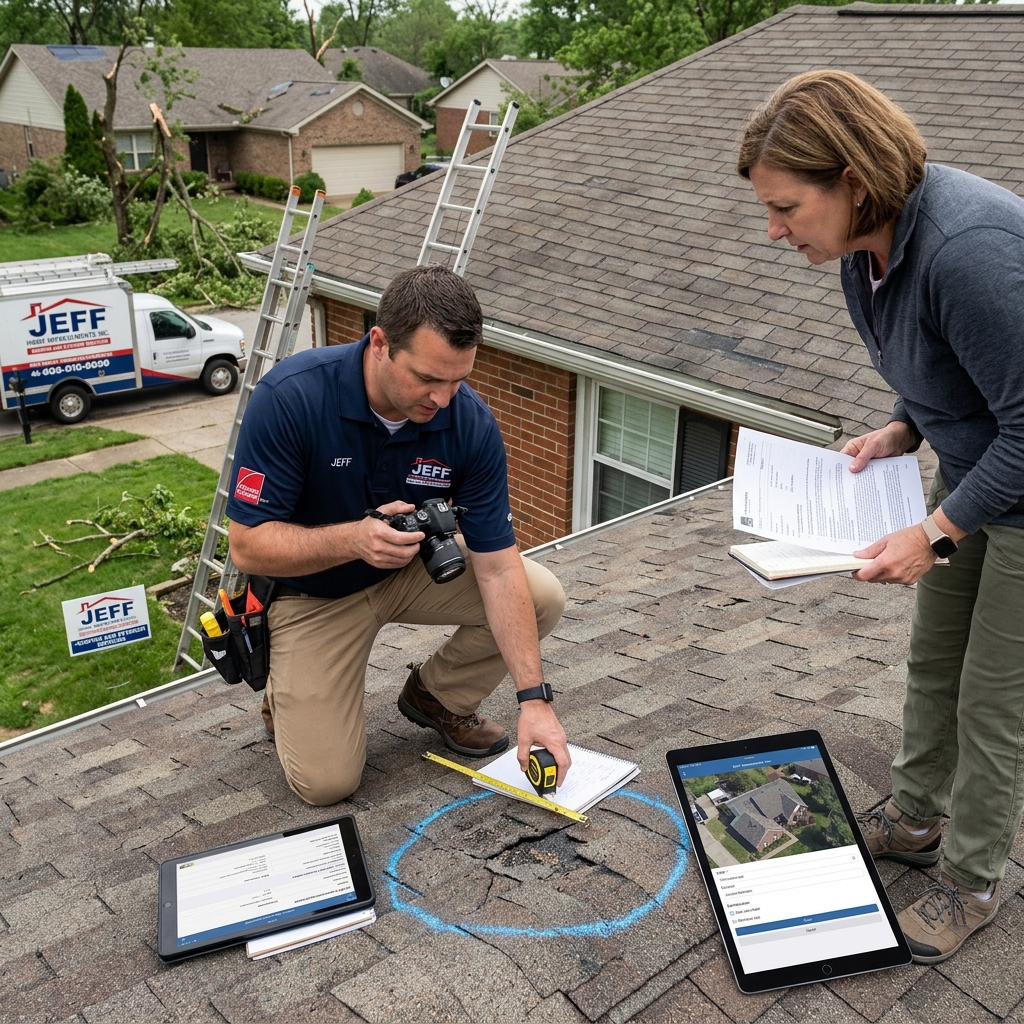
Step three: Detailed estimation and reporting. We prepare a formal damage report that meets insurance industry standards. This includes the specific materials damaged, estimated repair versus replacement costs, and recommendations for the most cost-effective restoration approach. Our Owens Corning Platinum certification means our estimates are recognized and trusted by insurance adjusters throughout the region.
Throughout this process, we maintain digital copies of all documentation and provide you with a comprehensive report before we discuss next steps. You’ll know exactly what we found, how extensive the damage is, and what repair options exist.
Our assessment is thorough precisely because we’ve seen insurance claims denied or underpaid due to incomplete documentation. We treat your roof damage assessment like an insurance professional would, because that’s what it becomes—evidence in your claim.
Action item: Request that your contractor provide all documentation in digital format and give you copies before any work begins. This ensures you have evidence independent of your contractor’s records.
Maximizing Your Insurance Settlement with Expert Evidence
The difference between a minimal insurance payout and a full settlement often hinges on the quality of evidence presented. We’ve learned what adjusters need to see and how to present damage in ways they understand and respect.
Insurance companies use established damage assessment guidelines. Hail damage, for instance, requires multiple impact marks to establish a pattern. Wind damage might be demonstrated through lifted shingles, torn flashing, or exposed nail heads. Our documentation identifies damage using these same professional standards, making it harder for an adjuster to dispute.
Professional photography matters more than homeowners realize. A cell phone photo of roof damage taken from the ground rarely shows what an aerial photo captures. We use aerial photography and close-up detail shots that eliminate ambiguity. When an adjuster sees professional documentation showing 40% of your roof has hail damage, they can’t simply dismiss it as normal wear.
We also identify secondary damage that homeowners miss. A roof impact might crack underlying plywood. Wind lifting might have damaged soffit or fascia. Storm debris might have blocked gutters, causing water backup. These secondary issues often qualify for coverage and significantly increase your settlement.
Another key advantage: we understand depreciation nuances. Insurance coverage varies based on whether you have replacement cost value (RCV) or actual cash value (ACV) coverage. RCV pays for the full cost to replace materials; ACV deducts depreciation. Our documentation makes clear what depreciation the adjuster should be calculating, which can mean thousands of dollars in difference.
We’ve also learned that some damage only becomes apparent after repair begins. That’s why we recommend phased repair approval with your insurance company. Initial damage is approved, we start the work, and any additional damage discovered during repair is documented and submitted as a supplemental claim. This protects you from being left with partially repaired damage because the original estimate was incomplete.
Action item: If your adjuster’s estimate seems significantly lower than a contractor’s assessment, ask them to itemize what they included and excluded. This specific comparison often reveals what was missed.
The Complete Claim Timeline: What to Expect
Storm damage claims move at different speeds depending on several factors. Understanding realistic timelines helps you plan and know when to push for faster action.
Days 1-3: File your claim immediately after a storm. Contact your insurance agent or company’s claims line while the damage is fresh and before significant weather compounds the problem. Document your damage with photos and videos. Schedule a contractor assessment within these first few days. We can often fit emergency inspections into our schedule within 24 hours during storm season.
Days 4-7: Your insurance company typically schedules an adjuster inspection within a week of the claim filing, though this varies by how busy they are after a major storm event. Prepare for this inspection by having documentation ready, clearing access to your roof, and being present when the adjuster arrives. This is your opportunity to point out damage you’ve noticed.
Days 8-14: After the adjuster’s inspection, they have 10-30 days (depending on your policy) to issue their estimate. During this waiting period, we maintain documentation of your damage and prepare a detailed report comparing our assessment with what we expect from insurance.
Days 15-30: Once you receive the adjuster’s estimate, you have options. If you accept it, you can proceed with repairs. If you disagree, you typically have a deadline to file a supplemental claim with additional documentation. This is where our expert assessment becomes critical. We help you decide whether the adjuster missed something worth pursuing.
Days 31-45: If supplemental claims are filed, your insurance company has another period to review and respond. This can feel like the claim is moving slowly, but it’s normal. Many storms create regional claim surges that slow processing.
Days 45-60: Once your insurance approves payment, we schedule repair work. This is when the actual restoration happens. For major damage, repair work might take one to three weeks depending on material availability and weather cooperation.
Days 60-90: Final inspections occur once repair work is complete. Insurance may send a follow-up adjuster to verify that work was completed as approved. We coordinate this inspection and ensure everything meets their requirements.
The entire process from claim filing to completed repairs typically spans 60-90 days. Emergency repairs that keep your property protected (tarping, temporary fixes) can begin much sooner, often within the first week.
Action item: Create a simple timeline document for yourself. Write down when you filed your claim, when the adjuster inspection is scheduled, and what deadlines your insurance company provides. Refer to this frequently.
Why Our Owens Corning Platinum Certification Matters for Your Claim
Our Owens Corning Platinum Preferred Contractor status isn’t just a marketing designation—it’s a credential that directly influences how insurance companies view our work and our estimates.
Owens Corning maintains rigorous standards for contractors who receive this certification. We undergo annual training in roofing installation, assessment protocols, and industry best practices. We’re required to maintain detailed records, carry appropriate licensing and insurance, and achieve high customer satisfaction ratings. This means insurance adjusters already know our assessments are reliable before they even receive our documentation.
When we submit a damage assessment, adjusters give it weight because they trust Owens Corning’s vetting process. Our estimate isn’t one contractor’s opinion—it’s a documented assessment from a certified professional who must maintain standards or lose certification. This credibility translates into faster claim approvals and fewer disputes about damage extent.
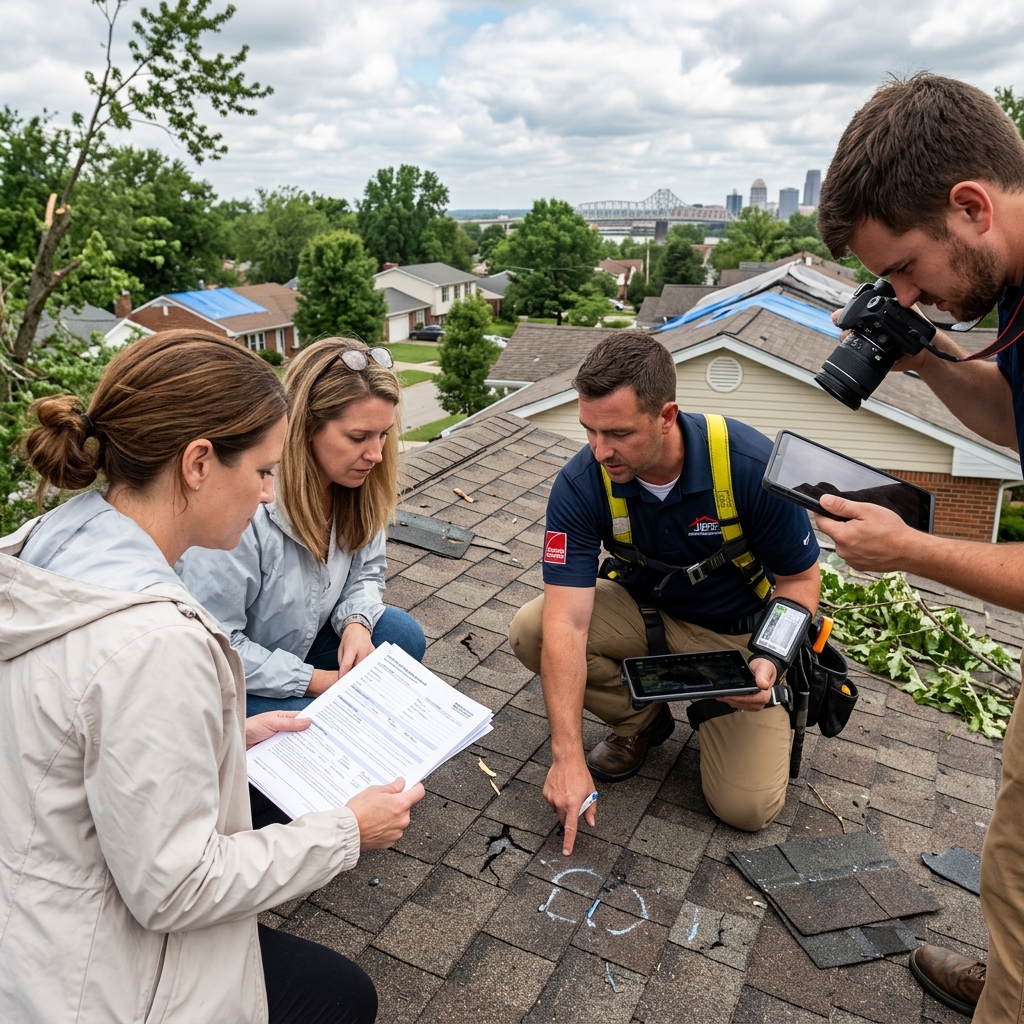
Additionally, our Platinum status gives us access to Owens Corning’s professional resources and support. We use their assessment tools, training updates, and technical guidance. This continuous education means we’re current on how different shingle types respond to storm damage, what constitutes legitimate hail damage versus normal wear, and how to document everything precisely.
For your warranties and coverage, this matters too. Owens Corning Platinum contractors can transfer certain warranties to subsequent homeowners, which increases your property’s resale value. Buyers prefer homes with certified contractor work and extended warranties.
Insurance companies also recognize that Platinum contractors complete work to specific standards. When we repair or replace your roof, they know it’s being done correctly, which reduces dispute risk. That confidence makes them more willing to approve full settlements rather than fight over coverage details.
Action item: Ask any contractor you’re considering whether they hold Owens Corning Platinum certification or equivalent credentials. This single factor often correlates with better claim outcomes.
Virtual Consultations: Getting Immediate Answers Without Waiting
After a storm, your roof becomes urgent, but getting someone to physically visit your property can take days. We’ve streamlined this by offering virtual consultations that provide preliminary assessment and answer your immediate questions the same day.
Here’s how virtual consultations work: You schedule a brief video call at your convenience. During that call, you walk us through your roof damage using your phone camera, showing us impact areas, damaged flashing, and any other concerns. Our experts provide real-time feedback about what we’re seeing, whether it appears covered by insurance, and what immediate steps you should take.
This doesn’t replace a full physical inspection—we still need to visit your property to provide detailed documentation for your insurance claim. But the virtual consultation answers critical questions immediately. You’ll know whether the damage appears significant enough to warrant a claim, whether emergency repairs are needed to prevent further damage, and what to expect from the claim process.
Virtual consultations are especially valuable during high-volume storm periods. After major weather events, contractor schedules fill quickly. A virtual consult lets us prioritize which properties need urgent on-site visits versus those that can wait a few days. This means we can direct emergency resources toward properties with the most critical damage while still keeping you informed.
For commercial property managers, virtual consultations are invaluable. You can conference in your facilities team, insurance agent, and business ownership to discuss damage and options together rather than having multiple separate conversations.
We typically provide estimates and next-step recommendations during or immediately after the virtual call. You get answers without the waiting.
Action item: When you contact us about storm damage, ask about virtual consultation availability. If timing is critical, a same-day video assessment might be exactly what you need.
Our Storm Damage Restoration Guarantee
We stand behind our storm damage work with a comprehensive guarantee that protects your interests after repairs are complete. This guarantee covers both the quality of our craftsmanship and the completeness of our damage assessment.
Our restoration guarantee includes: All repairs and replacement work is covered by our labor warranty for five years from completion. If any workmanship issue develops, we correct it at no cost. We guarantee that all visible storm damage identified during our assessment will be fully repaired or replaced based on insurance approval. If our assessment missed damage that becomes apparent during repair, we document and file supplemental claims on your behalf. We stand behind our documentation provided to insurance companies. If an adjuster disputes our assessment, we’re prepared to defend our findings with technical evidence.
We also offer a satisfaction guarantee. If you’re dissatisfied with any aspect of our work quality or the way we managed your claim process, we’ll address your concerns immediately. This isn’t about discounting your invoice—it’s about ensuring the work meets your expectations and the claim process was handled professionally.
For storm damage repair, these guarantees are critical because property owners are already dealing with the stress of weather damage. You need confidence that your contractor will follow through, handle claim coordination professionally, and deliver quality work.
This guarantee also applies to emergency tarping and temporary repairs we perform immediately after storms. We ensure these temporary measures protect your property adequately until permanent repairs can be scheduled.
Action item: Before hiring any contractor, request their written guarantee in writing. Compare what different contractors offer—this often reveals their confidence level in their work.
Next Steps: Scheduling Your Free Storm Assessment
If a recent storm has damaged your roof or exterior, the next step is straightforward: contact us for a free assessment that provides clear answers about damage extent and your claim options.
Here’s what happens when you reach out:
We’ll schedule a time that works for your schedule, typically within 24-48 hours for emergency situations. Our team will conduct a thorough inspection of your roof, exterior, gutters, and any other storm-exposed areas. You’ll receive detailed documentation including photos, video, and a written assessment. We’ll explain what appears covered by insurance, what might require supplemental claims, and what repair options exist. We’ll discuss the claim process and answer any questions about our coordination with your insurance company. If you’re ready to move forward, we’ll guide you through next steps.
This assessment is completely free whether you ultimately hire us or not. Our goal is ensuring you have professional guidance as you navigate storm damage and your insurance claim.
You can reach us by phone, through our website at https://jeffroof.com, or by requesting a virtual consultation if an immediate physical inspection isn’t possible. For emergencies like active leaks, we can often provide same-day response.
Since 1989, we’ve handled thousands of storm damage claims throughout Louisville and Kentuckiana. We know the frustration property owners feel when storms damage their homes. We’ve built our business on being the contractor that takes this burden seriously—the one that coordinates with insurance, provides expert documentation, and ensures your claim reflects the true cost of restoration.
Your action: Contact us today for your free storm assessment. The sooner we document your damage, the sooner you can move forward with your insurance claim and repairs.
Contact us today for a free in home, no obligation quote on your roof




 INDIANA
 KENTUCKY