
Why Verifying Roofer Credentials Protects Your Investment
When you’re planning a roof replacement or storm damage repair, choosing the right contractor can mean the difference between a job done right and years of costly problems. The first step in that process is confirming that your roofer holds the proper credentials. Here’s what you need to know to make an informed decision.
Your roof is one of the largest investments on your property. A poor installation or repair can lead to leaks, structural damage, mold, and safety hazards that compound over time. When you hire a licensed and insured contractor, you’re not just paying for labor; you’re securing legal protection and accountability.
A licensed roofer has demonstrated knowledge of building codes, safety practices, and proper installation techniques. Insurance protects you financially if something goes wrong on your property during the work. Without these safeguards, you could end up paying twice: once to fix the original problem and again to correct mistakes made by an unqualified contractor.
Taking the time to verify credentials upfront prevents expensive headaches later.
The Risks of Hiring Unlicensed or Uninsured Contractors
Unlicensed contractors may offer lower prices, but that savings comes with substantial hidden costs. If something goes wrong, you have no legal recourse and no bond to recover damages. Many unlicensed operators work cash-only specifically to avoid accountability.
Uninsured contractors pose even greater risks. If a worker is injured on your roof, you could be liable for medical bills and lost wages. If the contractor damages your home or a neighbor’s property, you’re responsible for repairs. Your homeowner’s insurance may not cover damage caused by uninsured contractors, leaving you personally accountable for thousands of dollars.
Additionally, unpermitted work can affect your property’s resale value and may violate local building codes. Buyers often discover unpermitted roofing during home inspections, leading to expensive complications at closing.
Kentucky’s Roofing Contractor Licensing Requirements
Kentucky does not require individual roofers to hold a state license for residential work, but this does not mean you should skip credential verification. Instead, focus on contractor licensing at the business level and look for additional certifications and insurance.
Commercial roofing projects in Kentucky may have stricter requirements depending on the project scope and local jurisdiction. Many cities and counties have their own licensing boards and permit requirements. This variation makes it even more important to ask your contractor about local compliance for your specific project.
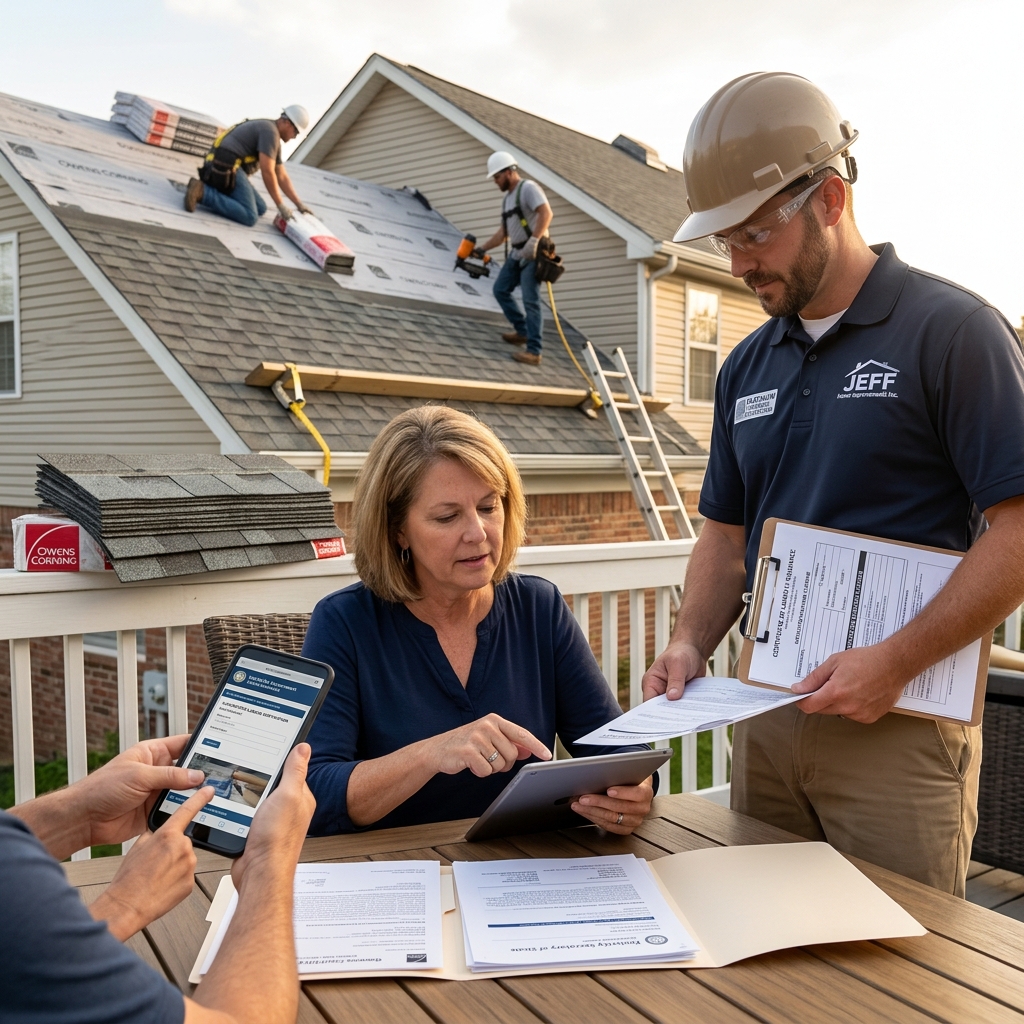
The Kentucky Department of Housing, Buildings and Construction oversees building standards and permits. Your contractor should be familiar with these codes and able to pull proper permits before starting work.
How to Check a Roofer’s License Status in Kentucky
Begin by verifying that your contractor maintains a current business license. You can check this through your city or county clerk’s office or the Kentucky Secretary of State’s business search portal. Search for the company name and confirm the license is active and current.
Ask your contractor directly for their business license number, insurance policy information, and any certifications. A reputable contractor will provide these documents without hesitation. Request to see physical copies of insurance certificates and license documentation.
Contact the Better Business Bureau and check online reviews on Google, Yelp, and the BBB website. Look for patterns in feedback about reliability, communication, and follow-through. A single negative review happens; consistent complaints about incomplete work or missing credentials are warning signs.
For additional assurance, ask your roofer if they hold certifications from major manufacturers like Owens Corning or GAF. These partnerships indicate ongoing training and quality standards.
What Insurance Coverage Your Roofer Must Carry
Your roofer should carry two essential types of insurance: general liability and workers’ compensation.
General liability insurance protects you if the contractor accidentally damages your home, a neighbor’s property, or causes injury to someone on the job. Coverage amounts typically range from $300,000 to $2 million per incident.
Workers’ compensation insurance covers medical costs and lost wages if a worker is injured during the project. In Kentucky, any contractor with employees is required by law to carry this coverage. If your roofer claims to have no employees (subcontractors only), ask to see proof that their subcontractors carry their own workers’ comp.
Request a Certificate of Insurance naming you as an additional insured. This document proves coverage is active and protects you legally. Don’t accept verbal assurances or old certificates; ask for current documentation directly from the insurance carrier.
Red Flags That Signal an Unqualified Contractor
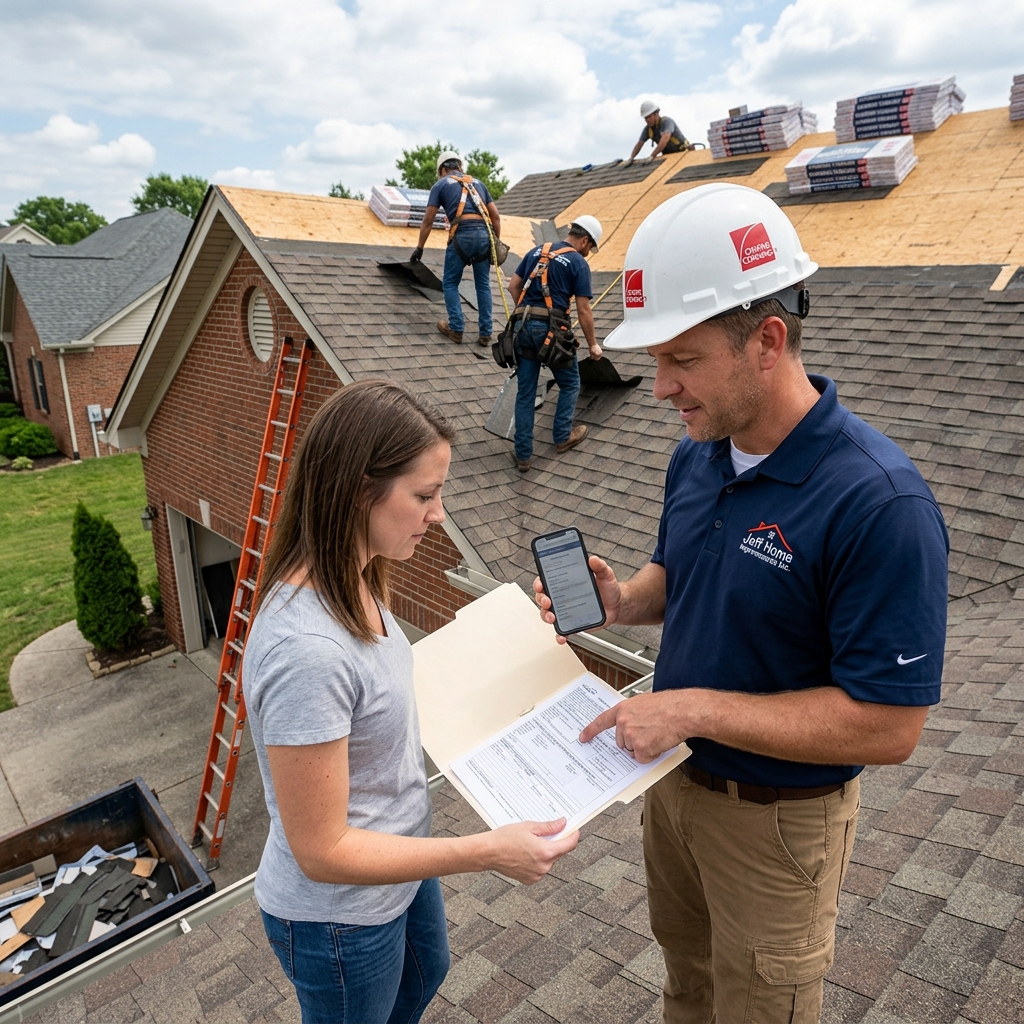
Be cautious if a contractor refuses to provide insurance certificates or business license information. Legitimate businesses keep these documents readily available.
Watch for unusually low estimates compared to competitors. Roofing is a skilled trade; significantly underpriced work often reflects cut corners, substandard materials, or inexperience.
Contractors who pressure you to pay the full amount upfront or demand cash-only payment are operating outside normal industry practices. Standard payment terms typically include a deposit, progress payments, and final payment upon completion.
Poor communication is another warning sign. If a contractor is hard to reach, vague about timelines, or dismissive of your questions, these issues typically worsen after the contract is signed.
Finally, be wary of anyone who shows up unsolicited after a storm claiming they just finished a job in your neighborhood. While some legitimate contractors do this, it’s also a common tactic used by scammers who disappear after collecting payment.
Our Approach to Transparent Credentials and Certifications
We operate with full transparency because we stand behind our work. We maintain current business licensing, carry comprehensive general liability and workers’ compensation insurance, and provide Certificates of Insurance to every client before work begins.
As an [Owens Corning Platinum Preferred Contractor], we’ve earned recognition for quality installation, customer service, and adherence to manufacturer standards. This certification requires ongoing training, customer satisfaction tracking, and use of premium materials. It’s something we work to maintain year after year.
All our team members receive regular training on current building codes, safety practices, and proper installation techniques. We pull all required permits and coordinate with local building inspectors to ensure your project complies with Kentucky regulations.
We encourage clients to verify our credentials. Ask for references, check our BBB profile, and request documentation. Our commitment to doing things right means we have nothing to hide.
Questions to Ask Before Hiring a Roofing Contractor
Start with the basics: “Are you licensed and insured?” and “Can you provide proof right now?” Request specific insurance policy numbers and coverage amounts.
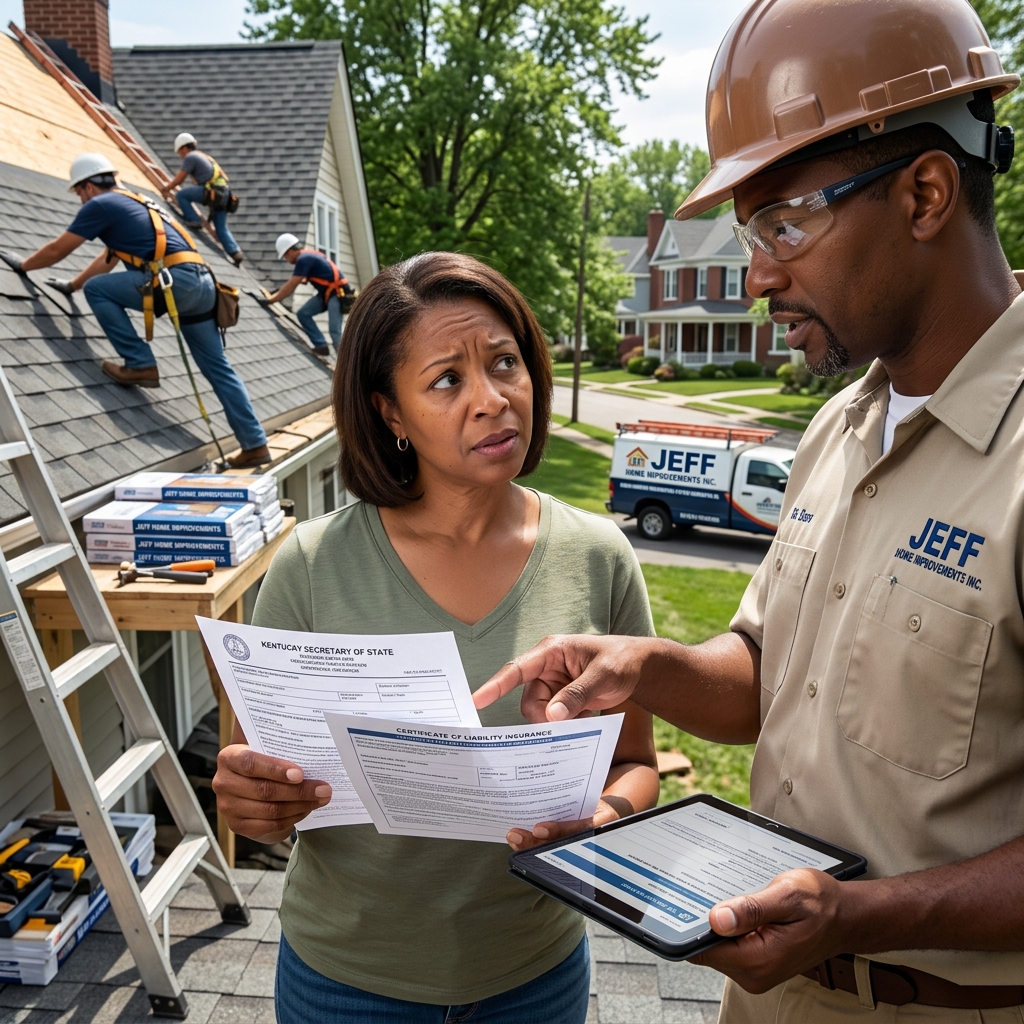
Ask about experience: “How long have you been in business?” and “Do you have references from similar projects completed in the last two years?” Call those references and ask about communication, timeline adherence, and overall satisfaction.
Clarify the work: “What materials will you use?” and “What warranty covers this work?” Get everything in writing, including materials, labor costs, timeline, and cleanup responsibilities.
Ask about permits: “Will you pull all required permits?” and “Who coordinates with the building inspector?” Reputable contractors handle this themselves.
Finally, inquire about their relationship with manufacturers: “Are you certified by any roofing manufacturers?” Certification demonstrates commitment to quality.
The Value of Working with Owens Corning Certified Partners
Choosing a manufacturer-certified contractor like ours adds another layer of protection. Certification programs require contractors to maintain specific standards, use quality materials, and provide warranties backed by the manufacturer.
When you work with an Owens Corning Platinum Preferred partner, your roof comes with enhanced warranty coverage. The manufacturer stands behind the installation, not just the shingles. If something fails due to improper installation, you have recourse beyond just the contractor.
These partnerships also mean access to the latest products, training, and technical support. We stay current with industry best practices and can discuss which solutions work best for your home’s specific needs.
Get Peace of Mind with Jeff Home Improvements
Verifying your roofer’s credentials takes time, but it’s one of the best investments you can make in your home’s protection. At Jeff Home Improvements Inc., we’ve built our reputation in the Louisville and Kentuckiana area since 1989 by doing exactly what we promise, maintaining proper credentials, and standing behind every project.
Ready to move forward with confidence? Contact us for a virtual consultation and instant estimate. We’ll verify our credentials, answer your questions, and show you why our licensed, insured, and certified team is the right choice for your roofing needs.
For further reading: Owens Corning Platinum Preferred Contractor, St. Matthews KY Roofing.
Contact us today for a free in home, no obligation quote on your roof




 INDIANA
 KENTUCKY