
1. Water Damage Assessment and Documentation
Severe weather doesn’t wait for convenient timing. A sudden hailstorm, heavy downpour, or wind event can leave your roof compromised within minutes, and water will find its way inside within hours. When you’re facing an emergency roof leak repair situation, knowing where to start makes the difference between containing damage and facing tens of thousands in restoration costs.
We’ve handled thousands of storm damage calls across Louisville and Kentuckiana since 1989, and we’ve learned that the first few hours after a leak appears are critical. Property owners who act quickly with the right priorities protect their homes far better than those who delay. Here’s what you need to prioritize after severe weather strikes.
Before you take any other action, get eyes on the problem and document everything. This isn’t about calling a contractor immediately (though we’re here when you’re ready). It’s about understanding the scope and protecting your interests with your insurance company.
Start by safely locating the leak source. If water is actively dripping inside, trace it back to where it enters. Look for water stains on ceilings, wet insulation in the attic, or soft spots on walls. Take photographs and videos from multiple angles, capturing the visible damage, wet areas, and any obvious roof damage if you can safely view it from ground level or inside your attic.
Document the date, time, and weather conditions when the leak started. Write down what you observed: water color, flow rate, affected areas, and any materials damaged (drywall, insulation, flooring, furniture). This timeline and visual record becomes essential when filing an insurance claim.
Your immediate action: Don’t climb on a wet or damaged roof yourself. Instead, photograph everything from safe vantage points and call a professional right away to assess structural safety and the full extent of damage.
2. Temporary Leak Containment Solutions
While permanent repairs take time to schedule and execute, you need to stop water from entering your home now. Temporary containment buys you hours or days until proper repair is possible.
For active leaks, place buckets or containers directly under dripping water to catch runoff and protect flooring. If water is spreading across a ceiling or down walls, use tarps or plastic sheeting to redirect it toward buckets. Don’t worry about a perfect solution; the goal is preventing additional water from spreading into walls and insulation.
If the leak source is visible on the roof and weather permits safe access, temporary tarping can work. Secure a heavy tarp over the damaged area using rope or wood blocks weighted down. However, if wind is ongoing, your roof is steep, or visibility is poor, this DIY approach carries serious injury risk. We recommend calling for emergency professional tarping instead.
For smaller leaks around vents or flashings, temporary caulking or roofing cement can slow water infiltration temporarily, but recognize this as a stopgap, not a permanent fix. Remove temporary sealants once professional repairs begin.
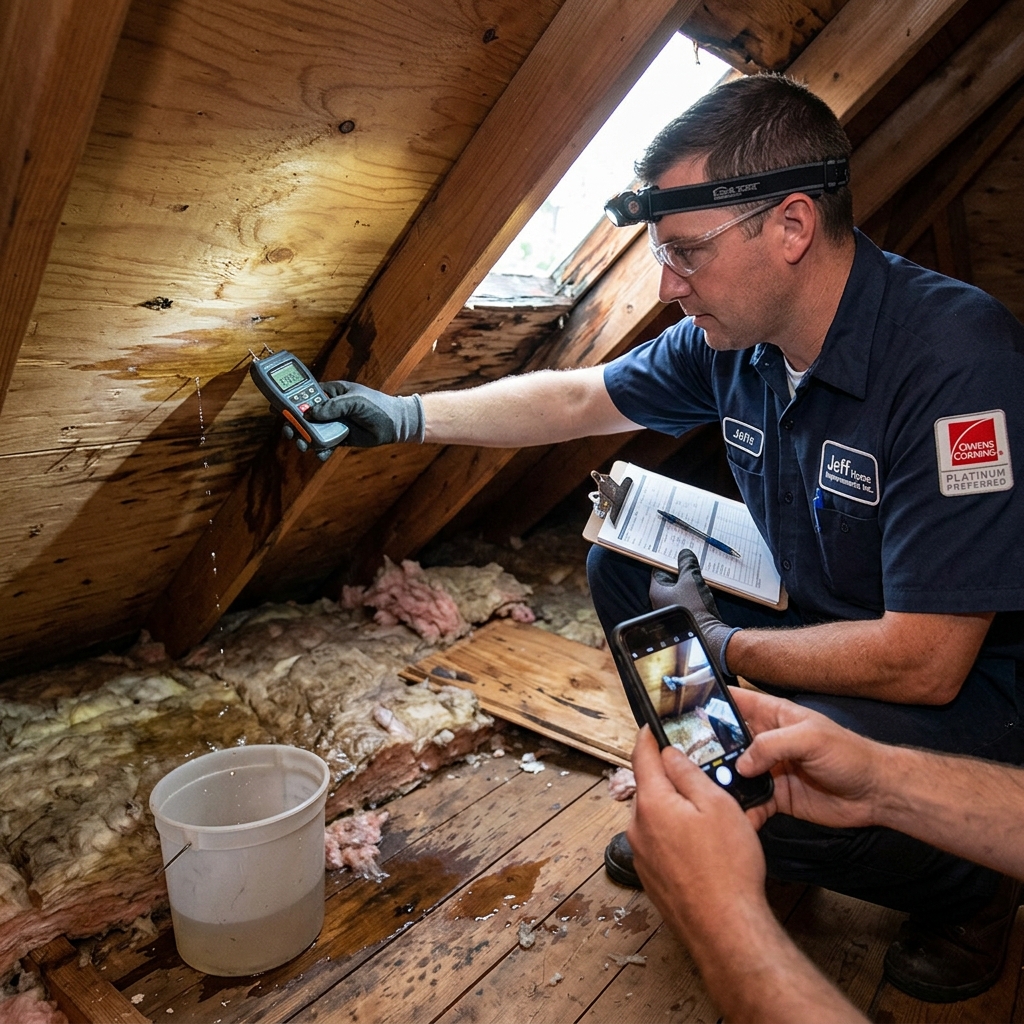
Your immediate action: Deploy buckets and tarps indoors first, where it’s safe. Call our emergency line for professional temporary roof protection if weather has stabilized but permanent repairs aren’t yet scheduled.
3. Interior Protection and Moisture Control
Water spreading inside your home causes problems far beyond the initial leak point. Wet drywall, insulation, and wood framing invite mold growth within 24-48 hours if moisture isn’t controlled. Protecting your interior is just as important as stopping water entry.
Move furniture and belongings away from wet areas and off affected flooring. Remove wet insulation from attics if it’s accessible and safe, as soggy insulation loses effectiveness and becomes a mold hazard. Open windows and doors (during dry weather) to create airflow. If you have fans, position them to direct moist air outward.
Use a dehumidifier if the leak is localized to one room or section. In larger affected areas or humid climates, a single dehumidifier won’t suffice. This is where professional water extraction equipment becomes necessary. We use industrial-grade dehumidifiers and air movers that remove moisture far more effectively than household equipment.
Avoid drying wet areas with heat alone, as trapped moisture can spread deeper into walls and framing. Moisture must exit the home, not just move around inside it.
Your immediate action: Remove furniture, open windows during dry periods, and run portable fans to keep air moving. If moisture feels widespread, contact professionals immediately rather than waiting for DIY drying to work.
4. Attic and Structural Inspection
Your attic tells the true story of roof damage and water infiltration. If you have safe attic access, put on a flashlight and look for visible water stains, wet insulation, active dripping, or visible roof damage from underneath. Dark stains or discoloration on rafters, trusses, or roof sheathing indicate past or ongoing water exposure.
Check for soft or spongy wood when touching rafters or trusses. Early rot feels soft and crumbly. If wood is compromised, structural integrity may be at risk. This is not a DIY assessment unless you’re trained in structural evaluation. Damaged framing can eventually fail, creating safety hazards.
Inspect ventilation openings (soffit vents, ridge vents, gable vents) for debris, nesting, or blockages that prevent proper airflow. Poor ventilation allows moisture to accumulate, leading to rot and mold even after the initial leak is fixed. Many emergency roof leaks stem from ventilation failures that go unaddressed.
Look at roof sheathing (the wood layer directly under roofing material). Soft spots, dark staining, or visible damage here indicates the leak has penetrated past the protective roof layer.
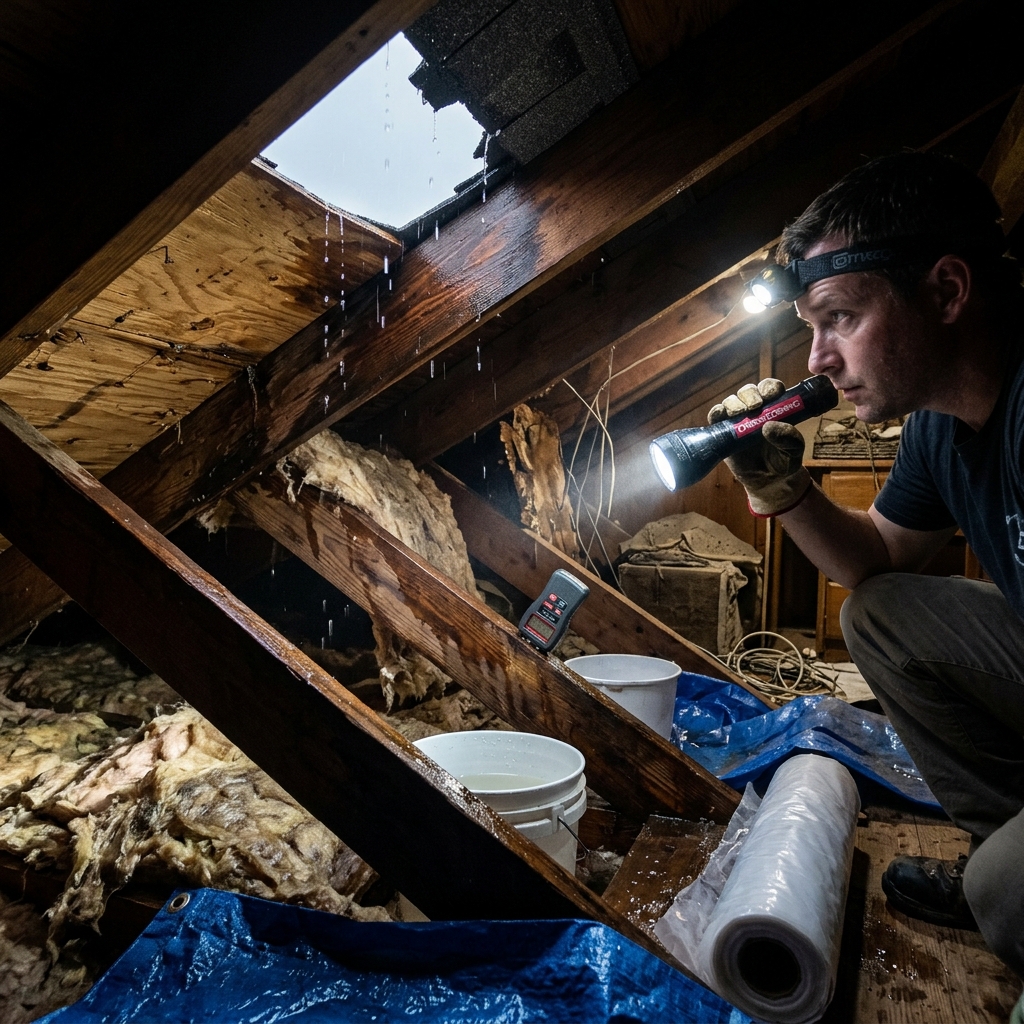
Your immediate action: If your attic is accessible, do a basic visual inspection. If you see soft wood, significant damage, or extensive rot, stop and call a professional immediately. We assess structural integrity as part of our storm damage evaluation.
5. Insurance Claim Preparation and Support
Once you’ve documented damage, contact your insurance company promptly. Most homeowner policies cover storm damage, but timing and proper documentation affect claim approval and reimbursement speed.
When you call your insurer, have your documentation ready: photos, videos, the damage timeline, and details about when the leak was discovered. File your claim within your policy’s timeframe (typically 30-60 days). Delays can lead to claim denial even if the damage is storm-related.
The insurance company will likely assign an adjuster to inspect the property. Be present during this inspection and point out all damage you’ve documented. Don’t minimize or exaggerate; let the evidence speak. If your insurer’s assessment seems incomplete, you can request a second opinion or hire an independent adjuster.
We often assist our clients by providing detailed damage assessments and repair estimates that support insurance claims. These professional reports carry significant weight with adjusters because they come from licensed contractors familiar with storm damage standards.
Your immediate action: File your claim immediately after initial documentation, even if you’re still assessing full damage. Insurance timelines matter, and filing early protects your coverage regardless of when repairs begin.
6. Professional Water Extraction and Drying
Once the roof leak is temporarily contained and initial assessment is complete, professional water extraction prevents long-term damage like mold, rot, and structural failure. This is where DIY solutions reach their limits.
We use industrial water extraction equipment that removes standing water from attics, walls, and crawlspaces far more effectively than shop vacuums or bucket removal. After extraction, commercial-grade dehumidifiers and air movers run continuously to dry affected areas completely. Moisture readings guide this process, ensuring spaces are truly dry before they’re closed back up.
Professional drying typically takes 3-7 days depending on moisture extent and airflow conditions. During this time, affected spaces remain open to airflow, and equipment monitors moisture levels. We document drying progress with moisture readings, creating a record for insurance purposes.
Inadequate drying leads to mold growth, hidden rot, and structural problems that emerge months later. Once mold establishes itself, remediation costs skyrocket and health concerns arise. Proper professional drying prevents this entirely.
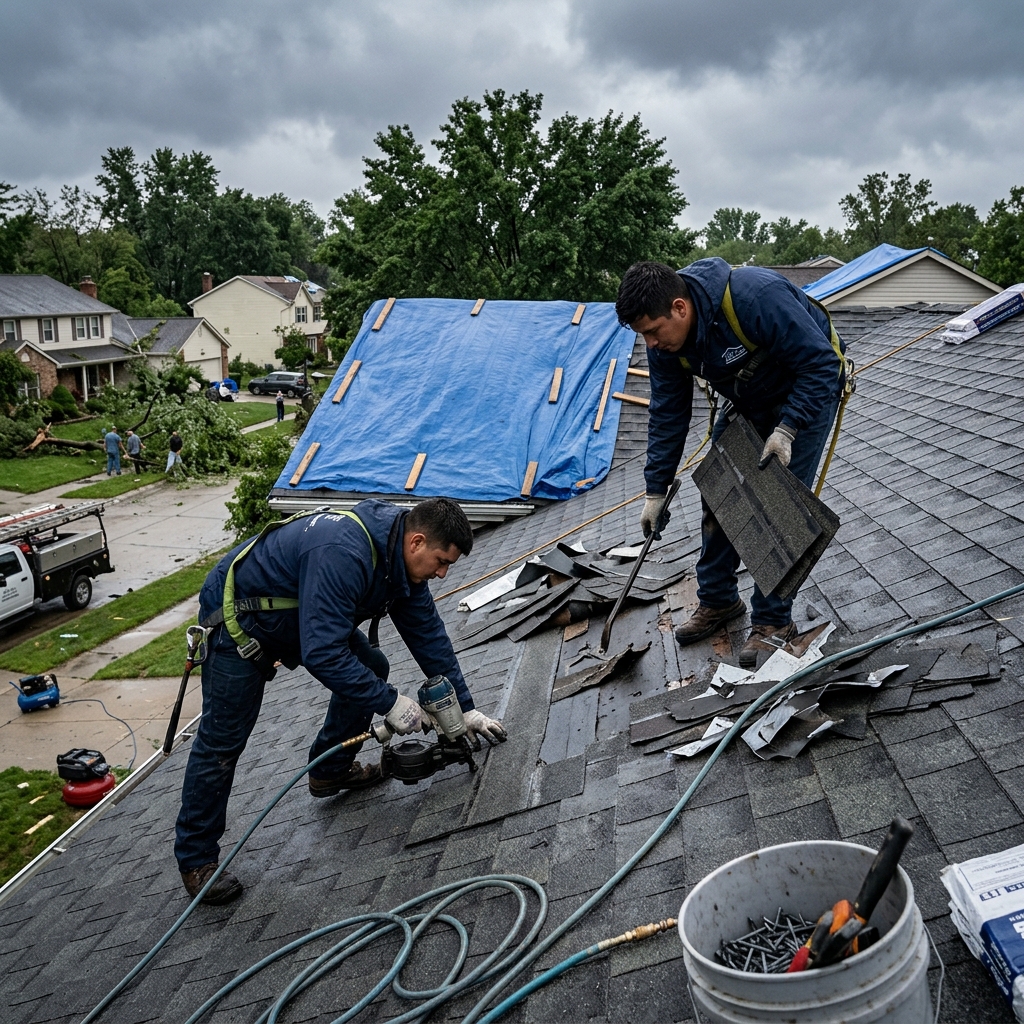
Your immediate action: Contact our team for professional water extraction as soon as the roof is temporarily contained. The sooner extraction begins, the more damage you prevent and the faster complete drying happens.
7. Permanent Roof Repair or Replacement
Temporary solutions keep water out for days or weeks, but permanent repairs address the underlying problem. The appropriate permanent solution depends on damage extent, roof age, and your long-term plans.
For minor damage (a few missing shingles, a small puncture, localized flashing failure), our team repairs the affected section while ensuring no hidden damage exists underneath. Repairs cost less than replacement and work well when damage is truly localized. We inspect the entire roof even during repairs to catch additional problems early.
For extensive damage affecting large roof sections, or if your roof is near the end of its lifespan, replacement becomes the practical choice. A new roof from us includes our Owens Corning Platinum Preferred Contractor backing, ensuring quality materials and expert installation. New roofs eliminate future leak risk for years, often providing better peace of mind than patching an aging system.
Storm damage often reveals that roofs are weaker than homeowners realized. Hail, wind, and water exposure accelerate aging. If your roof was already 15+ years old when the storm hit, replacement makes more sense than repair because future weather events will likely cause additional damage.
We handle the insurance coordination on your behalf, working directly with adjusters to maximize your claim reimbursement. Our detailed storm damage repair process ensures nothing is overlooked and your roof is restored properly.
Your immediate action: After the roof is dried and assessed, get a professional replacement estimate. We provide instant estimates and can often schedule replacement quickly after insurance approval.
—
Emergency roof leaks demand fast action, but the right sequence of steps prevents panic and protects your property. Document immediately, contain the leak, protect your interior, assess structural damage, file your insurance claim, extract water professionally, then plan permanent repairs.
We’re here for every step. From emergency tarping and damage assessment through professional drying to complete roof replacement, our team has handled thousands of storm emergencies across Louisville and Kentuckiana. Call us immediately if severe weather has damaged your roof. We respond quickly, work directly with your insurance company, and make the entire restoration process straightforward. Your home’s protection is our priority.
For further reading: Roof replacement planning.
Contact us today for a free in home, no obligation quote on your roof




 INDIANA
 KENTUCKY