
Understanding Your Storm Damage Coverage and Policy Details
When severe weather strikes the Kentuckiana area, the aftermath is stressful. Your roof may be damaged, your siding compromised, or your gutters torn away. Beyond the immediate disruption, you’re facing insurance paperwork, contractor quotes, and decisions about restoration. The insurance claim process itself often feels overwhelming, especially if you’re navigating it for the first time.
We understand this pressure because we’ve worked alongside hundreds of Louisville homeowners and commercial property managers through their storm damage claims. Over decades of serving this community, we’ve learned what makes the difference between a smooth claim experience and a frustrating one. The key lies in understanding your coverage, documenting properly, filing strategically, and getting the right professional support.
This guide walks you through each stage of the storm damage insurance claims process so you can move forward confidently and get your property restored.
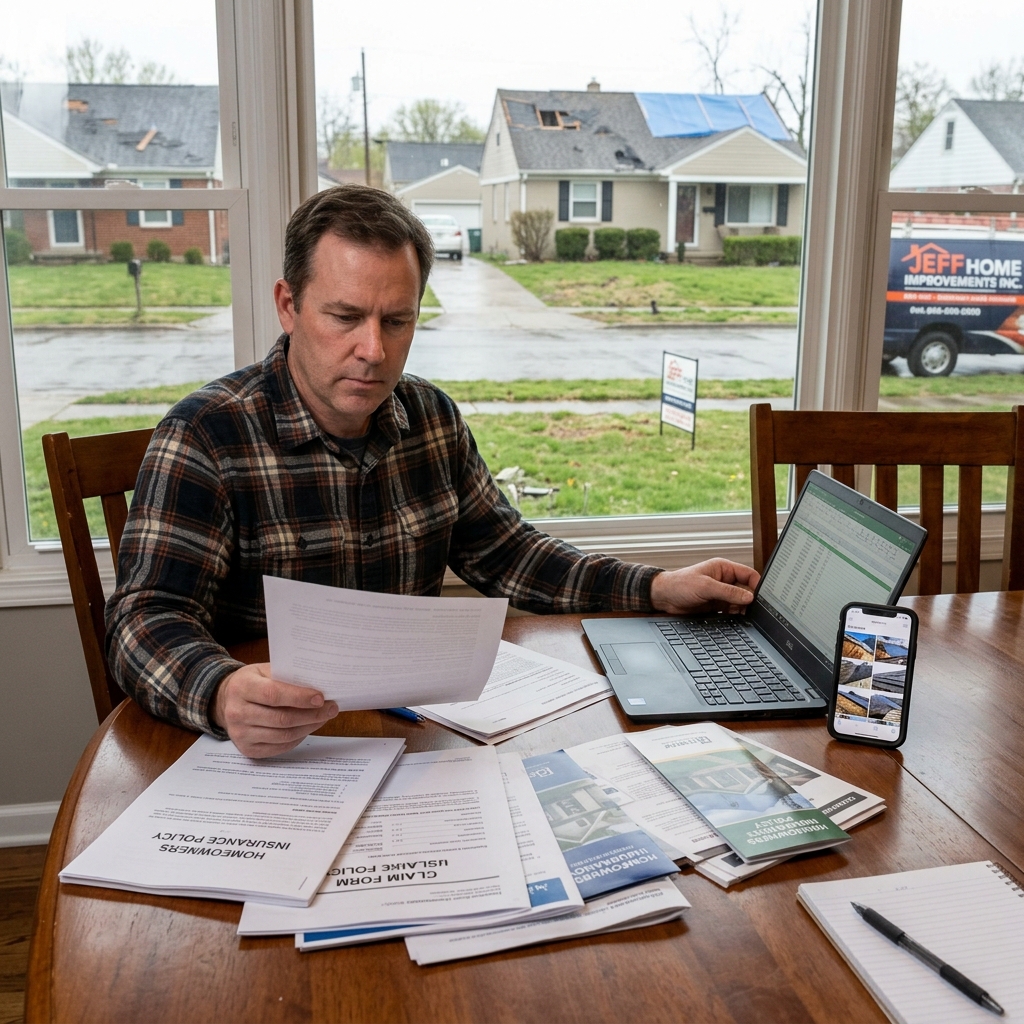
Before anything else, you need clarity on what your policy actually covers. Many property owners assume they know their coverage until they file a claim and discover gaps or exclusions.
Start by locating your homeowners or commercial property insurance policy. Review the declarations page, which outlines your coverage limits and deductibles. Pay close attention to:
- Your dwelling coverage limit (the maximum the insurer will pay for structural damage)
- Your deductible amount (what you pay out of pocket before insurance kicks in)
- Coverage for specific items like roofing, siding, and water damage
- Any exclusions or limitations for certain types of damage
Storm damage coverage varies considerably. Most standard homeowners policies cover sudden, accidental damage from wind and hail but may exclude damage from flooding unless you have a separate flood insurance rider. Kentucky homeowners should know that wind damage from storms is typically covered under dwelling coverage, though some policies impose age-based limitations on roof replacement payments if your roof is older than 15-20 years.
If you’re unsure about your coverage details, contact your insurance agent directly. Ask specifically whether your policy covers the type of damage you’ve sustained and what your deductible applies to. This conversation costs nothing and prevents costly surprises later.
We recommend requesting a written summary of your coverage from your agent so you have documentation before you file a claim. This creates a clear record and helps your adjuster understand your expectations from the start.
Step 1: Document All Damage with Photos and Video Evidence
Documentation is your strongest asset in the claims process. Insurance companies rely heavily on photographic and video evidence to assess damage severity and validate claim amounts.
Safety comes first. If your property is unsafe to access due to structural damage or hazardous conditions, do not attempt to document it yourself. Wait for professional assessment or hire a contractor to evaluate the damage. However, if you can safely access damaged areas, begin documenting immediately after the storm passes.
Here’s what effective documentation looks like:
- Take photos and video from multiple angles, both close-up and wide shots
- Capture the date and time stamps on your images when possible
- Document the entire affected area, not just the most damaged sections
- Include reference objects (like a ruler or your hand) in close-up photos to show scale
- Photograph interior water damage, stains, or structural issues alongside exterior damage
- Record video tours of affected rooms, describing what you see as you walk through
For roof damage specifically, photograph any missing shingles, dents from hail impacts, or obvious leaks and water stains inside. If you can safely access your attic, document water intrusion there as well. For siding, photograph cracks, punctures, or panels that have pulled away from the house. For gutters, capture bent sections, separations, or debris accumulation.
Create a detailed written inventory alongside your photos. List each damaged item or area with descriptions. For example: “Roof: Missing 15+ shingles on east-facing slope; multiple hail impacts visible; interior staining in master bedroom closet.” This written record complements your visual documentation.
Store copies of all documentation in multiple locations. Email photos to yourself, save them to cloud storage, and keep physical prints. Insurance claims can take months, and you need reliable access to your evidence throughout the process.
Step 2: File Your Claim Promptly with Your Insurance Company
Timing matters in insurance claims. Most policies require you to file within a specific timeframe, often 30 to 90 days from the date of loss. Filing promptly protects your rights and demonstrates your seriousness to the adjuster.
Contact your insurance company’s claims department as soon as you’ve documented the damage. Have your policy number and photos ready. Provide clear, factual information about the damage without exaggeration or speculation. Stick to what you can verify with your documentation.
Many insurers now offer online claim filing through their mobile apps or websites. This creates a time-stamped record and often allows you to upload photos directly. If you prefer to speak with someone, call the claims line. Either way, get a claim number immediately and note the date and time you filed.
When describing the damage, be specific:
- Describe the date and type of weather event (wind storm, hail, heavy rain, etc.)
- Identify all affected areas of the property
- Mention any visible interior damage or water intrusion
- Note whether you’ve had to take emergency measures (like tarping the roof)
- Avoid admitting fault or claiming damage that isn’t directly storm-related
Your insurance company will assign an adjuster to your claim. Ask for contact information and the expected timeline for inspection. Some adjusters schedule inspections within days; others may take longer depending on claim volume. Don’t hesitate to follow up if you haven’t heard within a week.
Be cautious about signing anything the adjuster presents without fully understanding it. If they provide a damage estimate, review it carefully against your documentation. If you believe the estimate is too low, you have the right to dispute it and provide supplemental documentation.
Step 3: Work with a Certified Public Adjuster or Contractor
This step often determines whether you receive a fair settlement. Many property owners benefit from having expert guidance during the claims process.
You have two main options: hire a public adjuster or work with a licensed contractor who assists with claims.
A public adjuster is an independent professional licensed by the state who represents your interests (not the insurance company’s). They review your documentation, communicate with the insurance adjuster, negotiate settlements, and typically take a percentage of any increase in the claim amount. Public adjusters are especially valuable if your claim is complex or if you suspect the initial estimate is significantly low. However, they add cost and extend the timeline.
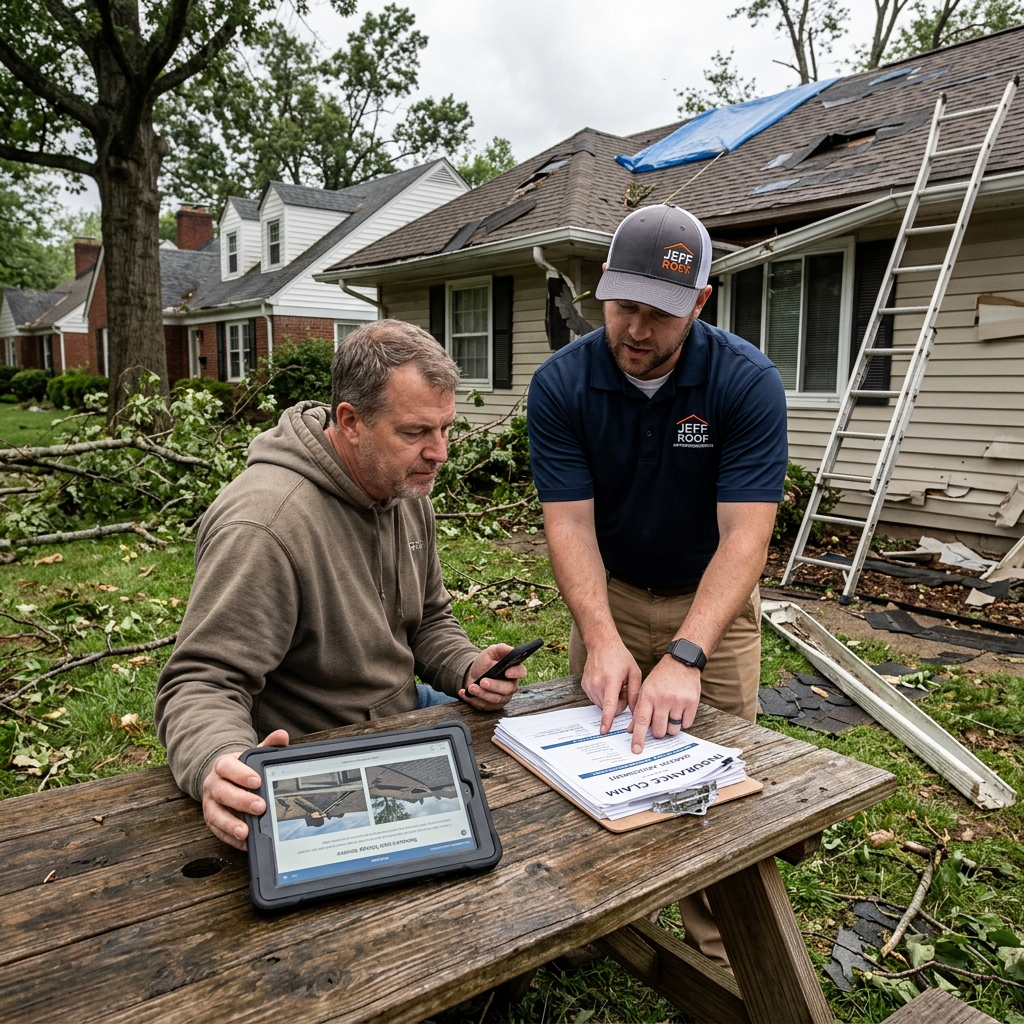
Alternatively, many experienced roofing and restoration contractors, like our team at Jeff Home Improvements, provide comprehensive claim support. We work directly with your insurance adjuster to ensure the estimate covers necessary repairs properly. We can identify damage that might be missed during the initial inspection, provide detailed supplemental estimates, and help interpret insurance language. Unlike public adjusters, we don’t add a percentage fee on top of your settlement; our benefit comes when we’re hired to perform the actual repairs.
The contractor route typically moves faster and costs nothing upfront. We’ve completed hundreds of storm damage repair projects in the Louisville area and understand Kentucky insurance requirements thoroughly.
Choose whichever path aligns with your comfort level and claim complexity. If your claim amount is substantial or the adjuster’s initial estimate seems low, consulting with either option is worth the investment.
Step 4: Schedule Professional Inspections and Get Detailed Estimates
Professional inspections reveal damage that untrained eyes often miss. Insurance adjusters perform their own inspections, but having an independent contractor assessment protects your interests.
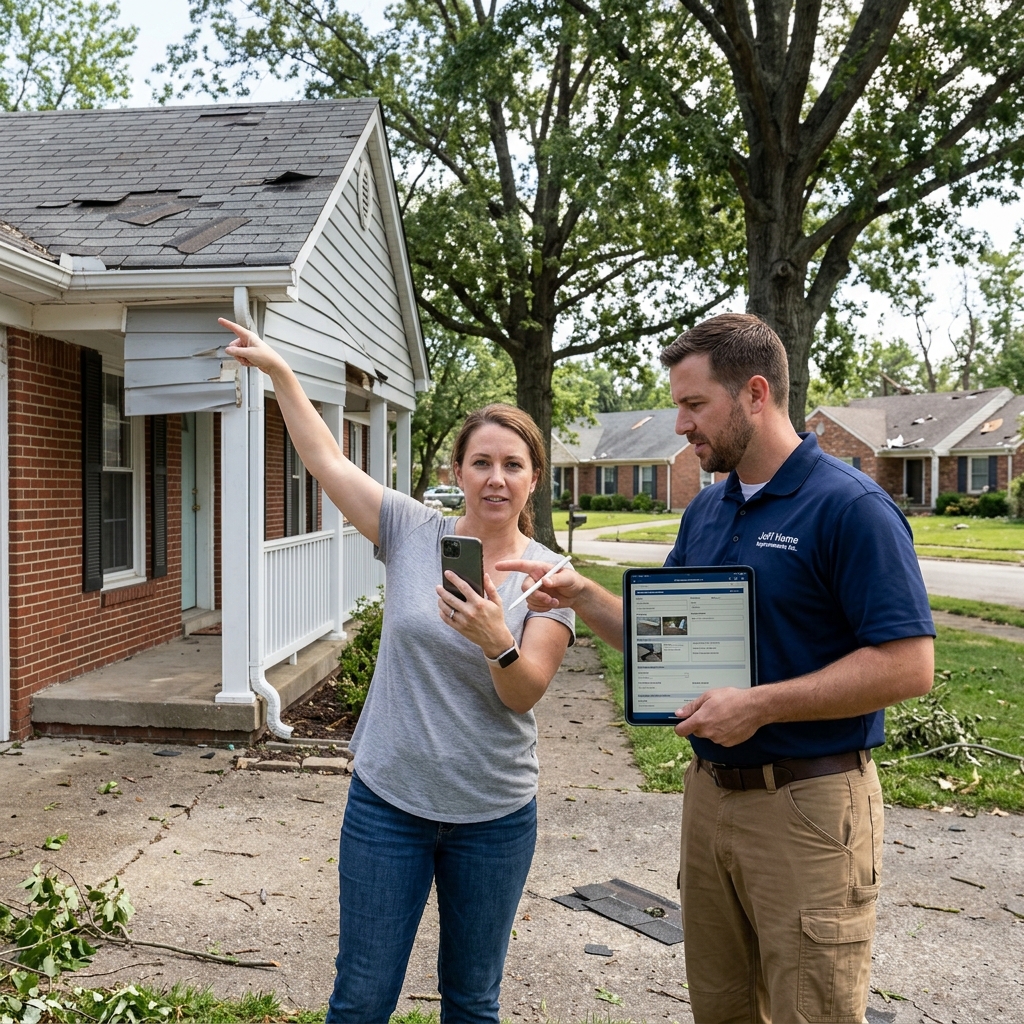
After filing your claim, schedule an inspection with a licensed roofing or restoration contractor. We provide free virtual consultations and on-site assessments for Louisville and Kentuckiana property owners. During this inspection, a certified professional will thoroughly evaluate all storm-affected areas, take detailed measurements, and identify both obvious and subtle damage.
A comprehensive contractor estimate typically includes:
- Itemized repair or replacement costs for each damaged component
- Material specifications and quality grades
- Labor costs and project timeline
- Breakdown of what the insurance policy should cover
- Details about code compliance and permit requirements
When the insurance adjuster provides their estimate, compare it side-by-side with your contractor’s estimate. Adjusters sometimes underestimate costs or miss certain damage categories. If there’s a significant discrepancy, request an explanation from your adjuster. You have the right to submit supplemental documentation and ask for a revised estimate.
If the insurance company’s estimate falls short, your contractor can submit a detailed supplemental estimate highlighting the additional damage and explaining why additional funds are needed. We’ve successfully helped clients secure accurate settlements by providing clear, professional documentation of damage the initial adjuster missed.
Keep all estimates organized chronologically. You may receive multiple estimates if the adjuster revisits the property or if you request a second opinion. Having this paper trail strengthens your negotiation position.
Why Jeff Home Improvements is Your Trusted Storm Damage Partner
We’ve been serving Louisville and Kentuckiana since 1989, which means we’ve guided property owners through storms and claims for over three decades. This experience isn’t just about completing repairs; it’s about understanding how insurance works, what adjusters look for, and how to ensure you receive fair compensation.
As an Owens Corning Platinum Preferred Contractor, we meet rigorous standards for materials, workmanship, and customer service. This certification matters when your adjuster reviews our work. We use premium materials and proven installation methods that insurance companies trust and that last for decades.
Our team works collaboratively with insurance adjusters. Rather than positioning ourselves against the insurance company, we communicate clearly and provide professional documentation that supports fair settlement amounts. Adjusters know that our estimates are thorough and accurate, which speeds up the approval process. Many of our clients report that the claims process felt manageable because we handled the technical side while they focused on getting their lives back to normal.
We’ve handled storm damage claims across diverse property types. Residential roofs with hail damage, commercial buildings requiring extensive repairs, water damage restoration, siding replacement, and gutter protection installations are all part of our daily work. That breadth of experience means we catch issues that contractors less familiar with storm claims might overlook.
Beyond insurance coordination, we stand behind our work. Our repairs come with warranties, and we handle all necessary permits and inspections. When you work with us, your insurance claim becomes a pathway to quality restoration, not a source of stress.
Comparing Claim Support Services: DIY vs Professional Contractor Assistance
Some property owners prefer to handle claims entirely on their own, while others prefer professional support throughout. Each approach has trade-offs.
Handling it yourself:
If you’re detail-oriented, have time, and your claim is straightforward, managing it solo is possible. You’ll save money by not paying a public adjuster percentage. However, you’ll spend significant time learning insurance terminology, documenting damage thoroughly, communicating with adjusters, and negotiating. If the adjuster lowballs the initial estimate, you need to identify what was missed and provide supplemental documentation yourself. For simple claims with clear damage and accepting adjusters, this works fine. For complex claims or if you suspect underpayment, DIY quickly becomes overwhelming.
Working with a public adjuster:
Public adjusters handle the entire process on your behalf. They’ll be present at inspections, negotiate with the adjuster, and manage supplemental estimates. The trade-off is their fee, typically 5-10% of the settlement increase they secure. So if they negotiate an additional $10,000 in your favor, they take $500-$1,000. This approach makes sense if your claim is large and complex, but it’s costly for straightforward claims and extends the timeline.
Partnering with a contractor like Jeff Home Improvements:
We provide claim support at no upfront cost. We’ll attend inspections, review estimates, identify missed damage, and submit supplemental documentation. When you’re ready to repair, you get the benefit of our expertise. Our incentive is straightforward: provide excellent service so you hire us for the restoration work. We’re not neutral; we’re invested in helping you receive a fair settlement that covers quality repairs. For most homeowners, this approach offers the best balance of expertise and cost-effectiveness.
The clear advantage of contractor partnership is that there’s no fee upside, no timeline extension, and no conflict of interest. We help you get a fair settlement, then perform the work we’ve documented. It’s a continuous relationship rather than a transactional one.
Our Comprehensive Approach to Storm Damage Restoration
After your claim is settled and approved, the restoration phase begins. This is where our work truly makes a difference.
We coordinate directly with your insurance company throughout the repair process. When unexpected additional damage is discovered during work, we document it and request supplemental approval from your adjuster. This prevents cost overruns and ensures surprises are handled through the insurance process rather than your wallet.
Our restoration approach includes:
- Initial damage assessment and comprehensive documentation
- Material selection that matches your home’s aesthetic and meets insurance requirements
- Quality installations performed by trained, licensed technicians
- Progress inspections to ensure work meets code and insurance standards
- Final walkthrough with you to confirm satisfaction before closing out the claim
For roof repairs, we assess whether patching is sufficient or if full replacement is necessary. For siding and windows, we match existing materials and colors whenever possible. For gutter and gutter guard protection, we install systems that protect against future storm damage. We coordinate permits with local authorities and ensure all work passes required inspections.
The timeline depends on claim approval speed and repair complexity. Simple roof repairs might take one to two weeks. Full roof replacements typically take longer. We provide detailed schedules upfront and keep you informed of progress.
The Clear Choice for Louisville Storm Damage Claims and Repairs
When you’re facing storm damage and an insurance claim, you need a partner who understands both the restoration work and the claims process. Generic contractors can perform repairs, but they won’t navigate insurance claims with you. Claims adjusters can validate damage, but they’re not invested in ensuring your repairs are done well. You need someone who bridges both worlds.
That’s where Jeff Home Improvements distinguishes itself. We’re not just roofers or siding contractors; we’re storm damage claim specialists who happen to perform exceptional restoration work. Our decades of experience in Louisville mean we know local adjusters, understand Kentucky insurance standards, and have a track record of fair, honest dealing with both insurers and property owners.
The reason to choose us isn’t because we’re the cheapest option. It’s because we eliminate stress from the claims process and deliver quality restoration that lasts. We provide free assessments so you understand exactly what your property needs. We attend insurance inspections alongside you. We identify damage the adjuster might have missed. We negotiate fairly for fair settlements. And we perform work that exceeds insurance minimums because we believe your home deserves it.
For residential roofs, commercial properties, siding, windows, or comprehensive restoration after major storms, we bring expertise, integrity, and commitment to every project.
Next Steps: Connect with Our Team for Your Free Assessment
If storm damage has affected your property, the next step is simple: reach out to us for a free assessment. We’ll evaluate the damage, explain what your insurance should cover, and outline the restoration process ahead.
Call us at your earliest convenience or visit our website to request a virtual consultation. We’re available to answer questions about the claims process, explain your coverage options, or provide an initial estimate. If you’re already in the claims process with an adjuster, bring that information to your consultation so we can review it and identify any gaps.
We serve Louisville, St. Matthews, Goshen, and throughout the Kentuckiana area. Whether your damage is from a recent storm or was overlooked in an earlier claim, we can help. Our team is ready to walk you through every step, from documenting damage to completing repairs.
Don’t let uncertainty about the insurance process delay your recovery. Storm damage claims are manageable when you have the right support. Let’s get your property restored and your peace of mind back.
For further reading: Storm damage in Goshen.
Contact us today for a free in home, no obligation quote on your roof




 INDIANA
 KENTUCKY