
Why Warranty Choice Matters for Your Investment
Your roof is one of the largest investments you’ll make as a Kentuckiana homeowner. A quality residential roof replacement can cost anywhere from $8,000 to $25,000 or more, depending on materials and square footage. That’s precisely why understanding warranty protection matters so much. The difference between manufacturer and contractor warranties isn’t just fine print; it directly affects how protected you are if something goes wrong months or years after installation.
Many homeowners focus primarily on material selection and installation cost, then overlook the warranty structure entirely. This is a costly mistake. A roof can fail due to defective materials, poor installation workmanship, or a combination of both. If you don’t understand which warranty covers which problem, you could find yourself paying out of pocket for repairs that should have been covered.
Think about this scenario: Five years after your roof installation, you notice premature shingle granule loss. Is this a material defect covered by the manufacturer? Is it an installation issue covered by the contractor? Or is it normal wear and conditions not covered by either? The answer depends on which warranty you selected and what you actually negotiated. We’ve seen too many homeowners discover gaps in their protection when they need it most. That’s why we spend time upfront explaining exactly what each warranty covers and how they work together.
Your next step: Before choosing a roofing contractor, request a detailed warranty comparison document that specifies material coverage, workmanship coverage, and duration.
Understanding Manufacturer Warranties on Roofing Materials
Manufacturer warranties protect you against defects in the roofing materials themselves. When Owens Corning or another major manufacturer issues a warranty, they’re guaranteeing that their shingles, underlayment, or other components meet their specifications and won’t fail prematurely due to manufacturing defects.
Here’s what a typical manufacturer warranty covers:
- Material defects: Blistering, cupping, cracking, or granule loss caused by manufacturing flaws
- Workmanship in manufacturing: Issues arising from how the shingles were made, not how they were installed
- Limited replacement or repair: The manufacturer may replace defective materials or issue credit toward repairs
What’s critical to understand is the difference between full replacement warranties and limited warranties. A full 30-year manufacturer warranty sounds comprehensive, but many homeowners don’t realize it’s actually non-prorated. This means if your shingles fail in year 20, the manufacturer replaces them at full value. However, most residential shingles come with limited warranties that depreciate over time. A limited warranty might cover 100% of material costs for the first 10 years, then decrease to 50% coverage by year 20.
As an Owens Corning Platinum Preferred Contractor, we work with premium manufacturer products that offer strong warranty protection. But here’s what we’ve learned: manufacturer warranties don’t cover installation mistakes. If your gutters weren’t properly angled, creating water pooling, that damage isn’t a material defect. If flashing was installed incorrectly around a chimney, allowing water intrusion, the manufacturer won’t cover that either.
Actionable insight: Ask your contractor which manufacturer warranty tier they recommend and why. Don’t assume the longest warranty is always the best choice; understand what’s actually covered.
What Contractor Warranties Actually Cover and Protect
This is where we step in with protection that manufacturer warranties simply can’t provide. A contractor warranty, sometimes called a workmanship warranty, covers the quality of installation. It protects you if problems arise because of how the roof was installed, not because of material defects.
Our contractor warranties typically cover:
- Installation defects: Improper fastening, incorrect underlayment installation, or faulty flashing work
- Sealing and waterproofing: Gaps or failures in roof sealing that allow water intrusion
- Compatibility issues: Problems arising from incompatible material combinations or installation methods
- Labor and service: Re-repair or corrective work needed to bring the installation to proper standards
A contractor warranty is only valuable if the contractor is still in business and willing to stand behind their work. This is one reason we pride ourselves on being a long-established, family-owned business serving the Louisville and Kentuckiana area since 1989. When you get a warranty from Jeff Home Improvements, you’re getting protection from a contractor with decades of local presence and reputation to protect.
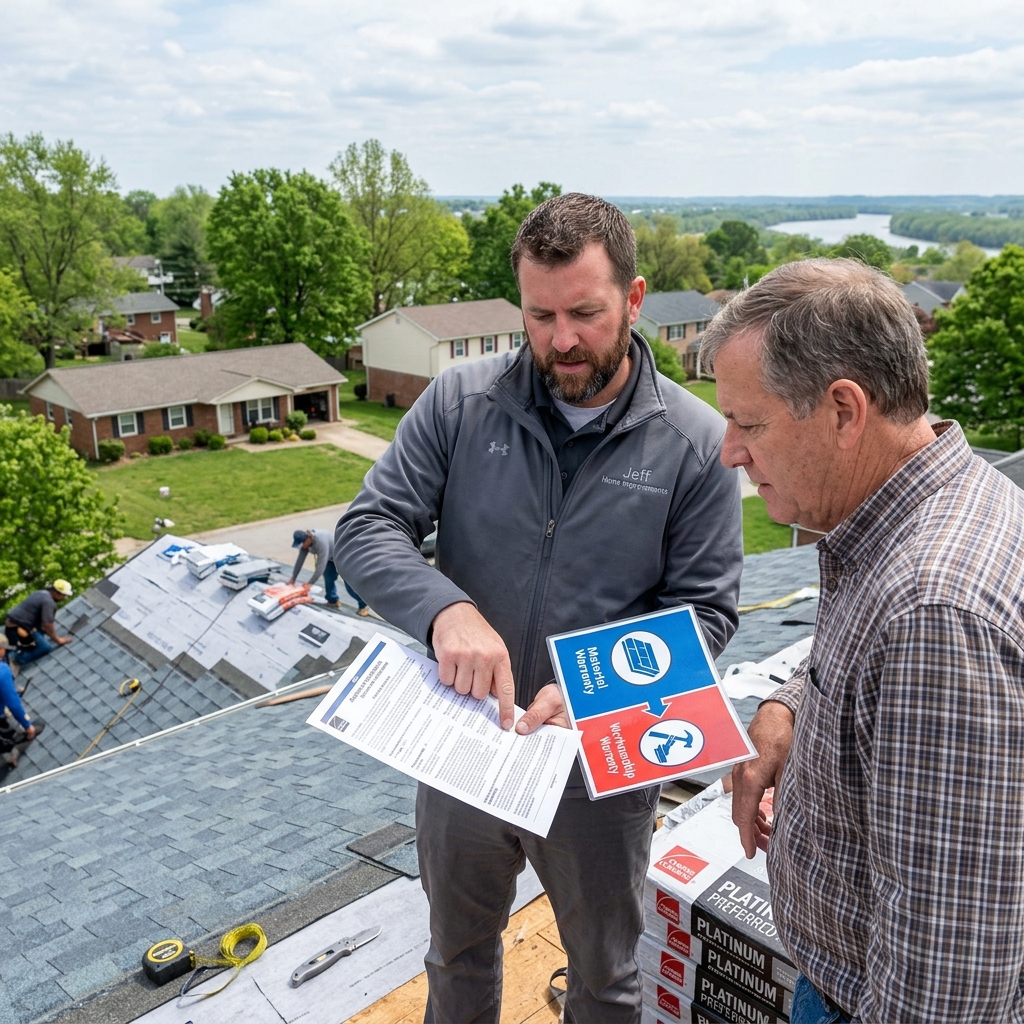
The duration of contractor warranties varies significantly. Some contractors offer 5-year workmanship warranties. We provide more extensive coverage because we’re confident in our installation standards. Our warranty reflects our commitment to doing the job right the first time. We also make sure homeowners understand that contractor warranties are only effective if you maintain the roof properly and allow authorized contractors to perform any repairs or inspections.
Key takeaway: A contractor warranty protects your investment against installation errors. The contractor’s stability, reputation, and local presence directly determine whether that warranty is actually worth the paper it’s written on.
Comparing Coverage Depth: Material vs Workmanship Protection
The real protection comes when manufacturer and contractor warranties work together. Let’s walk through some real-world scenarios we encounter regularly in Kentuckiana:
Scenario 1: Premature Granule Loss You notice significant granule loss in year 8. Manufacturer warranty covers this as a material defect. Cost: $0 from your pocket. The manufacturer replaces the defective shingles or reimburses material costs.
Scenario 2: Leaks Around a Chimney Flashing Water appears in your attic around the chimney six months after installation. The shingles themselves are fine, but the flashing was improperly sealed. Manufacturer warranty doesn’t apply; this is an installation issue. Your contractor warranty covers the corrective work at no cost to you. Without it, you’d pay $500-$1,500 for repair.
Scenario 3: Wind Damage with Installation Issues A severe storm lifts shingles from your roof. Some are damaged by the wind (typically not covered by either warranty; that’s what homeowner’s insurance addresses), but during inspection, the contractor discovers inadequate fastening that contributed to the problem. The installation defect becomes part of the claim, and the contractor warranty ensures proper re-nailing standards going forward.
Scenario 4: Combination Problems Gradual water intrusion causes both material degradation and reveals that the roof deck had inadequate ventilation (installation oversight). Both warranties may be involved, but coordination matters. A reputable contractor manages these claims together, working with manufacturers and insurance companies to ensure full coverage without gaps.
The depth of coverage also depends on what’s explicitly excluded. Both manufacturer and contractor warranties typically don’t cover normal weathering, acts of God (severe storms or natural disasters), improper maintenance, or damage from animals or accidents. Understanding these exclusions prevents disappointment when you file a claim.
Action item: Request a side-by-side comparison of what your chosen contractor’s warranty excludes. Ask specifically about storm damage, water intrusion from external sources, and maintenance-related issues.
Warranty Duration and Transfer Benefits Explained
Duration matters, but differently than homeowners often assume. A 30-year warranty sounds better than a 10-year warranty, but if you’re selling your home in 15 years, you’ll never use the last 15 years of coverage. Conversely, if you plan to stay in your home long-term, a longer duration provides genuine value.
Manufacturer warranties on residential roofing typically last:
- Architectural shingles: 20-30 years, depending on grade and product line
- Standard three-tab shingles: 10-20 years
- Premium products: May extend to 50 years for specific premium lines
Here’s the critical distinction: many manufacturer warranties are transferable to subsequent homeowners, but the coverage terms change. The original homeowner might have full coverage for 25 years, but the second homeowner might have limited coverage for the remaining years. This affects resale value. A home with a robust, transferable warranty is more attractive to buyers because they inherit that protection.
Contractor warranties are typically non-transferable. When you sell your home, the new owner doesn’t inherit our workmanship warranty. This is standard across the industry because the warranty depends on our ongoing relationship with you and our commitment to service the property we installed. If you’re planning to sell soon, this matters less. If you’re building long-term equity in your Kentuckiana home, it matters more.
We structure our warranties to be clear about what transfers and what doesn’t. Some contractors bury these terms in fine print; we explain them upfront. Our goal is ensuring you understand exactly what protection you have today and how it changes if circumstances shift.
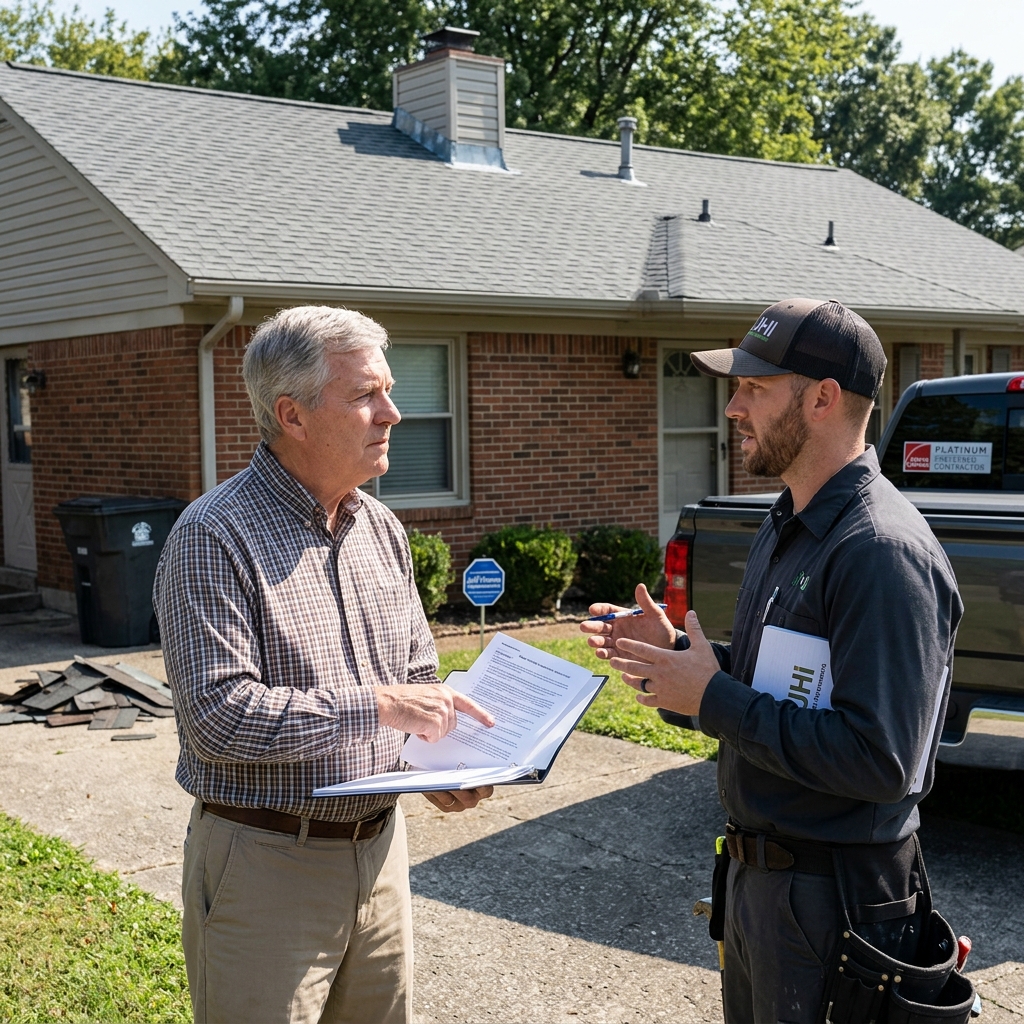
Practical next step: When comparing contractors, ask whether warranty terms remain if you sell your home within five years. This small detail significantly impacts your resale position.
Our Comprehensive Warranty Approach as Your Local Partner
We’ve structured our warranty program specifically for Kentuckiana homeowners. We understand the climate challenges here: heavy spring storms, humid summers, and temperature fluctuations that stress roofing materials. Our warranty reflects that understanding.
We typically provide:
- Manufacturer warranty: Full coverage of the specific materials we install, whether Owens Corning Platinum products or other premium lines
- Workmanship warranty: Comprehensive coverage against installation defects, typically extending 10+ years depending on project scope
- Labor guarantee: If any covered warranty claim occurs, we handle the repair work at no labor cost to you
- Storm damage protection: We coordinate with insurance companies and manufacturers to maximize your coverage when weather events occur
What makes our approach different is that we don’t simply hand you warranty documents and disappear. We maintain detailed records of your installation, conduct complimentary annual inspections for the first few years, and proactively reach out if we notice potential issues developing. This preventative approach catches small problems before they become warranty claims.
We also simplify the claims process. When something goes wrong, you contact us first. We inspect, document, and manage communication with manufacturers or insurance companies. You shouldn’t have to navigate technical warranty language or fight with manufacturers to get what’s rightfully yours. That’s our job.
As part of the Owens Corning Platinum program, we meet rigorous standards for contractor training, quality control, and customer service. This certification directly impacts the warranties we can offer. We can’t provide premium manufacturer warranties without maintaining these high standards, and we maintain these standards because we’re committed to the quality that makes warranties unnecessary.
What this means for you: When you choose us, you’re getting not just warranty documents but an active partner committed to protecting your investment long-term.
Claims Process: How We Simplify Your Protection
A warranty is only as good as its claims process. We’ve seen homeowners frustrated by manufacturers requiring extensive documentation, multiple inspections, or unreasonable timelines. We’ve built our process to remove that friction.
Here’s how our warranty claims typically work:
Step 1: Contact Us You notice an issue and contact Jeff Home Improvements. We respond quickly because you’re not just a customer; you’re a neighbor we’ve served for years.
Step 2: Professional Inspection We send a technician to evaluate the problem. This person has extensive experience identifying whether an issue is material defect, installation related, normal wear, or something else entirely. This inspection is complimentary.
Step 3: Documentation and Assessment We document findings with photos and detailed notes. We determine which warranty applies and what the coverage terms are. This step is crucial because incorrect categorization could result in claim denial.
Step 4: Claim Submission If manufacturer warranty applies, we submit the claim with full documentation. We coordinate with manufacturers and provide any additional information they require. If the issue is workmanship-related, we simply schedule corrective work.
Step 5: Authorization and Resolution Once approved, we either perform the repair (workmanship issues) or coordinate with the manufacturer (material issues). You receive regular updates and know exactly when resolution will occur.
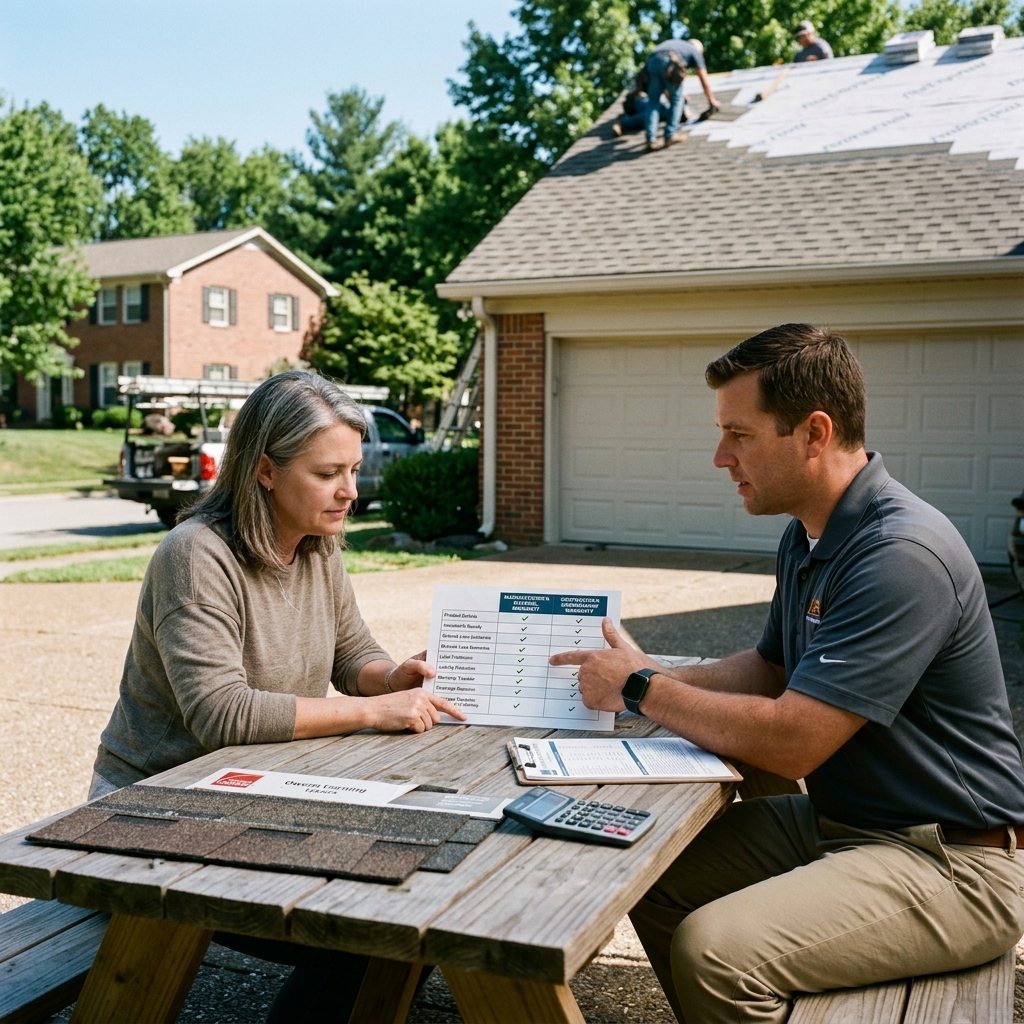
What distinguishes this process is accountability. We don’t disappear after your roof is installed. We have a vested interest in ensuring your warranty protection actually works because our reputation depends on it. A claim denied due to poor documentation reflects poorly on us, not just you.
Immediate action: Ask prospective contractors how many warranty claims they filed last year and what percentage were approved. This reveals whether their warranty is actually meaningful.
Long-Term Value: Why Our Warranty Structure Wins
Let’s look at total cost of ownership over 20 years. Suppose you have a $15,000 roof installed with two different warranty options.
Option A: Standard Contractor (budget choice)
- Lower upfront cost: $13,000
- Limited workmanship warranty: 5 years
- Standard manufacturer warranty: 20 years, but with limited coverage structure
- Year 8: Minor flashing issue costs $600 out of pocket (outside workmanship window)
- Year 15: Granule loss requires $2,000 in repairs (manufacturer dispute over coverage)
- Total 20-year cost: $15,600
Option B: Jeff Home Improvements (comprehensive choice)
- Slightly higher upfront cost: $15,000
- Robust workmanship warranty: 10+ years
- Premium manufacturer warranty with full coordination
- Year 8: Same flashing issue covered 100% (still within our warranty period)
- Year 15: Granule loss handled through coordinated manufacturer warranty with zero out-of-pocket cost
- Total 20-year cost: $15,000
The numbers show that comprehensive warranty protection often pays for itself within the first decade. More importantly, you avoid the stress and uncertainty of warranty disputes. You know exactly what’s covered.
This is especially valuable if you’re in an area like St. Matthews or other Kentuckiana communities where severe weather is common. Storm damage claims become dramatically smoother when you have a contractor who understands how to navigate manufacturer claims and work with insurance companies.
The real long-term value comes from peace of mind. You invested in a new roof to protect your home. A strong warranty ensures that protection extends across years of potential issues. You can plan your finances knowing you have professional support if problems arise.
Bottom line: While comprehensive warranties may cost more upfront, they consistently deliver lower lifetime costs and eliminate financial surprises.
Choosing Jeff Home Improvements for Guaranteed Peace of Mind
When you’re evaluating roof replacement options in Louisville and Kentuckiana, you’re ultimately answering one question: Who do I trust to protect my home and my investment?
Choosing between manufacturer and contractor warranties isn’t really an either-or decision. You need both working together. The question is whether your contractor understands how to make them work together and whether you can trust that contractor to stand behind their work for years to come.
We’ve been serving the Louisville and Kentuckiana area since 1989. That longevity isn’t accidental. We’ve built our reputation by standing behind every roof we install. Our Owens Corning Platinum Preferred Contractor status means we meet the highest standards for contractor training, quality control, and customer service. When you get a warranty from us, it’s backed by a company with four decades of local presence and deep commitment to this community.
We don’t offer warranties because it sounds good on marketing materials. We offer them because we’re confident in our installation standards and because we understand that homeowners deserve protection. We also understand that warranty language can be confusing, which is why we take time to explain exactly what you have, how it works, and what happens if you need to file a claim.
When you contact us for a roof replacement consultation, we’ll walk you through warranty options specific to your project. We’ll answer questions about coverage, duration, transferability, and claims process. We’ll show you exactly how our warranty structure protects you where manufacturer warranties can’t.
The investment in your home deserves protection that’s real, comprehensive, and backed by a contractor who’ll still be here when you need us. That’s what we provide. Ready to learn more about how we protect your roofing investment? Contact Jeff Home Improvements today for a free instant estimate and detailed warranty explanation.
Contact us today for a free in home, no obligation quote on your roof




 INDIANA
 KENTUCKY