
Understanding the Roof Repair vs. Replacement Decision
When you spot a leak or notice missing shingles, your first instinct might be to patch the problem. That’s reasonable, but it’s not always the best long-term choice for your home. The decision between roof repair and roof replacement depends on several factors that go beyond the initial damage you see.
We guide Louisville homeowners through this decision every week. The core question is simple: will repairs give you reliable protection for years to come, or are you just delaying an inevitable replacement? Answering honestly requires looking at your roof’s age, the extent of damage, your budget, and your risk tolerance.
A quick repair might save a few hundred dollars now, but a roof that’s nearing the end of its lifespan will demand repeated attention and leave you vulnerable to weather events. The Kentuckiana region experiences significant spring storms, humidity swings, and temperature fluctuations that strain aging roofing systems. By understanding what triggers a replacement decision, you can avoid costly surprises and protect your investment.
Key Signs Your Roof Needs Replacement Rather Than Repair
Your roof sends clear signals when it’s ready to retire. Learning to recognize these signs helps you act before minor issues cascade into major damage.
Widespread missing or damaged shingles is the most obvious red flag. If you’re seeing shingles curling, cracking, or gone entirely across multiple sections, patching individual spots won’t solve the underlying problem. The remaining shingles are likely near the same stage of deterioration.
Multiple leaks in different areas tell a different story than a single leak from a storm. One leak might come from a localized problem like a loose flashing or an isolated weak spot. Multiple leaks scattered across the roof suggest the entire roof is failing and no longer repelling water effectively.
Granule loss is another critical indicator. Run your hand along a gutter and feel for sand-like particles. Asphalt shingles naturally shed granules over time, but accelerated granule loss means the protective layer is eroding faster than normal. Once you lose that protective coating, the shingle deteriorates quickly.
Sagging or visible structural issues demand immediate replacement, not repair. If your roof appears to dip or bow in any section, your decking or support structure has been compromised by water damage. This situation is dangerous and won’t improve with patching.
Moss or algae growth, while not immediately dangerous, suggests trapped moisture and poor drainage. Heavy moss accumulation can trap water and accelerate decay. In our humid Kentucky climate, moss problems typically indicate the roof isn’t shedding water as it should.
When you spot any combination of these signs, [roof replacement] becomes the practical choice over repeated repairs.
Age of Your Roof: A Critical Factor
Roof age is often the deciding factor in the repair vs. replacement equation. Standard asphalt shingle roofs are designed to last 20 to 25 years under normal conditions. If your roof is approaching or past this window, replacement makes sense even if the damage seems manageable.
Think about it from a practical standpoint: if your roof is 23 years old and you spend $2,000 fixing a leak, you’re probably getting only one or two years of use before the next failure occurs. Then you’re back on a ladder or calling a contractor again.
We typically recommend checking your paperwork to find your roof’s installation date. If your home’s records don’t show this information, a professional inspection can estimate the age based on shingle condition and style. Homes built in the Louisville area in 2002 or earlier are likely due for roof evaluation right now in 2026.
Newer roofing materials like architectural shingles or premium brands may extend to 25 to 30 years. If you’re considering a replacement, choosing quality materials from our [Owens Corning Platinum Preferred Contractor] certification means you’re investing in durability.
Age alone doesn’t automatically mean you need replacement, but combined with other damage signs, it tips the scales decisively. A 24-year-old roof with multiple leaks isn’t a candidate for repairs; it’s time for a fresh start.
Extent of Damage: Comparing Repair-Only vs. Replacement Scenarios
The scope of damage is where repair and replacement truly diverge in practicality and cost-effectiveness.
Repair scenarios work well when damage is limited and localized. A single tree branch puncturing the roof after a storm, one loose flashing around a chimney, or a small section of damaged shingles from wind are all excellent candidates for repair. The surrounding roof is sound, and addressing the specific problem restores full function.
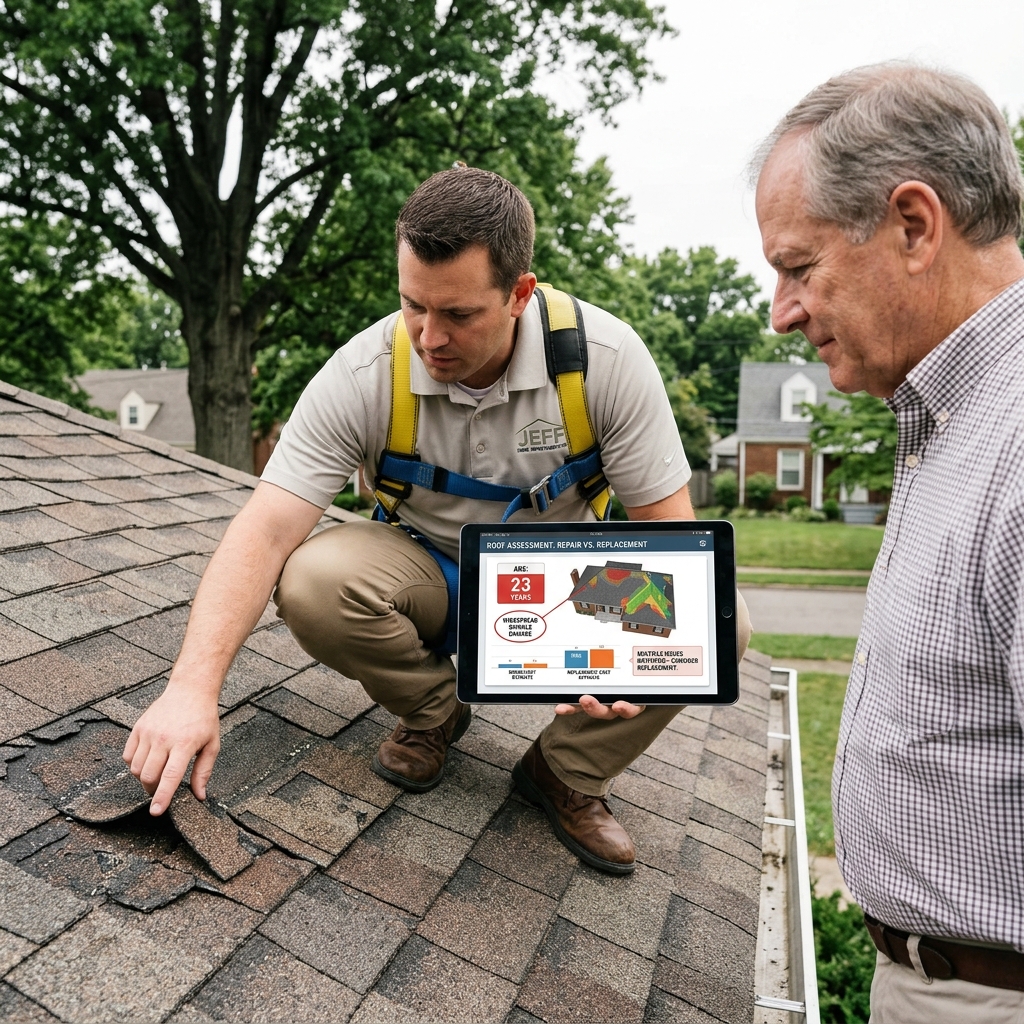
Replacement becomes necessary when damage affects 30 percent or more of your roof. If you’re looking at damage across multiple slopes or in multiple locations, the cost of individual repairs starts approaching replacement expense. Moreover, when you repair an old roof extensively, you end up with a patchwork of old and new materials that don’t age uniformly.
Consider this scenario: a hailstorm damages 40 percent of your roof. You could replace the damaged sections, but you’ve now got new shingles next to 20-year-old shingles that might fail shortly after. Your roof looks inconsistent, performs unevenly, and you’re likely to face another major repair in a few years anyway.
Storm damage in the Louisville area happens regularly. Hail, high winds, and ice damage can compromise large roof sections simultaneously. Our storm damage assessments help determine whether repairs or [roof repair vs replacement] evaluation makes sense. If half your roof is damaged and the other half is aging, complete replacement provides better overall protection and peace of mind.
Cost Comparison: Short-Term Repairs vs. Long-Term Roof Replacement
Initial cost is often the first number homeowners focus on, but it rarely tells the full financial story.
A roof repair typically costs between $300 and $1,500 depending on the damage. Replacement for an average Louisville home runs $8,000 to $15,000 depending on size, slope, and material choice. That’s a significant upfront difference, and for budget-conscious homeowners, the repair option looks immediately attractive.
However, the math changes when you factor in timeline and frequency. If your roof requires repairs every 2 to 3 years, you could spend $1,000 per year on maintenance over a 10-year period. That’s $10,000 in repair costs before you eventually face replacement anyway. Meanwhile, a $12,000 replacement provides guaranteed protection for 20+ years without the ongoing maintenance expense.
There’s also the hidden cost of risk. An aging roof that requires constant patching leaves you vulnerable to catastrophic failure. A sudden heavy rainstorm could cause water damage costing tens of thousands of dollars in interior repairs, mold remediation, and contents damage. That’s not just expensive; it’s disruptive to your family or business.
Insurance considerations matter too. Some insurers charge higher premiums for homes with aging roofs, and they may deny claims related to damage on a roof they deem unmaintainable. A new roof often qualifies for insurance discounts that offset some replacement costs.
When we meet with Louisville homeowners to discuss cost, we look at the complete financial picture. A replacement with quality materials is an investment that protects your home’s value and eliminates years of uncertainty.
Energy Efficiency and Weather Protection Benefits
A new roof does more than keep water out. Modern roofing materials and installation techniques improve how your home manages temperature and weather stress.
Newer shingles often feature reflective coatings that reduce heat absorption in summer. This can lower cooling costs, which matters significantly in our humid Kentucky climate where air conditioning runs hard from June through September. Some premium materials can reduce roof surface temperature by 20 to 30 degrees compared to aged dark shingles.
Proper installation also improves ventilation and moisture management. An old roof may have inadequate ventilation or damaged ventilation systems that allow humid air to accumulate in your attic space. This creates ideal conditions for mold growth and accelerates wood decay. A replacement with modern ventilation keeps your attic dry and your insulation performing at design capacity.
Weather protection is enhanced through updated flashing, sealing, and installation standards. We use current best practices to seal valleys, penetrations, and edges where most leaks originate. Aged roofs were often installed with techniques that don’t meet today’s standards for wind and water resistance.
Gutter integration matters too. We coordinate roof replacement with gutter and gutter guard installation to ensure comprehensive water management. Water that doesn’t get diverted away from your foundation through proper gutters runs down your exterior walls and can seep into basements or crawl spaces.
For Louisville properties facing regular storm challenges, a new roof with modern materials and installation provides measurably better protection and efficiency than patching an aging system.
Why Our Comprehensive Roof Assessment Makes the Difference
The decision between repair and replacement is only as good as the assessment behind it. We don’t rely on a quick walk-around or phone estimate to recommend such a significant investment.
Our comprehensive roof assessment uses multiple evaluation methods. We examine shingle condition, check for underlying damage to decking and framing, assess ventilation, review flashing and transitions, and evaluate drainage patterns. This detailed approach reveals problems hidden from surface inspection.
We take photos throughout the assessment so you can see exactly what we’re seeing. This transparency helps you understand the recommendation. If we recommend repair, we show you why the surrounding roof is sound. If we recommend replacement, we show you the deterioration patterns that drove that decision.
We also consider your home’s specific situation. Factors like roof pitch, attic insulation, ventilation setup, and exposure to prevailing weather patterns all influence how quickly roofs age and fail. A south-facing roof in direct sunlight ages faster than a north-facing roof on the same home.
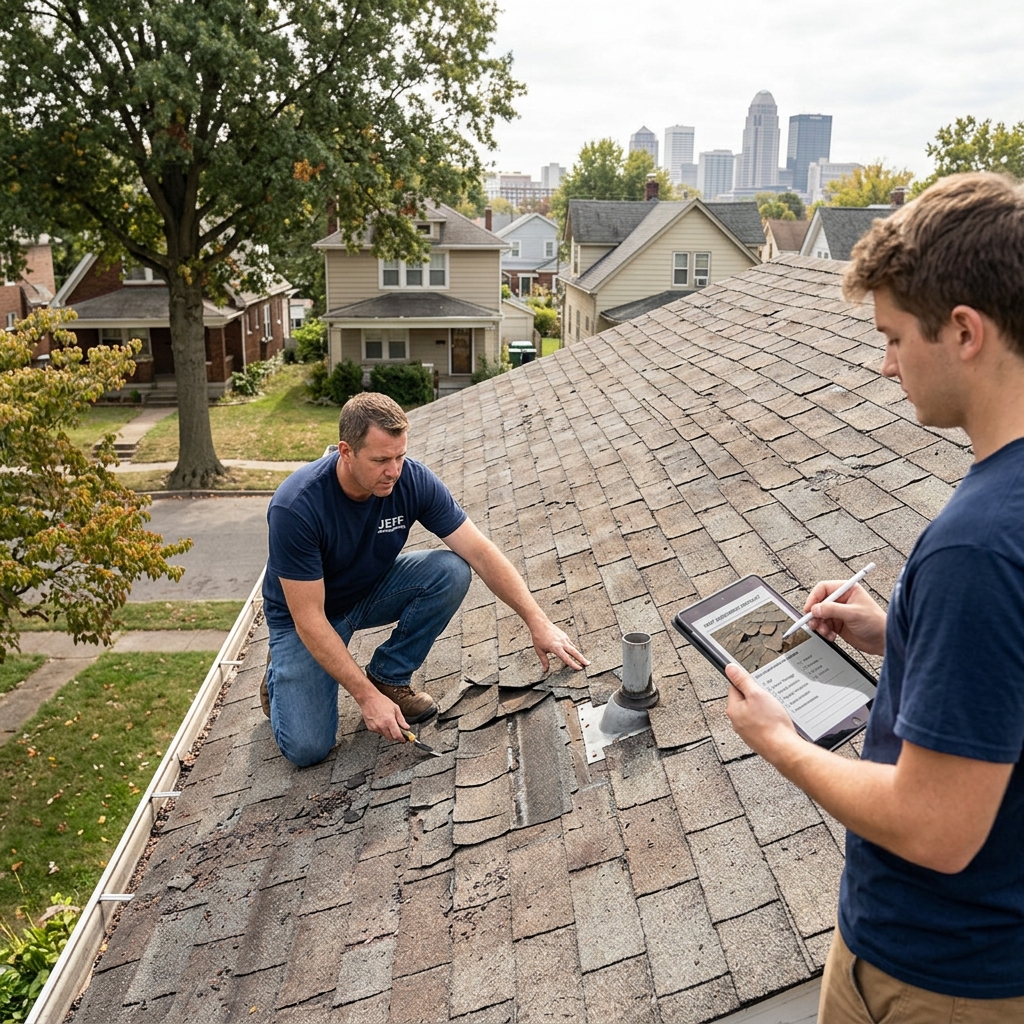
Our assessment includes a detailed estimate showing material costs, labor, timeline, and warranty information. You’re never left guessing about what the work involves or what protection you’re getting.
We offer virtual consultations and instant estimates using photo analysis and measurements, which provides preliminary guidance without waiting days for an in-person appointment. This technology helps busy Louisville homeowners get answers quickly.
Storm Damage and Louisville Weather Considerations
The Kentuckiana region experiences weather patterns that accelerate roof aging and create damage scenarios you won’t see in more moderate climates.
Spring brings severe thunderstorms with hail, high winds, and occasional tornadoes. Hail damage appears as small dents or dimples in shingles that compromise the protective granule coating. You might not notice hail damage immediately, but it accumulates over years and leads to accelerated degradation.
Summer humidity creates challenges that dry climates don’t face. Moisture gets trapped in attics and under shingles, promoting mold growth and wood decay. Proper ventilation becomes critical for roof longevity.
Winter ice dams form when heat escapes through inadequate attic insulation, melting snow on the roof. Water runs to the cold eaves, refreezes, and backs up under shingles. This cycle forces water into your home and damages the sheathing beneath.
Fall leaves clog gutters and trap moisture against the roof surface. Without proper gutter protection, water accumulation leads to leaks and vegetation growth.
When you’ve experienced significant storms in Louisville, professional damage assessment becomes essential. What looks like isolated damage might be part of a larger pattern. We see many roofs where storm damage is the final factor pushing an already-aging roof into replacement territory.
Insurance claims for storm damage often cover replacement cost, especially if you have comprehensive coverage. This timing can make replacement more affordable than you’d expect if a damaging storm has recently impacted your property.
The Long-Term Value of Choosing Roof Replacement
Replacement is an investment, but it’s an investment with measurable returns beyond just avoiding leaks.
Your home’s resale value is directly tied to roof condition. Real estate appraisers note roof age as a critical factor. A home with a newer roof commands higher value and sells faster than an identical home with an aging roof. If you’re planning to sell within 5 years, roof replacement often returns 60 to 80 percent of its cost through increased home value.
Peace of mind has real value too. Instead of worrying about the next leak or scheduling emergency repairs, you have a system designed to protect your home reliably for two decades. That’s freedom from uncertainty and the stress of unexpected expenses.
Structural protection prevents catastrophic damage. Water intrusion doesn’t just cause interior damage; it compromises the wooden framing and structural elements that hold your home together. Preventing that damage through a protective new roof is far cheaper than dealing with structural repairs later.
Energy savings continue year after year. Lower cooling costs in summer and better insulation performance in winter add up over time. The efficiency benefits compound across the 20+ year lifespan of a new roof.
If you own rental property, a new roof reduces maintenance calls and protects your investment. Tenants are happier with a reliable roof, and you avoid emergency repairs that disrupt business.
From every angle, choosing replacement instead of repeated repairs is the choice that protects your long-term interests.
Our Owens Corning Platinum Preferred Contractor Advantage
We’re proud to carry the designation of Owens Corning Platinum Preferred Contractor. This certification isn’t just a badge; it represents a commitment to quality and training that protects your investment.
Owens Corning Platinum status requires meeting rigorous standards for installation quality, customer service, and business practices. We’ve passed comprehensive audits and maintain ongoing education on the latest installation techniques and material innovations.
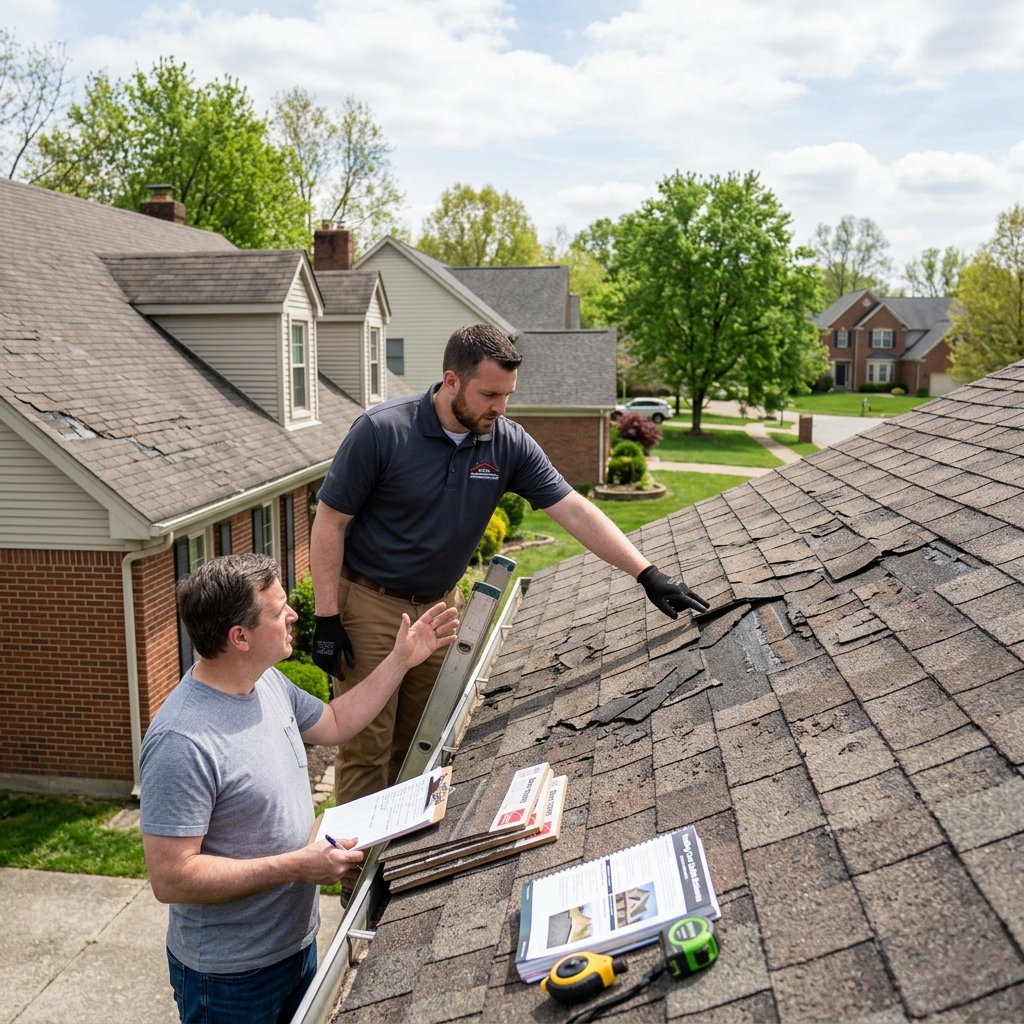
This designation gives you direct access to Owens Corning’s comprehensive warranty programs. Standard warranties cover defects in materials, but as a Platinum Preferred Contractor, we can offer extended warranties that cover labor as well. That means you’re protected if anything goes wrong with your roof for the contracted period.
We have priority access to Owens Corning’s premium product lines, including their top-tier architectural shingles and specialty products. These materials offer superior durability and aesthetic options compared to standard shingles.
Our team receives ongoing training on Owens Corning products, which translates to proper installation that maximizes product performance. Shingles are only as good as their installation, and training matters significantly.
We also benefit from Owens Corning’s supply chain reliability. We’re confident we can source the materials your roof needs and maintain consistent quality across projects. This matters when you need to match existing materials or when supply chain disruptions affect other contractors.
Choosing us for [roof replacement] means you’re getting Owens Corning quality backed by our expertise and that Platinum Preferred Contractor accountability.
Getting Your Free Virtual Consultation and Instant Estimate
Starting the conversation is simple, and we’ve made it convenient for busy Louisville homeowners.
Our virtual consultation process works with photos and information you provide. Share pictures of damaged areas, your roof’s general condition, and we can analyze the situation remotely. We ask about your home’s age, dimensions, and any previous roof work. From this information, we generate an instant estimate showing preliminary costs and options.
This approach saves you time. No need to schedule an appointment and wait days for a contractor to visit. You get preliminary answers within hours, allowing you to make informed decisions on your timeline.
If the virtual consultation suggests repair might work, we’ll confirm that. If replacement looks necessary, we show you material options, pricing, and timeline estimates. You can compare options and decide what makes sense for your situation.
Many homeowners want an in-person assessment after the virtual consultation to confirm findings or discuss final details. We’re always happy to schedule a thorough site visit for homeowners ready to move forward.
Our estimates include everything needed to understand the project: material specifications, labor scope, timeline, cleanup and disposal, warranty details, and financing options if needed. No surprise add-ons or hidden costs.
The estimate is yours to keep and review. We encourage you to get second opinions if that helps you feel confident. We’re confident our quality, pricing, and professionalism will speak for themselves.
Make the Right Choice for Your Louisville Home
The choice between roof repair and replacement isn’t purely financial. It’s about protecting your home, managing risk, and making a decision that serves your interests over the coming years.
If your roof is under 15 years old with isolated damage, repair is likely the right choice. If it’s approaching 20 years old, has multiple damage areas, or has required previous repairs, replacement provides better protection and value.
We’ve served Louisville homeowners since 1989, and we’ve guided countless families through exactly this decision. We’ve seen what happens when repairs delay a necessary replacement, and we’ve seen the satisfaction on homeowners’ faces when they choose a new roof and the problems finally stop.
Your home deserves protection. The weather in Kentucky doesn’t get easier on aging roofs, and delayed decisions often become emergency decisions that cost more and offer fewer options.
Reach out for your free virtual consultation and instant estimate. Share photos of your roof, and we’ll give you clear guidance on whether repair or replacement makes sense for your situation. There’s no obligation, and you’ll get answers fast.
We’re here to help Louisville homeowners make the right choice for their homes. Contact us today to see why so many Kentuckiana property owners trust us with their roofing needs.
For further reading: Roof repair vs replacement, Roof Replacement.
Contact us today for a free in home, no obligation quote on your roof




 INDIANA
 KENTUCKY