
When Storm Damage Strikes Your Louisville Home
Louisville’s spring and summer storms can cause significant roof damage in minutes. High winds, hail, and falling tree limbs damage shingles, create leaks, and compromise your home’s structural integrity. When this happens, most homeowners face a critical question: how do I get my insurance to pay for repairs?
The answer depends on several factors, including your policy terms, the type of damage, and how quickly you document and report the issue. We’ve worked with hundreds of Louisville-area homeowners through this process, and we know the path can feel overwhelming without expert guidance.
The sooner you act after spotting damage, the stronger your claim position becomes. Delays give insurers room to question whether the damage is recent or pre-existing, and they can weaken your case for full coverage.
Why Many Homeowners Struggle With Insurance Claims Alone
Insurance companies employ trained adjusters and use specific terminology that homeowners typically don’t understand. When you file a claim without professional support, you’re essentially negotiating against experienced specialists who evaluate claims daily.
Common mistakes we see include:
- Submitting incomplete or blurry photos that don’t clearly show damage patterns
- Accepting the insurance adjuster’s initial estimate without realizing it may undervalue repairs
- Missing deadlines for filing or documentation
- Overlooking coverage details that might apply to your specific damage type
- Failing to obtain written repair estimates from licensed contractors before the claim hearing
Most homeowners also don’t realize that insurance companies sometimes issue estimates that fall short of actual repair costs. A contractor’s bid might exceed the insurer’s estimate due to labor, material sourcing, or structural complications discovered during the work.
Understanding What Your Roof Insurance Policy Actually Covers
Your homeowner’s insurance typically covers roof damage caused by sudden, accidental events like storms, hail, or falling trees. However, policies exclude damage from wear and tear, poor maintenance, or gradual deterioration.
Key coverage distinctions include:
- Actual cash value (ACV): Pays for repairs minus depreciation based on roof age
- Replacement cost value (RCV): Covers the full cost of replacing damaged materials, though some policies cap this at a stated limit
- Named perils: Your policy specifies which events are covered (wind, hail, lightning, etc.)
- Deductible: You pay this amount out of pocket before insurance pays anything
Many Louisville homeowners don’t review their policy language until after damage occurs. The time to understand your coverage is now, before a storm hits. Check whether your roof has an age-based depreciation schedule and whether your deductible is per-incident or an annual aggregate.
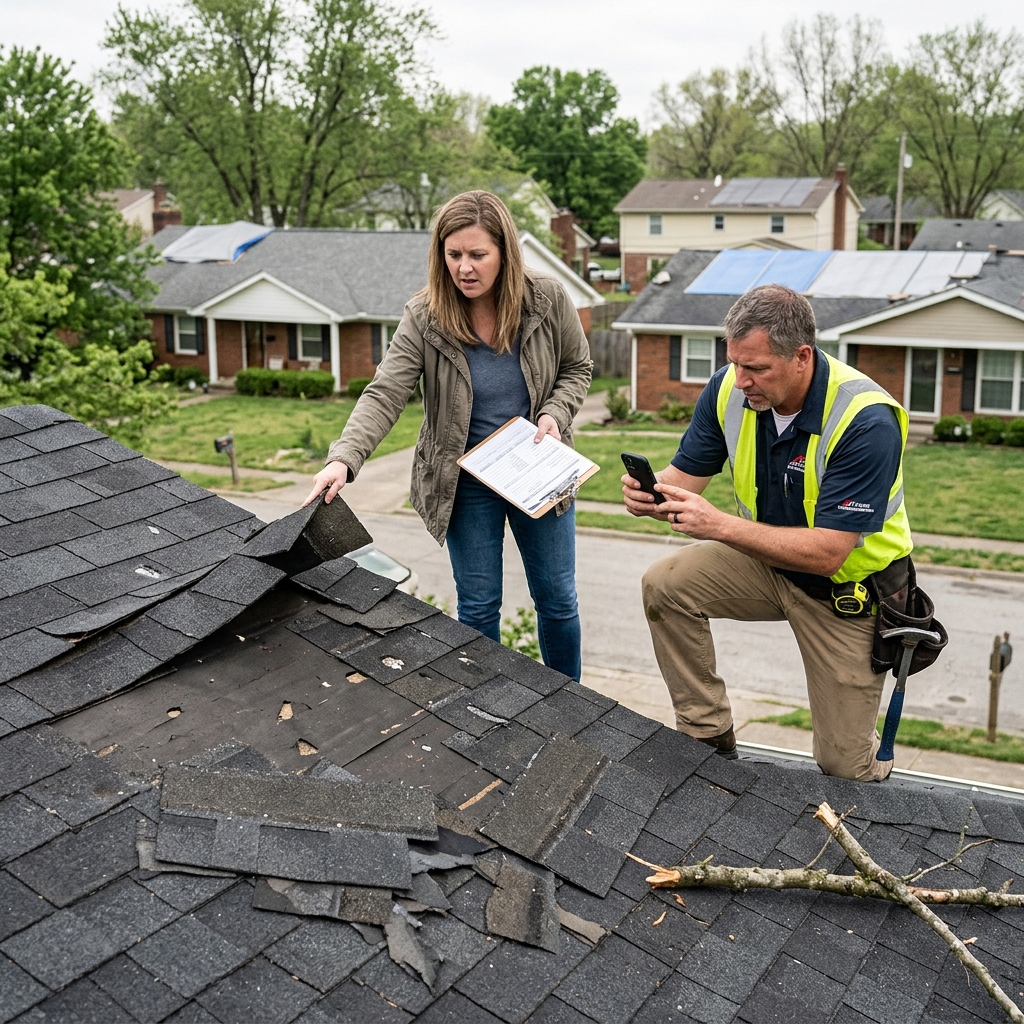
Also confirm what “full replacement” means in your policy. Some insurers include a “roof cap” that limits payouts to a percentage of your home’s insured value, not the actual replacement cost.
The Critical First Steps After Roof Damage Occurs
Immediately after a storm or when you discover damage, take these steps:
Document everything with photos and video. Use your phone to capture wide shots showing the overall damage pattern, then zoom in on specific areas like missing shingles, cracks, or punctures. Include images showing the surrounding landscape for context, and photograph the damage from multiple angles. Timestamp matters, so take photos the same day you discover the damage.
Contact your insurance company promptly. Most policies require you to report damage within a specific timeframe (often 30 days, but check yours). Don’t delay hoping the problem will resolve itself. A formal claim start date matters for documentation purposes.
Secure temporary repairs to prevent further damage. If weather permits, tarping or boarding damaged areas shows your insurer you’re acting responsibly. Keep all receipts and photos of temporary work, as these costs may be reimbursable.
Do not authorize full repairs until your claim is approved. Starting major work before the adjuster evaluates the damage can complicate your claim. We recommend waiting for the adjuster’s assessment, but temporary leak prevention is always appropriate.
How We Document and Present Your Claim for Maximum Approval
We’ve processed hundreds of roof insurance claims alongside homeowners, and we’ve learned exactly what documentation insurers want to see. Our approach uses professional-grade assessment and presentation that strengthens your position before the claim hearing.
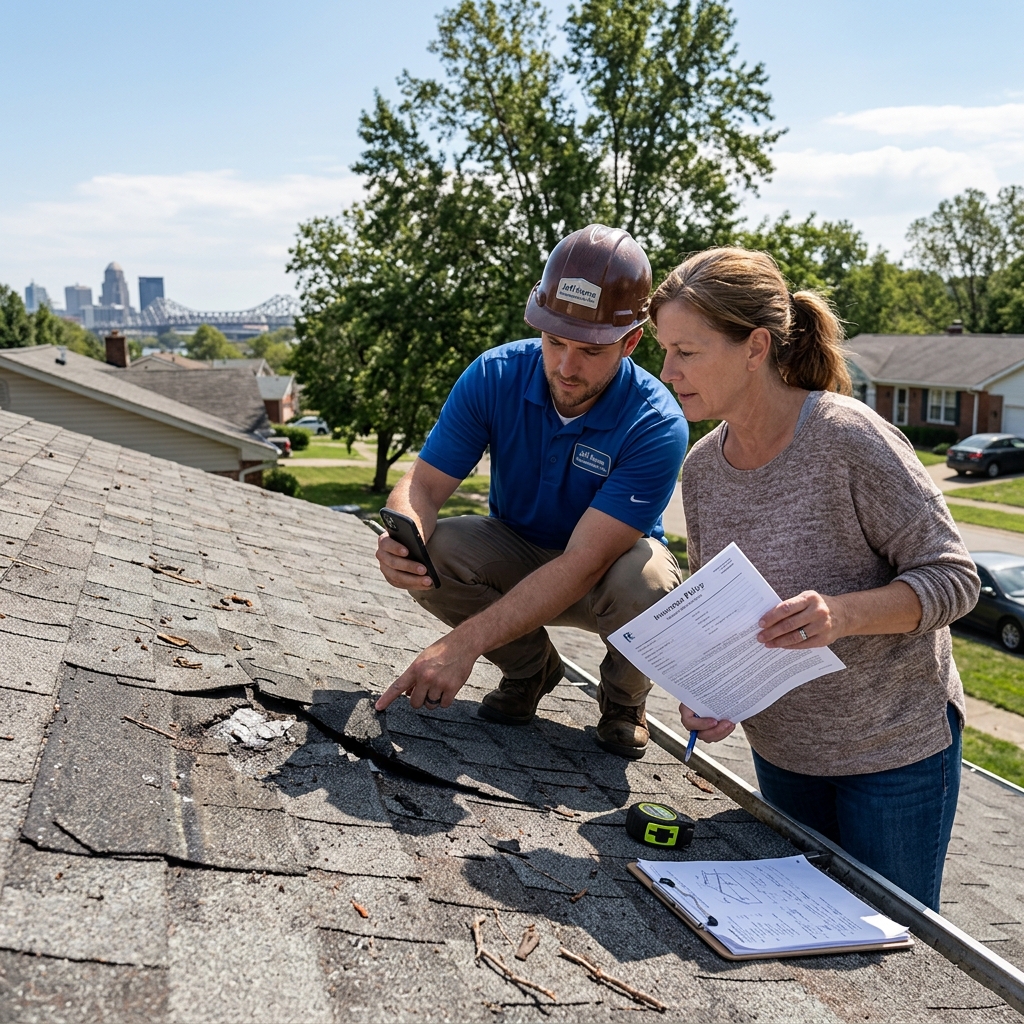
When you contact us after roof damage, we conduct a thorough roof inspection using aerial photography and detailed close-ups. We document damage location, extent, and cause with the specificity that insurance adjusters expect. Unlike smartphone photos, our documentation includes measurements, clear damage patterns, and professional context.
We then prepare a comprehensive estimate that accounts for all visible damage plus potential issues discovered during repair assessment. This estimate becomes your baseline for comparing against the insurance company’s offer. When estimates differ significantly, we provide detailed breakdowns explaining cost variations due to labor, material sourcing, or building code requirements.
Having a licensed contractor’s written estimate in hand before your claim hearing gives you credibility. Insurers take professional assessments seriously, especially when they come from established contractors with verifiable credentials.
Working With Your Insurance Adjuster: What to Expect
After you file your claim, the insurance company assigns an adjuster to assess the damage. This person represents the insurer’s interests, not yours. Understanding their role helps you navigate the process professionally.
The adjuster will schedule an inspection, typically within a few days. During this visit, they examine your roof, take photos, measure damage, and assess repair costs using their own estimate software. They may ask questions about when you first noticed damage and whether you’ve had prior claims.
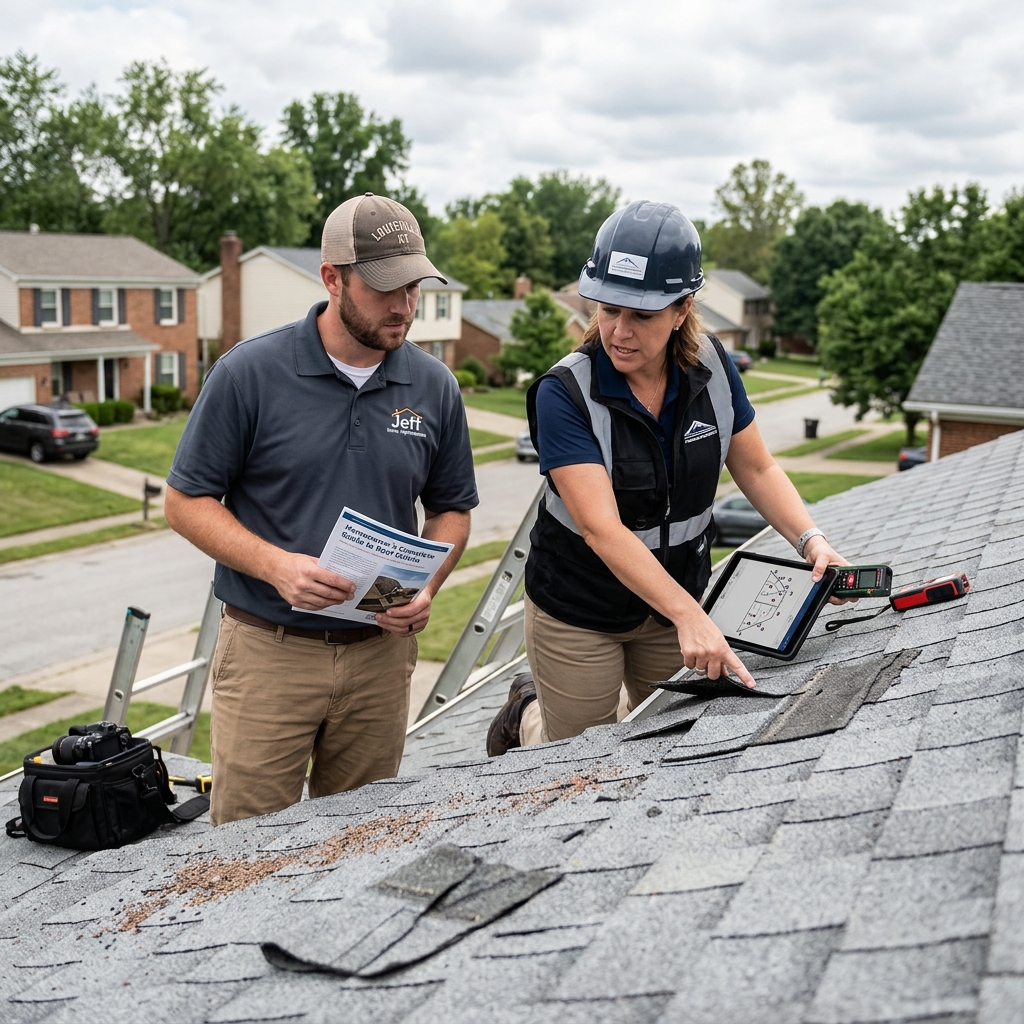
Be honest and factual in all conversations with the adjuster. Provide them with your own contractor’s estimate and explain any cost differences. If the adjuster’s estimate seems too low, ask them to itemize their calculations so you can identify specific discrepancies.
Keep records of all communication: emails, call dates, adjuster names, and claim numbers. If you disagree with their estimate, you have the right to request a second opinion or enter the claim dispute process outlined in your policy.
Common Denial Reasons and How to Avoid Them
Insurance claims get denied or underpaid for preventable reasons. Knowing these pitfalls protects your claim from the start.
Pre-existing damage: Insurers may deny claims if they determine damage occurred before your policy started or resulted from prior storms you didn’t report. Document your roof’s condition when you purchase your policy, and report all damage promptly.
Lack of maintenance: If your roof shows signs of neglect (missing shingles, clogged gutters, moss growth), insurers may reduce payment by claiming you failed to maintain it. Regular maintenance protections like gutter cleaning and minor repairs help demonstrate responsible ownership.
Insufficient documentation: Blurry photos or vague damage descriptions make claims harder to prove. Professional photographs showing clear damage patterns eliminate this objection.
Wrong damage category: Filing under “weather damage” when the adjuster determines the cause was impact damage (fallen limb) could delay processing. Let your adjuster determine the cause unless you have clear evidence otherwise.
Missed deadlines: Failing to report within your policy’s required timeframe may void coverage entirely. File immediately when damage occurs.
Inaccurate claim filing: Omitting rooms, roof sections, or damage types means those issues won’t be covered. List everything during your initial claim conversation.
Why Partnering With Jeff Home Improvements Strengthens Your Claim
Our 37 years serving the Louisville and Kentuckiana area as an Owens Corning Platinum Preferred Contractor gives us deep experience with local weather damage patterns and regional building codes. We understand how Louisville’s spring storms affect roofing systems and what documentation insurers expect.
When you work with us, we handle the technical aspects of claim preparation so you can focus on your family. We document damage professionally, provide detailed repair estimates that account for all variables, and communicate directly with insurers on your behalf. This partnership approach removes the confusion and complexity most homeowners face alone.
We also help you understand the gap between insurance estimates and actual repair costs. When an adjuster’s offer falls short, we explain the discrepancy and help you pursue additional coverage. Our reputation for honest, detailed work gives insurers confidence in our estimates, which strengthens your negotiating position.
We also guide you through roof repair vs full replacement decisions when damage is partial, helping you understand whether insurance will cover patches or if full replacement makes financial sense long-term.
The Complete Claim-to-Repair Timeline You Can Expect
A typical insurance claim moves through several phases. Understanding this timeline helps you plan repairs and manage expectations.
Days 1-3: File your claim, document damage, and contact contractors for initial assessments. Secure temporary repairs if needed.
Days 3-10: Insurance adjuster schedules and completes their inspection. You submit your contractor’s estimate and any additional documentation.
Days 10-20: The insurance company reviews the adjuster’s report and your documentation, then issues their initial estimate and check (or denial).
Days 20-30: If you disagree with their estimate, you can request a second opinion or dispute the assessment. If you accept, contractors begin scheduling repairs.
Days 30-45: Repairs begin and typically complete within one to three weeks, depending on weather and material availability.
Days 45+: Final inspection and claim closure occur after you verify repairs meet insurance standards.
Entire process from damage to completion often takes 6-8 weeks. Louisville weather can slow this timeline, especially if additional storms occur or supplies face delays.
Next Steps: Getting Your Roof Restored Quickly
If you’ve experienced storm damage or discovered roof issues in the Louisville area, contact us for a free assessment. We’ll document your roof’s condition, explain your options, and guide you through the insurance claim process without pressure.
You can reach us through our website at https://jeffroof.com to request a virtual consultation and instant estimate, or call for a same-day inspection if damage is severe. We work directly with insurance adjusters and handle the documentation that strengthens your claim position.
The key is acting fast. Storm damage claims have time-sensitive requirements, and early professional documentation makes the difference between full coverage and partial payment. Let’s protect your home and your wallet by getting your claim handled right the first time.
For further reading: Storm damage repair.
Contact us today for a free in home, no obligation quote on your roof




 INDIANA
 KENTUCKY