
Why Hiring the Wrong Roofer Costs You Thousands
Choosing the wrong roofing contractor can drain your wallet faster than a roof leak. A bad hire might mean substandard workmanship, inflated costs, incomplete repairs, or worse, legal headaches when something goes wrong. In the Louisville area, where weather patterns bring everything from spring storms to heavy seasonal shifts, your roof needs professional care from someone who knows the local climate and building codes.
We’ve been in the roofing business since 1989, and we’ve heard countless stories from homeowners who regret rushing their contractor search. This guide walks you through the vetting process so you can hire with confidence.
A poorly installed roof isn’t just an aesthetic issue. It’s a structural and financial problem that compounds over time. Improper installation can void manufacturer warranties, cause premature leaks, and necessitate costly repairs or complete replacement within a few years instead of decades.
Consider a real scenario: A homeowner contracts with an unlicensed roofer who offers a price 30% below market rate. The work seems complete, but within two years, water intrusion develops in the attic. The manufacturer’s warranty doesn’t apply because the roofer wasn’t certified. The homeowner now faces $8,000 to $15,000 in water damage remediation, mold inspection, and re-roofing with a legitimate contractor.
Beyond the direct costs, a failed roof can affect your home’s resale value and create liability issues if someone is injured on your property due to unsafe roofing work. Insurance companies may refuse claims tied to unpermitted work.
What to do next: Before you contact any contractor, make a list of three to five companies you’re considering. This article will help you evaluate each one systematically.
Verify Licensing and Insurance Requirements
Kentucky requires roofers to hold a valid license, and the state maintains a database you can check. Before signing any contract, verify that your contractor holds an active, unrestricted license through the Kentucky State Board of Licensure for Contractors.
The second critical step is confirming insurance. Your contractor should carry both general liability insurance and workers’ compensation coverage. If a worker is injured on your property and the contractor lacks workers’ comp, you could be held liable. General liability protects you if the contractor damages neighboring properties or causes other accidents.
Ask for certificates of insurance directly from the contractor. Call the insurance company to confirm the policy is active and covers roofing work specifically. Some policies exclude certain types of work, so verification matters.
In Kentucky’s Kentuckiana region, where weather events are common, many insurance carriers have strict underwriting. Verify your contractor’s policy is current and that coverage limits are appropriate for your project scope. Most reputable contractors won’t hesitate to provide this information.
Actionable steps:
- Request the contractor’s license number and verify it on the Kentucky State Board of Licensure website
- Ask for a certificate of insurance showing active coverage
- Confirm workers’ compensation is listed (not just general liability)
- Note the policy expiration dates and verify they extend beyond your project timeline
Check References and Past Project Reviews
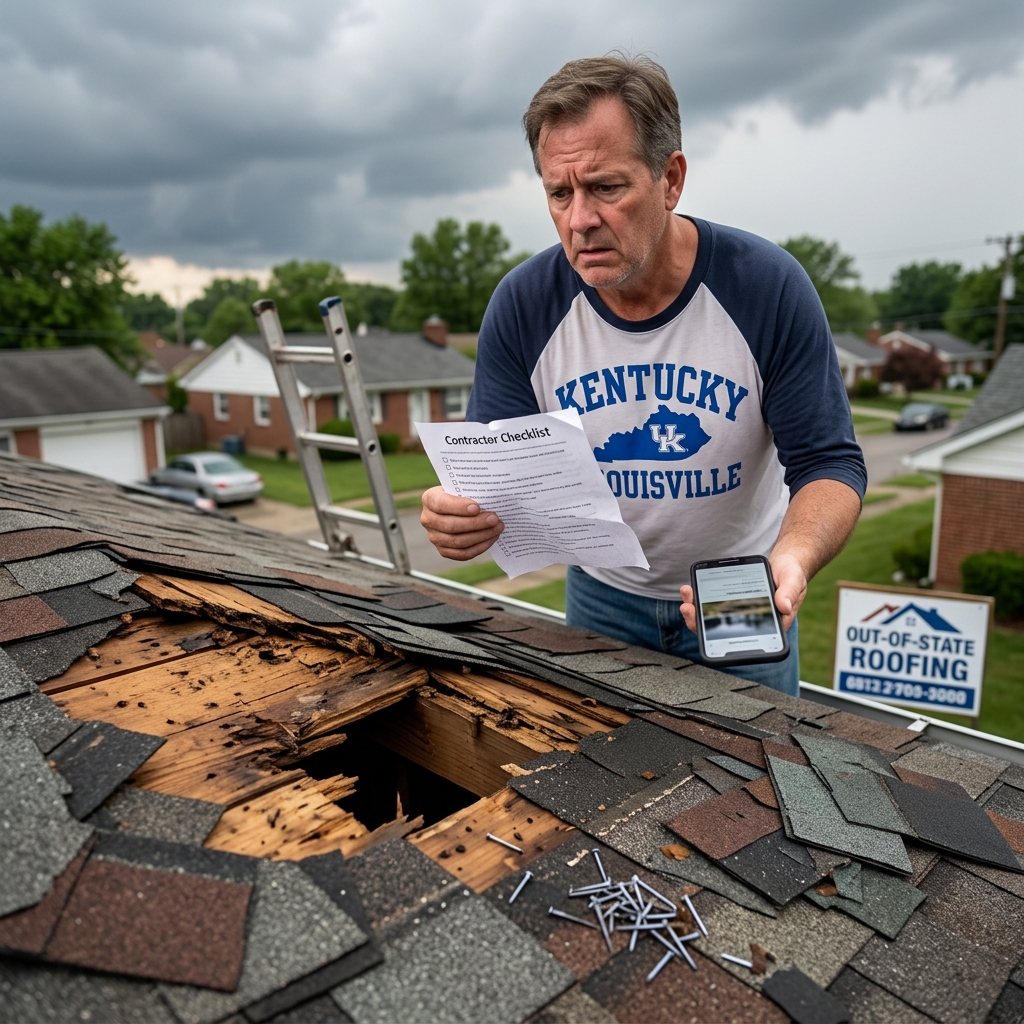
References reveal how a contractor actually performs once the contract is signed. Ask potential roofers for at least three recent residential projects in the Louisville area and contact those homeowners directly. Avoid references that are friends or family members.
When you call a reference, ask specific questions: Was the work completed on time? Did the contractor clean up debris properly? Were there any unexpected issues, and how did the contractor handle them? Did the homeowner encounter any leaks or problems after completion? Would they hire this contractor again?
Online reviews on Google, Yelp, and the Better Business Bureau offer another layer of insight. Look for patterns in feedback rather than obsessing over a single bad review (any contractor serving hundreds of clients will have the occasional dissatisfied customer). Red flags include consistently low ratings, complaints about unfinished work, or many reviews mentioning poor communication.
Our experience shows that contractors with transparent, verifiable project histories stand out. We maintain a portfolio of local Louisville projects and encourage homeowners to see the work in person or speak with recent clients. That level of transparency builds trust.
Quick reference check:
- Request three to five recent project contacts in your area
- Call and ask about timeline, quality, cleanup, and post-completion satisfaction
- Search online for reviews and look for patterns, not isolated complaints
- Ask for before-and-after photos or visit completed projects if possible
Identify Storm Chaser Red Flags
Storm chasers are contractors who descend on neighborhoods after severe weather, offering aggressive sales tactics and urgency-driven pitches. They often operate across multiple states, use high-pressure sales techniques, and disappear if issues arise post-project.
Storm chaser red flags include:
- Showing up at your door uninvited after a storm with estimates ready
- Offering to handle insurance negotiations or claims in ways that feel too good to be true
- Providing estimates on the spot without a detailed site inspection
- Requesting large upfront deposits before work begins
- Using temporary office space or no permanent local address
- Promising financing deals that seem designed to pressure you into signing quickly
In Louisville, after significant weather events, these operators flood the market. They prey on homeowners who are stressed, disoriented, and eager for quick repairs. Many disappear once they’ve received payment, leaving homeowners without recourse.
Legitimate local contractors like ourselves build long-term relationships with the community. We’re here before, during, and after storms, with permanent operations and accountability. We don’t arrive with clipboards immediately after hail; instead, we respond to your calls when you’re ready.
Spotting storm chasers:
- Check if the contractor has a permanent Louisville office and has been operating in your area for years
- Verify they have a local phone number and physical address, not just a toll-free number
- Never accept an unsolicited quote at your door
- Research the company’s history and ownership to confirm stability
Evaluate Warranty and Written Estimates
Every reputable roofing contractor provides written estimates that itemize materials, labor, timeline, and cleanup responsibilities. An estimate should be detailed enough that you understand exactly what you’re paying for.
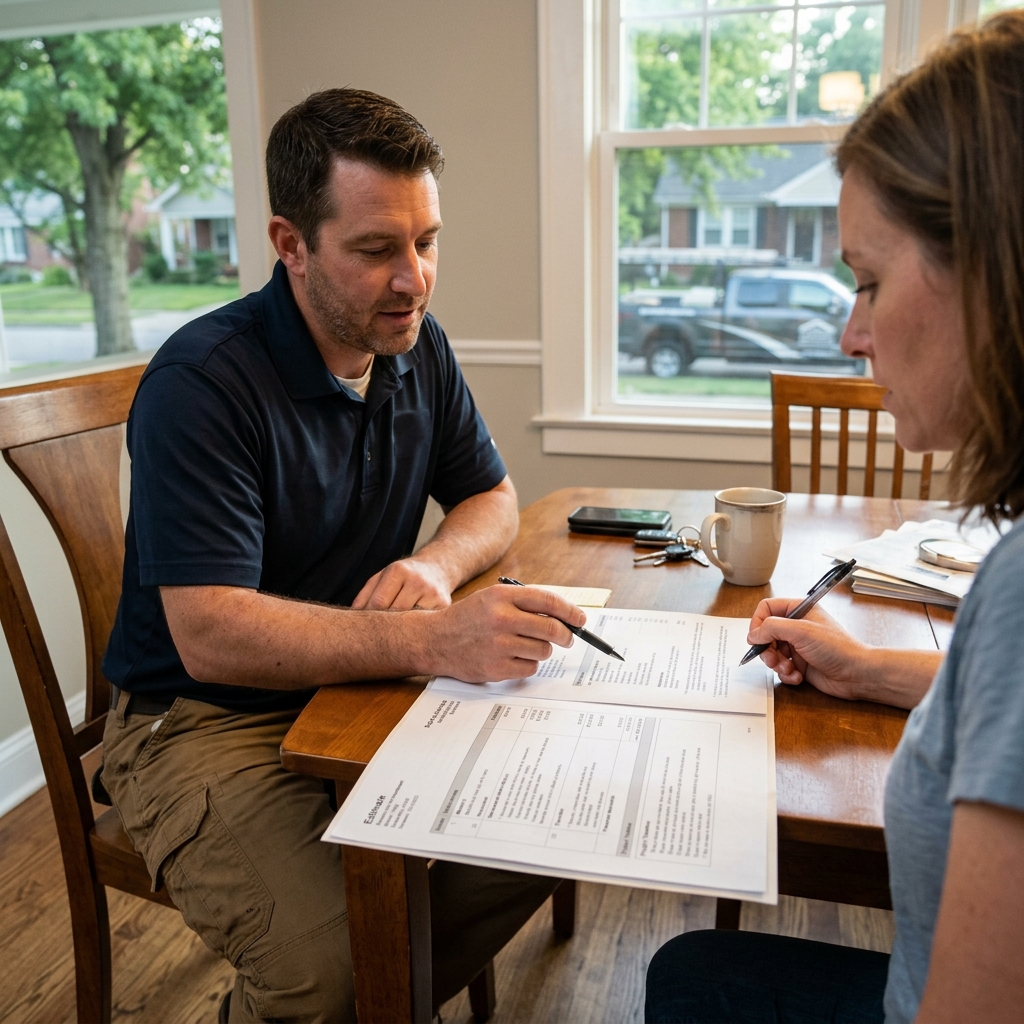
Warranties are equally critical. Roofing comes with manufacturer warranties (covering material defects, typically 15 to 50 years depending on the product) and workmanship warranties (covering installation quality, typically 5 to 10 years). Your contractor should clearly explain both in writing.
Be wary of estimates that are vague, missing critical details, or surprisingly low compared to competitors. A price 50% below other quotes usually signals cut corners, inexperienced labor, or a bait-and-switch scenario where hidden costs emerge mid-project.
When comparing estimates, look for consistency in what’s included. One contractor might include gutter guards, a complete cleanup, and a 10-year workmanship warranty, while another excludes these items. Apples-to-apples comparison ensures you’re not accidentally choosing the cheapest option because you’re missing key services.
Estimate evaluation checklist:
- Written estimate with line-item breakdown of all costs
- Clear description of materials (brand, grade, color)
- Workmanship warranty terms in writing
- Manufacturer’s warranty documentation
- Project timeline with start and completion dates
- Cleanup and debris removal specified
Ask About Owens Corning Certification
We’re proud to be an Owens Corning Platinum Preferred Contractor, a distinction that reflects our commitment to quality and expertise. This certification means Owens Corning has verified our licensing, insurance, training, and track record of professional installations.
Owens Corning Platinum status isn’t automatic. Contractors must meet rigorous standards in training, customer service, and installation quality. We maintain this status by continuing education, adhering to Owens Corning’s installation specifications, and achieving customer satisfaction metrics.
When a contractor holds Platinum Preferred status with a major manufacturer, it’s a signal that they’ve invested in excellence and are willing to be held accountable. It also means you have additional recourse through Owens Corning if issues arise, as the manufacturer maintains oversight of certified contractors.
Ask any contractor whether they’re certified with Owens Corning, GAF (another top manufacturer), or other national brands. These certifications are not industry-required, but they’re strong indicators of professional commitment. Contractors should be willing to show you certification documentation without hesitation.
What to look for:
- Ask “Are you a certified Owens Corning Platinum Preferred Contractor?” or similar
- Request proof of current certification
- Understand what the certification covers (materials, installation, warranty)
- Confirm the contractor follows the manufacturer’s installation protocols
Red Flags in Pricing and Pressure Tactics
Pricing is the area where homeowners get most vulnerable. You’ve received three estimates, and one is significantly lower. The temptation to save money is natural, but price rarely reflects actual value in roofing.
Pressure tactics accompany low-ball pricing. Language like “This offer is only good today,” “We’re finishing jobs in your neighborhood and can start next week,” or “The price will go up if you don’t decide now” signals a contractor more interested in volume than quality. Legitimate contractors are confident in their work and don’t need artificial urgency.
Another red flag is requesting large deposits upfront, especially before materials are ordered or work begins. A reasonable deposit is typically 25% to 50%, with the remainder due upon completion. If a contractor wants 75% or 100% upfront, they’re shifting financial risk onto you.
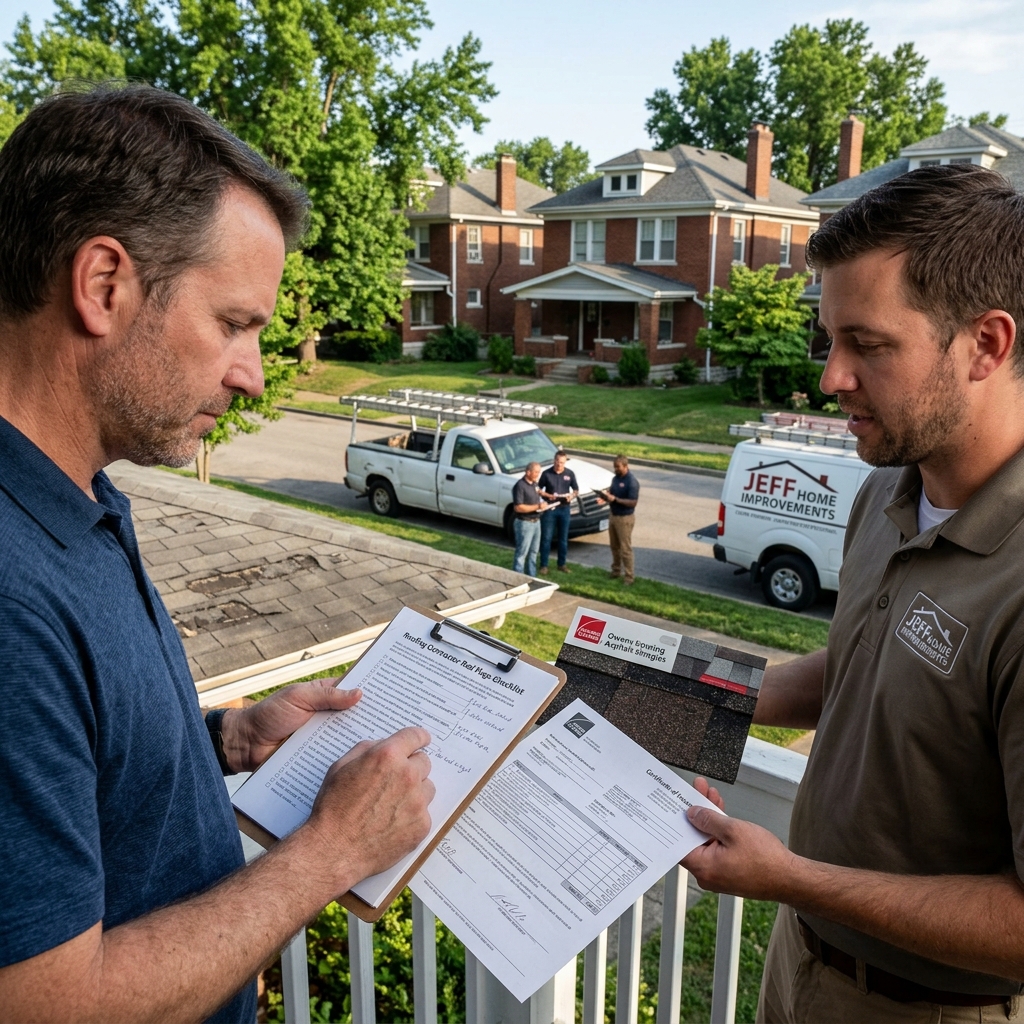
Be cautious of contractors who seem more interested in discussing financing options than discussing the actual work scope. Financing can be helpful, but it shouldn’t be the sales focus. The job itself should be the priority.
Hidden costs emerge during projects when corners have been cut in the estimate. You’ll be told “We discovered additional damage that requires extra work” or “The underlayment is worse than expected,” adding thousands to your bill. Proper inspections during the estimate phase prevent most of these surprises.
Pricing red flags to avoid:
- Estimates far below market rate for your area
- High-pressure language with artificial deadlines
- Requests for large upfront deposits (over 50%)
- Vague estimates that don’t itemize materials and labor
- Reluctance to provide references or proof of licensing
How We Help You Hire Confidently
Our approach at Jeff Home Improvements Inc. addresses every concern outlined in this guide. When you contact us for a roof replacement, storm damage repair, or exterior work, you’re working with a Louisville roofing contractor with three decades of local experience and transparent practices.
We provide detailed written estimates with no surprises. Our team conducts thorough inspections to identify any underlying issues before we start, so you know exactly what you’re getting. We carry full licensing, liability, and workers’ compensation insurance. We’re an Owens Corning Platinum Preferred Contractor, meaning every installation meets manufacturer specifications and comes with robust warranties.
We also offer virtual consultations for your convenience, so you can discuss your project without scheduling an in-home visit if that’s not immediately necessary. When we do inspect your roof, our estimates are accurate and comprehensive. We don’t use pressure tactics, and we respect your timeline.
If a storm damages your home, we help with the insurance claim process, but we’re transparent about what your policy covers and what it doesn’t. We won’t misrepresent damage or encourage fraudulent claims. Our reputation is built on doing excellent work ethically.
Why choose us for peace of mind:
- 30+ years in the Kentuckiana area with established reputation
- Owens Corning Platinum Preferred Contractor status
- Full licensing and insurance verified
- Detailed written estimates with no hidden costs
- Virtual consultations and instant estimates available
- Transparent warranty and post-project support
Next Steps for Finding Your Trusted Roofer
Start by making your list of three to five contractors. Run each through the checklist above: verify licensing and insurance, call references, check online reviews, and request detailed written estimates. During conversations, note how they communicate. Do they answer questions patiently? Do they explain options clearly? Do they respect your timeline or push for quick decisions?
Compare estimates side by side, ensuring you’re evaluating the same scope of work. The lowest price might feel attractive, but the middle or slightly higher estimate from a certified, well-reviewed contractor is usually the best investment.
Once you’ve narrowed your selection, ask the contractor questions about their process for your specific project. If you’re addressing storm damage, ask how they’ll handle insurance coordination. If you’re replacing an aging roof, ask about material options and longevity. A contractor who engages thoughtfully with your situation is one you can trust.
We’re here if you’re ready to move forward with a licensed, certified roofer in the Louisville area. Contact us for a virtual consultation or to schedule a site inspection. We’ll provide an instant estimate so you can compare apples to apples with other quotes. Your roof is one of your home’s most important assets, and it deserves professional care from someone who’s been doing this right for decades.
Contact us today for a free in home, no obligation quote on your roof



 INDIANA
 KENTUCKY