
Why Roofing Warranty Coverage Matters for Your Investment
A new roof isn’t a small purchase. Depending on your home’s size and the materials you choose, you’re looking at an investment ranging from $5,000 to $25,000 or more. That’s why understanding what actually gets protected after installation day matters so much.
Most property owners focus on choosing between shingles, metal, or tile without realizing that the warranty picture is equally important. A cheap roof with exceptional coverage beats an expensive roof with gaps in protection. The difference between a manufacturer warranty and a workmanship guarantee can mean the difference between a full replacement at no cost and paying out of pocket for repairs that should have been covered.
We’ve helped hundreds of Louisville-area homeowners sort through warranty confusion. The pattern we see repeatedly: people assume one warranty covers everything, only to discover later that their specific problem falls into a coverage gap. Understanding the distinction upfront prevents frustration down the road.
Action item: Before signing any roofing contract, request a written summary of both the material and labor warranties you’ll receive.
Understanding Manufacturer Warranties on Roofing Materials
Manufacturer warranties cover defects in the roofing materials themselves, not how they’re installed. Owens Corning, GAF, CertainTeed, and other major manufacturers stand behind their shingles, underlayment, and other products against manufacturing flaws.
These warranties typically include:
- Defective shingles or membranes
- Premature granule loss or blistering
- Manufacturing defects that cause leaks
- Material degradation beyond normal wear
Manufacturer coverage usually lasts 10 to 50+ years depending on the product line. Premium architectural shingles often carry longer warranties than basic three-tab options. As an Owens Corning Platinum Preferred Contractor, we work with some of the industry’s most robust material warranties, which we can detail during your consultation.
The catch: manufacturer warranties require proper installation. If materials are installed incorrectly, the manufacturer can deny the claim. This is where workmanship warranties become critical. You can have perfect shingles installed backwards or with insufficient nailing, and a material defect claim will go nowhere.
What to do next: Ask your contractor which manufacturers they prefer and why. Premium manufacturers often invest more in material testing and stand behind their products longer.
What Workmanship Warranties Actually Cover and Protect
Workmanship warranties, also called labor warranties or installation guarantees, cover the quality of the installation work itself. They protect against leaks, improper flashing installation, inadequate ventilation, and other issues caused by how the roof was built, not what it’s made from.
These guarantees typically cover:
- Improper nailing or fastening
- Poor flashing installation around chimneys, vents, and valleys
- Inadequate ventilation or insulation installation
- Leaks resulting from installation errors
- Improper sealing or caulking
- Structural or support issues
Workmanship warranties vary widely by contractor. Some offer one year, others five years, and reputable firms offer 10 years or longer. The length directly reflects how confident a contractor is in their crew’s skill and attention to detail.
We stand behind our work with comprehensive workmanship protection because our installation standards are high. When you work with us, you’re getting crews trained to manufacturer specifications and held accountable for precision work. That commitment shows in the warranty terms we offer.
Key takeaway: Never accept a roofing contract without a written workmanship warranty. If a contractor won’t put it in writing, that’s a red flag about their confidence in the installation quality.
Key Differences Between Material and Labor Guarantees
The practical differences come down to three factors: who pays the claim, what triggers coverage, and how long you’re protected.
Coverage trigger: Material warranties activate when a shingle fails due to a manufacturing defect. Workmanship warranties activate when installation errors cause problems. A leak from a defective shingle is a manufacturer claim. A leak from improper flashing installation is a contractor claim.
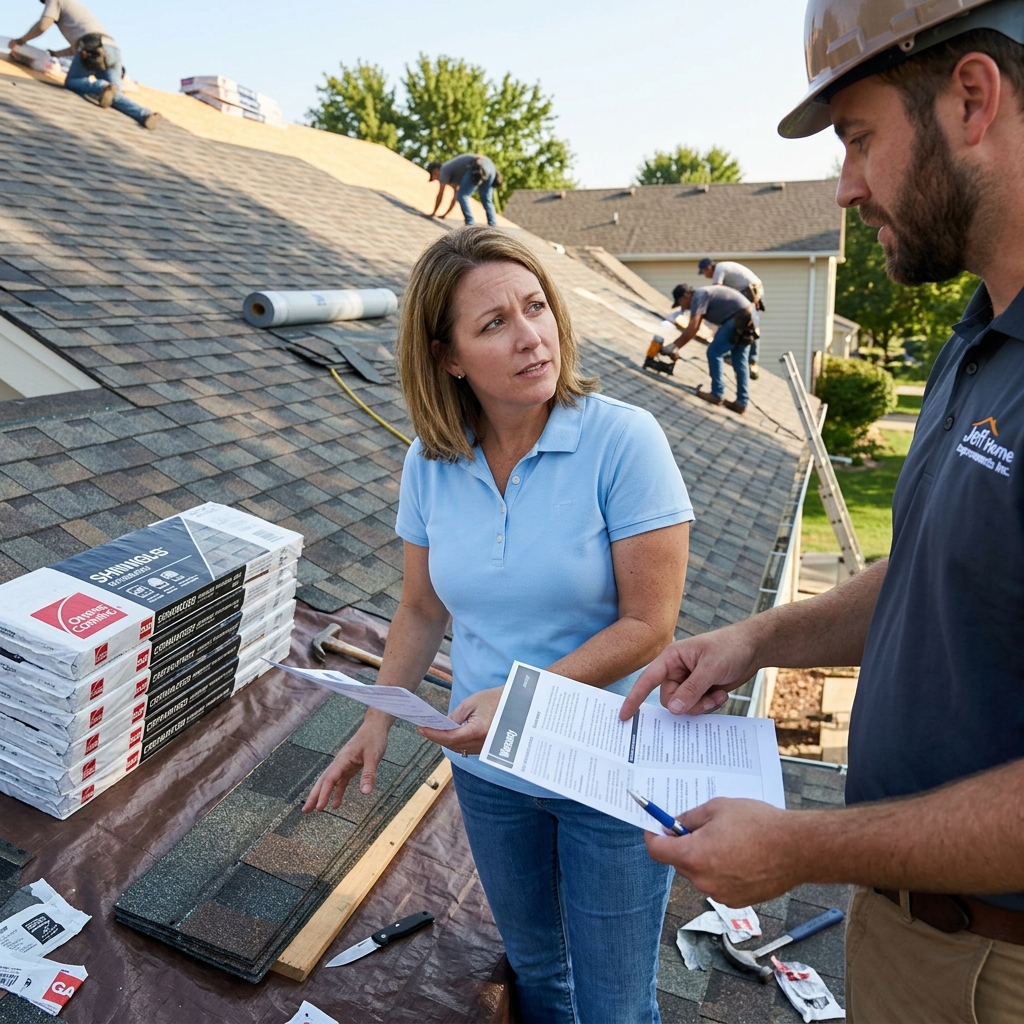
Claim process: With manufacturer warranties, you contact the roofing material company directly. With workmanship warranties, you contact your contractor. Manufacturer claims often require inspections and testing. Workmanship claims usually involve the contractor sending a crew to repair or assess the issue.
Duration: Material warranties often extend 20, 30, or even 50 years depending on the product. Workmanship warranties typically last 5 to 10 years, though some contractors like us offer longer terms. The thinking is that if an installation problem exists, it usually shows up within the first decade.
Cost responsibility: Material defects are the manufacturer’s problem. Installation failures are the contractor’s responsibility. Neither should be your financial burden if both warranties are in place.
Here’s the real-world scenario: You notice a leak along your roof’s north side three years after installation. A roofer inspects and determines it’s caused by improper flashing installation at a valley. The material is fine, the workmanship is the issue. Your contractor’s warranty should cover the repair cost. The manufacturer’s warranty is irrelevant here.
Next step: Request both warranties in writing before work begins, with clear definitions of what each covers and for how long.
How Jeff Home Improvements Backs Our Roofing Work
We’ve been serving the Louisville and Kentuckiana area since 1989, and our warranty approach reflects decades of experience and a commitment to standing behind every project.
Our standard workmanship warranty covers 10 years on all roof installations. This includes labor for repairs related to installation errors, improper flashing, ventilation issues, or other workmanship-related problems. We include this automatically, not as an upsell.
Beyond our own guarantee, we’re an Owens Corning Platinum Preferred Contractor, which means our customers benefit from the manufacturer’s backing on Owens Corning materials. This dual protection, combined with our installation standards, creates comprehensive coverage that protects your investment from both material and labor perspectives.
We also provide virtual consultations and instant estimates, so you can understand your warranty coverage before committing to anything. During that conversation, we walk through exactly what’s covered and for how long.
Our crews follow manufacturer installation specifications precisely. We don’t cut corners on nailing patterns, ventilation requirements, or flashing techniques. That rigor is why we’re confident offering the warranty terms we do, and why we rarely see warranty claims because the work is done right the first time.
What to do: Schedule a virtual consultation with us to discuss your specific roofing needs and the warranty protection you’ll receive. We’ll provide detailed coverage information upfront.
Comparing Coverage Limits and Duration Across the Industry
Industry standards vary widely, and understanding where different contractors fall on the spectrum helps you compare meaningfully.
Budget contractors often offer one to three years of workmanship coverage, sometimes with significant exclusions. Their lower prices reflect lower overhead, less experienced crews, and minimal warranty liability.
Mid-range contractors typically offer five to seven years of workmanship warranty with straightforward coverage terms. Material warranties depend on the shingle quality they choose.
Premium contractors and those with strong manufacturer relationships often offer 10 to 15+ years of workmanship protection. They use higher-grade materials with longer manufacturer warranties and employ installation crews trained to exacting standards.
Manufacturer warranties break down similarly. Basic shingles may carry 10 to 15-year non-prorated warranties, meaning defects are fully covered but coverage decreases over time. Premium shingles from manufacturers like Owens Corning often include 30 to 50-year limited warranties with prorated coverage.
Here’s what that means in practice: A basic shingle warranty might cover 100% of material costs in year one, decreasing to zero by year 15. A premium warranty might cover 100% for 20 years, then gradually decrease. When you’re comparing bids, asking about warranty duration and whether coverage is prorated is essential.
We recommend always choosing the longest workmanship warranty you can find paired with premium material warranties. The additional protection cost is minimal compared to the potential repair costs if problems arise after cheaper warranties expire.
Action item: Request a written warranty comparison from all contractors bidding your project. Look at duration, coverage scope, and whether they’re prorated or non-prorated.
What Happens When You Need to File a Warranty Claim
Understanding the claims process before you need it prevents surprises and delays if problems arise.
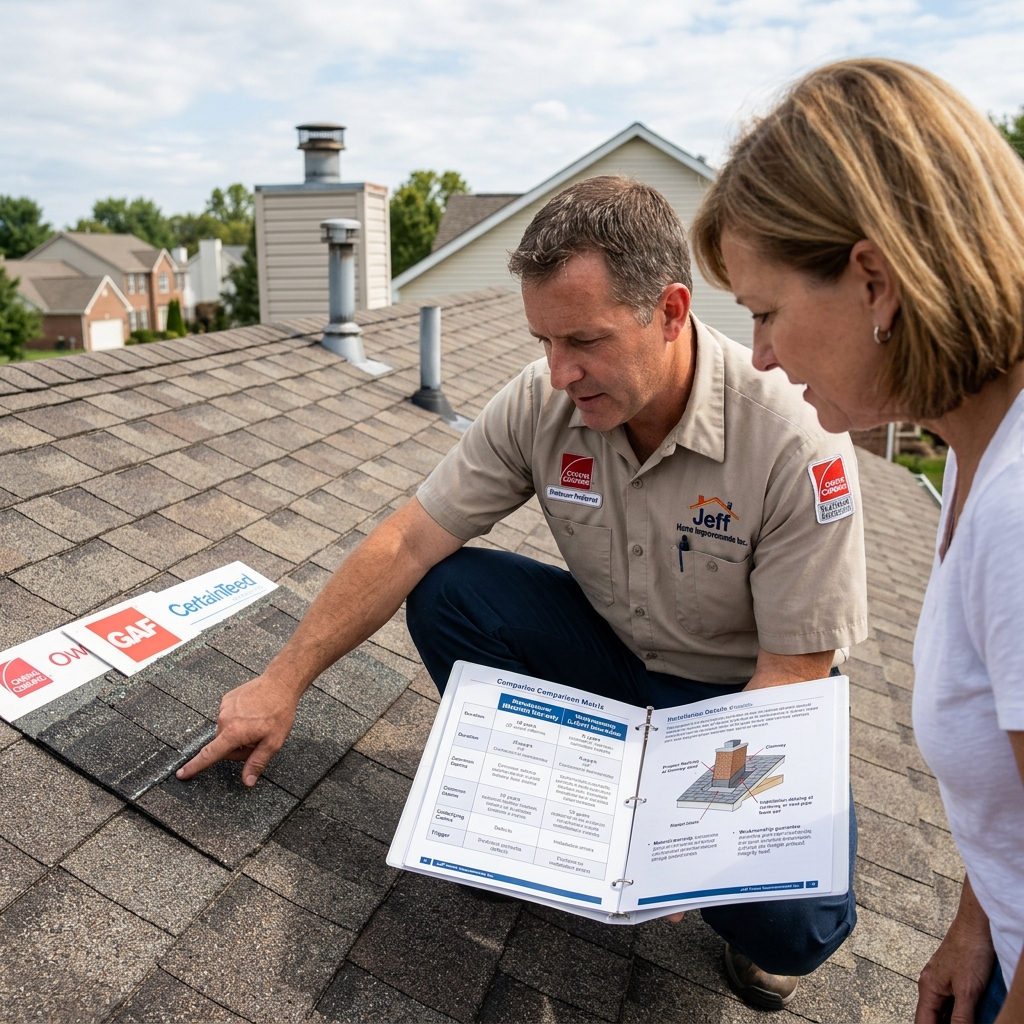
For workmanship claims with us, the process is straightforward. Contact our office with details about the issue you’ve noticed. We schedule an inspection, usually within a few days. Our crew assesses whether the problem falls under workmanship warranty coverage. If it does, we repair or replace the affected area at no cost. If the issue is outside warranty scope, we provide a quote for repairs.
Manufacturer claims are more involved. You typically contact the roofing material company’s customer service with photos and details of the defect. They may require inspection by a third-party assessor. If they determine it’s a manufacturing defect, they authorize the contractor to repair or replace the affected materials. Some manufacturers cover labor; others cover only material costs.
Common claim scenarios we handle:
- Leaks from improperly installed flashing (workmanship warranty)
- Insufficient ventilation causing ice dam issues (workmanship warranty)
- Improper nailing leading to wind damage (workmanship warranty)
- Defective shingle batches showing premature granule loss (manufacturer warranty)
The key advantage of using a long-established contractor like Jeff Home Improvements is that we handle the claims process with manufacturers on your behalf. We have relationships with material suppliers and know how to navigate claims efficiently. You’re not left managing paperwork and coordinating inspections on your own.
Important: Keep your warranty documentation in an accessible place and photograph your roof after installation. Documentation helps claims move faster if needed.
Why Choosing the Right Contractor Secures Your Warranty Benefits
Here’s a critical reality many homeowners miss: warranty coverage is only valuable if the contractor still exists when you need to claim it and if they maintain the financial stability to cover claim costs.
Fly-by-night operators offering rock-bottom prices often don’t survive long. When you need a warranty repair five years later, that company might be gone. A manufacturer won’t repair installation errors the original contractor made, so you’re stuck paying out of pocket.
We’ve been family-owned and operating in the Louisville area since 1989. That longevity means warranty claims 10 years from now will be handled by the same organization that installed your roof. We’re not going anywhere, and we have the financial backing to honor our commitments.
Additionally, contractor selection determines whether you actually benefit from manufacturer warranties. Manufacturers reserve the right to deny claims if installation wasn’t performed to their specifications. When you hire a contractor who cuts corners on nailing patterns, underlayment, or flashing techniques, you risk having a legitimate defect denied because installation was substandard.
As an Owens Corning Platinum Preferred Contractor, we meet rigorous training and performance standards. Our crews install to manufacturer specs consistently, which means manufacturer warranty claims rarely encounter denial due to installation issues.
Reputation also matters. Licensed, insured contractors with strong reviews and industry certifications carry professional liability insurance and bond requirements that protect you further. That’s different from a cash-only operator with no business registration.
What to verify: Before hiring, confirm the contractor is licensed, insured, and bonded in Kentucky. Ask for references from projects completed at least five years ago and contact those customers about their post-installation experience.
Common Warranty Gaps That Leave Homeowners Unprotected
Even with both material and workmanship warranties in place, gaps exist that leave you vulnerable.
Normal wear and weather: Warranties don’t cover normal aging or weathering. A roof that lasts 20 years and then deteriorates isn’t a warranty claim; it’s end of life. Most warranties explicitly exclude normal wear.
Lack of maintenance: If you ignore gutter cleaning, moss growth, or ventilation problems, manufacturers can deny claims. They require reasonable maintenance as a condition of coverage. Neglecting your roof can void protection.
Improper repairs: If someone other than your original contractor or an authorized professional performs repairs, you may void remaining warranty coverage. This is especially important with manufacturer warranties.
Storm damage: Most warranties specifically exclude weather-related damage like hail or severe wind. That’s why separate storm damage insurance or optional storm damage riders matter.
Improperly installed additions: If you later add a chimney, skylight, or vent without professional installation, damage around those additions won’t be covered.
Transferability limitations: Many workmanship warranties don’t transfer if you sell the home. The new owner loses coverage. Material warranties often transfer, but workmanship warranties frequently don’t. Clarify this before purchase if you think you might sell.
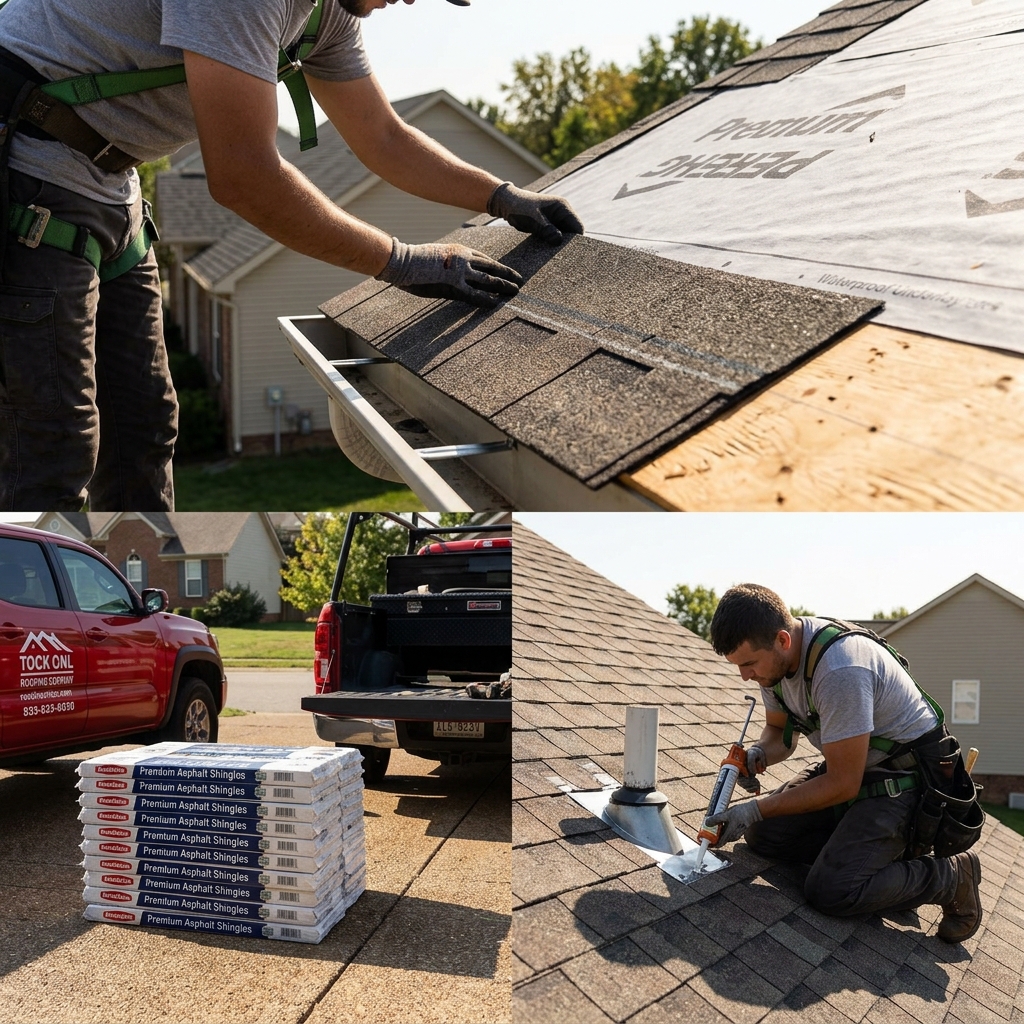
Hidden defects discovered late: If an installation issue isn’t discovered until after warranty expiration, you typically can’t claim it as a pre-existing defect.
The strongest protection against gaps is choosing a contractor who provides transparent, comprehensive warranty terms and who explicitly addresses exclusions upfront. We document what’s covered and what isn’t so there’s no confusion.
Action: Ask your contractor to highlight warranty exclusions in writing. If something isn’t clearly stated as covered, assume it isn’t.
Our Commitment to Long-Term Roofing Protection
Beyond standard warranties, we approach long-term protection as a core business philosophy.
We invest in training and equipment that exceeds industry minimums. Our crews use pneumatic tools calibrated to manufacturer specifications for consistent fastening. We install ice and water shields, proper ventilation systems, and flashing details that exceed basic code requirements. This over-specification means problems rarely emerge during the warranty period or beyond.
We also maintain detailed records of every installation. Photos, material lots, crew assignments, and installation dates are all documented. If a warranty claim arises years later, we have the proof of proper installation. This documentation protects you because we can quickly demonstrate the issue isn’t workmanship-related.
We offer virtual consultations where we can explain warranty details specific to your roof. Material choice, installation complexity, your specific roof pitch and climate exposure, and local building codes all affect what warranties are available and what makes sense for your situation.
For commercial clients and those with larger residential projects, we discuss extended protection options. Some premium material warranties can be enhanced, and some contractors offer additional labor warranty extensions available at installation time.
Our relationship with you extends beyond the invoice. We provide guidance on maintenance that preserves warranty coverage and recommend inspections after severe weather to document condition. This proactive approach prevents gaps from becoming problems.
Next step: If you have an existing roof and want to understand what coverage remains, we can assess and advise on options.
How to Maximize Your Roofing Warranty Protection
Getting maximum value from your warranty starts before installation and continues through the roof’s lifespan.
At selection: Choose premium materials with the longest manufacturer warranties you can afford. The difference in material cost between a 15-year and 50-year warranty is modest, but the protection difference is substantial. Choose a contractor offering 10+ years of workmanship warranty, preferably non-prorated.
During installation: Attend the pre-installation walkthrough and ask questions. Understand what warranty documents you’ll receive. Take photos of the completed roof and document the installation date. Request copies of warranty paperwork before the crew leaves.
Post-installation: Schedule a maintenance inspection annually, especially after severe weather. Photograph any damage or concerns before contacting your contractor or manufacturer. Keep gutters clean and ensure your attic has proper ventilation. Follow any maintenance recommendations in your warranty documentation.
Documentation: Store warranty papers in a safe, accessible location. Include them in your home file or digital records. If you sell, provide warranty documents to the new owner if transferable, and clarify what coverage transfers and what doesn’t.
Claim preparation: If you suspect a warranty issue, document it with photos and detailed descriptions. Contact your contractor promptly rather than waiting. The sooner a potential issue is assessed, the more straightforward the claims process becomes.
Manufacturer selection: When possible, choose materials from manufacturers with strong reputations for warranty claims. Some companies are known for fighting claims; others handle them promptly and fairly. Your contractor’s experience with specific manufacturers is valuable insight.
We’re here to guide you through every step. From your initial virtual consultation where we discuss warranty options, through installation, to any future warranty service needs, we manage the complexity so you don’t have to. Our goal is ensuring your roofing investment remains protected for decades.
Final action: Schedule a consultation with us to discuss your roofing needs and understand the comprehensive warranty protection you’ll receive. We’ll provide written warranty terms before any work begins.
For further reading: Roof replacement warranties, St. Matthews roofing contractor.
Contact us today for a free in home, no obligation quote on your roof




 INDIANA
 KENTUCKY