
Why Kentucky Homeowners Are Missing Solar Energy Opportunities on Aging Roofs
Kentucky homeowners are increasingly looking toward solar energy to reduce utility bills and improve home sustainability. Yet many are making a critical mistake: replacing their roofs without planning for solar integration. At Jeff Home Improvements Inc., we work with hundreds of Kentuckiana homeowners each year, and we see the same pattern repeatedly. Property owners invest in a new roof, then two or three years later decide to go solar, only to discover their roof wasn’t designed to accommodate panels efficiently or safely.
We want to change that approach. Solar-ready roofing isn’t a niche specialty anymore. It’s a practical investment strategy that protects your roof, maximizes your solar potential, and positions your home for long-term energy independence. Whether you’re planning to install solar panels next month or in five years, the roof you choose today will determine how cost-effective and efficient that transition becomes.
This guide covers everything you need to know about solar-ready roofing in Kentucky: how to recognize aging roofs that limit your options, what solar compatibility actually means, our installation process, and the incentives available to you. We’ll help you understand the real ROI of thinking ahead.
Most roofs in the Louisville and Kentuckiana area last 20 to 25 years before needing replacement. Homes built in the late 1990s and early 2000s are now reaching that lifespan. When owners replace these older roofs, they typically focus on weather protection and curb appeal without considering solar potential.
Here’s the problem: an aging roof that wasn’t built with solar mounting in mind often creates structural complications. Older roofing systems may use materials or framing that don’t support panel weight efficiently. The roof deck might not provide adequate fastening points, or the underlying structure may require reinforcement. What seems like a straightforward solar panel installation can turn into expensive retrofitting work.
We’ve consulted with homeowners who faced this exact situation. They chose a standard roof replacement, saved a few hundred dollars upfront, and then discovered that adding solar panels two years later required additional structural work that cost thousands more. In some cases, the roof geometry or orientation that made sense for weather protection created suboptimal angles for solar capture, forcing compromises on panel placement.
Kentucky’s climate also plays a role. Our region gets adequate sunshine for residential solar systems, but not all roof orientations or pitches perform equally. Aging roofs often have shading from mature trees or architectural features that weren’t problematic for traditional roofing but become significant obstacles for solar efficiency.
What to do next: If your roof is more than 15 years old or you’re experiencing leaks and damage, schedule a consultation with us. We’ll assess both your weather protection needs and your solar potential in the same visit, giving you a complete picture before you commit to a replacement plan.
What Solar-Ready Roofing Means and How It Differs from Standard Roofs
Solar-ready roofing isn’t a specific product category. Instead, it’s an approach to roof design and installation that anticipates solar panel integration. A solar-ready roof includes several key features that a standard roof might not prioritize.
First, structural readiness. Solar panels add weight to a roof, typically 2 to 4 pounds per square foot depending on the system design. A standard roof replacement focuses on weather protection and building code compliance. A solar-ready roof evaluation includes structural assessment to ensure the underlying framing can handle both the panels and normal snow/wind loads that Kentucky experiences. We inspect roof trusses, decking, and fastening systems to confirm they meet solar loading requirements.
Second, roof orientation and pitch. The ideal angle for solar panels in Kentucky is between 30 and 40 degrees, with southern exposure. When we plan a solar-ready replacement, we consider the roof geometry during material selection and installation. A standard roof replacement might not flag suboptimal orientations since weather protection works equally well regardless of pitch. Solar readiness requires thinking about panel placement from day one.
Third, electrical infrastructure. A solar-ready roof installation includes conduit runs, junction box access points, and planning for inverter placement that makes panel integration straightforward. These additions cost little during initial installation but save significant labor and materials later. A standard roof lacks this planning, requiring electricians to route wiring around roof penetrations and obstacles after solar work begins.
Fourth, material selection. We typically recommend impact-resistant asphalt shingles, metal roofing, or composite materials for solar-ready installations. These materials handle panel mounting hardware more effectively than lower-grade alternatives. They also tend to have longer warranties and better heat resistance, important factors when panels alter airflow patterns on the roof.
Actionable takeaway: When requesting roof replacement quotes, specifically ask contractors whether they offer solar-readiness assessment as part of their evaluation. Many contractors can install solar-compatible roofing without additional cost if it’s planned from the start. That’s our approach.
How We Install Solar-Compatible Roofing That Supports Future Panel Integration
Our installation process for solar-ready roofing begins with a detailed site assessment. We measure roof dimensions, photograph orientations and shading patterns, and review your home’s electrical panel capacity. This information determines which roofing materials and configurations will best support your future solar goals.
During material selection, we discuss roof pitch, drainage requirements, and ventilation needs alongside solar compatibility. For most Kentuckiana homes, we recommend 30-year architectural asphalt shingles or metal roofing. Both materials provide excellent durability, accept solar mounting systems reliably, and offer good cost-to-performance ratios for our climate.
Installation begins with proper decking and underlayment. We use premium underlayment products that provide both weather protection and a solid foundation for future electrical work. Our crews ensure consistent fastening patterns that meet solar loading standards, not just roof code minimums. This becomes especially important in Kentucky’s spring storms, which can produce significant wind and hail pressure.
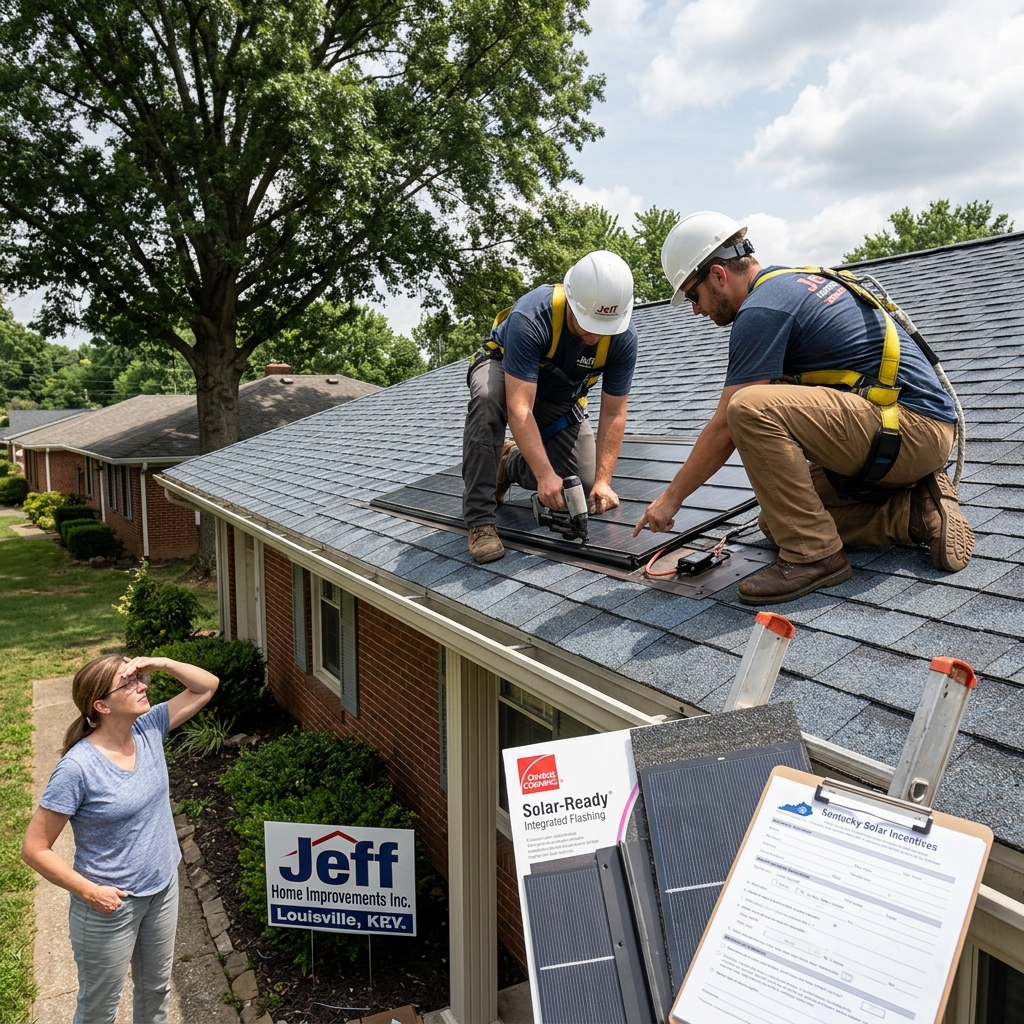
We then establish conduit pathways during installation. Running electrical conduit for solar wiring inside the roof structure during construction costs far less than surface-mounted options added later. We coordinate with your preferred electrician (or our recommended partners) to ensure the pathway design matches your eventual system size and configuration.
Ventilation planning is critical. Proper roof ventilation prevents heat buildup and extends shingle life. When solar panels sit on the roof, they reduce ventilation efficiency in their immediate area. A solar-ready installation accounts for this by ensuring the overall ventilation system compensates. This requires slightly different soffit and ridge vent sizing than a standard roof might receive.
Once installation is complete, we provide documentation showing the roof structure’s solar load capacity, the location of conduit runs and access points, and the optimal orientations for panel placement. This documentation becomes invaluable when you’re ready to work with a solar installer.
Practical next step: Request a site assessment from our team at https://jeffroof.com. We’ll photograph your roof, assess shading and orientation, and provide a detailed solar readiness report along with your roofing quote.
Solar Shingles vs. Traditional Panels: Which Solution Works Best for Your Home
Kentucky homeowners often ask whether solar shingles or traditional panel systems make more sense. The answer depends on your priorities, roof condition, and aesthetic preferences.
Solar shingles integrate photovoltaic cells directly into roofing material, replacing standard shingles. They offer a seamless, attractive appearance and eliminate the visual impact of panel arrays. From a solar-ready roofing perspective, solar shingles change your approach significantly. You’re not preparing to add panels to an existing roof. Instead, you’re replacing the roof with an integrated solar system.
The trade-offs include higher upfront cost (solar shingles typically run 2 to 3 times the cost of traditional panels plus roofing), lower installation flexibility, and fewer incentives available. If a section fails, repair costs are higher than replacing a single traditional panel. For Kentuckiana homes with roofs not yet at end-of-life, solar shingles may not make financial sense immediately. However, if your roof needs replacement in the next 2 to 3 years and you’re committed to solar, shingles can be a compelling long-term choice.
Traditional panel systems (photovoltaic arrays mounted on a solar-ready roof) remain the more popular option for residential properties in Kentucky. They attach to your completed roofing system without requiring roof replacement. Costs are lower, installation is faster, warranties are well-established, and maintenance is straightforward. If your roof is relatively new or in good condition, traditional panels are almost always the better financial choice.
The solar-ready roofing approach we typically recommend supports traditional panels. This keeps your options open. You get a durable, weather-protected roof that also happens to be structurally and electrically ready for panels when you decide to install them.
However, if you know with certainty that solar panels are your next step and your roof is near end-of-life anyway, solar shingles deserve consideration. They eliminate the need for separate panel mounting hardware and create a cleaner roofline. We can evaluate your specific situation and provide honest guidance about which path maximizes your long-term value.
Key takeaway: For most Kentucky homeowners, solar-ready roofing with traditional panels planned for future installation offers the best balance of cost, flexibility, and performance. Solar shingles work well for specific situations, typically those involving simultaneous roof replacement and solar commitment.
Understanding Solar Panel Mounting Systems on Our Roof Replacements
Solar panel mounting systems are the hardware framework that secures panels to your roof. The quality of mounting design affects everything from panel performance to roof longevity.
Modern mounting systems use L-shaped or rail-based hardware that distributes weight across multiple roof attachment points. A typical residential system might require 20 to 40 penetrations through the roof, depending on array size. Each penetration is a potential leak point if not sealed properly. This is where solar-ready roofing makes a difference.
During a solar-ready installation, we anticipate where these mounting points will go based on your roof orientation and planned system size. We work with solar installers beforehand to identify optimal attachment locations. This allows us to position decking fasteners, reinforce framing in those exact areas, and ensure the roof structure is maximally prepared.
Standard roofing installations don’t coordinate this level of detail. The roof gets built to code, then solar installers place mounting hardware wherever the array design requires, which may or may not align with optimal structural points. This can require additional reinforcement work after the fact.
Flashing and sealing around penetrations is critical. Poor flashing is the leading cause of solar-related roof leaks. We use marine-grade flashing materials and multiple-layer sealing approaches for solar-ready roofs, anticipating that water management will be especially important around panel attachment points. Our crews receive specific training on sealing techniques that solar installations demand.
We also coordinate conduit placement with mounting locations. Running electrical conduit near mounting points creates a consolidated infrastructure zone rather than scattered wiring paths that complicate future maintenance.
What this means for you: A solar-ready roof installation costs roughly the same as standard roofing but includes structural analysis and planning that makes solar installation far simpler and more reliable later. The mounting system will perform better, leak risk is minimized, and electricians will work faster when the time comes.
Federal Tax Credits and Kentucky Incentives We Help You Access
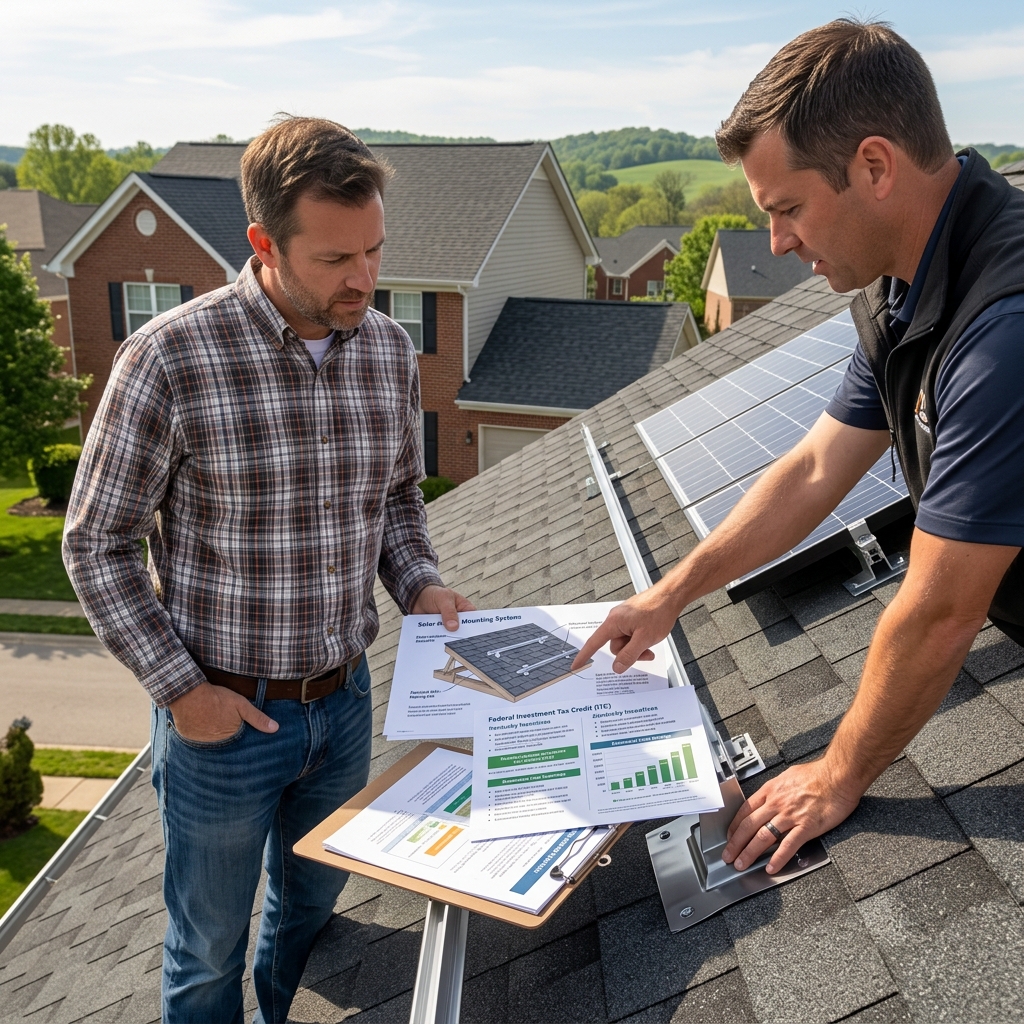
The financial incentives available for solar energy have shifted significantly in recent years, and understanding what applies to your situation can mean thousands of dollars in savings.
The federal Investment Tax Credit (ITC) currently allows homeowners to claim 30 percent of solar installation costs as a tax credit (as of 2026). This applies to the solar panels and balance-of-system equipment, but typically not to the roofing itself. However, if you’re installing solar panels within a few years of roof replacement, timing your projects strategically can maximize overall savings. Replacing your roof first on a solar-ready basis ensures the panels go in smoothly and reliably, setting you up for the best tax position.
Kentucky offers additional incentives at the state level. Net metering rules in Kentucky allow homeowners with solar systems to receive credits for excess electricity fed back to the grid. These credits reduce your future electricity bills, effectively increasing your solar ROI. We keep current on Kentucky’s solar regulations and share that information with homeowners during consultations.
Some Kentucky municipalities offer local tax credits or rebates for solar installation. Louisville and surrounding areas have varying programs, and we help homeowners research what applies to their specific location.
Property tax implications vary by county. In many Kentucky jurisdictions, adding solar panels doesn’t increase property tax assessments, which is a significant hidden benefit many homeowners overlook. Our team can provide guidance on your county’s rules.
We also assist with financing options. Many solar companies offer leasing, power purchase agreements, or partnership financing that reduces upfront costs. While we focus on roofing, we’ve built relationships with reputable solar installers in the Kentuckiana area who can discuss financing when you’re ready to move forward with panels.
Actionable guidance: Don’t assume solar incentives apply uniformly across Kentucky. Your specific address, roof configuration, and income level all factor into what programs you qualify for. Request an incentive analysis as part of your solar-ready roof consultation. We coordinate this information so you have a complete financial picture before committing.
The Long-Term Energy Savings and Home Value Increase from Solar-Ready Roofs
A solar-ready roof is an investment in your home’s future earning potential. The numbers can be compelling.
Average residential solar systems in Kentucky save homeowners $800 to $1,500 per year on electricity costs, depending on system size and shading. Over a 25-year solar panel lifespan, that’s $20,000 to $37,500 in direct energy savings. These figures vary based on your current utility rates and local sunshine hours, but they’re representative for the Louisville area.
Home value increases follow solar installation. Multiple studies show that solar-equipped homes sell for 3 to 4 percent more than comparable homes without solar. For a home valued at $300,000, that’s $9,000 to $12,000 in additional sale price. This premium reflects the operational savings and modernized appeal solar systems create.
A solar-ready roof supports these returns by ensuring smooth installation and optimal system performance. Retrofitting panels onto an older roof that wasn’t designed for solar often requires structural reinforcement, additional electrical work, and sometimes roof repairs that reduce the overall cost-effectiveness of going solar. By planning ahead during your roof replacement, you eliminate these hidden costs.
Long-term durability also factors into ROI. A properly installed solar-ready roof with quality materials lasts 30 to 50 years depending on material choice. Metal roofing we install for solar-ready projects often exceeds 50 years. A durable roof means fewer future replacement costs, and it provides consistent protection for your solar investment throughout the system’s operational life.
Consider the cumulative effect: a solar-ready roof replaces aging infrastructure, lasts decades, integrates seamlessly with future solar panels, and sets up your home for $20,000+ in energy savings plus home value appreciation. The upfront investment aligns with real, measurable long-term benefits.
Realistic expectation: Solar-ready roofing isn’t free, but the additional cost of planning for solar integration during replacement is typically under $500 to $1,000 for a residential property. Compare that to the thousands you’ll save by avoiding retrofitting hassles and structural work later. It’s sound financial planning.
Our Process: From Roof Inspection to Solar System Readiness
Our solar-ready roofing process follows a clear sequence designed to give you complete confidence in your roof’s solar compatibility.
Step one is a comprehensive roof inspection. We assess current roof condition, structural integrity, trusses, decking, existing ventilation, and electrical panel capacity. We photograph the roof from multiple angles, measure dimensions, document shading patterns from nearby trees or structures, and identify the optimal orientations for future solar placement. This inspection typically takes 1 to 2 hours and produces a detailed report.
Step two involves a consultation where we review inspection findings, discuss your timeline for solar installation, and explore your goals for energy independence. We talk about budget, aesthetic preferences, and whether you lean toward traditional panels, solar shingles, or haven’t decided yet. This conversation shapes our material and installation recommendations.
Step three is design and planning. Working with your input and input from solar partners we’ve worked with, we create a roof replacement plan that addresses your weather protection needs while optimizing for solar readiness. This includes structural analysis for solar loading, conduit pathway planning, optimal roof pitch confirmation, and material selection that supports your long-term goals.
Step four is the installation phase. Our crews execute the replacement following solar-ready specifications, which means attention to fastening patterns, conduit routing, flashing quality, and ventilation design that go beyond standard roofing code. We document everything for future reference.
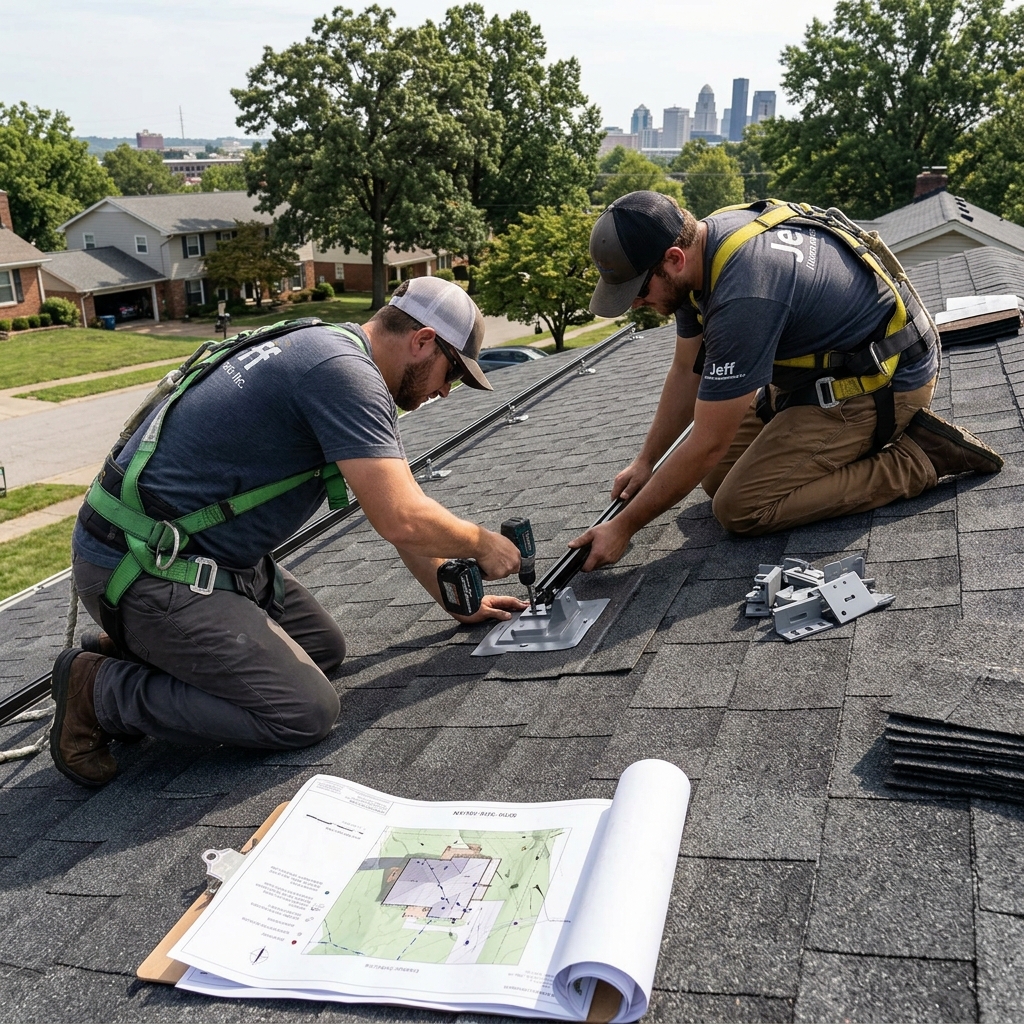
Step five is documentation and handoff. We provide detailed records showing roof structure capacity, solar loading verification, conduit locations, optimal panel placement zones, and electrical integration points. These documents become invaluable when you contact a solar installer.
Throughout this process, we maintain open communication. If questions arise about solar compatibility or if your plans change, we adjust recommendations accordingly. Solar-ready roofing succeeds because it’s a collaborative process, not a checkbox exercise.
Timeline consideration: The full process from inspection to completed installation typically takes 4 to 8 weeks depending on roof size, weather, and material availability. Plan accordingly if you have a specific timeline for solar installation.
Protecting Your Solar Investment with Our Quality Materials and Craftsmanship
The durability of your solar-ready roof directly determines how well your future solar panels perform and how long they remain problem-free.
We recommend specific material combinations for solar-ready projects. Impact-resistant asphalt shingles with Class 4 hail ratings provide excellent durability in Kentucky’s weather while accepting solar mounting hardware reliably. Metal roofing, increasingly popular in our region, offers 50+ year lifespans, superior heat resistance (important when solar panels are present), and outstanding structural capacity for panel weight distribution.
Quality underlayment matters significantly. We use premium synthetic underlayment rather than felt, which resists moisture better and lasts longer. This becomes critical when solar panels are involved because they alter roof surface moisture patterns. Better underlayment protects against that.
Our installation crews receive specific training in solar-compatible techniques. This includes proper sealing around future conduit pathways, fastening patterns that support solar loading, and flashing approaches that prevent leaks around future panel attachment points. It’s not enough to simply install a good roof. For solar readiness, installation quality must anticipate panel integration.
Warranties on our work are comprehensive. We provide material warranties through manufacturers (typically 25 to 50 years depending on material) and our own workmanship warranty covering installation quality. When solar panels go on your roof years later, that warranty protection remains in force, giving you and your solar installer confidence in the underlying structure.
We also recommend regular maintenance. An annual roof inspection, gutter cleaning, and addressing minor issues early prevents problems from compounding. When solar panels are eventually installed, your roof’s condition will support reliable panel operation with minimal surprise repairs.
Your protection: Choose a Louisville roofing contractor who understands solar integration and stands behind their work. We’ve installed hundreds of solar-compatible roofs across Kentuckiana, and we’re prepared to support your solar transition when the time comes.
Next Steps: Getting Your Home Roof-Ready for Solar Energy Today
If your roof is aging, leaking, or you’re simply thinking ahead about solar energy, now is the time to discuss solar-ready options.
Start by scheduling a no-obligation roof inspection with us. We’ll assess your current situation, provide honest feedback about solar potential, and explain how solar-ready roofing applies to your specific home. This inspection is free, takes roughly 90 minutes, and delivers comprehensive documentation you can use to make informed decisions.
Bring questions about your solar timeline, budget expectations, and aesthetic preferences. Share any information you’ve gathered about solar incentives or financing options you’re considering. The more context we have, the more tailored our recommendations become.
If you decide to move forward with a solar-ready roof replacement, we’ll provide a detailed quote that itemizes materials, labor, and solar-readiness enhancements. You’ll understand exactly what you’re investing in and why.
Once your roof is complete, keep our inspection report and documentation handy. When you’re ready to contact solar installers, that information streamlines their assessment process and often reduces their installation costs.
We’re here to support your long-term home improvement goals, whether that means a durable roof today or solar panels next year. Roofing and solar energy integration have become interconnected for smart Kentucky homeowners. We’ve equipped our team and processes to help you navigate both.
Contact us at https://jeffroof.com to request a solar-ready roof assessment. We’re ready to help you protect your home while preparing for the energy independence you’re considering.
For further reading: Louisville roofing contractor.
Contact us today for a free in home, no obligation quote on your roof




 INDIANA
 KENTUCKY