
The Real Risks of Hiring Unlicensed Roofers in Kentucky
Your roof is one of your home’s most valuable assets. It shields everything beneath it from weather, keeps your family safe, and represents thousands of dollars of your hard-earned money. So when it’s time for repair or replacement, the contractor you choose makes an enormous difference. In Louisville and Kentuckiana, the difference between hiring a licensed, insured professional and cutting corners with an unlicensed operator can mean the difference between a job done right and a financial disaster.
We’ve been helping homeowners and commercial property managers with roofing and exterior services since 1989. Over 35 years, we’ve learned exactly what separates quality contractors from those who shouldn’t be climbing on your roof at all. Here’s what you need to know to protect your investment.
Unlicensed roofers operate in a legal gray zone that puts you at significant risk. Kentucky requires roofing contractors to be licensed for good reason. When someone operates without a license, they’ve bypassed inspections, background checks, and financial accountability measures designed to protect consumers.
Here’s what can happen when you hire an unlicensed operator:
- Poor workmanship goes uncorrected. Without licensing requirements, there’s no standard they must meet. Shortcuts in flashing installation, inadequate ventilation, or improper nail placement can cause leaks within months instead of years.
- You have no legal recourse. If something goes wrong, you can file a complaint with the state licensing board only against a licensed contractor. An unlicensed roofer leaves you with limited recovery options.
- Building permits are often skipped. Legitimate roofing work requires permits in Louisville. Unlicensed contractors frequently skip this step to save time and money, which can void your roof warranty and create problems when you sell your home.
- Your homeowner’s insurance may not cover damage. Many policies exclude coverage if work was done by unlicensed contractors. A small leak becomes a full replacement cost you cover yourself.
We’ve seen homeowners in the Louisville area spend $15,000 on a roof replacement only to discover a year later that the work was substandard and the contractor had vanished. By then, water damage has already started affecting your attic and insulation.
What to do next: Before accepting a quote, verify your contractor’s license with the Kentucky Cabinet for Health and Family Services or check their credentials directly. Request their license number and confirm it’s current and active.
How Licensing and Insurance Protect You as a Homeowner
Licensing isn’t just a credential hanging on a wall. It’s proof that a contractor has met specific education requirements, passed examinations, maintains bonding, and submits to regulatory oversight. When something goes wrong, the licensing board has authority to investigate complaints and hold the contractor accountable.
Insurance works alongside licensing to provide financial protection. A properly insured roofing contractor carries two main types of coverage:
General liability insurance covers property damage or injuries that occur during the job. If a roofer accidentally damages your gutter system or a tool falls and hurts someone passing by, liability coverage pays for it rather than you being sued personally.
Workers’ compensation insurance protects you from liability if a roofer is injured on your property. Without workers’ comp, you could be held responsible for medical bills and lost wages. This alone makes hiring insured contractors non-negotiable.
When we take on a roofing project, we carry both. You should always request proof of current insurance before a contractor steps foot on your roof. A legitimate contractor will provide this without hesitation.
The relationship between licensing and insurance is straightforward: licensed contractors are accountable to the state, and insured contractors are accountable to their insurance carrier. Together, they create a safety net for you. If a leak appears two years after your roof replacement, a licensed contractor has recourse through warranty claims and professional standards. An unlicensed operator does not.
What to do next: Ask your contractor to send you a certificate of insurance before work begins. Call their insurance company to verify coverage is active. This takes five minutes and is worth every second.
Our Commitment to Certification and Professional Standards
We didn’t simply get a license and call it done. We’ve maintained our standing as an Owens Corning Platinum Preferred Contractor, which is a distinction we earn by consistently meeting and exceeding manufacturer standards for materials, installation quality, and customer service.
What this means for you: we’re trained directly by Owens Corning, we use their premium materials, and we install them according to specifications that often exceed Kentucky building codes. Our team undergoes ongoing education so we stay current with new roofing technology, safety practices, and industry changes.
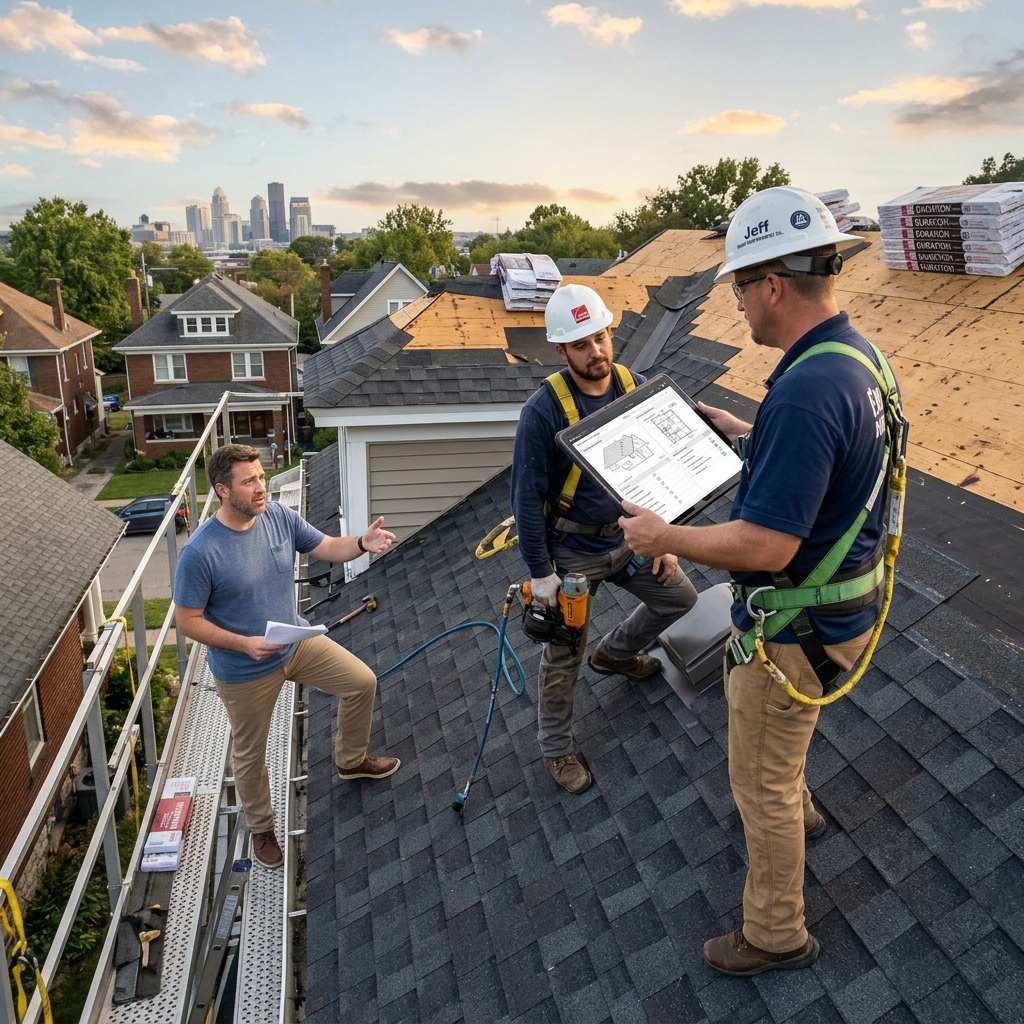
We also maintain our commercial and residential roofing certifications, which require continuing education and regular audits of our work. This isn’t something we do once and forget about. Every year, we renew credentials, update our crews’ training, and ensure we’re meeting professional standards.
Certification matters because it’s the difference between following a manufacturer’s instructions and truly understanding why each step matters. A certified installer knows that the spacing of nails, the type of underlayment used, and the ventilation strategy directly affect how long your roof will last. They’re not just hammering shingles; they’re protecting your home according to proven engineering principles.
What to do next: Before hiring any contractor, ask about their certifications. Find out which manufacturers they’re certified with and how long they’ve maintained that status. In our case, that Owens Corning Platinum Preferred Contractor designation tells you we’ve met rigorous standards and committed to maintaining them.
What Happens When Something Goes Wrong With Your Roof
Even with quality installation, roofs sometimes develop problems. Whether it’s a manufacturing defect, unexpected weather damage, or the normal wear that comes with age, knowing what happens next depends heavily on who did the original work.
If we installed your roof, here’s the process:
We’ll come back and assess the issue at no cost. Our warranty covers manufacturer defects and installation errors for a specified period, depending on the materials used. If the problem falls under warranty, we fix it without charging you.
We document the issue with photos and detailed notes. This protects you because you have a professional record of what happened and how we addressed it.
If the problem is outside warranty but we caused it, we work with you on a fair resolution rather than dismissing the issue.
With an unlicensed contractor, this process breaks down entirely. They may not answer their phone. They might claim it’s not their responsibility. They may have gone out of business. You’re left paying another contractor to assess the damage and fix it.
The stakes are highest with storm damage. When severe weather hits Louisville, we get multiple calls from homeowners who hired cut-rate roofers on their previous roof. Now a tree has fallen, there’s water damage, and they need their roof repaired again. If the original work was poor, subsequent damage is often worse because the roof’s integrity was compromised to begin with.
What to do next: Keep documentation of your roof installation including receipts, warranty information, and photos. Store the name and contact information of your roofing contractor somewhere accessible. If you suspect a problem with your roof, call your original contractor first, not a new one looking for business.
Why We Maintain Our Owens Corning Platinum Preferred Contractor Status
The Owens Corning Platinum Preferred Contractor program isn’t easy to maintain. We have to meet strict criteria:
- Install only Owens Corning premium products
- Maintain a minimum customer satisfaction rating (we consistently exceed this)
- Complete ongoing training for all installation crew members
- Undergo regular quality audits of completed jobs
- Carry appropriate licensing and insurance (which we do)
We maintain this status because it keeps us honest. Owens Corning has a reputation to protect, and they only associate their premium brand with contractors who deliver results. When you hire us, you’re getting a contractor that Owens Corning has vetted and approved.
This also means access to better pricing on materials and extended warranty options we pass along to you. A Platinum Preferred Contractor can often offer superior warranties because we’ve proven our installation quality. That’s a direct benefit to homeowners.
The renewal process is annual, which means we can’t rest on past accomplishments. Every year, we demonstrate that we’re still meeting standards. This continuous accountability is exactly what you want in a contractor.
What to do next: Look for the Owens Corning Platinum Preferred Contractor badge when shopping for roofing contractors in Louisville. If your contractor has it, you can verify it on the Owens Corning website. It’s a quick way to confirm they’re not exaggerating their credentials.
The Hidden Costs of Cutting Corners With Uninsured Contractors
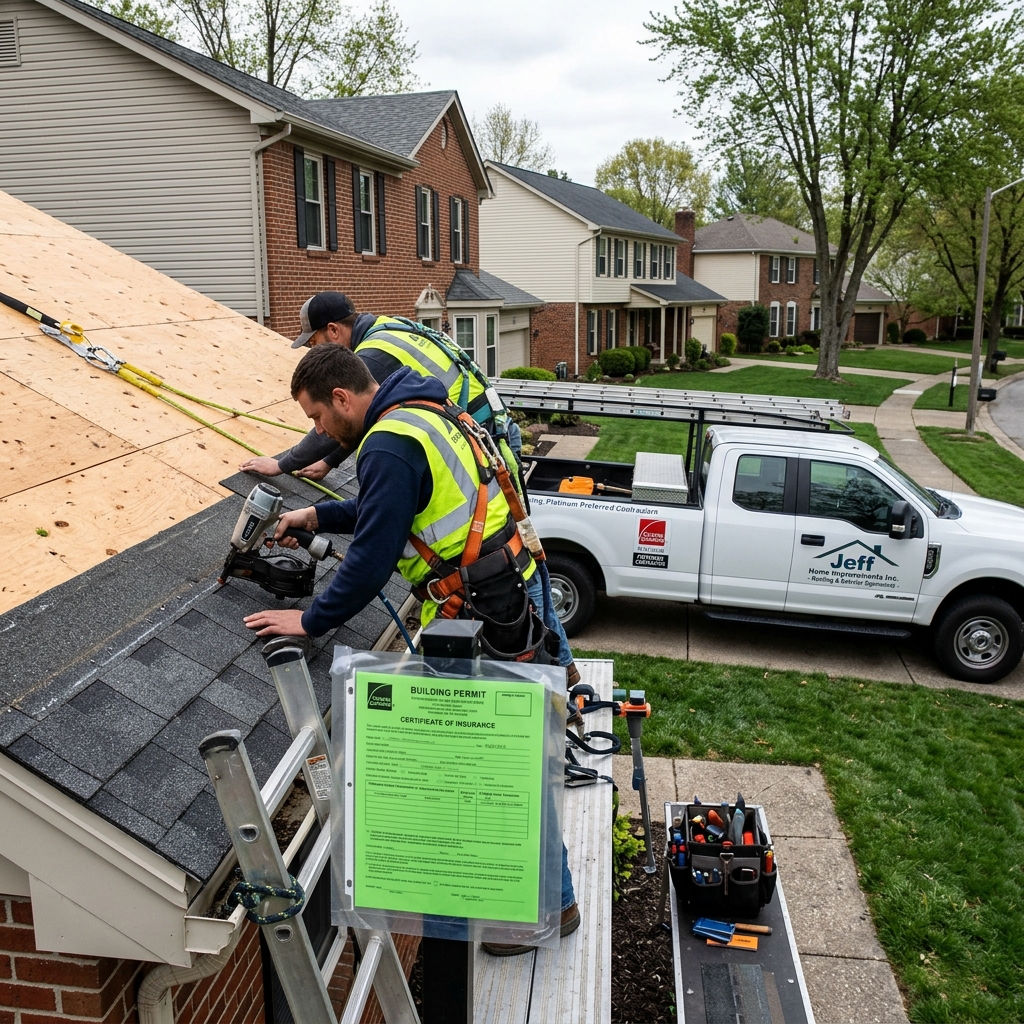
The lowest bid often comes from an uninsured contractor, and there’s always a reason for that price advantage. They’re cutting corners somewhere, and those corners eventually come back to cost you money.
Consider this real-world scenario: A homeowner in Louisville gets a bid of $8,000 from an uninsured roofing contractor and $12,000 from us. They choose the $8,000 option to save money. Eight months later, water starts leaking into the attic. The cheap roof’s flashing was installed incorrectly. Removing and reinstalling that section properly costs $3,000. The water damage to the attic space and insulation requires another $2,500 in remediation. The roofing contractor is unreachable.
Total cost: $8,000 original + $5,500 in repairs = $13,500. They’ve now spent more than our quote and have a headache instead of peace of mind.
Uninsured contractors also cut costs by:
- Using lower-quality materials that don’t last as long
- Rushing installation to complete more jobs per week
- Skipping safety equipment and practices
- Avoiding permits and inspections
- Not properly training their crews
If a worker is injured on your property and the contractor isn’t insured, your homeowner’s insurance may deny coverage, and you could face a personal lawsuit. That liability exposure can be far more expensive than any roofing project.
What to do next: When you get a bid that’s significantly lower than others, ask why. Request a detailed breakdown of materials and labor. Then check whether they’re insured. If they can’t or won’t provide insurance proof, move on.
How We Streamline Your Project From Consultation to Completion
We’ve refined our process over three and a half decades to make roofing projects as smooth as possible for you.
Virtual consultation and instant estimates: You don’t have to take time off work or coordinate schedules. We offer virtual consultations where we discuss your roof’s condition, your goals, and your timeline. Based on that conversation and photos you send or we assess, we provide an instant estimate. This gives you a clear price before we ever schedule a crew.
Detailed project planning: Once you approve the estimate, we schedule your work, confirm materials availability, and provide a specific start date. You know exactly when to expect our team.
Professional installation: Our licensed crew arrives with the right equipment, materials, and expertise. We protect your property during the work, managing debris and minimizing disruption to your neighborhood.
Quality inspection: Before we consider the job complete, we inspect the entire roof ourselves. We check nail placement, flashing installation, ventilation, and overall workmanship against Owens Corning standards and Kentucky building codes.
Documentation and warranty: You receive complete documentation of the work, including photos, warranty details, and maintenance tips. We explain your warranty coverage and what to watch for in the coming months.
This structured approach reduces surprises and keeps you informed throughout. We’re not trying to maximize jobs per day at the expense of quality. We’re trying to give you a roof that lasts decades.
What to do next: When you contact a roofing contractor, ask about their process. Do they offer virtual consultations? Can they provide an estimate quickly? Will they explain the warranty? These process details reveal a lot about how they operate.
The Difference Professional Storm Damage Assessment Makes
Kentucky weather can be brutal. Heavy rain, hail, wind, and falling trees create urgent roofing needs, and that’s when getting a professional assessment becomes critical.
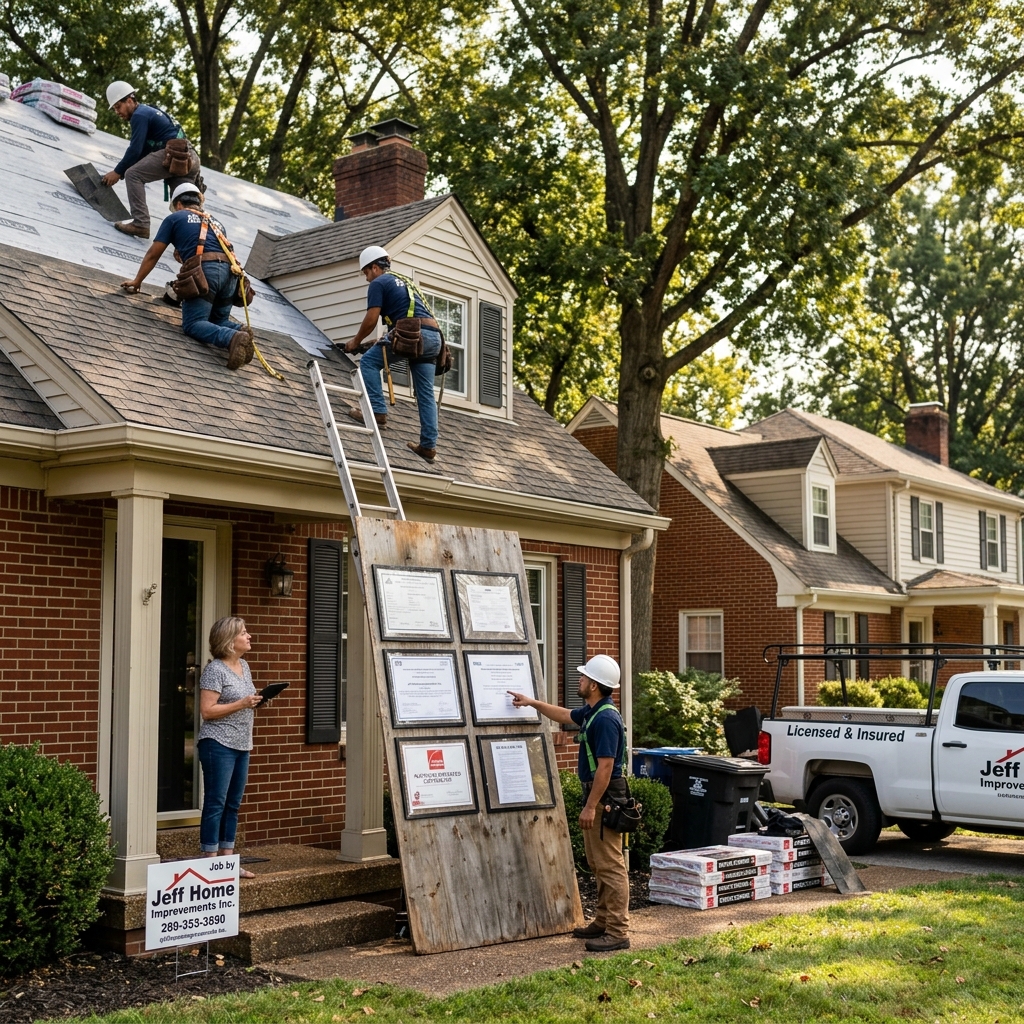
An amateur assessment might look at your roof from the ground or a cursory inspection from above and declare it fine when damage isn’t visible. A professional assessment means climbing on the roof with proper safety equipment, examining every section, checking for impact damage to shingles, inspecting flashing where water intrusion is most likely, and assessing structural integrity.
We’ve responded to storm damage across the Louisville area. Sometimes homeowners don’t realize their roof was affected because the damage isn’t obvious. Missing shingles on the far side of the roof, small cracks in flashing, or compressed areas on shingles from hail are easy to miss. But left unaddressed, these small issues turn into big leaks.
A professional storm assessment also matters for insurance claims. Your insurer needs detailed documentation of damage to approve coverage. We provide photos, measurements, and a professional assessment that supports your claim. This documentation often recovers thousands of dollars in coverage.
We assess storm damage at no cost. Our goal is to identify issues before water gets inside and creates secondary damage that’s far more expensive to fix.
What to do next: After severe weather, don’t wait to inspect your roof. Call a licensed contractor for a professional assessment. Even if you don’t see obvious damage, a professional eye catches what you might miss.
Why Louisville Homeowners Trust Our 35+ Years of Experience
We’ve been in business since 1989 because we do what we say we’ll do. In 35 years, we’ve replaced thousands of roofs across Louisville and Kentuckiana. We’ve helped homeowners recover from storms, navigate insurance claims, and make informed decisions about their homes’ exteriors.
Experience matters because we’ve seen every type of roof issue, weather pattern, and renovation challenge the region presents. We know how Louisville’s humidity affects roofing materials. We understand the specific wind patterns that affect certain parts of town. We know which contractors have disappeared and which ones are still here.
Longevity also means we’re invested in the community. We’re not a fly-by-night operation. We’re a family-owned business that plans to be here in 2046 as well. That means we stand behind our work because our reputation is everything.
When you hire us, you’re hiring institutional knowledge. You’re hiring a company that will be here if you have a question five years after your roof is installed. You’re hiring people who take pride in their work because they see the same customers at the grocery store and church.
We’ve also adapted to changes in the industry. We now offer virtual consultations that didn’t exist when we started. We use the latest materials that perform better than what was available decades ago. We’ve invested in training because roofing continues to evolve.
What to do next: Ask a prospective contractor how long they’ve been in business. Check online reviews and ask for references. A contractor with decades of history and community ties is more likely to stand behind their work.
Getting Your Free Virtual Consultation and Instant Estimate Today
Protecting your investment in your home starts with hiring the right contractor. The licensed insured roofing contractor you choose will influence how long your roof lasts, how well it protects your home, and how you’re treated if something goes wrong.
We’re ready to help. We offer free virtual consultations where we discuss your roofing needs, answer your questions, and provide an instant estimate. There’s no obligation, no pressure, and no reason to wait if you’re concerned about your roof’s condition.
Here’s what to expect when you reach out:
- A quick conversation about your roof and your goals
- A transparent estimate with no surprises
- Professional recommendations based on your home’s specific needs
- Information about warranties and our Owens Corning Platinum Preferred status
Contact us today to schedule your free virtual consultation. We’ll help you understand your options and move forward with confidence, knowing you’ve hired a licensed, insured, certified contractor who’s been protecting Louisville homes for over three decades.
Contact us today for a free in home, no obligation quote on your roof




 INDIANA
 KENTUCKY