Archive for:

Author Archive for Admin – Page 3

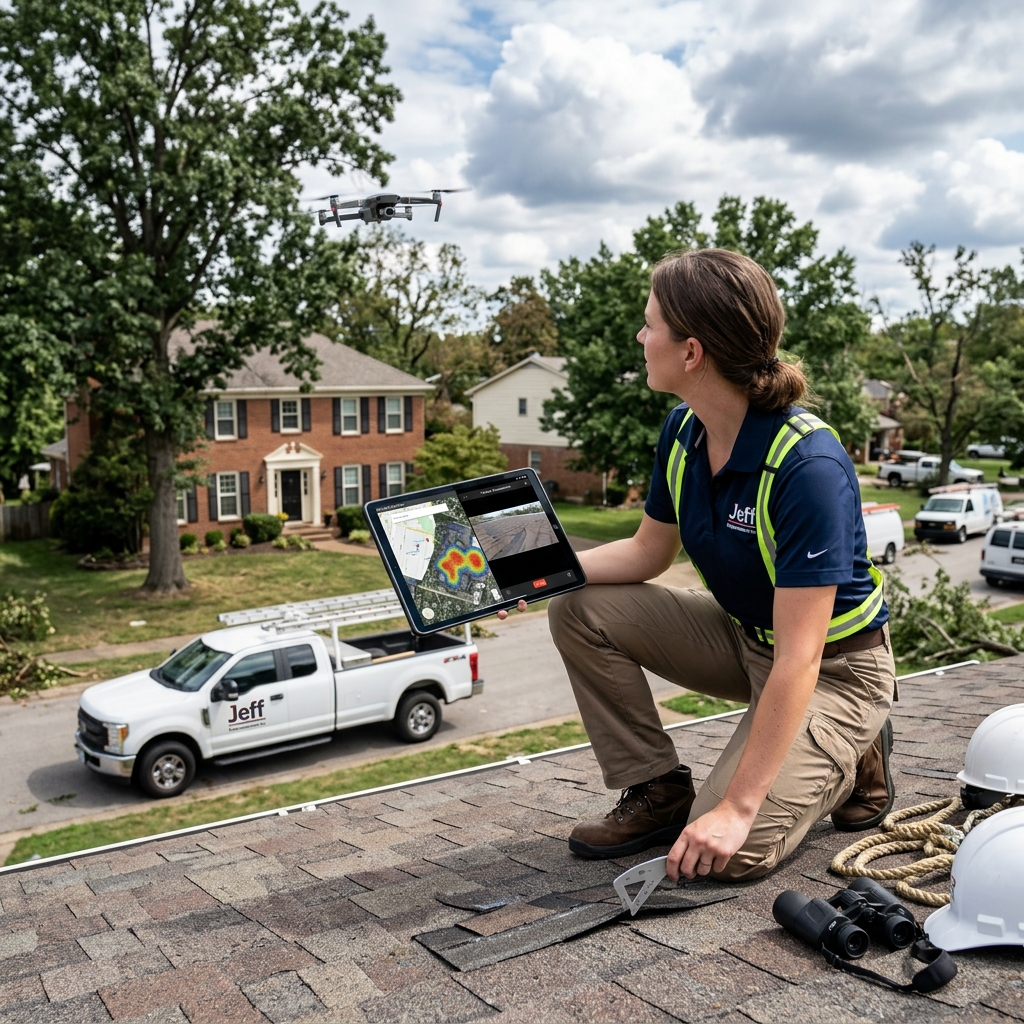
Fast Roof Inspection Scheduling in Louisville: Expert Service Near You

Why Quick Roof Inspections Matter for Your Home or Business

A roof inspection isn’t something most property owners think about until a problem shows up. By then, you may be facing water damage, mold growth, or structural concerns that cost significantly more to repair. Early detection through a timely inspection can catch small issues like cracked shingles, flashing gaps, or deteriorating sealant before they become expensive problems.

For homeowners, a quick inspection after severe weather gives you peace of mind and clarity on whether your insurance claim will be straightforward. For commercial property managers, regular inspections help you maintain your warranty coverage and avoid disruptions to tenants or operations. We’ve found that businesses that schedule inspections promptly report fewer emergency repairs and better long-term maintenance records.

The roof is your home or building’s first line of defense against moisture, wind, and UV damage. When you delay inspection, minor issues compound. A small leak in spring can lead to attic rot by summer. What might have cost $200 to seal can balloon into a $5,000 structural repair.

What to do next: If you haven’t had your roof inspected in the last two years, or if you’ve experienced recent weather events, schedule an inspection this week. Don’t wait for visible signs of damage inside your building.

The Problem with Delayed Inspection Responses

Many roofing companies operate with long scheduling backlogs. You call on Tuesday, and the first available appointment is three weeks away. By the time the inspector arrives, weather has changed, you’ve forgotten details about what you observed, and any minor issue has had time to worsen.

We’ve heard countless stories from property owners who waited weeks for an inspection only to discover the damage was far more extensive than they initially thought. Delayed response also complicates insurance claims. Adjusters expect prompt documentation, and if you’re submitting photos and inspection reports weeks after an event, carriers may question the timeline or severity.

For storm damage especially, timing matters for your claim. Insurance companies want evidence that you took reasonable steps to prevent further damage. A same-day or next-day inspection demonstrates that you acted responsibly and protects your coverage.

Slow response also creates stress. You’re left wondering whether your roof is safe, whether water is getting into your walls, and whether you need temporary tarping or emergency repairs. That uncertainty can disrupt your daily operations or your peace of mind at home.

What to do next: When you contact a roofing contractor, always ask about their typical scheduling window. If they can’t offer same-day or next-day options for urgent situations, keep looking.

How We Deliver Fast Inspection Scheduling Across Kentuckiana

We built our scheduling system around your needs, not ours. Our team works with a distributed network of certified inspectors across Louisville and the surrounding counties, so we can often dispatch someone to your property the same day you call. This isn’t a marketing promise; it’s how we operate because we know that roof emergencies don’t wait.

Our internal scheduling tool integrates real-time availability with our service routes. When you request an inspection, our office team immediately checks which inspector is closest to your location and has capacity that day. We’ve eliminated the back-and-forth that slows down other contractors. You call or fill out our online form, and we get you a confirmed appointment within hours, not days.

We also maintain buffer time in our schedule specifically for urgent requests. Rather than packing every hour with routine inspections, we reserve slots for storm damage assessments, insurance claims, and emergency situations. This strategy means homeowners and commercial clients can actually get quick appointments instead of hearing “sorry, we’re booked out.”

Weather also influences our approach. We monitor forecasts and proactively reach out to clients in areas where storms are developing, so they can schedule inspections before the weather hits rather than scrambling afterward when every contractor is overwhelmed.

What to do next: Bookmark our online scheduling tool or save our phone number. When you need an inspection, you’re just a few minutes away from a confirmed appointment.

Our Same-Day and Next-Day Appointment Options

We guarantee same-day or next-day inspection appointments for most situations in the Louisville area. If you call before 10 a.m., there’s a strong chance we can send an inspector to your home or commercial property the same afternoon. If you call after that, we prioritize next-day morning slots.

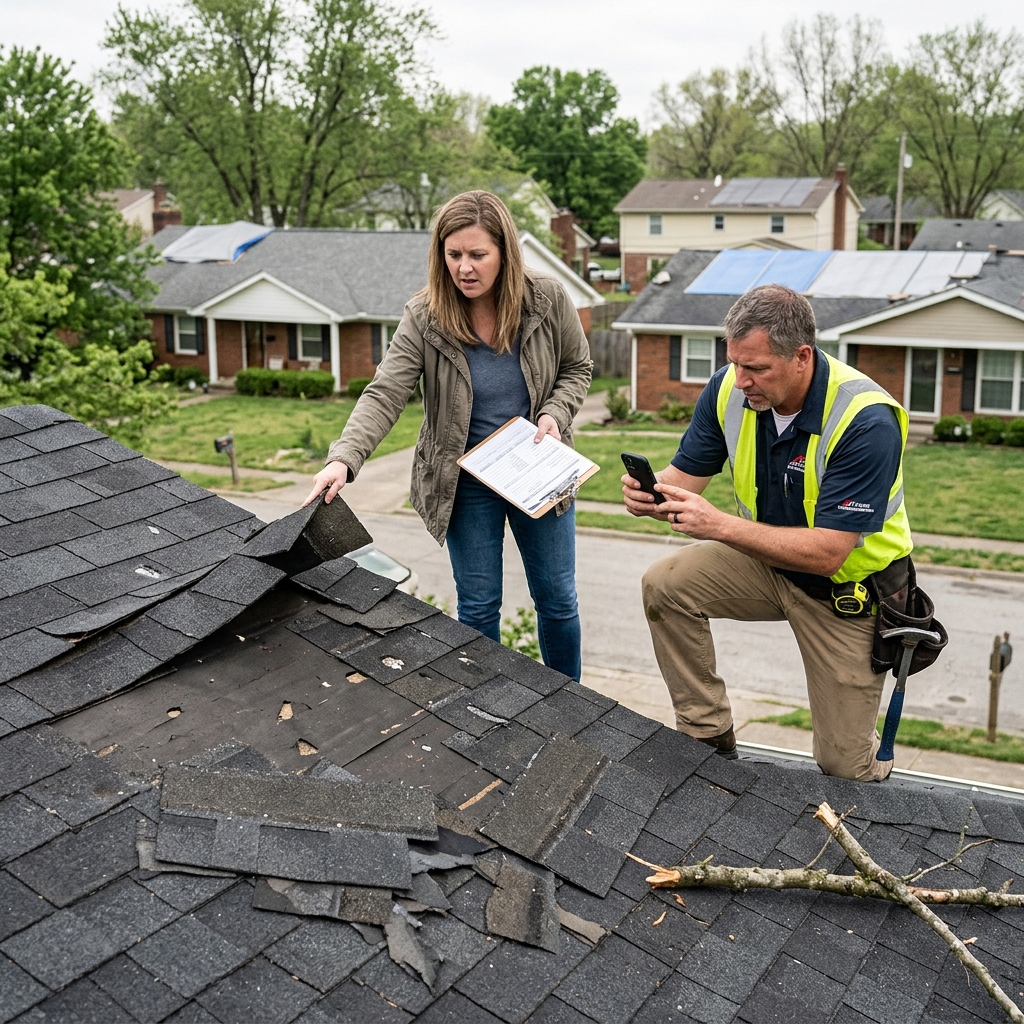
Same-day appointments are especially valuable for storm damage. Hail, high winds, or fallen trees damage roofs, and waiting weeks means you’re leaving your property vulnerable. We can assess the damage, document everything for your insurance claim, and recommend immediate protective measures (like tarping) if needed.

For non-emergency inspections, our next-day option still gives you speed that most competitors can’t match. You’re not waiting three weeks wondering whether to spend money on repairs. You get answers quickly and can make decisions with confidence.

Our inspectors arrive at your scheduled time, not “sometime between 8 a.m. and 6 p.m.” We respect your schedule whether you’re a busy homeowner or a property manager overseeing multiple buildings. If something comes up and you need to reschedule, we work with you to find the next available slot, often still same-day or next-day.

What to do next: When you call, specify if your situation is urgent (storm damage, visible leaks) or routine (regular inspection, pre-sale assessment). This helps us route your request to the right queue and set your expectations accurately.

What to Expect During Your Fast Roof Inspection

Our roof inspections are thorough yet efficient. When our inspector arrives, they’ll start by asking what prompted your inspection: Did you notice a leak? Did a storm pass through? Are you preparing for a sale? This context helps them focus on the most relevant areas.

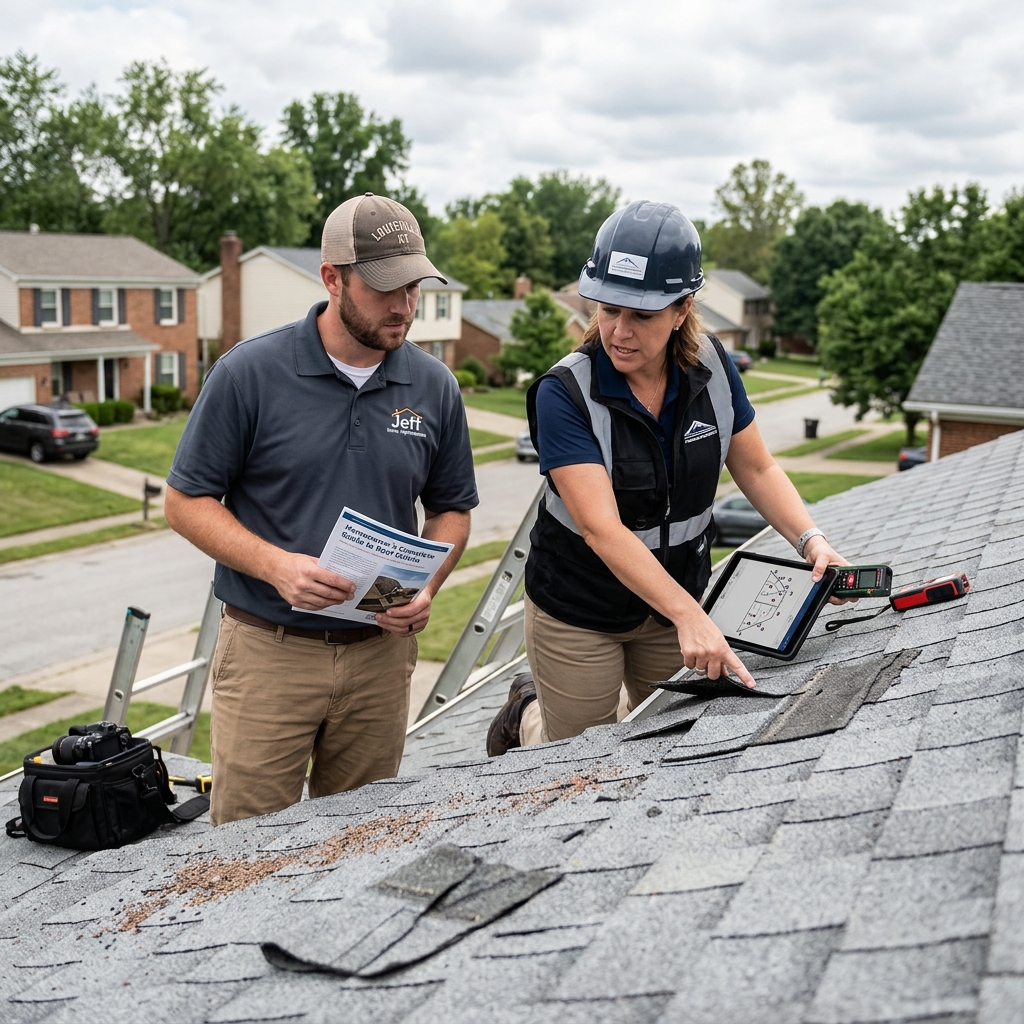
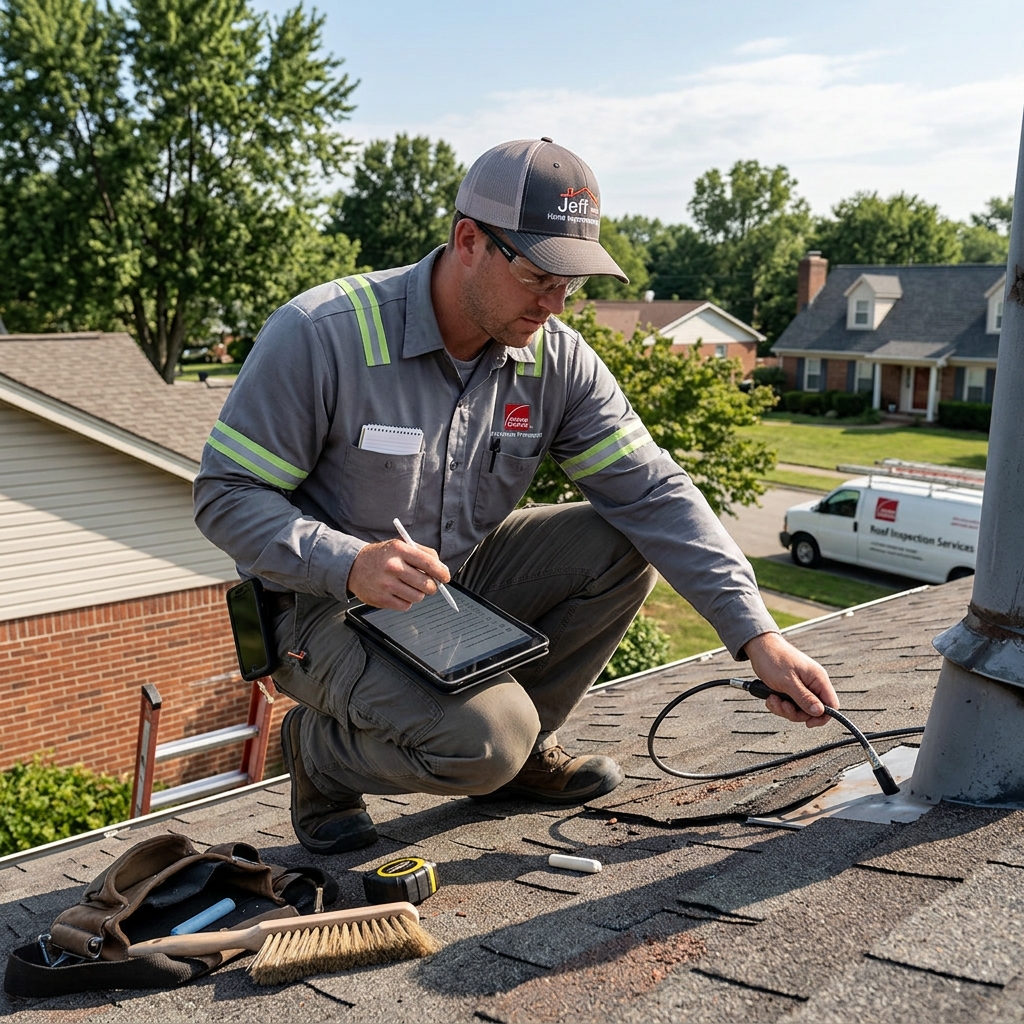
The inspection itself covers multiple areas. We examine your roof surface (shingles, tiles, or metal depending on your type), check flashing around chimneys and vents, inspect gutters and downspouts, look for signs of water damage in the attic or interior, and assess the general condition of the roof structure. Our team doesn’t just glance from the ground; we use safe access methods to get on the roof and see what’s actually happening.

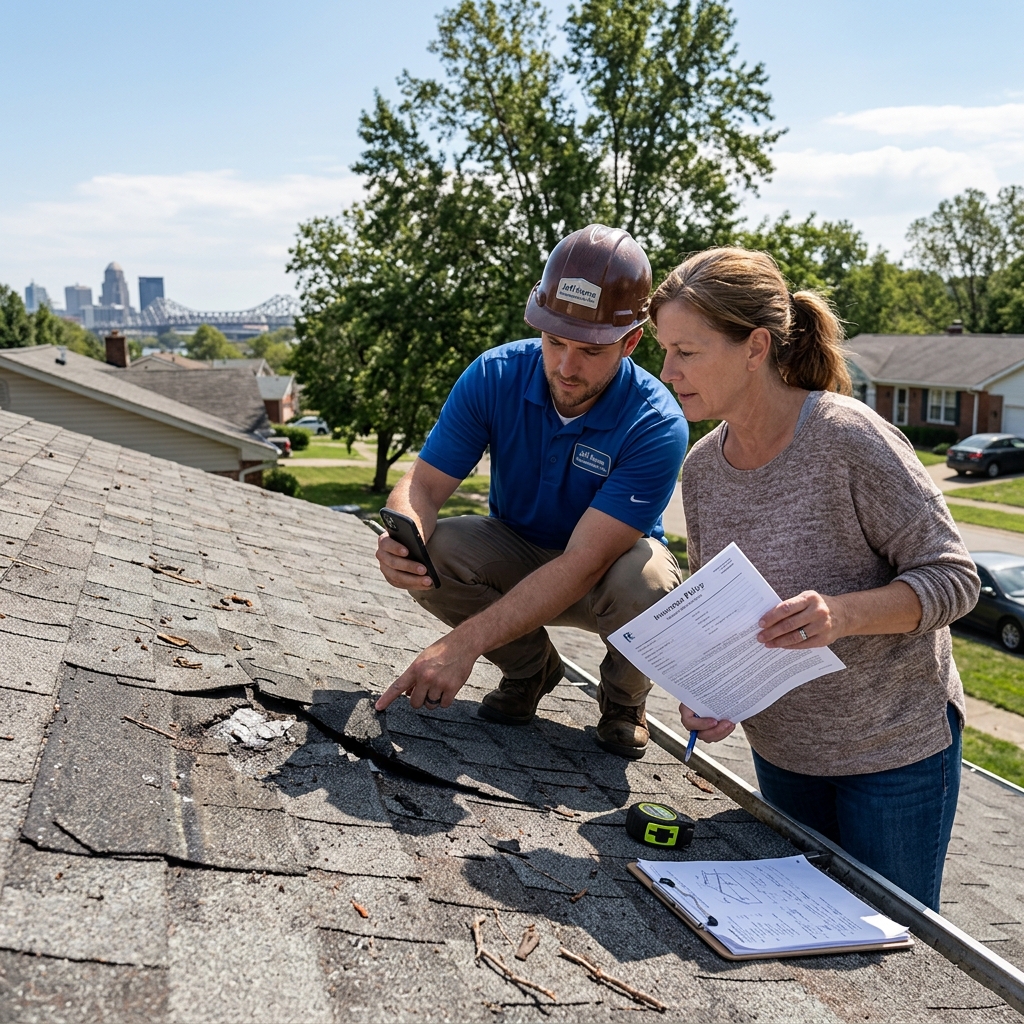
We also take photos and videos during the inspection. These images serve two purposes: they give you a clear visual record of your roof’s condition, and they provide critical documentation for insurance claims. You’ll have these files immediately so you can share them with your insurance adjuster if needed.

After the inspection, our team explains findings in straightforward language. We don’t use overly technical jargon or exaggerate problems to upsell unnecessary work. We tell you what we found, what it means for your safety and home, and what your options are. Whether you need immediate repairs, preventive maintenance, or just monitoring, we give you honest recommendations.

What to do next: Prepare a list of any concerns you’ve noticed (water stains, missing shingles, etc.) and have it ready when the inspector calls to confirm their arrival time.

Storm Damage: When Speed Makes a Difference

Storm damage assessment requires the fastest response possible. Hail, heavy winds, and lightning strike without warning, and your roof is immediately at risk. Every day that passes after a severe weather event is another day your roof is exposed and your interior could be damaged by moisture.

Insurance companies understand this, which is why they expect prompt action from property owners. If you wait two months to report a storm and file a claim, adjusters may question why you waited so long or whether the damage is really storm-related. A same-day or next-day inspection protects your claim by showing that you acted responsibly.

Storm damage repair assessment also informs your immediate decisions. Our inspector can tell you whether your roof is safe to occupy, whether temporary tarping is necessary to prevent interior water damage, and whether you need emergency repairs before regular repairs can be scheduled. These decisions affect your family’s safety and your property’s integrity.

We work closely with insurance adjusters throughout the process. When our inspection identifies storm damage, we provide detailed documentation that supports your claim. This collaboration streamlines the approval process and gets you to repairs faster. You’re not left coordinating between multiple parties; we handle the details.

What to do next: After any significant weather event, call us immediately. Even if you don’t see obvious damage, a quick inspection confirms your roof is safe or identifies problems before they worsen.

Virtual Consultations and Instant Estimates Available Now

For situations where you need initial guidance before scheduling an in-person inspection, we offer virtual consultations. You can share photos or video of your roof from your phone, and our team reviews what you’re seeing and advises whether a full inspection is necessary. This service is free and typically happens within a few hours.

Virtual consultations work well for minor concerns where you’re not sure if you actually need to hire a contractor. You can describe a visible gap near your chimney, show us a water stain on your ceiling, or discuss roof condition concerns. Our team gives you honest feedback: “This looks routine and can wait until your next maintenance check” or “This needs in-person evaluation; let’s get an inspector scheduled tomorrow.”

For clients who want a quick estimate before committing to a full inspection, we can often provide preliminary pricing based on your roof’s age, material, and size. This gives you a ballpark figure for budgeting or insurance documentation without waiting for a lengthy inspection process.

Once you’ve had a full inspection, we provide instant digital estimates. You’ll receive detailed pricing for recommended repairs or replacements, all in a format you can email to your insurance company or use for financial planning. No waiting days for a quote; you get clarity the same day as your inspection.

What to do next: Take a few clear photos of any roof concerns from your phone and have them ready if you request a virtual consultation. Good lighting helps our team see details accurately.

Our Service Area Coverage Across Louisville and Surrounding Counties

We serve the entire Louisville and Kentuckiana area, including communities throughout Jefferson, Oldham, Bullitt, Spencer, and adjacent counties. Our distributed team structure means we have inspectors positioned across the region, allowing us to offer fast scheduling whether you’re in downtown Louisville, suburban areas, or rural outskirts.

We know the weather patterns and building styles that are common in this region. Louisville experiences significant spring storms, winter ice dams, and occasional hail damage. Our team has encountered the full range of roofing problems that Kentuckiana weather creates. This experience means we spot issues quickly and recommend solutions that work for our climate.

For commercial clients managing multiple properties across the region, we coordinate inspections efficiently. If you oversee buildings in St. Matthews, Jeffersontown, and Shelbyville, we can schedule inspections strategically to minimize travel time for your team or our inspectors.

Our local presence also means we understand permitting requirements, local building codes, and regional insurance carrier expectations. When you work with a national franchise contractor, they often don’t know Kentucky’s specific requirements. We do, because we’ve been serving this area since 1989.

What to do next: Check our service area map on our website to confirm your property is included. If you’re at the boundary of our typical service area, call anyway; we often can accommodate locations slightly beyond our standard zone.

Why Choose Jeff Home Improvements for Your Urgent Inspection Needs

We’re an Owens Corning Platinum Preferred Contractor, which means we meet rigorous standards for expertise, customer service, and quality. This certification requires ongoing training, excellent customer reviews, and demonstrated competence in residential roofing. When you work with us, you’re getting contractors who know current best practices and materials.

Our family-owned structure means decisions are made locally. You’re not dealing with a corporate call center that routes your request to the lowest-cost provider in another state. Our team has roots in Louisville and genuinely cares about our community’s reputation. You can speak with experienced staff who know your neighborhood and understand local roofing challenges.

We’ve been in business since 1989, which speaks to stability and reliability. We’ve served thousands of homeowners and commercial clients through economic cycles, weather patterns, and industry changes. That longevity means we’ve seen every roofing problem multiple times and know what actually works long-term.

Fast scheduling is backed by real expertise. We don’t rush inspections to move people through quickly; we conduct thorough assessments efficiently. Our inspectors are trained and certified to identify issues that other contractors miss. Speed without accuracy isn’t helpful, but we deliver both.

What to do next: If you’ve been working with a contractor who can’t schedule inspections for weeks, switching to us means you’ll get answers faster and recommendations you can trust.

Schedule Your Fast Inspection Today

Getting a fast roof inspection is straightforward. You have three options: call us directly, fill out our online scheduling form, or request a virtual consultation if you want guidance before committing to an in-person visit.

When you contact us, be ready to share your address and a brief description of why you need the inspection (storm damage, visible leak, routine maintenance, etc.). This information helps us prioritize appropriately and dispatch the right inspector for your situation.

For same-day appointments, call before 10 a.m. local time. For next-day scheduling, you can reach out anytime during business hours or submit an online request that we’ll process first thing the next morning.

Whether you’re a homeowner worried about a new leak or a commercial property manager responsible for multiple buildings, fast inspection scheduling keeps your property protected and your decision-making on track. Don’t let inspection delays extend your uncertainty or risk further damage. Contact us today and get answers tomorrow.

Contact us today for a free in home, no obligation quote on your roof
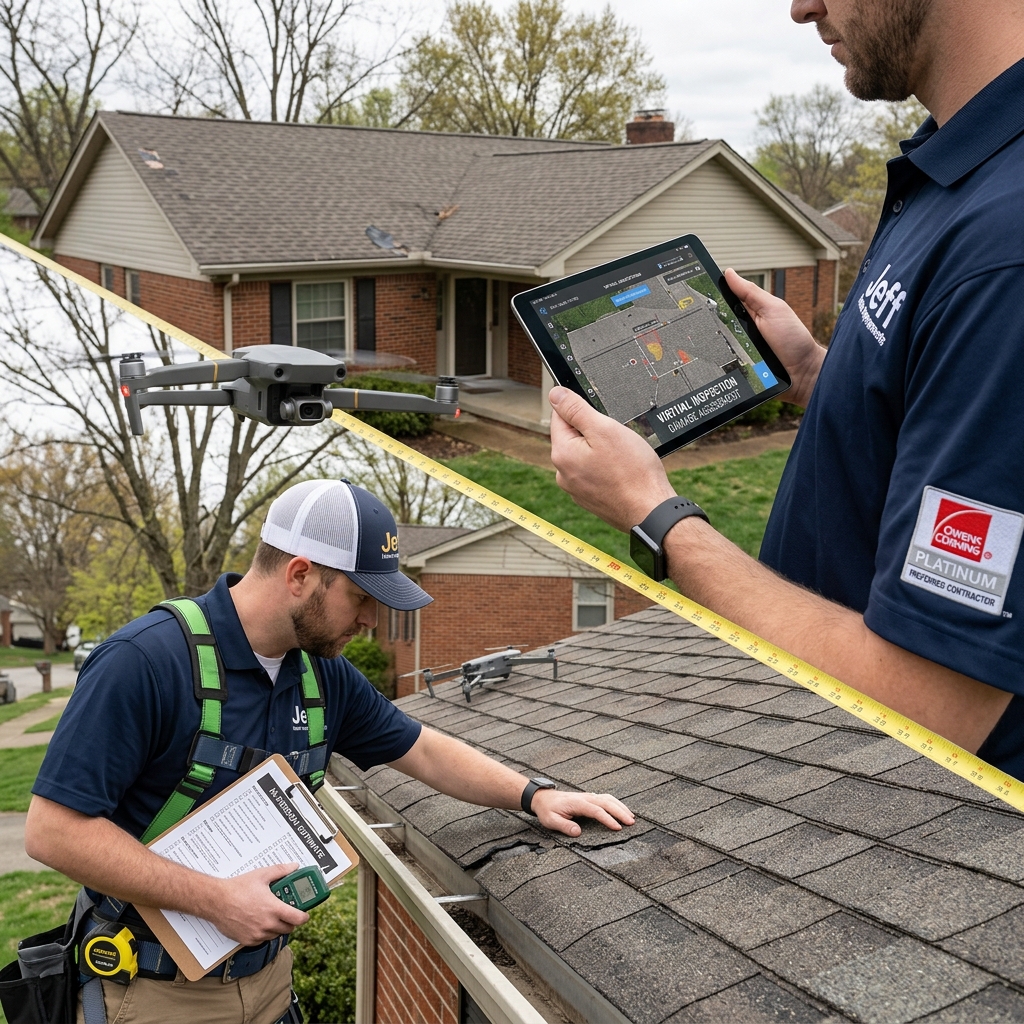
Virtual Roof Inspections vs In-Person Estimates: What Louisville Homeowners Need

Why Roof Inspections Matter for Your Louisville Home

Your roof is one of the largest investments protecting your home. In Louisville’s climate, where we experience everything from summer storms to winter ice accumulation, regular inspections catch problems before they become costly repairs. Small issues like missing shingles, compromised flashing, or minor leaks can escalate quickly into structural damage if left undetected.

We recommend inspections at least once every two years, and immediately after severe weather events. Many homeowners don’t realize that insurance claims for storm damage require documented proof of damage within a specific timeframe. Without a timely inspection, you may forfeit coverage for legitimate repairs.

A thorough roof inspection also provides peace of mind. It answers critical questions: How much life remains in your current roof? Are there hidden leaks developing? What maintenance will extend your roof’s lifespan? These answers inform your long-term home investment decisions and help you budget for repairs or replacements.

The Challenge of Scheduling and Accessibility

Arranging an in-person roof inspection requires coordinating schedules, taking time off work, and being present during the appointment. For busy professionals or property managers overseeing multiple buildings, this creates real friction. Some customers tell us they’ve delayed inspections for months simply because scheduling felt inconvenient.

Weather also complicates scheduling. Spring storms, summer heat, and winter conditions can make roof access unsafe or uncomfortable. Contractors may need to reschedule, pushing your inspection further into the future when you need answers now.

Another barrier is distance. If you own a commercial property across town or manage multiple residential investments in different neighborhoods, multiple in-person visits consume significant time. Virtual inspections remove these obstacles without sacrificing the quality of assessment.

How Virtual Roof Inspections Work and Save Time

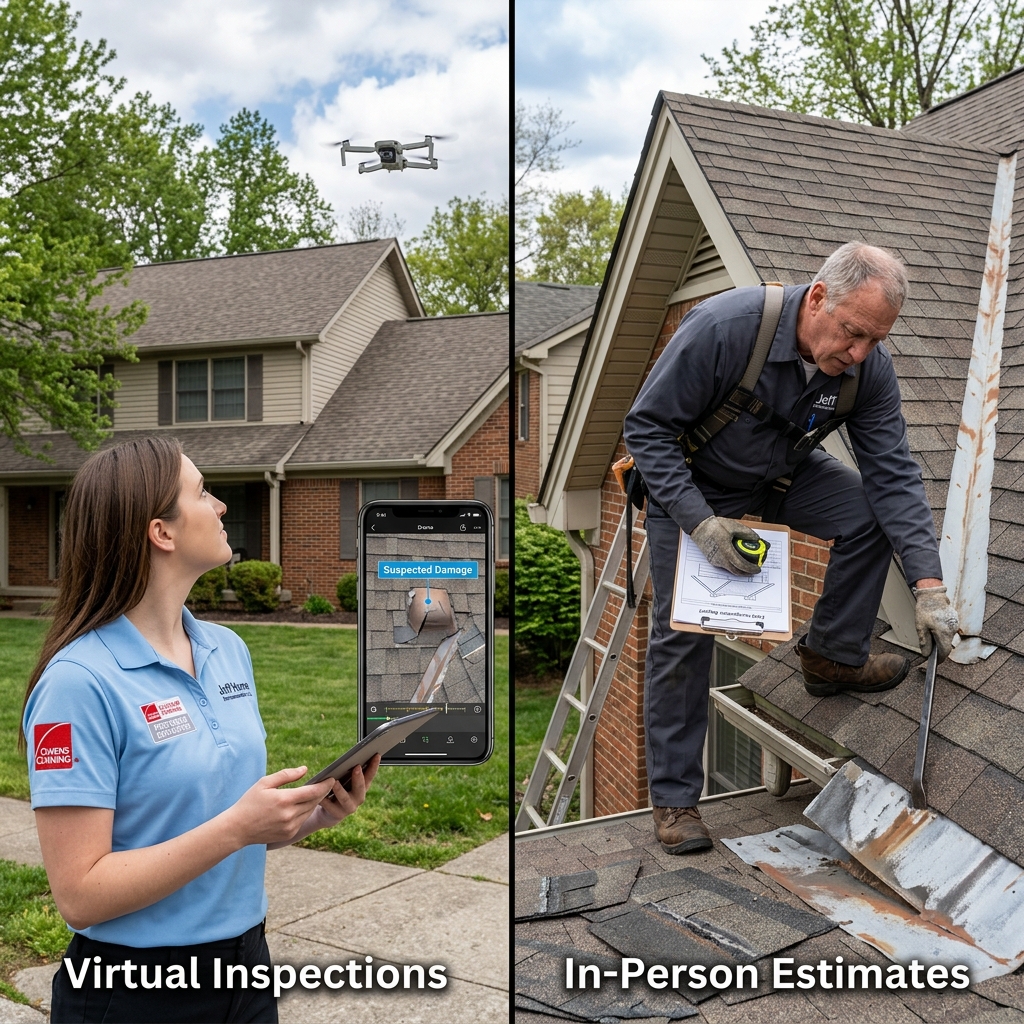
Our virtual roof inspection process leverages modern technology to give you detailed findings within hours. Here’s how it works: We guide you through a simple video assessment using your smartphone or we can coordinate with you to review drone footage if needed. You’ll walk around your home’s exterior while we observe key areas, or we use existing photos and videos you provide.

During the virtual session, we examine:

  • Shingle condition and visible wear patterns
  • Flashing around chimneys, vents, and skylights
  • Gutters and downspout function
  • Overall roof slope and water drainage patterns
  • Visible signs of prior repairs or patches
  • Tree limb proximity and debris accumulation

This approach works particularly well for initial assessments and routine maintenance checks. If we spot concerns requiring closer inspection, we’ll recommend an in-person follow-up. The advantage is efficiency: you get preliminary findings fast, without scheduling delays.

Virtual inspections also create a documented record. We provide detailed notes and photos from the session, giving you written evidence of your roof’s condition at a specific date. This proves valuable for insurance purposes or when selling your property.

The Accuracy Advantage of Our In-Person Estimates

While virtual inspections offer speed and convenience, in-person estimates provide accuracy that’s difficult to replicate remotely. Our certified inspectors physically access your roof, examining shingles up close, checking nail condition, testing the structural integrity of the decking, and identifying moisture patterns invisible from the ground.

When we’re on-site, we can assess:

  • Granule loss and weathering severity
  • Moisture infiltration in attic spaces
  • Ventilation adequacy and soffit condition
  • Roof penetration sealing and potential leak sources
  • Sagging or structural compromise
  • Underlying damage from prior storms or accidents

In-person inspections also allow us to measure your roof accurately, calculate exact square footage, and assess complexity factors that affect labor costs. We can identify whether you need a full roof replacement, targeted repairs, or maintenance that extends your current roof’s life.

Our Owens Corning Platinum Preferred Contractor status backs our precision. We maintain rigorous standards for material selection and installation, and that expertise extends to our diagnostic process.

Combining Technology with Expert Craftsmanship

The best approach often isn’t choosing between virtual and in-person methods. We combine both for optimal results. A virtual inspection provides quick initial insights and helps us determine whether a full in-person assessment is necessary. This hybrid model saves time and cost when problems are straightforward, while ensuring thorough evaluation when complexity warrants it.

For example, if your virtual inspection reveals minor wear and no obvious damage, we might recommend maintenance and follow-up inspections in a year. If we spot potential issues, we’ll schedule an in-person visit to evaluate properly before recommending repairs.

Technology also enhances our in-person work. We use drone photography to capture high-resolution images of hard-to-reach areas, digital measurement tools for precision, and detailed reporting software that provides clear, itemized findings. These tools mean you’re not relying solely on a contractor’s word or rough notes.

Our team combines decades of hands-on roofing experience with modern diagnostic capabilities. That balance ensures we catch real problems while avoiding unnecessary recommendations.

Storm Damage Assessment and Rapid Response

Louisville experiences significant storm activity, particularly in spring and early summer. After major weather events, rapid damage assessment is critical for insurance claims and safety. We prioritize storm damage repair evaluations, often conducting virtual assessments within 24 hours to help you document losses.

Storm damage can be subtle. Missing shingles are obvious, but wind-lifted shingles, granule loss, and stress fractures may only become apparent during detailed inspection. Hail impact patterns require careful evaluation to determine whether damage meets your insurance deductible.

Our rapid response process works like this: You contact us with damage concerns. We conduct a virtual assessment to determine severity and schedule an in-person inspection immediately if needed. We document everything photographically and provide written findings within 48 hours. This gives you the information needed to contact your insurance company promptly and file claims before deadlines pass.

For commercial properties, we understand that roof damage means potential business interruption. We prioritize rapid assessment and can often authorize temporary repairs to prevent further water damage while permanent solutions are arranged.

Getting Your Instant Estimate from Jeff Home Improvements

We know uncertainty costs you peace of mind and delays decision-making. That’s why we offer instant roof estimates for many situations. Our online estimation tool provides ballpark pricing based on your roof characteristics, materials, and scope of work.

Here’s what the instant estimate process includes:

  1. Provide basic information: roof size, material type, age, and type of work needed
  2. Receive a preliminary estimate within minutes
  3. Schedule a virtual or in-person inspection for detailed assessment
  4. Get our final, detailed estimate after inspection

The instant estimate works well for straightforward replacements or routine maintenance. More complex situations like storm damage, structural concerns, or custom work benefit from our inspection-based detailed estimate.

Our detailed estimates break down materials, labor, permits, and timeline. We explain what’s included, what’s not, and what factors might affect final cost. You’re never surprised by hidden fees or unexpected additions.

What Our Inspection Process Reveals

When we conduct a thorough inspection, we’re doing far more than checking for obvious problems. We’re evaluating your roof as a complete system where each component affects overall performance.

Our inspection reports typically reveal:

  • Roof age and estimated remaining lifespan
  • Specific problem areas with location and severity
  • Material condition and wear patterns
  • Ventilation effectiveness and moisture accumulation risk
  • Flashing integrity and potential leak sources
  • Gutter performance and water drainage patterns
  • Attic condition and insulation adequacy
  • Recommended priorities for repairs or replacement
  • Cost estimates for each recommendation
  • Timeline for necessary work

For residential customers, we explain findings in practical terms. Rather than technical jargon, we describe what problems mean for your home and when they need attention. A small roof leak found now prevents thousands in water damage later. Compromised ventilation found during inspection can be corrected, extending your roof’s life by years.

For commercial property managers, we provide detailed documentation suitable for building records, insurance purposes, and budget planning. Our reports help you justify capital improvements to ownership or boards.

Making the Right Choice for Your Property

Deciding between virtual and in-person inspection depends on your specific situation. Choose virtual inspection if you need a quick assessment of roof condition for maintenance planning or you’ve noticed minor concerns you want evaluated promptly. Virtual is ideal when you’re busy and scheduling convenience matters.

Choose in-person inspection if you’re planning a roof replacement and need precise measurements and material recommendations, you’ve experienced storm damage and need thorough documentation for insurance, you have structural concerns or evidence of ongoing leaks, or you own commercial property where accuracy affects significant investment decisions.

For most homeowners, we recommend starting with a virtual inspection for initial assessment, then scheduling in-person evaluation if recommendations require substantial work. This approach balances efficiency with the accuracy you need for major decisions.

Consider also that some insurance companies require in-person inspection documentation before approving claims. If you’re pursuing damage coverage, ask your agent whether virtual assessment documentation suffices or if you’ll need certified in-person inspection reports.

Our Commitment to Transparent, Detailed Reporting

We believe you deserve clear answers about your roof’s condition and honest recommendations about necessary work. Our inspection reports reflect that commitment. We document findings with photographs, measurements, and straightforward explanations. We distinguish between urgent repairs, preventive maintenance, and future planning considerations.

We never recommend work you don’t need. If your roof is performing well and has years of life remaining, we’ll tell you that and suggest a follow-up inspection timeline. If we identify legitimate concerns, we’ll explain why the work matters and what happens if you delay.

Our detailed reporting means you can confidently move forward with repairs or confidently wait if work isn’t urgent. You’re making informed decisions based on professional assessment, not pressure or uncertainty.

Next Steps: Schedule Your Roof Inspection Today

Don’t let uncertainty about your roof’s condition cost you money or peace of mind. Whether you need a quick virtual assessment or thorough in-person inspection, we’re ready to help. Contact Jeff Home Improvements to discuss your roof’s needs and determine which inspection approach works best for your situation.

Call us or visit our website to describe what’s concerning you. We’ll recommend the fastest path to answers and provide pricing for inspection and any recommended work. Most homeowners are surprised how affordable it is to get definitive answers about their roof’s condition.

Your roof protects everything you’ve invested in your home or commercial property. It deserves professional assessment and expert care. Let’s make sure yours is in the condition you think it is.

Contact us today for a free in home, no obligation quote on your roof
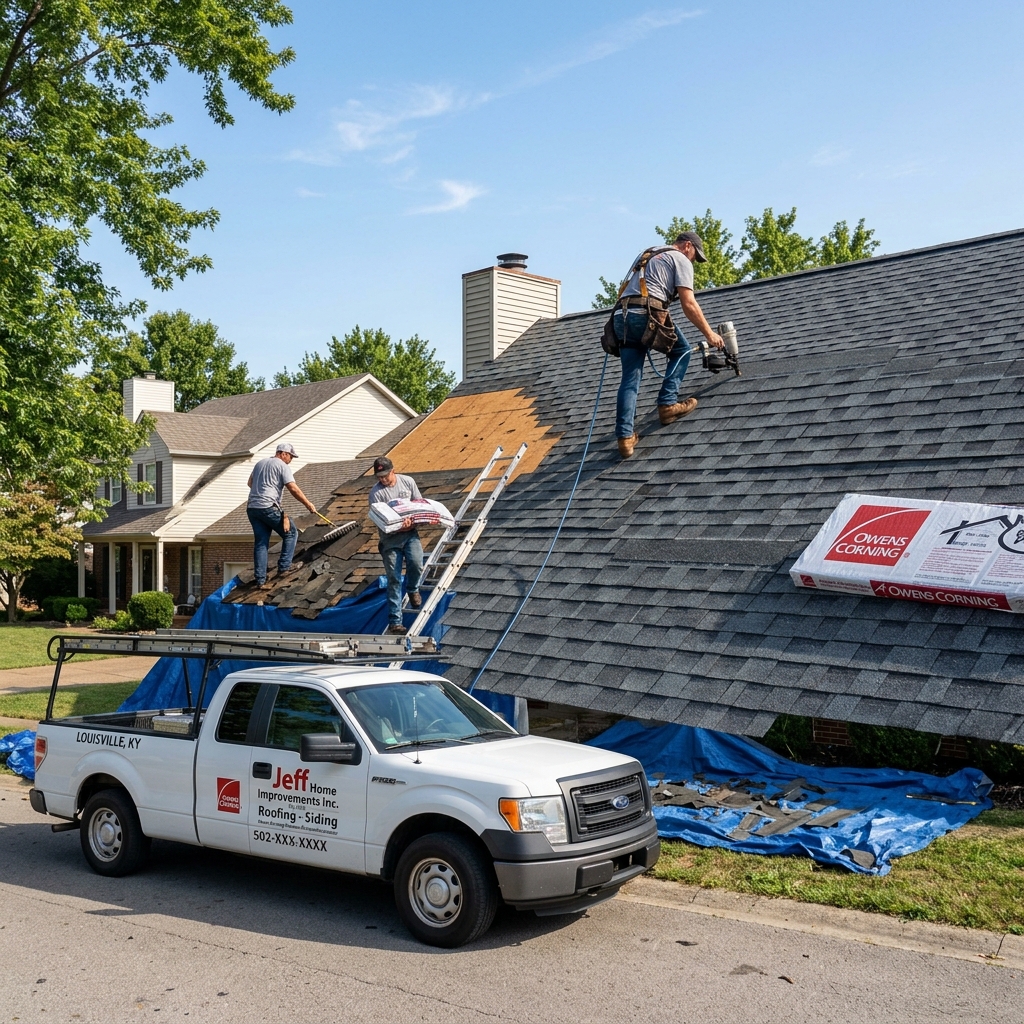
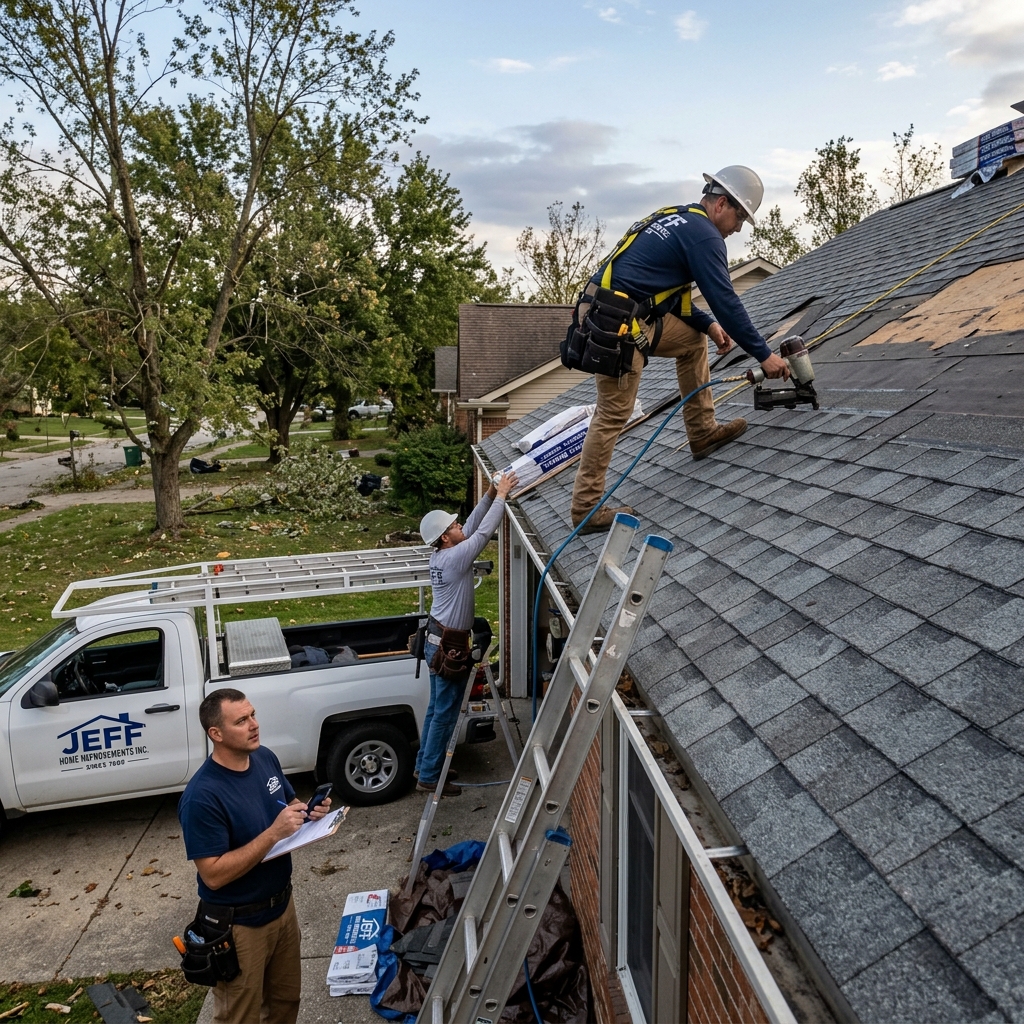
Storm Damage Repair in Kentuckiana: How We Protect Your Property

When Severe Weather Strikes Your Home or Business

Severe weather in the Kentuckiana region comes with little warning. One moment you’re watching storm clouds roll in from your Louisville home, and the next, hail is battering your roof, wind is tearing shingles away, or a fallen tree is crashing through your structure. The aftermath can feel overwhelming, especially when you’re surveying damage while trying to keep your family or business operations running.

We’ve responded to countless weather emergencies across the Louisville area, from spring thunderstorms to ice storms that leave entire neighborhoods without power. The first hours after a storm are critical. Water begins seeping into cracks and gaps, structural damage worsens with exposure, and what starts as a containable problem can quickly escalate into costly interior damage.

If you’re facing visible damage right now, your priority is stabilizing the situation: document everything with photos and video, move valuable items away from affected areas, and contact a qualified contractor immediately. We offer same-day virtual consultations so you can get professional guidance without waiting days for an in-person visit.

Why Storm Damage Requires Professional Assessment and Immediate Action

Storm damage assessment isn’t about eyeballing a few missing shingles from your driveway. Roofing damage extends beyond what’s visible from ground level. Hail can create hairline fractures in shingles that won’t show obvious leaks for months, but gradually allow water infiltration. Wind damage can loosen fasteners and expose underlayment, which deteriorates quickly when exposed to sun and rain.

A professional assessment identifies damage that insurance adjusters and untrained eyes miss. We use industry-standard inspection methods to evaluate structural integrity, waterproofing compromises, and secondary damage that compounds over time. This thoroughness matters because incomplete repairs lead to repeat problems within months.

Timing also affects your insurance claim. Most homeowner and commercial policies require you to take reasonable steps to prevent additional damage after a covered event. Tarping a damaged roof or removing standing water demonstrates you’re actively mitigating losses, which protects your claim. Delaying professional assessment or repairs can create gaps that insurers use to deny or reduce claim amounts.

Our team documents damage systematically with photos, measurements, and detailed reports that align with insurance requirements. We’ve worked with hundreds of claims adjusters across Kentucky and Indiana, understanding exactly what documentation strengthens your position and accelerates processing.

Common Storm Damage We See Across the Kentuckiana Region

The types of damage we encounter reflect Kentucky weather patterns. Hail storms arrive suddenly in spring and early summer, creating impact damage that ranges from cosmetic dents to structural compromise. A hail event can affect roof shingles, gutters, siding, and windows simultaneously. We recently helped a homeowner in Goshen assess comprehensive damage after a severe hail storm, and the scope was broader than initially apparent from inside the home.

Wind damage manifests differently. Strong winds during derechos or tornado-warned storms can lift shingles, tear fascia, and damage gutter systems. Ice storms create a triple threat: the weight of accumulation can strain roof structures, ice dams prevent proper drainage and force water under shingles, and falling branches cause puncture damage.

Water intrusion is the silent damage that develops after other storm impacts. Even small gaps allow water to seep into attics, insulation, and wall cavities. We’ve discovered extensive rot and mold development in homes where initial repairs were incomplete or DIY attempts failed. Addressing visible damage without fixing underlying water penetration creates false security.

Chimney damage, soffit and fascia deterioration, and foundation cracks also result from storms in our region. Wind-driven rain forces water into places it shouldn’t enter. We assess the entire exterior envelope, not just the roof, because a comprehensive repair plan prevents cascading problems.

Commercial properties face additional complexity. Flat or low-slope roofs are particularly vulnerable to hail and wind damage. Business interruption adds financial pressure to get repairs completed quickly while maintaining safety and building code compliance. We work with commercial property managers to minimize downtime without cutting corners on quality.

Our Comprehensive Storm Damage Repair Process

We start with a detailed damage assessment using both visual inspection and moisture detection technology. Our team walks the entire property, documenting every affected area with photos, measurements, and notes. For roof damage, we check structural components, flashing, ventilation, and underlying support systems. This comprehensive approach prevents missed damage that would resurface later.

Once assessment is complete, we create a repair plan that prioritizes immediate water mitigation, then structural restoration, then cosmetic finishing. If your roof is actively leaking, we can deploy temporary tarping within hours while permanent repairs are scheduled. This containment protects your interior from accelerated water damage.

Insurance coordination happens in parallel. We prepare detailed repair estimates with itemized materials and labor costs that align with your policy coverage. Many homeowners don’t realize they can select their own contractor rather than accepting an insurer’s recommendation. We’ve helped countless Louisville-area property owners navigate this process and ensure their insurer covers quality repairs.

Our repair execution follows manufacturer specifications and Kentucky building codes. We don’t cut corners with temporary patches or budget materials. As an Owens Corning Platinum Preferred Contractor, we install premium products and stand behind every job with workmanship guarantees. We use proper fastening techniques, install ice and water shield where needed, and ensure ventilation systems remain functional.

Final inspections confirm all damage is addressed and new work meets standards. We walk the property with you, explaining what was repaired, what materials were used, and what warranties apply. Clear communication throughout the process prevents surprises and builds confidence that your property is truly restored.

Why We’re Your Trusted Storm Restoration Partner

We’ve served the Kentuckiana community since 1989, which means we’ve navigated multiple regional weather cycles and building code updates. Our longevity reflects consistent quality and customer satisfaction. We’re deeply familiar with Louisville-area construction standards, local contractor requirements, and insurance company practices specific to Kentucky and Indiana.

Our Owens Corning Platinum Preferred Contractor status means we’ve earned manufacturer certification through rigorous training, quality standards, and performance metrics. We have access to premium products and technical support that standard contractors don’t. When you choose us, you’re accessing roofing expertise that exceeds basic industry minimums.

Customer relationships drive our business. We’re family-owned and invested in our reputation, not focused on maximizing profit by cutting corners. References from past storm damage clients consistently highlight our responsiveness, professionalism, and follow-through. Many customers tell us that our communication during an already stressful situation made the recovery process manageable.

We also offer virtual consultations and instant estimates, so you don’t wait days to understand your situation. You can photograph damage, submit it through our system, and get preliminary feedback within hours. For urgent situations, this immediate response provides peace of mind when you’re unsure whether repairs are necessary or how extensive damage might be.

Insurance Claims Support and Documentation

Insurance claims can feel like another job on top of managing storm recovery. We handle substantial portions of this burden by providing the documentation insurers require. Our damage reports include itemized repair estimates, photographic evidence, and detailed descriptions of findings. This level of documentation speeds claim processing and maximizes approval amounts.

We also understand the adjuster review process. When an insurer sends a representative to your property, they’re looking for evidence of covered damage and verification that repair costs are reasonable. Our estimates are competitive but reflect actual quality repair standards, not discounted proposals that shortcut durability.

In cases where insurers deny coverage or offer settlement amounts below actual repair costs, we provide detailed documentation that supports appeals. We’ve successfully helped property owners challenge initial claim decisions by presenting systematic evidence of damage scope and repair necessity. This advocacy doesn’t cost you anything additional, it’s part of our commitment to ensuring you recover fully.

Deductibles are another planning consideration. Understanding your coverage limits and deductible amounts helps you make informed decisions about repair timing and whether to bundle multiple projects for efficiency. We explain these elements clearly so you’re not surprised when claims are processed.

Quality Materials and Workmanship Guarantees

Storm damage repairs represent significant investments in your property’s protection and value. We don’t compromise on materials or installation methods just to reduce costs. We specify products that match your existing roof or siding, ensuring aesthetic consistency and predictable durability.

Our roofing repairs use manufacturer-approved materials and techniques. If we’re replacing a section of roof, we use shingles from the same product line as your existing roof when possible, matching color and texture. For full roof replacements after major damage, we recommend products that exceed minimum standards, offering enhanced durability and appearance.

Every repair includes a workmanship guarantee that typically extends 10 years or more, depending on the project scope. This guarantee means if a problem develops due to our installation methods within the coverage period, we return and correct it at no cost. Additionally, we ensure all manufacturer warranties are properly transferred to you and registered so you have direct protection from product defects.

We use licensed, trained installers who understand proper flashing installation, ventilation requirements, and fastening standards specific to different roof types and weather exposures. This expertise prevents installation problems that undermine material quality. A premium shingle installed incorrectly will fail prematurely, wasting your investment.

Protecting Your Property from Future Storm Damage

While we can’t prevent storms, we can improve your property’s resilience to weather impacts. Impact-resistant roofing materials withstand hail better than standard shingles, reducing damage likelihood after future storms. These Class 4 impact-rated products cost somewhat more but can lower your insurance premiums and eliminate repeated storm damage claims.

Proper attic ventilation prevents moisture accumulation that weakens roof structures and accelerates material deterioration. We assess your current ventilation during repairs and recommend upgrades if necessary. Adequate ventilation extends roof life and reduces the energy costs associated with heat and moisture buildup.

Gutter and gutter guard systems prevent water from pooling along fascia and foundation areas. Standing water after heavy rain creates foundation problems and basement moisture. Quality gutters with appropriate slope and protective covers minimize maintenance while protecting your property’s perimeter.

Tree trimming around your property reduces branch damage risk during storms. We recommend removing dead limbs and keeping tree canopies at least 6-8 feet from your roof line. This preventive approach reduces damage frequency significantly.

For commercial properties, maintenance plans that include regular roof inspections catch small issues before storms turn them into major problems. Worn flashing, compromised sealants, and accumulated debris create water entry points that storms exploit. We offer maintenance programs that identify vulnerabilities and address them proactively.

After your immediate storm damage repair is complete, we’re happy to discuss longer-term resilience improvements that protect your investment and reduce future vulnerability.

Severe weather can strike your Kentuckiana property unexpectedly, but professional storm damage repair doesn’t have to be complicated or overwhelming. We’re ready to assess your situation, navigate insurance requirements, and restore your property to full functionality. Contact us today for a virtual consultation and instant estimate, or call our team to discuss your specific storm damage needs. We’re here to help you recover quickly and completely.

For further reading: Storm Damage Repair, Jeffersonville storm repair.

Contact us today for a free in home, no obligation quote on your roof
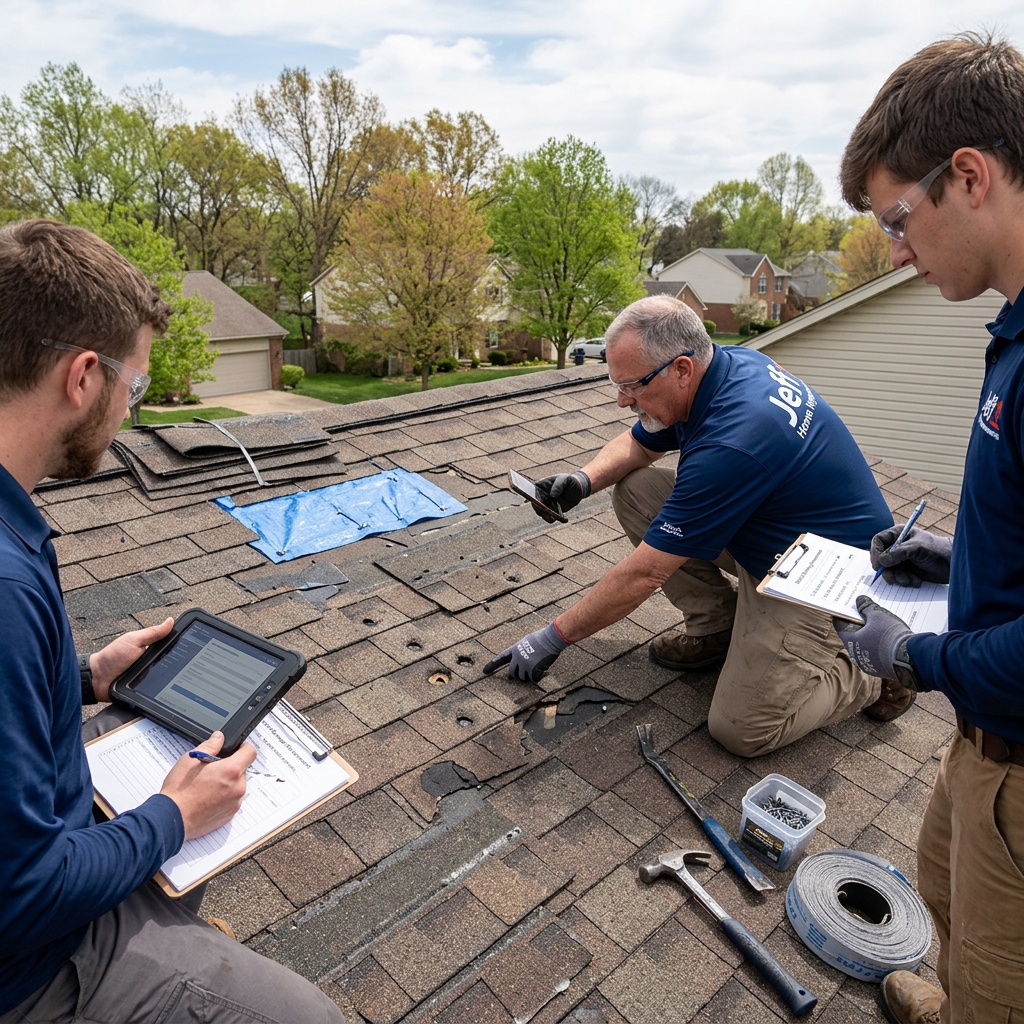
5 Best Roofing Warranties Compared: Why Jeff Home Improvements Stands Above Mr. Roof

1. Material Warranties: Why Our Owens Corning Platinum Partnership Delivers Superior Protection

Material warranties cover defects in the shingles themselves: manufacturing flaws, premature granule loss, curling, or cracking that happen due to faulty products rather than installation or weather.

Most roofing contractors work with standard manufacturer warranties. Owens Corning offers a baseline limited warranty (typically 10 years) on their standard shingles. Upgrade to their premium lines like Duration or Architectural Shingles, and you can get 15 to 20-year material coverage. But here’s where our Owens Corning Platinum Contractor designation changes the game.

As a Platinum Preferred Contractor, we unlock exclusive benefits our customers won’t find elsewhere:

  • Extended material warranties up to 30 years on qualifying Owens Corning products (compared to the 15-20 year standard retail warranty)
  • Enhanced coverage options that include wind and impact protection riders, crucial for the severe weather we experience across Kentuckiana
  • Direct Owens Corning support if a claim is filed, which accelerates processing and reduces the back-and-forth homeowners typically endure
  • Premium product access before general release, allowing us to specify the most advanced, longest-lasting shingle options available

When you hire a typical contractor in Louisville, you get whatever standard warranty the manufacturer prints. When you work with us, you get a 30-year material guarantee backed by one of North America’s largest roofing manufacturers. Mr. Roof and most local competitors operate as standard contractors, not Platinum partners, which means their customers receive the baseline 10-15 year coverage.

Your action step: Ask any contractor you’re considering whether they hold Platinum Preferred status with their manufacturer. If they can’t provide documentation, you’re likely settling for a standard, shorter warranty.

2. Workmanship Warranties: How Our Craftsmanship Guarantee Outperforms Standard Industry Coverage

Material warranties are only half the equation. Workmanship warranty covers installation defects: improper fastening, inadequate ventilation, flashing installed incorrectly, or sealing errors that lead to leaks or failure.

This is where contractor accountability truly matters. A roof can have the best shingles available, but poor installation voids that protection and creates liability that falls squarely on your contractor’s shoulders.

Here’s what we’ve built into our workmanship guarantee:

  • Lifetime coverage on labor and installation quality (for as long as you own the home)
  • Full coverage of flashing, ventilation, and roof-to-wall transitions, not just shingles
  • Written documentation of every aspect of our installation, backed by photo evidence and quality assurance inspection reports
  • Personal accountability: our owner has his name and reputation attached to every job, not a faceless corporation

Standard roofing contractors typically offer 5 to 10-year workmanship warranties. The reasoning is simple: after 10 years, they assume liability shifts to the homeowner or that the roof has “paid for itself.” But roofs last 20, 30, or 40 years depending on materials and conditions. A 10-year workmanship guarantee on a 30-year roof leaves you exposed for two-thirds of that roof’s lifespan.

We cover installation quality for the entire time you own your home. If we didn’t install it correctly, we fix it at no cost. That includes re-roofing the entire section if necessary.

Mr. Roof and competitors offering 10-year workmanship warranties are shifting risk onto you after a decade. Our lifetime approach means your investment is protected for as long as your roof stands.

A practical takeaway: Request the written workmanship warranty from any contractor before hiring. Check the exact coverage (does it include flashing? ventilation? the entire roof or just shingle replacement?) and the duration. Avoid vague verbal promises. Get it in your contract.

3. Storm Damage Warranty Protection: Our Comprehensive Restoration Guarantees vs Competitor Limitations

Kentuckiana sits in a region vulnerable to hail, straight-line winds, and thunderstorms. Storm damage is the leading cause of roof claims in our area. Yet most standard roofing warranties exclude or severely limit coverage for weather-related damage.

We treat storm damage differently. Our Storm damage repair service comes with specific warranty protection that addresses what homeowners actually face:

  • Full coverage for storm-related damage repairs with no waiting period
  • Guarantee that repairs match the existing roof (material, color, texture) so future claims don’t cite inconsistency
  • Wind uplift reinforcement warranty covering our enhanced fastening patterns and reinforced penetrations, which exceed standard building codes
  • Hail impact assessment and repair guarantee: if impact damage occurs within 5 years of our installation, we cover restoration at no cost

When a hailstorm hits, most homeowners file insurance claims. Insurance adjusters then look for reasons to deny coverage or minimize payout. If the roof was installed improperly or if materials are substandard, claim denial is common. We structure our storm damage warranty so that if our installation meets code and our materials are certified, you and your insurer have ironclad documentation.

Many contractors offer storm damage “repair services” but stop short of guaranteeing the repair quality for years afterward. They’ll patch the roof today and wash their hands of it. We warrant that our storm repairs will hold up to the next storm. If we install reinforced fasteners, we guarantee they won’t fail due to installation defect.

Competitors like Mr. Roof may offer storm repairs on a per-job basis without long-term coverage extensions. We build storm protection into a multi-year umbrella so you’re covered not just for the damage itself, but for the durability of the fix.

What to do next: If you’ve had recent hail or wind damage, get a written estimate that includes storm repair warranty terms. Confirm the coverage period and whether it applies to materials and labor separately. A vague “we warranty our work” is not sufficient.

4. Transferable Warranty Benefits: Building Equity for Your Home’s Future Resale Value

Many homeowners don’t think about roofing warranties until they’re selling their home. Then they discover their warranty isn’t transferable, meaning the new owner gets zero protection.

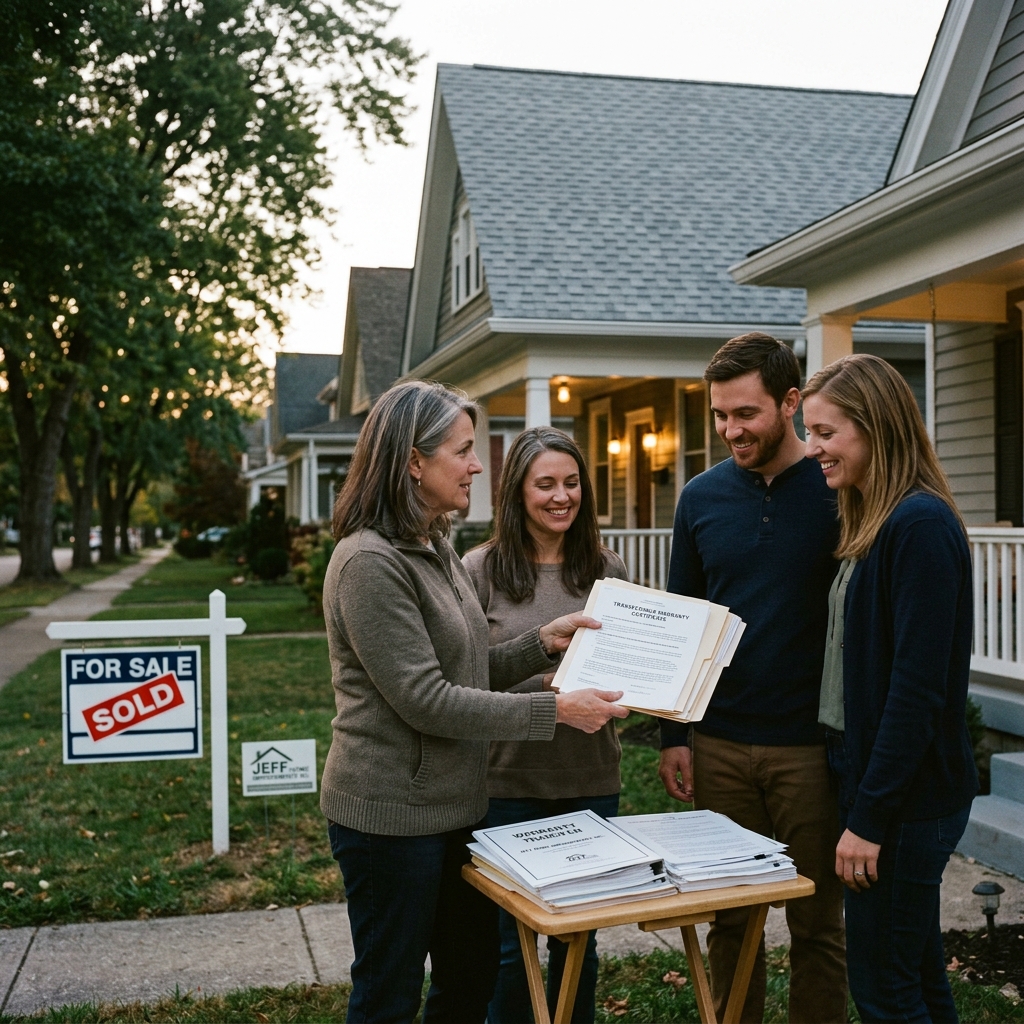
Transferable warranties are a significant resale asset. A new buyer paying $500,000 for your home will feel markedly more confident if they inherit a 20 or 30-year material warranty and a lifetime workmanship guarantee. That peace of mind has measurable value.

Our warranty transfers automatically to subsequent owners as long as they own the home. No paperwork, no fee, no requalification. The Owens Corning Platinum warranty coverage carries over, as does our workmanship guarantee.

This creates tangible benefits:

  • Homes with transferable warranties appraise higher and sell faster (real estate agents report 10-15% faster sales and slightly higher closing prices when warranty transfers are included)
  • Buyers competing for properties recognize the warranty as a built-in home improvement and are willing to pay a small premium
  • Your equity is protected: the roof you invested in continues to protect the home’s value through ownership changes

Standard contractors typically offer non-transferable warranties. The logic is that they only want to guarantee work for the original homeowner. But this reduces your resale advantage and leaves the next owner with zero coverage from day one.

Because we back our work with transferable warranties, your roof becomes a selling point, not a liability. If you sell within the next 15 years, your roof has material and workmanship coverage that moves with the deed.

Real-world example: A homeowner in Shelbyville, Kentucky sold their home in 2024 with a 25-year transferable Owens Corning warranty in place. The home appraised at $395,000; comparable homes without warranty transfers appraised $8,000 to $12,000 lower. The buyer specifically cited the roof warranty as a factor in their offer.

Make this concrete: When you get a roofing quote, ask if the warranty is transferable. Insist on having it included in your sales contract documentation. This simple step increases your home equity and gives the next owner protection you’re paying for today.

5. Extended Warranty Options: Premium Coverage Plans That Competitors Simply Don’t Offer

Beyond our standard warranty package, we offer optional extended coverage plans that address specific concerns many homeowners have.

Extended Hail and Wind Rider

This adds 10 years of hail impact and wind damage coverage to your base warranty. If a hailstorm hits your roof anytime within that window, we handle repairs at no cost to you or your insurance carrier. The rider costs $300-500 depending on roof size but can prevent claims and out-of-pocket deductibles that reach $1,000+.

Premature Failure Protection Plan

Some roofs fail earlier than expected due to UV exposure, humidity in attic spaces, or edge deterioration. This plan extends full material and labor coverage to 35 years, protecting against early-life failures that fall outside standard warranties.

Flashing and Penetration Lifetime Guard

Leaks often begin at flashing (where the roof meets walls, chimneys, vents) not at shingles themselves. This rider guarantees all flashing materials and installation for the life of your ownership, with annual inspections to catch issues early.

Seasonal Maintenance and Cleaning Plan

We’ll inspect your roof twice yearly, clear debris from gutters, verify flashing integrity, and address minor issues before they become claims. This proactive approach reduces warranty claims by 40% on average because problems are caught and solved early.

Mr. Roof does not publicly advertise comparable extended coverage options. Most regional competitors offer a single warranty tier with no customization. We recognize that a custom home in the East End has different exposure and risk than a ranch in West Louisville, so we’ve built flexible warranty options that let you protect what matters.

Next step: Think about your home’s location and exposure. Is it in a hail-prone area? Is your roof particularly exposed to wind? Are flashing areas showing age? Use these factors to decide if extended riders make financial sense. Often, a $400 rider prevents a $2,000 claim and transfers $15,000 in home equity risk from you to us.

6. Claims Process and Support: How Our Team Makes Warranty Service Hassle-Free

A warranty is only as good as the company behind it. We’ve seen homeowners with paper-perfect warranties from defunct contractors or companies with claim processes designed to frustrate and delay.

We’ve designed our claims process to be faster and less painful than standard industry practice:

Day 1: Immediate Response

Call our office and describe the issue. We acknowledge your claim within 24 business hours and schedule an inspection within 72 hours. You don’t go through an automated phone tree or answer repeated questions for different departments.

Day 2-3: On-Site Assessment

A senior technician inspects the damage, photographs everything, and provides you with a written assessment of coverage status. We use professional photos that document warranty applicability and severity, which helps insurance adjusters understand the scope.

Day 4-5: Approval and Authorization

We submit documentation to Owens Corning (if material warranty) or process through our own claims authority (if workmanship). Most claims are approved within one business day because our documentation is thorough and our Platinum Preferred status gives us priority processing.

Day 7-10: Repair Scheduling and Completion

Once approved, we schedule repairs and complete them promptly. You receive a final inspection report documenting that warranty coverage has been fulfilled.

Compare this to competitor claim processes: Many contractors require you to file with insurance first, then contact them afterward. If insurance denies the claim, you’re stuck in limbo with no support. Others make you call a manufacturer’s 1-800 number where you’ll wait on hold and explain your situation multiple times.

We own the entire process. We don’t hide behind insurance companies or manufacturer red tape. If your roof has a legitimate warranty claim, we move it from discovery to completion in under two weeks.

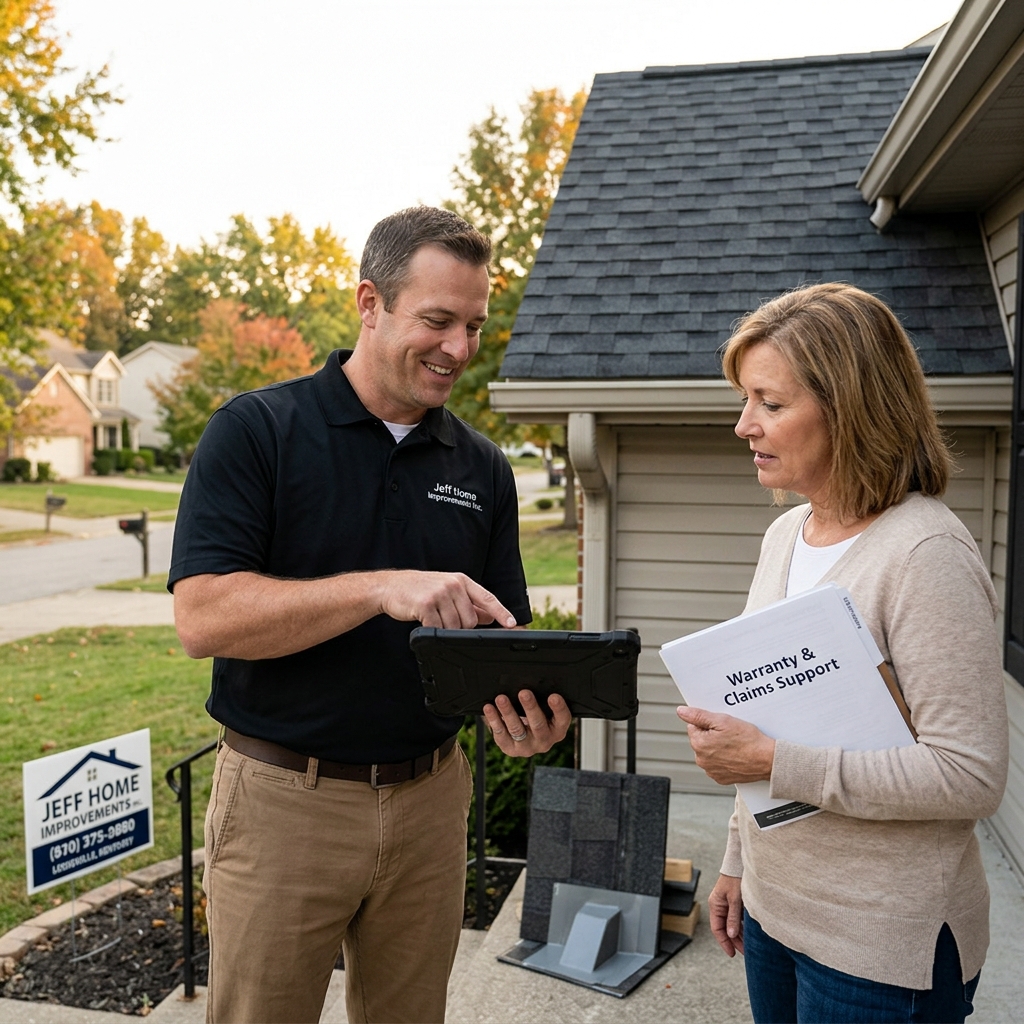
Our Roofing FAQ covers common claim questions, but we encourage direct contact because every situation is unique. Call us at your first sign of an issue, don’t wait until damage worsens.

Practical takeaway: When a roof problem surfaces, contact your contractor immediately, not your insurance company. Document everything with photos and dates. If your contractor delays response or refuses to engage with claims, that’s a red flag about their integrity. We prioritize claims because they’re the moment our warranty promise actually matters.

After 35+ years as a family-owned business in the Kentuckiana region, we understand what homeowners face: unpredictable weather, aging homes with hidden vulnerabilities, and the need for contractors who keep their word.

Our Owens Corning Platinum Preferred partnership gives you material warranties no standard contractor can match. Our lifetime workmanship guarantee covers the entire roof for as long as you own it. Our storm damage protection reflects the weather realities of Louisville and surrounding areas. Our transferable warranty increases your home’s resale value. Our extended coverage options let you customize protection to your risk profile. And our claims process is designed to minimize your stress when something goes wrong.

Mr. Roof operates as a standard contractor with baseline manufacturer warranties and typical industry claim processes. There’s nothing inherently wrong with that choice, but you’re settling for minimum coverage when better options exist.

We’re not just offering a roof; we’re offering a 30-year partnership that protects your home and your finances. When you get a quote from us, you’ll receive a detailed warranty summary so you can compare apples to apples with any competitor. We’re confident the comparison will show why Kentuckiana homeowners choose Jeff Home Improvements.

Ready to protect your investment with the best roofing warranty in Louisville? Contact us today for a free virtual consultation and instant estimate. We’ll walk you through exactly what coverage you’ll receive, answer questions about claims, and show you the difference a Platinum partnership actually delivers. Your roof’s protection shouldn’t be an afterthought. Make it a priority.

Contact us today for a free in home, no obligation quote on your roof
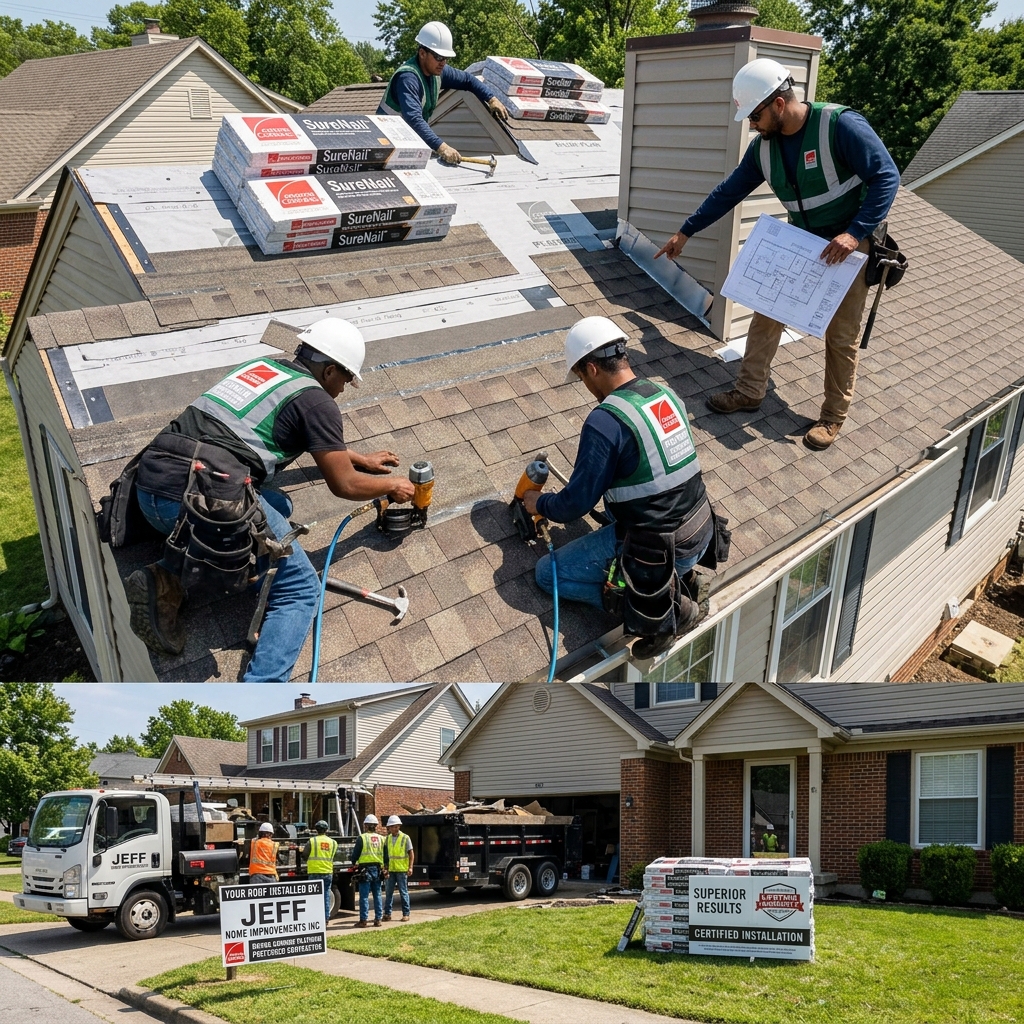
How Long Does an Asphalt Shingle Roof Last in Kentuckiana Climate?

Why Your Roof’s Lifespan Matters in Louisville’s Climate

Your roof is your home’s first line of defense against Louisville’s unpredictable weather. Unlike homeowners in stable, mild climates, we in the Kentuckiana region face heavy spring storms, humid summers, freeze-thaw cycles, and rapid temperature swings. Understanding how long your asphalt shingle roof should last isn’t just academic—it directly affects your repair budget, your insurance coverage, and your family’s safety.

A roof failure at the wrong time can mean water damage in your attic, mold growth in walls, and thousands of dollars in unexpected repairs. We’ve worked with hundreds of homeowners who didn’t know their roof was near the end of its life until leaks appeared. Knowing what to expect helps you plan replacements before emergencies happen.

The Kentuckiana climate is harder on roofing than many other regions. Our combination of moisture, temperature extremes, and severe weather events compresses typical roof lifespans compared to drier parts of the country. This is why we focus specifically on how regional factors shape durability and what you can do to extend your roof’s years of service.

Typical Asphalt Shingle Roof Lifespan Explained

Most asphalt shingle roofs are rated to last between 20 and 30 years under normal conditions. Manufacturer warranties typically cover 15 to 25 years, depending on the quality of the shingles and installation. However, the actual lifespan you’ll see varies significantly based on your specific environment.

Three main categories affect lifespan:

  • Three-tab (or strip) shingles: 15 to 20 years. These basic asphalt shingles are affordable but more vulnerable to wind damage, UV breakdown, and moisture penetration.
  • Architectural (or laminate) shingles: 20 to 25 years. They’re thicker than three-tab and offer better impact resistance and weather protection.
  • Premium or high-performance shingles: 25 to 30 years or more. These include enhanced materials and installation methods that resist algae, UV damage, and severe weather.

When we quote a roof replacement, we base our timeline expectations on these ranges, but we always adjust for Kentuckiana’s specific climate challenges. We’ve seen three-tab roofs last only 15 years in our region and architectural shingles hold up for the full 25 years when properly maintained and installed.

The difference between a roof that lasts 15 years and one that lasts 25 years often comes down to installation quality and proactive maintenance. We recommend scheduling inspections every three to five years to catch problems early.

How Kentuckiana’s Weather Impacts Your Roof’s Longevity

Louisville sits in a climate zone that tests roofing materials aggressively. We experience temperature fluctuations of 80 degrees or more between winter and summer, which causes shingles to expand and contract constantly. This repeated stress weakens granules, lifts edges, and eventually leads to leaks.

Our humid summers accelerate algae and mold growth on roof surfaces, especially on north-facing slopes where moisture lingers. Algae doesn’t just discolor your roof; it traps moisture against the shingles and speeds up decay. Spring storms bring heavy rain and high winds that can tear shingles loose or create pooling areas where water sits and penetrates.

The freeze-thaw cycle is particularly damaging. Water enters small cracks in shingles or underneath lifted edges, then freezes and expands at night. This pushes shingles further apart, letting more water in. After several winters, this repeated freeze-thaw damage compounds, and you’re left with a roof that fails much earlier than the national 20 to 30 year estimate.

Ice dams form frequently in Louisville during winters, where warm air from attics melts snow on the roof edge, and the runoff refreezes at the gutter line. This creates a barrier that forces water back up under shingles, causing leaks that may not appear until weeks later. We’ve seen ice dam damage shorten roof life by 5 to 8 years when homeowners don’t address ventilation and insulation issues.

Severe weather events—hail, derechos, and straight-line winds—are common enough in our region that many of our customers have dealt with storm damage at least once. Even “minor” hail damage that isn’t immediately visible can create entry points for water and accelerate roof failure.

Common Factors That Shorten Roof Life in Our Region

Beyond climate, several preventable factors commonly reduce roof lifespan in our area.

Poor ventilation is the single biggest culprit we see. If your attic doesn’t have adequate airflow, hot, moist air gets trapped under the roof deck. This heat prematurely ages shingles from underneath, and moisture promotes mold and rot. We’ve found that homes with inadequate ventilation often see roof failure 5 to 10 years earlier than expected. If your attic feels hot and humid in summer, or if you see ice dams regularly in winter, ventilation is likely your issue.

Improper installation can cut years off a roof’s life. Shingles that are nailed too high, too low, or with too few nails don’t seal properly and can lift or tear. Valleys that aren’t flashed correctly become water entry points. When we inspect older roofs, we frequently find installation mistakes that should have been caught years ago. Our Owens Corning Platinum Preferred Contractor certification means we follow strict installation protocols to prevent these problems.

Gutters that are clogged or pull away from the roofline cause water to pool at the edges and back up under shingles. Debris-filled gutters also add weight that stresses fasteners and causes sagging. Regular gutter cleaning and inspection is essential, and we offer gutter guard systems that keep debris out and water flowing freely.

Flashing failures are common around chimneys, vents, and skylights. Metal flashing can rust, crack, or separate from the roof, creating leaks that damage interior framing. Once flashing fails, water damage spreads quickly.

Lack of maintenance speeds deterioration. A roof that goes 10 years without inspection, gutter cleaning, or debris removal will fail noticeably earlier than one that receives regular care.

Signs Your Asphalt Roof is Nearing the End

Watch for these specific warning signs that your roof is approaching the end of its usable life.

Granule loss is one of the earliest indicators. Run your hand along a gutter downspout after rain or look in your gutters for dark, gritty material. Granules protect shingles from UV and weather; when they wash away, the asphalt underneath becomes exposed and degrades rapidly. Significant granule loss usually means you have 2 to 5 years left before leaks start.

Curling or cupping shingles appear as edges that lift up or the center that sags inward. This happens as shingles age and lose flexibility, especially in areas with poor ventilation or extreme temperature swings. Curled shingles don’t seal properly and let wind-driven rain penetrate.

Visible cracks, tears, or bald spots where shingles have broken off are clear signs of advanced wear. Once shingles start actively failing, water will find its way inside.

Sagging or uneven roof lines suggest structural issues, often caused by water damage or ventilation problems that have rotted the roof deck underneath. Sagging is serious and requires immediate professional assessment.

Leaks in your attic, water stains on ceilings, or mold spots are definitive proof that your roof has failed in at least one area. By the time you see interior water damage, the underlying problem has likely existed for weeks or months.

Active moss or algae growth isn’t just cosmetic. It indicates moisture retention and will accelerate deterioration if left unchecked.

If you see any of these signs, schedule an inspection right away. Early detection often means you can make targeted repairs before a full replacement becomes necessary.

The Jeff Home Improvements Roof Inspection Advantage

Our inspection process is more thorough than what most homeowners expect. We don’t just peek at your roof from the ground or make a quick assessment from the attic.

We conduct a full physical inspection, actually walking your roof (safely and carefully) to examine shingles, flashing, valleys, vents, and the roof deck condition. We look for granule loss, checking both gutters and downspouts. We assess ventilation by examining attic airflow, soffit vents, and ridge vents. We inspect gutters and downspouts for clogs, rust, or separation. We identify any visible signs of water damage or previous repairs.

We then provide a detailed report with photos, highlighting any areas of concern and recommending specific actions. We prioritize findings by urgency so you know what needs immediate attention versus what can wait. For many homeowners, this inspection becomes a baseline that helps them plan budgets over the next 5 to 10 years.

We also offer virtual consultations and instant estimates through our website. If you’d prefer not to have us on-site right away, we can discuss your roof’s age, condition, and any recent issues via phone or video, and provide preliminary guidance on replacement timing.

Our goal with every inspection is to give you clear, honest information so you can make decisions on your timeline and budget, not on emergency pressure.

Premium Roofing Options That Extend Durability

If you’re ready for a roof replacement, material choice significantly affects how long your new roof will last in our climate. We install high-performance roofing systems that outperform basic asphalt shingles.

Premium architectural shingles use multiple layers and enhanced asphalt formulations that resist UV breakdown and algae growth. They handle wind speeds up to 110 mph and impact from hail better than standard shingles. These typically last 25 to 30 years in Kentuckiana.

Dimensional or luxury shingles add even more durability and aesthetic appeal. They’re thicker, heavier, and engineered to resist weather extremes. Some premium lines include algae-fighting granules and come with extended warranties.

Impact-resistant shingles are worth considering if you live in an area prone to hail or falling debris. They’re more expensive upfront but can save you money on insurance premiums and repairs after storm damage.

Metal roofing is another option for homeowners seeking maximum longevity. Metal roofs last 40 to 70 years and handle Kentuckiana storms exceptionally well. They’re more expensive initially but rarely need repairs and have excellent resale value.

As an Owens Corning Platinum Preferred Contractor, we specialize in their premium shingle lines, which combine superior materials with our expert installation to maximize durability and warranty coverage.

The right material choice depends on your budget, roof age, and long-term plans for your home. We help you weigh the upfront cost against expected lifespan and maintenance needs.

Preventive Maintenance We Recommend for Kentuckiana Homes

The best way to extend your roof’s life is consistent preventive maintenance. Here’s what we recommend.

Schedule roof inspections every 3 to 5 years, or immediately after severe storms. Early detection of small problems prevents expensive water damage.

Clean gutters and downspouts at least twice per year, ideally in spring and fall. We offer gutter guard systems that significantly reduce debris accumulation while keeping water flowing freely. Guards are especially valuable in Kentuckiana where leaves and pollen accumulate quickly.

Trim tree branches that hang over your roof. Branches damage shingles, drop debris into gutters, and create shade that promotes algae and moss growth.

Check your attic ventilation regularly. Make sure soffit and ridge vents are clear of debris or blockage. Poor ventilation is one of the most common causes of premature roof failure in our region.

Have flashing around chimneys, vents, and skylights inspected and re-sealed if needed. Caulking and flashing deteriorate over time and should be refreshed as part of regular maintenance.

After storms with hail or high winds, do a visual inspection from the ground or have us check for damage. Small dents or lifted shingles may not seem important but become entry points for water.

Pressure washing can remove algae and moss, but only low-pressure washing should be used on asphalt shingles. High-pressure washing strips granules and damages shingles. If you hire someone for this service, specify low pressure.

These maintenance steps cost relatively little and extend roof life by 5 to 10 years in many cases. They also help us catch issues before they become emergencies.

Storm Damage Protection and Rapid Restoration Services

Kentuckiana’s storm season means many homeowners will eventually face hail, wind, or water damage to their roofs. How quickly you respond determines whether you face isolated repairs or widespread replacement.

We provide storm damage repair and restoration services on an emergency basis. After major storms, we prioritize calls from homeowners and can often have an inspector at your property within 24 hours. We document damage thoroughly with photos and measurements, which is essential for insurance claims.

Our storm damage process includes:

  • Emergency tarping to prevent further water intrusion
  • Comprehensive damage assessment and documentation
  • Insurance claim support and photo evidence
  • Rapid repairs or replacement as needed
  • Follow-up inspections to ensure water hasn’t entered your home

We’ve handled hundreds of storm damage cases and know how insurance companies evaluate roof damage. We help ensure you get the coverage you’re entitled to and that repairs are completed to standard.

For homeowners with roofs nearing the end of their expected life, storm damage can actually trigger replacement at a time when you were already planning it. Understand your insurance coverage and how deductibles work so you can make informed decisions if a storm hits.

Why Upgrading Your Roof Makes Financial Sense

Replacing an aging roof is one of the highest-return home improvements you can make, especially in Kentuckiana where severe weather is common.

A new roof protects your most valuable asset. Water damage from a failed roof can rot framing, ruin insulation, promote mold growth, and damage ceilings, walls, and possessions. Repair costs from neglected roof leaks often exceed the cost of a complete replacement.

New roofing improves your home’s market value and curb appeal. Buyers are immediately reassured by a recent roof installation and warranty. A home with a 20-year-old roof often faces negotiating pressure or appraisal reductions.

Your homeowners insurance may offer premium discounts for new roofs. Some insurers reduce premiums for homes with roofs less than 10 years old, especially if you choose impact-resistant materials. Get quotes from your insurer before replacement to understand potential savings.

Energy efficiency can improve with the right roofing choices. Lighter-colored shingles reflect more heat, potentially reducing cooling costs in summer. Better ventilation that comes with a new roof installation also helps regulate attic temperature.

A roof replacement is a major investment, but the protection and peace of mind it provides justifies the cost. Most new roofs we install represent insurance against costly water damage, not an extravagance.

Our Owens Corning Platinum Installation Process

Being an Owens Corning Platinum Preferred Contractor means we meet rigorous standards for installation quality, customer service, and warranty support.

Our installation process begins with detailed measurements and material selection. We walk your roof, identify any structural issues, and explain exactly what we’re replacing and why. We order premium Owens Corning shingles and materials matched to your home’s style and your climate needs.

Installation follows a strict protocol:

  • Removal of old roofing down to the deck
  • Inspection and repair of the roof deck if needed
  • Installation of quality underlayment for additional weather protection
  • Shingle installation with the correct nail placement, spacing, and fastener type
  • Proper flashing installation around all vents, chimneys, and skylights
  • Final inspection and clean-up

We don’t rush installations. A typical residential roof takes us 2 to 4 days depending on size and complexity. We protect your landscaping, clean up daily, and conduct a final walk-through with you before we consider the job complete.

Owens Corning’s warranty support is substantial. Premium shingles come with extended manufacturer warranties covering material defects for 15 to 25 years. Because we’re a Platinum Contractor, we can also extend certain warranty benefits to our customers.

The investment in quality materials and careful installation reduces callbacks, extends roof life, and gives you genuine peace of mind. We stand behind our work and your roof will be built to last.

Schedule Your Free Roof Assessment Today

If your roof is 15 years old or older, showing any signs of wear, or if you want to plan ahead for replacement, contact us for a free assessment. We’ll inspect your roof thoroughly, explain what we find, and discuss timing and options with no pressure or hidden agendas.

Call us or visit our website to schedule your inspection. We offer virtual consultations if you prefer to start that way. Based on what we find, we can provide an accurate estimate for repairs or replacement and discuss how to proceed on your timeline.

Our team has been serving Kentuckiana homeowners and commercial property managers since 1989. We understand our region’s climate challenges and know how to install roofs that withstand them. Let us help you understand your roof’s condition and plan the right solution for your home.

Contact us today for a free in home, no obligation quote on your roof
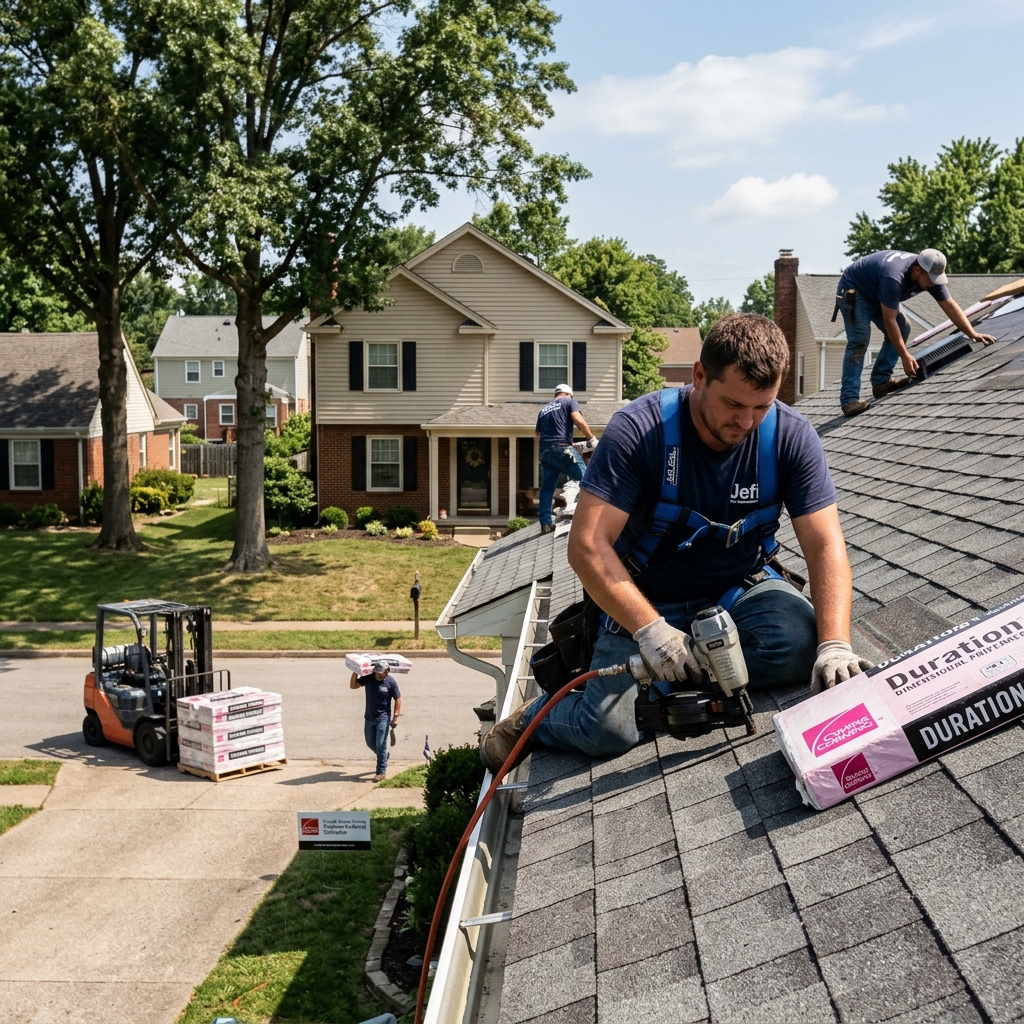
Top 7 Emergency Roof Leak Repairs to Prioritize After Severe Weather

1. Water Damage Assessment and Documentation

Severe weather doesn’t wait for convenient timing. A sudden hailstorm, heavy downpour, or wind event can leave your roof compromised within minutes, and water will find its way inside within hours. When you’re facing an emergency roof leak repair situation, knowing where to start makes the difference between containing damage and facing tens of thousands in restoration costs.

We’ve handled thousands of storm damage calls across Louisville and Kentuckiana since 1989, and we’ve learned that the first few hours after a leak appears are critical. Property owners who act quickly with the right priorities protect their homes far better than those who delay. Here’s what you need to prioritize after severe weather strikes.

Before you take any other action, get eyes on the problem and document everything. This isn’t about calling a contractor immediately (though we’re here when you’re ready). It’s about understanding the scope and protecting your interests with your insurance company.

Start by safely locating the leak source. If water is actively dripping inside, trace it back to where it enters. Look for water stains on ceilings, wet insulation in the attic, or soft spots on walls. Take photographs and videos from multiple angles, capturing the visible damage, wet areas, and any obvious roof damage if you can safely view it from ground level or inside your attic.

Document the date, time, and weather conditions when the leak started. Write down what you observed: water color, flow rate, affected areas, and any materials damaged (drywall, insulation, flooring, furniture). This timeline and visual record becomes essential when filing an insurance claim.

Your immediate action: Don’t climb on a wet or damaged roof yourself. Instead, photograph everything from safe vantage points and call a professional right away to assess structural safety and the full extent of damage.

2. Temporary Leak Containment Solutions

While permanent repairs take time to schedule and execute, you need to stop water from entering your home now. Temporary containment buys you hours or days until proper repair is possible.

For active leaks, place buckets or containers directly under dripping water to catch runoff and protect flooring. If water is spreading across a ceiling or down walls, use tarps or plastic sheeting to redirect it toward buckets. Don’t worry about a perfect solution; the goal is preventing additional water from spreading into walls and insulation.

If the leak source is visible on the roof and weather permits safe access, temporary tarping can work. Secure a heavy tarp over the damaged area using rope or wood blocks weighted down. However, if wind is ongoing, your roof is steep, or visibility is poor, this DIY approach carries serious injury risk. We recommend calling for emergency professional tarping instead.

For smaller leaks around vents or flashings, temporary caulking or roofing cement can slow water infiltration temporarily, but recognize this as a stopgap, not a permanent fix. Remove temporary sealants once professional repairs begin.

Your immediate action: Deploy buckets and tarps indoors first, where it’s safe. Call our emergency line for professional temporary roof protection if weather has stabilized but permanent repairs aren’t yet scheduled.

3. Interior Protection and Moisture Control

Water spreading inside your home causes problems far beyond the initial leak point. Wet drywall, insulation, and wood framing invite mold growth within 24-48 hours if moisture isn’t controlled. Protecting your interior is just as important as stopping water entry.

Move furniture and belongings away from wet areas and off affected flooring. Remove wet insulation from attics if it’s accessible and safe, as soggy insulation loses effectiveness and becomes a mold hazard. Open windows and doors (during dry weather) to create airflow. If you have fans, position them to direct moist air outward.

Use a dehumidifier if the leak is localized to one room or section. In larger affected areas or humid climates, a single dehumidifier won’t suffice. This is where professional water extraction equipment becomes necessary. We use industrial-grade dehumidifiers and air movers that remove moisture far more effectively than household equipment.

Avoid drying wet areas with heat alone, as trapped moisture can spread deeper into walls and framing. Moisture must exit the home, not just move around inside it.

Your immediate action: Remove furniture, open windows during dry periods, and run portable fans to keep air moving. If moisture feels widespread, contact professionals immediately rather than waiting for DIY drying to work.

4. Attic and Structural Inspection

Your attic tells the true story of roof damage and water infiltration. If you have safe attic access, put on a flashlight and look for visible water stains, wet insulation, active dripping, or visible roof damage from underneath. Dark stains or discoloration on rafters, trusses, or roof sheathing indicate past or ongoing water exposure.

Check for soft or spongy wood when touching rafters or trusses. Early rot feels soft and crumbly. If wood is compromised, structural integrity may be at risk. This is not a DIY assessment unless you’re trained in structural evaluation. Damaged framing can eventually fail, creating safety hazards.

Inspect ventilation openings (soffit vents, ridge vents, gable vents) for debris, nesting, or blockages that prevent proper airflow. Poor ventilation allows moisture to accumulate, leading to rot and mold even after the initial leak is fixed. Many emergency roof leaks stem from ventilation failures that go unaddressed.

Look at roof sheathing (the wood layer directly under roofing material). Soft spots, dark staining, or visible damage here indicates the leak has penetrated past the protective roof layer.

Your immediate action: If your attic is accessible, do a basic visual inspection. If you see soft wood, significant damage, or extensive rot, stop and call a professional immediately. We assess structural integrity as part of our storm damage evaluation.

5. Insurance Claim Preparation and Support

Once you’ve documented damage, contact your insurance company promptly. Most homeowner policies cover storm damage, but timing and proper documentation affect claim approval and reimbursement speed.

When you call your insurer, have your documentation ready: photos, videos, the damage timeline, and details about when the leak was discovered. File your claim within your policy’s timeframe (typically 30-60 days). Delays can lead to claim denial even if the damage is storm-related.

The insurance company will likely assign an adjuster to inspect the property. Be present during this inspection and point out all damage you’ve documented. Don’t minimize or exaggerate; let the evidence speak. If your insurer’s assessment seems incomplete, you can request a second opinion or hire an independent adjuster.

We often assist our clients by providing detailed damage assessments and repair estimates that support insurance claims. These professional reports carry significant weight with adjusters because they come from licensed contractors familiar with storm damage standards.

Your immediate action: File your claim immediately after initial documentation, even if you’re still assessing full damage. Insurance timelines matter, and filing early protects your coverage regardless of when repairs begin.

6. Professional Water Extraction and Drying

Once the roof leak is temporarily contained and initial assessment is complete, professional water extraction prevents long-term damage like mold, rot, and structural failure. This is where DIY solutions reach their limits.

We use industrial water extraction equipment that removes standing water from attics, walls, and crawlspaces far more effectively than shop vacuums or bucket removal. After extraction, commercial-grade dehumidifiers and air movers run continuously to dry affected areas completely. Moisture readings guide this process, ensuring spaces are truly dry before they’re closed back up.

Professional drying typically takes 3-7 days depending on moisture extent and airflow conditions. During this time, affected spaces remain open to airflow, and equipment monitors moisture levels. We document drying progress with moisture readings, creating a record for insurance purposes.

Inadequate drying leads to mold growth, hidden rot, and structural problems that emerge months later. Once mold establishes itself, remediation costs skyrocket and health concerns arise. Proper professional drying prevents this entirely.

Your immediate action: Contact our team for professional water extraction as soon as the roof is temporarily contained. The sooner extraction begins, the more damage you prevent and the faster complete drying happens.

7. Permanent Roof Repair or Replacement

Temporary solutions keep water out for days or weeks, but permanent repairs address the underlying problem. The appropriate permanent solution depends on damage extent, roof age, and your long-term plans.

For minor damage (a few missing shingles, a small puncture, localized flashing failure), our team repairs the affected section while ensuring no hidden damage exists underneath. Repairs cost less than replacement and work well when damage is truly localized. We inspect the entire roof even during repairs to catch additional problems early.

For extensive damage affecting large roof sections, or if your roof is near the end of its lifespan, replacement becomes the practical choice. A new roof from us includes our Owens Corning Platinum Preferred Contractor backing, ensuring quality materials and expert installation. New roofs eliminate future leak risk for years, often providing better peace of mind than patching an aging system.

Storm damage often reveals that roofs are weaker than homeowners realized. Hail, wind, and water exposure accelerate aging. If your roof was already 15+ years old when the storm hit, replacement makes more sense than repair because future weather events will likely cause additional damage.

We handle the insurance coordination on your behalf, working directly with adjusters to maximize your claim reimbursement. Our detailed storm damage repair process ensures nothing is overlooked and your roof is restored properly.

Your immediate action: After the roof is dried and assessed, get a professional replacement estimate. We provide instant estimates and can often schedule replacement quickly after insurance approval.

Emergency roof leaks demand fast action, but the right sequence of steps prevents panic and protects your property. Document immediately, contain the leak, protect your interior, assess structural damage, file your insurance claim, extract water professionally, then plan permanent repairs.

We’re here for every step. From emergency tarping and damage assessment through professional drying to complete roof replacement, our team has handled thousands of storm emergencies across Louisville and Kentuckiana. Call us immediately if severe weather has damaged your roof. We respond quickly, work directly with your insurance company, and make the entire restoration process straightforward. Your home’s protection is our priority.

For further reading: Roof replacement planning.

Contact us today for a free in home, no obligation quote on your roof
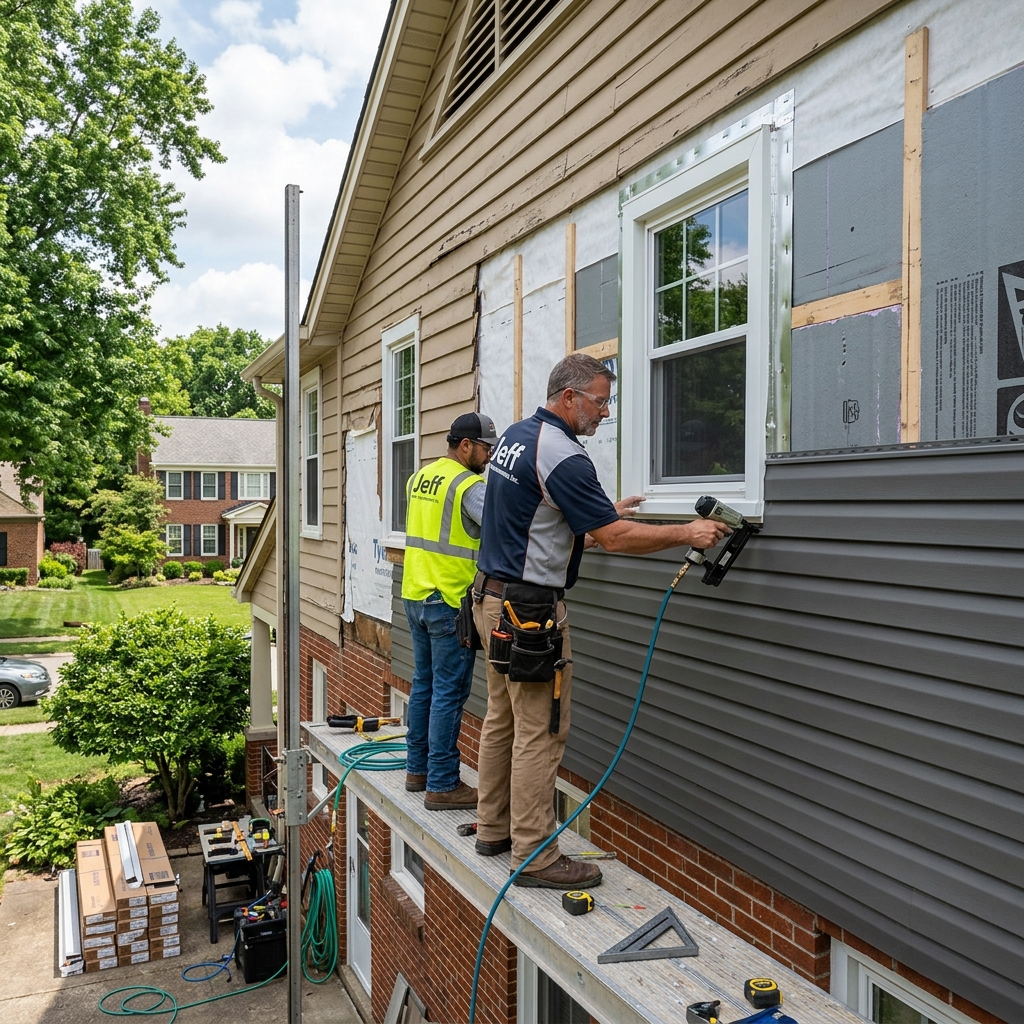
How to Verify Your Roofer is Licensed and Insured in Kentucky

Why Verifying Roofer Credentials Protects Your Investment

When you’re planning a roof replacement or storm damage repair, choosing the right contractor can mean the difference between a job done right and years of costly problems. The first step in that process is confirming that your roofer holds the proper credentials. Here’s what you need to know to make an informed decision.

Your roof is one of the largest investments on your property. A poor installation or repair can lead to leaks, structural damage, mold, and safety hazards that compound over time. When you hire a licensed and insured contractor, you’re not just paying for labor; you’re securing legal protection and accountability.

A licensed roofer has demonstrated knowledge of building codes, safety practices, and proper installation techniques. Insurance protects you financially if something goes wrong on your property during the work. Without these safeguards, you could end up paying twice: once to fix the original problem and again to correct mistakes made by an unqualified contractor.

Taking the time to verify credentials upfront prevents expensive headaches later.

The Risks of Hiring Unlicensed or Uninsured Contractors

Unlicensed contractors may offer lower prices, but that savings comes with substantial hidden costs. If something goes wrong, you have no legal recourse and no bond to recover damages. Many unlicensed operators work cash-only specifically to avoid accountability.

Uninsured contractors pose even greater risks. If a worker is injured on your roof, you could be liable for medical bills and lost wages. If the contractor damages your home or a neighbor’s property, you’re responsible for repairs. Your homeowner’s insurance may not cover damage caused by uninsured contractors, leaving you personally accountable for thousands of dollars.

Additionally, unpermitted work can affect your property’s resale value and may violate local building codes. Buyers often discover unpermitted roofing during home inspections, leading to expensive complications at closing.

Kentucky’s Roofing Contractor Licensing Requirements

Kentucky does not require individual roofers to hold a state license for residential work, but this does not mean you should skip credential verification. Instead, focus on contractor licensing at the business level and look for additional certifications and insurance.

Commercial roofing projects in Kentucky may have stricter requirements depending on the project scope and local jurisdiction. Many cities and counties have their own licensing boards and permit requirements. This variation makes it even more important to ask your contractor about local compliance for your specific project.

The Kentucky Department of Housing, Buildings and Construction oversees building standards and permits. Your contractor should be familiar with these codes and able to pull proper permits before starting work.

How to Check a Roofer’s License Status in Kentucky

Begin by verifying that your contractor maintains a current business license. You can check this through your city or county clerk’s office or the Kentucky Secretary of State’s business search portal. Search for the company name and confirm the license is active and current.

Ask your contractor directly for their business license number, insurance policy information, and any certifications. A reputable contractor will provide these documents without hesitation. Request to see physical copies of insurance certificates and license documentation.

Contact the Better Business Bureau and check online reviews on Google, Yelp, and the BBB website. Look for patterns in feedback about reliability, communication, and follow-through. A single negative review happens; consistent complaints about incomplete work or missing credentials are warning signs.

For additional assurance, ask your roofer if they hold certifications from major manufacturers like Owens Corning or GAF. These partnerships indicate ongoing training and quality standards.

What Insurance Coverage Your Roofer Must Carry

Your roofer should carry two essential types of insurance: general liability and workers’ compensation.

General liability insurance protects you if the contractor accidentally damages your home, a neighbor’s property, or causes injury to someone on the job. Coverage amounts typically range from $300,000 to $2 million per incident.

Workers’ compensation insurance covers medical costs and lost wages if a worker is injured during the project. In Kentucky, any contractor with employees is required by law to carry this coverage. If your roofer claims to have no employees (subcontractors only), ask to see proof that their subcontractors carry their own workers’ comp.

Request a Certificate of Insurance naming you as an additional insured. This document proves coverage is active and protects you legally. Don’t accept verbal assurances or old certificates; ask for current documentation directly from the insurance carrier.

Red Flags That Signal an Unqualified Contractor

Be cautious if a contractor refuses to provide insurance certificates or business license information. Legitimate businesses keep these documents readily available.

Watch for unusually low estimates compared to competitors. Roofing is a skilled trade; significantly underpriced work often reflects cut corners, substandard materials, or inexperience.

Contractors who pressure you to pay the full amount upfront or demand cash-only payment are operating outside normal industry practices. Standard payment terms typically include a deposit, progress payments, and final payment upon completion.

Poor communication is another warning sign. If a contractor is hard to reach, vague about timelines, or dismissive of your questions, these issues typically worsen after the contract is signed.

Finally, be wary of anyone who shows up unsolicited after a storm claiming they just finished a job in your neighborhood. While some legitimate contractors do this, it’s also a common tactic used by scammers who disappear after collecting payment.

Our Approach to Transparent Credentials and Certifications

We operate with full transparency because we stand behind our work. We maintain current business licensing, carry comprehensive general liability and workers’ compensation insurance, and provide Certificates of Insurance to every client before work begins.

As an [Owens Corning Platinum Preferred Contractor], we’ve earned recognition for quality installation, customer service, and adherence to manufacturer standards. This certification requires ongoing training, customer satisfaction tracking, and use of premium materials. It’s something we work to maintain year after year.

All our team members receive regular training on current building codes, safety practices, and proper installation techniques. We pull all required permits and coordinate with local building inspectors to ensure your project complies with Kentucky regulations.

We encourage clients to verify our credentials. Ask for references, check our BBB profile, and request documentation. Our commitment to doing things right means we have nothing to hide.

Questions to Ask Before Hiring a Roofing Contractor

Start with the basics: “Are you licensed and insured?” and “Can you provide proof right now?” Request specific insurance policy numbers and coverage amounts.

Ask about experience: “How long have you been in business?” and “Do you have references from similar projects completed in the last two years?” Call those references and ask about communication, timeline adherence, and overall satisfaction.

Clarify the work: “What materials will you use?” and “What warranty covers this work?” Get everything in writing, including materials, labor costs, timeline, and cleanup responsibilities.

Ask about permits: “Will you pull all required permits?” and “Who coordinates with the building inspector?” Reputable contractors handle this themselves.

Finally, inquire about their relationship with manufacturers: “Are you certified by any roofing manufacturers?” Certification demonstrates commitment to quality.

The Value of Working with Owens Corning Certified Partners

Choosing a manufacturer-certified contractor like ours adds another layer of protection. Certification programs require contractors to maintain specific standards, use quality materials, and provide warranties backed by the manufacturer.

When you work with an Owens Corning Platinum Preferred partner, your roof comes with enhanced warranty coverage. The manufacturer stands behind the installation, not just the shingles. If something fails due to improper installation, you have recourse beyond just the contractor.

These partnerships also mean access to the latest products, training, and technical support. We stay current with industry best practices and can discuss which solutions work best for your home’s specific needs.

Get Peace of Mind with Jeff Home Improvements

Verifying your roofer’s credentials takes time, but it’s one of the best investments you can make in your home’s protection. At Jeff Home Improvements Inc., we’ve built our reputation in the Louisville and Kentuckiana area since 1989 by doing exactly what we promise, maintaining proper credentials, and standing behind every project.

Ready to move forward with confidence? Contact us for a virtual consultation and instant estimate. We’ll verify our credentials, answer your questions, and show you why our licensed, insured, and certified team is the right choice for your roofing needs.

For further reading: Owens Corning Platinum Preferred Contractor, St. Matthews KY Roofing.

Contact us today for a free in home, no obligation quote on your roof
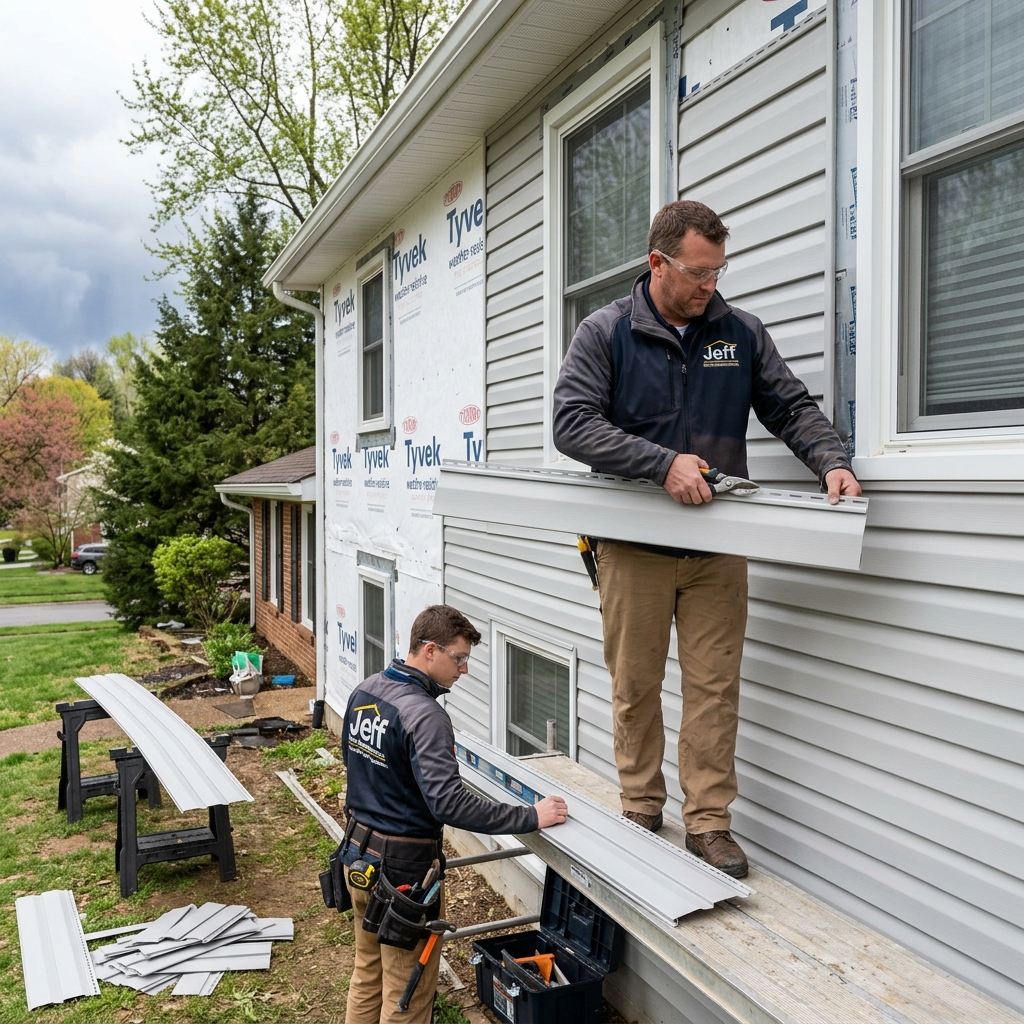
Complete Exterior Upgrades: Coordinating Siding, Windows, and Gutters in Louisville

Why Homeowners Leave Exterior Systems Mismatched and Disconnected

Most homeowners approach exterior upgrades the way they handle home maintenance: one emergency at a time. A vinyl window fails in the master bedroom, so you call a contractor. Six months later, hail damage strikes the roof. A year passes, and you notice the gutters aren’t draining properly. Each repair gets handled by whoever’s available, often at different times and sometimes by different contractors.

This piecemeal approach creates a disconnect. The new windows don’t coordinate with the existing siding color. The gutters weren’t sized to match your roof’s pitch and drainage needs. Flashing details don’t align between systems. What should be a cohesive exterior envelope becomes a mismatched collection of separate fixes.

The root cause is simple: homeowners typically don’t think of their exterior as an integrated system. We see a roof, siding, windows, and gutters as independent components rather than parts of one protective barrier. Contractors who handle only one specialty reinforce this thinking. They solve their piece of the puzzle without considering how it fits with the rest.

Actionable takeaway: Before calling separate contractors for individual projects, map out your entire exterior’s condition. Note which elements truly need replacement and which could wait. This inventory becomes the foundation for coordinated planning.

The Problem With Tackling Upgrades Separately

Handling siding, windows, and gutters as separate projects creates real financial and functional costs. When contractors work independently, sealing and flashing details don’t align between systems. Water can exploit gaps that form where different materials meet, leading to moisture damage inside walls that won’t surface for months or years.

Energy efficiency suffers too. New high-performance windows paired with old, drafty siding mean you’re only addressing part of the insulation problem. Your heating and cooling system still works overtime. The investment in better windows doesn’t deliver full returns because the broader envelope remains compromised.

Budget impacts are significant. Three separate projects mean three separate mobilizations, three separate permit consultations, and three contractor markups. You might get quotes of $12,000 for new windows, $8,500 for vinyl siding, and $3,200 for gutters handled separately. Combined, you’re paying for three separate business costs that a coordinated project could absorb more efficiently.

Scheduling headaches multiply when contractors work independently. One crew needs access to your exterior for two weeks. Another can’t start for a month. Material deliveries don’t align. Your home’s appearance stays in transition longer. Neighbors see constant activity rather than a focused renovation effort.

The biggest hidden cost is missed opportunities for better design. When professionals see your entire exterior at once, they spot solutions that single-specialty contractors miss. Better water management strategies. Superior color and material combinations. More efficient installation sequences that reduce labor time.

Actionable takeaway: Get a full exterior assessment from one contractor who handles multiple disciplines. Request a written summary showing which projects should happen together and why, rather than accepting three separate recommendations.

Our Integrated Approach to Exterior Transformation

We’ve been serving the Louisville and Kentuckiana area since 1989, and our approach has always centered on seeing your exterior as one system. When you contact us about new siding, we evaluate how that impacts your gutter capacity and window performance. If you need storm damage repair, we assess the entire affected area rather than just the visible damage.

Our team includes roofing specialists, siding experts, and window technicians who communicate throughout every project. We’re Owens Corning Platinum Preferred Contractors, which means we maintain rigorous standards across all exterior installations. This certification applies to our complete scope, not just one product line.

The integrated model works like this: we schedule a virtual consultation to understand your goals and assess your exterior. Our team documents current conditions, identifies problems, and proposes solutions that work together. We create a master plan showing which elements should be addressed first, second, and third. The sequencing matters. Installing new windows before siding removal protects them during that process. Installing new siding before gutters ensures proper drainage alignment. Coordinating the timeline reduces disruption and catches problems early.

We coordinate material selections to ensure visual harmony. Your new vinyl siding color, window trim style, and gutter system all complement each other and your home’s architecture. We specify products that work together functionally. Gutters are sized for your roof pitch and rainfall patterns. Flashing transitions are detailed before installation begins. Window installations account for your new siding thickness and slope.

Our project management system keeps one schedule, one crew coordinator, and one point of contact for your entire exterior transformation. No more managing multiple contractors or wondering why different teams aren’t communicating.

Actionable takeaway: Request our integrated exterior assessment instead of calling separate specialists. We’ll provide one comprehensive plan with priorities and timing, not three separate bids competing against each other.

Siding Replacement as Your Foundation Investment

Vinyl siding is the foundation of a coordinated exterior upgrade. Unlike roofing or gutters that primarily manage water, siding is your home’s primary weather barrier. It’s the first line of defense against wind, UV damage, and moisture. When siding fails, water finds paths into walls that create structural problems over years.

Most homes in the Louisville area benefit from vinyl siding replacement after 25-30 years or following storm damage. Modern vinyl siding performs far better than products from even 15 years ago. Today’s options resist fading, withstand higher wind speeds, and install more efficiently than earlier generations.

The key advantage of siding as your starting project: it influences everything else. New siding determines your color palette. Its profile and style shape window trim selections. Its surface condition and installation details affect how gutters connect. Its wall thickness and insulation value factor into overall energy efficiency gains.

When we replace siding, we address underlying issues simultaneously. We inspect sheathing and framing for damage. We install new house wrap or weather barrier with enhanced moisture protection. We ensure proper ventilation gaps behind the siding. These details only get done properly when you’re opening up the wall system.

We coordinate window sizing and installation with new siding. Existing windows sometimes need resizing when siding changes the exterior wall profile. New windows install cleanly into new openings rather than retrofitting into old frames. The flashing creates clean transitions instead of compromises between materials.

Actionable takeaway: If your siding is 25+ years old or shows visible damage, start your coordinated project here. Getting new siding planned before purchasing windows lets us specify the right window sizing and flashing details.

Window Installation for Energy Efficiency and Curb Appeal

New windows deliver both functional and aesthetic returns. Functionally, modern vinyl window installation dramatically reduces heating and cooling costs. Older single-pane or early double-pane windows lose significant energy through glass and frames. New Low-E coated glass reflects heat back into winter months and reflects summer heat outward. Insulated frames prevent thermal transfer that old aluminum or wooden frames allow.

The curb appeal impact is equally important. Windows are the face of your home. New vinyl windows with clean lines, bright frames, and uniform appearance transform how your property looks from the street. They signal to neighbors and potential buyers that the home is well-maintained.

In a coordinated upgrade, window installation timing matters. If you’re replacing siding first, we size new windows for the wall profile before siding installation. This gives us clean openings, proper flashing, and no gaps between siding and window frames. If siding and windows install together, we coordinate crews so one doesn’t damage the other’s work.

Material selection connects to your overall design. Vinyl window color should complement your new siding and shutters. Frame styles should match your home’s architectural character. We help homeowners avoid choosing styles that clash with their overall aesthetic.

Energy efficiency gains multiply when windows coordinate with other exterior improvements. New insulated siding, proper air sealing, and ventilated gutters work together with efficient windows to create a sealed thermal envelope. Your HVAC system doesn’t work as hard. Energy bills drop noticeably, especially in Kentucky winters.

Actionable takeaway: Choose window styles and colors during your siding consultation, not in isolation. The coordinated approach ensures your windows complement rather than compete with your new exterior appearance.

Gutter Systems and Protection That Work Together

Gutters are the nervous system of your exterior, collecting water from the roof and directing it away from your home’s foundation and walls. Undersized gutters cause overflow during heavy rain, sending water down siding and into soil around foundations. Improperly graded gutters trap debris and create standing water. Disconnected gutters, often installed without considering roof size or pitch, fail during the heavy spring rains common in Kentucky.

Our gutters installation process starts with calculations based on your roof’s square footage and your area’s rainfall patterns. Louisville receives about 45 inches of annual precipitation, with concentrated periods during spring and fall. Properly sized gutters handle peak flow rates during these periods without overflowing.

When coordinating with new siding and windows, gutter sizing and positioning can be optimized. We know exactly where new siding ends and what the soffit and fascia configuration will be. This lets us design gutter systems that integrate cleanly rather than retrofitting onto existing structures. We specify gutter guards or protection systems at the same time, preventing debris buildup that requires constant maintenance.

Gutter guards deserve attention in coordinated projects. They eliminate leaves, twigs, and debris that clog conventional gutters. During heavy rain, water flows freely into gutters without obstruction. The initial investment is higher, but maintenance costs drop dramatically. Most homeowners find gutter protection pays for itself within a few years through eliminated cleaning expenses and reduced pest problems.

The soffit and fascia components that support gutters integrate with your siding project. New siding often calls for new fascia boards. These elements should be specified together so color, material, and installation details align.

Actionable takeaway: Have gutters sized during your exterior assessment, not after siding installation. Proper sizing based on your roof configuration prevents water management problems that expensive repairs won’t fix later.

The Cost Advantage of Coordinated Projects

The financial case for coordinated exterior upgrades is compelling when you account for all factors. Separate projects typically cost 20-30% more than coordinated ones. This difference comes from multiple sources.

Mobilization costs are significant. Each contractor charges to set up crews, position equipment, and establish site safety. When all work happens together, one mobilization handles multiple trades. Your cost drops accordingly. Permit and inspection costs consolidate. Your city charges one review fee instead of three, and inspectors visit once to evaluate the entire project rather than three separate times.

Material procurement is more efficient. A contractor handling siding, windows, and gutters purchases everything at once, often negotiating better pricing through volume purchases. Three separate contractors lack this buying power. Delivery costs consolidate. Materials arrive on a coordinated schedule rather than in multiple shipments with separate delivery fees.

Labor efficiency matters too. Crews that understand the full scope of work plan their sequences strategically. Rough openings are prepared once rather than visited by multiple teams. Cleanup happens systematically rather than repeatedly. This efficiency reduces labor hours even though the actual work quantity stays the same.

Financing options improve with coordinated projects. Many lenders offer better rates for comprehensive home improvements than for single-purpose repairs. You might qualify for a renovation loan at favorable terms when the scope exceeds $20,000, whereas three separate projects might not individually reach that threshold.

Long-term maintenance costs drop significantly. Problems that would develop from misaligned systems get prevented during coordinated installation. Water leaks that would damage framing don’t occur. Energy efficiency gains compound over years, reducing utility bills month after month. Warranty coverage often improves when multiple systems install together from one contractor rather than separately from different sources.

Actionable takeaway: Request a coordinated project estimate alongside separate bids. Calculate the total five-year cost including maintenance, energy usage, and potential repairs. The coordinated approach typically shows substantial savings.

How We Manage the Complete Exterior Upgrade Process

Our project management process ensures coordination from first conversation through final inspection. We start with a virtual consultation where you describe your goals and concerns. We discuss your timeline, budget parameters, and priorities. We schedule an in-person assessment where our team photographs and documents your exterior’s current condition.

Following the assessment, we develop a comprehensive plan showing all recommended work, sequencing, material specifications, and costs. This plan explains why certain elements should happen before others. We outline the timeline, identifying start and completion dates for each phase. Most complete exterior upgrades take 4-8 weeks depending on scope and weather conditions.

Our team then manages permits and inspections. We handle Louisville building code compliance, secure necessary permits, and coordinate inspector visits. You don’t need to navigate bureaucratic processes. We ensure all work meets code and qualifies for final sign-off.

During execution, one crew coordinator serves as your primary contact. They manage daily schedules, coordinate material deliveries, and handle any questions or changes. They ensure crews from different trades communicate so their work aligns. Daily work summaries keep you informed about progress.

Quality control happens continuously. We inspect each phase before moving to the next. New siding installation is verified before window crews begin. Window installation is complete and sealed before gutter installation starts. Final inspection by our team and the city ensures everything meets standards.

We provide detailed warranties for all work, covering materials and labor according to manufacturer specifications. We explain warranty coverage in writing so you know what’s protected and for how long. For most exterior upgrades, warranties extend 5-10 years depending on specific products and services.

Actionable takeaway: Ask potential contractors about their project coordinator system. You should have one person managing the entire project, not separate coordinators for different phases.

Real Results From Louisville Properties

We’ve completed thousands of coordinated exterior upgrades across the Kentuckiana area. The results demonstrate the value of integrated planning.

A St. Matthews home built in 1975 had original vinyl siding showing significant fading and warping. The homeowners wanted to refresh the exterior and improve energy efficiency. We replaced siding with modern vinyl in a slate gray color, upgraded windows to high-efficiency units with matching trim, and installed new gutters with guards. The project took six weeks and ran 25% under what separate contractors had quoted. Two years later, their energy bills had dropped $1,200 annually. The home’s appearance had transformed so dramatically that neighbors initiated their own exterior projects.

A commercial property in Old Louisville needed storm damage restoration plus long-overdue maintenance updates. Hail had damaged the roof and siding. The gutters were undersized and clogged with decades of debris. We replaced the roof, installed new siding in historically appropriate colors, and upgraded gutters with protection systems. The work coordinated so efficiently that despite the storm damage scope, the project timeline compressed to four weeks. The property owner appreciated having one contractor manage all exterior systems and one warranty covering everything.

A Frankfort Avenue home undergoing significant interior renovation needed exterior work to match. The owners wanted to modernize the appearance while preserving the home’s character. We specified period-appropriate vinyl siding profiles, installed new windows with traditional muntain patterns, and specified gutters in matching materials. The coordinated approach ensured the exterior renovation complemented the interior work timeline. The result attracted multiple qualified buyers and sold for above asking price.

Actionable takeaway: Ask your contractor for references from coordinated projects similar in scope to yours. Speaking with homeowners who managed multiple systems through one contractor provides valuable insight into the actual experience.

Protection Plans and Warranty Coverage

Our warranty structure covers all aspects of coordinated exterior upgrades comprehensively. Roofing work carries manufacturer warranty plus labor warranty. Siding installations include 10-year material and labor coverage. Window installations include sealed unit warranty and installation warranty. Gutter systems include product warranty and workmanship warranty.

What distinguishes our approach is unified warranty management. If a problem develops where siding, windows, and gutters meet, you don’t argue about which contractor’s warranty applies. We own the entire interface and handle problems regardless of where they fall technically. This eliminates the finger-pointing that homeowners sometimes experience when multiple contractors share a project boundary.

We offer optional extended protection plans that cover maintenance and minor repairs beyond standard warranty periods. These plans typically cover gutter cleaning twice annually, siding and window inspections, and minor repairs up to specified dollar amounts. Extended plans are cost-effective for homeowners who value predictable maintenance expenses.

Manufacturer warranties vary by product. Owens Corning roofing products we install carry strong manufacturer backing since we’re Platinum Preferred Contractors. Vinyl siding manufacturers typically warrant against defects for 10 years. Window manufacturers warrant sealed units for 10 years and frames for similar periods. We document all warranties in writing and provide you with original documentation for future reference.

Actionable takeaway: Review warranty coverage details before signing contracts. Understand what each warranty covers, for how long, and what maintenance requirements you must perform to keep warranty protection valid.

Getting Started With Your Exterior Consultation

Beginning your coordinated exterior upgrade is straightforward. Contact us through our website at https://jeffroof.com or call directly to schedule your virtual consultation. We’ll discuss your property, goals, and timeline during an initial conversation. We’ll explain our process and answer questions about how coordinated upgrades work.

Following the consultation, we schedule an in-person assessment where our team evaluates your exterior’s current condition. We take measurements, photograph areas of concern, and document existing systems. We ask about past repairs, water intrusion problems, and your priorities for improvement. This assessment typically takes two to three hours.

We then develop your comprehensive upgrade plan. This document includes detailed recommendations, material specifications, cost estimates, sequencing strategy, and timeline. We explain why elements should be done in recommended order. We outline what you should expect during each phase. We answer questions about warranty coverage, financing options, and maintenance expectations post-project.

Once you approve the plan, we manage everything from permits through final inspection. We coordinate with the city, manage material deliveries, oversee installation quality, and handle warranty documentation. Your role is to provide access and communicate any changes or questions to your project coordinator.

Most homeowners find the coordinated approach reduces stress and delivers better results than managing multiple contractors independently. You get professional exterior systems that work together, integrated warranties that cover interfaces, and a simpler process from start to finish.

Start your exterior transformation today. Reach out to schedule your virtual consultation. We’ll assess your complete exterior, develop an integrated plan, and help you understand how coordinated improvements deliver both better function and appearance for your Louisville area property.

Contact us today for a free in home, no obligation quote on your roof
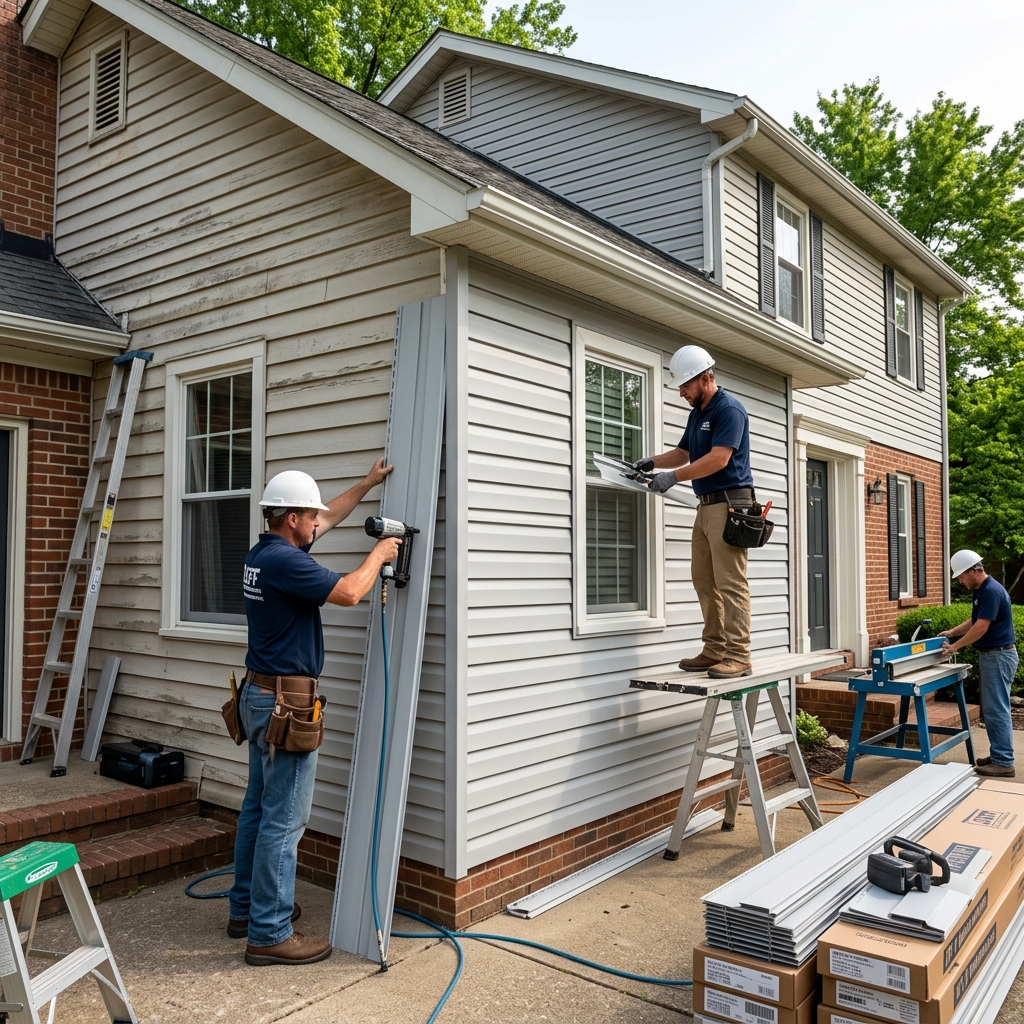
Storm Damage Roof Repair: Your Complete Insurance Claim Guide for Louisville

When a Storm Strikes Your Roof: Understanding Your Coverage Gap

A severe thunderstorm rolls through Kentuckiana and leaves hail damage across dozens of roofs in your neighborhood. You file a claim with your insurance company, assuming the process will be straightforward. Then reality sets in: the adjuster’s estimate seems low, communication stalls, and you’re uncertain whether your roof truly needs replacement or if repairs will suffice.

This coverage gap exists because most homeowners don’t understand what their policy actually covers or how insurance companies assess storm damage. Your homeowners policy typically covers sudden, accidental damage from wind, hail, or fallen trees. But “covered” doesn’t mean “fully reimbursed at replacement cost.” Insurance adjusters work within specific guidelines and may miss damage that a roofing expert would catch immediately.

We’ve worked with thousands of Louisville-area property owners navigating this exact situation since 1989. The difference between a claim that gets denied, underpaid, or fully approved often comes down to documentation and having the right contractor in your corner. When a storm damages your roof, you’re not just dealing with weather damage—you’re managing a parallel negotiation with your insurance company.

Understanding your policy limits, deductibles, and what triggers full replacement versus partial repair is essential. Most standard homeowners policies include a wind and hail deductible that’s separate from your regular deductible. That means you might owe $2,500 or more out of pocket before insurance kicks in. Knowing this upfront helps you make realistic financial decisions about your repairs.

Action item: Locate your homeowners policy documents and review the declarations page. Note your deductible amounts, coverage limits, and any endorsements related to wind or hail damage.

Why Most Louisville Homeowners Struggle with Storm Damage Claims

The storm damage claim process trips up homeowners for several predictable reasons. First, most people lack the technical knowledge to identify all the damage a storm has caused. From the ground, a roof looks fine even when shingles are cracked, flashing is torn, or structural damage exists underneath. An insurance adjuster may spend 15 minutes on your roof during a brief inspection, missing issues that become apparent during a thorough assessment.

Second, homeowners often don’t realize they have leverage in the claim process. Insurance companies employ adjusters to assess damage fairly, but their primary obligation is to manage claim costs. If you accept their initial estimate without expert input, you may leave thousands of dollars on the table. This isn’t about being adversarial—it’s about ensuring your roof is properly restored rather than patched with a band-aid approach.

Third, many property owners delay getting professional evaluation because they’re uncertain about next steps. After a major storm, your roof becomes a pressing concern, but you might not know whether to call a contractor first or wait for the insurance inspection. This confusion often leads to further damage as rain or wind compounds the initial problem.

Communication breakdown is another common issue. Your insurance company may not clearly explain what’s covered, what the timeline looks like, or what documentation you need to provide. You’re left juggling calls between your adjuster, your contractor, and your insurance agent without a clear point person managing the process.

Finally, homeowners in Louisville sometimes assume their previous insurance history or credit rating affects claim approval. In reality, homeowners insurance claim approvals are based on policy language and documented damage, not on whether you’ve filed claims before. Understanding this removes unnecessary anxiety from the process.

Action item: After filing a storm claim, request a copy of the adjuster’s written estimate and ask them to specifically identify all damage they found. If anything seems unclear, ask for clarification before accepting their assessment.

How We Coordinate with Your Insurance Company from Start to Finish

Our role in the storm damage process goes well beyond simply fixing your roof. We become the bridge between you and your insurance company, ensuring nothing falls through the cracks and that your claim reflects the true scope of damage.

Here’s how we structure this coordination:

Immediate documentation. Within 24-48 hours of a storm, we perform a detailed roof inspection and create a comprehensive damage report with photos and video. This documentation becomes critical evidence if your insurance adjuster’s initial assessment seems incomplete. We’re not trying to inflate claims—we’re providing objective evidence of what the storm actually damaged.

Adjuster communication. We attend the insurance inspection when possible and present our findings alongside the adjuster’s assessment. When there’s a discrepancy between what the adjuster documented and what we’ve identified, we explain the technical reasons for the difference. Adjusters appreciate working with contractors who speak their language and provide evidence rather than arguments.

Supplemental claim filing. If our assessment identifies damage the adjuster missed, we prepare supplemental documentation and help you file an amended claim. This is standard practice and doesn’t trigger investigation—it’s simply providing additional evidence that should have been caught during the initial inspection.

Estimate alignment. We ensure our repair estimate aligns with what insurance will cover under your policy. We’re transparent about what’s covered by insurance, what falls under your deductible, and what might be out-of-pocket if your coverage limits have been reached. This honesty builds trust and prevents surprises later.

Timeline management. Insurance claims operate on specific timelines. Adjusters have limited time to respond, supplemental claims have filing deadlines, and your repair work needs to start while the damage is fresh. We track these dates and keep you informed so nothing expires.

Repair authorization. Before we begin any work, we ensure your insurance company has approved the scope of repairs and issued payment authorization. We don’t start work hoping to get paid later—we confirm coverage first.

Action item: After filing your claim, provide your contractor’s contact information to your insurance adjuster immediately. This sets up direct communication that speeds up the process significantly.

Our Three-Step Assessment and Documentation Process

When you contact us about storm damage, we follow a structured process designed to protect your interests and document everything thoroughly.

Step one: Initial damage assessment. Our roofing experts conduct a complete roof inspection, examining shingles, flashing, gutters, skylights, and any other storm-exposed components. We document everything photographically, including wide shots of affected areas and close-ups of specific damage. We use video to show the complete picture—something static photos can’t always convey. This assessment typically takes 30-60 minutes depending on your roof size and complexity.

Step two: Comparative analysis. We compare undamaged sections of your roof with damaged areas to highlight the difference. This visual comparison is powerful evidence when presenting to your insurance adjuster. For example, if one side of your roof has impact damage from hail and the other side was protected by a large tree, the contrast makes the damage obvious.

Step three: Detailed estimation and reporting. We prepare a formal damage report that meets insurance industry standards. This includes the specific materials damaged, estimated repair versus replacement costs, and recommendations for the most cost-effective restoration approach. Our Owens Corning Platinum certification means our estimates are recognized and trusted by insurance adjusters throughout the region.

Throughout this process, we maintain digital copies of all documentation and provide you with a comprehensive report before we discuss next steps. You’ll know exactly what we found, how extensive the damage is, and what repair options exist.

Our assessment is thorough precisely because we’ve seen insurance claims denied or underpaid due to incomplete documentation. We treat your roof damage assessment like an insurance professional would, because that’s what it becomes—evidence in your claim.

Action item: Request that your contractor provide all documentation in digital format and give you copies before any work begins. This ensures you have evidence independent of your contractor’s records.

Maximizing Your Insurance Settlement with Expert Evidence

The difference between a minimal insurance payout and a full settlement often hinges on the quality of evidence presented. We’ve learned what adjusters need to see and how to present damage in ways they understand and respect.

Insurance companies use established damage assessment guidelines. Hail damage, for instance, requires multiple impact marks to establish a pattern. Wind damage might be demonstrated through lifted shingles, torn flashing, or exposed nail heads. Our documentation identifies damage using these same professional standards, making it harder for an adjuster to dispute.

Professional photography matters more than homeowners realize. A cell phone photo of roof damage taken from the ground rarely shows what an aerial photo captures. We use aerial photography and close-up detail shots that eliminate ambiguity. When an adjuster sees professional documentation showing 40% of your roof has hail damage, they can’t simply dismiss it as normal wear.

We also identify secondary damage that homeowners miss. A roof impact might crack underlying plywood. Wind lifting might have damaged soffit or fascia. Storm debris might have blocked gutters, causing water backup. These secondary issues often qualify for coverage and significantly increase your settlement.

Another key advantage: we understand depreciation nuances. Insurance coverage varies based on whether you have replacement cost value (RCV) or actual cash value (ACV) coverage. RCV pays for the full cost to replace materials; ACV deducts depreciation. Our documentation makes clear what depreciation the adjuster should be calculating, which can mean thousands of dollars in difference.

We’ve also learned that some damage only becomes apparent after repair begins. That’s why we recommend phased repair approval with your insurance company. Initial damage is approved, we start the work, and any additional damage discovered during repair is documented and submitted as a supplemental claim. This protects you from being left with partially repaired damage because the original estimate was incomplete.

Action item: If your adjuster’s estimate seems significantly lower than a contractor’s assessment, ask them to itemize what they included and excluded. This specific comparison often reveals what was missed.

The Complete Claim Timeline: What to Expect

Storm damage claims move at different speeds depending on several factors. Understanding realistic timelines helps you plan and know when to push for faster action.

Days 1-3: File your claim immediately after a storm. Contact your insurance agent or company’s claims line while the damage is fresh and before significant weather compounds the problem. Document your damage with photos and videos. Schedule a contractor assessment within these first few days. We can often fit emergency inspections into our schedule within 24 hours during storm season.

Days 4-7: Your insurance company typically schedules an adjuster inspection within a week of the claim filing, though this varies by how busy they are after a major storm event. Prepare for this inspection by having documentation ready, clearing access to your roof, and being present when the adjuster arrives. This is your opportunity to point out damage you’ve noticed.

Days 8-14: After the adjuster’s inspection, they have 10-30 days (depending on your policy) to issue their estimate. During this waiting period, we maintain documentation of your damage and prepare a detailed report comparing our assessment with what we expect from insurance.

Days 15-30: Once you receive the adjuster’s estimate, you have options. If you accept it, you can proceed with repairs. If you disagree, you typically have a deadline to file a supplemental claim with additional documentation. This is where our expert assessment becomes critical. We help you decide whether the adjuster missed something worth pursuing.

Days 31-45: If supplemental claims are filed, your insurance company has another period to review and respond. This can feel like the claim is moving slowly, but it’s normal. Many storms create regional claim surges that slow processing.

Days 45-60: Once your insurance approves payment, we schedule repair work. This is when the actual restoration happens. For major damage, repair work might take one to three weeks depending on material availability and weather cooperation.

Days 60-90: Final inspections occur once repair work is complete. Insurance may send a follow-up adjuster to verify that work was completed as approved. We coordinate this inspection and ensure everything meets their requirements.

The entire process from claim filing to completed repairs typically spans 60-90 days. Emergency repairs that keep your property protected (tarping, temporary fixes) can begin much sooner, often within the first week.

Action item: Create a simple timeline document for yourself. Write down when you filed your claim, when the adjuster inspection is scheduled, and what deadlines your insurance company provides. Refer to this frequently.

Why Our Owens Corning Platinum Certification Matters for Your Claim

Our Owens Corning Platinum Preferred Contractor status isn’t just a marketing designation—it’s a credential that directly influences how insurance companies view our work and our estimates.

Owens Corning maintains rigorous standards for contractors who receive this certification. We undergo annual training in roofing installation, assessment protocols, and industry best practices. We’re required to maintain detailed records, carry appropriate licensing and insurance, and achieve high customer satisfaction ratings. This means insurance adjusters already know our assessments are reliable before they even receive our documentation.

When we submit a damage assessment, adjusters give it weight because they trust Owens Corning’s vetting process. Our estimate isn’t one contractor’s opinion—it’s a documented assessment from a certified professional who must maintain standards or lose certification. This credibility translates into faster claim approvals and fewer disputes about damage extent.

Additionally, our Platinum status gives us access to Owens Corning’s professional resources and support. We use their assessment tools, training updates, and technical guidance. This continuous education means we’re current on how different shingle types respond to storm damage, what constitutes legitimate hail damage versus normal wear, and how to document everything precisely.

For your warranties and coverage, this matters too. Owens Corning Platinum contractors can transfer certain warranties to subsequent homeowners, which increases your property’s resale value. Buyers prefer homes with certified contractor work and extended warranties.

Insurance companies also recognize that Platinum contractors complete work to specific standards. When we repair or replace your roof, they know it’s being done correctly, which reduces dispute risk. That confidence makes them more willing to approve full settlements rather than fight over coverage details.

Action item: Ask any contractor you’re considering whether they hold Owens Corning Platinum certification or equivalent credentials. This single factor often correlates with better claim outcomes.

Virtual Consultations: Getting Immediate Answers Without Waiting

After a storm, your roof becomes urgent, but getting someone to physically visit your property can take days. We’ve streamlined this by offering virtual consultations that provide preliminary assessment and answer your immediate questions the same day.

Here’s how virtual consultations work: You schedule a brief video call at your convenience. During that call, you walk us through your roof damage using your phone camera, showing us impact areas, damaged flashing, and any other concerns. Our experts provide real-time feedback about what we’re seeing, whether it appears covered by insurance, and what immediate steps you should take.

This doesn’t replace a full physical inspection—we still need to visit your property to provide detailed documentation for your insurance claim. But the virtual consultation answers critical questions immediately. You’ll know whether the damage appears significant enough to warrant a claim, whether emergency repairs are needed to prevent further damage, and what to expect from the claim process.

Virtual consultations are especially valuable during high-volume storm periods. After major weather events, contractor schedules fill quickly. A virtual consult lets us prioritize which properties need urgent on-site visits versus those that can wait a few days. This means we can direct emergency resources toward properties with the most critical damage while still keeping you informed.

For commercial property managers, virtual consultations are invaluable. You can conference in your facilities team, insurance agent, and business ownership to discuss damage and options together rather than having multiple separate conversations.

We typically provide estimates and next-step recommendations during or immediately after the virtual call. You get answers without the waiting.

Action item: When you contact us about storm damage, ask about virtual consultation availability. If timing is critical, a same-day video assessment might be exactly what you need.

Our Storm Damage Restoration Guarantee

We stand behind our storm damage work with a comprehensive guarantee that protects your interests after repairs are complete. This guarantee covers both the quality of our craftsmanship and the completeness of our damage assessment.

Our restoration guarantee includes: All repairs and replacement work is covered by our labor warranty for five years from completion. If any workmanship issue develops, we correct it at no cost. We guarantee that all visible storm damage identified during our assessment will be fully repaired or replaced based on insurance approval. If our assessment missed damage that becomes apparent during repair, we document and file supplemental claims on your behalf. We stand behind our documentation provided to insurance companies. If an adjuster disputes our assessment, we’re prepared to defend our findings with technical evidence.

We also offer a satisfaction guarantee. If you’re dissatisfied with any aspect of our work quality or the way we managed your claim process, we’ll address your concerns immediately. This isn’t about discounting your invoice—it’s about ensuring the work meets your expectations and the claim process was handled professionally.

For storm damage repair, these guarantees are critical because property owners are already dealing with the stress of weather damage. You need confidence that your contractor will follow through, handle claim coordination professionally, and deliver quality work.

This guarantee also applies to emergency tarping and temporary repairs we perform immediately after storms. We ensure these temporary measures protect your property adequately until permanent repairs can be scheduled.

Action item: Before hiring any contractor, request their written guarantee in writing. Compare what different contractors offer—this often reveals their confidence level in their work.

Next Steps: Scheduling Your Free Storm Assessment

If a recent storm has damaged your roof or exterior, the next step is straightforward: contact us for a free assessment that provides clear answers about damage extent and your claim options.

Here’s what happens when you reach out:

We’ll schedule a time that works for your schedule, typically within 24-48 hours for emergency situations. Our team will conduct a thorough inspection of your roof, exterior, gutters, and any other storm-exposed areas. You’ll receive detailed documentation including photos, video, and a written assessment. We’ll explain what appears covered by insurance, what might require supplemental claims, and what repair options exist. We’ll discuss the claim process and answer any questions about our coordination with your insurance company. If you’re ready to move forward, we’ll guide you through next steps.

This assessment is completely free whether you ultimately hire us or not. Our goal is ensuring you have professional guidance as you navigate storm damage and your insurance claim.

You can reach us by phone, through our website at https://jeffroof.com, or by requesting a virtual consultation if an immediate physical inspection isn’t possible. For emergencies like active leaks, we can often provide same-day response.

Since 1989, we’ve handled thousands of storm damage claims throughout Louisville and Kentuckiana. We know the frustration property owners feel when storms damage their homes. We’ve built our business on being the contractor that takes this burden seriously—the one that coordinates with insurance, provides expert documentation, and ensures your claim reflects the true cost of restoration.

Your action: Contact us today for your free storm assessment. The sooner we document your damage, the sooner you can move forward with your insurance claim and repairs.

Contact us today for a free in home, no obligation quote on your roof
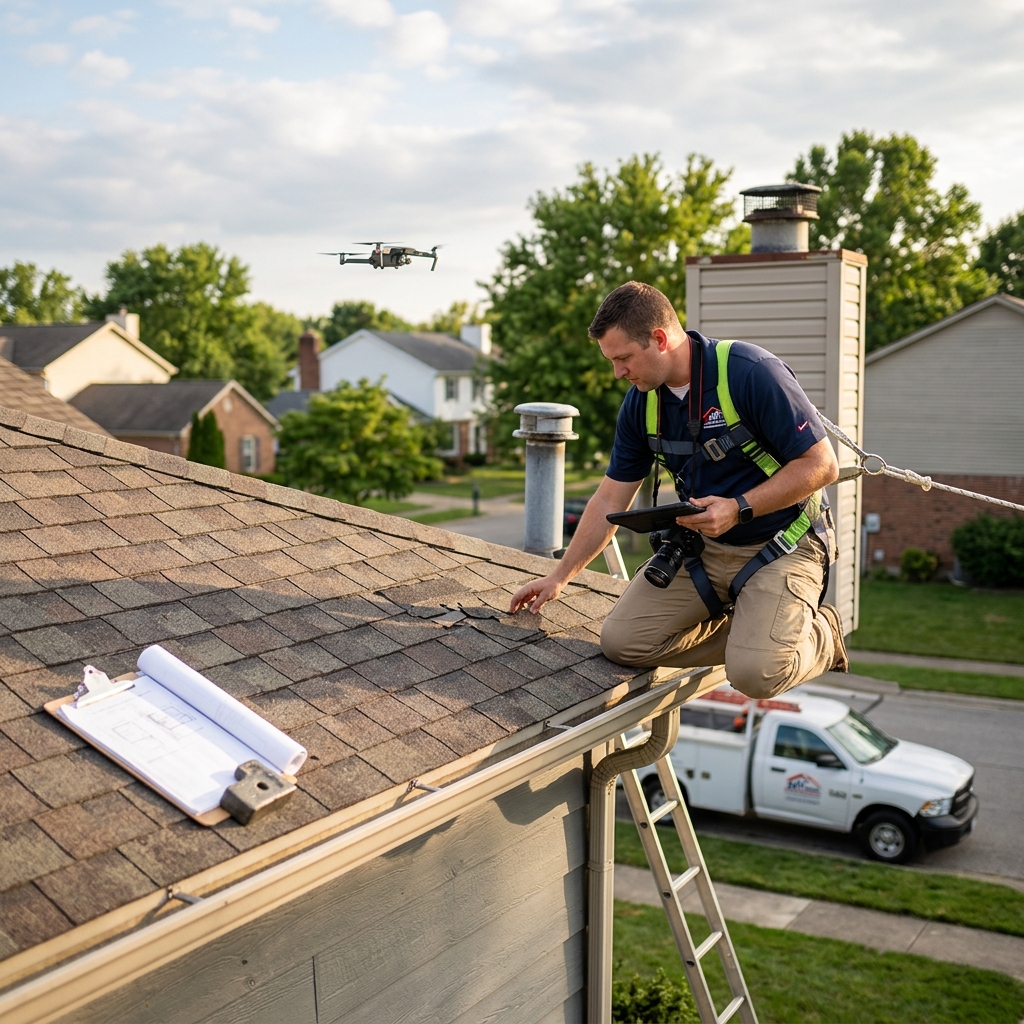
7 Best Storm Damage Roof Repairs in Louisville: Complete Insurance Guide

1. Immediate Roof Damage Assessment and Documentation

When a severe storm rolls through the Kentuckiana area, the aftermath can leave homeowners feeling overwhelmed. Hail, high winds, and falling debris can cause serious roof damage that threatens your home’s structural integrity and interior spaces. Without proper assessment and repair, a damaged roof can lead to water intrusion, mold growth, and costly secondary damage that insurance may not cover.

The difference between a quick patch and a genuine restoration comes down to expertise, documentation, and coordination with your insurance company. We’ve spent over three decades helping Louisville property owners navigate storm damage claims and secure the professional repairs their homes deserve. This guide walks you through each critical step, from initial damage assessment to final restoration, so you understand what to expect and why quality matters.

Your first 48 hours after a storm are crucial. Before filing a claim, you need clear evidence of what the storm damaged and how extensively. This is where professional documentation becomes your strongest asset.

We recommend scheduling a thorough inspection immediately after severe weather passes. A trained eye can spot damage that homeowners often miss, including broken shingles, compromised flashing, dented gutters, and structural concerns that develop internally. Photographs and written notes create the foundation for your insurance claim, so this step directly influences whether you’ll receive full coverage for repairs.

During assessment, we document:

  • Visible shingle damage, curling, or missing sections
  • Flashing integrity around chimneys, vents, and skylights
  • Gutter system condition and separation points
  • Evidence of water intrusion or interior staining
  • Structural weakening or sagging areas
  • Manufacturer defects versus storm damage

This documentation becomes your insurance adjuster’s reference point. Clear, time-stamped photos and detailed descriptions remove ambiguity and strengthen your claim. Without proper documentation, adjusters may dispute the extent of damage or deny portions of your claim.

Action item: After any significant storm, request a professional roof inspection within 24-48 hours. Do not climb onto your roof yourself, as wet or damaged surfaces are hazardous.

2. Insurance Claim Support and Adjuster Coordination

Filing a roof damage insurance claim involves coordination between you, your insurance company, and your contractor. Many homeowners underestimate the complexity here, which leads to incomplete claims or delayed repairs.

We work directly with insurance adjusters on your behalf. This partnership ensures your adjuster understands the full scope of damage and the necessary repairs to restore your roof properly. When we identify issues that weren’t initially apparent, we provide supplemental documentation to support claim adjustments.

Here’s how the process typically unfolds:

Report the claim immediately. Contact your insurer within days of the damage. Delays can complicate coverage eligibility or limit investigation windows.

Schedule adjuster inspection. Your insurance company sends an adjuster to assess damage and determine payout amounts. This inspection heavily influences your final settlement.

Obtain contractor estimates. Professional repair estimates provide the adjuster with objective pricing and scope. Our estimates detail labor, materials, and timeline so there’s no confusion about costs.

Submit supplemental claims if needed. Storm damage often reveals secondary issues once work begins. Interior water damage, attic rot, or structural compromises may not be visible during initial inspection. We document these discoveries and submit them to your adjuster for coverage consideration.

Many contractors simply accept the adjuster’s initial estimate without advocating for comprehensive repairs. We take the opposite approach, ensuring your claim reflects the full scope of necessary work. If the initial settlement falls short, we provide detailed supplemental documentation to support additional coverage.

Action item: Keep all insurance communications and contractor estimates in one folder. When supplemental damage is discovered, report it to your adjuster immediately with supporting photos.

3. Professional Leak Detection and Water Damage Prevention

Storm damage doesn’t always announce itself loudly. A roof can appear intact while allowing slow, silent water intrusion that damages insulation, framing, and interior finishes. Detecting and preventing these leaks prevents exponential damage costs.

Professional leak detection uses systematic methods to trace water entry points. We inspect the entire roof surface, checking for obvious damage, but we also follow water stain patterns inside the attic or interior walls to identify where water originally entered. This detective work prevents contractors from simply patching the obvious hole while leaving a secondary leak unaddressed.

Prevention strategies we implement:

  • Seal all penetration points (vents, pipes, chimneys) with weather-tight flashing
  • Replace damaged underlayment that channels water away from sheathing
  • Install proper attic ventilation to prevent moisture accumulation
  • Apply ice and water shield in vulnerable valleys and eave areas
  • Clear gutters and install gutter guards to maintain proper drainage

Water damage compounds quickly in humid climates like Kentucky’s. What starts as a small leak can create mold within weeks, causing health concerns and structural deterioration. Our prevention-first approach stops water before it enters your home.

Action item: After repairs are complete, schedule a follow-up inspection during the next rain to confirm no water entry occurs. This verification provides peace of mind and documents successful repair.

4. Structural Integrity Evaluation and Safety Inspection

Storm damage sometimes reveals hidden structural compromises. High winds can loosen connections, hail can fracture wood, and water intrusion can weaken framing over time. A complete restoration must address structural integrity, not just roof surface repairs.

Our safety inspections evaluate the roof’s structural system, looking for problems that threaten long-term stability. We assess:

  • Roof decking condition (rotted or weakened wood)
  • Rafter and truss stability
  • Proper fastening and connection integrity
  • Load-bearing capacity and sag indicators
  • Foundation or wall settling that stresses roof systems

Missing this evaluation means you might have repairs that fail prematurely under future weather stress. Structural issues also create insurance complications, as some damage may only be covered if discovered and documented during the initial claim process.

We provide detailed structural reports that protect both your insurance claim and your home’s long-term safety. If significant structural work is required, we explain recommendations clearly and provide separate estimates so you can budget appropriately.

Action item: Request a structural engineer’s assessment if any decay, separation, or sagging is discovered. This documentation strengthens insurance claims for comprehensive repairs.

5. High-Quality Material Selection for Storm-Damaged Repairs

The materials you choose for storm repairs directly impact durability, appearance, and insurance coverage. Many contractors use the cheapest available materials to maximize profit margins, leaving homeowners with repairs that fail during the next storm or look mismatched with existing roofing.

We’re an Owens Corning Platinum Preferred Contractor, meaning we specify premium materials that exceed standard requirements. These aren’t cosmetic upgrades, they’re investments in durability and weather resistance.

Material considerations for storm repairs:

  • Shingle quality: Premium shingles with enhanced wind resistance and impact rating withstand future storms better than budget alternatives
  • Manufacturer matching: Exact color and style matching ensures your repaired sections don’t age differently than existing roof areas
  • Underlayment durability: High-quality underlayment protects against secondary water intrusion during the repair process and provides long-term backup protection
  • Flashing materials: Galvanized, copper, or aluminum flashing resists corrosion and seals more reliably than lower-grade alternatives

Insurance claims typically cover materials necessary to restore your roof to pre-damage condition. Using quality materials ensures your settlement covers appropriate products, not cheap substitutes that fail prematurely.

Action item: When you receive contractor estimates, verify what materials each contractor specifies. Request samples to match your existing roof’s appearance, and confirm all materials carry manufacturer warranties.

6. Expert Installation with Manufacturer Warranties

Professional installation determines whether quality materials perform as designed. Poor installation technique voids warranties, creates premature failures, and can be more expensive to correct than getting it right the first time.

Our installation process follows manufacturer specifications precisely. Shingles are fastened at exact locations with correct fastener types, valleys are sealed with proper methods, and transitions are handled without shortcuts. This attention to detail ensures your warranty coverage remains valid and your repair lasts for decades.

Warranty protection matters significantly:

  • Material warranties: Owens Corning products come with manufacturer protection against defects, covering replacement costs if materials fail
  • Workmanship warranties: Our installation warranty covers labor and ensures repairs are corrected if issues arise from installation defects
  • Insurance documentation: Proper installation with valid warranties supports insurance coverage for any future weather damage

Contractors cutting corners might complete repairs faster, but their installations often fail to meet manufacturer standards, which voids coverage. We invest the time in proper technique because it protects your investment and our reputation.

Action item: After installation, request copies of all warranty documentation. Keep these with your insurance records, as they’re valuable if future damage occurs.

7. Comprehensive Restoration Beyond Surface Repairs

Storm damage restoration extends beyond replacing damaged shingles. Complete restoration addresses cosmetic damage, integrates repairs seamlessly with existing structures, and restores your home’s full protective envelope.

Many quick-fix contractors view their job as finished once the obvious roof damage is patched. We see restoration differently. Your home’s exterior is an integrated system, and storm damage often affects siding, gutters, windows, and fascia simultaneously. Addressing only the roof leaves your home partially vulnerable.

Our comprehensive approach includes:

  • Roof replacement or repair with exact material matching
  • Gutter system restoration or replacement with seamless protection
  • Vinyl siding repair or replacement where storm debris caused damage
  • Window and frame assessment for seal integrity
  • Fascia and soffit restoration for complete weather protection
  • Landscaping debris removal and site cleanup

A Louisville roofing contractor offering true restoration coordinates all these elements into a single project timeline, minimizing disruption and ensuring cohesive results. You receive one warranty covering the entire exterior system, simplifying future maintenance and claims.

Action item: Request a comprehensive exterior assessment alongside your roof repair estimate. Addressing related damage during the same project saves time and ensures consistent quality standards across all repairs.

Storm damage to your Louisville home deserves professional restoration that protects your investment and simplifies insurance coordination. We’ve guided thousands of Kentuckiana homeowners through this process, combining meticulous documentation, insurance expertise, and master-level craftsmanship. Whether your damage is extensive or localized, our approach ensures complete restoration that lasts. Contact us for a professional assessment and instant estimate, and let us handle the complexity while you focus on getting your home back to normal.

Contact us today for a free in home, no obligation quote on your roof
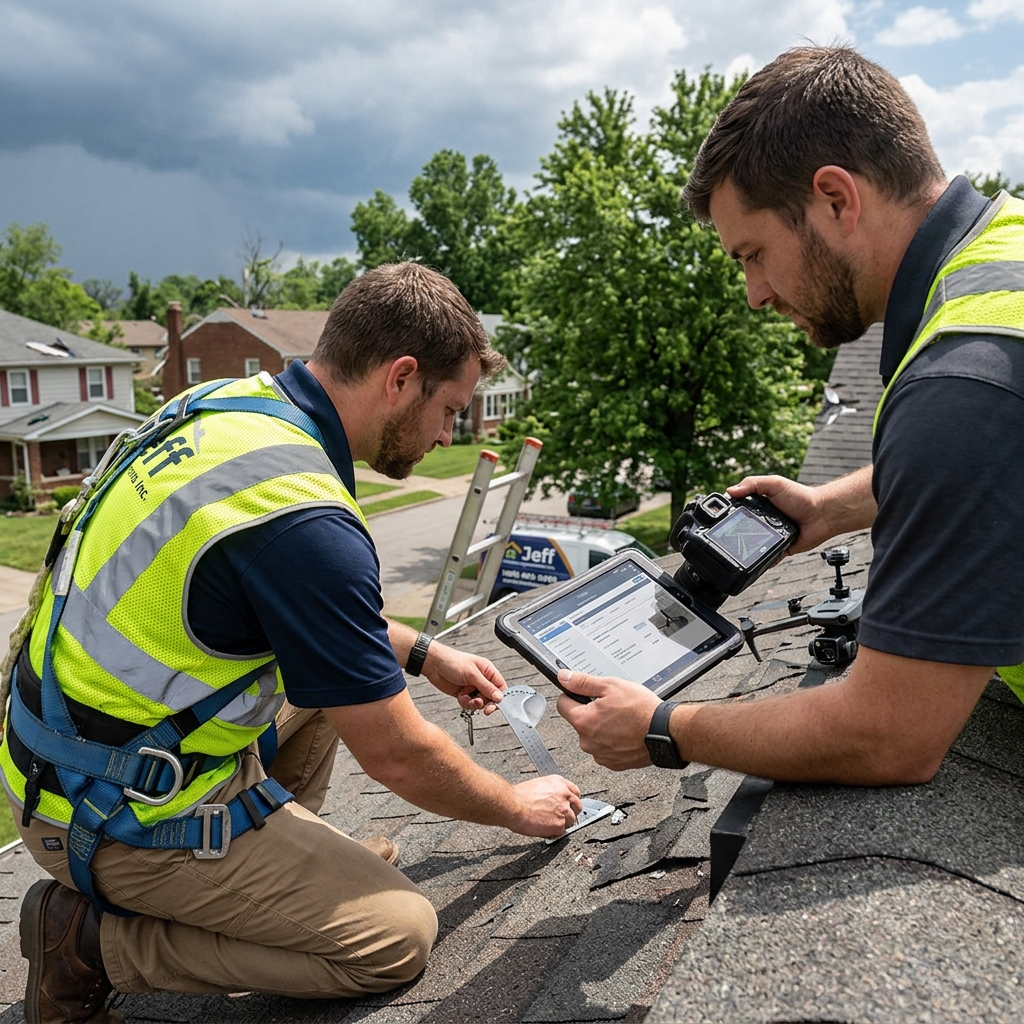
Request Estimate