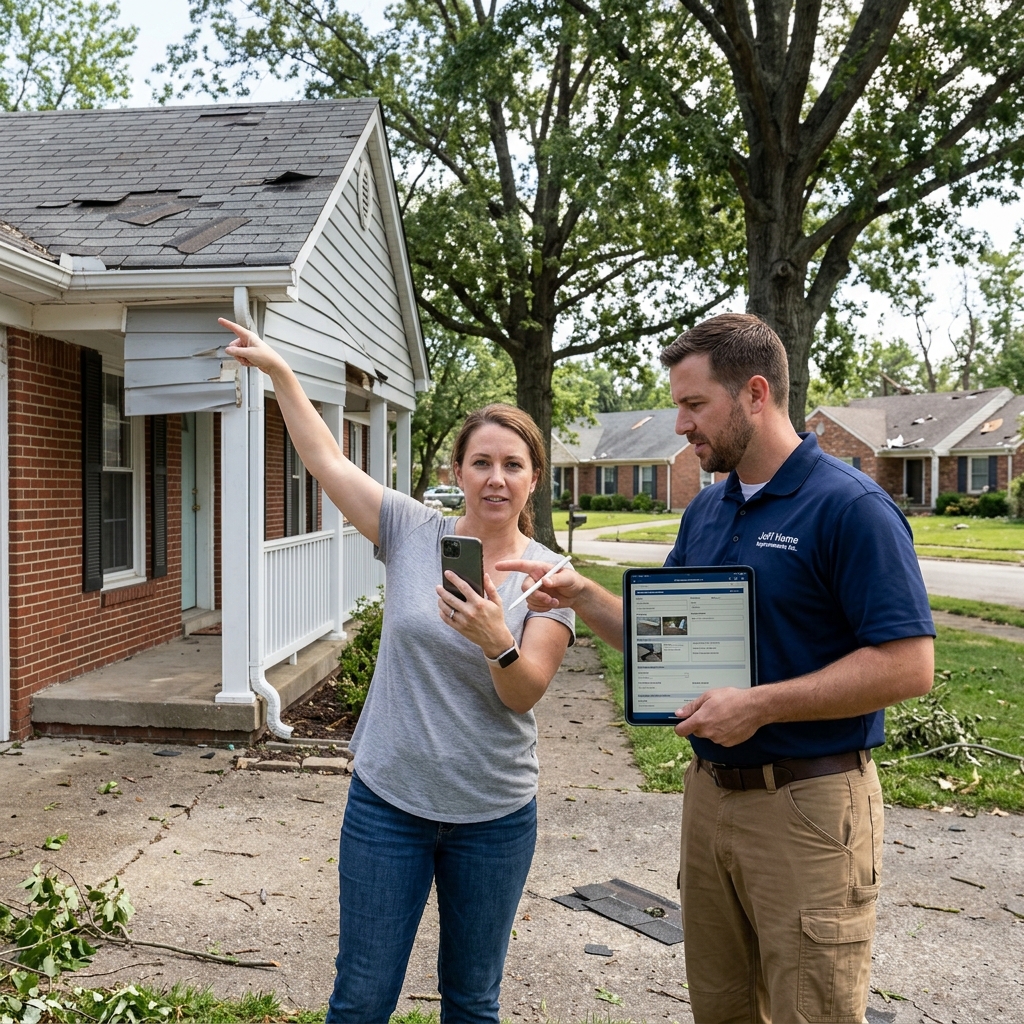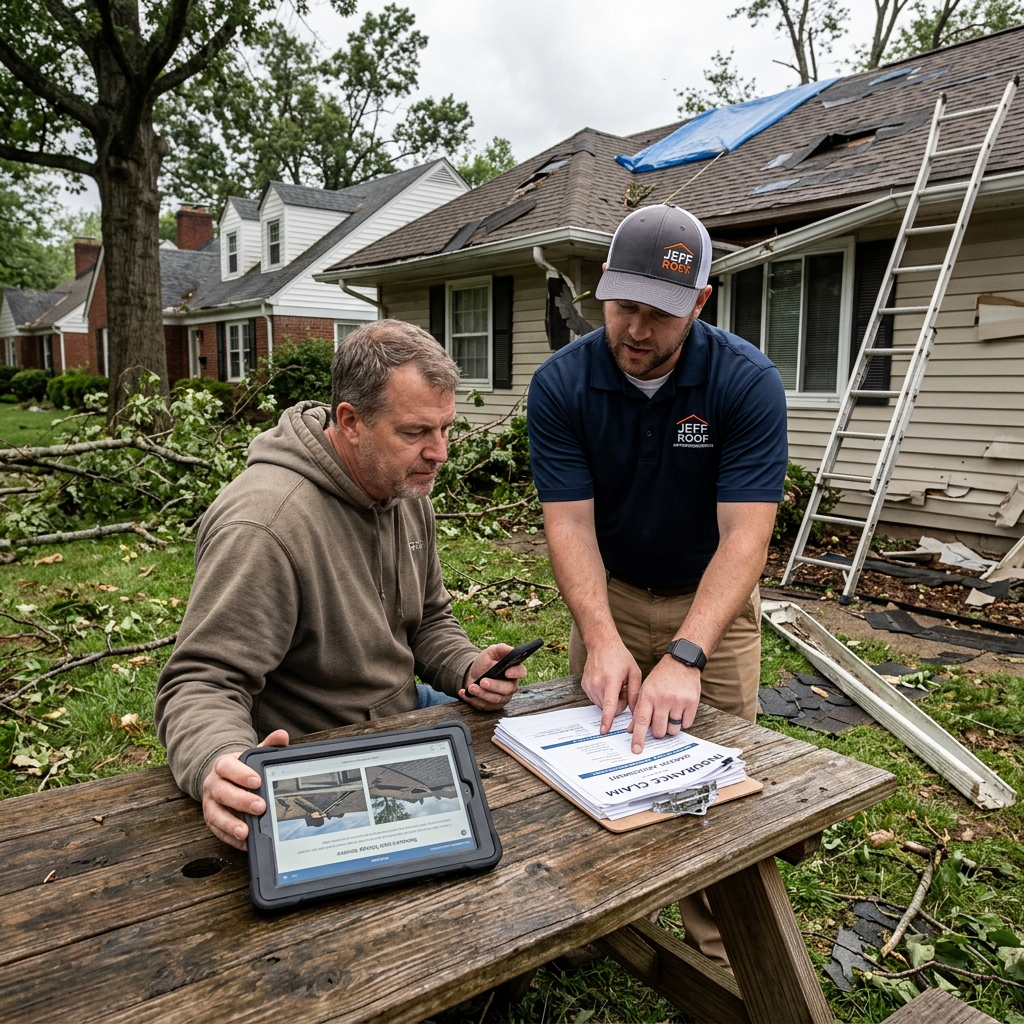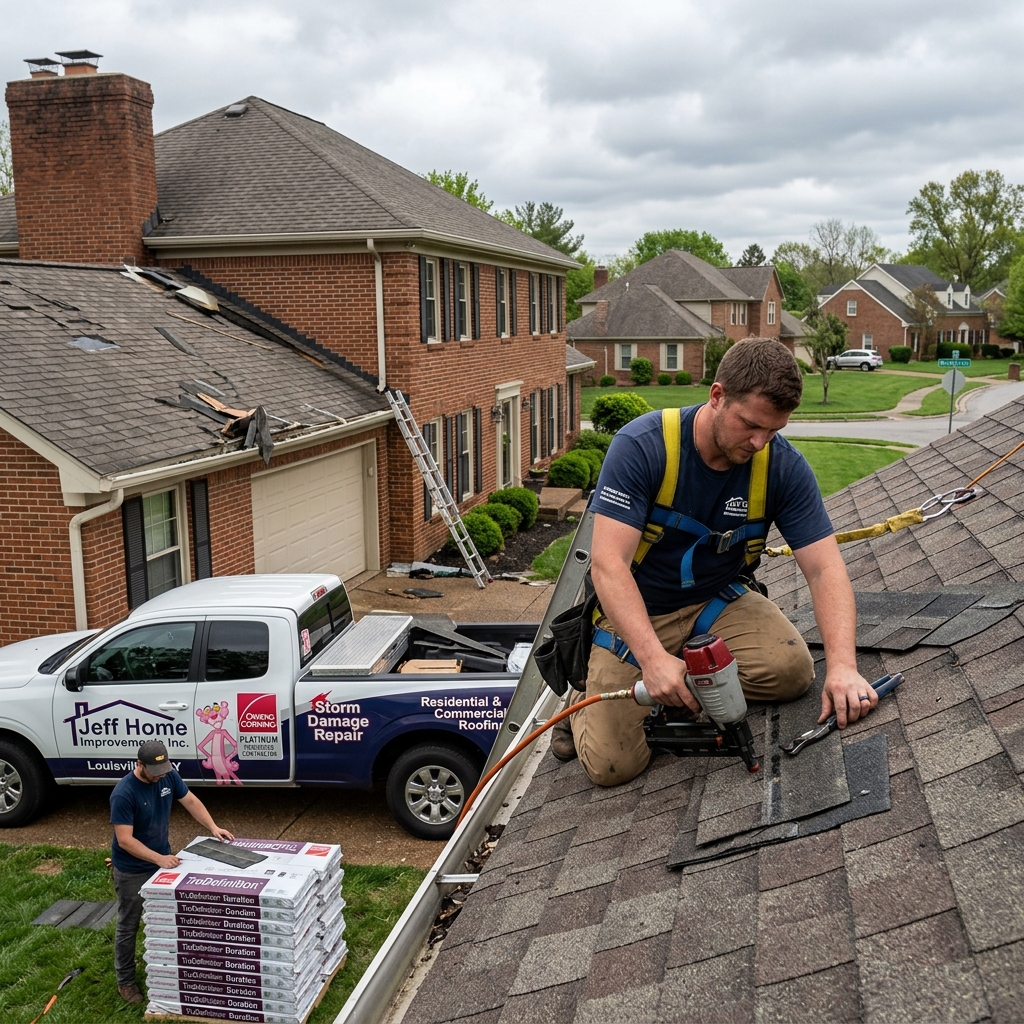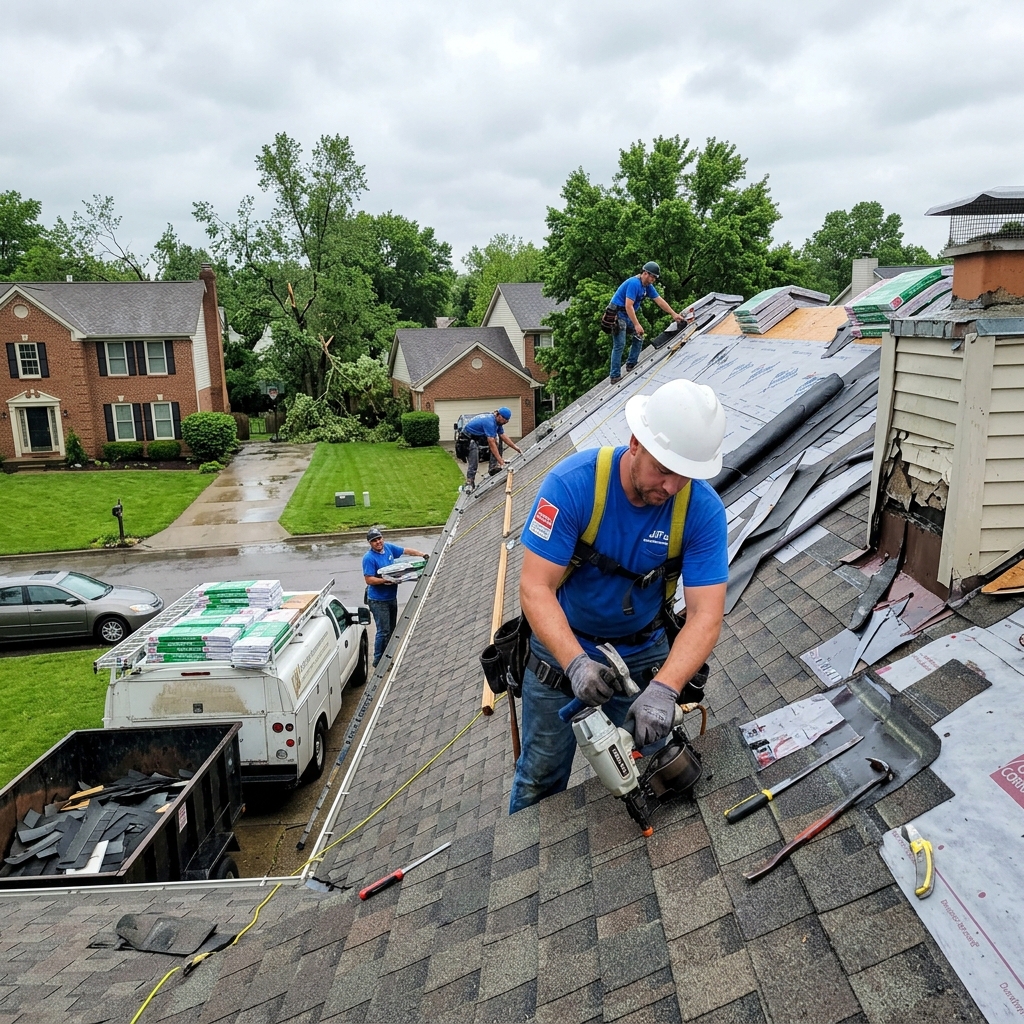
Archive for:

Author Archive for Admin – Page 2

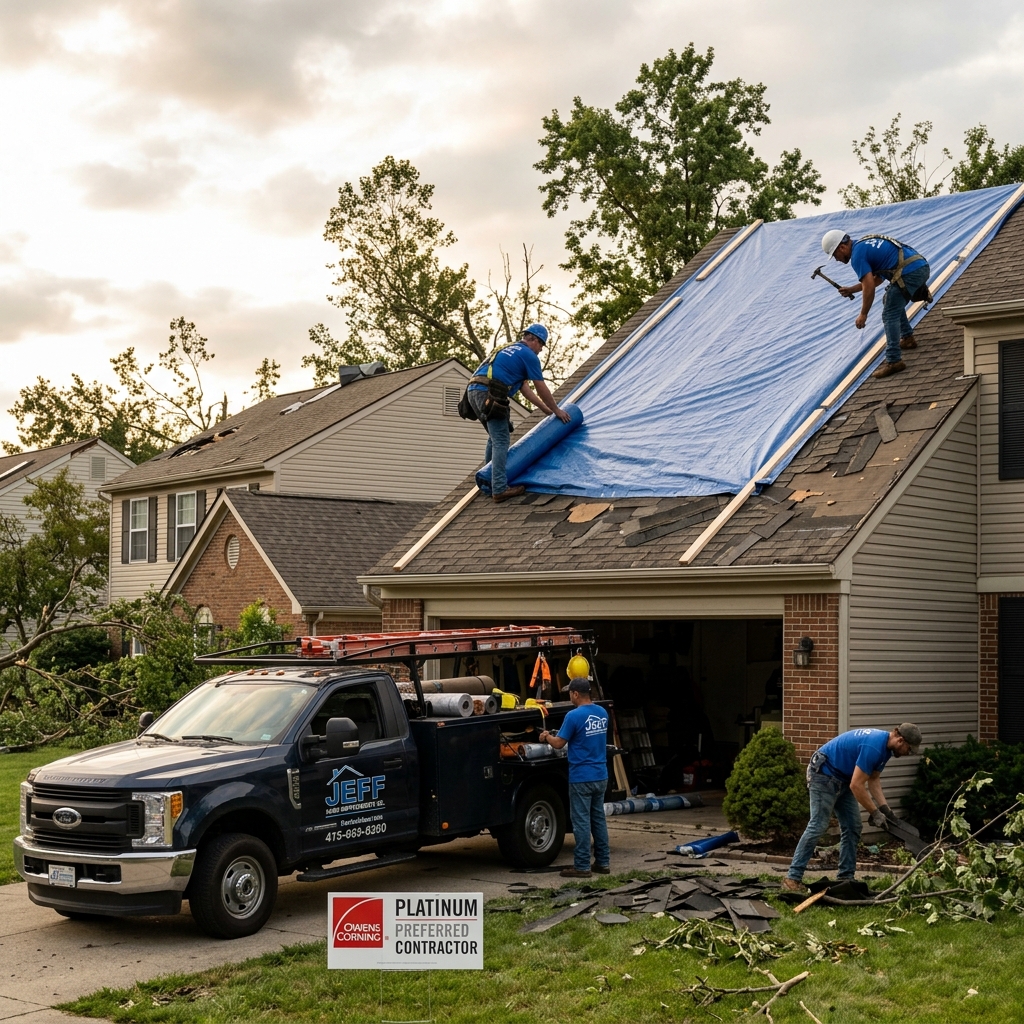
7 Best Benefits of Owens Corning Platinum Contractor Status for Your Roof

1. Access to Premium Owens Corning Materials and Products

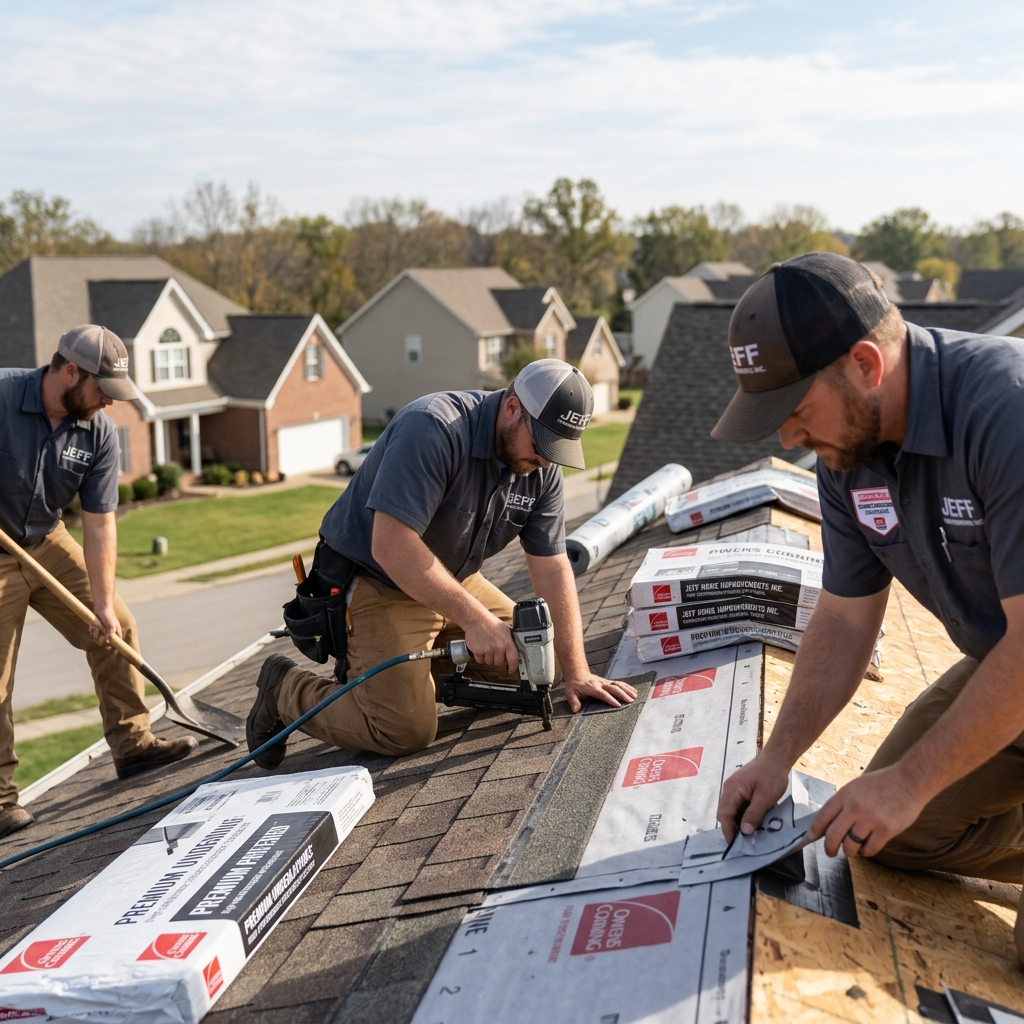
Not all roofing materials are equal. As an Owens Corning Platinum Preferred Contractor, we have direct access to their full lineup of premium shingles, underlayment systems, and protective products that general contractors may not carry or may have limited inventory of.

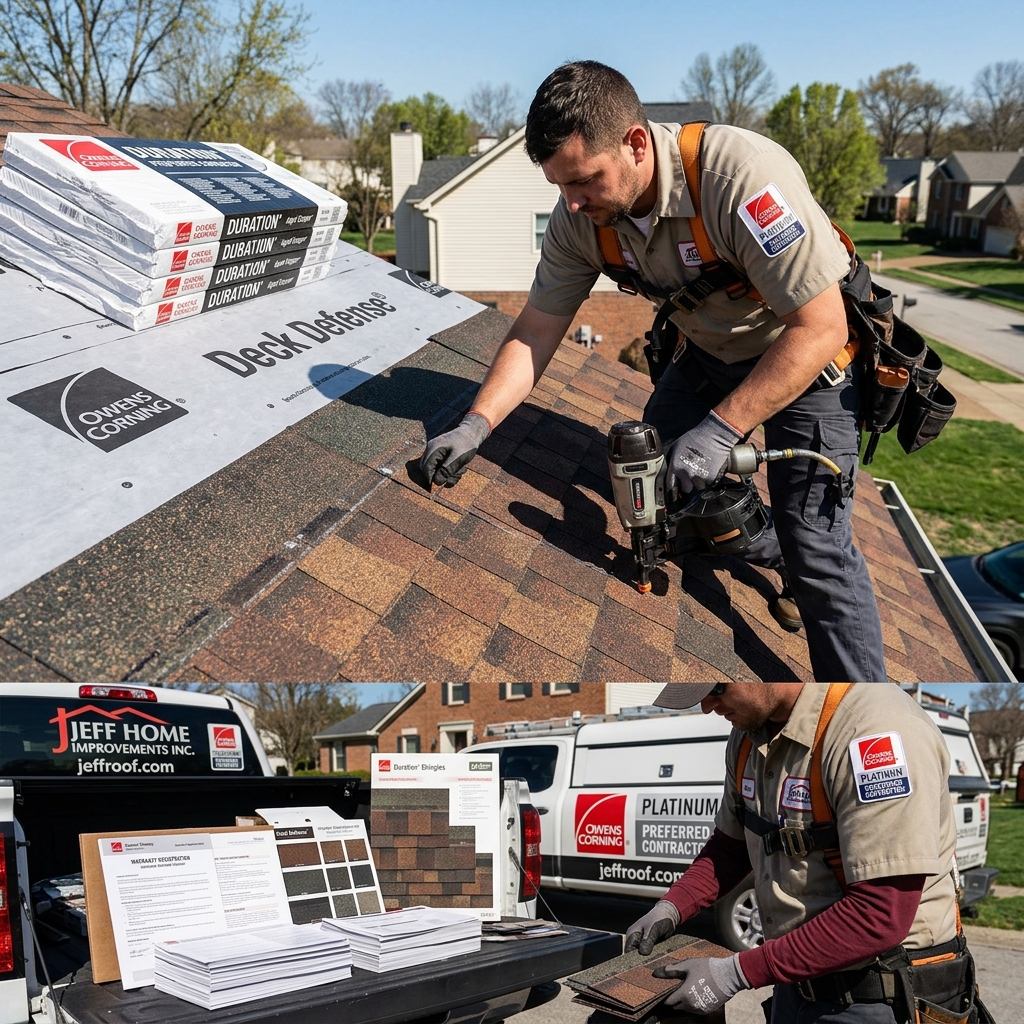
Owens Corning’s premium products include their Duration, Duration Flex, and Berkley collections, along with advanced underlayment options designed to enhance durability and weather resistance. These aren’t the entry-level shingles you’ll find at every big-box retailer. They’re engineered with enhanced granule technology, superior wind resistance, and weather protection that standard options lack.

Here’s the practical difference: when we specify Owens Corning materials for your roof, you’re getting products that have been tested to withstand severe weather, temperature fluctuations, and UV exposure better than commodity alternatives. Our access to their full material catalog means we can match the right product to your specific climate, roof pitch, and home aesthetic, rather than settling for what’s available on a shelf.

For a Louisville homeowner, this matters. Our region experiences heavy rainfall, occasional hail, and temperature swings that demand roofing materials engineered for performance. We source materials specifically tested for this climate, giving your roof a foundation built to last decades rather than years.

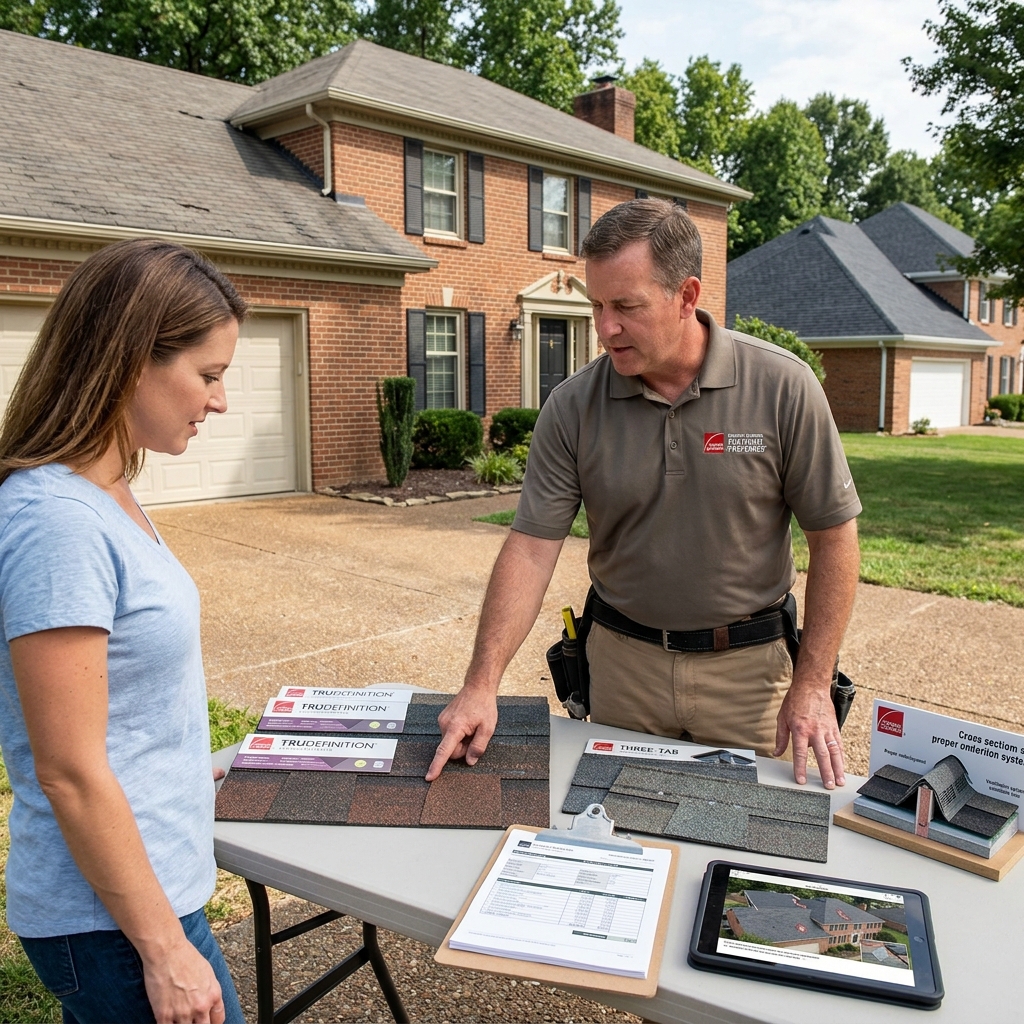
What to do next: Ask us about the specific Owens Corning material options for your project. We’ll show you samples and explain why we recommend a particular product for your home’s exposure and condition.

2. Manufacturer-Backed Warranties That Protect Your Investment

This is where Platinum status delivers real financial protection. Owens Corning backs our work with warranties that go beyond what you’d get with a non-certified contractor.

Our roof replacement warranties include the manufacturer’s limited lifetime shingle warranty combined with our workmanship warranty. This two-layer protection means if a defect in the Owens Corning material appears, the manufacturer covers it. If an installation issue emerges, we cover it. You’re not caught in the middle arguing about who’s responsible.

Standard contractors using budget materials may offer warranties, but those warranties often carry significant exclusions, limited coverage periods, or require you to prove the failure wasn’t due to installation. Owens Corning’s warranty structure, backed by our Platinum certification, is straightforward: if the product fails within the coverage period and you’ve used a certified installer, you’re protected.

Here’s a concrete example: A homeowner in Goshen experienced storm damage that required roof replacement. With Owens Corning materials installed by a certified contractor, the homeowner wasn’t just getting a new roof, they were getting 30+ years of manufacturer backing on the shingles themselves. That peace of mind, backed by a major manufacturer’s reputation and financial guarantee, is something you don’t get with a contractor working with lesser-known brands.

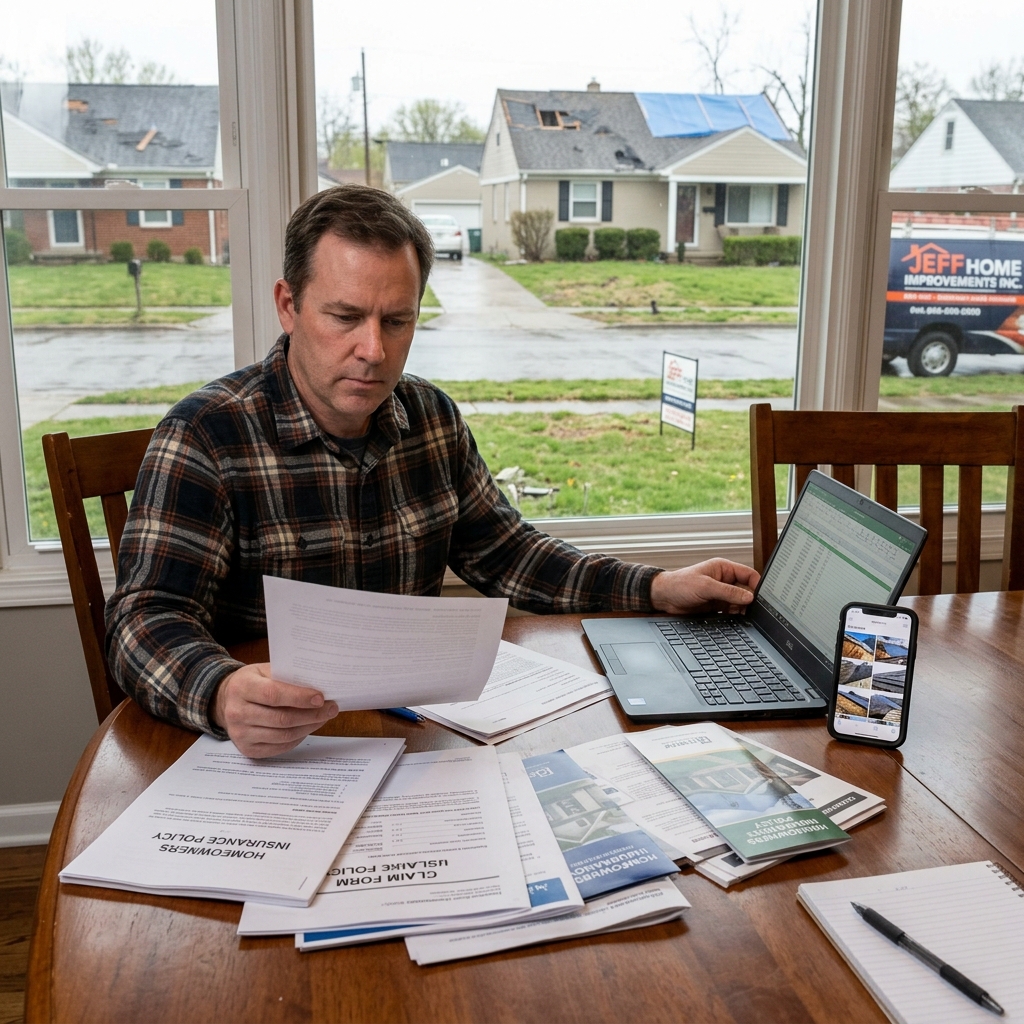
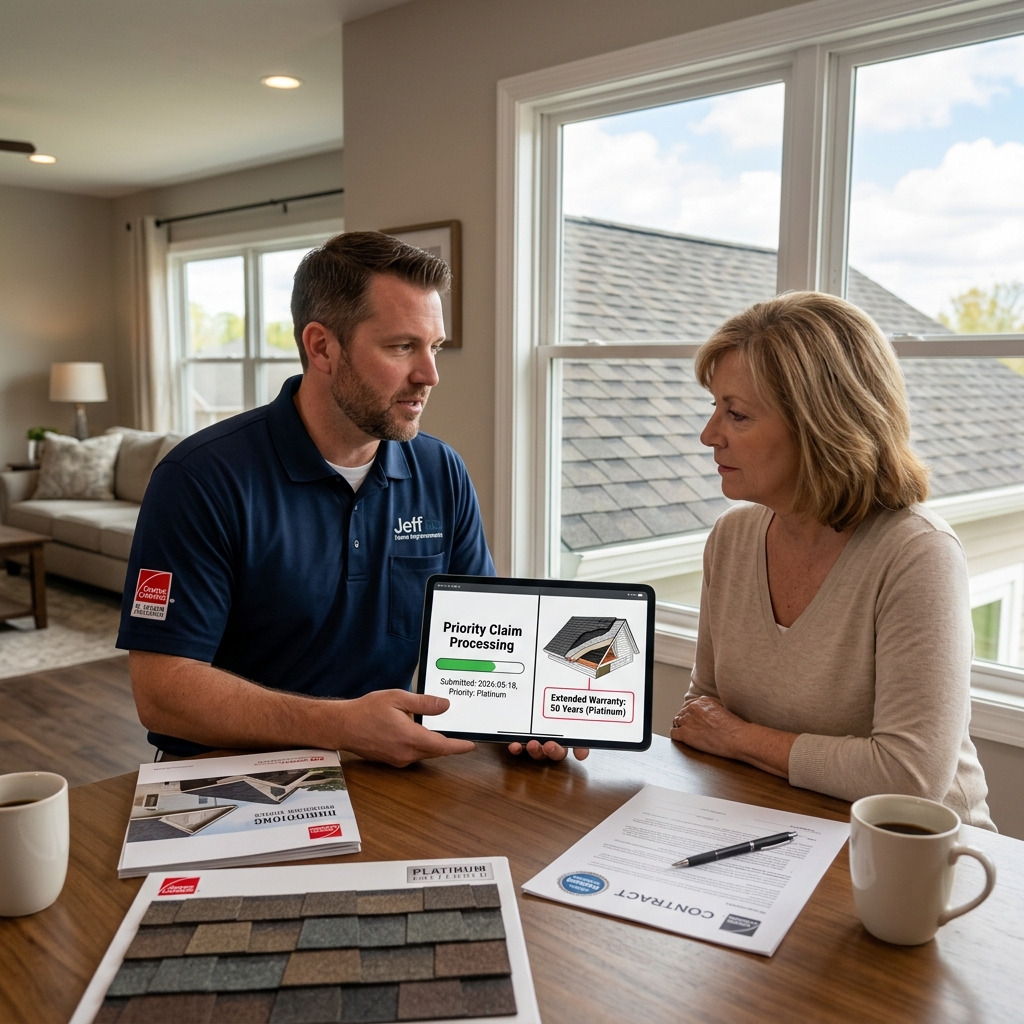
The warranty also simplifies insurance claims. Insurers recognize Owens Corning’s Platinum Preferred Contractors because of our proven track record and the manufacturer backing. When you file a storm damage claim, the clarity of our warranty coverage often makes the claims process faster and more straightforward.

What to do next: Request a detailed warranty summary for your specific project. We’ll provide documentation showing exactly what’s covered, for how long, and what maintenance keeps your warranty valid.

3. Advanced Installation Techniques and Certified Training

Material quality only gets you halfway there. Installation is where most roofing failures begin.

Owens Corning Platinum status requires us to maintain ongoing certified training on their latest installation techniques, safety protocols, and product innovations. This isn’t a one-time certification. We’re required to stay current, which means our team is trained on the newest best practices every time Owens Corning updates their specifications.

Standard contractors may have years of experience, but if they’re not systematically trained on manufacturer specifications and updated techniques, they’re likely using installation methods that worked 10 or 15 years ago. Building codes evolve. Product engineering evolves. Climate demands evolve. We evolve with them.

Our certified training covers critical details that directly affect your roof’s lifespan and performance:

  • Proper ventilation system design and installation to prevent moisture buildup and heat damage
  • Underlayment application techniques that create a secondary water barrier
  • Flashing installation at valleys, penetrations, and edges where leaks most commonly start
  • Nailing patterns and fastener specifications that match current Owens Corning engineering standards
  • Attic airflow and insulation coordination that affects both roof longevity and energy efficiency

A roof installed to 2015 standards versus 2026 standards can have 10+ years of difference in expected lifespan, especially in our climate. We’re trained and certified on current standards because Owens Corning requires it.

What to do next: Ask about our installation team’s certifications during your consultation. We’re happy to walk you through the specific techniques we’ll use on your project.

4. Priority Support and Faster Claim Processing

After your roof is installed, Owens Corning provides us with priority support channels that benefit you directly.

If a question arises about warranty coverage, product performance, or an unusual condition, we have direct access to Owens Corning technical specialists. We don’t wait in phone queues or deal with generic support lines. This means faster answers and faster resolution if any issue emerges after installation.

For insurance claims involving storm damage, Owens Corning’s partnership with major insurance carriers and our Platinum status streamlines the process. Insurance adjusters are familiar with our work quality and the robustness of our warranty documentation, which reduces back-and-forth negotiations. We’ve seen claims process 2-3 weeks faster when the contractor is Platinum certified versus non-certified, simply because the insurer has confidence in the work and documentation.

We also get priority notification of any product bulletins or recalls. If Owens Corning identifies an issue with a batch of materials or issues an updated installation specification, we learn about it immediately and can proactively communicate with homeowners who used those materials. You’re never left wondering if your roof was affected by a known issue.

Additionally, Owens Corning’s support team can assist with complex warranty situations. If a claim seems denied or partial, we can escalate through manufacturer channels. A non-certified contractor has no escalation path, leaving you at the mercy of whatever decision was made.

What to do next: During your estimate, ask us how we coordinate with Owens Corning on warranty claims. We’ll explain the support structure so you know exactly who’s backing your roof.

5. Energy-Efficient Roofing Solutions for Lower Utility Bills

Your roof affects your home’s energy performance more than most people realize. A poorly ventilated or poorly insulated roof forces your HVAC system to work harder, raising utility bills year-round.

Owens Corning’s premium shingle lines include advanced color and reflectivity technologies that reduce solar heat absorption. In summer, this keeps attic temperatures lower, reducing cooling costs. Their ventilation systems and underlayment products are engineered to work together, creating airflow patterns that move heat out of your attic efficiently.

We’re trained to specify roofing systems, not just shingles. This means we evaluate your attic ventilation, insulation levels, and air sealing in coordination with the roofing materials. A Platinum Contractor approach looks at energy performance holistically.

For a Louisville homeowner, energy-efficient roofing can reduce summer cooling costs by 10-15%, depending on existing conditions. Over a 30-year roof lifespan, that’s significant savings. Plus, energy-efficient roofing can qualify for certain home efficiency tax credits or rebates, further improving your return on investment.

Non-certified contractors typically focus only on shingles. We focus on the entire roofing system: materials, ventilation, underlayment, and installation technique all working together to optimize performance.

What to do next: Let us evaluate your current attic condition and ventilation during the consultation. We’ll quantify potential energy savings from system upgrades as part of our estimate.

6. Enhanced Storm Damage Coverage and Restoration

Living in Kentucky, storm risk is real. Hail, high winds, and heavy rain damage roofs regularly, and having the right contractor handling restoration makes a major difference.

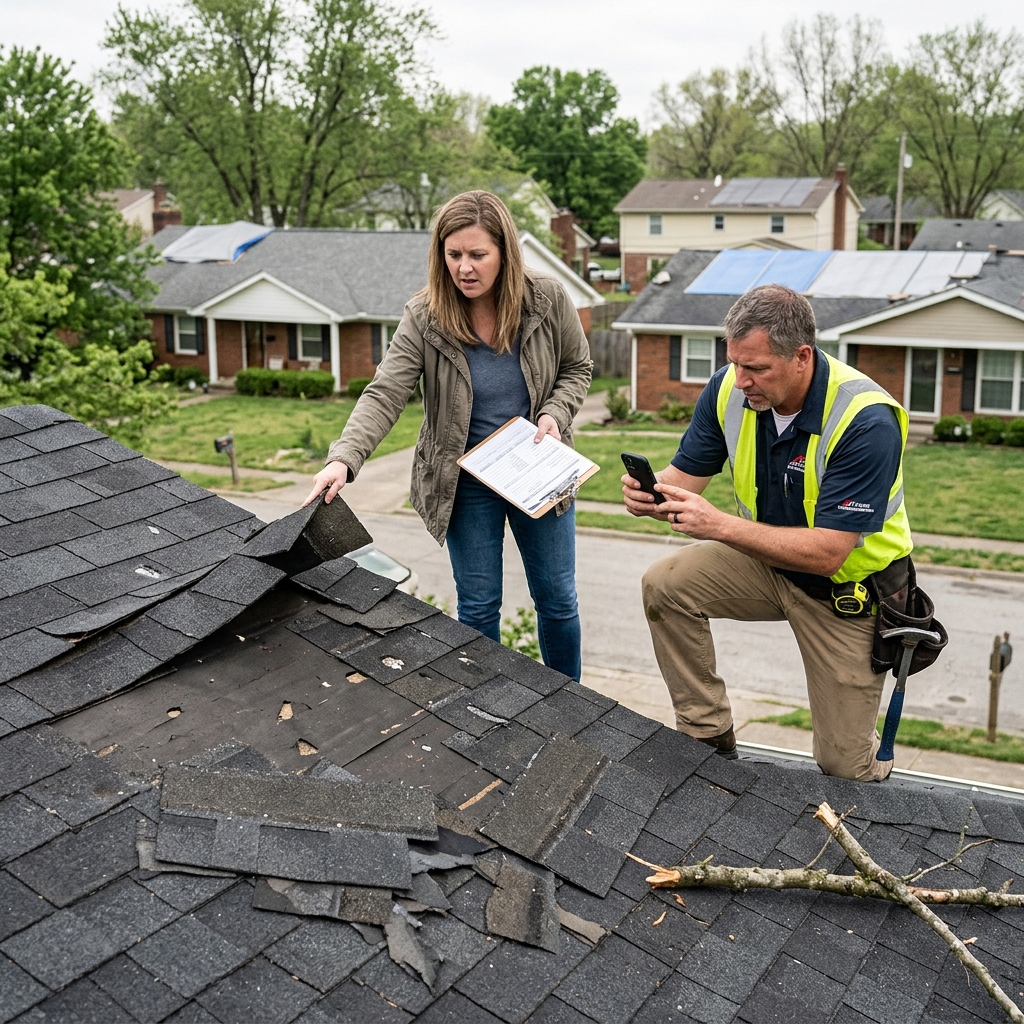
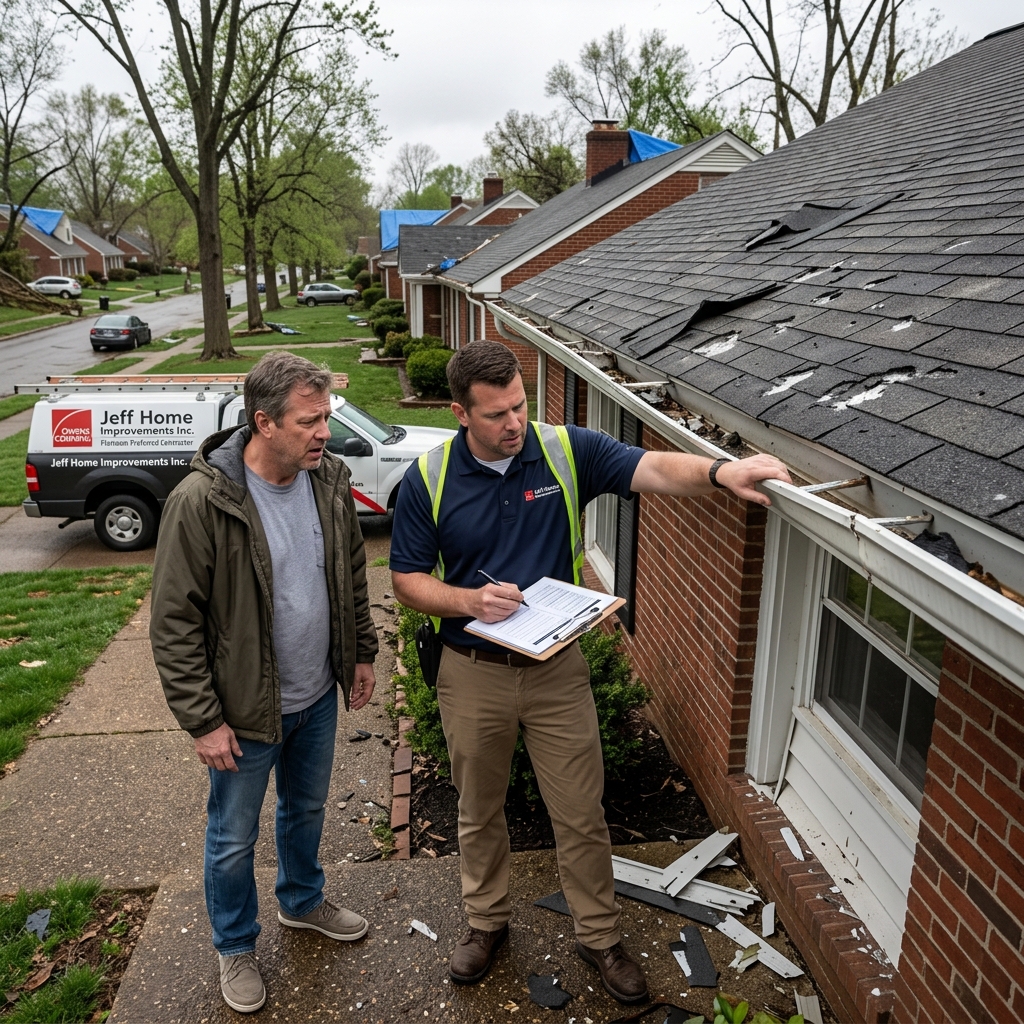
Owens Corning Platinum Preferred Contractors are trained and equipped to handle storm damage assessment, documentation for insurance claims, and full restoration. We understand the specific damage patterns that various storm types create and know how to document them for insurance adjusters.

When we assess storm damage, we’re using Owens Corning’s own specifications and standards. This credibility carries weight with insurance companies. If our assessment shows hail damage, the manufacturer backing and our certification adds confidence to that assessment. Disputes are less common because insurers trust Platinum Certified Contractors.

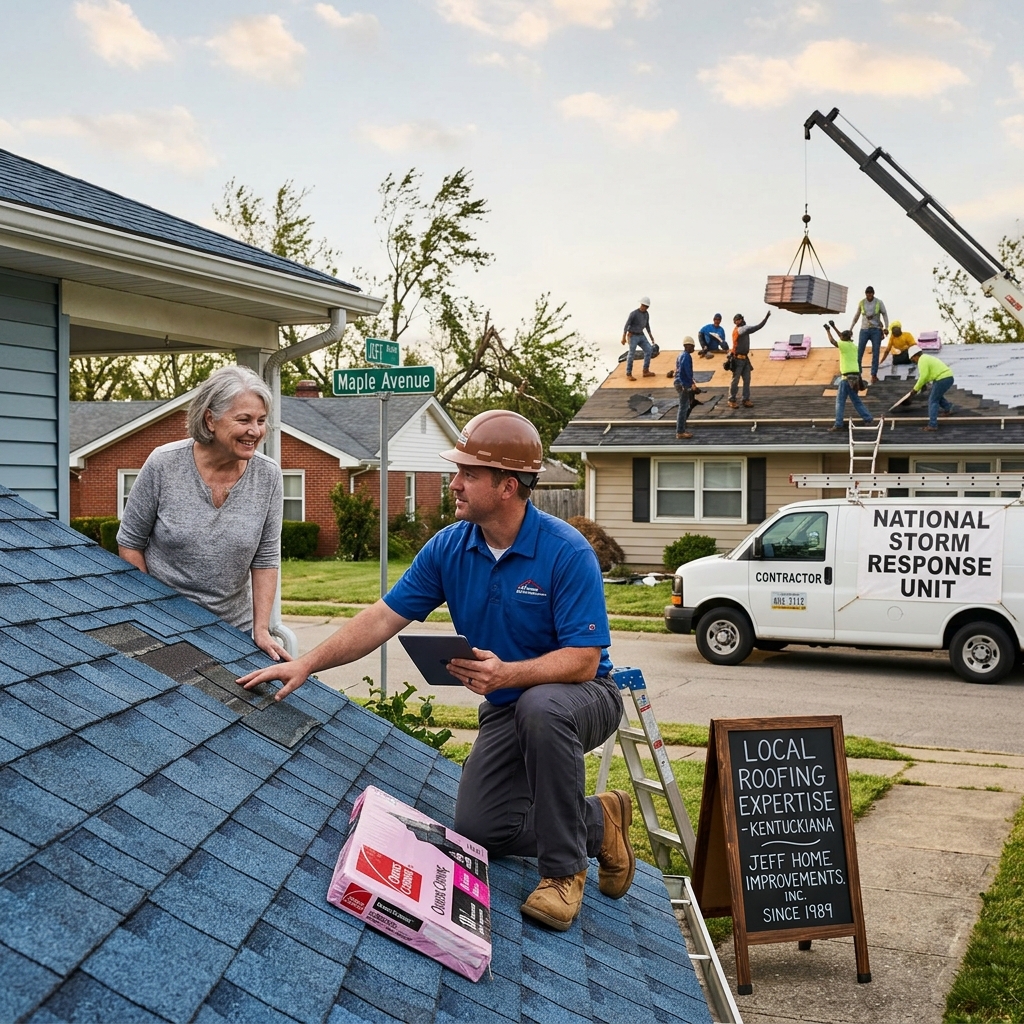
We’ve handled storm damage restoration across the Kentuckiana area. In one recent project, a Goshen homeowner’s roof suffered hail damage affecting 60% of the roof surface. Because we documented it properly and used certified Owens Corning materials for replacement, the claim processed without dispute, and the restoration was completed within two weeks.

Non-certified contractors may be cheaper upfront for storm damage work, but they often lack the credibility with insurers to advocate for full coverage. You may end up with a partial insurance payout and a contractor who can’t bridge the gap.

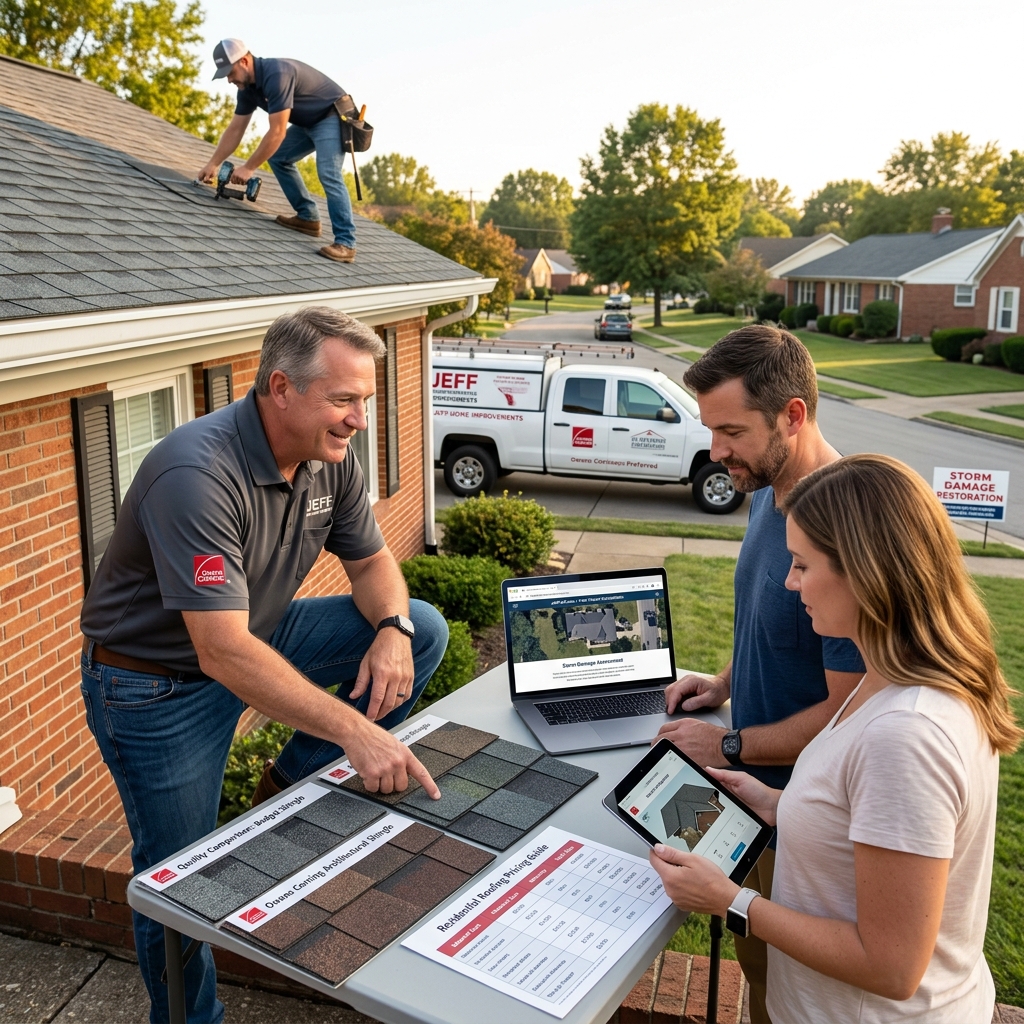
What to do next: If you’ve experienced storm damage, contact us immediately. We’ll inspect at no cost, document findings, and guide you through the insurance claim process.

7. Long-Term Quality Assurance and Peace of Mind

Beyond warranties and immediate support, Platinum status reflects a commitment to quality that persists throughout your roof’s life.

We maintain documented training records, use only approved installation techniques, and adhere to Owens Corning’s quality standards on every single project. This consistency means your roof from 2026 is built to the same rigorous standard as a roof we install in 2030 or 2035. There’s no quality drift over time.

Owens Corning audits Platinum Contractors regularly. They inspect our job sites, review our documentation, and verify that we’re meeting their standards. This oversight benefits you directly because it keeps us accountable to a standard beyond what we’d choose on our own.

We also provide post-installation support. Owens Corning’s guidelines include maintenance recommendations, and we’re available to answer questions years after installation. A small leak or concern that emerges three years later? We’re still here, still certified, and still backed by the manufacturer.

Many homeowners who’ve worked with us five, ten, or fifteen years ago still call us for related work or referrals. That’s because they experienced the reliability that Platinum status delivers. Your roof isn’t just installed and forgotten. It’s installed with ongoing support and accountability built in.

What to do next: Ask us about our post-installation support and maintenance recommendations. We’ll provide a timeline for inspections and upkeep that keeps your roof in peak condition.

Since 1989, we’ve earned our reputation as the premier roofing contractor in the Louisville area. Our Platinum Preferred Contractor status isn’t our only credential, but it’s a meaningful one because it reflects our commitment to quality, training, and customer protection. When you hire us, you’re choosing a contractor with manufacturer backing, advanced training, priority support, and a financial stake in your satisfaction.

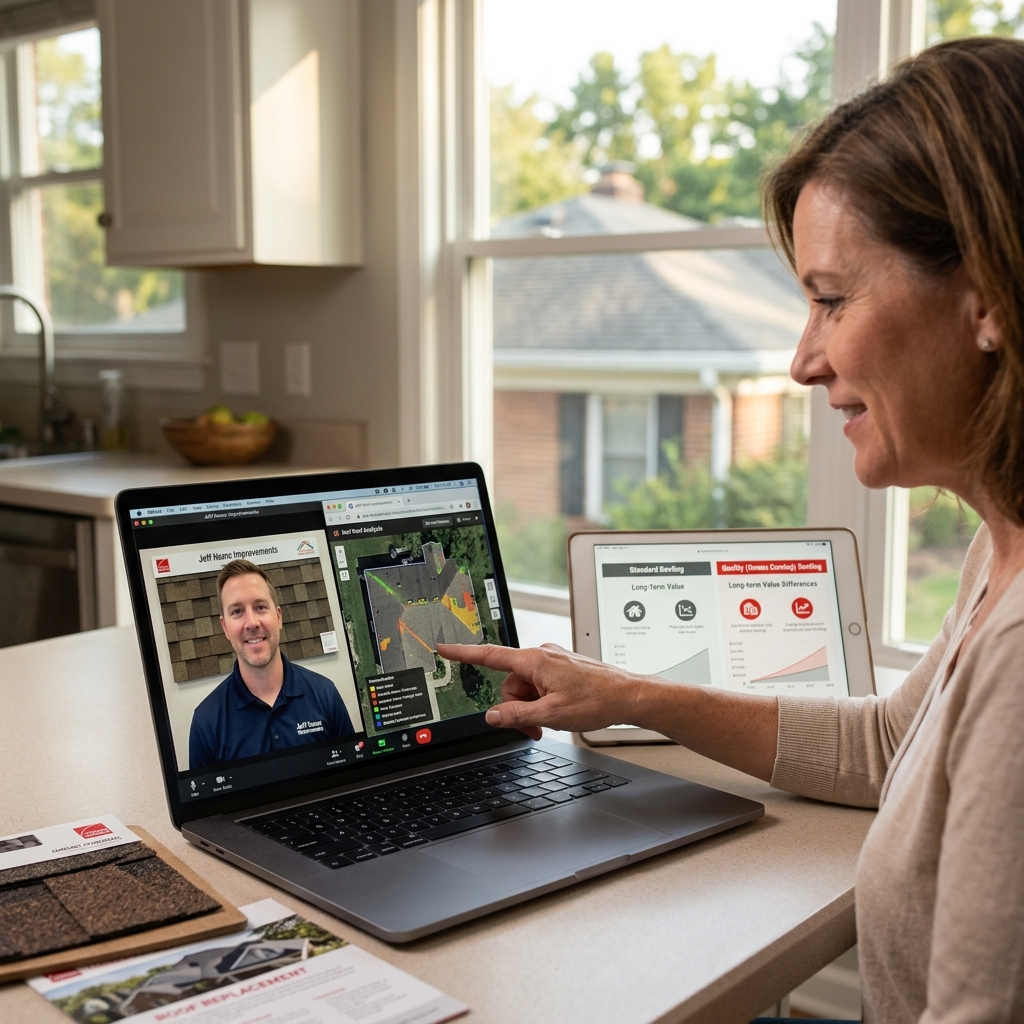
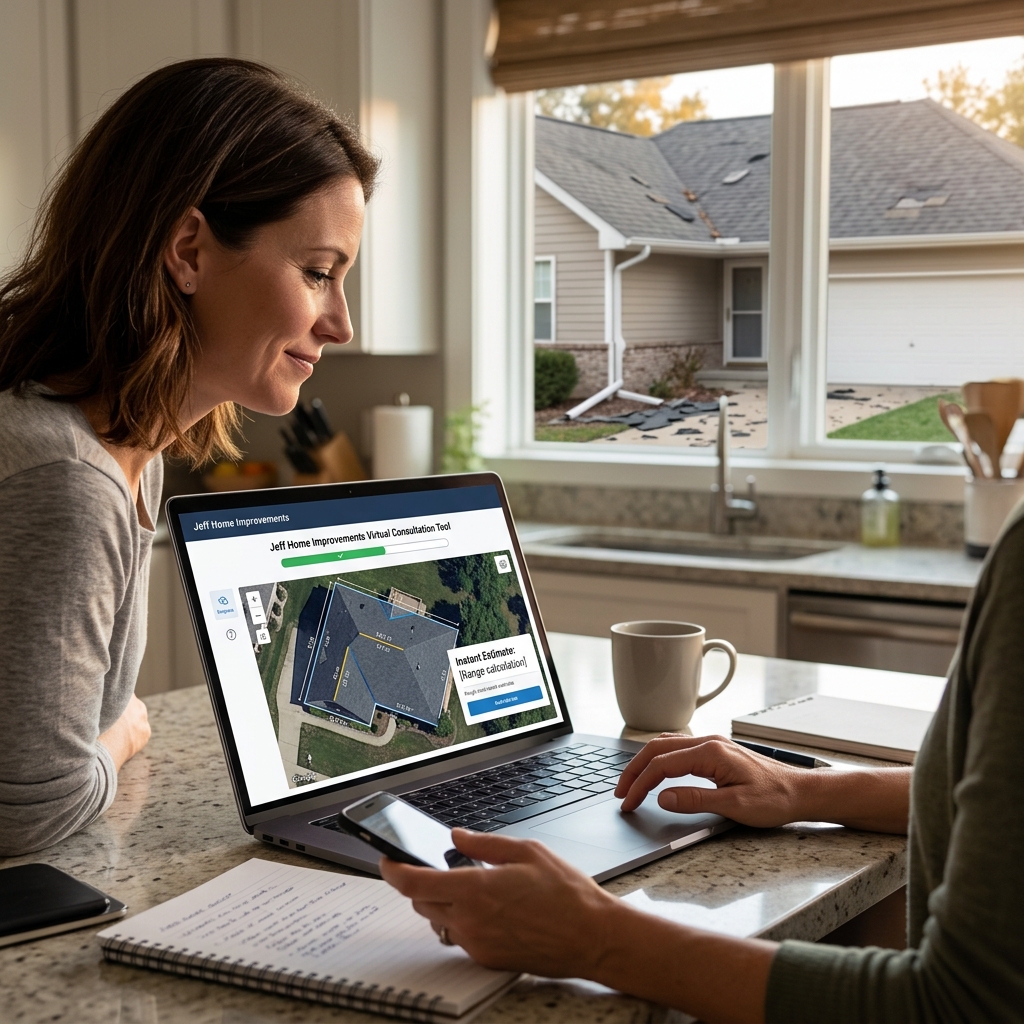
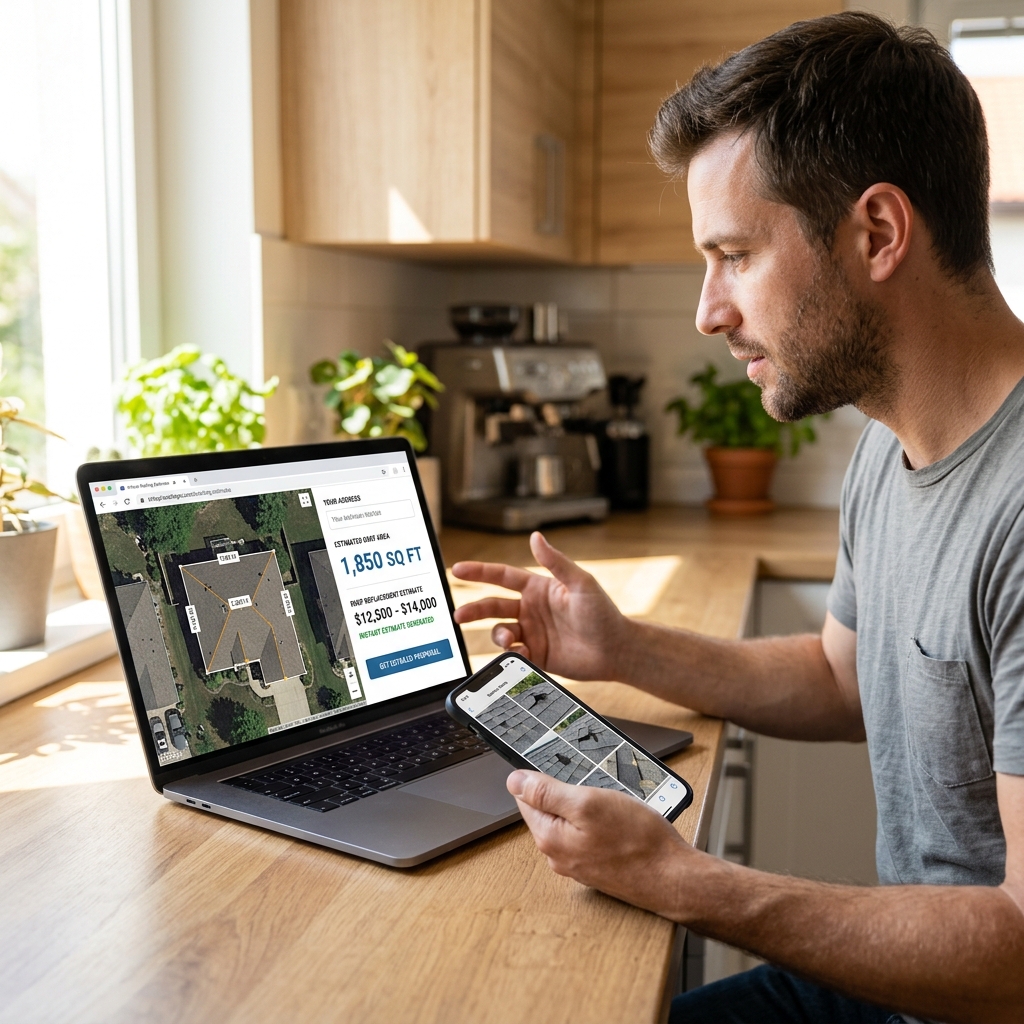
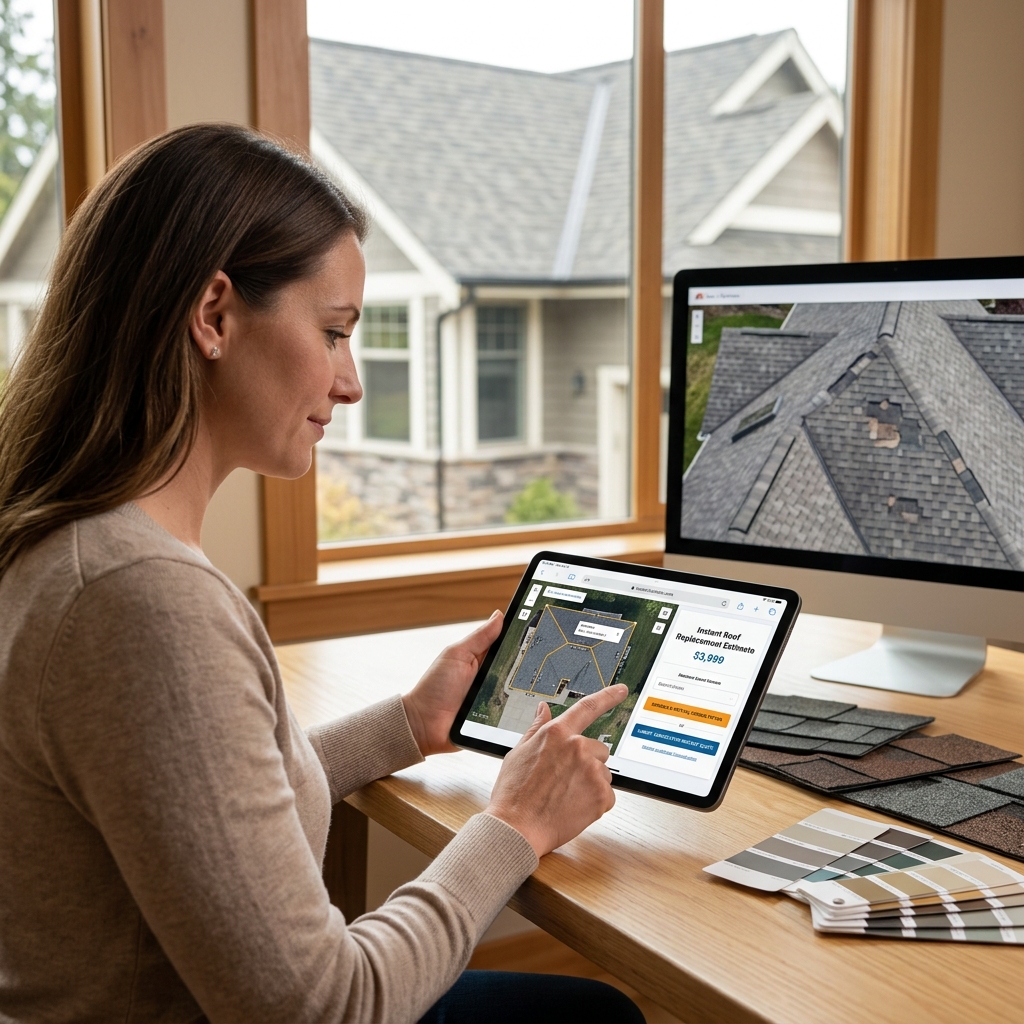
We offer virtual consultations and instant estimates, making it easy to get started. Contact us today to discuss your roofing needs, storm damage concerns, or exterior upgrade plans. We’ll provide a detailed estimate backed by our Platinum status and our 35+ years of local expertise. Your roof is one of your home’s most critical systems. It deserves a contractor who treats it that way.

For further reading: Platinum Preferred Contractor, Roof replacement warranties.

Contact us today for a free in home, no obligation quote on your roof
Navigate Storm Damage and Insurance Claims: Your Louisville Restoration Guide

Why Storm Damage Claims Overwhelm Most Louisville Homeowners

Storm season in Kentucky brings unpredictable weather, and when hail, wind, or torrential rain strikes your home, the damage compounds quickly. The roof leaks, siding gets torn, gutters separate from the fascia, and suddenly you’re facing thousands in repairs. What makes this worse isn’t just the physical damage—it’s the confusion that follows. Insurance paperwork, coverage limits, adjuster appointments, and contractor selection all pile up at once, leaving most homeowners unsure where to start.

We’ve helped hundreds of Louisville-area property owners navigate this exact situation since 1989. Over the decades, we’ve learned what works and what doesn’t when it comes to filing claims, documenting damage, and getting the repairs done right. This guide walks you through the entire process, step by step, so you can make informed decisions and recover faster.

Storm damage claims fail or come up short for a few consistent reasons. Most homeowners don’t understand their policy limits, don’t photograph damage correctly, and don’t involve a qualified contractor early enough. By the time they call for help, weeks have passed and evidence has degraded.

Insurance companies receive thousands of claims after major weather events. Without professional documentation and a clear timeline, yours can easily get lost in the shuffle or receive a lower payout than justified. Homeowners also underestimate the total scope of damage. A roof can hide water intrusion inside attics and walls. Siding damage can lead to mold if not addressed quickly. Gutters that seem “dented but functional” can cause foundation issues over time.

The emotional weight adds another layer. You’re already stressed about damage to your home, so the prospect of fighting with insurance companies feels overwhelming. Many homeowners give up or accept the first settlement offer without understanding whether it covers the full scope of repairs. This is where having a trusted contractor on your side makes all the difference.

What to do next: Schedule a free virtual consultation with us as soon as damage occurs. We’ll give you an honest assessment of what you’re looking at and help you understand what insurance typically covers for your type of damage.

Understanding Your Coverage: What Insurance Actually Pays For

Your homeowner’s insurance policy covers sudden, accidental damage from named perils. For storm damage, this typically includes wind, hail, lightning, and heavy rain. What your policy does not cover includes general wear and tear, poor maintenance, or damage that develops over time.

Most policies use one of two payment methods: actual cash value (ACV) or replacement cost value (RCV). ACV accounts for depreciation, meaning a 10-year-old roof will pay out less than a 2-year-old one, even if both sustain identical damage. RCV pays what it actually costs to replace the damaged item with a new one of similar quality, without depreciation. Your deductible also matters significantly. A $1,000 deductible means you pay the first $1,000 of repairs; the insurance covers the rest. Higher deductibles lower your premiums but mean you pay more out of pocket after a claim.

Coverage limits cap how much the insurance company will pay. If your home’s roof coverage limit is $15,000 and storm damage costs $25,000 to repair properly, you have a $10,000 gap unless you have additional coverage. Some policies include optional endorsements like wind or hail deductibles that differ from your standard deductible.

Understanding these details before a storm hits saves enormous frustration afterward. Review your policy now, note your deductible and coverage limits, and call your agent if anything is unclear.

The Critical First 48 Hours After Storm Damage Strikes

The hours immediately after a storm define how well your claim proceeds. Your first priority is safety: ensure no one is in danger from falling debris, exposed electrical wiring, or structural instability. If the roof is severely damaged or interior water is actively entering, shut off electricity to affected areas and move valuables away from the leak.

Once you’re safe, take photos and video from multiple angles. Document everything: roof shingles, siding, gutters, landscaping, and interior water stains. Your phone camera is fine. Take wide shots and close-ups. If there’s active water intrusion, capture that too. These images become evidence for your claim and proof of damage scope.

Next, call your insurance company. Most insurers have 24/7 claims lines. Provide your policy number and a brief description of what happened. Ask when an adjuster will contact you and what documentation they need. Many companies now process claims digitally, so ask if you can submit photos online.

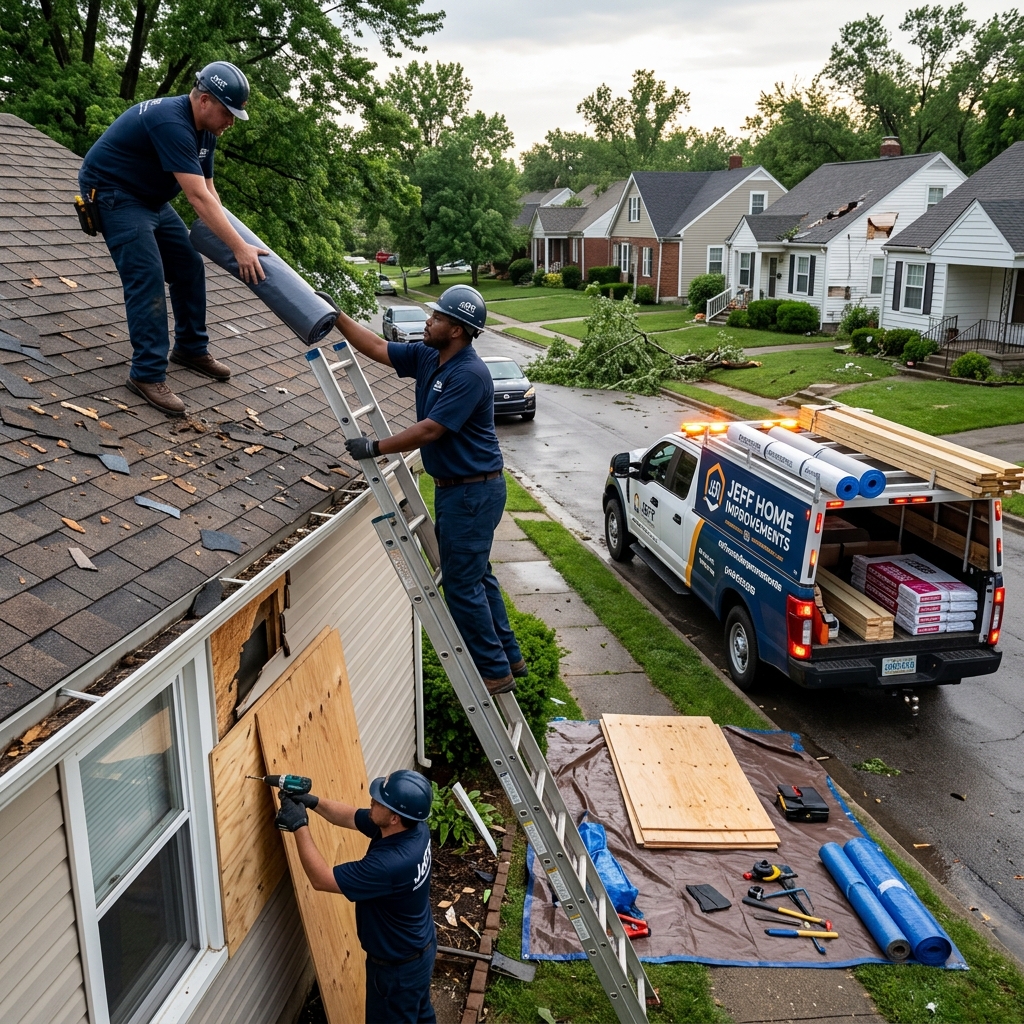
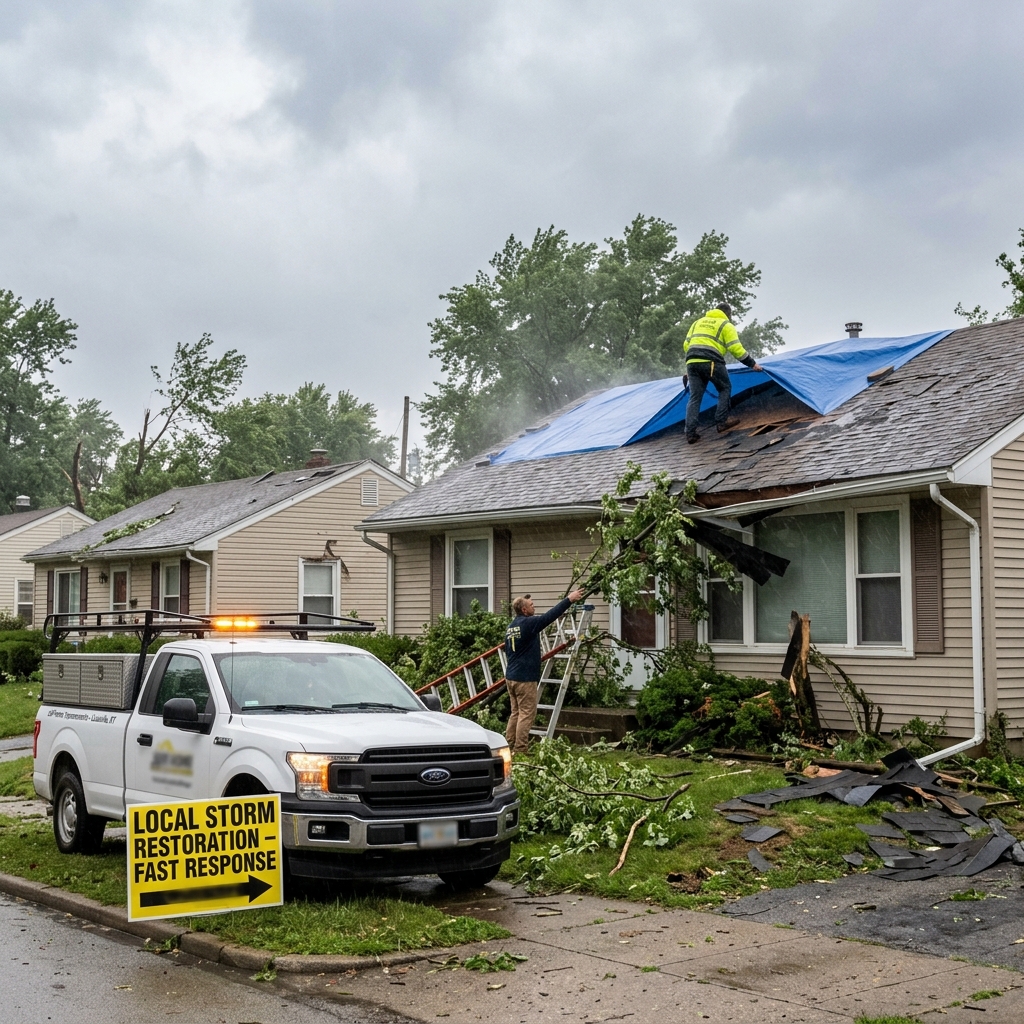
After reporting to insurance, call us. We’ll schedule a prompt inspection, even before the adjuster arrives. This early assessment protects you: we’ll identify all damage, note conditions that require urgent attention, and create documentation that supports your claim. We can also advise you on temporary repairs (like tarping the roof) to prevent additional water damage while the claim processes.

Actionable step: Save your insurance company’s claims number and the adjuster’s contact information in your phone immediately after reporting. You’ll reference this repeatedly over the coming weeks.

How We Document Damage to Maximize Your Insurance Claim

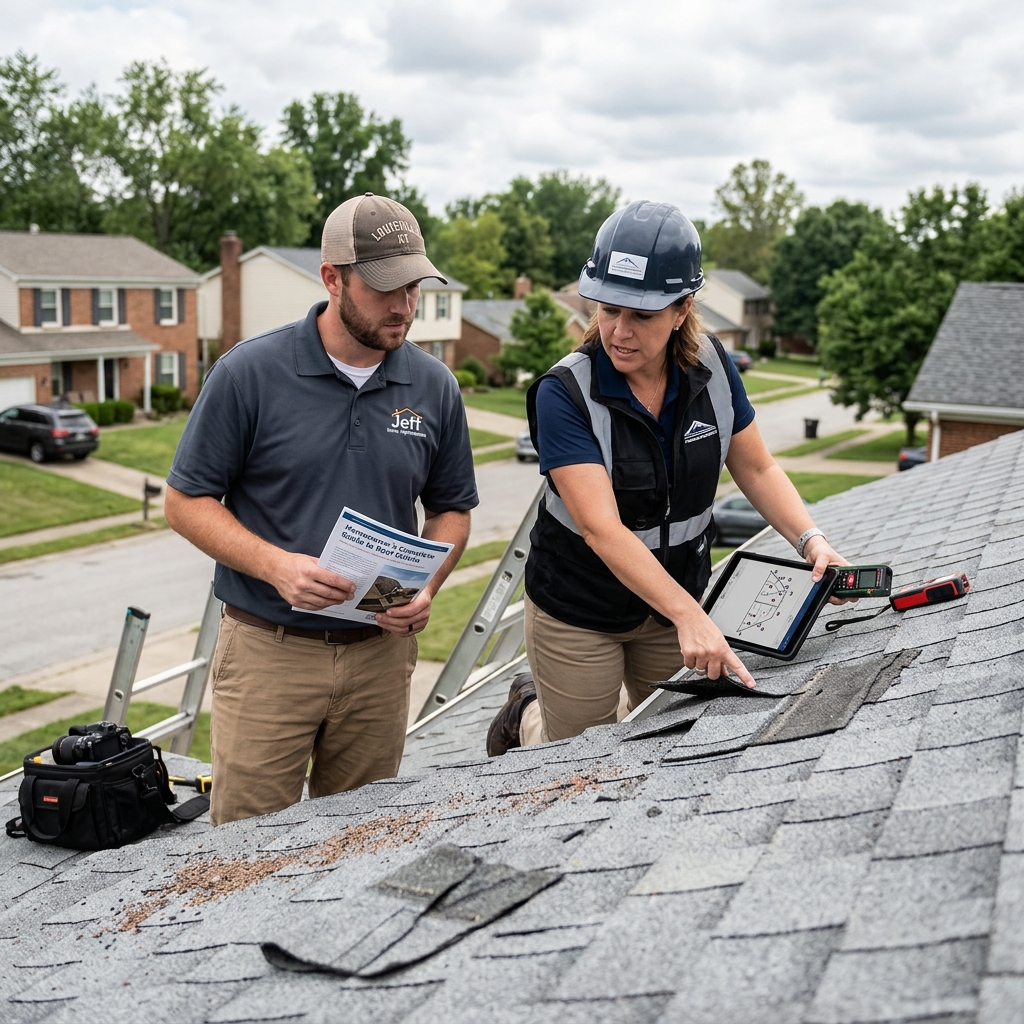
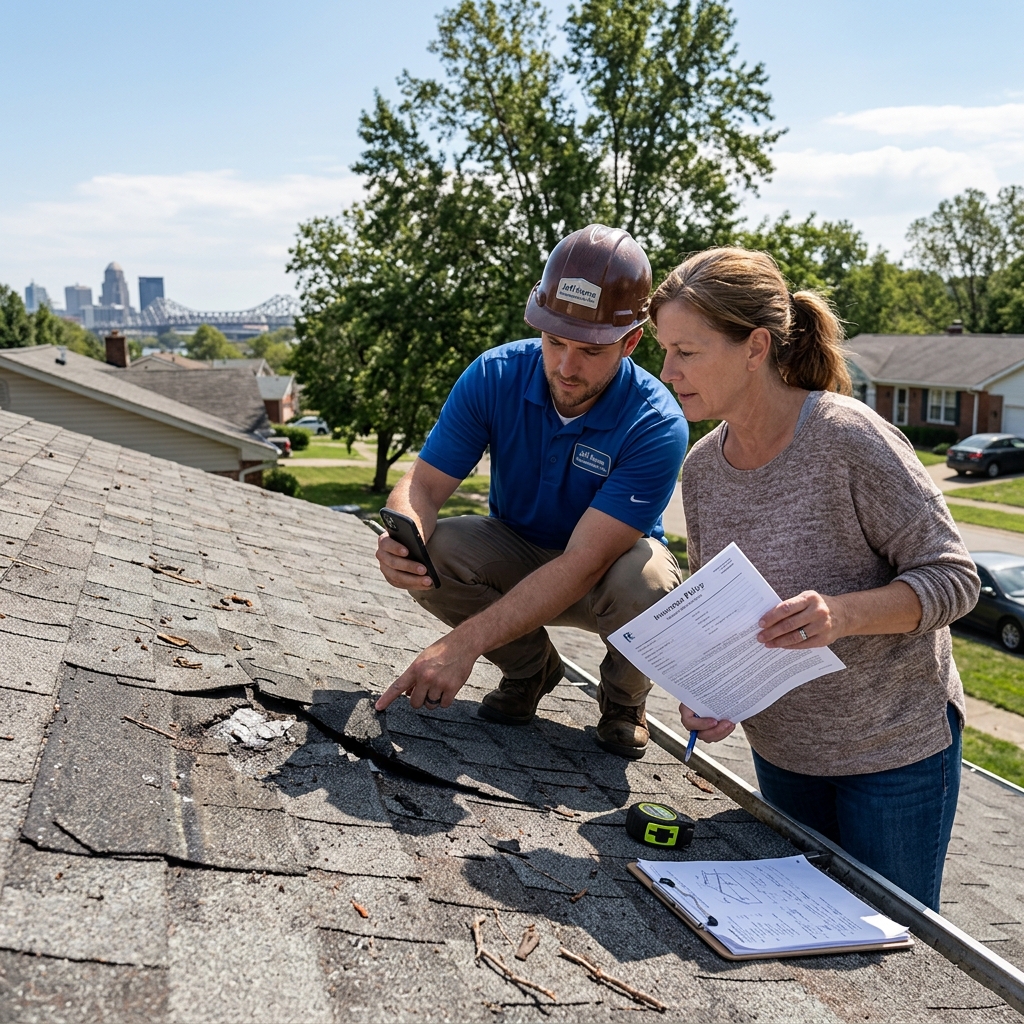
Professional damage documentation is one of the strongest tools in your corner during the claims process. When we inspect storm damage, we create a detailed report that includes measurements, photos, diagrams, and repair cost estimates. This documentation becomes part of your claim file and carries significant weight with adjusters because it comes from an licensed contractor.

Our process starts with a thorough exterior inspection. We photograph every affected surface from multiple distances and angles. We measure damage dimensions. For roof damage, we inspect from the roof itself and from the attic, documenting missing shingles, exposed plywood, damaged flashing, and any water intrusion. For siding, we check for dents, cracks, splits, and compromised seals. We examine gutters, downspouts, and soffit. We note the condition of vents, ridge caps, and chimney flashing.

We then generate an estimate that breaks down labor and materials by section. This estimate serves dual purposes: it shows the insurance adjuster what repairs actually cost in your area, and it gives you a clear understanding of the final scope of work. We also document pre-existing conditions that are not covered, so there’s no confusion later about what the claim should and shouldn’t include.

With this level of detail, adjusters have fewer reasons to dispute your claim or lowball the settlement. They see that a licensed professional has already assessed the damage and costed the repairs. This reduces their liability and speeds the claims process.

Our Process for Handling Storm Repairs From Start to Finish

Once your claim is approved and you’ve selected us to handle repairs, we manage every phase so you can focus on getting your life back to normal. Our approach is systematic and transparent from day one.

First, we schedule a pre-work consultation. We review the insurance settlement with you, confirm what’s covered and what isn’t, and discuss any gaps. If the settlement falls short of the full repair cost, we explain your options: accept the payout and do partial repairs, pay the difference out of pocket, or explore supplemental coverage options.

Next, we order materials. We’re an Owens Corning Platinum Preferred Contractor, so we source high-quality shingles, siding, and other materials that meet or exceed insurance guidelines. We secure these materials promptly to avoid delays.

Work begins with proper site preparation. We set up protective coverings for landscaping, establish parking and equipment staging areas, and ensure neighbors aren’t negatively impacted. We then execute repairs in a logical sequence, typically starting with roof work, followed by siding, gutters, and soffit as needed.

Throughout the project, we document progress with photos and maintain regular communication with you. If we discover additional damage during work (which sometimes happens once we open up affected areas), we inform you immediately and work with the insurance adjuster to adjust the claim if warranted.

We perform final quality inspections before cleanup and project closeout. We confirm all work meets building codes, that seams and seals are watertight, and that the finish is aesthetically consistent. We remove all debris and leave your property cleaner than when we arrived.

Next action: When you’re ready to move forward with repairs, we’ll provide a detailed project timeline so you know exactly what to expect and when the work will be complete.

Working Directly With Your Insurance Adjuster

We serve as a liaison between you and your insurance company throughout the process. This relationship is professional but straightforward: we’re here to ensure the claim is handled fairly and that repairs are completed to the insurer’s standards and yours.

When the adjuster inspects damage, we attend the appointment. We’re present to answer technical questions, point out damage the adjuster might miss, and ensure the assessment is thorough. If the adjuster’s initial estimate seems low, we provide our own documentation showing why the scope of work is larger. This isn’t confrontational; it’s simply presenting facts. Adjusters appreciate professionals who can clearly explain damage and costs.

If the adjuster’s estimate differs from ours, we discuss the discrepancies professionally. Sometimes it’s a disagreement about the extent of damage; sometimes it’s about material pricing or labor costs in your area. We provide market data, building codes, and technical standards to support our position. Most disputes resolve through these conversations without requiring additional escalation.

In rare cases where an adjuster and contractor genuinely disagree on scope or cost, your policy typically allows for appraisal or mediation. We’ve handled this process before and know how it works. We’ll guide you through it if needed.

Why Professional Assessment Increases Your Claim Value

Insurance adjusters assess damage objectively, but they work within tight time constraints and often evaluate multiple properties daily. They may miss secondary damage that becomes apparent once primary repairs begin. A professional contractor brings specialized knowledge about how storm damage affects different building systems and materials.

When we assess a roof, for example, we look beyond visible shingle damage. We inspect flashing seals around penetrations, check soffit and fascia for wind damage, examine gutters for dent patterns indicating impact force, and look inside the attic for water stains or leaks that suggest interior damage. We understand how hail damage progresses and which materials are most vulnerable. We know that a single split in siding can allow moisture into wall cavities, potentially causing mold or structural damage that isn’t visible from outside.

Adjusters often rely on what they can see from the ground and through photographs. We climb onto roofs, enter attics, and inspect every detail. When we find damage that the adjuster missed or underestimated, we document it thoroughly. This additional documentation supports a supplemental claim, increasing your total payout to cover the full scope of necessary repairs.

We’ve also assisted dozens of customers with roof replacement warranties and coverage questions, so we understand how warranty claims interact with insurance claims. We make sure you’re not double-paying for coverage or missing benefits you’re entitled to.

Common Mistakes That Reduce Storm Damage Payouts

We’ve seen homeowners inadvertently reduce their insurance settlements by making preventable errors. Knowing these mistakes helps you avoid them.

The first major mistake is delaying the claim. Insurance policies require you to report damage “promptly.” Waiting weeks or months weakens your position. By then, weather may have worsened existing damage, you’ll have difficulty remembering details, and the insurer may question why you waited. Report damage within 24-48 hours of discovery.

A second error is accepting the adjuster’s initial estimate without question. Adjusters sometimes miss damage. Have a contractor assess the property independently. If the professional assessment reveals additional damage, your adjuster can issue a supplemental estimate.

Hiring an uninsured or underqualified contractor creates massive problems. Some contractors intentionally inflate repair costs to inflate insurance claims, which is fraud. Others do subpar work that later fails. Insurers sometimes send inspectors to verify that repairs match the claim estimate. If work is shoddy, you’ll be liable for bringing it up to standard. We’re fully licensed and insured, so your repairs meet all building codes and insurance requirements.

Another mistake is performing partial repairs yourself before the insurance inspection. This can be seen as accepting the damage without proving its full extent. Even if you’re capable of DIY repairs, wait until the adjuster has assessed everything. Then make temporary repairs (like tarping a leak) to prevent additional damage.

Finally, many homeowners fail to keep detailed records. Write down the date you reported the claim, the adjuster’s name, every conversation you have, photos you submitted, and costs you’ve incurred. This trail protects you if disputes arise.

Quality Materials and Workmanship for Long-Term Protection

Your insurance settlement represents the funds available for repairs, but how those funds are used determines whether repairs last or fail prematurely. We prioritize quality in both materials and labor because a quick, cheap fix often costs more in the long run.

As an Owens Corning Platinum Preferred Contractor, we install roofing products that carry strong warranties and proven durability. Owens Corning shingles are engineered for Kentucky’s weather, including hail resistance and wind performance. We don’t cut corners by installing budget-grade materials that might void warranties or fail within a few years.

Our installation standards exceed industry minimums. Every shingle is fastened correctly. Every seam is sealed properly. Flashing is installed with multiple layers of protection. Gutters are secured to proper specifications with adequate slope for drainage. When we finish a repair, it’s built to last another 20-30 years, not just until the warranty expires.

We also provide guidance on roofing mistakes to avoid so you understand the difference between acceptable and superior craftsmanship. This knowledge helps you evaluate contractors and understand why some bid lower than others.

Investing in quality during the repair process means you won’t face recurring damage from the same storm two years later. Your home stays protected, your insurance won’t see claim after claim from the same property, and your property value remains strong.

We Handle the Entire Restoration Process for You

From the moment you contact us after storm damage, we become your advocate and project manager. You don’t have to juggle insurance companies, adjusters, permit requirements, and contractor coordination. We do that.

Our full-service approach includes initial damage assessment, insurance claim support, detailed documentation, permit acquisition if needed, material ordering, professional repair execution, quality inspections, and final project closeout. We handle communication with your adjuster, address any scope adjustments that arise during work, and ensure every detail meets your expectations and insurance guidelines.

This comprehensive approach is why hundreds of Louisville homeowners have called us first after storm damage. You get the assurance that a family-owned business with 35+ years of experience is managing your restoration. You’re not dealing with a large national contractor that treats your claim as one of thousands. You’re working with local professionals who know Kentuckiana building codes, local material suppliers, and the unique challenges of our climate.

If you’ve experienced storm damage or are concerned about your home’s vulnerabilities, we’re ready to help. We offer free virtual consultations and instant estimates on our website. Contact us today for a professional assessment and peace of mind. Visit our storm damage repair page to learn more about our services, or call to schedule your consultation immediately.

Contact us today for a free in home, no obligation quote on your roof
Why Kentuckiana Homeowners Choose Local Roofers Over Big Box Stores

Why Big Box Stores Fall Short for Roof Replacements

When your roof needs attention, the temptation to call a national chain or grab materials from a big box store is understandable. Those places advertise low prices and convenience. But here’s what we’ve learned after 35 years serving Louisville and Kentuckiana: cutting corners on roofing leads to costly problems down the road. A roof isn’t just another home project. It protects your family, your possessions, and your investment. The right choice matters more than saving a few dollars upfront.

Big box retailers excel at selling supplies, not solving roofing problems. When you walk in looking for roofing materials, you’ll find options, but you won’t find expertise about your specific home’s needs. Staff members typically aren’t trained in local building codes, climate considerations, or the unique challenges of Kentucky weather.

Consider a common scenario: a homeowner in St. Matthews picks up a roof system rated for 25-year longevity. They assume that rating applies everywhere. But Kentucky’s hot summers, freeze-thaw cycles, and occasional severe storms create different demands than a mild climate. A big box store employee won’t know whether your roof structure can handle the weight of the material they’re selling or whether your home’s ventilation is adequate.

Beyond guidance, these retailers offer zero installation support. If something goes wrong during the job, you’re on your own. Their return policies don’t cover labor costs or damage caused by improper installation. And when a roofing problem emerges two years later, you can’t call them for help. That warranty sits on paper while your ceiling develops a leak.

Actionable takeaway: Before purchasing any roofing materials elsewhere, get a professional assessment of your roof’s load capacity, ventilation, and structural requirements.

The Hidden Costs of DIY and Chain Store Solutions

DIY roofing seems appealing until you understand what’s actually involved. Modern roof systems aren’t simple nail-and-shingle projects anymore. Proper installation requires understanding flashing techniques, vapor barriers, ventilation dynamics, and weight distribution. Miss one detail and water finds its way in.

The financial reality often surprises homeowners. A budget roof might cost $3,000 in materials, making it seem cheap. But hiring unlicensed labor or attempting the work yourself creates hidden expenses:

  • Improper installation voids manufacturer warranties (potentially worth $10,000-$20,000)
  • Structural damage from incorrect fastening or load distribution
  • Water damage to attic insulation, rafters, and interior walls
  • Additional repairs needed when the job isn’t done right
  • Insurance claims denial if the roof wasn’t installed to code
  • Liability issues if someone is injured during installation

We’ve encountered homes where a $3,000 DIY attempt cost $18,000 to fix properly. The homeowner had to replace damaged interior walls, mold remediation, new insulation, and the roof itself, done correctly this time.

Chain store contractors present a different problem. Some hire subcontractors with minimal oversight. Quality varies dramatically from one crew to the next. Communication breaks down. If the work is defective, the responsibility chain becomes murky: Did the chain store hire bad contractors? Will they hold the contractor accountable? Getting resolution takes months.

Actionable takeaway: Request references from any roofing contractor, and verify they’re properly licensed and insured in Kentucky. Check the Better Business Bureau and ask for proof of recent completed projects with photos.

What Sets Professional Local Roofers Apart

We operate differently because we’re invested in this community. Our reputation depends on your satisfaction. If you’re unhappy, you tell your neighbors, post online, and our business suffers. That accountability creates motivation to do things right the first time.

Local roofers understand Kentuckiana’s specific conditions. We know how ice dams form on Louisville roofs during freeze-thaw cycles. We’re familiar with wind loads from severe storms and how they stress different roof configurations. We’ve handled hail damage across Jefferson County and know exactly which materials resist impact best. We’ve installed thousands of roofs in this climate, so we’ve learned what works and what doesn’t.

Professional contractors also carry proper licensing and insurance. We maintain liability coverage that protects you if something goes wrong. We pull permits on major work, which means local inspectors verify the job meets code. That inspection protects you, even if the inspector catches something we might have missed.

Communication is another distinction. When you call a local roofing company about a leaky roof, you typically speak with someone who actually knows your home’s history. We can review previous work we’ve done, understand the roof’s age and condition, and provide informed recommendations. We’re available for follow-up questions and won’t vanish once payment clears.

Actionable takeaway: Ask any contractor how long they’ve served your specific area, and ask them to describe the climate challenges that affect roofing longevity in your region.

Our Owens Corning Platinum Preferred Advantage

Our status as an Owens Corning Platinum Preferred Contractor reflects a commitment that goes beyond most competitors. Owens Corning doesn’t hand this designation out easily. We had to demonstrate consistent quality, customer satisfaction, proper installation techniques, and ongoing training.

This partnership gives our customers tangible benefits. Owens Corning products used on our installations come with extended warranties. We’re authorized to offer their Platinum Warranty coverage, which typically exceeds standard manufacturer terms. If your roof has a defect, Owens Corning stands behind it, and we stand behind our installation.

The certification also means our teams undergo regular training on the latest materials and installation methods. We don’t just rely on experience from 1995. We stay current with evolving technology, updated building codes, and new products entering the market. When we recommend a solution, it’s informed by current best practices, not outdated approaches.

Owens Corning’s backing matters when you need to file a warranty claim years later. The manufacturer knows we’re accountable contractors. They’re more likely to resolve disputes in your favor because our reputation is on the line too.

Actionable takeaway: Verify your potential contractor’s manufacturer certifications. Premium brands like Owens Corning only partner with top-tier installers, making certification a shortcut to identifying quality-focused companies.

Quality Craftsmanship and Warranty Protection You Can Trust

When we install a roof, we’re thinking about how it will perform in five years, ten years, and beyond. That perspective changes how we approach the work. We won’t cut corners on flashing around chimneys because that’s where leaks start. We spend extra time ensuring gutters tie into the roof system correctly. We verify that ventilation is adequate, even though the homeowner won’t see it.

Quality starts with materials. We use premium shingles, underlayment, and fasteners designed to withstand Kentucky weather. A cheaper shingle might look identical but will degrade faster under UV exposure and temperature swings. Over a 20-year service life, the cost difference becomes negligible.

Craftsmanship extends to the details. Proper nailing patterns, correct fastener spacing, and water-tight sealing of seams all influence how long a roof lasts. An installer who rushes through a job might miss something subtle that causes problems later. We take the time to do it right.

Our warranties reflect our confidence. We offer manufacturer warranties on materials, backed by Owens Corning’s guarantee. We also stand behind our installation work. If a problem emerges due to installation error within a defined period, we address it at no cost. That’s a promise we can make because we’re confident in our craftsmanship.

Actionable takeaway: Request a written warranty document before work begins. Ensure it covers both materials and labor, specifies the duration, and clearly outlines what is and isn’t covered.

Storm Damage Repair and Emergency Response Capabilities

Kentucky storms can strike with little warning. High winds, hail, and fallen trees damage roofs regularly across Kentuckiana. When this happens, homeowners need fast, reliable response. We maintain emergency crews specifically trained in storm damage assessment and rapid repairs.

Our storm damage repair process starts with a swift evaluation. We photograph damage, document the timing, and help you understand what your insurance will likely cover. We work directly with insurance adjusters, speaking their language and providing documentation that speeds claim approval.

Quick response isn’t just about convenience. Storm damage worsens if left exposed. Rain enters through damaged areas, affecting insulation and framing. Mold can develop within days in humid conditions. We prioritize emergency tarping and temporary protection while permanent repairs are organized.

Our crews are trained in safety practices specific to storm recovery. Damaged roofs are unstable. Debris is hazardous. We have equipment and expertise to work safely where other contractors might hesitate. We also understand how insurance claims work, so we communicate with adjusters in ways that get repairs approved and scheduled promptly.

Actionable takeaway: If your roof is damaged by a storm, photograph everything, contact your insurance company, and call a local roofing contractor the same day. The faster you document and repair, the less secondary damage occurs.

Virtual Consultations and Transparent Estimates from Our Team

We modernized how we interact with customers by offering virtual consultations. If you’re concerned about your roof, you can schedule a video call. We’ll guide you through walking onto the roof or attic, looking at the condition together, and discussing what you’re seeing. This initial conversation helps us understand your situation without requiring a site visit for basic questions.

When a full inspection is needed, we still visit in person. Our inspectors provide detailed assessments, explaining what they observe in plain language. They don’t use jargon to make problems sound bigger than they are. They also don’t minimize issues to avoid seeming expensive.

Estimates from our team reflect actual costs and honest assessment. We’ll walk you through material choices, labor time, and why we’re recommending specific solutions. If a cheaper option exists that’s suitable, we’ll mention it. Our goal isn’t to upsell you; it’s to solve your roofing problem responsibly.

Transparency extends to timeline and process. We explain how long the work takes, what to expect during installation, and how weather might affect scheduling. There are no surprise invoices after the job completes.

Actionable takeaway: Request itemized estimates that break down materials, labor, and timeline. Compare estimates from at least two contractors, but don’t choose solely based on price.

Why Kentuckiana Homeowners Trust Our 35+ Years of Experience

We’ve been serving Louisville and the broader Kentuckiana area since 1989. That’s 35 years of roofing homes in this exact climate, with these specific weather patterns and building styles. We’ve developed deep knowledge that only comes from time.

Our longevity also means we’re here for the long term. If you need warranty support five years after your roof installation, we’re still operating. We haven’t relocated or closed down. We answer the phone when you call with questions. That reliability matters when issues emerge after the initial project concludes.

Generational knowledge is another advantage. Founders and early employees trained newer team members. Techniques and lessons learned from decades of installations were passed forward. We don’t start from scratch every few years with a completely new crew. There’s continuity and accumulated wisdom.

This experience shows in how we handle complications. When we encounter an unusual roof configuration or an unexpected structural issue, we’ve likely seen something similar. We can quickly adapt our approach. Newer contractors might struggle longer or suggest expensive solutions we’d avoid.

Actionable takeaway: Ask potential contractors how long they’ve been in business and request a reference from a customer they’ve served for at least five years.

The Complete Exterior Solution We Provide Beyond Roofing

Most homeowners contact us about roofing, but our scope extends further. We provide siding installation, window replacement, gutter and gutter guard systems, and comprehensive exterior services. This broader capability helps homeowners address multiple needs efficiently.

When a new roof is needed, the ideal time to replace siding, update gutters, and upgrade windows is often simultaneously. Coordinating these projects reduces overall disruption and cost. Instead of multiple contractors coming over months, we can manage everything.

Our gutter and gutter guard protection prevents the debris accumulation that leads to clogs and water damage. Properly maintained gutters direct water away from your foundation and roof system. Gutter guards reduce maintenance while ensuring water flows freely.

Vinyl siding and window installation improves energy efficiency and curb appeal. These projects complement a new roof, creating a cohesive exterior upgrade. We use quality materials and proper installation techniques across all services.

Actionable takeaway: Consider timing exterior projects together. Getting multiple estimates for a complete exterior renovation often costs less than staggering individual projects over several years.

Getting Started with Your Free Consultation Today

Taking the first step is simple. Contact us to schedule a free consultation, either virtual or in-person, depending on your preference. We’ll listen to your concerns, ask questions about your roof and exterior condition, and provide honest guidance on what work is needed and what can wait.

During the consultation, we’ll discuss your timeline, budget considerations, and material preferences. We’ll answer questions about warranties, the installation process, and what to expect. There’s no obligation to proceed. We’re here to provide information and help you make an informed decision.

If you decide to move forward, we’ll provide a detailed, transparent estimate. We’ll discuss scheduling, walk you through the installation process, and remain available for questions before, during, and after the work.

Kentuckiana homeowners choose local, professional roofers because the stakes are too high for anything less. Your roof protects your family and your property investment. Proper installation and quality materials matter. We’ve earned the trust of thousands of local families over 35 years. We’re ready to serve yours. Contact Jeff Home Improvements Inc. today to discuss your roofing and exterior needs. We look forward to helping you protect your home.

For further reading: Owens Corning Platinum Preferred, Storm Damage Repair.

Contact us today for a free in home, no obligation quote on your roof
Energy-Efficient Roofing Materials Compared: Cool Roofs vs Traditional Shingles

Why Louisville Homeowners Need Energy-Efficient Roofing Solutions

Louisville’s summers bring intense heat, humidity, and long stretches of direct sun exposure. That combination puts constant pressure on your cooling system and your electric bill. The choice of roofing material you make today directly impacts your home’s temperature regulation and energy costs for the next 20 to 30 years.

We’ve helped hundreds of Kentuckiana homeowners cut cooling expenses by switching from traditional dark shingles to reflective, energy-efficient roofing systems. The difference isn’t subtle. Many of our clients report noticeable reductions in air conditioning runtime during peak heat months, along with lower monthly utility bills.

This guide compares cool roofing technology with conventional asphalt shingles so you can make an informed decision about your next roof replacement.

Your roof is your home’s first line of defense against solar heat. Traditional dark shingles absorb up to 90 percent of the sun’s thermal energy, which raises attic and interior temperatures significantly during summer months. That extra heat forces your air conditioning system to work harder and longer, driving up energy consumption and costs.

Louisville’s climate makes this particularly pressing. With summer temperatures regularly climbing into the 80s and 90s, and humidity levels that make it feel even hotter, homeowners face mounting pressure on HVAC systems from June through September. A standard roof with dark asphalt shingles can reach surface temperatures of 150 to 180 degrees Fahrenheit on a sunny day.

The financial impact adds up quickly. According to the U.S. Department of Energy, roof color and material can account for 5 to 10 percent of a home’s total cooling energy consumption. For a household spending $1,500 annually on air conditioning, that translates to $75 to $150 in excess costs every year.

Beyond cooling costs, premature heat absorption accelerates roof material degradation. UV exposure combined with thermal cycling causes conventional shingles to curl, crack, and lose their protective granules faster. This shortens your roof’s effective lifespan and forces earlier replacement.

Energy-efficient roofing materials offer a direct solution. By reflecting rather than absorbing solar radiation, they keep your roof surface cooler, reduce heat transfer into your home, and extend the life of your roofing system. The upfront investment pays for itself through lower energy bills and reduced replacement frequency over time.

Cool Roofing Technology vs Traditional Asphalt Shingles

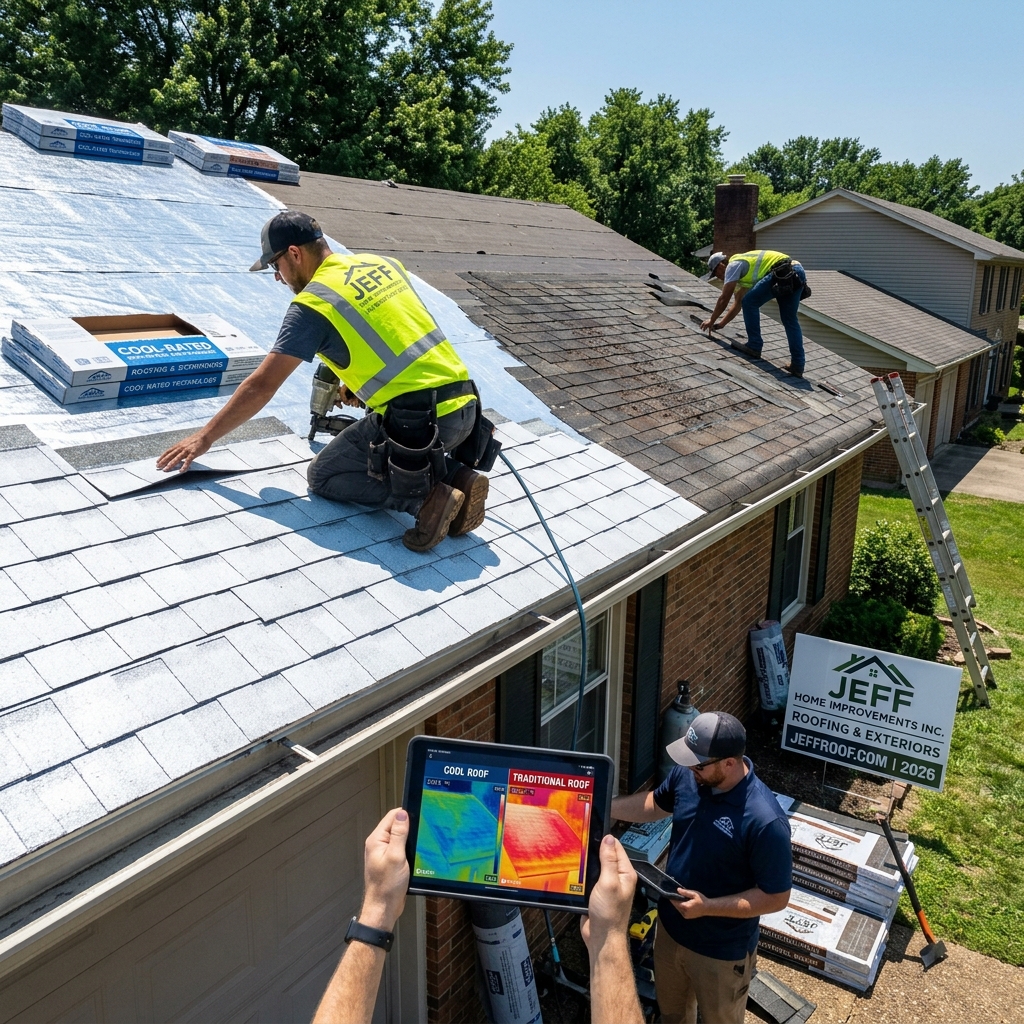
Cool roofing technology relies on highly reflective pigments and coatings that bounce solar energy away from your home instead of trapping it. The most common energy-efficient options include cool-rated asphalt shingles, metal roofing with reflective finishes, and specially coated tiles or membranes.

Our standard asphalt shingles come in dark colors because traditional manufacturing prioritized appearance over thermal performance. Darker shingles absorbed more heat, which meant higher interior temperatures and greater strain on cooling systems. Modern cool-rated asphalt shingles maintain attractive aesthetics while incorporating reflective granules that reduce solar absorption by 20 to 30 percent compared to conventional products.

Traditional asphalt shingles typically have a Solar Reflectance value (a measure of how much sunlight bounces off the surface) of 0.15 to 0.25. Cool-rated asphalt shingles jump to 0.40 to 0.65. As an Owens Corning Platinum Preferred Contractor, we install Owens Corning Duration cool shingles that meet ENERGY STAR standards and deliver measurable reflectance improvements.

Metal roofing takes energy efficiency even further. Unpainted metal naturally reflects 40 to 60 percent of solar radiation. When finished with light-colored or specialized reflective coatings, metal roofs can achieve solar reflectance values of 0.70 or higher. Metal roofs also dissipate absorbed heat more efficiently than shingles because of their conductive properties.

The trade-off differs by material type. Cool-rated shingles provide reflectance benefits without changing your home’s appearance dramatically. Metal roofs offer superior reflectance but come with different aesthetic considerations and, typically, higher upfront costs. Neither choice involves compromise on durability or protection when properly installed.

We assess your specific home, climate exposure, and budget to recommend the cool roofing technology that delivers the best energy savings for your situation. Our team installs both cool-rated shingles and metal options as part of our comprehensive high-performance roofing services.

Energy Efficiency Performance Comparison

The energy efficiency advantage of cool roofs becomes concrete when you measure actual temperature differences and cooling energy consumption.

In controlled studies, cool-rated roofs maintain surface temperatures 20 to 40 degrees Fahrenheit lower than traditional dark shingles under the same sun exposure. That temperature reduction translates directly to lower attic temperatures and reduced heat transfer through ceilings into living spaces.

Attic temperatures illustrate this well. With traditional dark shingles on a sunny 95-degree day, attic temperatures can reach 140 to 160 degrees Fahrenheit. Cool-rated shingles reduce attic temperatures to 120 to 130 degrees. That 20 to 30-degree difference means your air conditioning system cools your home faster and doesn’t have to fight as hard against heat radiating through the ceiling.

The cooling energy savings vary based on several factors:

  • Roof size and angle (south and west-facing roofs absorb more heat)
  • Local climate and number of cooling-degree days per year
  • Home insulation quality (better insulation magnifies the benefit)
  • Thermostat settings and occupancy patterns
  • Quality of existing air sealing in the envelope

Louisville’s climate provides favorable conditions for cool roof performance. With roughly 1,600 cooling-degree days annually, the extended cooling season justifies the energy efficiency investment. Homes with good attic insulation see efficiency gains on the higher end of the range, sometimes reaching 15 to 20 percent reductions in cooling energy consumption.

Metal roofing typically delivers slightly better cooling energy savings than cool-rated shingles due to superior reflectance and the material’s heat dissipation properties. The difference is often 3 to 5 percentage points in total cooling energy reduction, though both options substantially outperform traditional dark shingles.

One practical measure: we’ve installed roof monitoring equipment in several recent projects. Customers report measurable reductions in air conditioning cycling during peak hours and noticeably faster cooling when returning home or opening windows during cooler evening hours. These real-world observations consistently align with energy modeling predictions.

Long-Term Cooling Cost Savings Analysis

The financial argument for energy-efficient roofing relies on simple math: lower monthly cooling costs minus the upfront material premium equals net savings over your roof’s lifetime.

A typical Louisville home uses roughly 5,000 to 6,000 kilowatt-hours annually for cooling. At the current regional average of $0.13 per kilowatt-hour, that’s approximately $650 to $780 per year in pure cooling costs. A well-executed cool roof installation can reduce cooling energy consumption by 10 to 15 percent, depending on your specific home and climate zone.

That means annual cooling savings of $65 to $117 for a typical residential property. Over a 25-year roof lifespan, cumulative cooling cost savings range from $1,625 to $2,925.

The material premium for cool-rated asphalt shingles versus conventional alternatives typically runs 5 to 15 percent higher. For a 2,000 square foot roof replacement in the Louisville area, that usually means an additional $500 to $1,500 in material costs. Metal roofing carries a higher premium, typically 30 to 50 percent above asphalt shingles, adding $3,000 to $8,000 to your project cost.

Here’s where the analysis gets favorable. Even at the higher end of the premium, the cooling savings over your roof’s lifespan often recoup the investment. More importantly, you’re not spending extra money solely on energy efficiency. You’re investing in superior reflectance while maintaining all the protection, durability, and weather resistance of your primary roofing investment.

For commercial properties, the financial case strengthens considerably. A commercial building with 10,000 to 50,000 square feet of roof can accumulate $5,000 to $20,000 in annual cooling savings. Payback periods frequently fall to 8 to 12 years, after which accumulated savings grow exponentially.

We recommend requesting instant energy estimates when evaluating your roof replacement options. Our virtual consultation process includes energy modeling based on your home’s specific characteristics, giving you precise projections for your situation rather than generic averages.

Durability and Lifespan Benefits

Cool roofing materials don’t just save energy, they also outlast traditional alternatives because they experience less thermal stress.

Conventional dark shingles undergo repeated expansion and contraction cycles as they heat and cool throughout each day. On a typical summer day, a dark roof surface might swing from 85 degrees in morning shadow to 170 degrees in peak sun, then back down to 95 degrees at sunset. This constant flexing accelerates material fatigue, causes adhesive bonds to weaken, and leads to granule loss and premature deterioration.

Cool-rated shingles experience smaller temperature swings. Because they reflect more sunlight, their surface temperature climbs only to 130 to 140 degrees instead of 170. That reduced thermal cycling means less mechanical stress on the shingle material itself, less stress on the adhesive strips that hold shingles in place, and longer-lasting protective granules.

The durability advantage compounds over time. We typically observe:

  • Fewer shingle splits and cracks on cool roof installations
  • Better-preserved granule coverage extending into year 15 and beyond
  • Reduced incidence of curling or buckling at the edges
  • Extended sealed life on shingle adhesive strips

Metal roofing takes durability to another level. With proper installation, metal roofs regularly achieve 40 to 50-year lifespans, which is nearly double that of conventional asphalt shingles. The reflective properties preserve the metal finish while the material’s inherent strength resists impact damage and environmental stressors.

When you’re planning your roof replacement, consider durability as part of your total cost analysis. A cooler-running roof that lasts 30 years instead of 20 years delivers value far beyond the initial purchase price.

Why We Recommend Cool Roof Upgrades for Your Home

After more than three decades of roofing work across Louisville and Kentuckiana, our recommendation is straightforward: cool roofing technology makes financial and practical sense for virtually every residential property in our region.

The combination of energy savings, extended lifespan, and improved home comfort aligns with what our customers actually care about. Nobody wants higher electric bills or to replace their roof sooner than necessary. Cool roofs directly address both concerns while maintaining the appearance and protection of your home.

Kentucky’s summer climate creates ideal conditions for cool roof performance. You’re not in a heating-dominated region where roof reflectance might reduce beneficial passive solar gain in winter. The cooling season vastly outweighs heating needs, making energy-efficient roofing the clear priority.

We’ve worked with hundreds of clients who made the switch. The consistent feedback emphasizes two points: noticeably lower air conditioning bills during summer months, and confidence that their investment protects their home more effectively and longer than traditional alternatives.

As Owens Corning Platinum Preferred Contractors, we have direct access to their best-performing products and can integrate those materials into a comprehensive home exterior strategy. Cool roofing pairs beautifully with our gutter, siding, and window services to create a complete energy-efficient envelope upgrade.

The investment aligns with modern home value expectations as well. Prospective buyers increasingly recognize energy efficiency as a quality marker. A home with a newer, energy-efficient roof, quality siding, and updated windows commands better resale value than one with aging dark shingles and degraded exterior components.

Our Expert Installation Advantage

Selecting the right cool roofing material is only half the equation. Proper installation determines whether you actually realize the energy efficiency benefits promised by the manufacturer.

Many roofing contractors install cool-rated shingles using the same techniques they apply to conventional products. The problem: cool shingles require attention to detail around ventilation, underlayment selection, and flashings to optimize thermal performance. Substandard installation can reduce energy savings by 20 to 40 percent.

Our crew understands that high-performance roofing installation goes beyond nailing shingles. We evaluate your home’s existing ventilation to ensure heat can escape efficiently from the attic. We specify complementary underlayment products that work synergistically with cool shingles. We execute flashing details precisely to prevent thermal bridging at penetrations.

We also conduct virtual consultations that include a thorough assessment of your home’s current state. Before recommending any material, our team evaluates:

  • Existing attic ventilation adequacy
  • Roof deck condition and need for repairs
  • Proper slope and drainage patterns
  • Potential heat distribution issues through your home’s structure

This comprehensive approach means your cool roof installation actually performs as designed. You’re not paying for energy-efficient materials and then losing their benefits through mediocre installation practices.

Our Owens Corning Platinum Preferred Contractor certification reflects years of successful installations and customer satisfaction. We maintain this status through ongoing training, quality standards, and performance accountability.

Getting Your Energy-Efficient Roof Replacement Started

The first step is connecting with our team for a virtual consultation and instant estimate. We’ll assess your home’s current condition, discuss your energy efficiency goals, and present options with realistic cost projections and expected energy savings.

During the consultation, we’ll examine:

  • Your roof’s current age and condition
  • Attic insulation and ventilation quality
  • Your home’s size and cooling energy patterns
  • Your budget and timeline for replacement

We’ll then provide specific recommendations for cool roofing materials suited to your home and climate exposure. Our estimates include material costs, labor, and projected annual energy savings so you understand the complete financial picture.

For most properties, we can complete residential roofing replacements within 2 to 4 weeks. Storm damage repair and restoration often moves faster, depending on material availability and damage scope.

We handle the entire process: obtaining necessary permits, arranging waste removal, coordinating with your homeowners association if applicable, and ensuring final inspections verify proper installation. Your role is simple: schedule the virtual consultation, approve the proposal, and let our team handle the rest.

Ready to explore energy-efficient roofing for your Louisville home? Contact Jeff Home Improvements Inc. today to schedule your consultation. We’ll show you exactly how cool roofing technology can reduce your cooling costs, extend your roof’s lifespan, and protect your home more effectively than conventional alternatives.

Contact us today for a free in home, no obligation quote on your roof
How We Help Louisville Homeowners Choose Quality Roofing at the Right Price

Why Roofing Quality and Price Matter for Your Home’s Protection

Your roof is your home’s first line of defense against Kentucky’s unpredictable weather. When it comes time to replace it or repair storm damage, you face a fundamental question: how do you balance quality with cost? At Jeff Home Improvements Inc., we’ve spent over three decades helping Louisville homeowners and business owners answer this exact question. We’ve learned that the cheapest option rarely delivers the best value, and the most expensive doesn’t always mean you’re getting what you pay for.

This guide walks you through the real factors that influence roofing cost and quality, shows you what separates a trustworthy contractor from the rest, and explains how we help you make decisions that protect your home and your wallet.

A roof isn’t a decorative choice. It’s a structural system that determines whether water stays out, energy stays in, and your family stays safe during severe weather. The difference between a quality installation and a rushed job can be tens of thousands of dollars over the life of your home.

When you invest in quality roofing, you’re protecting against multiple risks simultaneously. Poor installation leads to premature leaks, water damage in attics and walls, mold growth, and structural deterioration. Even one year of undetected roof damage can cost more to remediate than a quality roof replacement would have cost upfront. Beyond protection, a well-installed roof with premium materials holds its value and keeps your home comfortable by maintaining proper ventilation and insulation.

Price matters because roofing is a significant home improvement expense. Most homeowners aren’t replacing their roof every year, so they lack the expertise to evaluate whether they’re getting fair value. Contractors with low prices sometimes cut corners on preparation, use inferior materials, or hire inexperienced crews. Others inflate prices because they assume you won’t verify their claims.

Our role is to clarify what you’re actually getting for your investment. We use quality materials, certified installers, and proven processes because those choices protect your home long-term and reduce the likelihood of expensive callbacks or warranty disputes.

Action step: Before speaking with any contractor, understand your roof’s age and condition. Roofs typically last 15 to 25 years depending on material and climate. If yours is nearing the end of that window, quality becomes even more critical.

The Hidden Costs of Choosing Low-Quality Roofing Materials

Budget roofing materials often fail in ways that don’t show up immediately. A cheap shingle might install easily and look acceptable for the first few years, but inferior composition means it loses flexibility faster, cracks under temperature swings, and becomes vulnerable to wind damage. When severe weather hits, that budget roof fails first.

Here’s what actually happens with low-grade materials in the Kentuckiana climate. Our region experiences temperature swings from freezing winters to hot summers, plus spring storms with high wind. Budget shingles become brittle in cold and lose adhesion in heat. Cheap underlayment doesn’t breathe properly, trapping moisture that rots decking underneath. Low-cost flashing and sealants fail around penetrations like chimneys and vents, creating leak pathways that spread damage deeper into your home.

The hidden costs compound:

  • Water damage repairs to interior walls, ceilings, and insulation often exceed the original roofing cost
  • Mold remediation (if moisture sits undetected) runs $5,000 to $20,000+
  • Structural repairs to rotted decking and framing cost exponentially more than prompt roof replacement
  • Insurance may not cover damage caused by deferred maintenance or poor workmanship
  • Resale value suffers if inspectors discover roof issues during a home sale

A homeowner who saves $3,000 on a budget roof installation might face $15,000 in water damage repairs within five years. We’ve seen it repeatedly in our service area.

Quality materials from manufacturers like Owens Corning come with warranties that actually mean something because the manufacturer stands behind the product durability. They cost more upfront, but they hold up through Kentucky’s weather extremes and reduce your risk of costly surprises.

Action step: When comparing contractor quotes, ask specifically about material grade, manufacturer warranties, and the contractor’s labor warranty. Low prices that don’t explain material choices should raise questions.

What Makes a Roofing Contractor Worth the Investment

Not all contractors deliver equal value. The difference often comes down to systems, training, and accountability.

A contractor worth your investment has proper licensing, insurance, and references you can actually verify. They should provide detailed written estimates that break down materials, labor, timeline, and cleanup. They answer technical questions clearly and don’t pressure you into quick decisions.

Beyond credentials, they bring expertise that protects your project. Our crews understand Louisville’s specific challenges: ice dam risk in winter, rapid temperature cycling that stresses seams, and the heavy rain that tests every flashing detail. We’ve handled enough roofs in this area to know exactly where problems start and how to prevent them.

A reliable contractor also manages the logistics that homeowners rarely consider. Proper roof replacement requires removing old material responsibly, inspecting and repairing decking if needed, installing new underlayment and flashing to exact specifications, and coordinating vents, chimneys, and other penetrations. Rushed crews skip inspections, reuse worn decking, or install flashings without sealing properly. You won’t notice these shortcuts until the first rain.

Accountability matters too. When work is complete, a quality contractor should provide documentation of what was installed, when it was done, and what warranty covers it. They should be available if you notice an issue after the project ends.

We invest in ongoing crew training because roofing standards evolve and technique matters. Our team carries credentials from roofing associations and material manufacturers. That investment costs us money, but it transfers directly to your roof’s reliability.

Action step: Ask any contractor for at least three local references, and actually call them. Ask about the contractor’s responsiveness if problems arose after installation.

How Our Owens Corning Platinum Preferred Status Guarantees Your Value

Being an Owens Corning Platinum Preferred Contractor isn’t a marketing badge. It’s a certification that Owens Corning only awards to contractors who meet strict material knowledge, installation standard, and customer service requirements.

Owens Corning uses Platinum Preferred status to identify contractors they trust to install their premium shingles correctly. The company knows that installation quality directly affects whether their material warranty actually protects homeowners. So they train and audit contractors, require documentation of completed installations, and stand behind the combined material-plus-labor warranty.

When you choose us for Owens Corning products, you receive:

  • Premium material warranties (often 30+ years depending on product) that cover manufacturing defects
  • Labor warranty on our installation work, backed by Owens Corning’s network
  • Access to their customer support if an issue arises
  • Assurance that your roof was installed to manufacturer specifications

This matters because it closes the gap where most roof problems happen. A homeowner who buys quality shingles but hires a contractor unfamiliar with proper installation can end up with a roof that fails prematurely while the shingle manufacturer denies claims because installation wasn’t correct.

Our certification means you get both the materials and expertise aligned toward the same goal: your roof lasting its full lifespan and staying leak-free. Owens Corning has our work documented, and they’ve trained us on their latest roofing styles and technology.

Action step: When comparing contractors, ask whether they carry manufacturer certifications. A Platinum Preferred status from a major manufacturer is a concrete indicator of training and accountability.

Our Storm Damage Restoration Process Protects Your Investment

Storm damage repairs operate under different constraints than scheduled roof replacement. You need fast assessment, accurate insurance documentation, and reliable repairs that prevent further deterioration. We’ve refined our storm damage repair process over decades of handling Kentuckiana’s spring and summer storms.

When you report storm damage, we schedule a rapid inspection to identify affected areas and determine whether the damage is covered by homeowners insurance. Many homeowners assume all roof damage is covered, but policies vary. Our assessment documents what insurance typically covers: wind damage, hail impact, and damage from falling branches or debris. It rarely covers gradual deterioration or maintenance issues exposed by the storm.

We provide clear, professional documentation of damage that insurance adjusters understand. This documentation is crucial because it affects whether your insurance reimburses you appropriately. We’ve seen situations where homeowners received inadequate settlements because the damage wasn’t clearly documented.

Once damage is confirmed and insurance is involved, we manage the repair timeline carefully. We prevent further damage by tarping or temporarily sealing affected areas. We coordinate with adjusters and handle permits if required. We repair to the same standard as a full replacement, using quality materials and proper installation practices even on partial repairs.

If you go through us for storm damage repair, you’re not just getting a patch. You’re getting a durable fix that maintains your roof’s integrity and protects your warranty status.

Action step: After severe weather, document any visible damage with photos dated that day. Contact us immediately for a free assessment rather than waiting. Quick action prevents minor damage from becoming major problems.

Why Virtual Consultations Help You Make Better Roofing Decisions

Making a roofing decision is easier when you understand your actual situation, and virtual consultations let you get expert assessment without the pressure of an in-home sales pitch.

A virtual consultation starts with you describing what you need: roof replacement, storm damage repair, siding work, or general inspection. We ask targeted questions about your roof’s age, any current problems you’ve noticed, and what triggered your interest in roofing work. From there, we can often assess your situation over video, identifying visible concerns and explaining what inspection would reveal.

The format offers real advantages. You’re in control of the conversation pace. You can reference documents like your home’s purchase records or previous roofing work. You can ask follow-up questions without time pressure. We can share information about materials and processes visually, making technical explanations clearer.

Virtual consultations also serve as a screening step. If you’re considering multiple contractors, video consultations let you evaluate communication style, technical knowledge, and how seriously they take your situation without scheduling multiple in-home visits. You’ll notice quickly which contractors listen carefully and which ones are pushing a predetermined solution.

We use virtual consultations to provide instant estimates based on visible information combined with your description. We can’t measure roof pitch or check interior conditions remotely, but we can give you a reasonable range for your situation, which helps you understand whether you’re getting competitive pricing.

Action step: Schedule a virtual consultation as your first step. It’s free, takes 15-20 minutes, and gives you real information to evaluate whether you want us to do a full in-person inspection.

The Long-Term Savings of Choosing Certified Professional Installation

The least expensive roof today can become the most expensive roof over 25 years. Certified professional installation creates long-term savings through durability, warranty coverage, and reduced repair calls.

When installation is done correctly, your roof meets its design lifespan. Premium shingles rated for 25-30 years actually last that long because proper installation prevents the premature failures that plague rush jobs. The math is straightforward: a quality roof that lasts 25 years costs far less per year than a budget roof that fails at 12 years and requires expensive repairs in between.

Professional installation also preserves warranty coverage. Most roofing warranties require installation by certified contractors. If problems arise and you’ve hired an uncertified installer, the manufacturer might deny the claim. You’d be responsible for expensive repairs that should have been covered. Even if the manufacturer pays, the process is lengthy and contentious.

Certified installation reduces callbacks and minor issues. Professional crews catch problems during installation rather than leaving them for you to discover during the first heavy rain. They properly ventilate attics to prevent moisture issues. They seal penetrations correctly. They coordinate gutters and drainage. These details compound into a roof that stays trouble-free.

Insurance companies also recognize certified installation value. Some offer small rate discounts for homes with recent professional roof replacements, recognizing the lower claim risk.

We certify our crews through ongoing training and manufacturer programs specifically because long-term durability matters to our reputation. A roof that fails early is a permanent reference that hurts our business. A roof that still protects the home 20 years later becomes our best marketing.

Action step: Factor lifecycle cost into your roofing decision, not just upfront price. A roof lasting 25 years instead of 12 saves approximately $400-600 per year in averaged replacement costs, plus eliminates the expense and disruption of mid-life repairs.

How We Deliver Premium Quality Without Premium Prices

We’re often asked how we maintain quality standards while keeping pricing competitive. The answer involves how we operate as a business.

First, we stay focused on our core competencies. We’re roofing and exterior specialists in Louisville, not a national mega-contractor spreading resources thin across dozens of service areas. This focus lets us build relationships with local suppliers, streamline our logistics, and develop processes optimized for our specific climate and market.

Second, we manage labor efficiently without cutting corners on training. We have permanent crews who work with us year-round, rather than seasonal workers unfamiliar with our standards. Permanent crews work faster because they know our methods and handle our materials every day. That efficiency reduces labor hours without reducing quality.

Third, we source materials strategically. We’ve partnered with quality manufacturers like Owens Corning based on volume and loyalty, earning pricing that lets us offer competitive quotes while still paying for premium products. We’re not buying discount materials at liquidation prices; we’re buying quality materials at wholesale pricing because of our established relationships.

Fourth, we operate lean. We minimize overhead spending that doesn’t directly improve your roof. That means less advertising spend than larger contractors, smaller office overhead, and a management structure focused on job delivery rather than corporate hierarchy. Those savings translate to competitive pricing.

Finally, we build our business on referrals and reputation. We don’t spend heavily on marketing because happy customers recommend us to neighbors. That referral model means we can price fairly rather than inflating to cover massive advertising budgets.

The result is that our pricing sits firmly in the value range: fair compared to other certified contractors, not the cheapest option but not premium pricing either. You’re paying for quality materials, certified installation, and the efficiency of a focused local contractor.

Action step: When comparing quotes, verify you’re comparing identical materials and scopes. A quote missing details like underlayment grade or flashing specification isn’t comparable. Ask contractors to itemize what’s included so you can make true apples-to-apples comparisons.

What Our Louisville Customers Say About Our Roofing Value

We’ve completed thousands of roofing projects across Louisville and Kentuckiana since 1989. The feedback we hear consistently centers on value and peace of mind.

Homeowners frequently mention surprise at how quickly quality installation happened. They expected a disruptive multi-week project but were done in days. That efficiency comes from experienced crews who know the exact sequence of work. When crews aren’t figuring out the job as they go, they move faster.

Customers also appreciate thorough communication. We explain what we’re finding during inspection, show you any damage before we remove old roofing, and discuss repairs needed beyond the original scope before proceeding. No surprise bills or scope changes that weren’t discussed. That transparency builds confidence that you’re getting fair value.

We hear regularly that people recommend us to friends and family based on how their roof performed over subsequent years. After a hail storm, during heavy rain, through winter ice damming: homeowners tell us their roof protected their home as it should. That’s the simplest compliment we can receive.

Long-term customers frequently call us back for additional work: gutter installation, siding replacement, or regular inspections. That repeat business tells us they felt they received good value the first time.

Our residential roofing services have earned recognition as Owens Corning Platinum Preferred contractors and developed a reputation as dependable specialists, not salespeople pushing unnecessary upgrades.

Action step: When researching contractors, read recent reviews focusing on specific details: communication, timeline accuracy, and how the roof performed afterward. Generic praise is less useful than specific examples.

Getting Your Free Estimate and Starting Your Roofing Project Today

Starting your roofing project is straightforward. We offer two initial consultation options depending on your preference and urgency.

For immediate assessment, request a virtual consultation through our website. Describe your situation, and we’ll connect you with a roofing specialist within one business day. During a 15-20 minute video call, we’ll ask targeted questions, assess what we can see, and provide a preliminary estimate range. This approach works well if you’re in the early evaluation stage or want to compare contractors efficiently.

If you prefer an in-person inspection, we schedule a detailed property visit. During this inspection, we evaluate your roof from the ground and safely from above if needed, check interior attic conditions, and document current conditions. We provide detailed written estimates that break down materials, labor, timeline, and warranty details. We also discuss any concerns we identify and recommend priorities if multiple projects apply.

Both consultation paths are free. We provide estimates without obligation, understanding that you’re evaluating options.

From estimate to project completion, we manage the entire process. We handle permit coordination where required, schedule work around your calendar, protect your property during installation, and conduct final inspection before we consider the job complete. Insurance coordination is included if your project involves damage claims.

We’re ready to start conversations about roof replacement, storm damage repair, siding installation, gutter protection, or any exterior improvement you’re considering. Reach out to https://jeffroof.com today to schedule your free consultation.

Your home deserves roofing that protects it properly, installed by people who take pride in their work. We’ve helped Louisville homeowners find that balance between quality and value for over 35 years. We’d welcome the opportunity to help you too.

For further reading: Owens Corning Platinum Preferred, Owens Corning roofing styles.

Contact us today for a free in home, no obligation quote on your roof
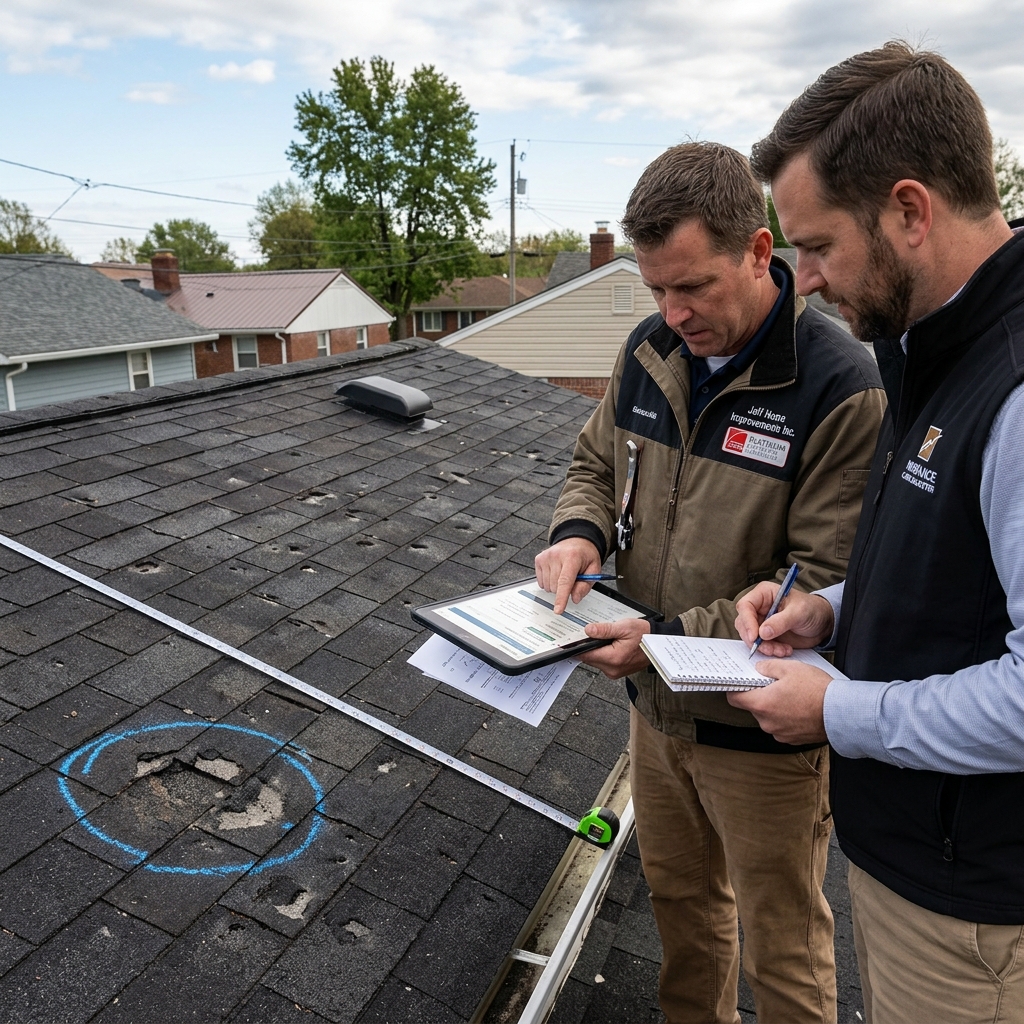
Best Storm Damage Insurance Claims Process for Louisville Property Owners

Understanding Your Storm Damage Coverage and Policy Details

When severe weather strikes the Kentuckiana area, the aftermath is stressful. Your roof may be damaged, your siding compromised, or your gutters torn away. Beyond the immediate disruption, you’re facing insurance paperwork, contractor quotes, and decisions about restoration. The insurance claim process itself often feels overwhelming, especially if you’re navigating it for the first time.

We understand this pressure because we’ve worked alongside hundreds of Louisville homeowners and commercial property managers through their storm damage claims. Over decades of serving this community, we’ve learned what makes the difference between a smooth claim experience and a frustrating one. The key lies in understanding your coverage, documenting properly, filing strategically, and getting the right professional support.

This guide walks you through each stage of the storm damage insurance claims process so you can move forward confidently and get your property restored.

Before anything else, you need clarity on what your policy actually covers. Many property owners assume they know their coverage until they file a claim and discover gaps or exclusions.

Start by locating your homeowners or commercial property insurance policy. Review the declarations page, which outlines your coverage limits and deductibles. Pay close attention to:

  • Your dwelling coverage limit (the maximum the insurer will pay for structural damage)
  • Your deductible amount (what you pay out of pocket before insurance kicks in)
  • Coverage for specific items like roofing, siding, and water damage
  • Any exclusions or limitations for certain types of damage

Storm damage coverage varies considerably. Most standard homeowners policies cover sudden, accidental damage from wind and hail but may exclude damage from flooding unless you have a separate flood insurance rider. Kentucky homeowners should know that wind damage from storms is typically covered under dwelling coverage, though some policies impose age-based limitations on roof replacement payments if your roof is older than 15-20 years.

If you’re unsure about your coverage details, contact your insurance agent directly. Ask specifically whether your policy covers the type of damage you’ve sustained and what your deductible applies to. This conversation costs nothing and prevents costly surprises later.

We recommend requesting a written summary of your coverage from your agent so you have documentation before you file a claim. This creates a clear record and helps your adjuster understand your expectations from the start.

Step 1: Document All Damage with Photos and Video Evidence

Documentation is your strongest asset in the claims process. Insurance companies rely heavily on photographic and video evidence to assess damage severity and validate claim amounts.

Safety comes first. If your property is unsafe to access due to structural damage or hazardous conditions, do not attempt to document it yourself. Wait for professional assessment or hire a contractor to evaluate the damage. However, if you can safely access damaged areas, begin documenting immediately after the storm passes.

Here’s what effective documentation looks like:

  • Take photos and video from multiple angles, both close-up and wide shots
  • Capture the date and time stamps on your images when possible
  • Document the entire affected area, not just the most damaged sections
  • Include reference objects (like a ruler or your hand) in close-up photos to show scale
  • Photograph interior water damage, stains, or structural issues alongside exterior damage
  • Record video tours of affected rooms, describing what you see as you walk through

For roof damage specifically, photograph any missing shingles, dents from hail impacts, or obvious leaks and water stains inside. If you can safely access your attic, document water intrusion there as well. For siding, photograph cracks, punctures, or panels that have pulled away from the house. For gutters, capture bent sections, separations, or debris accumulation.

Create a detailed written inventory alongside your photos. List each damaged item or area with descriptions. For example: “Roof: Missing 15+ shingles on east-facing slope; multiple hail impacts visible; interior staining in master bedroom closet.” This written record complements your visual documentation.

Store copies of all documentation in multiple locations. Email photos to yourself, save them to cloud storage, and keep physical prints. Insurance claims can take months, and you need reliable access to your evidence throughout the process.

Step 2: File Your Claim Promptly with Your Insurance Company

Timing matters in insurance claims. Most policies require you to file within a specific timeframe, often 30 to 90 days from the date of loss. Filing promptly protects your rights and demonstrates your seriousness to the adjuster.

Contact your insurance company’s claims department as soon as you’ve documented the damage. Have your policy number and photos ready. Provide clear, factual information about the damage without exaggeration or speculation. Stick to what you can verify with your documentation.

Many insurers now offer online claim filing through their mobile apps or websites. This creates a time-stamped record and often allows you to upload photos directly. If you prefer to speak with someone, call the claims line. Either way, get a claim number immediately and note the date and time you filed.

When describing the damage, be specific:

  • Describe the date and type of weather event (wind storm, hail, heavy rain, etc.)
  • Identify all affected areas of the property
  • Mention any visible interior damage or water intrusion
  • Note whether you’ve had to take emergency measures (like tarping the roof)
  • Avoid admitting fault or claiming damage that isn’t directly storm-related

Your insurance company will assign an adjuster to your claim. Ask for contact information and the expected timeline for inspection. Some adjusters schedule inspections within days; others may take longer depending on claim volume. Don’t hesitate to follow up if you haven’t heard within a week.

Be cautious about signing anything the adjuster presents without fully understanding it. If they provide a damage estimate, review it carefully against your documentation. If you believe the estimate is too low, you have the right to dispute it and provide supplemental documentation.

Step 3: Work with a Certified Public Adjuster or Contractor

This step often determines whether you receive a fair settlement. Many property owners benefit from having expert guidance during the claims process.

You have two main options: hire a public adjuster or work with a licensed contractor who assists with claims.

A public adjuster is an independent professional licensed by the state who represents your interests (not the insurance company’s). They review your documentation, communicate with the insurance adjuster, negotiate settlements, and typically take a percentage of any increase in the claim amount. Public adjusters are especially valuable if your claim is complex or if you suspect the initial estimate is significantly low. However, they add cost and extend the timeline.

Alternatively, many experienced roofing and restoration contractors, like our team at Jeff Home Improvements, provide comprehensive claim support. We work directly with your insurance adjuster to ensure the estimate covers necessary repairs properly. We can identify damage that might be missed during the initial inspection, provide detailed supplemental estimates, and help interpret insurance language. Unlike public adjusters, we don’t add a percentage fee on top of your settlement; our benefit comes when we’re hired to perform the actual repairs.

The contractor route typically moves faster and costs nothing upfront. We’ve completed hundreds of storm damage repair projects in the Louisville area and understand Kentucky insurance requirements thoroughly.

Choose whichever path aligns with your comfort level and claim complexity. If your claim amount is substantial or the adjuster’s initial estimate seems low, consulting with either option is worth the investment.

Step 4: Schedule Professional Inspections and Get Detailed Estimates

Professional inspections reveal damage that untrained eyes often miss. Insurance adjusters perform their own inspections, but having an independent contractor assessment protects your interests.

After filing your claim, schedule an inspection with a licensed roofing or restoration contractor. We provide free virtual consultations and on-site assessments for Louisville and Kentuckiana property owners. During this inspection, a certified professional will thoroughly evaluate all storm-affected areas, take detailed measurements, and identify both obvious and subtle damage.

A comprehensive contractor estimate typically includes:

  • Itemized repair or replacement costs for each damaged component
  • Material specifications and quality grades
  • Labor costs and project timeline
  • Breakdown of what the insurance policy should cover
  • Details about code compliance and permit requirements

When the insurance adjuster provides their estimate, compare it side-by-side with your contractor’s estimate. Adjusters sometimes underestimate costs or miss certain damage categories. If there’s a significant discrepancy, request an explanation from your adjuster. You have the right to submit supplemental documentation and ask for a revised estimate.

If the insurance company’s estimate falls short, your contractor can submit a detailed supplemental estimate highlighting the additional damage and explaining why additional funds are needed. We’ve successfully helped clients secure accurate settlements by providing clear, professional documentation of damage the initial adjuster missed.

Keep all estimates organized chronologically. You may receive multiple estimates if the adjuster revisits the property or if you request a second opinion. Having this paper trail strengthens your negotiation position.

Why Jeff Home Improvements is Your Trusted Storm Damage Partner

We’ve been serving Louisville and Kentuckiana since 1989, which means we’ve guided property owners through storms and claims for over three decades. This experience isn’t just about completing repairs; it’s about understanding how insurance works, what adjusters look for, and how to ensure you receive fair compensation.

As an Owens Corning Platinum Preferred Contractor, we meet rigorous standards for materials, workmanship, and customer service. This certification matters when your adjuster reviews our work. We use premium materials and proven installation methods that insurance companies trust and that last for decades.

Our team works collaboratively with insurance adjusters. Rather than positioning ourselves against the insurance company, we communicate clearly and provide professional documentation that supports fair settlement amounts. Adjusters know that our estimates are thorough and accurate, which speeds up the approval process. Many of our clients report that the claims process felt manageable because we handled the technical side while they focused on getting their lives back to normal.

We’ve handled storm damage claims across diverse property types. Residential roofs with hail damage, commercial buildings requiring extensive repairs, water damage restoration, siding replacement, and gutter protection installations are all part of our daily work. That breadth of experience means we catch issues that contractors less familiar with storm claims might overlook.

Beyond insurance coordination, we stand behind our work. Our repairs come with warranties, and we handle all necessary permits and inspections. When you work with us, your insurance claim becomes a pathway to quality restoration, not a source of stress.

Comparing Claim Support Services: DIY vs Professional Contractor Assistance

Some property owners prefer to handle claims entirely on their own, while others prefer professional support throughout. Each approach has trade-offs.

Handling it yourself:

If you’re detail-oriented, have time, and your claim is straightforward, managing it solo is possible. You’ll save money by not paying a public adjuster percentage. However, you’ll spend significant time learning insurance terminology, documenting damage thoroughly, communicating with adjusters, and negotiating. If the adjuster lowballs the initial estimate, you need to identify what was missed and provide supplemental documentation yourself. For simple claims with clear damage and accepting adjusters, this works fine. For complex claims or if you suspect underpayment, DIY quickly becomes overwhelming.

Working with a public adjuster:

Public adjusters handle the entire process on your behalf. They’ll be present at inspections, negotiate with the adjuster, and manage supplemental estimates. The trade-off is their fee, typically 5-10% of the settlement increase they secure. So if they negotiate an additional $10,000 in your favor, they take $500-$1,000. This approach makes sense if your claim is large and complex, but it’s costly for straightforward claims and extends the timeline.

Partnering with a contractor like Jeff Home Improvements:

We provide claim support at no upfront cost. We’ll attend inspections, review estimates, identify missed damage, and submit supplemental documentation. When you’re ready to repair, you get the benefit of our expertise. Our incentive is straightforward: provide excellent service so you hire us for the restoration work. We’re not neutral; we’re invested in helping you receive a fair settlement that covers quality repairs. For most homeowners, this approach offers the best balance of expertise and cost-effectiveness.

The clear advantage of contractor partnership is that there’s no fee upside, no timeline extension, and no conflict of interest. We help you get a fair settlement, then perform the work we’ve documented. It’s a continuous relationship rather than a transactional one.

Our Comprehensive Approach to Storm Damage Restoration

After your claim is settled and approved, the restoration phase begins. This is where our work truly makes a difference.

We coordinate directly with your insurance company throughout the repair process. When unexpected additional damage is discovered during work, we document it and request supplemental approval from your adjuster. This prevents cost overruns and ensures surprises are handled through the insurance process rather than your wallet.

Our restoration approach includes:

  • Initial damage assessment and comprehensive documentation
  • Material selection that matches your home’s aesthetic and meets insurance requirements
  • Quality installations performed by trained, licensed technicians
  • Progress inspections to ensure work meets code and insurance standards
  • Final walkthrough with you to confirm satisfaction before closing out the claim

For roof repairs, we assess whether patching is sufficient or if full replacement is necessary. For siding and windows, we match existing materials and colors whenever possible. For gutter and gutter guard protection, we install systems that protect against future storm damage. We coordinate permits with local authorities and ensure all work passes required inspections.

The timeline depends on claim approval speed and repair complexity. Simple roof repairs might take one to two weeks. Full roof replacements typically take longer. We provide detailed schedules upfront and keep you informed of progress.

The Clear Choice for Louisville Storm Damage Claims and Repairs

When you’re facing storm damage and an insurance claim, you need a partner who understands both the restoration work and the claims process. Generic contractors can perform repairs, but they won’t navigate insurance claims with you. Claims adjusters can validate damage, but they’re not invested in ensuring your repairs are done well. You need someone who bridges both worlds.

That’s where Jeff Home Improvements distinguishes itself. We’re not just roofers or siding contractors; we’re storm damage claim specialists who happen to perform exceptional restoration work. Our decades of experience in Louisville mean we know local adjusters, understand Kentucky insurance standards, and have a track record of fair, honest dealing with both insurers and property owners.

The reason to choose us isn’t because we’re the cheapest option. It’s because we eliminate stress from the claims process and deliver quality restoration that lasts. We provide free assessments so you understand exactly what your property needs. We attend insurance inspections alongside you. We identify damage the adjuster might have missed. We negotiate fairly for fair settlements. And we perform work that exceeds insurance minimums because we believe your home deserves it.

For residential roofs, commercial properties, siding, windows, or comprehensive restoration after major storms, we bring expertise, integrity, and commitment to every project.

Next Steps: Connect with Our Team for Your Free Assessment

If storm damage has affected your property, the next step is simple: reach out to us for a free assessment. We’ll evaluate the damage, explain what your insurance should cover, and outline the restoration process ahead.

Call us at your earliest convenience or visit our website to request a virtual consultation. We’re available to answer questions about the claims process, explain your coverage options, or provide an initial estimate. If you’re already in the claims process with an adjuster, bring that information to your consultation so we can review it and identify any gaps.

We serve Louisville, St. Matthews, Goshen, and throughout the Kentuckiana area. Whether your damage is from a recent storm or was overlooked in an earlier claim, we can help. Our team is ready to walk you through every step, from documenting damage to completing repairs.

Don’t let uncertainty about the insurance process delay your recovery. Storm damage claims are manageable when you have the right support. Let’s get your property restored and your peace of mind back.

For further reading: Storm damage in Goshen.

Contact us today for a free in home, no obligation quote on your roof
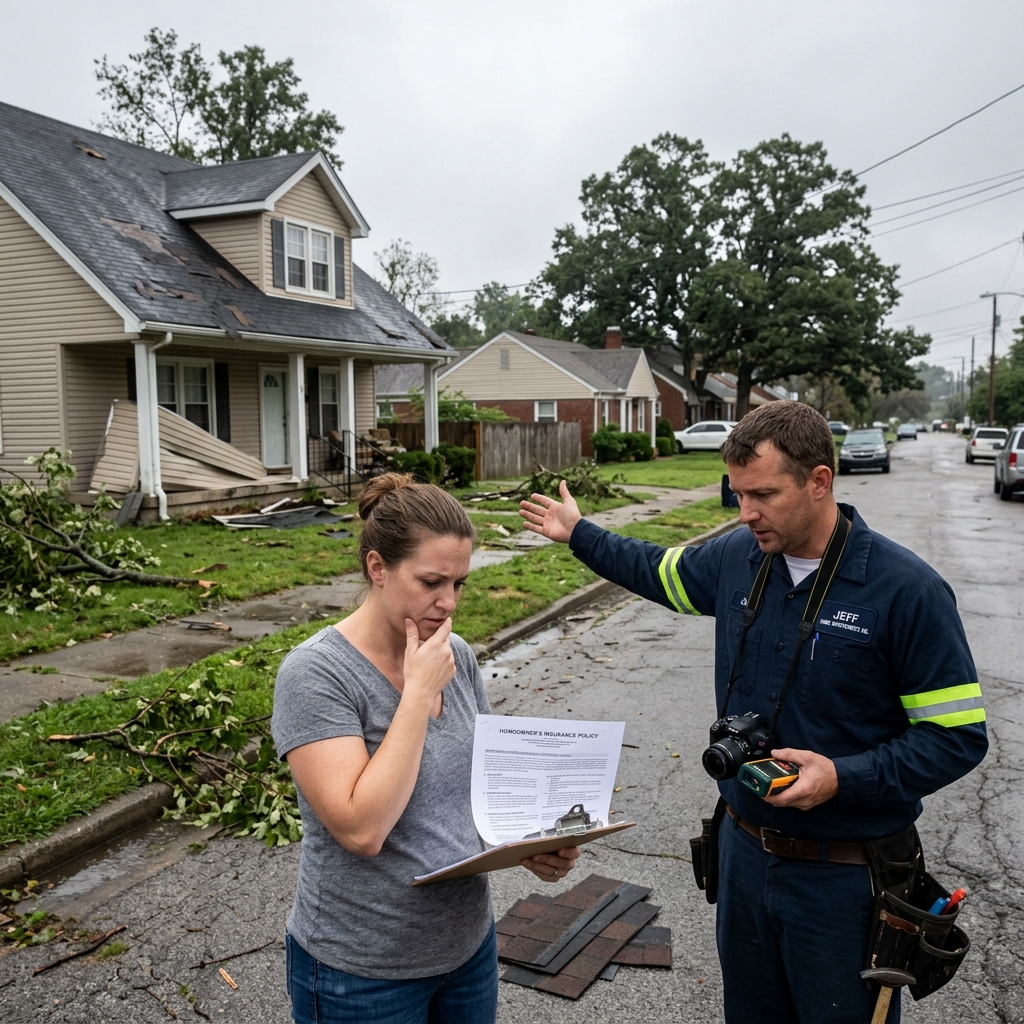
Local Roofing Expertise vs. Out-of-State Contractors in Kentuckiana

Why Kentuckiana Property Owners Need Local Roofing Experience

When your roof leaks during a spring thunderstorm or hail damages your siding, you need someone who understands the unique challenges of the Kentuckiana climate and can show up quickly with a real solution. This is where choosing a local roofing contractor makes all the difference.

At Jeff Home Improvements Inc., we’ve been serving the Louisville area and surrounding communities since 1989. Over three decades, we’ve learned exactly what Kentuckiana properties need to withstand our weather patterns, and we’ve built relationships with homeowners and commercial property managers who trust us to do the job right. When you work with us, you’re not dealing with a call center in another state or waiting weeks for a crew to arrive.

The decision between a local contractor and an out-of-state operation isn’t just about convenience. It’s about expertise, accountability, and getting fair pricing from someone who knows your area’s real costs and challenges.

Kentuckiana weather is unpredictable. We experience intense spring storms, ice accumulation in winter, and humidity that puts stress on roofing materials year-round. An out-of-state contractor may understand roof installation in a general sense, but they won’t have the regional knowledge that helps us anticipate problems before they happen.

Local contractors who’ve worked in this area for decades understand:

  • How our soil composition and foundation settling patterns affect roof stability
  • Which materials perform best in our humidity and temperature swings
  • The specific building code interpretations Louisville and surrounding jurisdictions enforce
  • Where insurance companies and inspectors are most likely to scrutinize work

When we inspect your roof, we’re not applying generic checklists. We’re drawing on thousands of roof inspections across Louisville homes and commercial buildings. We know which areas of the county tend toward ice damming, where wind uplift is most problematic, and which neighborhoods see more hail damage than others.

This local intelligence saves you money and headaches. A contractor unfamiliar with Kentuckiana might recommend expensive solutions to problems that don’t actually apply here, or miss early warning signs that a local eye would catch immediately.

Action step: Before contacting any roofer, ask them how long they’ve served the Louisville area and what specific challenges they’ve seen in your neighborhood.

Understanding the Local vs. National Contractor Divide

National roofing franchises have advantages at scale. They can buy materials in bulk, they have standardized processes, and they advertise heavily. But those advantages often don’t translate into better service for your specific home.

Here’s the fundamental difference: national contractors are built to maximize jobs per crew per month. Local contractors like us are built to maximize the quality of each individual relationship.

When a national company sends a crew to Kentuckiana, they’re working to a timeline set by corporate headquarters. If complications arise, they escalate to a regional manager who may never have visited Kentucky. A local roofing contractor deals directly with the customer, makes decisions on the spot, and stakes their reputation on every single job.

National companies also rotate crews constantly. You might meet one crew for your estimate and get a different crew for the actual work. There’s no accountability between the people who promised the job and the people doing it. We work with the same trusted teams across all our projects, so every crew member cares about your satisfaction because they work in this community.

Pricing also reflects this difference. Large national contractors have higher overhead and profit expectations. They’re answering to shareholders, not to neighbors who might see them at a local restaurant. When you get a quote from us, you’re paying for craftsmanship and materials, not corporate bureaucracy.

Action step: When comparing quotes, ask each contractor how long their crews have worked together and whether the same project manager will oversee your job from start to finish.

Our Commitment to Kentuckiana Weather and Building Codes

Louisville and the surrounding Kentuckiana area fall under specific building codes managed by local jurisdictions. Getting a permit approved and inspection passed requires intimate familiarity with how inspectors in this area interpret those codes.

We’ve worked with Louisville building officials long enough to understand their priorities and expectations. When we install a roof or complete exterior work, we know exactly what documentation they want to see, what photos they need, and what installation details will pass inspection the first time.

Out-of-state contractors often discover code issues mid-project, which delays completion and adds costs. We anticipate these requirements upfront and build them into our estimates and timelines.

Our team stays current on any code changes through our membership in industry organizations and our partnership with Owens Corning. We’re not guessing about current standards; we’re keeping pace with them.

The Kentuckiana climate also demands specific material choices and installation methods. In winter, ice dams form differently here than in drier climates. In spring, wind speeds and hail frequency require particular attention to roof deck attachment and impact-resistant materials. We factor these realities into every recommendation.

Action step: Ask any contractor you’re considering whether they’re familiar with the specific building code jurisdiction where your property sits, and request references from recent projects that required inspection and permit approval.

Response Time and Accessibility: A Clear Local Advantage

Storm season in Kentuckiana can create bottlenecks. When severe weather hits, dozens of properties get damaged simultaneously. National contractors manage these peaks by dispatching crews from wherever they’re available, sometimes pulling teams from other states. That means slower initial response and repair timelines that stretch into weeks.

We’re here. When a storm moves through Louisville, our crews are already in the area, we know exactly which neighborhoods were affected, and we can prioritize emergency repairs based on real risk to your home or business. We typically respond to storm damage calls within 24 to 48 hours, not weeks.

This matters more than many homeowners realize. Roof damage left unaddressed after a storm invites secondary damage from water intrusion. Every day your roof sits compromised increases the risk of interior damage, mold growth, and structural issues. Fast response protects your property and often prevents your insurance claim from getting complicated.

We also handle virtual consultations, which means you don’t need to wait around for someone to show up. We can assess many roofing concerns through a video call and provide preliminary guidance immediately. For situations requiring in-person inspection, we schedule appointments that fit your availability, not ours.

Action step: Ask potential contractors what their average response time is for storm damage calls and whether they offer virtual consultation options.

Quality Certifications and Our Owens Corning Platinum Status

Certifications matter because they reflect ongoing training, quality standards, and accountability. We’re proud to be an Owens Corning Platinum Preferred Contractor, a designation that puts us in the top tier of roofing contractors nationwide.

Achieving Platinum status requires:

  • Continuous education and training for our crews
  • Minimum production standards and quality metrics
  • Customer satisfaction scores that must remain high
  • Compliance with Owens Corning’s detailed installation specifications
  • Regular audits and performance reviews

This isn’t a one-time certification. We renew it annually, which means Owens Corning regularly evaluates our work and our processes. It’s third-party validation that we’re doing the job right.

When you use an Owens Corning Platinum contractor, your warranty coverage is often stronger than standard. You get manufacturer support backing your roofing system, not just the contractor’s promise. That’s real protection.

Many out-of-state contractors claim certifications they don’t actively maintain. They may have gotten certified years ago and never renewed. We actively invest in our certification because it demonstrates our commitment to quality and gives you concrete assurance that you’re working with a vetted professional.

Action step: Verify any certification a contractor claims by checking the manufacturer’s website directly. Ask when their certification was last renewed and what specific training their crews completed recently.

Storm Damage Restoration: We Know Our Region’s Risks

Spring severe weather and occasional straight-line wind events are part of living in Kentuckiana. When hail, high winds, or fallen trees damage your roof or siding, the repair process needs to happen quickly and be documented thoroughly for insurance purposes.

We specialize in storm damage repair across Louisville and the surrounding area. We understand which damage patterns insurance adjusters expect to see and how to document repairs in ways that facilitate faster claims processing. We’ve worked with hundreds of Kentuckiana homeowners through insurance claims, so we know how to navigate that process efficiently.

A contractor unfamiliar with insurance claims in this region might under-document damage, leading to claims disputes or denials. We photograph damage comprehensively, maintain detailed records, and communicate directly with adjusters to ensure repairs are approved and completed properly.

We also know the most common failure points in Kentuckiana roofs after storm events. Valley areas where water concentrates, flashing around chimneys and vents, gutter systems that weren’t reinforced properly, and roof decking weakened by previous minor damage. When we assess storm damage, we’re looking at your entire roofing system, not just the obvious spots.

Action step: If your property has storm damage, get an inspection from a local contractor before filing an insurance claim. We’ll document everything thoroughly and help ensure your claim is as complete as possible.

Pricing Transparency and Fair Local Estimates

You should never feel surprised by a roofing quote. We provide itemized estimates that break down materials, labor, timeline, and any warranty or service guarantees.

Local contractors have lower overhead than national chains. We don’t have corporate marketing budgets, multiple layers of management, or shareholder expectations. That efficiency translates into fair pricing that reflects the actual cost of quality materials and professional labor.

When you get a quote from us, you know what you’re paying for. We’ll explain material choices, discuss why we recommend certain options over cheaper alternatives, and address any questions about cost. If a cheaper estimate comes from a competitor, we can often explain specifically where the difference lies: cheaper materials, shortcuts in installation, or reduced warranty coverage.

National contractors often lead with aggressive, low-ball estimates, then discover “issues” during the job that require expensive change orders. By the time the work is finished, you’ve paid significantly more than the initial quote. That’s not how we operate. Our estimates include what the job actually requires, and we don’t nickel-and-dime you with surprise costs.

We also offer virtual consultations and instant estimates through our website, so you get pricing information without waiting for a contractor to show up. This transparency upfront saves everyone time and builds trust.

Action step: Request itemized estimates from any contractor you’re considering, and ask them to explain specifically why they recommend certain materials over alternatives.

Why We’re Your Best Choice for Roof Replacement

Whether you need a full residential roof replacement or storm damage repairs, choosing Jeff Home Improvements means getting a contractor who understands Kentuckiana, stands behind their work, and prioritizes your satisfaction over quick turnaround.

We’ve been in this business since 1989 because we do quality work and our customers trust us enough to refer us to their neighbors and friends. That’s not marketing talk; it’s the foundation of our business. We can’t afford to cut corners or disappear after the job is done, because we live in the same community we serve.

Here’s what you actually get when you hire us:

  • Local expertise and fast response times
  • Owens Corning Platinum certification and manufacturer-backed warranties
  • Crews who’ve worked together and know your area’s specific challenges
  • Transparent pricing with no surprise costs
  • Direct communication with project managers who are accountable for your satisfaction
  • Experience navigating Kentuckiana building codes and insurance claims

Out-of-state contractors might seem appealing because of big advertising budgets or slightly lower initial quotes. But when complications arise, when you need quick response, or when building inspectors have questions about your roof installation, you’ll wish you’d chosen someone local.

Our Track Record Serving Louisville Area Homeowners

For over three decades, we’ve built our reputation one satisfied customer at a time. We’ve replaced thousands of roofs across the Louisville area, installed countless siding and window systems, and handled emergency storm damage repairs that kept families safe during unpredictable weather.

Our customers come back to us for additional projects because they know we’ll treat their homes with care. They refer us to their families and neighbors because they’ve experienced our work and can speak to the quality. This isn’t paid marketing; it’s genuine trust built over years of consistent, professional service.

We’ve weathered recessions, supply chain disruptions, and market changes by staying focused on what matters: doing excellent work, keeping our customers informed, and solving problems with integrity. That steady approach builds loyalty, and our customer base reflects it.

When you check our reviews and references, you’ll notice a pattern. Customers mention responsiveness, professionalism, quality workmanship, and fair pricing. You won’t see complaints about surprise costs or crews that didn’t show up when promised. That consistency is what you’re paying for when you choose a local contractor with decades of history in this area.

Get Your Free Virtual Consultation with Our Team

When you’re ready to discuss your roofing or exterior needs, we offer virtual consultations and instant estimates that work around your schedule. You don’t need to wait for someone to show up or commit time to an in-person meeting before you understand what we’d recommend and what it costs.

Contact us through our website at https://jeffroof.com, describe your project, and we’ll connect you with a team member who can answer your questions and provide guidance specific to your situation. Whether you’re dealing with storm damage, planning a roof replacement, or upgrading your siding and windows, we’re ready to help.

We’re not just another roofing company. We’re your neighbors, your local contractors, and the team that’s been protecting Kentuckiana homes and businesses since 1989. When you work with us, you get the expertise of a company that knows this area inside and out, stands behind every project with manufacturer-backed warranties, and will be here to support you long after the work is finished.

Your roof is one of the most important investments in your property. Choose someone who understands Kentuckiana, cares about the quality of their work, and will be accountable for your satisfaction. That’s Jeff Home Improvements Inc.

Contact us today for a free in home, no obligation quote on your roof
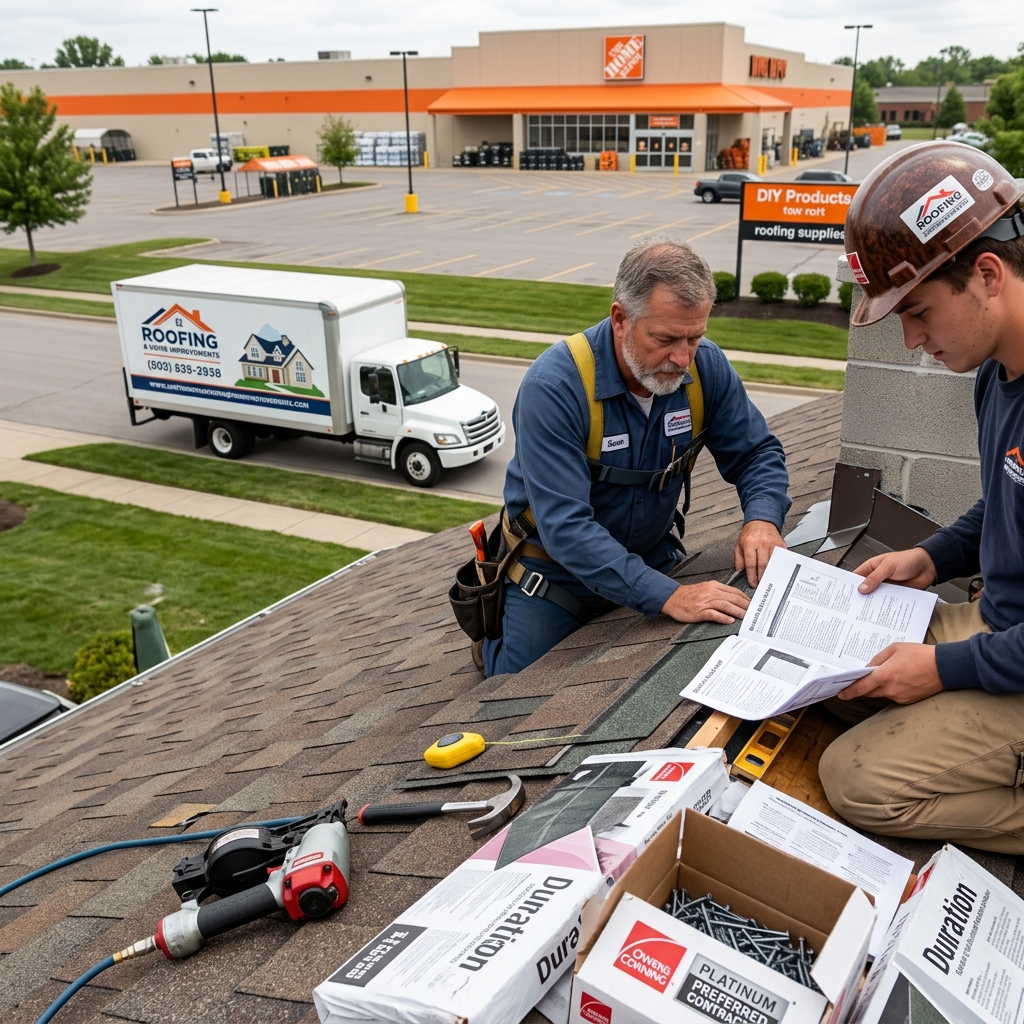
Get an Instant Roof Replacement Estimate with Our Virtual Consultation Tool

Why Getting a Fast Roof Estimate Matters for Your Timeline

Your roof doesn’t wait for convenient scheduling. When hail damage appears or you notice a leak after a storm, you need answers quickly to plan repairs, file insurance claims, or budget for replacements. We understand that delays cost you money and create uncertainty about your home or building’s protection.

A fast estimate gives you leverage. With numbers in hand, you can contact your insurance agent immediately, compare contractor options side by side, and start the actual work sooner rather than months from now. Property managers dealing with multiple units face even tighter pressure, since roof issues affect tenant satisfaction and liability exposure.

Getting an instant estimate also removes one major friction point from the decision process. Most people hesitate because they dread scheduling an appointment, waiting for a contractor to show up, and then sitting through a lengthy consultation. When you can see what we’ll charge and what we’ll fix in under an hour, you move from information-gathering to decision-making without the back-and-forth.

Actionable takeaway: If you’ve been delaying a roof assessment due to scheduling hassles, that’s exactly the problem our virtual tool solves. You get clarity today instead of pushing the decision into next month.

The Problem with Traditional In-Person Roof Inspections

Scheduling an in-person inspection sounds simple but rarely works that way. You coordinate with the contractor’s calendar, take time off work or plan around your availability, and then a single appointment gets postponed because of weather, emergencies, or overbooking. Even when it happens, the inspector spends 30 to 60 minutes on your property, and you still wait 3 to 5 business days for an official estimate.

This delay creates real friction, especially during storm season when demand surges. We’ve seen homeowners reach out to three or four contractors simultaneously just to get competing estimates within a reasonable timeframe. That’s exhausting and rarely produces better results, only more phone calls and duplicate site visits.

Weather complications add another layer. Inspectors can’t safely access roofs during rain, high wind, or icy conditions. If a storm just hit your area, you’re competing with dozens of other property owners for available inspection slots. Meanwhile, tarps remain temporary fixes, and water intrusion continues inside your walls.

There’s also the trust factor. Homeowners worry that in-home visits might trigger aggressive upselling or inflated estimates. You feel pressured to make decisions on the spot when you’d rather take time to think and compare options. Virtual consultations eliminate that pressure dynamic entirely.

Actionable takeaway: Skip the scheduling maze and avoid the pressure-sale environment. Request our virtual consultation instead of booking traditional appointments with multiple contractors.

How Our Virtual Consultation Tool Works

We’ve built our instant estimate process to be as frictionless as possible. Start by visiting our Instant Estimate page and providing your address and a brief description of your roof concern, whether that’s storm damage, visible deterioration, or planning for a future replacement. The tool uses your property information to gather data right away.

Next, you share photos or video from your property. Most customers can snap several clear pictures from ground level or a safe spot on their roof. If you’re not comfortable accessing the roof, photos from upper windows or your attic work too. Our team uses these images alongside aerial data (satellite imagery and weather records) to evaluate your roof’s current condition and identify damage.

Within hours, you’ll receive a detailed estimate via email that includes material costs, labor, timeline, and scope of work. The estimate breaks down exactly what needs repair or replacement and why. If you have questions, you can schedule a brief call with our team to discuss findings or clarify next steps. Many customers move straight to booking work after reviewing the estimate, while others use it to contact their insurance company or compare with one other contractor.

This approach respects your time while giving us the visual information we need to provide accurate pricing. You’re not blocked by calendar availability, and we’re not making decisions based on incomplete information.

Actionable takeaway: Stop accepting excuses about waiting weeks for an estimate. Our virtual process delivers results in hours, not days.

What Our Roof Assessment Includes

Our virtual roof assessment covers everything a thorough in-person inspection would identify, just faster and without the scheduling burden. We evaluate the overall condition of your existing roof, checking for missing or damaged shingles, worn flashing, and proper ventilation. We also note the age and type of your current roofing material, which directly affects replacement costs and material recommendations.

Damage assessment is central to the process. If you’ve experienced storm damage, hail, wind, or water intrusion, our inspection identifies the extent. We look for signs of ice dam formation, granule loss, curling shingles, and structural compromise. Our estimate documents which areas need repair versus full replacement, giving your insurance adjuster and you clear visibility into the problem.

We also assess related systems that impact roof longevity. That includes gutter condition, downspout functionality, soffit and fascia integrity, and attic ventilation. A roof replacement that doesn’t address underlying gutter problems or ventilation issues will fail prematurely. Our estimate reflects those interdependencies so you understand the full scope.

For commercial properties, our assessment includes roof access points, HVAC penetrations, membrane condition (for flat roofs), and load-bearing capacity considerations. We note fire ratings and building code compliance to ensure your replacement meets current standards.

The assessment also flags any unique challenges specific to your property. Steep pitch roofs, skylights, multiple penetrations, or architectural complexity all factor into timeline and cost, and our estimate calls those out explicitly.

Actionable takeaway: You receive a complete picture of what’s wrong and what needs to happen, not just a vague repair recommendation and a number.

Getting Your Estimate in Minutes, Not Days

Speed doesn’t mean guessing. Our process delivers fast results because we’ve streamlined the data collection and analysis workflow. Satellite imagery, weather records, and your photos combine to give us 80 to 90 percent of the information an on-site inspector gathers. We then apply our 30-plus years of roofing experience to convert that data into an actionable estimate.

Most customers complete the initial information submission in under 10 minutes. Photo uploads take another 5 to 10 minutes depending on file size and your internet connection. From that point, our team typically reviews your submission and generates an estimate within 2 to 4 hours. You receive the estimate via email with full pricing, material options, and next steps.

The speed opens up real possibilities. If a storm hits on Tuesday evening, you can have an estimate by Wednesday afternoon. That gives you time to contact your insurance adjuster the same day with concrete damage documentation. You can also reach out to other contractors immediately if you want competing quotes, rather than chasing appointment availability for another week.

For emergencies like active leaks or storm damage, we offer expedited estimates with same-day turnaround during business hours. Call our team directly for urgent situations, and we prioritize your submission.

Having an estimate in hand also accelerates the insurance claim process. Adjusters expect documentation, and a professional estimate from a certified contractor carries weight. You’re not asking for vague approval; you’re presenting a specific plan with pricing, materials, and timeline.

Actionable takeaway: Stop expecting to wait five business days for an estimate. We deliver yours before the weekend.

Why We’re Louisville’s Trusted Roofing Partner

We’ve served the Kentuckiana area since 1989, which means we’ve navigated every roof challenge this region throws at us. Winter ice dams, spring hail storms, summer heat stress, and the occasional tornado keep our team sharp. That experience translates directly into estimates that account for local weather patterns and your specific climate risk.

Our status as an Owens Corning Platinum Preferred Contractor matters too. Owens Corning doesn’t award that designation lightly. It requires consistent quality workmanship, customer satisfaction scores, and ongoing training. When you choose us, you’re getting a contractor backed by one of the roofing industry’s leading manufacturers and their warranty support.

We maintain strong relationships with local insurance adjusters, which streamlines the claims process for our customers. Adjusters know our estimates are realistic and our work meets or exceeds code requirements. That familiarity accelerates approvals and keeps projects on schedule.

Our family-owned structure means you’re not dealing with a call center or rotating teams. The same people who estimate your roof typically oversee the installation, ensuring consistency and accountability. You develop a relationship with actual decision-makers rather than service representatives reading scripts.

We also offer more than just roofing. Our residential and commercial services include siding installation, window replacement, and gutter systems. If your roof inspection reveals related exterior damage, we can provide bundled estimates and coordinate work efficiently. That one-stop-shop approach saves you time coordinating with multiple contractors.

Actionable takeaway: Choose a contractor with deep local roots and manufacturer recognition, not a franchise that staffs new people every season.

Common Roof Issues Our Estimates Address

Storm damage tops the list during spring and fall. Hail creates impact damage that often isn’t visible until water intrusion starts months later. High winds tear off shingles, expose underlayment, and can lift sections of the entire roof. Our assessment identifies both obvious damage and the subtle stress damage that compromises longevity.

Age-related deterioration affects roofs that have reached or exceeded their expected lifespan. Asphalt shingle roofs typically last 15 to 20 years, depending on climate and maintenance. After that, granule loss accelerates, shingles become brittle, and failure becomes inevitable. Our inspection determines whether repair or replacement makes financial sense.

Water intrusion appears in various forms. Attic staining reveals active leaks, while soft spots in drywall indicate long-standing moisture problems. Flashing failures at valleys and penetrations account for many slow leaks that homeowners discover only after significant interior damage. Our assessment pinpoints the source, not just the symptom.

Ice dam formation, especially common in our Kentucky winters, causes water to back up under shingles and into walls. This isn’t always a roofing problem, sometimes it’s a ventilation or insulation issue in the attic. Our virtual assessment asks questions that help us determine the actual cause and recommend the appropriate fix.

Improper ventilation reduces roof lifespan by trapping moisture and heat. Roofs with inadequate airflow experience premature shingle failure and structural wood decay. Our assessment notes ventilation adequacy and factors that into material recommendations.

For commercial properties, we encounter flat roof membrane failures, ponding water issues, and deteriorated caulking at seams and penetrations. These problems accelerate wear and require different repair strategies than pitched residential roofs.

Actionable takeaway: Don’t assume your roof just needs patching. Our assessment identifies the root cause, so your repair investment actually solves the problem.

Next Steps: Scheduling Your Virtual Consultation

Getting started takes one action: visit our Instant Estimate page and complete the initial information form. You’ll need your address, a brief description of your roof concern, and permission to use satellite imagery of your property. The form takes fewer than five minutes to complete.

After submission, gather clear photos of your roof if possible. Shoot from the ground, a safe vantage point, or even from an upper window if roof access isn’t comfortable. Include images of any visible damage, and capture wide shots that show overall roof condition. Include photos of gutters, downspouts, and fascia too. Email those images through the portal, or our team will request them if needed.

You can also leave notes in the submission about specific concerns. If you’ve noticed water stains inside, mention the location. If the damage is recent, describe what happened. These details help our team prioritize what to look for in the satellite and photo data.

Once we receive everything, we begin analysis immediately. Our team reviews materials, checks local building codes and weather history, and compares conditions against typical patterns for your neighborhood. We compile findings into a professional estimate document with line-item pricing, material options, labor breakdown, and timeline projections.

When your estimate is ready, we email it to you along with an invitation to schedule a brief call if you have questions. Some customers approve the estimate and request scheduling information right away. Others ask clarifying questions or want to discuss insurance coverage. We’re available to support whatever decision path makes sense for your situation.

Actionable takeaway: The first step is always the hardest. Get that form submitted today, and you’ll have a complete estimate by tomorrow.

Your Instant Estimate Leads to Quality Roof Replacement

An estimate is only meaningful if the contractor backing it delivers quality work. We don’t cut corners on materials or labor, and our roof replacement process follows manufacturer specifications and local codes precisely. Your instant estimate isn’t a low-ball quote to get you interested; it’s the actual price you’ll pay for quality craftsmanship.

When you approve an estimate and schedule work, we coordinate timing around your availability and weather conditions. Our crews arrive prepared with materials, equipment, and a clear work plan. Most residential roof replacements complete in one to three days, depending on size and complexity. We protect your property during the process, removing debris daily and leaving everything clean at the end.

We also stand behind our work. Every roof replacement comes with our workmanship warranty plus the manufacturer’s material warranty. If Owens Corning shingles fail during the warranty period, they cover replacement. If our installation has issues, we fix them at no cost. That dual protection gives you confidence in your investment.

Insurance claims integrate seamlessly into the process too. If your estimate supports a claim, we’ll work directly with your adjuster to coordinate inspections and approvals. Once the claim is approved, insurance typically pays us directly, reducing your out-of-pocket responsibility.

Your instant estimate removes the uncertainty from the roof replacement decision. You know costs, timeline, materials, and the exact scope of work before you commit. That clarity, combined with our reputation and warranty backing, makes choosing Jeff Home Improvements the logical next step for protecting your property.

Actionable takeaway: Request your instant estimate today. In a few hours, you’ll have the information needed to make a confident roofing decision.

Contact us today for a free in home, no obligation quote on your roof
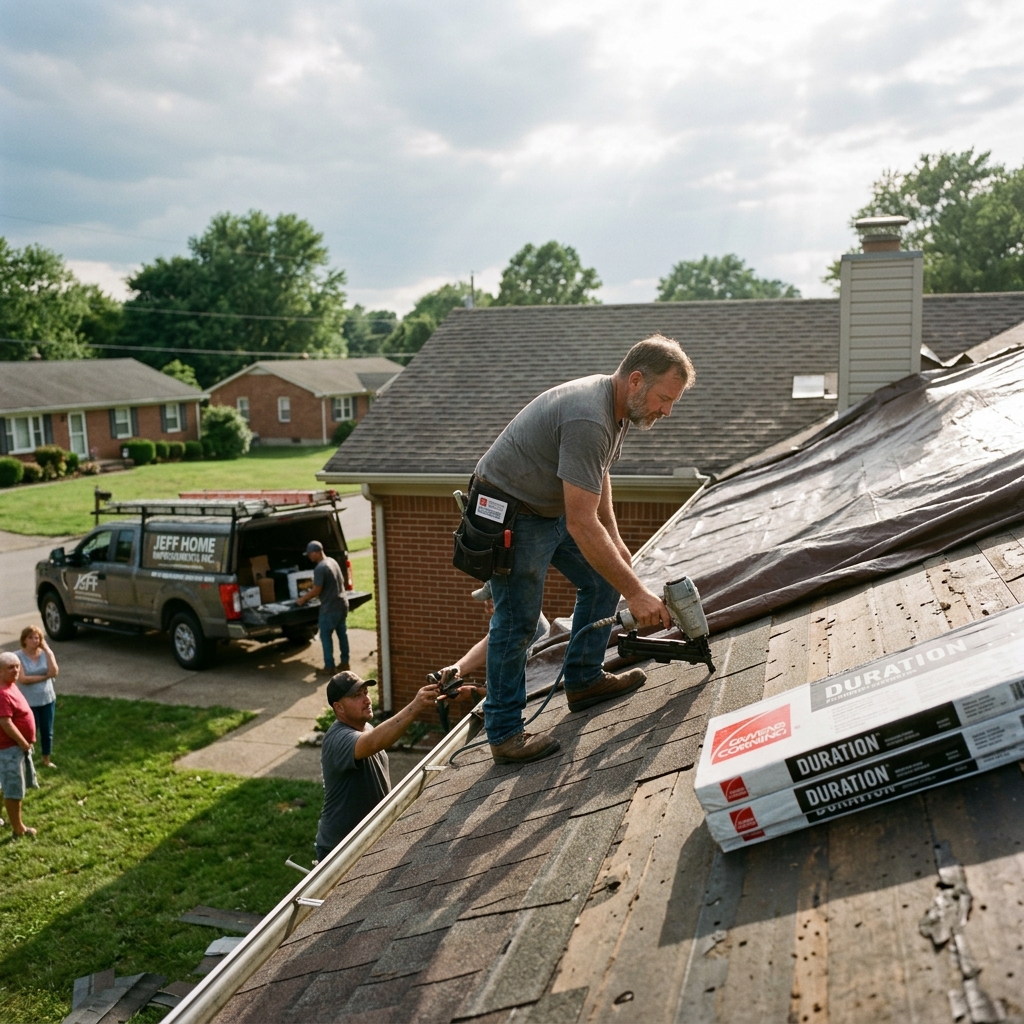
How to File a Roof Insurance Claim in Louisville: A Homeowner’s Complete Guide

When Storm Damage Strikes Your Louisville Home

Louisville’s spring and summer storms can cause significant roof damage in minutes. High winds, hail, and falling tree limbs damage shingles, create leaks, and compromise your home’s structural integrity. When this happens, most homeowners face a critical question: how do I get my insurance to pay for repairs?

The answer depends on several factors, including your policy terms, the type of damage, and how quickly you document and report the issue. We’ve worked with hundreds of Louisville-area homeowners through this process, and we know the path can feel overwhelming without expert guidance.

The sooner you act after spotting damage, the stronger your claim position becomes. Delays give insurers room to question whether the damage is recent or pre-existing, and they can weaken your case for full coverage.

Why Many Homeowners Struggle With Insurance Claims Alone

Insurance companies employ trained adjusters and use specific terminology that homeowners typically don’t understand. When you file a claim without professional support, you’re essentially negotiating against experienced specialists who evaluate claims daily.

Common mistakes we see include:

  • Submitting incomplete or blurry photos that don’t clearly show damage patterns
  • Accepting the insurance adjuster’s initial estimate without realizing it may undervalue repairs
  • Missing deadlines for filing or documentation
  • Overlooking coverage details that might apply to your specific damage type
  • Failing to obtain written repair estimates from licensed contractors before the claim hearing

Most homeowners also don’t realize that insurance companies sometimes issue estimates that fall short of actual repair costs. A contractor’s bid might exceed the insurer’s estimate due to labor, material sourcing, or structural complications discovered during the work.

Understanding What Your Roof Insurance Policy Actually Covers

Your homeowner’s insurance typically covers roof damage caused by sudden, accidental events like storms, hail, or falling trees. However, policies exclude damage from wear and tear, poor maintenance, or gradual deterioration.

Key coverage distinctions include:

  • Actual cash value (ACV): Pays for repairs minus depreciation based on roof age
  • Replacement cost value (RCV): Covers the full cost of replacing damaged materials, though some policies cap this at a stated limit
  • Named perils: Your policy specifies which events are covered (wind, hail, lightning, etc.)
  • Deductible: You pay this amount out of pocket before insurance pays anything

Many Louisville homeowners don’t review their policy language until after damage occurs. The time to understand your coverage is now, before a storm hits. Check whether your roof has an age-based depreciation schedule and whether your deductible is per-incident or an annual aggregate.

Also confirm what “full replacement” means in your policy. Some insurers include a “roof cap” that limits payouts to a percentage of your home’s insured value, not the actual replacement cost.

The Critical First Steps After Roof Damage Occurs

Immediately after a storm or when you discover damage, take these steps:

Document everything with photos and video. Use your phone to capture wide shots showing the overall damage pattern, then zoom in on specific areas like missing shingles, cracks, or punctures. Include images showing the surrounding landscape for context, and photograph the damage from multiple angles. Timestamp matters, so take photos the same day you discover the damage.

Contact your insurance company promptly. Most policies require you to report damage within a specific timeframe (often 30 days, but check yours). Don’t delay hoping the problem will resolve itself. A formal claim start date matters for documentation purposes.

Secure temporary repairs to prevent further damage. If weather permits, tarping or boarding damaged areas shows your insurer you’re acting responsibly. Keep all receipts and photos of temporary work, as these costs may be reimbursable.

Do not authorize full repairs until your claim is approved. Starting major work before the adjuster evaluates the damage can complicate your claim. We recommend waiting for the adjuster’s assessment, but temporary leak prevention is always appropriate.

How We Document and Present Your Claim for Maximum Approval

We’ve processed hundreds of roof insurance claims alongside homeowners, and we’ve learned exactly what documentation insurers want to see. Our approach uses professional-grade assessment and presentation that strengthens your position before the claim hearing.

When you contact us after roof damage, we conduct a thorough roof inspection using aerial photography and detailed close-ups. We document damage location, extent, and cause with the specificity that insurance adjusters expect. Unlike smartphone photos, our documentation includes measurements, clear damage patterns, and professional context.

We then prepare a comprehensive estimate that accounts for all visible damage plus potential issues discovered during repair assessment. This estimate becomes your baseline for comparing against the insurance company’s offer. When estimates differ significantly, we provide detailed breakdowns explaining cost variations due to labor, material sourcing, or building code requirements.

Having a licensed contractor’s written estimate in hand before your claim hearing gives you credibility. Insurers take professional assessments seriously, especially when they come from established contractors with verifiable credentials.

Working With Your Insurance Adjuster: What to Expect

After you file your claim, the insurance company assigns an adjuster to assess the damage. This person represents the insurer’s interests, not yours. Understanding their role helps you navigate the process professionally.

The adjuster will schedule an inspection, typically within a few days. During this visit, they examine your roof, take photos, measure damage, and assess repair costs using their own estimate software. They may ask questions about when you first noticed damage and whether you’ve had prior claims.

Be honest and factual in all conversations with the adjuster. Provide them with your own contractor’s estimate and explain any cost differences. If the adjuster’s estimate seems too low, ask them to itemize their calculations so you can identify specific discrepancies.

Keep records of all communication: emails, call dates, adjuster names, and claim numbers. If you disagree with their estimate, you have the right to request a second opinion or enter the claim dispute process outlined in your policy.

Common Denial Reasons and How to Avoid Them

Insurance claims get denied or underpaid for preventable reasons. Knowing these pitfalls protects your claim from the start.

Pre-existing damage: Insurers may deny claims if they determine damage occurred before your policy started or resulted from prior storms you didn’t report. Document your roof’s condition when you purchase your policy, and report all damage promptly.

Lack of maintenance: If your roof shows signs of neglect (missing shingles, clogged gutters, moss growth), insurers may reduce payment by claiming you failed to maintain it. Regular maintenance protections like gutter cleaning and minor repairs help demonstrate responsible ownership.

Insufficient documentation: Blurry photos or vague damage descriptions make claims harder to prove. Professional photographs showing clear damage patterns eliminate this objection.

Wrong damage category: Filing under “weather damage” when the adjuster determines the cause was impact damage (fallen limb) could delay processing. Let your adjuster determine the cause unless you have clear evidence otherwise.

Missed deadlines: Failing to report within your policy’s required timeframe may void coverage entirely. File immediately when damage occurs.

Inaccurate claim filing: Omitting rooms, roof sections, or damage types means those issues won’t be covered. List everything during your initial claim conversation.

Why Partnering With Jeff Home Improvements Strengthens Your Claim

Our 37 years serving the Louisville and Kentuckiana area as an Owens Corning Platinum Preferred Contractor gives us deep experience with local weather damage patterns and regional building codes. We understand how Louisville’s spring storms affect roofing systems and what documentation insurers expect.

When you work with us, we handle the technical aspects of claim preparation so you can focus on your family. We document damage professionally, provide detailed repair estimates that account for all variables, and communicate directly with insurers on your behalf. This partnership approach removes the confusion and complexity most homeowners face alone.

We also help you understand the gap between insurance estimates and actual repair costs. When an adjuster’s offer falls short, we explain the discrepancy and help you pursue additional coverage. Our reputation for honest, detailed work gives insurers confidence in our estimates, which strengthens your negotiating position.

We also guide you through roof repair vs full replacement decisions when damage is partial, helping you understand whether insurance will cover patches or if full replacement makes financial sense long-term.

The Complete Claim-to-Repair Timeline You Can Expect

A typical insurance claim moves through several phases. Understanding this timeline helps you plan repairs and manage expectations.

Days 1-3: File your claim, document damage, and contact contractors for initial assessments. Secure temporary repairs if needed.

Days 3-10: Insurance adjuster schedules and completes their inspection. You submit your contractor’s estimate and any additional documentation.

Days 10-20: The insurance company reviews the adjuster’s report and your documentation, then issues their initial estimate and check (or denial).

Days 20-30: If you disagree with their estimate, you can request a second opinion or dispute the assessment. If you accept, contractors begin scheduling repairs.

Days 30-45: Repairs begin and typically complete within one to three weeks, depending on weather and material availability.

Days 45+: Final inspection and claim closure occur after you verify repairs meet insurance standards.

Entire process from damage to completion often takes 6-8 weeks. Louisville weather can slow this timeline, especially if additional storms occur or supplies face delays.

Next Steps: Getting Your Roof Restored Quickly

If you’ve experienced storm damage or discovered roof issues in the Louisville area, contact us for a free assessment. We’ll document your roof’s condition, explain your options, and guide you through the insurance claim process without pressure.

You can reach us through our website at https://jeffroof.com to request a virtual consultation and instant estimate, or call for a same-day inspection if damage is severe. We work directly with insurance adjusters and handle the documentation that strengthens your claim position.

The key is acting fast. Storm damage claims have time-sensitive requirements, and early professional documentation makes the difference between full coverage and partial payment. Let’s protect your home and your wallet by getting your claim handled right the first time.

For further reading: Storm damage repair.

Contact us today for a free in home, no obligation quote on your roof
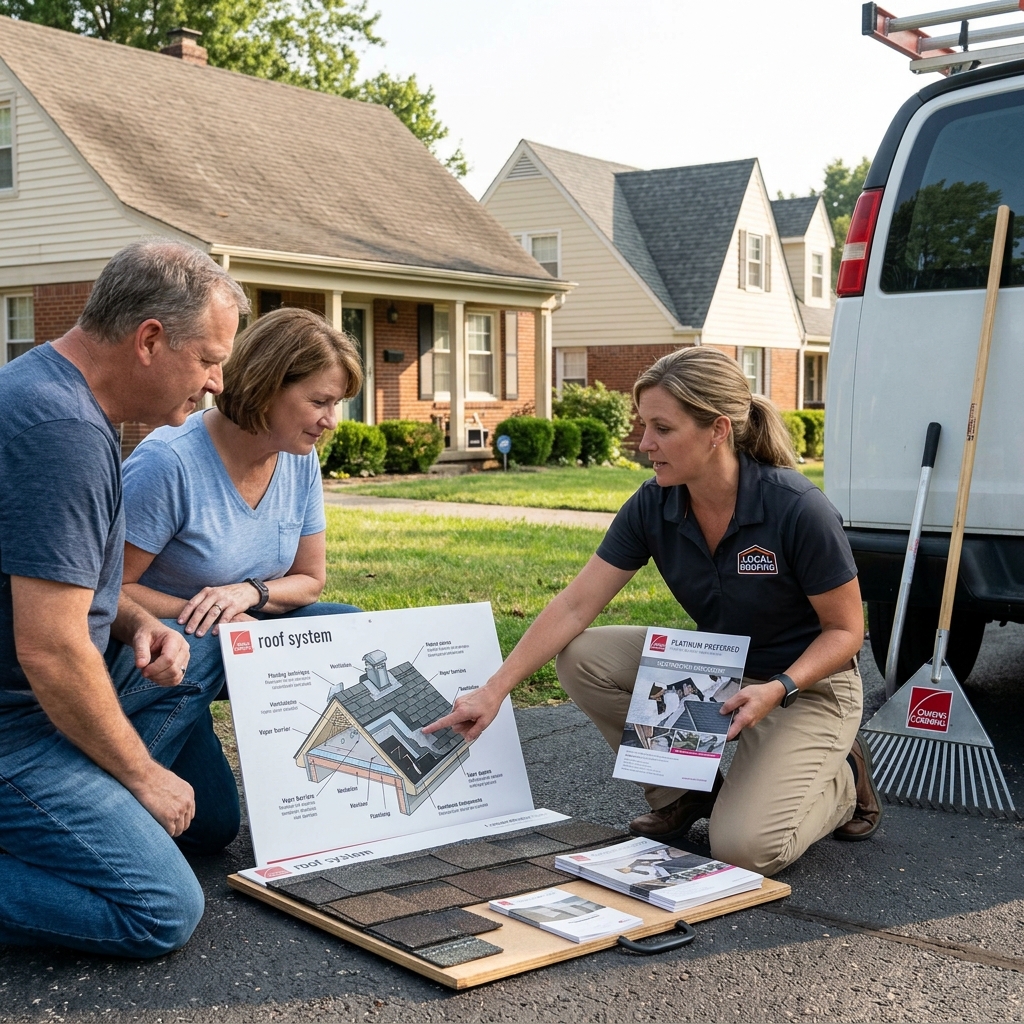
Top 5 Strategies for Minimizing Business Disruption During Commercial Roof Replacement

Understanding the Cost of Roofing Downtime for Your Business

Commercial roof replacement is one of those necessary investments that every building owner dreads. You know the work has to happen, but the thought of noise, debris, restricted access, and potential interruptions to daily operations can make you hesitate. The good news: with the right strategy and contractor partner, you can keep your business running smoothly while your roof gets the attention it needs.

At Jeff Home Improvements Inc., we’ve helped Kentuckiana business owners and commercial managers navigate commercial roof replacements for nearly four decades. We understand that your bottom line depends on keeping operations intact. That’s why we’ve developed proven strategies to minimize disruption while delivering the quality your building deserves.

When we talk to commercial clients, many focus only on the material and labor costs of roof replacement. They often overlook the real expense: lost productivity and operational disruption.

Consider a mid-sized office building. If roof work forces you to relocate staff, lose HVAC access due to roofing activity, or deal with noise that disrupts client meetings, the costs add up quickly. A retail space losing customer foot traffic during renovation week. A warehouse unable to receive shipments while heavy equipment operates on the roof. A professional services firm dealing with uncomfortable working conditions that affect employee morale.

The financial impact includes:

  • Lost revenue from reduced capacity or customer avoidance
  • Employee productivity loss due to noise, heat, or displacement
  • Potential overtime costs if staff must work shifted hours
  • Client dissatisfaction and reputational risk
  • Emergency response costs if unexpected issues arise mid-project

Research in the commercial real estate sector shows that every day of operational disruption can cost small to mid-sized businesses anywhere from $500 to $5,000, depending on the operation type. For a two-week roof replacement without proper planning, that’s a significant hidden expense layered on top of the actual roof investment.

The real question isn’t “How much does this roof cost?” It’s “How much does this roof cost if we lose two weeks of normal operations?” Once you frame it that way, the value of planning becomes crystal clear.

Why Professional Planning Prevents Operational Disruption

The difference between a smoothly executed roof replacement and a chaotic one almost always comes down to planning before the first nail is hammered.

We’ve observed a pattern over the years: contractors who rush into projects without detailed site planning create unnecessary friction. They haven’t identified rooftop access points, evaluated traffic patterns, communicated with building occupants, or built flexibility into their timeline. The result? Surprises emerge daily, timelines slip, and your business absorbs the impact.

Professional planning addresses the core question: “How do we complete this work efficiently while keeping your building operational?”

This requires several elements working together:

  • Site assessment before scheduling: We evaluate your roof, building layout, access points, and surrounding operations to identify potential friction points.
  • Customized project sequencing: Rather than applying a one-size-fits-all approach, we structure the work around your specific business needs.
  • Clear timeline expectations: You know exactly when noise will occur, when access will be limited, and when normal operations resume.
  • Contingency buffers: Weather happens. Unexpected structural issues surface. Professional planners build realistic schedules that account for variables.
  • Communication infrastructure: Regular updates keep your team aligned and prevent surprises.

When we plan a roof replacement, we’re not just scheduling work days. We’re designing the entire project to protect your business continuity. That’s the distinction between standard contractors and partners who understand commercial operations.

Strategy 1: Phased Roofing Approach for Continued Operations

Many building owners assume roof replacement must happen all at once, resulting in maximum disruption for a fixed period. That’s not always the case, and we often recommend breaking the work into phases.

Here’s how phased roofing works in practice: Rather than replacing the entire roof simultaneously, we section the building into zones. We complete one zone fully before moving to the next, allowing normal operations to resume in completed sections while work continues elsewhere.

For a 40,000-square-foot commercial building, that might look like this:

  • Phase 1 (Week 1-2): East section of roof. West side operations continue normally; minimal noise in main building areas.
  • Phase 2 (Week 3-4): North section. East section now protected; North-facing offices experience activity, but two-thirds of building unaffected.
  • Phase 3 (Week 5-6): West and south sections complete the project.

This approach delivers several advantages:

  • Staged financial investment: You’re not paying the full project cost upfront; invoicing aligns with completed phases.
  • Reduced operational impact: At any given time, only one building section experiences active work.
  • Easier staff coordination: Employees know which week their area will be affected and can plan accordingly.
  • Quality assurance: Completing one phase fully before moving on allows us to inspect and address any issues before moving the crew.
  • Revenue continuity: For retail or hospitality operations, customer-facing areas can remain operational throughout most of the project.

The trade-off: phased work typically extends the overall timeline by 2-4 weeks compared to a single mobilization. For most commercial operations, that’s a worthwhile exchange for reduced disruption. Not every building is a candidate for phasing (very small roofs, for instance, might finish faster as one project), but discussing this option during planning often reveals it’s the better path.

Strategy 2: Scheduling Around Your Peak Business Hours

Timing isn’t just about picking a convenient month. It’s about aligning roofing activity with your lowest-traffic hours.

A professional services firm’s traffic peaks mid-morning and early afternoon. Roofing crews should start before dawn and focus on the loudest work during lunch hours and late afternoon. A retail location sees customer flow increase after 10 a.m.; early morning work with noise-mitigation measures during opening hours makes sense.

We work with your team to map your actual operational rhythm. This isn’t about assumptions. We ask:

  • When does customer traffic peak?
  • When are employee focus hours critical?
  • Are there specific days (Friday drop-off, Monday startup) that are off-limits?
  • Do you have seasonal fluctuations?
  • Are there client presentations or events scheduled during the project window?

Once we understand your rhythm, we schedule accordingly:

  • Loud work phases (tear-off, debris removal, structural repairs) cluster during lower-traffic windows.
  • Quieter phases (material installation, finishing) can flex during normal hours.
  • Crew arrival and departure schedule avoids your peak congestion times.
  • Material delivery times prevent parking lot complications.

A manufacturing facility we worked with in Louisville had strict shift changes at 6 a.m., 2 p.m., and 10 p.m. We scheduled our noisiest roofing work between 9 a.m. and 1 p.m., in the window after first shift ended and before second shift peaked. The two-week project was barely noticed by production teams.

Strategic scheduling requires flexibility and real coordination, not just project management software entries. It’s the difference between a contractor who fits your building into their schedule and a partner who fits the project to your operations.

Strategy 3: Coordinated Communication and Employee Preparation

Disruption isn’t just physical. Uncertainty and lack of communication amplify the experience of disruption.

An unprepared staff dealing with unexpected noise, restricted hallway access, or surprise access points experiences far more disruption than a prepared staff dealing with identical conditions. Communication transforms chaos into managed expectations.

Our process includes:

  • Pre-project briefing with your team: We meet with facility managers, department heads, or employee representatives to walk through what will happen, when, and what we’ll need from them.
  • Detailed information packets: We provide written schedules, contact information, access instructions, and emergency protocols for your team to review and share.
  • Weekly updates during active work: Regular check-ins keep you informed of progress, any changes to the schedule, and upcoming milestones.
  • Dedicated project contact: Your team has one primary contact for questions or concerns, not a rotating roster of sub-contractors.
  • Noise mitigation explanations: We explain why certain phases require noise, how long they’ll last, and what we’re doing to minimize impact.

Consider how differently employees experience a week when they’ve been told “Thursday will be loud due to old roofing tear-off, 8 a.m. to 4 p.m., then we’ll switch to quiet installation work,” versus a week where they simply hear unexpected hammering with no context.

Small operational details matter too. We coordinate:

  • Where crews enter and exit (not through your main lobby)
  • Parking arrangements for our vehicles and material deliveries
  • Restroom access for our crew
  • Weather contingency communication
  • Safety protocols for your team if rooftop access is involved

This level of coordination prevents the day-to-day friction that turns a project into an unwelcome intrusion. Your team isn’t scrambling to accommodate us; we’ve already accommodated them.

Strategy 4: Weather-Dependent Project Timing and Flexibility

Kentucky weather is unpredictable. We can’t control it, but we can plan around it intelligently.

A roofing project impacted by rain or extreme heat costs more than scheduled. Bad weather forces:

  • Work stoppages (you can’t install certain roofing materials in rain or extreme heat)
  • Extended timelines (the project stretches from two weeks to three or four)
  • Crew sitting idle or returning multiple times (driving labor costs)
  • Uncertainty for your business (unclear when the project actually ends)

Smart scheduling builds in flexibility without guaranteeing excessive downtime. Here’s our approach:

Seasonal selection: We recommend scheduling roof work during Kentucky’s more stable weather windows. Spring (April-May) and early fall (September-October) offer the most reliable conditions. We avoid high-risk periods like summer thunderstorm season or winter snow/ice risks.

Weekly weather monitoring: As the project approaches, we monitor the 10-day forecast and adjust the schedule if significant rain is predicted. Rather than pushing forward through poor conditions, we shift work to available days.

Built-in buffer days: Our timeline includes 2-3 extra days factored in for legitimate weather delays. Your committed completion date accounts for realistic Kentucky conditions; we’re not promising an impossible schedule.

Flexible crew deployment: Some work can proceed in light rain (interior preparations, material staging). Other work requires dry conditions. Our crew knows how to maximize productivity while respecting material requirements.

This isn’t an excuse for delays. It’s realistic planning that respects both roofing best practices and your business needs. A project that completes on week 3 instead of week 2 due to two rain days is far better than a project that stretches to week 5 because we didn’t plan for weather realistically.

Strategy 5: Post-Project Inspection and Rapid Restoration

The project isn’t complete when the last shingle is installed. Rapid restoration and thorough inspection protect both your building and your operations.

Our post-project process includes:

  • Magnetic debris sweeps: We thoroughly inspect the entire roof and surrounding areas for any stray fasteners, metal pieces, or debris that could damage equipment or create hazards.
  • Ground-level inspections: We walk the perimeter, parking lot, and adjacent landscaping to ensure no material debris remains.
  • Interior inspections: We check building interiors for dust, debris, or any damage that may have occurred during work.
  • Drainage system flush: New roofing occasionally creates debris in gutters and downspouts. We clear these and ensure water flows properly.
  • Documentation and warranty review: We provide detailed documentation of completed work, materials used, and your warranty coverage. This becomes your reference for future maintenance.
  • Quick turnaround on final walkthrough: Rather than disappearing for weeks, we schedule your final walkthrough within 2-3 days of project completion, address any minor touch-ups immediately, and close out the project.

One often-overlooked detail: parking lot restoration. If our equipment or material staging damaged parking surfaces, we coordinate repairs quickly to restore that space to your team. It’s a small detail that signals whether a contractor respects your overall operations.

The goal of this phase is simple: clear visual evidence that the project is truly complete, your building is secured with a new roof, and your operations can fully resume without wondering about hidden debris or incomplete details.

How Jeff Home Improvements Minimizes Your Business Disruption

For nearly 40 years, we’ve partnered with Kentuckiana commercial property owners navigating roof replacement. What we’ve learned is that minimizing disruption isn’t accidental. It’s the result of intentional planning, experienced crews, and genuine commitment to understanding your business.

Here’s what sets our approach apart:

Our Owens Corning Platinum Preferred Contractor status means we’re held to rigorous standards for quality, safety, and customer communication. That’s not just certification language; it’s accountability.

Our commercial roofing experience isn’t limited to residential properties. We understand the unique requirements of office buildings, retail spaces, warehouses, and multi-unit commercial structures. We know that commercial operations can’t simply shut down; they need strategic project management.

We offer virtual consultations and instant estimates, which means your team doesn’t need to spend hours coordinating in-person meetings. We can review your building, discuss your specific concerns, and deliver a customized timeline proposal quickly.

Our team understands Kentuckiana’s climate and seasonal patterns. We’re not a national franchise applying generic timelines. We’ve replaced thousands of roofs in this region; we know Louisville summers, spring storms, and fall conditions intimately. Our scheduling reflects that local expertise.

We maintain detailed commercial roof maintenance plans that help extend your roof’s service life and catch minor issues before they become major repairs. This forward-looking approach reduces emergency disruptions down the road.

When we take on your commercial roof replacement, we’re not just replacing materials. We’re protecting your business continuity while we upgrade your building’s protection. Those two goals drive every decision we make.

Comparing Our Approach to Standard Roofing Contractors

Not all commercial roofing contractors operate with the same commitment to disruption minimization. Here’s how our approach differs:

Standard contractors often operate on a fixed schedule regardless of your business rhythm. “We’ll be there weeks 3 and 4 of June” becomes their timeline, with little adjustment for your peak operations. You adapt to their schedule.

We customize the schedule to your operations. We ask questions about your business, peak times, seasonal fluctuations, and employee needs. Your operations shape our timeline, not the reverse.

Standard contractors may minimize communication until issues arise. You’re left wondering what’s happening, when disruption will peak, and whether unexpected problems are developing.

We maintain regular check-ins and proactive updates. You always know what’s happening, what to expect next, and how the project is tracking against the plan.

Standard contractors treat weather delays as an excuse for extended timelines. “The project will take however long it takes” becomes their answer, leaving you uncertain about your actual disruption window.

We build realistic timelines with weather buffers, so unexpected rain doesn’t cascade into weeks of additional disruption. We’ve planned for Kentucky conditions.

Standard contractors finish the job and move to the next project. You’re left managing any final details, debris, or questions.

We complete thorough post-project inspection, debris removal, and documentation, then schedule a final walkthrough to confirm you’re satisfied. The project truly ends when you confirm completion, not when our trucks leave.

Standard contractors may view commercial work as a job, plain and simple.

We view it as a partnership. Your business success matters to us because our reputation depends on completing projects that keep your operations running smoothly. That’s fundamentally different.

Why We’re Your Best Choice for Commercial Roof Replacement

Choosing a contractor for commercial roof replacement is choosing a partner who will directly impact your business operations during a significant project. That decision deserves careful thought.

We’re your best choice for several concrete reasons:

Proven track record in Kentuckiana: Nearly four decades of satisfied commercial clients in the Louisville area isn’t marketing language. It’s evidence that we consistently deliver on the promise of quality work with minimal disruption.

Owens Corning Platinum Preferred Contractor status: This certification means we meet rigorous standards for material quality, installation expertise, and customer communication. It’s third-party validation of our commitment to excellence.

Comprehensive service scope: Whether you need complete commercial roof replacements, storm damage repair, or exterior upgrades, we handle the full spectrum of your building’s exterior needs. That means one coordinated contractor rather than juggling multiple vendors.

Experience with disruption-sensitive projects: We’ve worked on active office buildings, operating retail locations, functioning warehouses, and multi-unit complexes where every day of downtime costs money. We understand the stakes.

Local expertise: We know Louisville’s climate, seasonal weather patterns, permitting processes, and building characteristics. We’re not applying a national playbook; we’re using regional expertise built over decades.

Transparent communication and realistic planning: We don’t promise impossible timelines or surprise you with unexpected costs. We communicate clearly about what to expect, how long it will take, and what your investment includes.

Dedicated project management: Your project isn’t one of dozens managed by a rotating roster of coordinators. You have a clear point of contact who understands your specific building, business needs, and timeline.

Rapid response and flexibility: If a weather event or unexpected structural issue emerges, we have the team capacity and expertise to respond quickly and adjust plans without derailing the entire project.

When you partner with us for your commercial roof replacement, you’re not just getting a new roof. You’re getting a contractor who prioritizes keeping your business running smoothly while we upgrade your building’s most critical protection system. That’s the difference between a contractor and a true partner.

Ready to discuss your commercial roofing project? We offer free virtual consultations and instant estimates. Contact us through our website or call today to talk through how we can minimize disruption while delivering the quality roof your building needs.

Contact us today for a free in home, no obligation quote on your roof
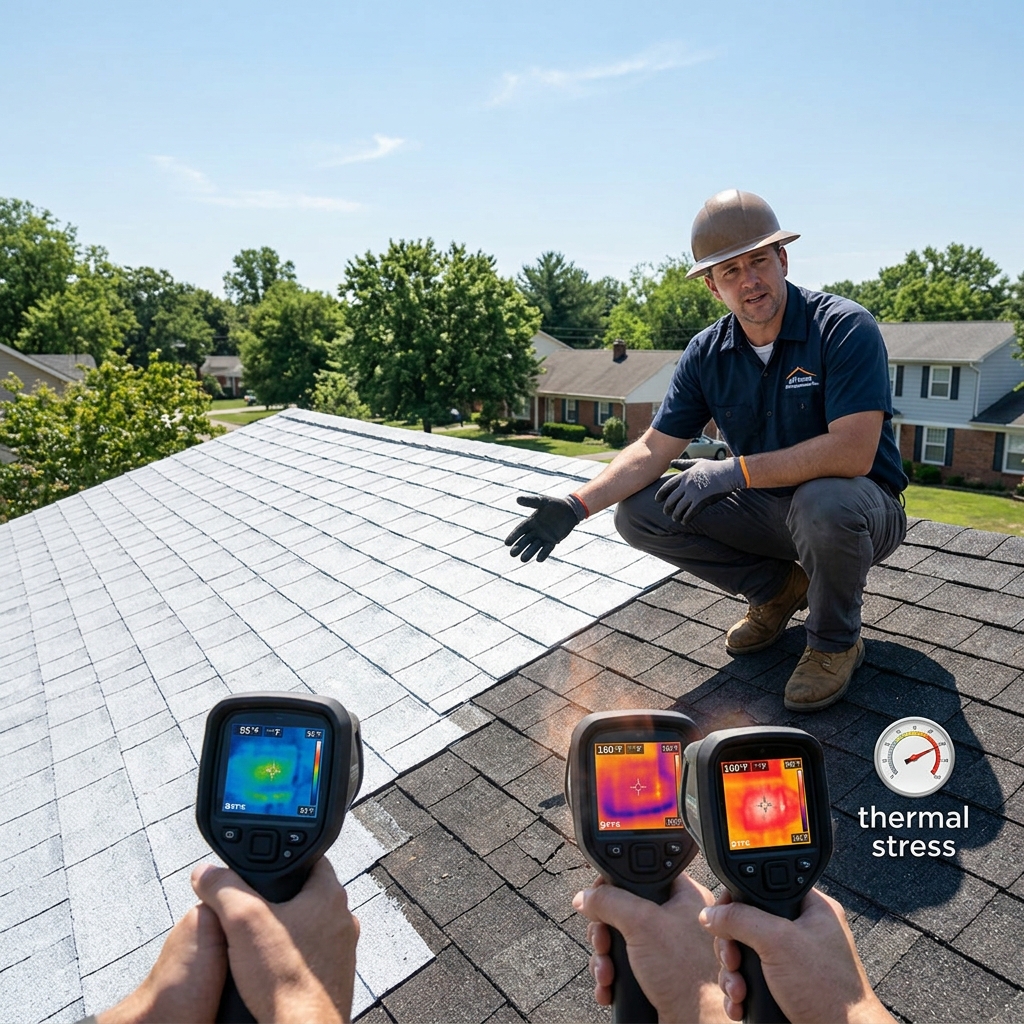
Request Estimate