Blog

Archive for Announcements – Page 4

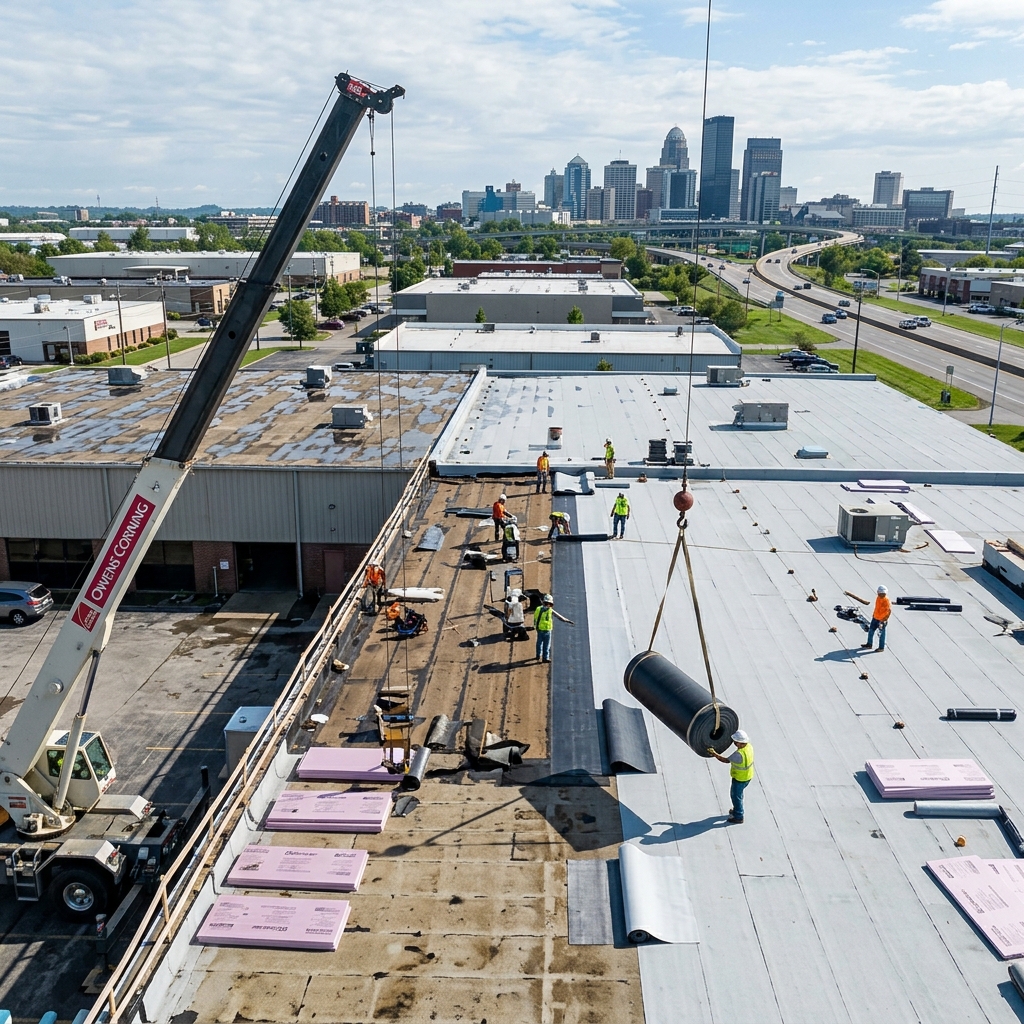
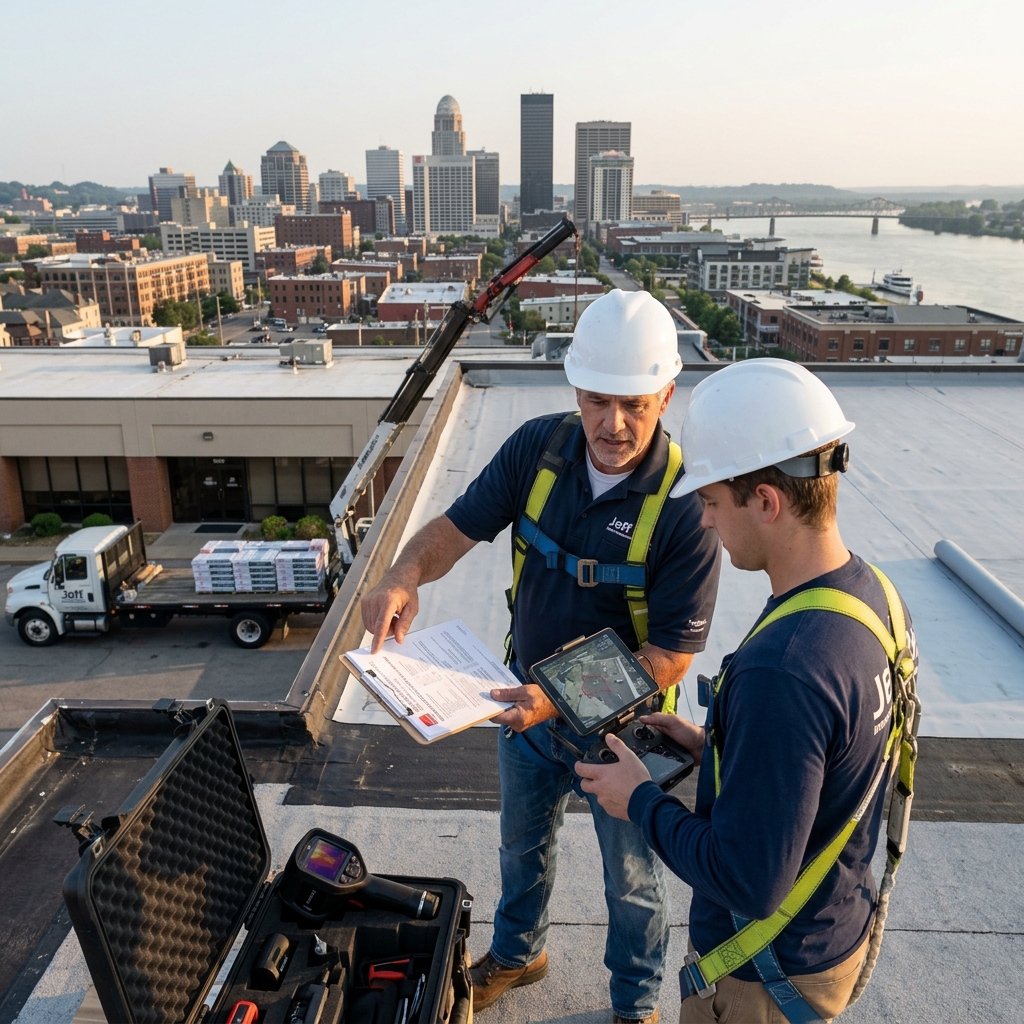
Commercial Roofing Contractors Louisville Businesses Trust for Storm Damage

Why Louisville Businesses Need a Certified Roofing Partner

Your commercial roof is one of your biggest assets and one of your largest potential liabilities. A failing roof doesn’t just leak water into your facility—it disrupts operations, damages inventory, jeopardizes employee safety, and eats into your bottom line. Louisville’s unpredictable weather, from spring thunderstorms to occasional hail events, puts commercial properties under constant stress.

At Jeff Home Improvements Inc., we’ve spent over 35 years protecting Louisville and Kentuckiana businesses from roofing failures and storm damage. We know the local climate, the building codes that matter in Kentucky, and the difference between a quick patch and a solution that lasts decades. Whether you need emergency storm repairs or a planned roof replacement, our team understands that downtime is money lost and quality is non-negotiable.

Not every roofing contractor is equipped to handle commercial properties. Residential roofs and commercial roofs operate under different demands. Your commercial roof may span thousands of square feet with complex drainage systems, multiple HVAC units, and load-bearing requirements that demand precision.

Working with an uncertified contractor creates real risk. You might face incomplete work, voided manufacturer warranties, code violations that complicate future permits, or insurance claims denied because the work wasn’t performed by a licensed professional. Louisville’s building inspectors require proof of proper installation, and cutting corners now means liability later.

We’re an Owens Corning Platinum Preferred Contractor, which means we’ve met rigorous standards for training, equipment, and customer service. This certification requires us to stay current on evolving materials and best practices. When you hire us, you’re hiring a contractor that manufacturers trust and that your insurance company recognizes. Our credentials protect your investment and your peace of mind.

What to do next: Ask any roofing contractor for proof of licensing, insurance, and manufacturer certifications before signing a contract. Request references from other commercial clients they’ve served in the past two years.

The Hidden Costs of Delaying Commercial Roof Repairs

Business owners often postpone roof work when the immediate crisis passes. A small leak gets patched. A few shingles get replaced. The roof “seems fine” for now. This thinking can cost you tens of thousands of dollars.

Here’s what typically happens: A minor leak in spring becomes a structural problem by fall. Water infiltrates the insulation, reducing its effectiveness and driving up heating and cooling costs. Mold develops in the attic or walls, creating health hazards and triggering expensive remediation. The longer water sits, the more it compromises the decking and the trusses underneath. What started as a $5,000 repair becomes a $50,000 replacement.

There’s also the operational cost. A roof that fails mid-season forces you to close areas of your building or run dehumidifiers constantly. If you operate manufacturing equipment, food storage, or climate-sensitive operations, a leaking roof becomes an emergency shutdown. Lost production, spoiled goods, and customer service disruptions add up fast.

Insurance claims for damage caused by a known roof problem are often denied. If you reported a leak but didn’t repair it, the insurer can refuse to cover secondary damage. You’re then liable for the full cost of restoration.

What to do next: Schedule a professional roof inspection once a year, ideally in spring before severe weather season. Document any issues in writing, even minor ones. This creates a clear record for insurance and helps you prioritize repairs by urgency.

How We Protect Your Business from Weather Damage

Louisville experiences significant storm activity. Heavy rain, high winds, and occasional hail can compromise roofing systems that weren’t properly installed or maintained. Our approach to weather protection starts before the damage occurs.

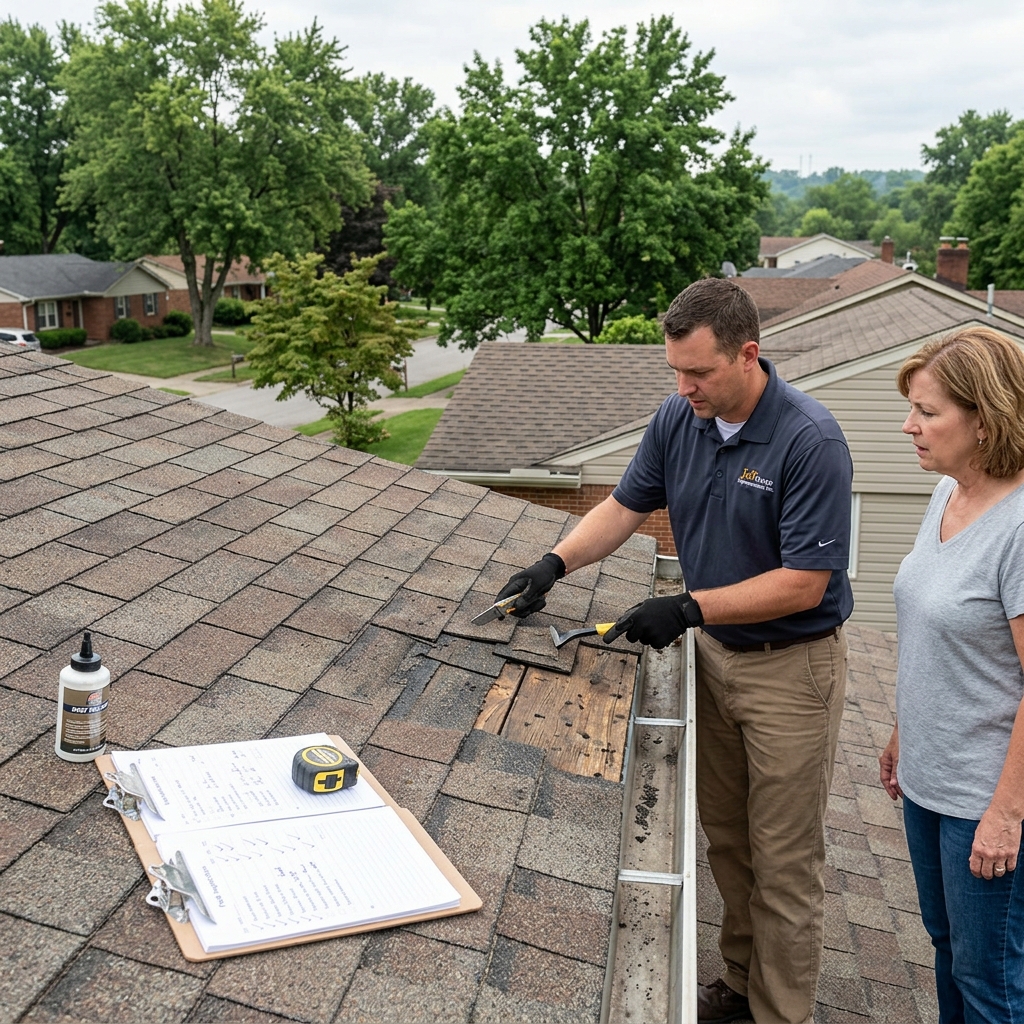
We conduct thorough inspections that identify vulnerable areas: flashing around penetrations, edge details, membrane seams, and drainage paths. We make sure your gutter systems are clear and functioning, because water that can’t drain properly will find its way into the building. We check for missing or damaged fasteners, lifting shingles, and gaps in coverage where wind can infiltrate.

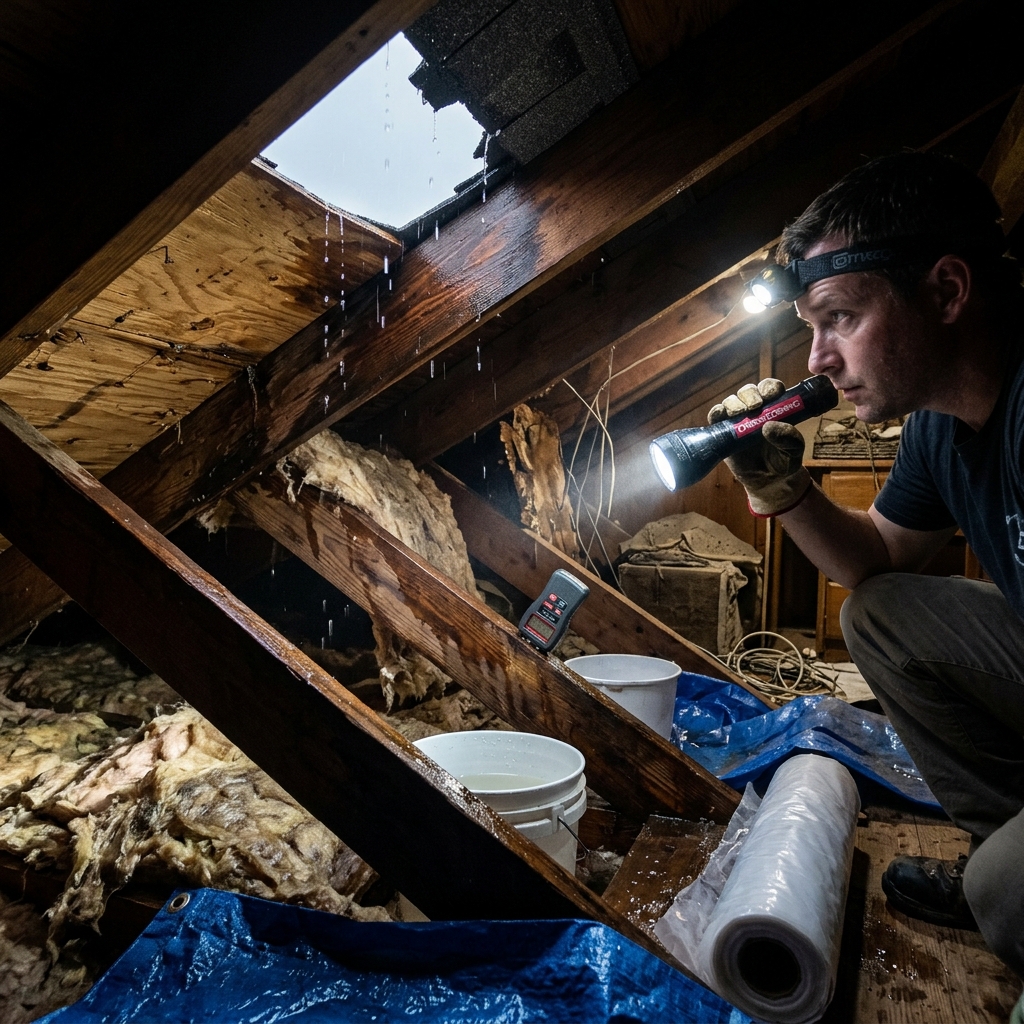
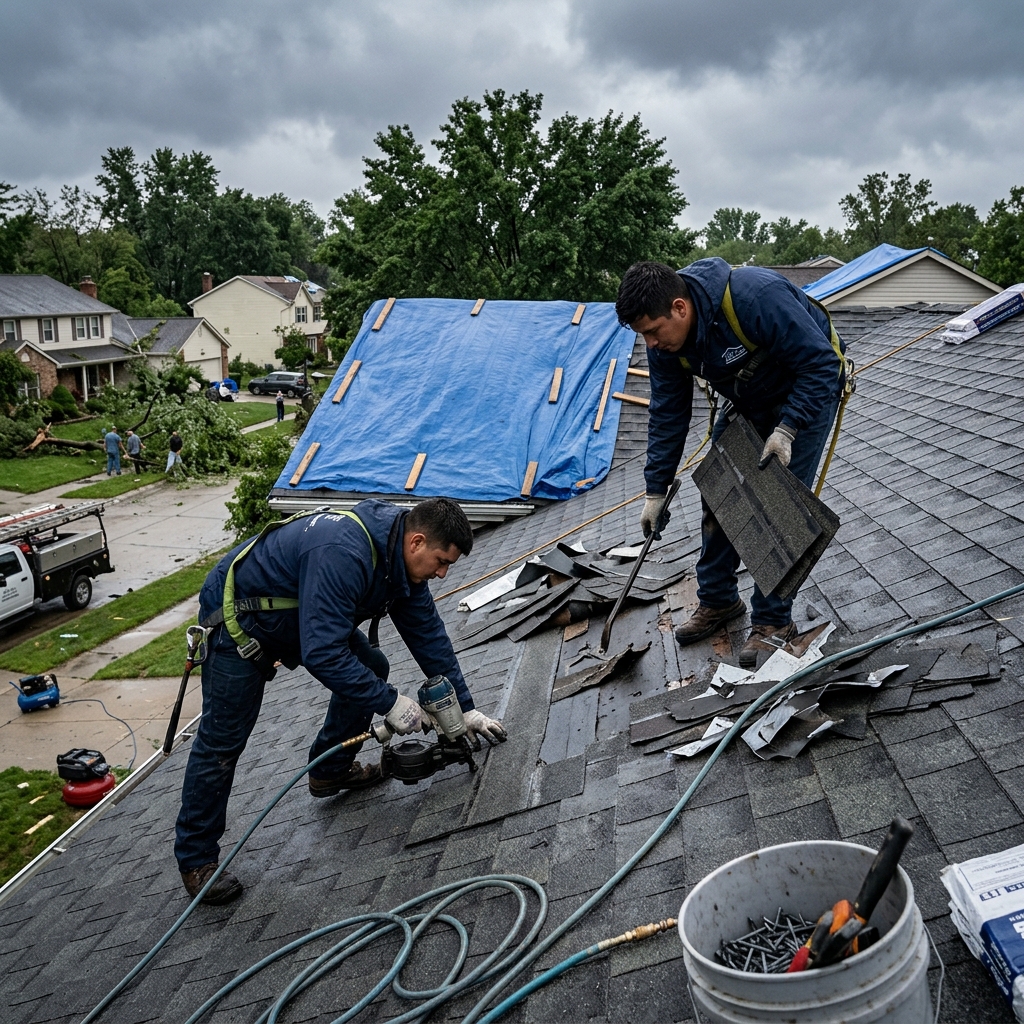
When a storm does hit, our rapid response team deploys quickly. We stabilize the roof temporarily with tarps and secure any loose materials so secondary damage doesn’t worsen while you wait for permanent repairs. We document every area of damage with photos for your insurance claim. Our estimators work with your insurer to ensure you receive the full claim value you’re entitled to.

Prevention and rapid response minimize your exposure. A roof that’s been properly maintained and promptly repaired after damage is a roof that protects your business.

What to do next: Before storm season, have your roof inspected by a professional. Ask specifically about how water drains from your roof and whether any areas show signs of previous repairs or patching.

Our Owens Corning Platinum Preferred Advantage

The Owens Corning Platinum Preferred Contractor program isn’t a participation award. It’s a credential that means we’ve invested in training, maintain rigorous standards, and stand behind our work with backing from one of the nation’s largest roofing material manufacturers.

When we install Owens Corning roofing systems, your warranty coverage is enhanced. You get a manufacturer’s warranty that protects your materials, plus our labor warranty that covers our installation work. This layered protection is more comprehensive than you’d receive from a contractor who isn’t certified by the manufacturer.

We also have priority access to materials, especially critical during supply shortages. We can schedule your project more efficiently because we maintain established relationships with the manufacturer and understand their supply chain. You’re not waiting weeks for materials to arrive or dealing with unexpected substitutions that delay your project.

The Platinum designation means we’re required to stay educated on new products and installation techniques. Your building gets the benefit of our ongoing professional development. We’re not relying on knowledge from five years ago; we’re applying current industry standards.

What to do next: When requesting quotes from commercial roofing contractors, ask specifically whether they’re Owens Corning certified and at what level. Compare the warranty terms they offer alongside their pricing.

Commercial Roof Replacement That Minimizes Downtime

A full roof replacement on a commercial building is a significant undertaking. You need a contractor who understands that every day of your roof project is a day your business is vulnerable to weather and operational disruption.

We plan every replacement project with your operational schedule in mind. We work with your facility manager to identify the least disruptive timing and sequence the work to keep the largest portion of your roof protected at all times. If your building operates 24/7, we adjust crew schedules to work around your hours. If you have seasonal peaks, we schedule around them.

We bring multiple crews when the scope warrants it, not to cut corners but to complete the work faster and keep your exposure to weather minimal. We clean the site daily, secure waste materials, and prevent debris from blowing onto neighboring properties. Weather delays happen, but our crews are experienced at working efficiently when conditions allow.

Modern commercial roofing materials have come a long way. TPO membranes, modified bitumen, and PVC systems offer durability, energy efficiency, and long service lives. We’ll recommend the system that makes sense for your building’s climate exposure, building use, and budget. We also discuss reflective coatings that reduce cooling costs during hot Kentucky summers.

What to do next: Get a project timeline from your contractor that specifies the duration, which areas will be worked on each phase, and what weather events would cause delays. Understand the warranty terms for both materials and labor.

Storm Damage Assessment and Rapid Restoration

When severe weather strikes, you need a contractor who shows up fast and documents everything accurately. Our team responds to storm damage calls within 24 hours during active season. We know that uncertainty about the extent of damage is almost as costly as the damage itself.

We conduct a comprehensive assessment that documents every affected area with photos and detailed notes. We assess not just roof damage but also the underlying structure, insulation, and any water intrusion into the building. This thorough approach is critical because insurance adjusters need clear evidence of what the storm caused versus pre-existing conditions.

We prepare the estimate in a format that your insurance company will accept. We know the language adjusters use and the level of detail they require. This speeds up the claims process and reduces disputes over coverage. Many storms create covered damage that business owners don’t even realize, and we identify these areas during assessment.

Our temporary stabilization work prevents secondary damage while you wait for the permanent repair. A tarp installation done correctly keeps water out and holds through wind. We don’t leave your property exposed longer than necessary.

What to do next: After a storm, photograph any visible damage and contact your insurance company and a contractor the same day. Get multiple contractors to assess the damage independently so you can verify the scope. Document what the weather event was (wind speed if known, hail size, rainfall amount).

Why Louisville Businesses Choose Our 35-Year Track Record

We’ve been in business since 1989 because we deliver results and treat every project like it’s our own facility. Thirty-five years in the roofing business in Louisville means we’ve worked through multiple generations of weather events, building code changes, and material innovations. We’ve learned what works in this climate and what doesn’t.

Our longevity means you can verify our work. Call businesses we worked with ten years ago and ask how those roofs are holding up. Many of our customers have worked with us repeatedly, first on residential properties and later on commercial buildings, or across multiple properties as their business expanded. That kind of repeat business doesn’t happen unless you deliver consistent quality.

We’re a family-owned company, not a national franchise. Our reputation in the Louisville community is built on real relationships and accountability. We’re not a company that completes a project and disappears. We’re your neighbor who you might see around town at the grocery store or your kid’s school. That matters when something goes wrong and you need someone to make it right.

Being deeply rooted in Kentuckiana also means we understand the unique weather patterns, building styles, and local contractor ecosystem. We know which vendors are reliable, which inspectors are thorough, and how to navigate the permitting process efficiently.

What to do next: Ask any contractor you’re considering for references from commercial clients in Louisville. Call at least two references and ask specifically whether they’d hire that contractor again.

Virtual Inspections and Instant Estimates for Your Convenience

Your time is valuable. You shouldn’t have to coordinate a site visit just to get a sense of what a roof repair or replacement costs. That’s why we offer virtual inspections and instant estimates that respect your schedule and give you clarity fast.

Schedule a convenient time, and our inspector will conduct a virtual assessment using video conferencing. You can walk them around your facility, show them specific areas of concern, and ask questions in real time. For many routine assessments, this visual inspection is sufficient to provide an accurate estimate. It takes 30 minutes instead of a full day on your part.

We also provide mobile estimates at our office if you’d prefer to meet in person. After your visit, you receive a detailed written estimate within one business day. The estimate breaks down materials, labor, timeline, and warranty coverage so there are no surprises when work begins.

This streamlined process means you can compare quotes from multiple contractors efficiently and make decisions based on complete information. No guessing about pricing or scope. No waiting a week for an estimate to arrive.

What to do next: When requesting a quote, specify whether you’d prefer a virtual inspection, mobile estimate, or in-person site visit. Have photos of any problem areas ready to share with the inspector.

Protecting Your Commercial Investment Long-Term

A quality commercial roof is an investment that should protect your building for 15 to 25 years, depending on the material system you choose. Protecting that investment starts with choosing the right contractor and material, but it continues with ongoing maintenance.

We recommend annual inspections and regular maintenance cleaning. Debris accumulation on flat roofs prevents drainage and accelerates deterioration. Cleaning gutters and downspouts keeps water flowing away from your building. Maintaining seals around penetrations prevents water from finding gaps. These small investments prevent large problems.

We provide maintenance agreements that formalize regular inspections and keep your roof in peak condition. These agreements often pay for themselves through insurance discounts and energy savings. Many insurance companies offer premium reductions for commercial properties that participate in documented maintenance programs.

If you ever need repairs down the road, our maintenance records give us a complete history of your roof’s condition. We know what areas have been reinforced, where potential issues developed, and what patterns to watch for. This institutional knowledge, built over years of regular service, makes us more effective at diagnosing and solving problems.

Your roof is too important to leave to chance. Partner with a contractor who understands your business, knows your building, and will protect your investment for the long term.

What to do next: Establish a preventive maintenance plan for your commercial roof. Schedule your first professional inspection with Jeff Home Improvements Inc. and discuss what regular maintenance looks like for your specific roof system. Contact us through https://jeffroof.com or request a virtual inspection today to get started protecting your commercial investment.

For further reading: Louisville roofing contractor.

Contact us today for a free in home, no obligation quote on your roof
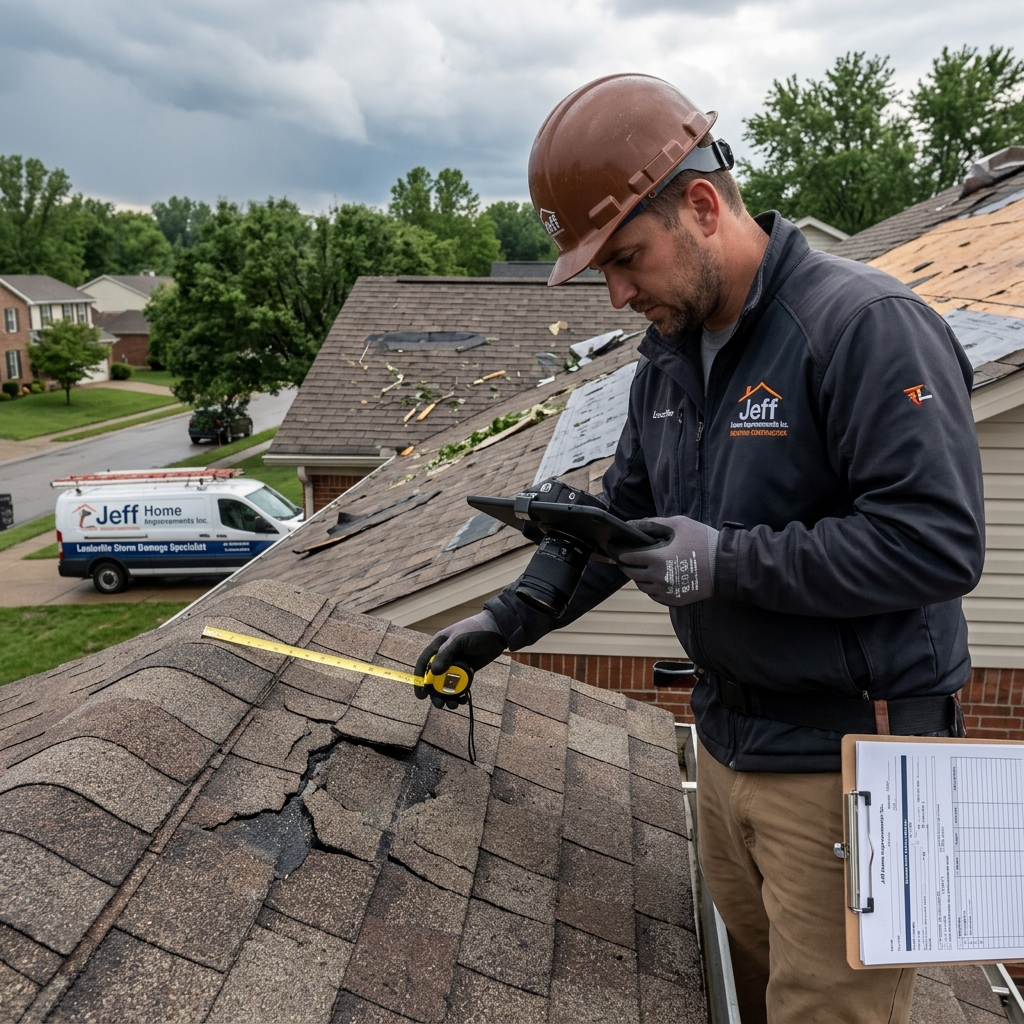
7 Best Storm Damage Roof Repairs in Louisville: Complete Insurance Guide

1. Immediate Roof Damage Assessment and Documentation

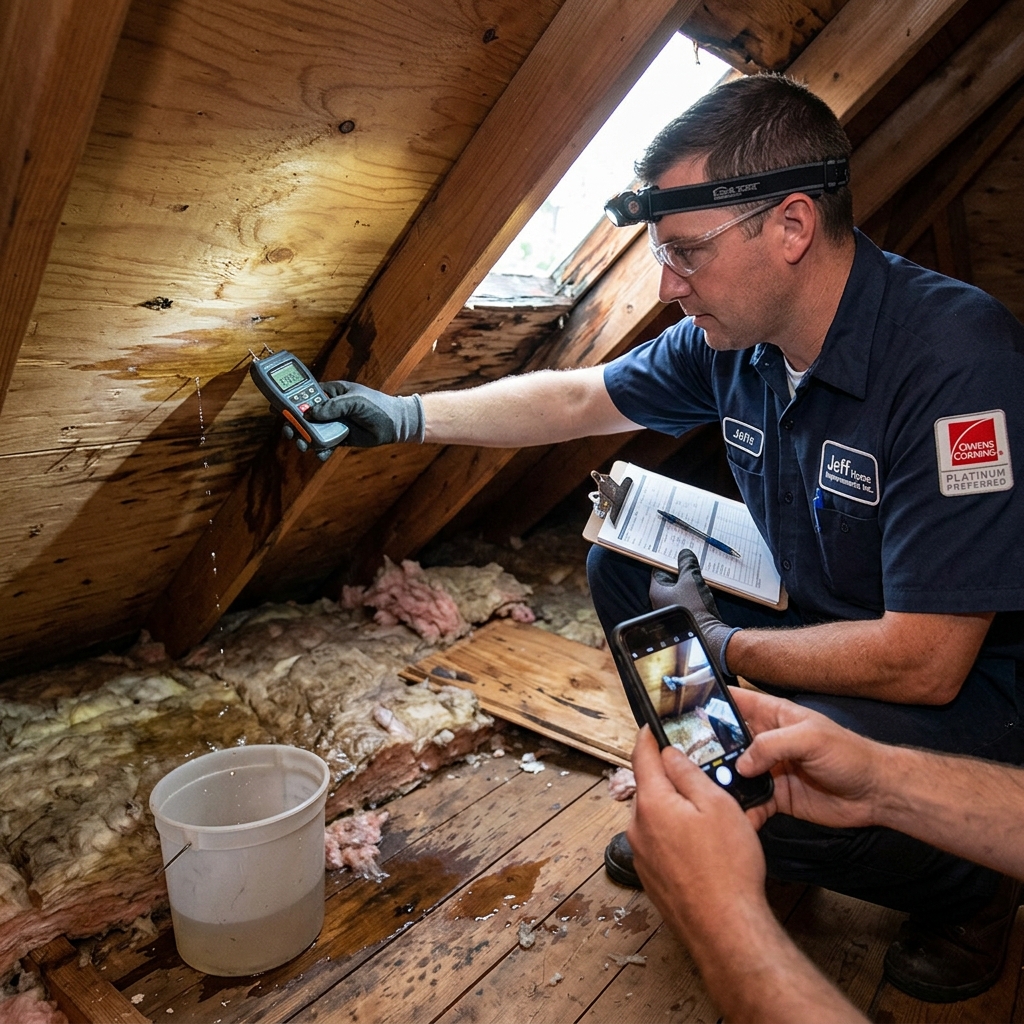
When a severe storm rolls through the Kentuckiana area, the aftermath can leave homeowners feeling overwhelmed. Hail, high winds, and falling debris can cause serious roof damage that threatens your home’s structural integrity and interior spaces. Without proper assessment and repair, a damaged roof can lead to water intrusion, mold growth, and costly secondary damage that insurance may not cover.

The difference between a quick patch and a genuine restoration comes down to expertise, documentation, and coordination with your insurance company. We’ve spent over three decades helping Louisville property owners navigate storm damage claims and secure the professional repairs their homes deserve. This guide walks you through each critical step, from initial damage assessment to final restoration, so you understand what to expect and why quality matters.

Your first 48 hours after a storm are crucial. Before filing a claim, you need clear evidence of what the storm damaged and how extensively. This is where professional documentation becomes your strongest asset.

We recommend scheduling a thorough inspection immediately after severe weather passes. A trained eye can spot damage that homeowners often miss, including broken shingles, compromised flashing, dented gutters, and structural concerns that develop internally. Photographs and written notes create the foundation for your insurance claim, so this step directly influences whether you’ll receive full coverage for repairs.

During assessment, we document:

  • Visible shingle damage, curling, or missing sections
  • Flashing integrity around chimneys, vents, and skylights
  • Gutter system condition and separation points
  • Evidence of water intrusion or interior staining
  • Structural weakening or sagging areas
  • Manufacturer defects versus storm damage

This documentation becomes your insurance adjuster’s reference point. Clear, time-stamped photos and detailed descriptions remove ambiguity and strengthen your claim. Without proper documentation, adjusters may dispute the extent of damage or deny portions of your claim.

Action item: After any significant storm, request a professional roof inspection within 24-48 hours. Do not climb onto your roof yourself, as wet or damaged surfaces are hazardous.

2. Insurance Claim Support and Adjuster Coordination

Filing a roof damage insurance claim involves coordination between you, your insurance company, and your contractor. Many homeowners underestimate the complexity here, which leads to incomplete claims or delayed repairs.

We work directly with insurance adjusters on your behalf. This partnership ensures your adjuster understands the full scope of damage and the necessary repairs to restore your roof properly. When we identify issues that weren’t initially apparent, we provide supplemental documentation to support claim adjustments.

Here’s how the process typically unfolds:

Report the claim immediately. Contact your insurer within days of the damage. Delays can complicate coverage eligibility or limit investigation windows.

Schedule adjuster inspection. Your insurance company sends an adjuster to assess damage and determine payout amounts. This inspection heavily influences your final settlement.

Obtain contractor estimates. Professional repair estimates provide the adjuster with objective pricing and scope. Our estimates detail labor, materials, and timeline so there’s no confusion about costs.

Submit supplemental claims if needed. Storm damage often reveals secondary issues once work begins. Interior water damage, attic rot, or structural compromises may not be visible during initial inspection. We document these discoveries and submit them to your adjuster for coverage consideration.

Many contractors simply accept the adjuster’s initial estimate without advocating for comprehensive repairs. We take the opposite approach, ensuring your claim reflects the full scope of necessary work. If the initial settlement falls short, we provide detailed supplemental documentation to support additional coverage.

Action item: Keep all insurance communications and contractor estimates in one folder. When supplemental damage is discovered, report it to your adjuster immediately with supporting photos.

3. Professional Leak Detection and Water Damage Prevention

Storm damage doesn’t always announce itself loudly. A roof can appear intact while allowing slow, silent water intrusion that damages insulation, framing, and interior finishes. Detecting and preventing these leaks prevents exponential damage costs.

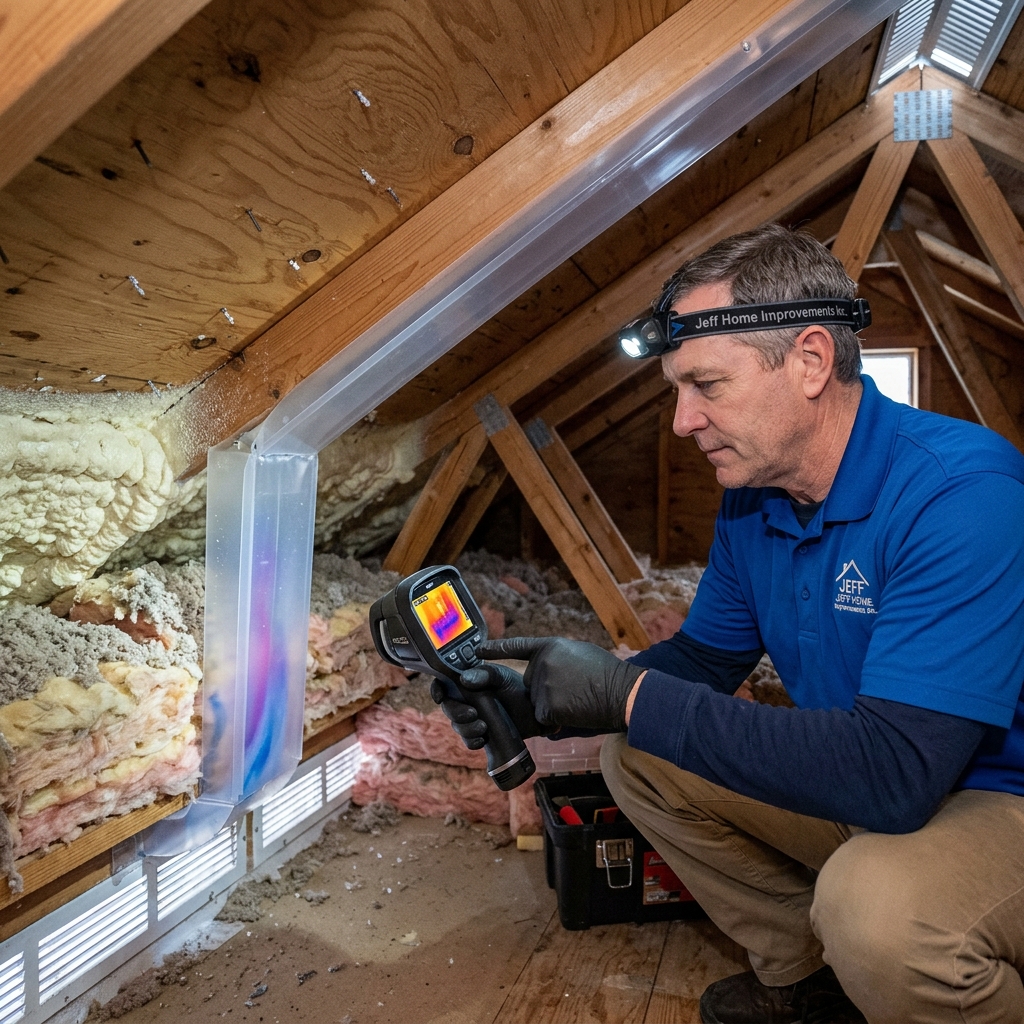
Professional leak detection uses systematic methods to trace water entry points. We inspect the entire roof surface, checking for obvious damage, but we also follow water stain patterns inside the attic or interior walls to identify where water originally entered. This detective work prevents contractors from simply patching the obvious hole while leaving a secondary leak unaddressed.

Prevention strategies we implement:

  • Seal all penetration points (vents, pipes, chimneys) with weather-tight flashing
  • Replace damaged underlayment that channels water away from sheathing
  • Install proper attic ventilation to prevent moisture accumulation
  • Apply ice and water shield in vulnerable valleys and eave areas
  • Clear gutters and install gutter guards to maintain proper drainage

Water damage compounds quickly in humid climates like Kentucky’s. What starts as a small leak can create mold within weeks, causing health concerns and structural deterioration. Our prevention-first approach stops water before it enters your home.

Action item: After repairs are complete, schedule a follow-up inspection during the next rain to confirm no water entry occurs. This verification provides peace of mind and documents successful repair.

4. Structural Integrity Evaluation and Safety Inspection

Storm damage sometimes reveals hidden structural compromises. High winds can loosen connections, hail can fracture wood, and water intrusion can weaken framing over time. A complete restoration must address structural integrity, not just roof surface repairs.

Our safety inspections evaluate the roof’s structural system, looking for problems that threaten long-term stability. We assess:

  • Roof decking condition (rotted or weakened wood)
  • Rafter and truss stability
  • Proper fastening and connection integrity
  • Load-bearing capacity and sag indicators
  • Foundation or wall settling that stresses roof systems

Missing this evaluation means you might have repairs that fail prematurely under future weather stress. Structural issues also create insurance complications, as some damage may only be covered if discovered and documented during the initial claim process.

We provide detailed structural reports that protect both your insurance claim and your home’s long-term safety. If significant structural work is required, we explain recommendations clearly and provide separate estimates so you can budget appropriately.

Action item: Request a structural engineer’s assessment if any decay, separation, or sagging is discovered. This documentation strengthens insurance claims for comprehensive repairs.

5. High-Quality Material Selection for Storm-Damaged Repairs

The materials you choose for storm repairs directly impact durability, appearance, and insurance coverage. Many contractors use the cheapest available materials to maximize profit margins, leaving homeowners with repairs that fail during the next storm or look mismatched with existing roofing.

We’re an Owens Corning Platinum Preferred Contractor, meaning we specify premium materials that exceed standard requirements. These aren’t cosmetic upgrades, they’re investments in durability and weather resistance.

Material considerations for storm repairs:

  • Shingle quality: Premium shingles with enhanced wind resistance and impact rating withstand future storms better than budget alternatives
  • Manufacturer matching: Exact color and style matching ensures your repaired sections don’t age differently than existing roof areas
  • Underlayment durability: High-quality underlayment protects against secondary water intrusion during the repair process and provides long-term backup protection
  • Flashing materials: Galvanized, copper, or aluminum flashing resists corrosion and seals more reliably than lower-grade alternatives

Insurance claims typically cover materials necessary to restore your roof to pre-damage condition. Using quality materials ensures your settlement covers appropriate products, not cheap substitutes that fail prematurely.

Action item: When you receive contractor estimates, verify what materials each contractor specifies. Request samples to match your existing roof’s appearance, and confirm all materials carry manufacturer warranties.

6. Expert Installation with Manufacturer Warranties

Professional installation determines whether quality materials perform as designed. Poor installation technique voids warranties, creates premature failures, and can be more expensive to correct than getting it right the first time.

Our installation process follows manufacturer specifications precisely. Shingles are fastened at exact locations with correct fastener types, valleys are sealed with proper methods, and transitions are handled without shortcuts. This attention to detail ensures your warranty coverage remains valid and your repair lasts for decades.

Warranty protection matters significantly:

  • Material warranties: Owens Corning products come with manufacturer protection against defects, covering replacement costs if materials fail
  • Workmanship warranties: Our installation warranty covers labor and ensures repairs are corrected if issues arise from installation defects
  • Insurance documentation: Proper installation with valid warranties supports insurance coverage for any future weather damage

Contractors cutting corners might complete repairs faster, but their installations often fail to meet manufacturer standards, which voids coverage. We invest the time in proper technique because it protects your investment and our reputation.

Action item: After installation, request copies of all warranty documentation. Keep these with your insurance records, as they’re valuable if future damage occurs.

7. Comprehensive Restoration Beyond Surface Repairs

Storm damage restoration extends beyond replacing damaged shingles. Complete restoration addresses cosmetic damage, integrates repairs seamlessly with existing structures, and restores your home’s full protective envelope.

Many quick-fix contractors view their job as finished once the obvious roof damage is patched. We see restoration differently. Your home’s exterior is an integrated system, and storm damage often affects siding, gutters, windows, and fascia simultaneously. Addressing only the roof leaves your home partially vulnerable.

Our comprehensive approach includes:

  • Roof replacement or repair with exact material matching
  • Gutter system restoration or replacement with seamless protection
  • Vinyl siding repair or replacement where storm debris caused damage
  • Window and frame assessment for seal integrity
  • Fascia and soffit restoration for complete weather protection
  • Landscaping debris removal and site cleanup

A Louisville roofing contractor offering true restoration coordinates all these elements into a single project timeline, minimizing disruption and ensuring cohesive results. You receive one warranty covering the entire exterior system, simplifying future maintenance and claims.

Action item: Request a comprehensive exterior assessment alongside your roof repair estimate. Addressing related damage during the same project saves time and ensures consistent quality standards across all repairs.

Storm damage to your Louisville home deserves professional restoration that protects your investment and simplifies insurance coordination. We’ve guided thousands of Kentuckiana homeowners through this process, combining meticulous documentation, insurance expertise, and master-level craftsmanship. Whether your damage is extensive or localized, our approach ensures complete restoration that lasts. Contact us for a professional assessment and instant estimate, and let us handle the complexity while you focus on getting your home back to normal.

Contact us today for a free in home, no obligation quote on your roof
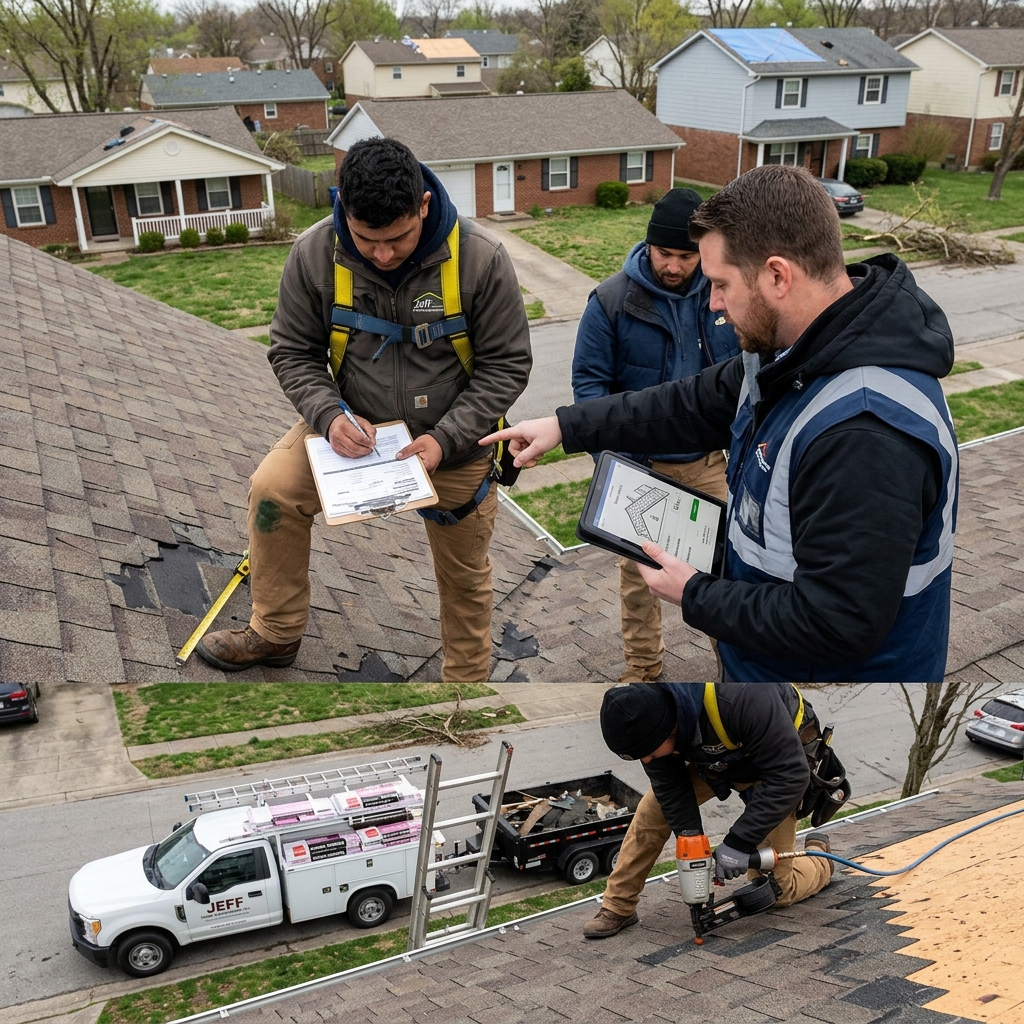
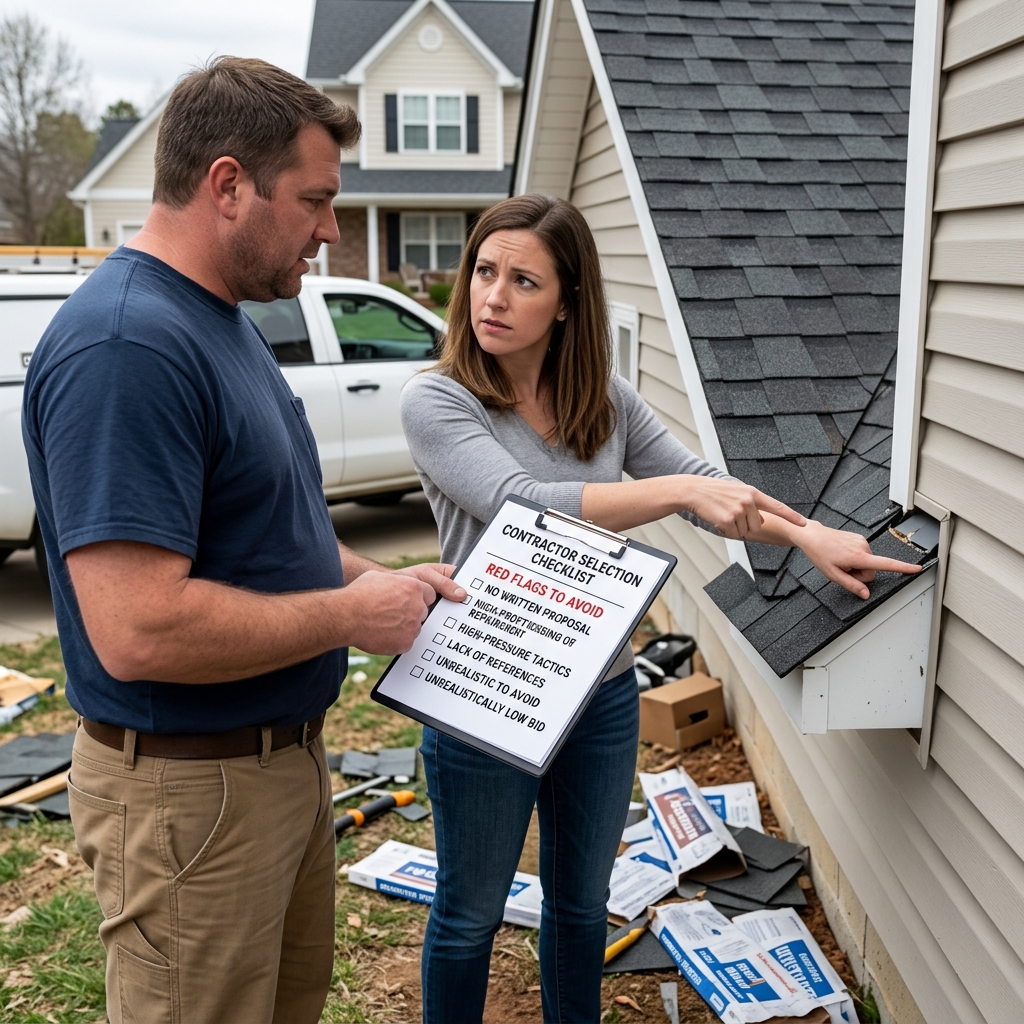
Red Flags Checklist: What to Avoid When Hiring a Roofing or Siding Contractor

Why Contractor Selection Matters for Your Home

Your roof and siding are among the largest investments you’ll make in your property. A quality installation protects everything beneath it, controls energy costs, and maintains your home’s structural integrity for decades. Choose the wrong contractor, and you’re looking at premature failure, costly repairs, water damage, and headaches that compound over time.

We’ve been serving the Louisville and Kentuckiana area since 1989, and we’ve encountered countless homeowners who wish they’d spent more time vetting their contractor before signing a contract. The difference between a reputable professional and a fly-by-night operator often becomes painfully obvious only after work begins or after the warranty period expires.

This checklist exists to help you avoid that regret. We’ll walk through the warning signs that separate experienced, trustworthy contractors from those who prioritize quick cash over quality workmanship.

Understanding Common Roofing and Siding Contractor Red Flags

Some red flags are obvious; others are subtle enough that busy homeowners miss them entirely. Recognizing these patterns early saves you time, money, and stress.

No physical business address or office presence. A legitimate contractor maintains a verifiable location. If a roofer only communicates via mobile phone and meets you in parking lots, that’s a significant concern. You need a place to track them down if something goes wrong.

Lack of online presence or reviews. In 2026, every credible contractor has a website and professional social media profiles. Check Google Maps, the Better Business Bureau, and industry review sites. Look for patterns in customer feedback, not just star ratings.

Starting work immediately or requesting full payment upfront. Established contractors follow a professional timeline: inspection, written proposal, scheduling, and payment terms tied to project milestones. Someone pressuring you to hand over cash before work begins is signaling financial instability or worse.

Unwillingness to provide a written estimate. A professional estimate includes materials, labor, timeline, warranty terms, and cleanup responsibilities. Verbal quotes or vague “ballpark figures” are protection for them, not you.

Using high-pressure sales tactics or creating false urgency. “This offer expires today” or “I’m only in your area this week” are classic manipulation techniques. Legitimate contractors have work year-round and don’t need artificial deadlines to secure jobs.

Subcontracting everything without disclosure. While some subcontracting is standard, contractors should be transparent about who’s performing the work. Hidden subcontracting arrangements often mean reduced oversight and accountability.

Action step: Before meeting any contractor, search their name plus “complaints” or “lawsuit” on Google. If red flags appear in the first few results, move on.

Licensing and Insurance: Non-Negotiable Requirements

This is where emotion must step aside and due diligence takes over. Licensing and insurance aren’t bureaucratic hassles; they’re your legal protection.

Verify active licensing. Kentucky’s Residential Contractor Commission (RCC) maintains a public database of licensed contractors. Enter the company name or license number and confirm it’s current. If a contractor can’t provide their license number readily, that’s a warning sign.

Confirm workers’ compensation and liability coverage. Ask for certificates of insurance directly from the carrier, not just from the contractor. A typical roofing contractor carries general liability insurance (minimum $1 million) and workers’ compensation. If a roofer gets injured on your property and they lack coverage, you could face personal liability.

Understand what their insurance actually covers. Some policies have exclusions or limited coverage for specific situations (storm damage, for instance). Request details before signing anything.

Check for bonding. A surety bond protects you if the contractor disappears mid-project or fails to complete work. Not all states require bonding for roofers, but it’s a sign of financial stability when it’s present.

Uninsured contractors might seem cheaper upfront, but you’re exposing yourself to massive risk. If someone gets hurt, your homeowner’s insurance won’t cover it. If the work fails, you have no recourse.

Action step: Call the contractor’s insurance agent directly to verify coverage. Don’t rely on documents the contractor provides.

Pressure Tactics and Unrealistic Pricing Warnings

One of the fastest ways to identify an unreliable contractor is to notice how they handle pricing and your decision timeline.

Extremely low bids. If one estimate comes in 30-50% below others, something’s wrong. Either they’re using inferior materials, cutting corners on labor, or planning to add surprise charges later. Quality roofing and siding work costs what it costs.

“Storm chaser” contractors offering too-good-to-be-true damage claims. After severe weather, opportunistic roofers flood neighborhoods claiming every home qualifies for insurance-covered replacement. While legitimate storm damage exists, these operators often pressure homeowners to file questionable claims, then disappear if the insurance company denies coverage.

Demanding cash payments or checks only. Professional contractors accept credit cards, checks, and financing options. They have nothing to hide with payment trails.

Creating artificial scarcity. “I can only fit you in this week” or “I have one more opening this month” are sales tactics designed to rush your decision. Real contractors book out weeks in advance without manufactured urgency.

Reluctance to put promises in writing. If they’re unwilling to document warranty terms, material specifications, or timeline commitments in your contract, they’re preserving wiggle room for themselves.

We price our work fairly based on materials, labor, and market conditions in Kentuckiana. We don’t compete on being the cheapest option; we compete on delivering quality that lasts decades and protecting your home properly.

Action step: Get at least three written estimates from different contractors. If one is significantly lower, ask why before assuming it’s the better deal.

Lack of References and Proven Track Record

References separate contractors who deliver from those who merely promise.

Unwillingness to provide recent customer references. Ask for at least three homeowners or commercial clients whose work was completed in the past two years. A contractor confident in their work will provide these freely.

References that are friends or family members. Legitimate references are independent customers with no relationship to the contractor beyond the business transaction.

No portfolio or before-and-after photos. Quality contractors document their work visually. Siding installations, roof replacements, and storm damage restoration should all have photographic evidence available.

Inability to discuss previous projects in detail. When you call a reference, listen for specific details. Did the contractor show up on time? Did they communicate clearly about changes? Did the work hold up over time? Vague answers suggest the reference didn’t actually have that experience.

No certifications or manufacturer partnerships. We’re proud to be an Owens Corning Platinum Preferred Contractor, a designation earned through training, quality standards, and customer satisfaction metrics. Similar certifications from other manufacturers indicate commitment to excellence.

New company with no history. There’s nothing inherently wrong with newer contractors, but they should have verifiable work history, training credentials, or prior experience within your local market. “Just started this year” combined with other red flags should concern you.

Action step: Contact at least two references and ask specifically about communication, timeline adherence, and how the contractor handled any problems that arose.

Communication Problems and Hidden Costs

Professional contractors communicate clearly and proactively. Poor communication during the sales process predicts problems during the project.

Difficulty reaching them or slow response times. If they’re slow to return calls or emails before signing a contract, they’ll be worse afterward when you’re paying the bill.

Vague contract language. Your contract should specify:

  • Exact materials and brands being used
  • Square footage or scope of work
  • Start and completion dates
  • Payment schedule tied to milestones
  • Warranty terms and what’s covered
  • Cleanup and site restoration responsibilities
  • What happens if weather delays the project

Contracts with blanks, unclear terms, or references to “standard industry practices” leave room for disputes.

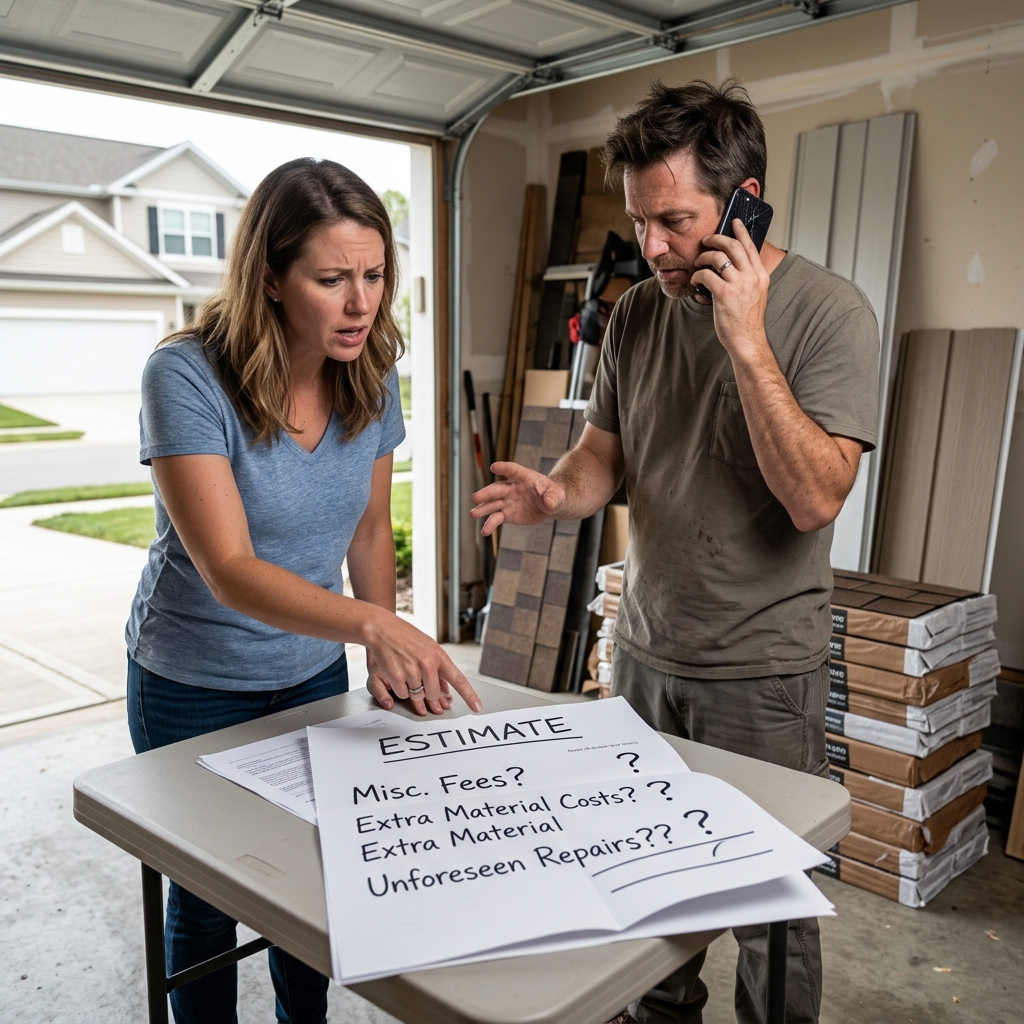
No written change order process. If modifications become necessary mid-project, they should require a written change order detailing the scope change, cost adjustment, and timeline impact. Without this, you might discover extra charges at the end.

Hidden costs that appear after work starts. Legitimate contractors identify complications during inspection and discuss them before work begins. If your estimate suddenly balloons because of “unexpected issues,” that contractor should have caught them beforehand or explained the contingency upfront.

Reluctance to explain their process. Before work begins, you should understand how they’ll protect your property, where they’ll stage materials, how they’ll handle debris, and what to expect daily. Evasive answers suggest they haven’t thought it through or don’t care about your experience.

We provide virtual consultations and instant estimates to ensure you understand the scope, timeline, and costs before any commitment. Our communication approach means no surprises.

Action step: Ask your contractor to walk you through their daily process on a roof or siding project. Their level of detail reveals their professionalism.

Our Commitment to Transparent, Professional Service

We’ve built our reputation over 37 years by doing what we say we’ll do, communicating honestly, and treating every project like it’s our own home.

Our process starts with a thorough inspection. We identify the actual condition of your roof, siding, or whatever exterior system needs attention. We don’t pressure you into work you don’t need. If a repair will extend the life of your existing system cost-effectively, we say so. If replacement is the right choice, we explain why.

Our estimates are detailed and comprehensive. You know exactly what materials we’re using, which Owens Corning products are included, what the timeline looks like, and what your warranty covers. We answer questions fully and explain trade-offs between material options clearly.

We manage our schedule professionally. When we commit to start dates, we honor them. When weather or complications arise, we communicate immediately and adjust expectations. Our customers aren’t left wondering where we are or when we’re coming back.

Our team is trained, insured, and focused on doing this work right. We’re not a franchise operation or a crew that changes weekly. You get consistency and accountability.

How We Protect Your Investment with Proper Credentials

Our Owens Corning Platinum Preferred Contractor status isn’t a marketing badge we display casually. It represents measurable standards in training, customer satisfaction, and quality workmanship.

To earn and maintain this certification, we:

  • Complete annual training on the latest roofing materials and installation techniques
  • Maintain documented quality standards that are regularly audited
  • Achieve high customer satisfaction ratings through third-party surveys
  • Stay current on manufacturer warranties and coverage terms
  • Follow strict safety protocols and best practices

We also carry comprehensive general liability insurance (protecting you if someone is injured on your property) and workers’ compensation coverage (protecting our team). We provide proof of both before any work begins.

Our roofing and siding installations come with manufacturer warranties on materials plus our own labor warranty. That means you’re protected on both fronts. If a shingle fails or siding cracks due to faulty installation, we take responsibility.

We’re bonded through the state, which adds another layer of financial protection if anything goes wrong. If you hire a contractor without these credentials and something fails, you’re often left with no recourse except small claims court.

Action step: Request copies of our current insurance certificates and verification of our Owens Corning Platinum Preferred status before scheduling your project.

Why Jeff Home Improvements Stands Out in Kentuckiana

We’re deeply rooted in the Louisville area. Our family has been solving roofing and siding problems for nearly four decades. We know the local climate challenges: heavy spring storms, humidity, ice dams in winter. We understand how these conditions age roofing and siding differently than contractors who work in other regions.

Our storm damage restoration work speaks for itself. When severe weather strikes Kentuckiana, we show up immediately, document damage for insurance claims, and handle the repairs with the same care we give routine replacements. We’ve helped hundreds of homeowners recover from storms without the stress of dealing with unfamiliar contractors.

We offer virtual consultations, which means you get expert guidance without scheduling someone to visit your home immediately. Our instant estimate system gives you pricing and timeline information quickly so you can compare options and plan your budget.

We don’t vanish after the job is complete. If questions arise during the warranty period, we’re here. If adjustments are needed, we address them.

Our residential and commercial expertise means we work on everything from suburban homes to multi-unit properties. That versatility reflects deep knowledge across different building types and code requirements.

Making Your Final Contractor Decision with Confidence

You’ve identified the red flags. You know what to look for. Now apply these standards consistently across every contractor you consider.

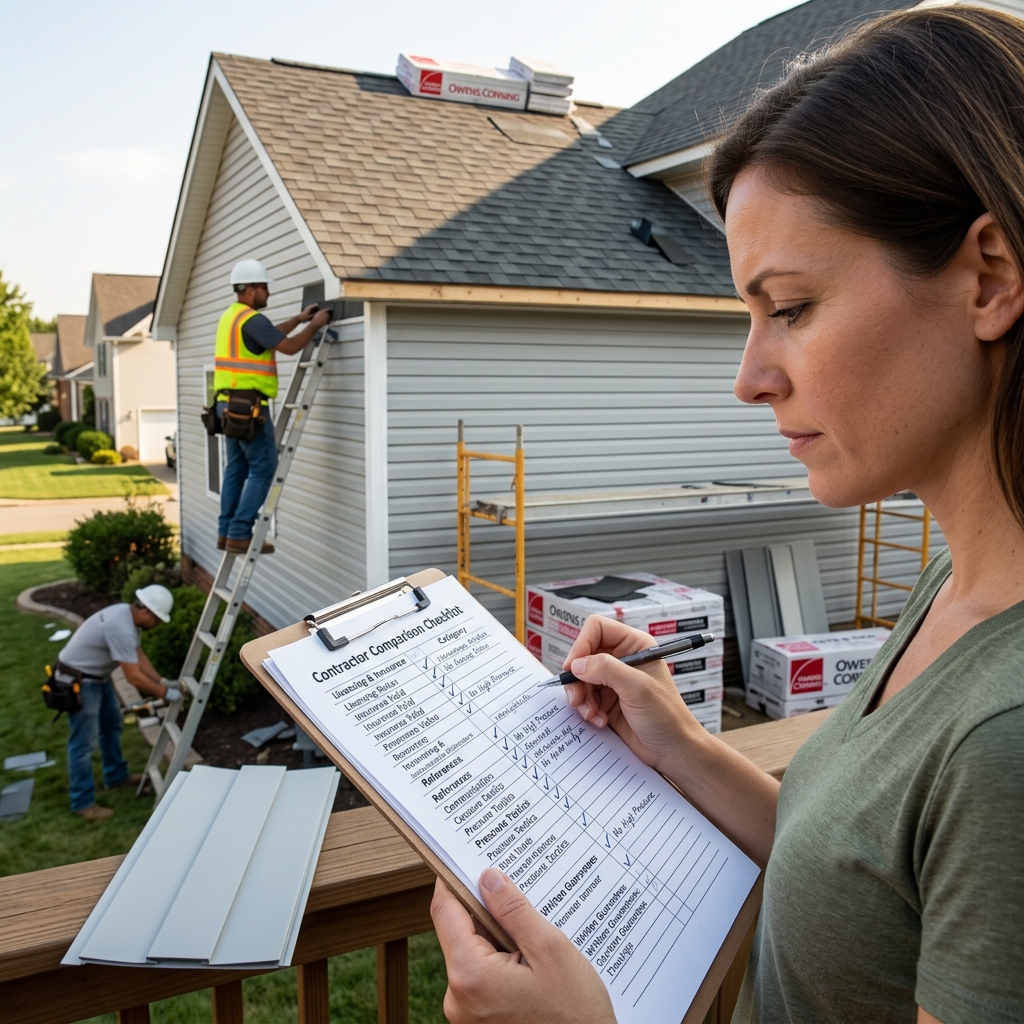
Create a simple checklist before meeting anyone:

  • Verify licensing through the Kentucky RCC database
  • Request and review certificates of insurance
  • Ask for three recent references and actually call them
  • Request a detailed written estimate with specifications
  • Review their contract thoroughly before signing
  • Confirm they carry workers’ compensation coverage
  • Check online reviews and the Better Business Bureau
  • Ask about certifications and manufacturer partnerships
  • Verify their physical business address

When you evaluate contractors honestly against these criteria, the decision becomes clearer. The ones who pass are the ones worth hiring.

We’re confident that when you vet Jeff Home Improvements against this checklist, you’ll find a contractor who meets every standard. Our track record, credentials, and commitment to transparent service are exactly what protects your home and your investment.

Your roof and siding will last 20-50 years depending on materials and maintenance. The contractor you hire today sets the quality foundation for all those years. Choose carefully, verify thoroughly, and you’ll avoid the costly mistakes and headaches that poor contractor selection creates.

Contact us today for a free in home, no obligation quote on your roof
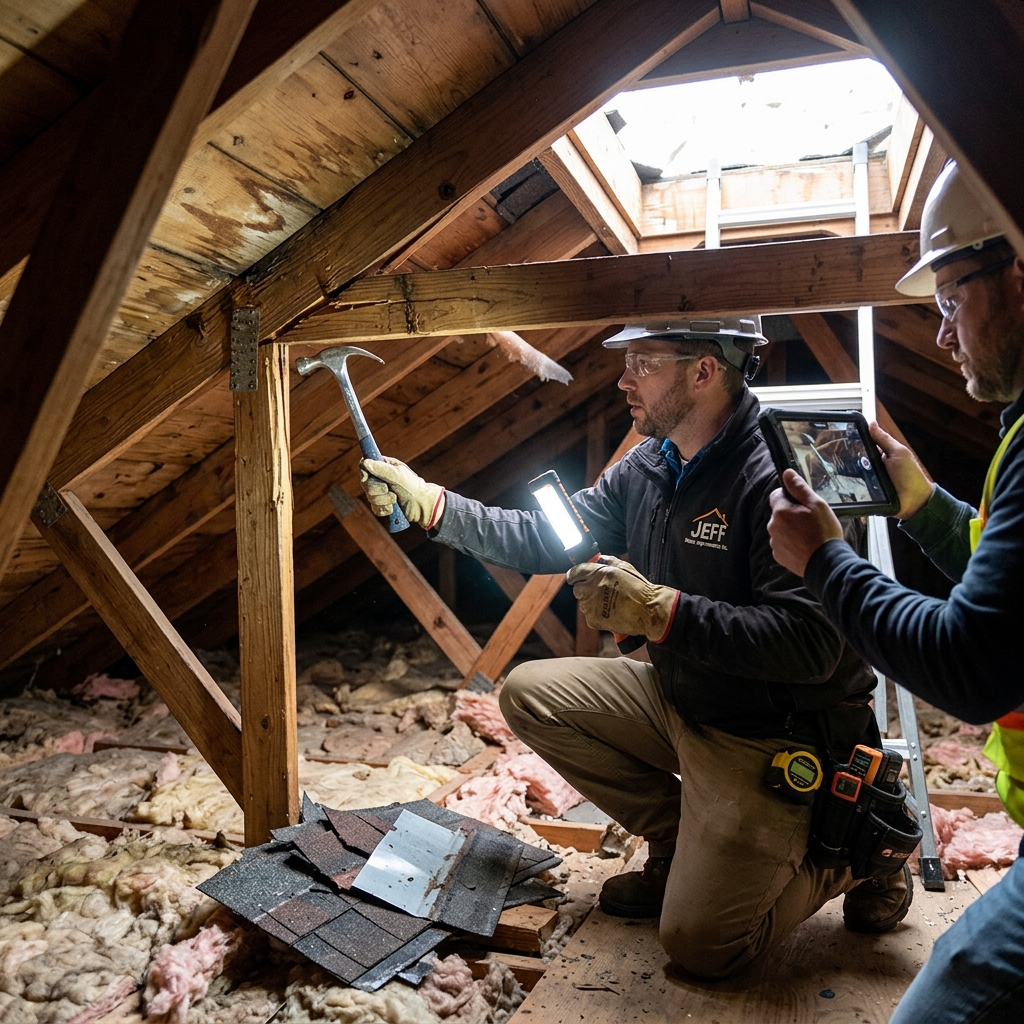
How Roof Ventilation and Attic Insulation Work Together to Extend Roof Life

The Hidden Cost of Ignoring Attic Ventilation and Insulation Balance

Your roof’s lifespan depends on far more than shingles and flashing. The systems working silently above your ceiling—ventilation and insulation—determine whether your roof reaches its expected 20-30 year life or fails years early. At Jeff Home Improvements Inc., we’ve spent decades watching homeowners in Louisville and Kentuckiana discover this the hard way. The good news: understanding how these systems interact can save you tens of thousands in premature replacement costs.

Most homeowners focus on visible roof damage: missing shingles, leaks, or storm damage. But the real culprit behind deteriorating roofs often hides in the attic. When ventilation and insulation aren’t properly balanced, your roof slowly decays from the inside out.

Here’s what happens: inadequate insulation lets conditioned air escape into the attic during winter. Meanwhile, poor ventilation traps warm, moist air under your roof deck. The combination creates a perfect storm of wood rot, shingle deterioration, and premature failure. We’ve pulled back attics where homeowners thought they had a 10-year-old roof only to find structural damage that cut the actual remaining life to 2-3 years.

The financial impact extends beyond roof replacement. Trapped moisture leads to mold growth, compromised structural integrity, and higher energy bills as your heating and cooling systems work overtime. A homeowner spending $800 annually on electricity could save $200-300 yearly with properly balanced attic systems. Over 20 years, that’s $4,000-6,000 in energy savings alone.

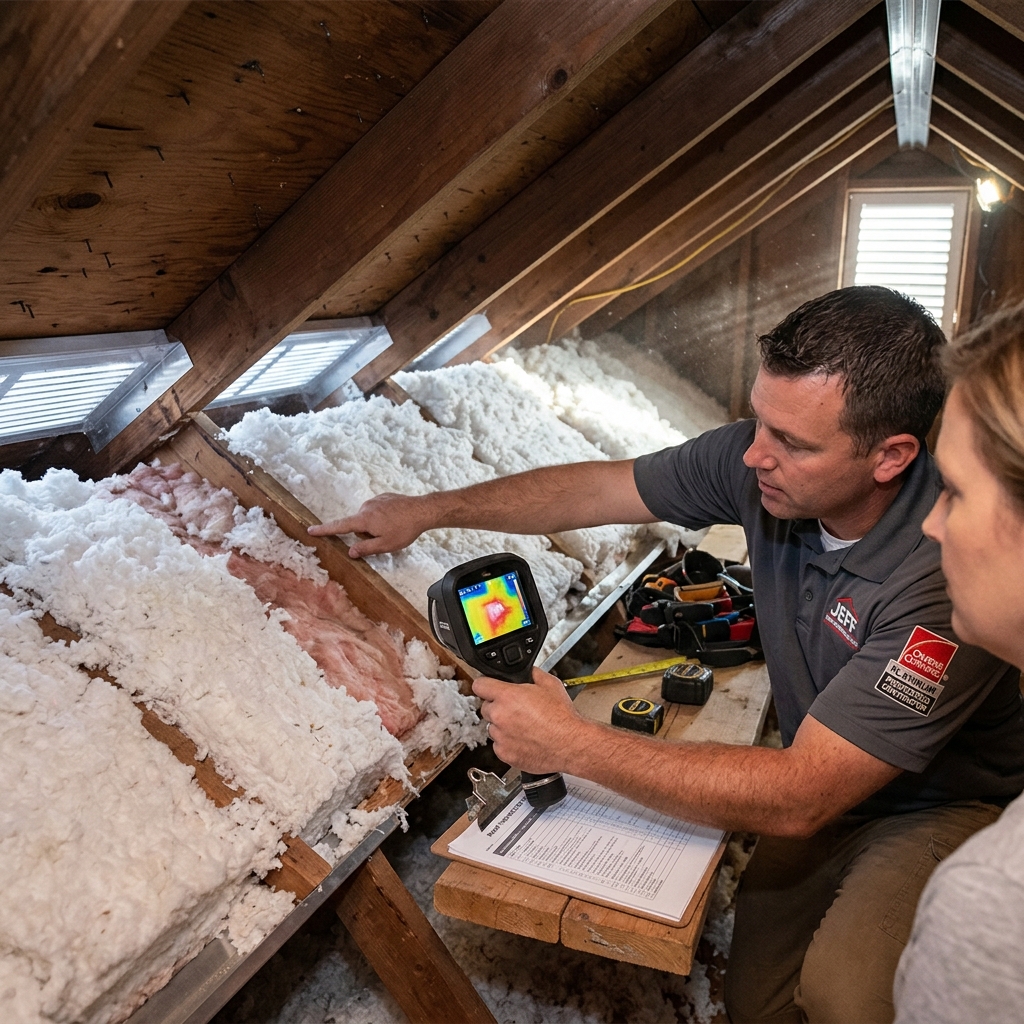
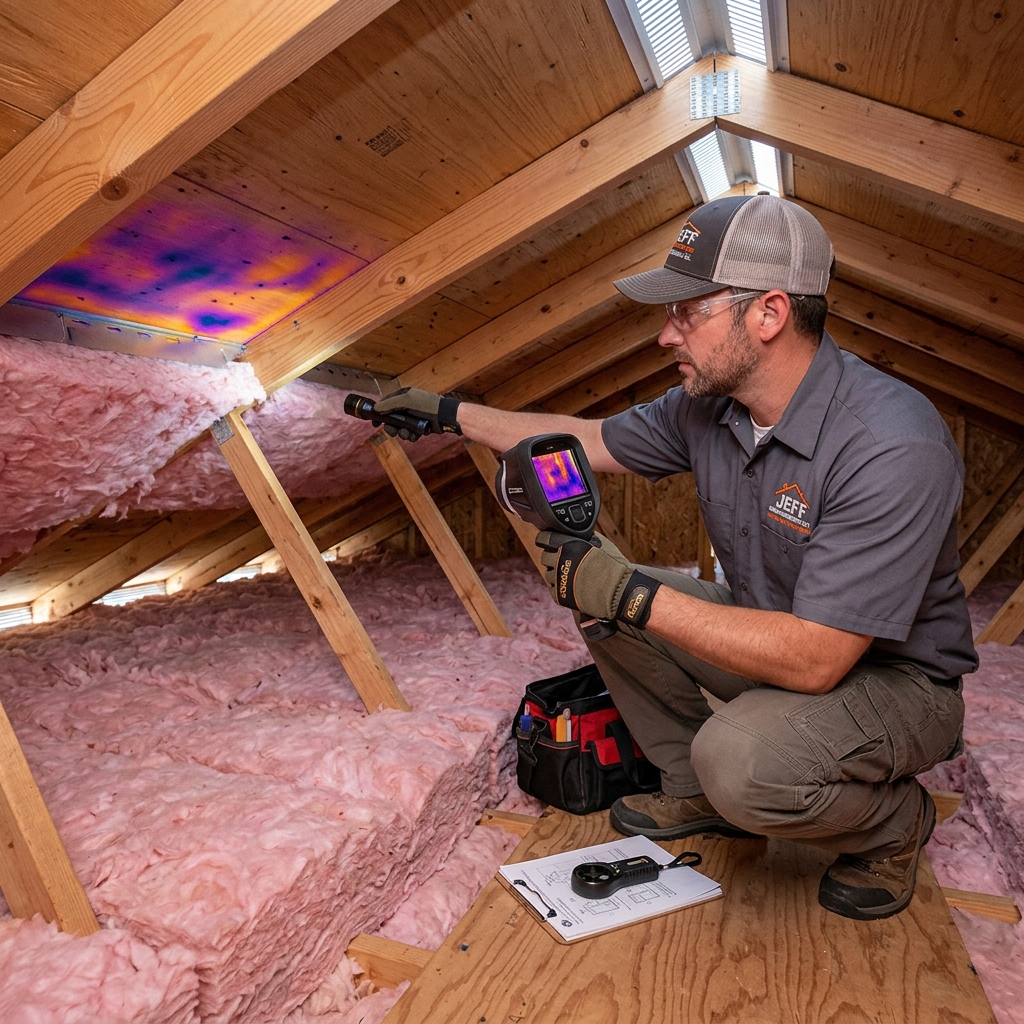
What to do next: Schedule a professional attic inspection. Many contractors assess only the roof itself. We evaluate your attic’s ventilation pattern, insulation R-value, and moisture levels to identify imbalances before they become expensive problems.

How Poor Ventilation Damages Your Roof Before Its Time

Ventilation removes hot air, moisture, and odors from your attic space. Without it, heat builds up. During summer in Kentucky, attic temperatures can exceed 160 degrees Fahrenheit, even when outdoor temps hover around 90. That extreme heat accelerates shingle degradation, drying out the asphalt binders that hold granules in place.

Poor ventilation also traps moisture year-round. In winter, warm air from your living spaces rises into the attic. When it hits cold roof decking, it condenses into liquid water. This moisture settles on wood framing, encouraging mold and rot. Nails rust. Structural beams weaken. The roof deck loses integrity. Shingles that seemed fine at eye level suddenly buckle or curl because the foundation beneath them has softened.

We’ve seen ice dams form more severely in poorly ventilated attics. Trapped heat melts snow unevenly on the roof edge. Water backs up under shingles and seeps into your home. Worse, the water pools inside the attic before dripping into walls and ceilings. That’s not just a roof problem—it becomes a structural and mold problem.

Inadequate ventilation also creates pressure imbalances. Soffit vents pull air in. Ridge vents should release it. When this pathway is blocked, obstructed, or improperly sized, air swirls unpredictably. Some areas become stagnant pockets of warm, humid air while others experience temperature swings that stress roofing materials.

What to do next: Walk your attic on a calm day and feel for airflow near soffits and ridge vents. If you detect little to no movement, ventilation is likely compromised. Look for blocked soffits, improper insulation piling against vents, or flashing that restricts airflow.

The Science Behind Ventilation and Insulation Working Together

Ventilation and insulation aren’t enemies—they’re partners with specific roles. Insulation slows heat transfer between your living space and the attic. Ventilation removes excess heat and moisture from the attic itself. Both need to work properly for your roof to thrive.

Think of the airflow pattern as a complete system. Air enters through soffit vents (intake) running along your eaves. It travels across the attic floor and exits through ridge vents (exhaust) at the peak. This continuous flow prevents heat and moisture accumulation. Insulation sits below this air pathway—typically on the attic floor or between rafters. It doesn’t block ventilation; it occupies the space below the ventilation channel.

The ideal scenario: insulation keeps your living spaces comfortable and reduces energy demand. Ventilation removes the small amount of heat and moisture that naturally occurs from daily living. Together, they create an attic that stays cool, dry, and protected.

The math matters too. Building codes specify minimum ventilation requirements: typically 1 square foot of net free area per 150 square feet of attic space. So a 1,500-square-foot attic needs at least 10 square feet of combined intake and exhaust ventilation. Insulation R-values range from R-19 to R-60 depending on your climate zone and ceiling type. Kentucky generally calls for R-30 to R-38 in the upper range.

When these elements align, roofing materials experience minimal thermal stress, moisture stays controlled, and structural integrity is preserved. Your roof can reach or exceed its designed lifespan.

What to do next: Check your current attic insulation level by measuring rafter cavity depth and comparing R-value recommendations for your zip code. Compare that to your actual insulation thickness. If you’re significantly underinsulated, ventilation alone won’t protect your roof.

Why Our Roofing Assessments Include Ventilation Analysis

When we perform a roofing inspection, we don’t stop at the shingles. We climb into your attic and evaluate the complete system because roof failures rarely happen in isolation. A roof under excessive heat stress fails faster. Moisture-laden rafters weaken. Poor drainage leads to ponding and leaks.

Our process includes measuring soffit and ridge vent opening sizes, checking for blockages, identifying insulation placement issues, and assessing moisture levels. We photograph conditions and explain findings in terms homeowners understand. Is your ridge vent actually open? Are soffit vents covered by siding or fascia repairs? Is insulation piled against vents, restricting airflow? These details determine roof longevity far more than the shingle grade.

We also evaluate the interaction between your roof pitch, attic size, and climate exposure. A north-facing slope in a humid microclimate needs stronger ventilation than a south-facing slope in a drier area. Our assessments account for these variables rather than applying one-size-fits-all solutions.

This thorough approach means we often identify problems other contractors miss. A homeowner might receive a quote for a $15,000 roof replacement when a $3,000 ventilation improvement would extend their current roof by 10+ years. We believe in honest assessment and long-term value.

What to do next: Request a roofing contractor services estimate that includes attic evaluation. If a contractor only inspects from the ground, you’re getting an incomplete picture.

The Energy Efficiency Connection: Lower Bills Through Proper Ventilation

Your HVAC system works harder when attic conditions are misbalanced. In summer, a poorly ventilated attic can reach 160-180 degrees. Your air conditioning runs continuously trying to cool a home with heat radiating through the ceiling. In winter, trapped humidity forces your furnace to work longer because moisture in air is harder to heat than dry air.

Proper ventilation reduces attic temperatures significantly. Studies show a well-ventilated attic stays 20-30 degrees cooler than a poorly ventilated one on hot summer days. That translates directly to lower cooling costs. Your thermostat doesn’t need to call for air conditioning as often. Compressors cycle less. Energy consumption drops.

Insulation complements this by creating a thermal barrier. If your insulation is inadequate, adding ventilation alone won’t help much because heat still leaks through. If insulation is good but ventilation is blocked, heat and moisture still accumulate. Both must work in tandem.

A Kentucky homeowner with balanced attic systems typically saves 10-20% on annual heating and cooling costs compared to someone with poor ventilation or insufficient insulation. For a home with a $1,200 annual energy bill, that’s $120-240 yearly. Over a roof’s 25-year lifespan, the savings compound significantly while also extending that roof’s actual usable years.

What to do next: Review your last 12 months of utility bills. Compare your heating and cooling costs to regional averages for your home size. If you’re running consistently higher, attic ventilation or insulation imbalances could be the culprit.

Moisture Control and Roof Longevity in Kentucky’s Climate

Kentucky’s climate presents unique challenges. Our humid summers and cold winters create conditions where moisture moves constantly. During winter, warm interior air wants to rise into the attic. During summer, outdoor humidity can be 80% or higher. Without proper ventilation and insulation balance, that moisture accumulates where it damages everything.

Wood framing begins rotting when moisture content exceeds 20%. Mold thrives in humid, dark spaces above 60% relative humidity. Metal fasteners rust. Roof decking softens. Shingles lose their granule adhesion as moisture moves through the underlayment. All these failures accelerate in Kentucky’s climate without proper moisture control.

We’ve inspected attics where homeowners installed excellent insulation without understanding ventilation. The insulation blocked air from the living space, which was good. But it also partially blocked the air pathway meant to remove moisture from the attic itself. Moisture accumulated above the insulation. By the time the homeowner noticed a problem, structural damage had already begun.

Conversely, oversized ventilation without adequate insulation wastes energy and fails to prevent heat buildup. The moisture that does form can’t be managed effectively because air movement alone doesn’t extract moisture that’s already condensed into liquid.

Kentucky requires this balanced approach more than drier climates. Our spring rains and summer humidity demand that every component of your attic system work together. Moisture sensors in our inspections show us exactly what’s happening and help us tailor solutions to your specific situation.

What to do next: During humid months, check your attic for visible condensation or water staining on framing. If you find moisture, improper ventilation or insulation balance is almost certainly the cause.

What Happens When Ventilation and Insulation Are Misaligned

Misaligned systems create cascading problems that compound over years. Consider a common scenario: a homeowner adds insulation to improve energy efficiency but doesn’t adjust ventilation. Soffit vents remain the same size. Airflow slows. Heat and moisture build up. The new insulation actually traps warm, moist air more effectively, making the problem worse than before. The roof fails faster despite the investment in insulation.

Another scenario: excessive ventilation without adequate insulation. In winter, the attic stays cold (which seems good), but your ceiling isn’t well-insulated, so you lose heat to the attic anyway. Your furnace works harder. You pay more for heating. In summer, continuous airflow can actually introduce hot outside air, negating the cooling benefit. Energy costs remain high.

Perhaps most problematic is partial ventilation blockage combined with aging insulation. An ice dam creates a leak. Water stains appear. A contractor installs new insulation directly against soffit vents, thinking it helps energy efficiency. It doesn’t. Ventilation drops by 40%. Three years later, moisture damage has progressed significantly. Roof replacement becomes unavoidable at $18,000+ when the original roof had 10+ years of life remaining.

We’ve also seen misalignment where attic access is poor, so homeowners never maintain ventilation openings. Soffit vents get covered by siding repairs. Gutter debris backs up into eaves, blocking intake air. Ridge vent caps get covered by roof-mounted solar installations or satellite dishes. Each obstruction reduces system effectiveness. The roof ages prematurely despite adequate insulation.

What to do next: If you’ve recently made attic changes (added insulation, installed skylights, had siding work), have your ventilation system re-evaluated. Many upgrades inadvertently disrupt airflow patterns.

Our Complete Ventilation and Roofing Solutions for Kentuckiana Homes

We approach every roofing project with a complete systems perspective. Rather than just replacing shingles, we evaluate and improve the entire attic ecosystem. Our solutions typically include:

Ventilation assessment and repair. We clear blocked soffit and ridge vents, install properly sized vents where missing, and ensure airflow patterns are optimized. We use passive ventilation systems (ridge vents, soffit vents, gable vents) as the foundation and recommend powered ventilation only when passive systems can’t meet your home’s requirements.

Insulation evaluation and upgrade. If your insulation is inadequate, we recommend the proper R-value for your roof system and climate. We ensure insulation is installed correctly without blocking ventilation pathways. We also remove damaged or settled insulation and replace it with modern materials that maintain their R-value over time.

Roof replacement done right. When replacement is necessary, we install proper underlayment and ventilation components that work together. Our crew understands that quality shingles on a poorly ventilated, inadequately insulated roof will fail prematurely. We coordinate all systems to maximize roof life.

Gutter and drainage solutions. Standing water accelerates all roofing problems. Our gutter and gutter guard protection services keep water flowing away from fascia and soffits, protecting the very vents that keep your attic healthy.

Storm damage restoration. Severe weather often damages ventilation components (soffit vents, ridge caps, vent flashing). We address both the obvious roof damage and the ventilation system impacts to ensure your attic remains protected during repairs.

What to do next: Contact us for a comprehensive attic evaluation. We’ll assess your current ventilation and insulation balance, identify any misalignment, and recommend integrated solutions rather than piecemeal repairs.

Signs Your Attic Needs Ventilation and Insulation Improvements

Several visible and non-visible signs indicate problems with your attic systems. Watch for these red flags:

Shingle deterioration that seems premature. If your roof is only 10-15 years old but shingles are already curling, losing granules, or cracking, excessive heat is likely the culprit. That points to ventilation problems.

Ice dams in winter, especially if they’re asymmetrical (worse on one side of the roof). This indicates uneven melting caused by heat escaping unevenly through poor insulation or ventilation.

Visible mold or water staining on attic framing. This is a clear sign moisture is accumulating. Ventilation and/or insulation are out of balance.

Higher-than-average utility bills despite efficient HVAC systems. If your energy costs are climbing while equipment is relatively new, attic system imbalance is a likely suspect.

Visible gaps or damage in soffit vents, ridge vents, or fascia. If vents are deteriorated or visibly blocked, airflow is compromised.

Attic temperatures that feel extreme (very hot in summer, very cold in winter). Proper ventilation should moderate attic temperatures. Extreme swings indicate poor airflow.

Sagging or wet insulation. Insulation that’s compressed, waterlogged, or deteriorated has lost its R-value and may indicate ventilation problems.

Musty or moldy smells in your attic. This points to moisture accumulation that proper ventilation should prevent.

What to do next: Climb into your attic on a mild day and check for at least three of these signs. If you find more than one, ventilation and insulation evaluation is worth the investment.

Year-Round Benefits: Summer Cooling and Winter Protection

A properly balanced attic system delivers benefits throughout every season. In summer, continuous airflow removes heat before it penetrates your living spaces. Ridge vents release the hottest air continuously. Soffit vents pull cooler air from shaded eaves. Your attic stays 20-30 degrees cooler than an improperly ventilated one. That means your air conditioning runs less, cooling costs drop, and your roof experiences less thermal stress.

In winter, adequate insulation keeps warm air in your living spaces rather than leaking into the attic. Ventilation removes any moisture that does accumulate from cooking, showers, and normal humidity. Wood framing stays dry. Nails don’t rust. Structural integrity is preserved. Even during freezing temperatures, your attic remains dry enough to prevent condensation and ice dam formation.

Spring and fall benefit from balanced systems too. Rapid temperature swings stress building materials. Roofing and framing that are dry and not experiencing extreme heat fluctuations handle these transitions better. Mold spores don’t find the warm, moist conditions they need to proliferate. Pests find the attic less hospitable because it’s drier and less humid.

The cumulative effect is a roof that ages gracefully rather than degrading prematurely. A 25-year roof with properly balanced ventilation and insulation might genuinely last 25 years or longer. The same roof with poor ventilation and insulation might fail at 15 years. That’s a difference of $15,000-25,000 in premature replacement costs, plus energy bills that run 10-20% higher annually.

What to do next: Have your system inspected during different seasons if possible. Temperature and humidity readings taken in summer versus winter reveal how well your ventilation and insulation are actually performing in real conditions.

Protecting Your Investment: Why We Recommend Integrated Systems

Your roof is one of your home’s largest investments and most critical protective systems. Protecting that investment means treating it as an integrated system rather than isolated components. A shingle replacement without addressing ventilation or insulation problems is like patching a tire on a car with three other flats. The new component fails quickly while underlying issues remain.

We recommend thinking about your roof, attic ventilation, insulation, gutters, and drainage as one unified system. Each component affects the others. Upgrade one without considering the others and you create imbalances that lead to failure.

Our approach has consistently delivered better outcomes for Kentuckiana homeowners. We don’t recommend a $20,000 roof replacement if a $4,000 ventilation and insulation improvement can extend your current roof by another decade. Conversely, we don’t skimp on proper ventilation and insulation when replacement is truly necessary. We build roofs to last.

This integrated thinking also means we catch problems early. During routine inspections, we identify ventilation restrictions before they cause moisture damage. We notice insulation settling before it significantly reduces R-value. We spot early signs of mold before it requires expensive remediation. Early intervention costs less and prevents bigger problems.

Our experience since 1989 as a family-owned business has taught us that the homes we built with the strongest integrated systems are the ones that need fewer emergency calls and expensive repairs years later. Those are the ones where owners feel confident their investment is protected.

What to do next: Request a comprehensive attic systems evaluation. Let’s assess your specific situation and recommend solutions designed to maximize your roof’s lifespan while improving energy efficiency and comfort. The small investment in professional evaluation now can save thousands in premature repairs and replacement later.

Contact us today for a free in home, no obligation quote on your roof
Modern Roofing Technology Guide: Cool Roofs and Solar-Ready Shingles Explained

Why Roofing Technology Matters for Your Home

Your roof is your home’s first defense against Louisville’s unpredictable weather. Over the last decade, roofing materials have evolved dramatically, moving beyond basic protection to include energy efficiency, durability, and even renewable energy integration. These advances aren’t luxury upgrades; they’re practical investments that affect your utility bills, home comfort, and property longevity.

Modern roofing technology tackles real problems that Kentuckiana homeowners face. Summer heat radiates through traditional dark shingles, forcing air conditioning systems to work overtime. Algae thrives in our humid climate, degrading shingles and darkening roof appearance within a few years. Standard ventilation systems fail to manage moisture properly, leading to premature decay and shortened roof lifespan. Contemporary solutions address each of these issues with materials and systems engineered for measurable performance gains.

The right roofing choice can reduce cooling costs by 10-20%, maintain your roof’s appearance for decades, and position your home for solar panel installation. Understanding what’s available helps you make decisions aligned with your priorities, whether that’s energy savings, sustainability, or simply extending the time before your next roof replacement.

Understanding Cool Roof Technology and Energy Savings

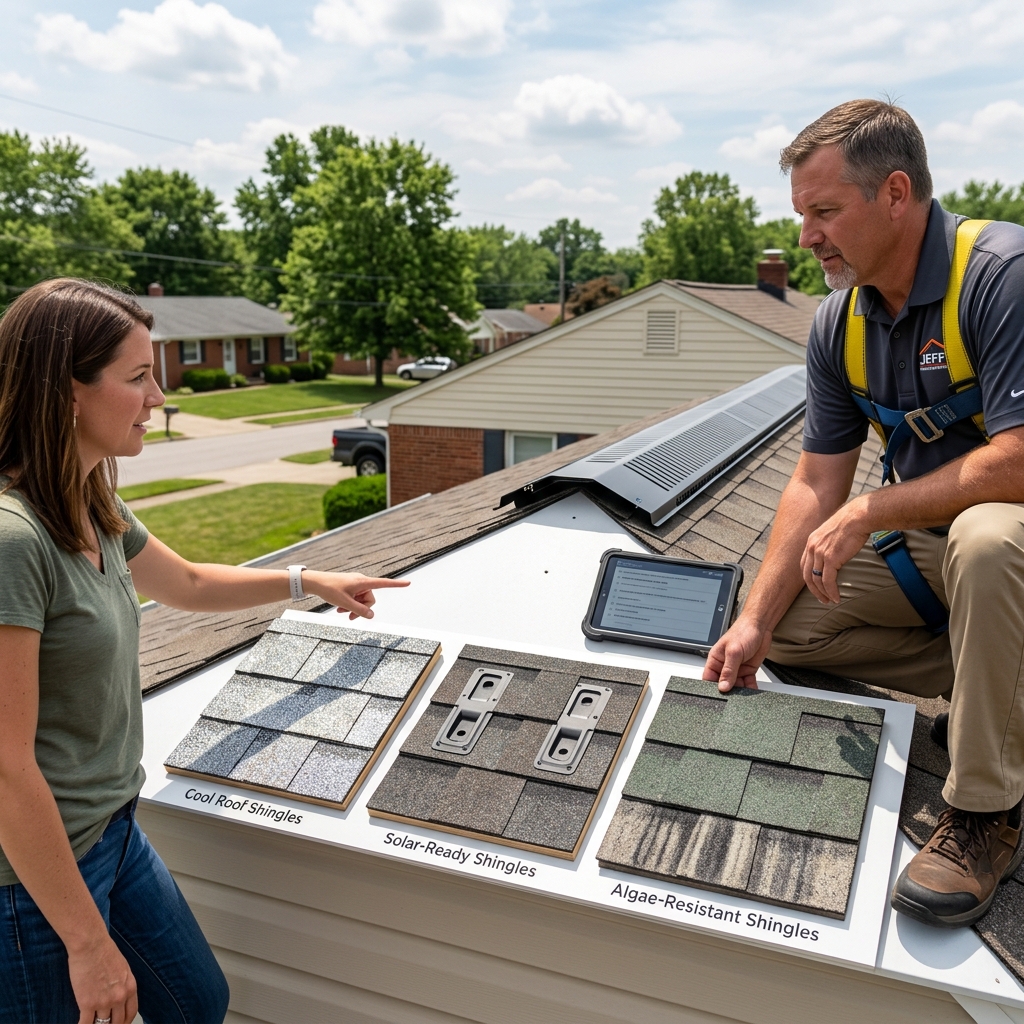
Cool roof shingles use reflective pigments and special coatings to bounce more sunlight away from your roof surface rather than absorbing it as heat. Traditional asphalt shingles absorb roughly 80-90% of incoming solar radiation; cool roof variants reflect 65-75% of that energy back to the sky. The difference translates directly to lower attic temperatures and reduced cooling loads.

We’ve worked with many Louisville homeowners who switched to cool roof shingles and reported noticeably lower summer electric bills. A 1,500-square-foot home might see savings of $300-600 annually, depending on cooling habits and local energy rates. Those numbers compound over a roof’s 25-30 year lifespan, often totaling $7,500-18,000 in cumulative savings.

Cool roof technology works through multiple mechanisms. The reflective coatings maintain their effectiveness across temperature ranges common to Kentucky. The material doesn’t require additional installation steps; your contractor applies cool shingles using standard roofing methods. Unlike some emerging technologies, this option has a proven track record spanning over 15 years.

Key benefits of cool roof shingles:

  • Reduced attic temperatures by 20-30 degrees on peak summer days
  • Lower HVAC strain and extended system lifespan
  • Improved comfort in upper-floor rooms during hot months
  • Minimal premium cost (typically $1-3 per square foot more than standard shingles)
  • Measurable energy bill reductions tracked by homeowners over full seasons

When selecting cool roof materials, look for products with high solar reflectance ratings (0.65 or higher on a 0-1 scale). Owens Corning and similar manufacturers publish these specs clearly. The investment pays for itself over time while keeping your home cooler and more comfortable year-round.

Solar-Ready Shingles: Preparing Your Roof for Renewable Energy

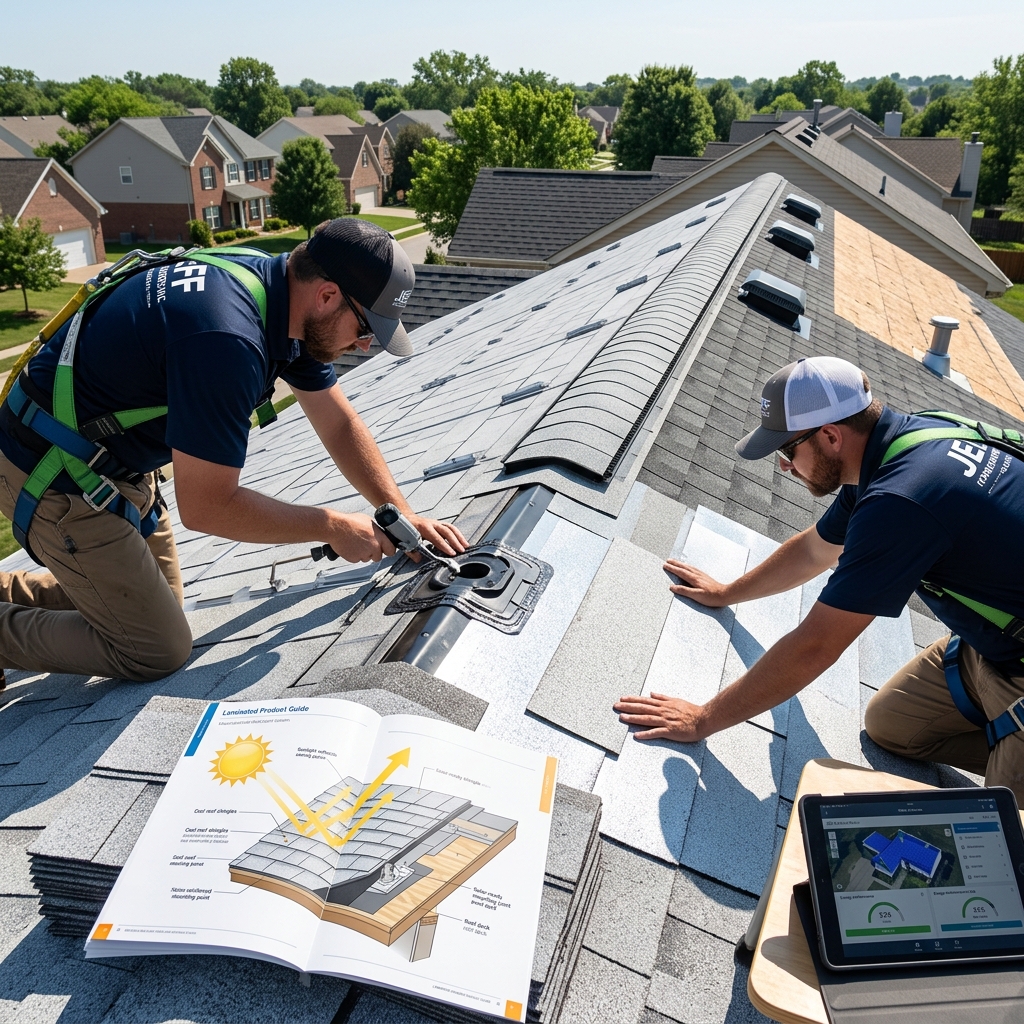
Solar-ready shingles represent a bridge between traditional roofing and renewable energy adoption. These shingles are engineered with features that make future solar panel installation simpler and more efficient: reinforced attachment points, optimized spacing patterns, and electrical pathways built into the design.

Installing solar-ready shingles now doesn’t obligate you to add panels immediately. Instead, you’re preparing your roof to accommodate solar technology down the line without needing a complete reroof. The shingles perform as standard roofing while you decide whether solar energy fits your timeline and budget.

The practical advantage becomes apparent when you consider installation logistics. A standard roof retrofit for solar requires removing shingles, cutting mounting openings, and reinstalling sections. Solar-ready shingles eliminate that complexity. When you’re ready to add panels, installers work with existing attachment points and electrical channels already in place. Installation time drops by 20-30%, reducing labor costs and minimizing roof exposure.

For Kentuckiana property owners, solar-ready shingles make sense when you’re planning a roof replacement anyway and anticipate solar interest within the next 5-10 years. Even if you never install panels, you’ve upgraded your roof with technology that adds flexibility and future-proofs your home. The cost difference compared to standard shingles is modest, typically $2-4 per square foot.

Several manufacturers now produce solar-ready options that meet our quality standards. We source from suppliers offering 25+ year warranties and proven performance in humid, seasonal climates like Kentucky’s. When you discuss roofing options with us, we can walk through whether solar-ready shingles align with your long-term vision for your home.

Algae-Resistant Shingles: Long-Term Protection and Curb Appeal

Louisville’s humidity creates ideal conditions for algae growth on roofs. Within 2-4 years, many standard shingles develop dark streaks and discoloration. Algae doesn’t destroy shingles immediately, but it traps moisture, accelerates deterioration, and makes your roof look significantly older than it is. One call requesting roof cleaning and we know algae has become a real concern for that homeowner.

Algae-resistant shingles incorporate copper or zinc granules that inhibit growth at the surface. Rather than fighting algae after it appears, these shingles prevent colonization from the start. Homeowners consistently report that algae-resistant roofs maintain their original color and appearance 2-3 times longer than standard options in our region.

The mechanics are straightforward: copper and zinc ions gradually wash down the roof with rain, creating a surface environment where algae struggles to establish. The effect is continuous and self-renewing as long as the granules remain intact. This approach beats periodic roof cleaning because it eliminates the problem rather than treating the symptom.

Why algae-resistant shingles matter for Kentuckiana homes:

  • Preserve visual appeal without regular professional cleaning ($200-500 per cleaning, typically needed every 3-5 years)
  • Reduce moisture retention that weakens shingle structure over time
  • Avoid the hassle of pressure washing and potential granule loss
  • Maintain resale appeal; a clean roof significantly impacts first impressions
  • Add longevity through slower material degradation

We recommend algae-resistant shingles for any roofing project in Louisville or the surrounding area. The cost premium is minimal, typically $0.50-1.50 per square foot, and the benefits accumulate over the roof’s lifespan. If your current roof shows algae streaking, an upgrade to algae-resistant materials prevents the cycle from repeating.

Advanced Ventilation Systems That Extend Roof Lifespan

A high-quality roof fails prematurely without proper ventilation. Moisture trapped in your attic accelerates wood decay, reduces insulation effectiveness, and promotes mold growth. Traditional ridge vents and soffit vents do basic work, but advanced systems manage airflow with precision that extends roofing material life significantly.

Modern ventilation employs several strategies working together. Continuous soffit ventilation intake runs the full length of roof eaves, ensuring balanced air entry. Ridge vent systems with baffles direct exhaust upward consistently rather than allowing backflow or uneven venting. Some premium systems add intake dampers that regulate airflow based on temperature and humidity, preventing excessive moisture exchange in winter months.

The payoff is measurable. Attics with advanced ventilation maintain lower moisture levels, typically below 50% relative humidity even during Louisville’s humid summers. Research shows that properly ventilated roofs last 3-5 years longer than those with inadequate airflow. Over a roof’s 25-year lifespan, that difference is substantial.

Components of an effective advanced ventilation system:

  • Continuous soffit vents with mesh screens protecting against pest entry
  • Ridge vents running the full roof peak with internal baffles
  • Gable vents (where applicable) supplementing primary ventilation
  • Adequate attic insulation maintaining a thermal barrier
  • Periodic inspection to ensure vents remain unobstructed by debris or insulation

We evaluate ventilation during every roofing project and often recommend upgrades when existing systems are inadequate. Poor ventilation is a silent roof killer that many homeowners don’t notice until structural damage becomes obvious. Addressing it during replacement prevents problems before they start.

How We Select the Right Technology for Your Property

Choosing roofing technology isn’t one-size-fits-all. Your home’s specific characteristics, local climate, energy usage, and long-term plans should drive the decision. We conduct a thorough assessment before recommending materials.

Start with your roof’s current condition and remaining lifespan. If you’re replacing a roof destroyed by storm damage, you’re making a fresh technology choice. If your existing roof is aging but still intact, we evaluate whether upgrades make economic sense or if standard materials suit your timeline. A roof with 3-4 years of remaining life might not justify premium technology, while one approaching end-of-life is the ideal upgrade point.

Climate considerations matter significantly in Kentucky. Our region experiences hot, humid summers, freeze-thaw cycles in winter, and occasional severe storms. Cool roof shingles pay dividends in summer energy savings. Algae-resistant options prevent the discoloration our humidity encourages. Advanced ventilation combats the moisture issues common in our climate. These factors should feature prominently in material selection.

Energy goals influence your choices too. If reducing summer cooling costs matters, cool roof shingles belong on your priority list. If you’re planning solar installation within 5-10 years, solar-ready shingles eliminate future reroof costs. If you rarely use air conditioning and prioritize durability over energy efficiency, a different mix of technologies makes sense.

During our virtual consultations, we discuss these factors and show you specific options suited to your property. We provide instant estimates comparing standard shingles against advanced alternatives, so you see the cost differences and long-term payback clearly. This approach helps you decide based on actual numbers rather than marketing claims.

Installation Standards That Maximize Performance Benefits

Premium roofing technology only delivers promised benefits when installation meets exacting standards. A cool roof installed incorrectly delivers no energy savings. Solar-ready shingles installed with sloppy attachment points fail their core purpose. Ventilation systems installed without proper air sealing create moisture problems instead of solving them.

We hold our installation teams to Owens Corning Platinum Preferred Contractor standards, which exceed typical roofing industry practices. Every installation follows detailed specifications covering shingle attachment, flashing details, ventilation integration, and workmanship verification. Our inspectors review completed work before we consider a project finished.

Specific installation details vary by technology. Cool roof shingles require proper attic ventilation to fully realize energy benefits; a poorly ventilated attic negates the reflective advantages. Solar-ready shingles demand precise attachment following manufacturer specs; loose installation compromises structural integrity and panel stability later. Algae-resistant shingles need proper flashing to prevent water penetration around valleys and penetrations where algae growth often begins.

Our team understands these nuances because we’ve installed thousands of roofs across Kentuckiana. We’ve seen what works and what leads to callbacks. That experience translates to installations that perform as designed and hold up to our region’s weather patterns.

We document every installation with photos and warranty paperwork so you have clear evidence of work quality. You’ll receive maintenance recommendations specific to your roof’s technology package. These simple steps keep your roof performing at peak efficiency throughout its lifespan.

Comparing Roofing Technologies: What Works Best for Kentuckiana

Different roofing technologies solve different problems. Understanding how options compare helps you decide which combination makes sense for your situation.

Cool Roofs vs. Standard Shingles: Cool roof shingles cost $1-3 per square foot more than standard options but recover that investment through summer energy savings within 5-8 years. For homeowners planning to stay in their home long-term or seeking immediate comfort improvements, the payoff is clear. If you’re planning to move within 5 years, the investment may not recoup through resale value alone, though the home will be more comfortable and lower-utility in the meantime.

Algae-Resistant vs. Standard Shingles: The cost difference is minimal ($0.50-1.50 per square foot), making algae-resistant shingles an easy recommendation for Louisville homes. The visual benefit is dramatic; your roof maintains its original appearance rather than darkening over time. If you plan any roof replacement in Kentucky, this upgrade is practically always worth considering.

Solar-Ready vs. Standard Shingles: Solar-ready shingles cost $2-4 per square foot more but add long-term flexibility. This option makes sense if you’re considering solar panels within the next decade. If solar energy isn’t on your horizon, the cost premium doesn’t deliver immediate value, though you’ll gain slight structural improvements and flexibility.

Advanced Ventilation Systems: Adding premium ventilation during replacement costs $1,500-3,000 depending on home size and existing conditions. The payoff is extended roof lifespan (3-5 additional years) and improved attic condition preventing moisture damage. For any home in a humid climate, we strongly recommend this investment.

Most homeowners see the strongest value in combining algae-resistant shingles (minimal cost, proven benefit in our climate) with advanced ventilation (extends roof life significantly) and cool roof technology if energy savings matter. Solar-ready shingles make sense only if you’re genuinely considering panels. Discuss your specific priorities with us during a virtual consultation, and we’ll recommend the technology mix offering the best return for your situation.

Financing Modern Roofing Upgrades and Long-Term ROI

Premium roofing technology requires upfront investment, but the financial picture improves substantially when you calculate long-term returns. A complete roof replacement with advanced technologies costs $12,000-20,000 for an average Louisville home, compared to $10,000-16,000 for standard materials. That additional $2,000-5,000 investment delivers measurable benefits over 25-30 years.

Consider the numbers: cool roof shingles save $300-600 annually in energy costs. Over 25 years, that’s $7,500-15,000 in recovered energy expenses, roughly offsetting the entire technology premium. When you factor in avoiding roof cleaning costs (typically $200-500 every 3-5 years with standard algae-prone shingles), the financial case strengthens further.

Extended lifespan from advanced ventilation adds another dimension. If better ventilation extends your roof’s life by 4 years, you delay your next major roofing expense by 4 years. That delay represents the full cost of a future roof replacement pushed further into the future, a valuable benefit in itself.

We work with homeowners to explore financing options that fit their situations. Many roofing contractors offer financing plans spreading payments across months or years, reducing upfront strain. Some energy-efficiency upgrades qualify for utility rebates or tax incentives, further improving financial performance. During your consultation, we’ll discuss available programs and help you understand the true cost of ownership for different technology options.

The strongest argument for modern roofing technology is this: you’re replacing your roof anyway. The question isn’t whether to spend money on roofing, but whether to spend slightly more for materials that deliver years of additional benefits. When framed that way, the technology premium becomes a sensible investment rather than an unnecessary expense.

Why Jeff Home Improvements Leads in Roofing Innovation

We’ve been serving Kentuckiana since 1989, and our commitment to quality and innovation has only deepened over those decades. We became an Owens Corning Platinum Preferred Contractor not by accident but through consistent dedication to installation standards, customer education, and continuous improvement.

Our roofing team stays current with emerging technologies and material science advances. We don’t simply install what suppliers recommend; we evaluate new options, test performance in our region’s climate, and integrate technologies only when we’re confident they deliver promised benefits. That scrutiny protects our reputation and ensures you’re getting genuinely valuable upgrades, not marketing trends.

We invest in staff training and equipment that enables precise installation of complex systems. Cool roof benefits depend on proper ventilation integration. Solar-ready shingle installation requires specific attachment techniques. Advanced flashing details prevent water infiltration that undermines material performance. Our team has the knowledge and tools to execute these details correctly, which matters more than material selection.

Most importantly, we stand behind our work with comprehensive warranties and accessible support. If a system underperforms or questions arise during your roof’s lifespan, you reach experienced professionals who understand what was installed and why. That accessibility and accountability distinguish us from roofing contractors focused primarily on quick turnaround and minimal cost.

When you contact Jeff Home Improvements for a roofing consultation, you’re engaging a team that approaches every project with the same standards we’d apply to our own homes. We’ll help you understand modern roofing technology, assess what makes sense for your specific property, and deliver installation that maximizes performance benefits. Virtual consultations and instant estimates make it easy to explore options without obligation. Reach out today to discuss how contemporary roofing technology can enhance your home’s performance, longevity, and value.

Contact us today for a free in home, no obligation quote on your roof
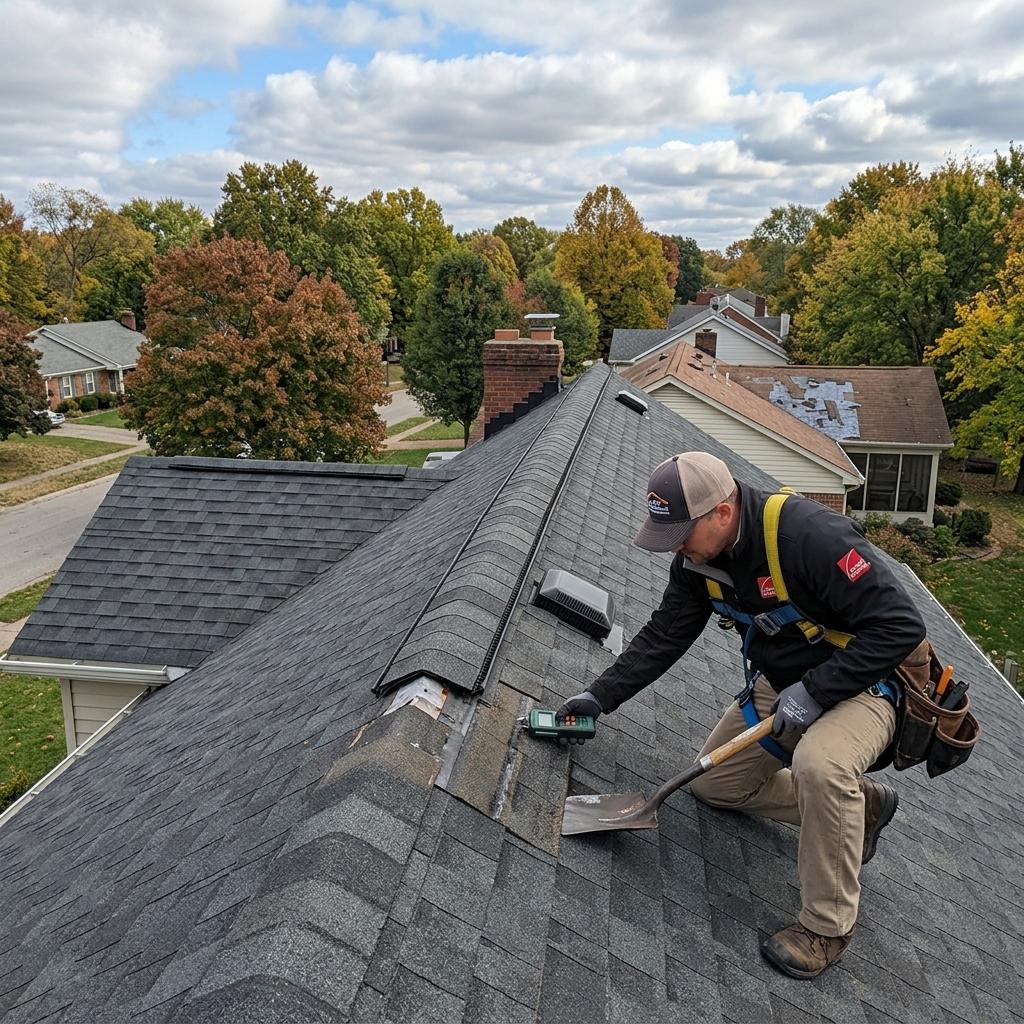
Expert Gutter Guard Installation to Protect Your Louisville Home from Water Damage

Why Gutter Guards Matter for Louisville Homeowners

Your gutters are the first line of defense against water damage, yet most homeowners don’t give them much thought until a problem develops. In the Louisville area, where we see significant rainfall and seasonal storms, gutters work overtime. Without proper protection, they can become clogged with leaves, debris, and sediment, causing water to back up and damage your roof, siding, foundation, and landscaping.

Gutter guards prevent this damage by keeping debris out while allowing water to flow freely. Think of them as a protective barrier that works 24/7, even when you’re not thinking about maintenance. When gutters become blocked, water pools and creates ideal conditions for mold, rust, and wood rot. Over time, this damage compounds and becomes expensive to repair.

We’ve worked with hundreds of Louisville homeowners who discovered water damage in their basements, attics, or along their foundations only after ignoring gutter maintenance for years. A gutter guard installation is a smart preventative investment that saves you thousands in potential repairs down the road. It also eliminates the dangerous task of climbing ladders to clean gutters yourself, which is one of the leading causes of home injuries.

What to do next: Schedule a visual inspection of your current gutters. Look for sagging sections, visible debris buildup, or water stains below the gutter line. These are red flags that protection is needed.

Common Gutter Problems We See in Kentuckiana

Kentucky’s climate creates specific challenges for gutters. Our spring and fall storms bring heavy downpours, summer brings leafy debris from mature trees, and winter ice dams can cause serious backups. We regularly encounter four recurring issues in the Louisville and Kentuckiana region.

Debris accumulation is the most common problem we address. Leaves, twigs, moss, and sediment pile up in gutters, especially around homes surrounded by mature trees or in areas with overhead power lines. A single clogged section can block water flow across your entire gutter system.

Ice dam formation happens frequently in our winters. When snow melts and refreezes along the gutter edge, it creates a barrier that prevents water from draining. This causes backups that seep under your roofline and into your attic. We’ve seen attic damage and insulation destruction from ice dams that could have been prevented.

Gutter sagging and separation occurs when gutters become too heavy with debris and standing water. The weight pulls the gutter away from the fascia board, creating gaps where water escapes. Once gutters start to separate, repairs become costly and the structural integrity of your exterior is compromised.

Downspout clogs and improper drainage leave water dumping directly at your foundation instead of directing it away from your home. This causes foundation settling, cracks, and basement flooding. Proper drainage is essential for foundation longevity.

Professional gutter guards address all four of these issues by maintaining clear water flow and keeping debris out of the system entirely.

How Our Gutter Guard Systems Work

We install several gutter guard styles depending on your home’s needs, roof pitch, and climate exposure. Each system operates on the same basic principle: allowing water to flow into the gutter while blocking debris from entering.

Our most popular option is the micro-mesh gutter guard, which uses an ultra-fine stainless steel or aluminum mesh screen. This design allows water to pass through while filtering out debris as small as pine needles and granules from shingles. The mesh sits flat against your gutter opening, maintaining your home’s appearance while providing maximum protection.

Surface-tension guards work differently. They use a curved design that allows water to follow along the surface and drop into the gutter, while debris slides off the back. These are especially effective in high-rainfall climates like ours because they handle volume well without pooling.

Foam insert guards use a permeable foam material that sits directly inside your gutter. Water penetrates the foam while leaves and debris accumulate on top where they’re easily removed. This option is budget-friendly and works well for homes without heavy leaf coverage.

Reverse-curve guards have a hood that extends over your gutter opening. Water flows over the edge and down into the gutter while debris falls straight down and away from the system. These perform excellently in heavy storms and are particularly durable.

We assess your home’s specific situation, including rainfall patterns, tree coverage, roof pitch, and existing gutter condition, before recommending a system. What works perfectly for one Louisville neighborhood might not be ideal for another location just a few miles away. Our experts explain the pros and cons of each option during your consultation so you can make an informed decision.

Benefits of Professional Gutter Guard Installation

The advantages of gutter guards extend far beyond having clean gutters. Homeowners who invest in professional gutter protection systems report benefits across multiple areas of home maintenance and safety.

Reduced maintenance burden is the most immediate benefit. Without gutter guards, you’re looking at 2-4 cleaning sessions per year, depending on tree coverage. With guards installed, maintenance drops to virtually zero for most homeowners, or perhaps a quick annual visual inspection. This saves you time, eliminates ladder-climbing risk, and removes the hassle from your maintenance calendar.

Protection from water damage is substantial. Water damage is one of the most expensive home repairs, often exceeding $10,000 when it involves foundation work, basement moisture, or attic mold remediation. A gutter guard system is a fraction of that cost yet prevents these catastrophic scenarios.

Extended gutter lifespan happens because your gutters aren’t constantly holding water and heavy debris. Standing water accelerates rust and corrosion, while debris weight causes stress on fasteners and brackets. Clean, dry gutters last 25-30 years or longer.

Improved curb appeal is often overlooked. Clean gutters without debris overflow look better and protect your siding and landscaping from water staining and soil erosion. If you’re planning to sell, proper water management signals good home maintenance to potential buyers.

Prevention of pest entry is significant in Kentucky. Standing water and debris in gutters attract mosquitoes, and blocked gutters create nesting sites for birds and insects. Guards keep your gutter system inhospitable to pests.

Reduced fire risk for homes in areas prone to wildfires. While Louisville doesn’t face major wildfire threats, accumulated leaves in gutters are a legitimate fire hazard in dry conditions. Guards eliminate this concern entirely.

Our Installation Process and Quality Standards

When you choose us for gutter guard installation, you’re getting experienced professionals who follow a detailed process to ensure your system performs perfectly for years to come.

Our process begins with a comprehensive gutter assessment. We inspect every section of your existing gutters, measure dimensions, identify damage, and note areas of particular concern. If your current gutters are compromised, we’ll discuss repair or replacement as part of the solution. We also check downspout placement and drainage patterns to ensure water flows away from your foundation.

Next comes product selection and planning. Based on our assessment, we present options with honest recommendations about which system best suits your home. We discuss durability, warranty coverage, maintenance expectations, and cost. We’ll take time to answer your questions, because an informed homeowner is a satisfied customer.

Before installation begins, we prepare the area. This includes clearing existing debris from gutters, inspecting and tightening gutter fasteners, and repairing any leaks or sagging sections. We don’t install guards over damaged gutters because they won’t perform properly.

The installation itself follows manufacturer specifications precisely. We ensure guards are securely fastened, sealed properly at joints, and positioned correctly to maximize water flow. We check that guards don’t impede shingle granules or cause roofing issues. Quality installation determines whether a gutter guard system lasts 10 years or 30 years.

Finally, we conduct a thorough inspection and demonstration. We show you how the system works, explain maintenance expectations, and walk through any warranty coverage. We also document the installation with photos for your records.

All our work is backed by warranties covering both materials and labor. We’re confident in our installation quality because we’ve been serving Louisville and Kentuckiana since 1989, and our reputation depends on long-term customer satisfaction.

Protecting Your Home Year-Round in Kentucky Weather

Kentucky’s four-season climate creates distinct challenges for home exterior systems, and gutter guards are essential for year-round protection.

Spring brings heavy rainfall and occasional severe storms. Gutter guards ensure that downpours drain properly instead of overwhelming your gutters. During thunderstorms with 2-3 inches of rain, unprotected gutters often can’t handle the volume, causing water to spill over and damage siding, landscaping, and foundation areas. Our gutter systems are rated for Kentucky’s heaviest rainfall events.

Summer presents leaf and debris challenges. Trees are full, pollen counts are high, and severe afternoon storms can break branches. Gutter guards keep this summer debris from accumulating. Many Louisville neighborhoods have large oak and maple trees that produce enormous quantities of leaves in summer and again in fall.

Fall is when most gutters clog. Leaves pile up faster than water can drain them. This is when unprotected gutters become problematic, backing up water into fascia boards and creating ice dam conditions before winter even arrives. Gutter guards keep fall foliage out of your system entirely.

Winter ice dams are a serious concern in Kentucky. When snow melts on your roof and refreezes at the gutter line, water backs up under shingles. This causes interior damage that homeowners sometimes don’t discover until spring. Proper gutter guards, combined with adequate attic insulation, prevent most ice dam damage.

A well-maintained gutter guard system handles all four seasons without letting seasonal challenges damage your home. This is particularly important in Louisville, where we’re in Zone 6 with significant weather variability throughout the year.

Why Choose Jeff Home Improvements for Gutter Guards

We’ve been installing gutter systems and exterior improvements across the Louisville area since 1989. That’s nearly 40 years of working through Kentucky winters, managing storm damage recovery, and building relationships with homeowners who trust us with their properties.

As an Owens Corning Platinum Preferred Contractor, we maintain the highest standards of quality and customer service. This certification means we’re regularly audited, we maintain current product knowledge, and we back our work with Owens Corning’s support and warranty programs.

Our team brings genuine expertise. We don’t treat gutter guards as an afterthought to roofing work. We understand drainage patterns, local climate challenges, and how different systems perform in various home configurations. Our technicians are trained and experienced, not rushed crews trying to maximize daily job counts.

We offer virtual consultations and instant estimates. You can schedule a consultation from your phone, show us your gutters, and receive a detailed estimate without committing to a site visit. This convenience matters, especially for busy homeowners balancing work and family responsibilities.

We handle the complete exterior picture. Whether you need just gutter guards or you’re planning a larger home improvement project including roof repair, siding work, or window replacement, we can coordinate the work efficiently. We see how each system interacts and ensure everything works together.

Our warranty and follow-up support is comprehensive. We explain exactly what’s covered, for how long, and what your responsibilities are. We don’t disappear after the job is complete. We’re here to answer questions, address concerns, and ensure you’re satisfied.

Visit Jeff Home Improvements to see our full range of services and customer testimonials. You’ll find detailed information about our credentials, service areas, and past projects.

Investment and Cost Considerations

Gutter guard systems vary in price based on several factors specific to your home and situation.

Linear footage is the primary cost driver. A small home might need 100-150 linear feet of gutter guards, while a large home with multiple roof lines could require 300+ feet. We price competitively, but you can generally expect professional gutter guard installation to cost $8-15 per linear foot, depending on the system chosen.

Material selection affects cost. Micro-mesh systems typically run on the higher end because of durability and fine filtration. Foam inserts are more budget-friendly. Surface-tension and reverse-curve guards fall in the middle range. All of our options are quality products that perform excellently.

Existing gutter condition impacts total cost. If your current gutters need repair, replacement, or thorough cleaning before guards are installed, that work is separate from the guard installation itself. We always recommend addressing underlying gutter issues before adding guards on top of problematic systems.

Labor complexity varies by home architecture. Homes with steep roofs, multiple roof lines, or difficult access points require more time and expertise, which affects labor costs. We provide accurate estimates after assessing your specific situation.

Most homeowners view gutter guard installation as a preventative investment that pays for itself through avoided water damage and elimination of cleaning costs. Consider that professional gutter cleaning costs $150-300 per service, and most homes need it 2-4 times yearly. A gutter guard system that eliminates most of that cleaning saves you $300-1,200 annually. Over a 10-year lifespan, the system essentially pays for itself while dramatically reducing your maintenance burden.

We offer financing options for larger projects, making it easier to protect your home without straining your budget. Ask about current promotions and financing programs during your consultation.

Maintenance Tips for Long-Lasting Gutter Guards

While gutter guards dramatically reduce maintenance, they’re not completely maintenance-free. A few simple practices ensure your system performs optimally for decades.

Annual inspections should happen in spring after winter weather passes and again in fall before heavy leaf season. Walk around your home and look at the gutter guards from ground level. Check that they’re still securely fastened and haven’t lifted or separated. Look for any visible damage or debris accumulation.

Clear debris from the top of guards as needed. Even the best gutter guards can accumulate leaves and twigs on top, particularly if you have overhanging trees. Twice-yearly removal of surface debris takes 30 minutes and keeps water flow optimal. You’re simply brushing material off the top rather than digging into gutters.

Ensure downspouts remain clear. Water should exit your downspouts 4-6 feet away from your foundation. If downspouts are clogged or draining too close to your home, water damage risk increases despite having guards on the gutters above. Test downspout flow by running water from a hose into your gutter system.

Address damage immediately. If you notice a guard has lifted, come loose, or been damaged by a storm, contact us for repair. Small issues become large problems if left unattended. We handle repairs quickly and affordably.

Avoid pressure washing your guards. While it might seem like an easy cleaning method, high-pressure water can damage or dislodge guards. Gentle hand cleaning with a soft brush is safer.

Don’t ignore ice dam warning signs. If you notice water stains appearing in your attic or ceiling during winter, this indicates ice dams are backing water under your roof. This requires professional assessment and possibly additional insulation or ventilation work, not just better gutter protection.

Most gutter guard systems we install require minimal attention beyond these simple practices. Many of our customers go years between maintenance visits once the system is properly installed.

Getting Your Free Gutter Assessment Today

Protecting your Louisville home from water damage starts with understanding your current situation and what improvements would benefit you most. We offer free gutter assessments that take the guesswork out of your decision.

During your assessment, we’ll examine your gutters, identify any existing damage or concerns, discuss the specific challenges your home faces based on its location and design, review gutter guard options with honest recommendations, and provide a detailed estimate for any work you decide to pursue.

You can schedule your assessment in multiple ways. Use our website at Jeff Home Improvements to request a virtual consultation if you prefer to show us your gutters via phone or video. Call our office to speak with a team member directly and discuss your situation. Or fill out our online form describing your needs and preferred contact time, and we’ll reach out to schedule your visit.

We serve the entire Louisville and Kentuckiana area with reliable, professional service. Whether your home needs gutter guards, gutter repair, complete gutter replacement, or a comprehensive exterior refresh, we’re here to help. Our free assessment comes with no obligation and no high-pressure sales tactics. We simply want to understand your situation and present honest recommendations.

Take the first step toward protecting your home from water damage. Contact us today for your free gutter assessment, and let’s discuss how professional gutter guard installation can give you peace of mind year-round in Kentucky weather.

Contact us today for a free in home, no obligation quote on your roof
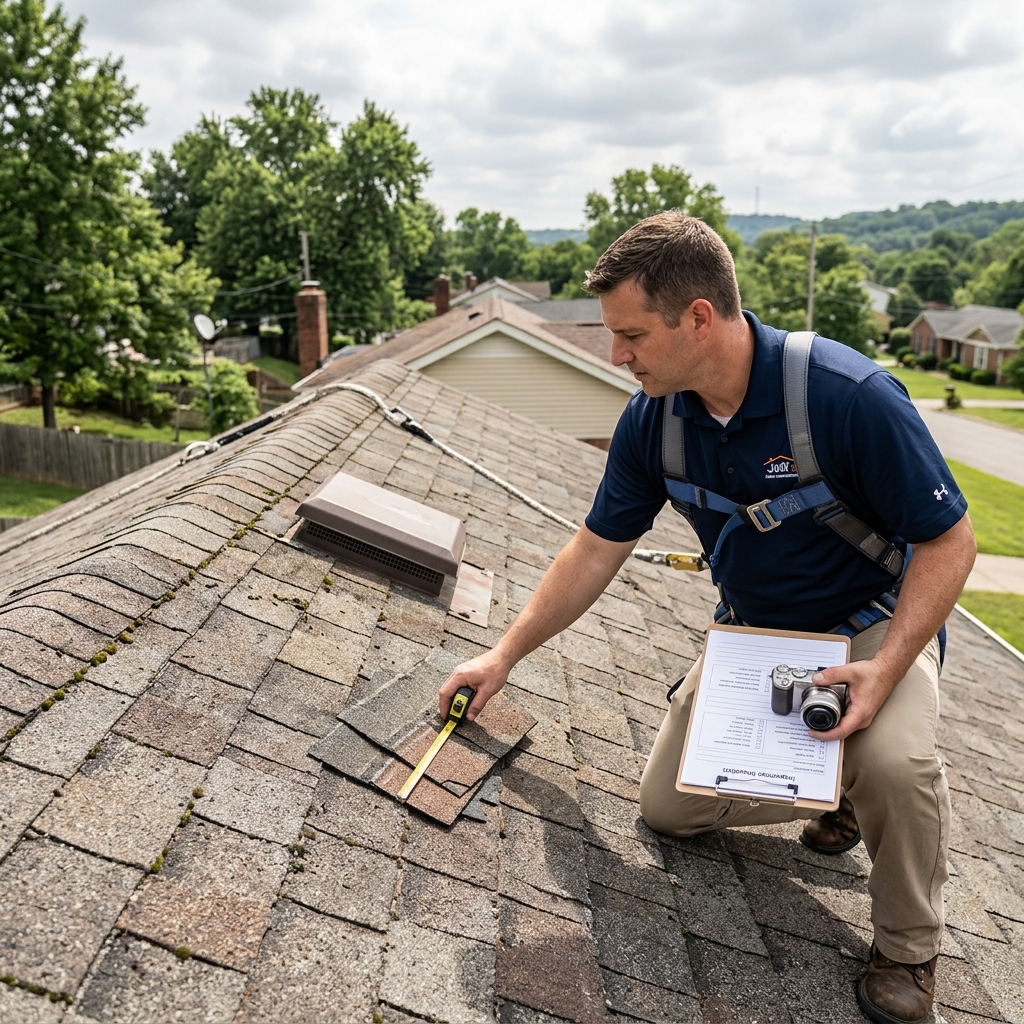
Roofing ROI Calculator: Real Costs, Savings, and Financing Options for Kentucky Homeowners

Why Roofing Decisions Require More Than Price Quotes

When you’re facing a roof replacement, it’s tempting to grab the lowest estimate and call it done. But roofing is one of the largest investments you’ll make in your home, and the numbers deserve careful attention. Over the next 20 to 40 years, your roofing choice affects energy bills, insurance rates, home value, repair frequency, and peace of mind. We’ve helped thousands of Louisville and Kentuckiana homeowners see beyond the initial price tag to understand the full financial picture.

This guide walks you through how to calculate real roofing ROI, what factors drive long-term value, and how financing and warranties change the equation. By the end, you’ll have the framework to compare quotes honestly and make a decision that actually pays dividends.

A roof quote is just the starting point. Two contractors might bid $12,000 and $16,000, but those numbers hide critical differences in material quality, lifespan, warranty terms, labor guarantees, and financing options.

Consider energy efficiency. A premium shingle or metal roof with reflective properties can reduce summer cooling costs by 10 to 15 percent in Kentucky’s humid climate. Over 25 years, that compounds into real savings. A bargain shingle won’t capture that benefit, and you’ll recoup some of the price premium through utility reductions alone.

Durability matters too. A budget roof might last 15 years before needing replacement; a premium option lasts 25 to 30. Each replacement cycle includes labor, waste, and disruption. When you factor in the cost of replacing a roof twice versus once, the higher upfront investment often becomes cheaper per year of protection.

Warranty coverage varies wildly. One contractor offers a 10-year labor warranty; another provides 25 years. If a leak develops at year 12, the first option leaves you paying for repairs out of pocket. The second backs your investment.

Insurance and resale value add another layer. Some insurance companies offer discounts for newer roofs or impact-resistant materials. Buyers expect a quality roof when considering a home purchase, and a newly replaced roof with transferable warranty can increase perceived value by 2 to 5 percent.

Our approach focuses on understanding your specific situation: the roof’s current condition, your timeline, your budget, and your long-term plans for the home. That context lets us build a recommendation tailored to your needs, not just your immediate budget constraint.

The True Cost of Delaying Your Roof Replacement

Procrastination on a failing roof costs money every day it sits. If your roof shows signs of age (curling shingles, missing pieces, visible wear), you’re not just risking major leaks; you’re potentially facing hidden damage that worsens rapidly.

Water intrusion in the attic or walls spreads quietly. A small leak at the roof penetration can lead to mold, wood rot, and structural deterioration that costs five to ten times the roof replacement bill to repair. Insurance may deny claims for water damage from a roof that was clearly failing and unmaintained, leaving you with the full repair cost.

Delayed replacement also impacts insurance. Carriers require roof replacements within 5 to 10 years of claim history in many cases, or they’ll drop coverage or raise premiums significantly. In Kentucky, where summer storms and hail occur regularly, a weak roof becomes expensive to insure.

Energy costs spike with an aging roof. Poor insulation, ventilation gaps, and deteriorating shingles compromise your home’s thermal envelope. A 20-year-old roof with compromised ventilation can add 15 to 25 percent to your cooling bills during Kentucky summers.

Resale complications arise too. Home inspectors flag old roofs immediately. Buyers either demand a replacement as a condition of purchase (shifting negotiating power away from you) or they walk away. You end up replacing the roof anyway, but now you’re doing it on a compressed timeline with less leverage on price.

The financial calculation is straightforward: replacing your roof now at current market rates, with available financing and incentives, typically costs less than replacing it in emergency conditions after weather damage, mold remediation, energy waste, and lost home value.

How We Calculate Long-Term Savings for Your Home

ROI on roofing comes down to comparing total lifecycle costs across different scenarios. We break this into five components:

Material and installation costs form the foundation. We get honest bids based on your home’s square footage, pitch, structural requirements, and local labor rates. A 2,000 square-foot roof in Louisville typically ranges from $12,000 to $22,000 depending on material choice and complexity.

Lifespan of the system determines how many replacement cycles you’ll face over 30 years. A 20-year shingle means one replacement in that period; a 30-year shingle or metal roof might mean none. Multiply the cost by replacement frequency to see the true per-year expense.

Energy efficiency gains reduce utility costs over time. We calculate this using your current cooling costs, local climate data, and the reflectivity rating of your chosen material. A metal roof in Louisville saves roughly $400 to $600 annually on cooling in a typical home.

Maintenance and repair costs accumulate. A standard asphalt roof needs gutter cleaning, occasional patching, and inspections every few years. A metal roof requires minimal maintenance. A premium asphalt roof with our extended maintenance plan costs you zero in unplanned repairs.

Insurance and resale value adjustments round out the picture. We factor in any insurance discounts your new roof qualifies for and the typical 2 to 5 percent home value increase buyers attribute to a recently replaced roof with warranty.

Put together, a $18,000 premium roof with 30-year lifespan, $500 annual energy savings, $100 annual maintenance, and 3 percent home value increase often shows superior ROI compared to a $12,000 roof with 20-year lifespan and escalating repair costs.

Your next step: Get two detailed estimates that break down materials, labor, lifespan, and warranty terms separately. Ask each contractor about energy efficiency ratings and maintenance requirements. You’ll spot the real value differences quickly.

Warranty Coverage: What Actually Protects Your Investment

Warranty terms are where contractors create vastly different levels of customer protection. Understanding the difference is critical.

Material warranty covers manufacturer defects in the shingles or panels. Most run 20 to 30 years and are transferable to future owners, adding resale appeal. This is standard and expected.

Labor warranty covers the installation workmanship. This is where we see dramatic variation. Some contractors offer 10 years; we provide 25 years. If your roof develops a leak due to improper installation, a 10-year warranty leaves you paying for repairs at year 15. Our 25-year promise covers you through most of the roof’s lifespan.

Leak-free warranty is a premium offering we extend to customers who choose certain material and maintenance plan combinations. This guarantees that if you follow recommended maintenance, you won’t pay for leak repairs during the warranty period.

Transferability matters for resale value. A non-transferable warranty dies when you sell the home. A transferable warranty transfers to the new owner, making the home more attractive and justifying a higher sale price.

Exclusions and conditions hide in the fine print. Some warranties exclude storm damage, ice dams, or deterioration from lack of maintenance. Others require you to use their maintenance program or photos documenting the roof annually. Read the actual warranty document, not the sales sheet.

We provide detailed warranty documentation with every project and explain exactly what’s covered, what isn’t, and what actions maintain coverage. This transparency prevents surprises years down the road.

Financing Options That Make Premium Roofing Accessible

A $18,000 roof is a large expense, and the best material often costs more upfront. Our financing options let you choose the roof you actually want, not just the one you can pay cash for today.

0% APR financing for 12 to 24 months moves the payment into monthly installments without interest charges. A $18,000 roof becomes roughly $750 per month over 24 months. For most homeowners, spreading this across monthly budgets works better than one large lump sum.

Traditional home equity lines of credit (HELOC) let you borrow against your home’s equity at rates typically lower than credit cards. Current Kentucky rates run 7 to 9 percent, and interest may be tax-deductible (consult your accountant). This works well if you have substantial equity and don’t mind a variable rate.

FHA 203k loans are structured specifically for home improvements and repairs. These allow you to refinance or establish a new mortgage that includes the roof replacement cost. Monthly payments spread over 15 or 30 years, and rates are often favorable compared to HELOC or credit cards.

Cash-out refinancing lets you refinance your existing mortgage for a higher amount and pocket the difference as cash for the roof. This works if current rates are favorable or if your goal is to consolidate high-interest debt alongside the roof replacement.

Our direct financing partnerships simplify the process. We’ve pre-arranged relationships with lenders who understand home improvement projects and can approve applications quickly. Many customers receive funding approval within 24 hours.

Compare total interest paid across options. A $18,000 roof at 8 percent over five years costs roughly $3,500 in interest; at 6 percent it’s $2,900. That difference matters. Calculate the monthly payment against your budget and choose the option that balances affordability with total interest cost.

Our Maintenance Plans and Extended Protection Benefits

A premium roof is an investment, and like any investment, it requires care to deliver maximum returns. Our maintenance plans keep your roof performing optimally and preserve warranty coverage.

Spring inspection checks for winter damage: cracked shingles, ice dam damage, debris accumulation, and ventilation blockages. We clear gutters, address minor issues, and document the roof’s condition. This runs roughly $150 to $250 annually.

Fall preparation ensures your roof handles upcoming winter weather. We inspect flashing, seal any gaps, trim overhanging branches, and confirm proper gutter function. Another $150 to $250.

Annual monitoring tracks your roof’s performance between inspections. We respond quickly to weather events and assess damage before insurance companies do, positioning you to file accurate claims.

Extended coverage adds more value. Our full maintenance plan includes repair credits (typically $500 to $1,000 annually) that roll forward if unused, emergency storm response within 48 hours, and continued warranty validation through documentation. Annual cost typically runs $400 to $600 depending on roof size and complexity.

The math is compelling. A maintenance plan costs $500 annually. Over 25 years, that’s $12,500 total. But it prevents the $2,000 to $5,000 repairs that emerge from deferred maintenance, preserves your warranty coverage, catches small issues before they become large ones, and ensures your roof maintains its resale value. Customers on maintenance plans report zero unplanned roof-related expenses and consistently higher home appraisals.

Using Our Instant ROI Calculator to Compare Your Options

Comparing roofing options gets easier when you run the numbers through a structured calculator. We’ve built ours to account for the factors that actually impact your bottom line.

Input your home’s square footage and current roof age. The calculator estimates replacement cost for three material tiers: budget asphalt, premium asphalt, and metal. You immediately see the price difference.

Next, it projects lifespan for each option. Budget material typically lasts 15 to 20 years; premium asphalt runs 25 to 30; metal can exceed 40. The calculator shows total replacement cycles you’ll face over your chosen timeframe (typically 25 to 30 years).

Energy savings come next. Enter your current monthly cooling bill (or let us estimate based on average Kentucky usage), and the calculator applies the efficiency gains of each material type. Metal roofs and premium reflective shingles save the most; standard asphalt saves less.

Annual maintenance costs factor in. Budget roofing requires more repairs and attention; premium options with maintenance plans cost more upfront but generate fewer surprises.

The calculator totals everything: material, labor, replacements, energy, maintenance, and financing costs if you choose a loan. Then it shows annual cost per year of protection, total 30-year expense, and ROI impact on home value.

Most Kentucky homeowners discover that the premium option costs 15 to 25 percent more upfront but costs 10 to 15 percent less over 30 years when all factors combine. That’s not hype; that’s data.

Access our calculator on our website, or schedule a virtual consultation where we run the analysis together. We can model different financing options and show you how extending the payment term reduces monthly impact while increasing total interest (and vice versa).

Storm Damage Repairs: When Your Investment Pays Immediate Dividends

Kentucky experiences severe weather regularly: spring hail, summer storms, and winter ice events. When your roof sustains damage, the ROI equation shifts dramatically.

A storm-damaged roof that you replace immediately qualifies for insurance coverage. Your homeowner’s policy typically covers the full replacement cost (minus your deductible) when the damage is documented and the repair is completed by a licensed contractor. This makes the effective out-of-pocket cost your deductible only, typically $500 to $1,500.

We handle the documentation and insurance process for you. We inspect the damage, photograph it, file the claim on your behalf, and work directly with the adjuster. Most claims we file are approved within two weeks, and the insurance check covers the bulk of replacement costs.

A storm-damaged roof that you delay repairing gets worse. Water intrusion leads to mold, wood rot, and structural damage. Insurance will deny subsequent claims if the damage resulted from a roof that was previously identified as compromised and not repaired. You lose insurance coverage and face exponentially higher repair costs.

If your roof sustains storm damage and you were already considering replacement, the damage actually improves your financial position. You’re accessing insurance money toward a replacement that makes sense anyway. The effective ROI becomes nearly 100 percent because the insurance covers most of the cost, and you get a new roof that performs for 25 to 40 years.

Document any storm-related concerns immediately. If you notice a leak, missing shingles, or visible damage after weather events, contact us within 48 hours. We’ll assess whether it’s insurable and help you file a claim properly. Many homeowners don’t realize their damage qualifies for insurance coverage because they don’t get a professional evaluation.

Tax Credits and Incentives for Your Exterior Upgrade

Federal and state tax credits can reduce the effective cost of a roofing replacement, especially if you choose energy-efficient materials.

Federal energy tax credits for 2026 allow homeowners to claim up to $3,200 in credits for qualifying energy-efficient home improvements, including roofs with specific reflectivity ratings and metal roofs. These are credits, not deductions, meaning they reduce your tax liability dollar-for-dollar. A $18,000 premium roof might net you a $3,200 credit, reducing your true cost to $14,800.

Eligibility requires the roof to meet Department of Energy efficiency standards. Metal roofs and premium asphalt shingles with ENERGY STAR or similar ratings typically qualify. Standard asphalt does not.

State incentives vary. Kentucky currently offers property tax exemptions for solar energy systems but limited tax breaks specifically for roofing. However, some utility companies offer rebates for cool roofs that reduce cooling costs in summer. Check with your local electric and gas providers.

Energy audits sometimes qualify for grants or low-interest loans through Kentucky state programs or local utility companies. If you’re making multiple exterior improvements (roof, windows, insulation), combined energy upgrades may open funding doors that standalone roofing doesn’t.

Keep all receipts and documentation from your contractor. The tax credit requires proof that the work was completed and paid for. We provide itemized invoices and can include ENERGY STAR documentation to streamline the credit application process.

Talk to your tax preparer before choosing your roofing material. In some cases, the tax credit difference between material options is substantial enough to justify a higher upfront cost that’s more than offset by the federal credit.

Owens Corning Platinum Benefits and Extended Coverage

As an Owens Corning Platinum Preferred Contractor, we’ve earned certification through rigorous training, quality standards, and customer satisfaction metrics. This status directly benefits our customers.

Owens Corning Platinum contractors get exclusive access to extended warranty programs unavailable to standard installers. We can offer the SureNail Advanced Protection Warranty, which provides enhanced labor coverage and faster claim processing compared to standard warranties.

Platinum certification also qualifies our customers for Owens Corning’s fastest-claims program. If you file a warranty claim on your roof, Owens Corning prioritizes it for investigation and resolution, often completing the process in weeks rather than months.

We maintain inventory of premium Owens Corning shingles and materials that standard contractors don’t stock. This means we can begin your installation faster and aren’t constrained by supplier delays that plague less-established contractors.

The Owens Corning Platinum relationship also ensures we stay current on the latest material innovations and installation techniques. We benefit from training that standard contractors skip, and that training directly translates to higher-quality installations and fewer future problems.

When you work with us, you’re not just getting a contractor; you’re accessing Owens Corning’s warranty infrastructure and accelerated claims support. Combined with our 25-year labor warranty, this creates one of the strongest protection packages available in Kentucky.

Start Your Free Virtual Consultation and Instant Estimate Today

Everything in this guide points toward one practical truth: your roofing ROI depends on getting detailed, honest information about your specific situation. Generic advice doesn’t account for your home’s condition, your timeline, your budget, or your long-term plans.

We offer free virtual consultations where you can show us your roof via video, discuss your concerns, and get honest assessment without pressure. We’ll explain the condition of your current roof, discuss timing, explore material options, and run ROI calculations specific to your home.

If you’re ready to move forward, we provide instant estimates based on your home’s details. These estimates include material costs, labor, warranty terms, financing options, and energy savings projections. You’ll have the numbers you need to compare confidently against other contractors.

Many Kentucky homeowners start with a virtual consultation as a sanity check. They compare our analysis against another contractor’s estimate and find the details matter enormously. We’re confident that when you see the full ROI picture, our recommendations and pricing stand up to scrutiny.

Contact Jeff Home Improvements Inc. to schedule your free consultation. You’ll spend 20 minutes on video with a roofing specialist, get professional assessment of your roof, and leave with a clear understanding of your options and true costs. No obligation. No sales pressure. Just honest expertise on how to protect your home and maximize your investment.

Contact us today for a free in home, no obligation quote on your roof
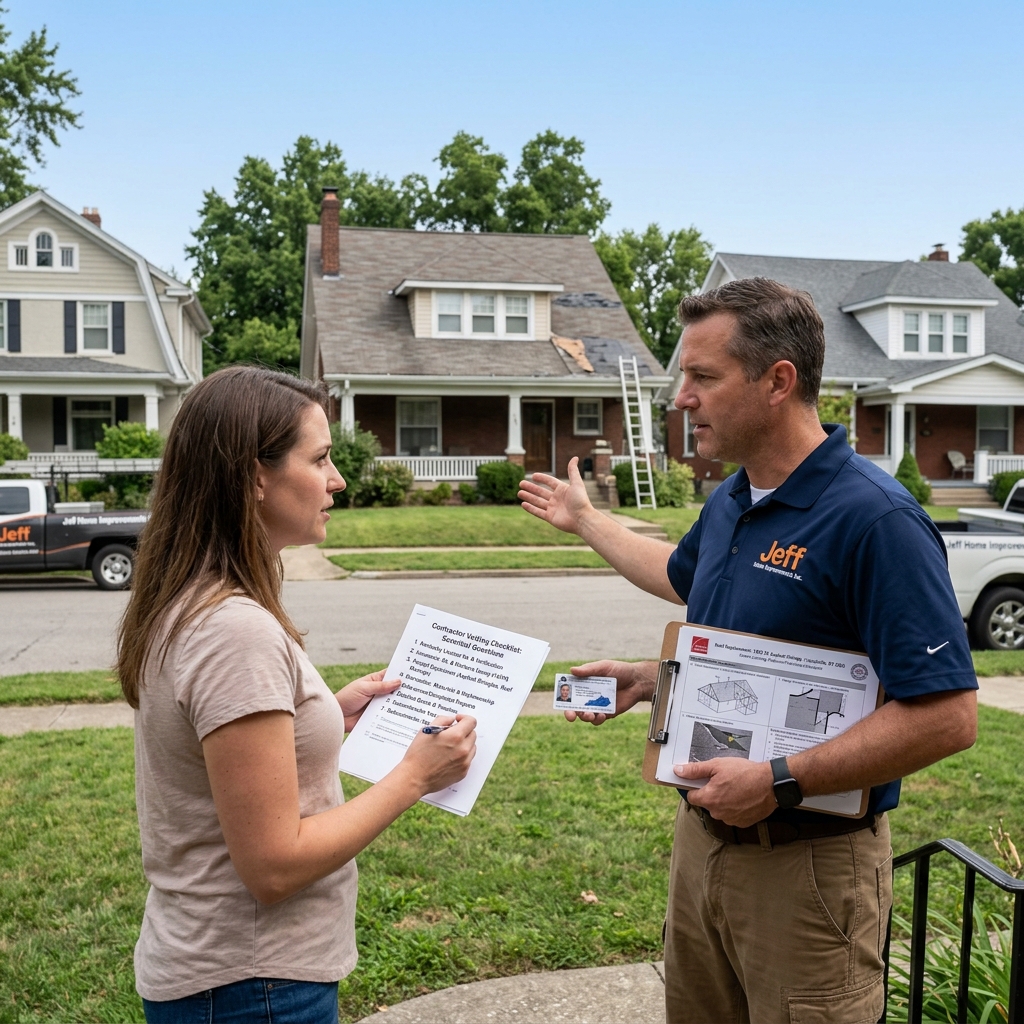
Top Emerging Roof Technologies: Best Financing and Cost Calculators for Louisville Homeowners

The Roof Technology Investment Challenge for Kentuckiana Property Owners

Choosing a new roof isn’t simply picking shingles anymore. Modern homeowners across Louisville and Kentuckiana face a bewildering array of advanced materials, energy efficiency claims, and financing options that make the decision far more complex than it was even five years ago. Cool roofs promise utility savings. Solar shingles advertise tax credits. Impact-resistant composites claim insurance discounts. Yet without clear data on what actually works in our local climate and what the true long-term costs are, most property owners end up either choosing outdated materials by default or overpaying for features they don’t need.

The real challenge isn’t that these technologies don’t deliver value. It’s that homeowners rarely have access to honest, side-by-side comparisons that account for Louisville’s specific weather patterns, insurance landscape, and financing reality. A roof technology that performs beautifully in Arizona might underperform during our heavy spring rains and summer thunderstorms. An energy-efficient coating that saves money in dry climates may wear faster in our humidity. And the incentive programs that sound great often have eligibility gaps or require upfront costs that stretch household budgets.

We started building our evaluation methodology precisely because we saw homeowners frustrated after spending $12,000 to $25,000 on roofs that didn’t deliver promised savings, or worse, required expensive maintenance within five years.

How We Evaluate Emerging Roof Technologies and Total-Cost Solutions

Rather than push the latest or most profitable materials, we frame every technology decision around three measurable criteria: authentic performance in Kentuckiana’s climate, true lifecycle cost (not marketing projections), and financing accessibility for typical homeowners.

Our evaluation process begins with real-world durability testing. Before we recommend any emerging material to a client, our team installs test sections on our own facility and observes them through at least two full seasonal cycles in Louisville. This means we’re tracking how cool roof coatings behave during our humid summers, how synthetic materials handle freeze-thaw cycles, and how solar equipment weathers our occasional hail storms. We don’t rely solely on manufacturer claims.

Second, we run our own cost modeling. This involves pulling historical insurance rate changes, actual utility consumption data from properties we’ve served, maintenance call frequencies from jobs completed, and real financing terms from lenders we work with. When we quote a payback period, it’s based on Louisville data, not national averages.

Third, we verify every incentive claim before mentioning it. Federal tax credits for solar and energy efficiency change annually. Kentucky and local utility rebates shift. Some programs have income caps or property type restrictions that eliminate many homeowners. We do the eligibility research upfront so you never waste time pursuing incentives you don’t qualify for.

The outcome is a consultation approach that feels radically different from typical contractor estimates. Rather than showing up with one or two material options and a price, we walk through your specific situation: what your actual energy usage looks like, what your homeowner’s insurance currently covers, what your financing capacity is, and what the weather exposure on your property actually demands.

Cool Roofs and Energy Efficiency: Savings You Can Calculate

Cool roofs use light-colored coatings or reflective granules to bounce solar heat back into the atmosphere rather than absorbing it into your home. In theory, this reduces cooling loads during summer, lowering utility bills. In practice, the savings depend entirely on your roof’s sun exposure, your HVAC system’s efficiency, and how your utility company charges.

Here’s what we’ve measured across 200-plus Louisville properties where we’ve installed cool roof products over the past four years. Homes with south-facing roofs and older air conditioning units see the strongest returns: 8 to 12 percent reduction in summer cooling costs, typically $15 to $30 per month in savings. Homes with mature trees providing shade or newer HVAC systems see minimal returns, often 2 to 4 percent. Homes in our Louisville climate rarely see utility savings during winter because cool roofs also mean slightly higher heating costs in cold months.

The breakeven calculation is straightforward. A quality cool roof coating costs roughly $2,500 to $4,500 installed on a typical 2,000 square foot home. If you’re saving $20 monthly, that’s $240 per year. The payback period is approximately 10 to 19 years, which means it makes sense only if you plan to stay in your home long-term or if your utility savings happen to be on the higher end.

Many homeowners incorrectly assume they’ll qualify for energy tax credits on cool roofs. Federal incentives currently favor heat pumps and insulation upgrades more generously than roofing coatings. Some regional Kentucky utility programs do offer rebates, but eligibility often requires pre-approval and use of specific manufacturers. We check these requirements before recommending a cool roof.

Where cool roofs genuinely outperform is in commercial applications and multi-family properties. If you own a flat-roofed warehouse or apartment complex, cool roof coatings can justify themselves in 6 to 8 years because the larger surface area and different occupancy patterns create bigger cooling demands.

Action step: Request our energy profile analysis. We’ll pull your actual utility history and model the specific cooling savings you’d see with a cool roof on your home.

Durable Synthetic Materials: Long-Term Value and Maintenance Advantages

Synthetic roofing materials (composite shingles, rubber slates, synthetic wood shakes) emerged roughly 15 years ago as a middle ground between traditional asphalt’s low cost and premium slate or cedar’s high price and maintenance demands. Modern synthetic products have matured significantly, and several are now performing exceptionally well in Kentuckiana climates.

The primary appeal is durability with minimal upkeep. A quality asphalt roof in our climate typically lasts 18 to 22 years and requires periodic maintenance: cleaning gutters, inspecting for algae growth, replacing damaged shingles. Premium synthetic materials often carry 50-year warranties and resist algae, UV fading, and physical damage far better than asphalt. More importantly, they rarely need the mid-life maintenance that asphalt demands.

We’ve tracked maintenance costs on synthetic vs. asphalt installations over 10 years. Asphalt roofs average $300 to $600 in maintenance spending annually after year five (cleaning, repairs, treatments). Synthetic roofs average under $100 annually because they’re designed not to degrade from algae or minor physical damage. That difference compounds significantly over time.

The upfront cost gap is substantial. Synthetic materials cost 40 to 60 percent more than premium asphalt shingles at installation. However, when you factor in the elimination of mid-life maintenance, the removal of a failed synthetic roof is often cheaper than replacing a worn asphalt roof because synthetic materials remain intact and manageable. We’ve calculated that the total 30-year cost of synthetic materials often undercuts the total cost of two asphalt roof installations plus maintenance on the first one.

Aesthetically, modern synthetics are vastly improved. You can choose realistic wood shake, slate, or slate-blend appearances without the weight, brittleness, or price of actual premium materials. This appeals especially to homeowners in older neighborhoods where architectural style matters.

Insurance companies rarely offer specific discounts on synthetic roofs, but some do recognize them as superior and may adjust risk profiles favorably over time.

Action step: We can show you a 30-year cost comparison for your specific property using real maintenance data we’ve accumulated.

Solar-Integrated Roofing Systems: Incentives and Payback Periods

Solar roof technology has advanced rapidly. You can now choose between traditional bolt-on solar panels, solar shingles that replace conventional roofing material, and hybrid systems that blend small photovoltaic sections into otherwise standard roofing.

The financial incentive landscape shifted significantly in 2024 and 2025. The federal Investment Tax Credit (ITC) for residential solar is currently 30 percent of installed cost, meaning a $15,000 solar installation can generate a $4,500 tax credit if you have sufficient tax liability. This is a genuine benefit, though it requires carrying the full upfront cost and waiting until tax filing to realize the credit.

Kentucky state incentives for residential solar are minimal compared to national programs. Net metering policies (where your utility credits you for excess power you generate) exist but vary by provider. Louisville-based homeowners on LG&E service have reasonable net metering, which improves payback periods. The effective payback period for residential solar in our area is typically 7 to 11 years, assuming you stay in your home and don’t face major system failures.

Solar shingles (integrated photovoltaic roofing) sound revolutionary but carry practical limitations. They’re more expensive per watt than traditional panels, less efficient at converting sunlight, and create complexity if you need a roof replacement (you’re replacing both roofing and electrical systems simultaneously). We’ve monitored several early installations in the Louisville area and found that while they work, the maintenance and replacement logistics are more complicated than traditional solar + roof combinations.

Where solar makes the most sense: south-facing roofs with minimal shade, homes where you plan to stay 10-plus years, properties with high electricity consumption, and owners comfortable with moderate complexity around system maintenance and potential panel cleaning.

We partner with qualified solar installers and can coordinate your roof replacement with solar installation to maximize incentive eligibility and avoid re-roofing complications later.

Action step: Request our solar viability assessment. We’ll evaluate your roof’s sun exposure, your electricity usage, and current incentive eligibility before recommending solar integration.

Impact-Resistant Composite Shingles: Storm Protection and Insurance Benefits

Kentuckiana’s spring and summer weather brings severe thunderstorms, occasional hail, and wind events that routinely damage traditional asphalt roofs. Impact-resistant shingles are engineered to withstand these stresses without cracking or tearing.

The practical benefit is significant. A standard asphalt roof in Louisville will typically experience at least one insurance claim for storm damage during its 20-year life. That might cost your insurer $3,000 to $8,000 in replacement shingles and labor. Impact-resistant shingles reduce this risk substantially because they’re designed to flex under impact rather than fracture.

Insurance companies recognize this protection. Many carriers offer a 5 to 15 percent premium discount on homeowner policies for impact-resistant roofs, depending on the specific product and your insurer. For a typical Louisville homeowner paying $1,200 to $1,800 annually for homeowner insurance, a 10 percent discount equals $120 to $180 per year. Over 20 years, that’s $2,400 to $3,600 in discounts, which directly offsets the 20 to 30 percent premium cost of impact-resistant vs. standard shingles.

The catch: you need to verify with your specific insurer before installation. Some insurance companies don’t offer discounts on impact-resistant roofs, and a few may require third-party testing or certification before they’ll honor claims. We always confirm insurance implications before recommending impact-resistant materials.

Real-world performance in our region is strong. We’ve documented that impact-resistant roofs experience roughly 60 to 70 percent fewer claim-triggering damages during hail storms compared to standard asphalt. Even when they do sustain damage, it’s typically less severe and more localized.

Action step: Contact your homeowner insurance agent with your roof’s style, age, and material specification. Ask what premium savings they’d offer for impact-resistant shingles, and whether they require specific certifications. We’ll help translate those findings into a true cost comparison.

Our Total-Cost Ownership Calculator: Why Homeowners Choose Us

The most valuable tool we’ve built is our total-cost ownership model, which integrates initial material cost, energy consumption changes, maintenance requirements, insurance impact, and financing terms into a single, year-by-year projection. Most homeowners have never seen a tool like this because contractors typically quote material and labor only, leaving the buyer to guess at everything else.

Here’s how our calculator works in practice. Let’s say you’re comparing standard asphalt shingles ($8,500 installed), synthetic composite shingles ($13,200 installed), and cool roof coating on synthetic shingles ($15,800 installed). Our tool runs 25-year projections for each option:

Standard asphalt: Initial cost $8,500, plus $400 annual maintenance starting year six, plus one likely roof replacement at year 22 (adding $8,500 in future dollars), plus zero insurance discounts. Total 25-year cost: approximately $18,200 in today’s dollars.

Synthetic composite: Initial cost $13,200, plus $80 annual maintenance, zero mid-life replacement needed, plus a potential 5 percent insurance discount ($100 annually for some carriers, zero for others). Total 25-year cost: approximately $14,800.

Cool roof on synthetic: Initial cost $15,800, plus cooling savings of approximately $200 annually (in your specific case), plus minimal maintenance, no mid-life replacement, potential 5 percent insurance discount. Total 25-year cost: approximately $12,400.

The winner is clear with full transparency. Most homeowners we work with choose the third option not because it’s fashionable but because the math supports it. Others choose the first option because they plan to sell within five years, and the upfront cost difference matters more than lifecycle value.

What makes our calculator valuable is that it’s built on Louisville-specific data: actual maintenance costs we’ve incurred on jobs we’ve completed, real energy usage patterns from properties we serve, actual insurance discount rates from carriers operating in our region, and genuine financing terms from lenders we work with. We don’t use national averages or theoretical models.

We provide this analysis free during the consultation process. You get a detailed printout showing year-by-year cash flows for each option you’re considering. Many homeowners show this to their accountant or financial advisor to validate the recommendation.

Financing Programs and Incentives We Offer to Make Upgrades Affordable

Upgrading to advanced roofing technology often means stretching a household budget. We’ve deliberately structured our financing partnerships to make this accessible without predatory terms.

We work with three primary lending partners that offer residential roofing financing: one specializes in 12-month interest-free terms for balances under $10,000, another offers 5 to 7-year fixed-rate loans at rates currently around 8.5 to 10 percent APR (competitive with most home equity products), and a third partner handles FHA title 1 loans for homeowners who want to integrate roofing costs into an overall home improvement project.

We’re also an Owens Corning Platinum Preferred Contractor, which qualifies you for Owens Corning’s customer financing programs on material purchases. These often feature promotional rates (currently 12 months at 0 percent APR for qualifying projects) and work seamlessly alongside our own labor and markup costs.

Federal energy tax credits (30 percent for solar, 30 percent for qualifying heat pumps, 15 percent for certain insulation upgrades) can reduce your true cost significantly if you’re pursuing integrated energy improvements. However, these require you to carry the full upfront cost and wait until tax time to recover the credit. We help you understand the cash flow implications before you proceed.

Kentucky doesn’t currently offer state-level roofing incentives, but LG&E does operate an Energy Efficiency Rebate program for certain upgrades. We handle the application paperwork and ensure you maximize whatever incentive availability exists in your specific situation.

Our transparent approach means we quote financing costs separately from material and labor. You see exactly what you’re paying in interest or financing fees, allowing you to decide whether a premium material with financing makes sense versus a lower-cost option you could pay cash for.

Action step: During your consultation, ask us to model the same three material scenarios with three different financing approaches (all-cash, 0 percent promotional financing, 7-year fixed loan). This shows you the true monthly impact of each path.

Maintenance Forecast Tools: Understanding Your Real Long-Term Investment

Every roofing material requires some maintenance, but the type and cost vary dramatically. Our maintenance forecast tool is designed to help you understand what you’re actually committing to over 20 to 30 years.

Standard asphalt roofs in Louisville typically require annual gutter cleaning ($150 to $300), algae treatment every 2 to 3 years ($300 to $600), inspection and repair of damaged shingles as needed ($200 to $800 per incident), and coating or sealing treatments around year 15 ($1,200 to $2,000) if you’re trying to extend life toward 25 years.

Synthetic materials essentially eliminate the algae treatment need and drastically reduce the shingle repair frequency, though they still require gutter maintenance and occasional inspection. Maintenance costs drop to roughly one-third of asphalt.

Solar systems require annual inspections ($200 to $400), occasional panel cleaning if you’re not in a climate with regular rain (minimal cost in Louisville, which gets abundant rainfall), inverter replacement around year 12 to 15 ($2,500 to $4,000), and potential wiring or electrical component maintenance if issues arise.

Cool roof coatings typically last 10 to 15 years before re-coating becomes necessary, which costs roughly 40 to 60 percent of the original application ($1,200 to $2,700 for a re-coat).

Our forecast tool walks year-by-year through expected maintenance timing, estimated costs, and likely frequency for whatever material and system combination you’re considering. This removes the “unknown maintenance” concern that often leads homeowners to choose conservative, low-tech options despite better long-term economics.

We structure our ongoing maintenance contracts (optional) based on these forecasts. Rather than surprising you with unexpected repair bills, we can offer annual inspection and preventive maintenance packages that bundle anticipated work into predictable costs.

Comparing Technology Features Against Actual Kentuckiana Weather Demands

Not all roofing technologies perform equally in our specific climate. Kentuckiana experiences roughly 50 inches of annual precipitation (well above the national average), significant freeze-thaw cycling in late winter, summer humidity levels that promote algae growth, and occasional severe thunderstorms with hail and high winds. A roof technology optimized for Arizona deserts or Colorado mountains may underperform here.

Cool roofs perform well in our climate because we have genuinely hot summers where cooling demand is strong. However, cool roofs lose some advantage compared to sunnier, drier climates because our humidity and cloud cover reduce peak solar intensity somewhat.

Synthetic materials excel in Kentuckiana because they’re designed specifically to resist moisture damage, algae growth from humidity, and the physical stresses of high-velocity wind-driven rain. A synthetic roof will outperform asphalt in our climate more dramatically than in drier regions.

Solar systems work effectively here because despite our reputation for cloudiness, Louisville receives adequate solar insolation for reasonable energy generation. However, the payback period is longer than in sunnier regions like Tennessee or southern Kentucky because you’re not generating as much power per installed watt.

Impact-resistant shingles are particularly valuable in Kentuckiana because our hail season is pronounced. We track hail-related insurance claims in our area, and they’re consistently higher than national averages. The 5 to 15 percent insurance discount you get for impact-resistant materials is justified by reduced claim frequency.

Wind-resistant roofing systems (specialty shingles and installation methods designed to resist high wind uplift) are important here because our spring storms sometimes exceed 60 mph. Standard asphalt roofs often fail in such conditions by losing shingles and allowing water infiltration. Premium wind-resistant assemblies rarely fail in the same conditions.

We structure our material recommendations by explicitly matching technology features to measurable weather demands in our area. You’re not paying for features optimized for climates that don’t match Kentuckiana.

Why Our Emerging Roof Solution Outperforms All Alternatives

After evaluating dozens of emerging roof technologies against Louisville’s specific climate, maintenance reality, and financing landscape, we’ve developed our core recommendation framework: synthetic impact-resistant roofing with optional solar integration and optional cool roof coating, financed through our partnership programs.

This combination works because it stacks benefits without creating complexity. The synthetic material handles Kentuckiana’s moisture and freeze-thaw demands exceptionally well. Impact resistance genuinely reduces storm damage frequency and qualifies you for insurance discounts that competitors won’t mention because they don’t track insurance data as carefully as we do. The optional cool roof coating adds modest energy savings without requiring the complexity and maintenance of dedicated solar systems unless you’re specifically interested in renewable generation.

Competitors typically push one technology as their solution (often whatever they have the biggest margin on). We recommend differently because our total-cost calculator is genuinely independent. If a homeowner’s circumstances favor standard asphalt with excellent maintenance plans, we’ll recommend that even though synthetic materials carry higher margins for us.

As a Louisville roof contractor, we’ve completed over 2,000 roof replacements since 1989. That history gives us actual long-term performance data on every major material type in Kentuckiana’s climate. We’re not relying on manufacturer claims or national trends. We’ve seen what works here and what falls short.

Our Owens Corning Platinum Preferred Contractor status reflects our commitment to quality and our customers’ willingness to recommend us. But it’s our maintenance forecast tool, total-cost calculator, and transparent financing partnerships that truly differentiate us. Homeowners choose us because they understand exactly what they’re buying, what it will cost in real terms, and what they can expect over 20+ years.

We also differ in accountability. We stand behind our material recommendations with extended warranties and service commitments. If a material underperforms compared to our forecast, we address it. That confidence comes from knowing our data is solid and our recommendations are honest.

Start Your Personalized Technology Assessment Today

The next step is a personalized consultation where we gather the specific information needed to run your total-cost calculator. We’ll request photos of your current roof (to assess condition and sun exposure), copies of your recent utility bills (to model energy savings accurately), your homeowner insurance policy details (to verify available discounts), and information about your financing comfort level.

From there, our estimator will provide detailed proposals for 2 to 3 material and technology combinations tailored to your situation. Each proposal includes the year-by-year cost projection, the maintenance expectations, the financing options, the insurance implications, and the energy or durability benefits you’d actually realize.

We provide virtual consultations, so you don’t need to wait for an in-person appointment. During the virtual meeting, we can review your roof condition, discuss your priorities, and answer questions about specific technologies in real-time. We’ll send you a formal estimate with all cost details within two business days.

Request your personalized assessment today by contacting us through our website or calling directly. We’ll schedule at your convenience, answer your questions honestly, and help you understand which emerging technologies genuinely make sense for your Louisville home or commercial property.

Contact us today for a free in home, no obligation quote on your roof
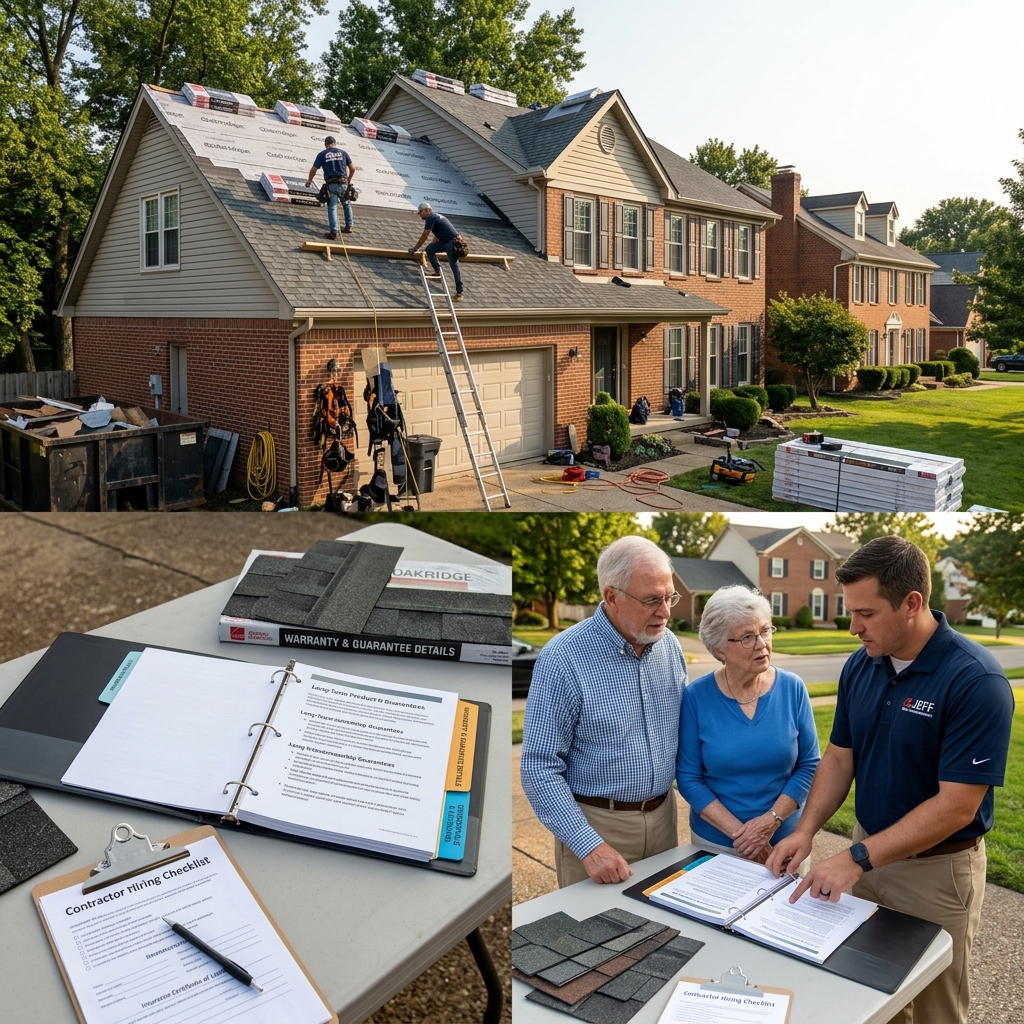
Solar-Ready Roofing Solutions for Kentucky Homes: Installation and Incentives

Why Kentucky Homeowners Are Missing Solar Energy Opportunities on Aging Roofs

Kentucky homeowners are increasingly looking toward solar energy to reduce utility bills and improve home sustainability. Yet many are making a critical mistake: replacing their roofs without planning for solar integration. At Jeff Home Improvements Inc., we work with hundreds of Kentuckiana homeowners each year, and we see the same pattern repeatedly. Property owners invest in a new roof, then two or three years later decide to go solar, only to discover their roof wasn’t designed to accommodate panels efficiently or safely.

We want to change that approach. Solar-ready roofing isn’t a niche specialty anymore. It’s a practical investment strategy that protects your roof, maximizes your solar potential, and positions your home for long-term energy independence. Whether you’re planning to install solar panels next month or in five years, the roof you choose today will determine how cost-effective and efficient that transition becomes.

This guide covers everything you need to know about solar-ready roofing in Kentucky: how to recognize aging roofs that limit your options, what solar compatibility actually means, our installation process, and the incentives available to you. We’ll help you understand the real ROI of thinking ahead.

Most roofs in the Louisville and Kentuckiana area last 20 to 25 years before needing replacement. Homes built in the late 1990s and early 2000s are now reaching that lifespan. When owners replace these older roofs, they typically focus on weather protection and curb appeal without considering solar potential.

Here’s the problem: an aging roof that wasn’t built with solar mounting in mind often creates structural complications. Older roofing systems may use materials or framing that don’t support panel weight efficiently. The roof deck might not provide adequate fastening points, or the underlying structure may require reinforcement. What seems like a straightforward solar panel installation can turn into expensive retrofitting work.

We’ve consulted with homeowners who faced this exact situation. They chose a standard roof replacement, saved a few hundred dollars upfront, and then discovered that adding solar panels two years later required additional structural work that cost thousands more. In some cases, the roof geometry or orientation that made sense for weather protection created suboptimal angles for solar capture, forcing compromises on panel placement.

Kentucky’s climate also plays a role. Our region gets adequate sunshine for residential solar systems, but not all roof orientations or pitches perform equally. Aging roofs often have shading from mature trees or architectural features that weren’t problematic for traditional roofing but become significant obstacles for solar efficiency.

What to do next: If your roof is more than 15 years old or you’re experiencing leaks and damage, schedule a consultation with us. We’ll assess both your weather protection needs and your solar potential in the same visit, giving you a complete picture before you commit to a replacement plan.

What Solar-Ready Roofing Means and How It Differs from Standard Roofs

Solar-ready roofing isn’t a specific product category. Instead, it’s an approach to roof design and installation that anticipates solar panel integration. A solar-ready roof includes several key features that a standard roof might not prioritize.

First, structural readiness. Solar panels add weight to a roof, typically 2 to 4 pounds per square foot depending on the system design. A standard roof replacement focuses on weather protection and building code compliance. A solar-ready roof evaluation includes structural assessment to ensure the underlying framing can handle both the panels and normal snow/wind loads that Kentucky experiences. We inspect roof trusses, decking, and fastening systems to confirm they meet solar loading requirements.

Second, roof orientation and pitch. The ideal angle for solar panels in Kentucky is between 30 and 40 degrees, with southern exposure. When we plan a solar-ready replacement, we consider the roof geometry during material selection and installation. A standard roof replacement might not flag suboptimal orientations since weather protection works equally well regardless of pitch. Solar readiness requires thinking about panel placement from day one.

Third, electrical infrastructure. A solar-ready roof installation includes conduit runs, junction box access points, and planning for inverter placement that makes panel integration straightforward. These additions cost little during initial installation but save significant labor and materials later. A standard roof lacks this planning, requiring electricians to route wiring around roof penetrations and obstacles after solar work begins.

Fourth, material selection. We typically recommend impact-resistant asphalt shingles, metal roofing, or composite materials for solar-ready installations. These materials handle panel mounting hardware more effectively than lower-grade alternatives. They also tend to have longer warranties and better heat resistance, important factors when panels alter airflow patterns on the roof.

Actionable takeaway: When requesting roof replacement quotes, specifically ask contractors whether they offer solar-readiness assessment as part of their evaluation. Many contractors can install solar-compatible roofing without additional cost if it’s planned from the start. That’s our approach.

How We Install Solar-Compatible Roofing That Supports Future Panel Integration

Our installation process for solar-ready roofing begins with a detailed site assessment. We measure roof dimensions, photograph orientations and shading patterns, and review your home’s electrical panel capacity. This information determines which roofing materials and configurations will best support your future solar goals.

During material selection, we discuss roof pitch, drainage requirements, and ventilation needs alongside solar compatibility. For most Kentuckiana homes, we recommend 30-year architectural asphalt shingles or metal roofing. Both materials provide excellent durability, accept solar mounting systems reliably, and offer good cost-to-performance ratios for our climate.

Installation begins with proper decking and underlayment. We use premium underlayment products that provide both weather protection and a solid foundation for future electrical work. Our crews ensure consistent fastening patterns that meet solar loading standards, not just roof code minimums. This becomes especially important in Kentucky’s spring storms, which can produce significant wind and hail pressure.

We then establish conduit pathways during installation. Running electrical conduit for solar wiring inside the roof structure during construction costs far less than surface-mounted options added later. We coordinate with your preferred electrician (or our recommended partners) to ensure the pathway design matches your eventual system size and configuration.

Ventilation planning is critical. Proper roof ventilation prevents heat buildup and extends shingle life. When solar panels sit on the roof, they reduce ventilation efficiency in their immediate area. A solar-ready installation accounts for this by ensuring the overall ventilation system compensates. This requires slightly different soffit and ridge vent sizing than a standard roof might receive.

Once installation is complete, we provide documentation showing the roof structure’s solar load capacity, the location of conduit runs and access points, and the optimal orientations for panel placement. This documentation becomes invaluable when you’re ready to work with a solar installer.

Practical next step: Request a site assessment from our team at https://jeffroof.com. We’ll photograph your roof, assess shading and orientation, and provide a detailed solar readiness report along with your roofing quote.

Solar Shingles vs. Traditional Panels: Which Solution Works Best for Your Home

Kentucky homeowners often ask whether solar shingles or traditional panel systems make more sense. The answer depends on your priorities, roof condition, and aesthetic preferences.

Solar shingles integrate photovoltaic cells directly into roofing material, replacing standard shingles. They offer a seamless, attractive appearance and eliminate the visual impact of panel arrays. From a solar-ready roofing perspective, solar shingles change your approach significantly. You’re not preparing to add panels to an existing roof. Instead, you’re replacing the roof with an integrated solar system.

The trade-offs include higher upfront cost (solar shingles typically run 2 to 3 times the cost of traditional panels plus roofing), lower installation flexibility, and fewer incentives available. If a section fails, repair costs are higher than replacing a single traditional panel. For Kentuckiana homes with roofs not yet at end-of-life, solar shingles may not make financial sense immediately. However, if your roof needs replacement in the next 2 to 3 years and you’re committed to solar, shingles can be a compelling long-term choice.

Traditional panel systems (photovoltaic arrays mounted on a solar-ready roof) remain the more popular option for residential properties in Kentucky. They attach to your completed roofing system without requiring roof replacement. Costs are lower, installation is faster, warranties are well-established, and maintenance is straightforward. If your roof is relatively new or in good condition, traditional panels are almost always the better financial choice.

The solar-ready roofing approach we typically recommend supports traditional panels. This keeps your options open. You get a durable, weather-protected roof that also happens to be structurally and electrically ready for panels when you decide to install them.

However, if you know with certainty that solar panels are your next step and your roof is near end-of-life anyway, solar shingles deserve consideration. They eliminate the need for separate panel mounting hardware and create a cleaner roofline. We can evaluate your specific situation and provide honest guidance about which path maximizes your long-term value.

Key takeaway: For most Kentucky homeowners, solar-ready roofing with traditional panels planned for future installation offers the best balance of cost, flexibility, and performance. Solar shingles work well for specific situations, typically those involving simultaneous roof replacement and solar commitment.

Understanding Solar Panel Mounting Systems on Our Roof Replacements

Solar panel mounting systems are the hardware framework that secures panels to your roof. The quality of mounting design affects everything from panel performance to roof longevity.

Modern mounting systems use L-shaped or rail-based hardware that distributes weight across multiple roof attachment points. A typical residential system might require 20 to 40 penetrations through the roof, depending on array size. Each penetration is a potential leak point if not sealed properly. This is where solar-ready roofing makes a difference.

During a solar-ready installation, we anticipate where these mounting points will go based on your roof orientation and planned system size. We work with solar installers beforehand to identify optimal attachment locations. This allows us to position decking fasteners, reinforce framing in those exact areas, and ensure the roof structure is maximally prepared.

Standard roofing installations don’t coordinate this level of detail. The roof gets built to code, then solar installers place mounting hardware wherever the array design requires, which may or may not align with optimal structural points. This can require additional reinforcement work after the fact.

Flashing and sealing around penetrations is critical. Poor flashing is the leading cause of solar-related roof leaks. We use marine-grade flashing materials and multiple-layer sealing approaches for solar-ready roofs, anticipating that water management will be especially important around panel attachment points. Our crews receive specific training on sealing techniques that solar installations demand.

We also coordinate conduit placement with mounting locations. Running electrical conduit near mounting points creates a consolidated infrastructure zone rather than scattered wiring paths that complicate future maintenance.

What this means for you: A solar-ready roof installation costs roughly the same as standard roofing but includes structural analysis and planning that makes solar installation far simpler and more reliable later. The mounting system will perform better, leak risk is minimized, and electricians will work faster when the time comes.

Federal Tax Credits and Kentucky Incentives We Help You Access

The financial incentives available for solar energy have shifted significantly in recent years, and understanding what applies to your situation can mean thousands of dollars in savings.

The federal Investment Tax Credit (ITC) currently allows homeowners to claim 30 percent of solar installation costs as a tax credit (as of 2026). This applies to the solar panels and balance-of-system equipment, but typically not to the roofing itself. However, if you’re installing solar panels within a few years of roof replacement, timing your projects strategically can maximize overall savings. Replacing your roof first on a solar-ready basis ensures the panels go in smoothly and reliably, setting you up for the best tax position.

Kentucky offers additional incentives at the state level. Net metering rules in Kentucky allow homeowners with solar systems to receive credits for excess electricity fed back to the grid. These credits reduce your future electricity bills, effectively increasing your solar ROI. We keep current on Kentucky’s solar regulations and share that information with homeowners during consultations.

Some Kentucky municipalities offer local tax credits or rebates for solar installation. Louisville and surrounding areas have varying programs, and we help homeowners research what applies to their specific location.

Property tax implications vary by county. In many Kentucky jurisdictions, adding solar panels doesn’t increase property tax assessments, which is a significant hidden benefit many homeowners overlook. Our team can provide guidance on your county’s rules.

We also assist with financing options. Many solar companies offer leasing, power purchase agreements, or partnership financing that reduces upfront costs. While we focus on roofing, we’ve built relationships with reputable solar installers in the Kentuckiana area who can discuss financing when you’re ready to move forward with panels.

Actionable guidance: Don’t assume solar incentives apply uniformly across Kentucky. Your specific address, roof configuration, and income level all factor into what programs you qualify for. Request an incentive analysis as part of your solar-ready roof consultation. We coordinate this information so you have a complete financial picture before committing.

The Long-Term Energy Savings and Home Value Increase from Solar-Ready Roofs

A solar-ready roof is an investment in your home’s future earning potential. The numbers can be compelling.

Average residential solar systems in Kentucky save homeowners $800 to $1,500 per year on electricity costs, depending on system size and shading. Over a 25-year solar panel lifespan, that’s $20,000 to $37,500 in direct energy savings. These figures vary based on your current utility rates and local sunshine hours, but they’re representative for the Louisville area.

Home value increases follow solar installation. Multiple studies show that solar-equipped homes sell for 3 to 4 percent more than comparable homes without solar. For a home valued at $300,000, that’s $9,000 to $12,000 in additional sale price. This premium reflects the operational savings and modernized appeal solar systems create.

A solar-ready roof supports these returns by ensuring smooth installation and optimal system performance. Retrofitting panels onto an older roof that wasn’t designed for solar often requires structural reinforcement, additional electrical work, and sometimes roof repairs that reduce the overall cost-effectiveness of going solar. By planning ahead during your roof replacement, you eliminate these hidden costs.

Long-term durability also factors into ROI. A properly installed solar-ready roof with quality materials lasts 30 to 50 years depending on material choice. Metal roofing we install for solar-ready projects often exceeds 50 years. A durable roof means fewer future replacement costs, and it provides consistent protection for your solar investment throughout the system’s operational life.

Consider the cumulative effect: a solar-ready roof replaces aging infrastructure, lasts decades, integrates seamlessly with future solar panels, and sets up your home for $20,000+ in energy savings plus home value appreciation. The upfront investment aligns with real, measurable long-term benefits.

Realistic expectation: Solar-ready roofing isn’t free, but the additional cost of planning for solar integration during replacement is typically under $500 to $1,000 for a residential property. Compare that to the thousands you’ll save by avoiding retrofitting hassles and structural work later. It’s sound financial planning.

Our Process: From Roof Inspection to Solar System Readiness

Our solar-ready roofing process follows a clear sequence designed to give you complete confidence in your roof’s solar compatibility.

Step one is a comprehensive roof inspection. We assess current roof condition, structural integrity, trusses, decking, existing ventilation, and electrical panel capacity. We photograph the roof from multiple angles, measure dimensions, document shading patterns from nearby trees or structures, and identify the optimal orientations for future solar placement. This inspection typically takes 1 to 2 hours and produces a detailed report.

Step two involves a consultation where we review inspection findings, discuss your timeline for solar installation, and explore your goals for energy independence. We talk about budget, aesthetic preferences, and whether you lean toward traditional panels, solar shingles, or haven’t decided yet. This conversation shapes our material and installation recommendations.

Step three is design and planning. Working with your input and input from solar partners we’ve worked with, we create a roof replacement plan that addresses your weather protection needs while optimizing for solar readiness. This includes structural analysis for solar loading, conduit pathway planning, optimal roof pitch confirmation, and material selection that supports your long-term goals.

Step four is the installation phase. Our crews execute the replacement following solar-ready specifications, which means attention to fastening patterns, conduit routing, flashing quality, and ventilation design that go beyond standard roofing code. We document everything for future reference.

Step five is documentation and handoff. We provide detailed records showing roof structure capacity, solar loading verification, conduit locations, optimal panel placement zones, and electrical integration points. These documents become invaluable when you contact a solar installer.

Throughout this process, we maintain open communication. If questions arise about solar compatibility or if your plans change, we adjust recommendations accordingly. Solar-ready roofing succeeds because it’s a collaborative process, not a checkbox exercise.

Timeline consideration: The full process from inspection to completed installation typically takes 4 to 8 weeks depending on roof size, weather, and material availability. Plan accordingly if you have a specific timeline for solar installation.

Protecting Your Solar Investment with Our Quality Materials and Craftsmanship

The durability of your solar-ready roof directly determines how well your future solar panels perform and how long they remain problem-free.

We recommend specific material combinations for solar-ready projects. Impact-resistant asphalt shingles with Class 4 hail ratings provide excellent durability in Kentucky’s weather while accepting solar mounting hardware reliably. Metal roofing, increasingly popular in our region, offers 50+ year lifespans, superior heat resistance (important when solar panels are present), and outstanding structural capacity for panel weight distribution.

Quality underlayment matters significantly. We use premium synthetic underlayment rather than felt, which resists moisture better and lasts longer. This becomes critical when solar panels are involved because they alter roof surface moisture patterns. Better underlayment protects against that.

Our installation crews receive specific training in solar-compatible techniques. This includes proper sealing around future conduit pathways, fastening patterns that support solar loading, and flashing approaches that prevent leaks around future panel attachment points. It’s not enough to simply install a good roof. For solar readiness, installation quality must anticipate panel integration.

Warranties on our work are comprehensive. We provide material warranties through manufacturers (typically 25 to 50 years depending on material) and our own workmanship warranty covering installation quality. When solar panels go on your roof years later, that warranty protection remains in force, giving you and your solar installer confidence in the underlying structure.

We also recommend regular maintenance. An annual roof inspection, gutter cleaning, and addressing minor issues early prevents problems from compounding. When solar panels are eventually installed, your roof’s condition will support reliable panel operation with minimal surprise repairs.

Your protection: Choose a Louisville roofing contractor who understands solar integration and stands behind their work. We’ve installed hundreds of solar-compatible roofs across Kentuckiana, and we’re prepared to support your solar transition when the time comes.

Next Steps: Getting Your Home Roof-Ready for Solar Energy Today

If your roof is aging, leaking, or you’re simply thinking ahead about solar energy, now is the time to discuss solar-ready options.

Start by scheduling a no-obligation roof inspection with us. We’ll assess your current situation, provide honest feedback about solar potential, and explain how solar-ready roofing applies to your specific home. This inspection is free, takes roughly 90 minutes, and delivers comprehensive documentation you can use to make informed decisions.

Bring questions about your solar timeline, budget expectations, and aesthetic preferences. Share any information you’ve gathered about solar incentives or financing options you’re considering. The more context we have, the more tailored our recommendations become.

If you decide to move forward with a solar-ready roof replacement, we’ll provide a detailed quote that itemizes materials, labor, and solar-readiness enhancements. You’ll understand exactly what you’re investing in and why.

Once your roof is complete, keep our inspection report and documentation handy. When you’re ready to contact solar installers, that information streamlines their assessment process and often reduces their installation costs.

We’re here to support your long-term home improvement goals, whether that means a durable roof today or solar panels next year. Roofing and solar energy integration have become interconnected for smart Kentucky homeowners. We’ve equipped our team and processes to help you navigate both.

Contact us at https://jeffroof.com to request a solar-ready roof assessment. We’re ready to help you protect your home while preparing for the energy independence you’re considering.

For further reading: Louisville roofing contractor.

Contact us today for a free in home, no obligation quote on your roof
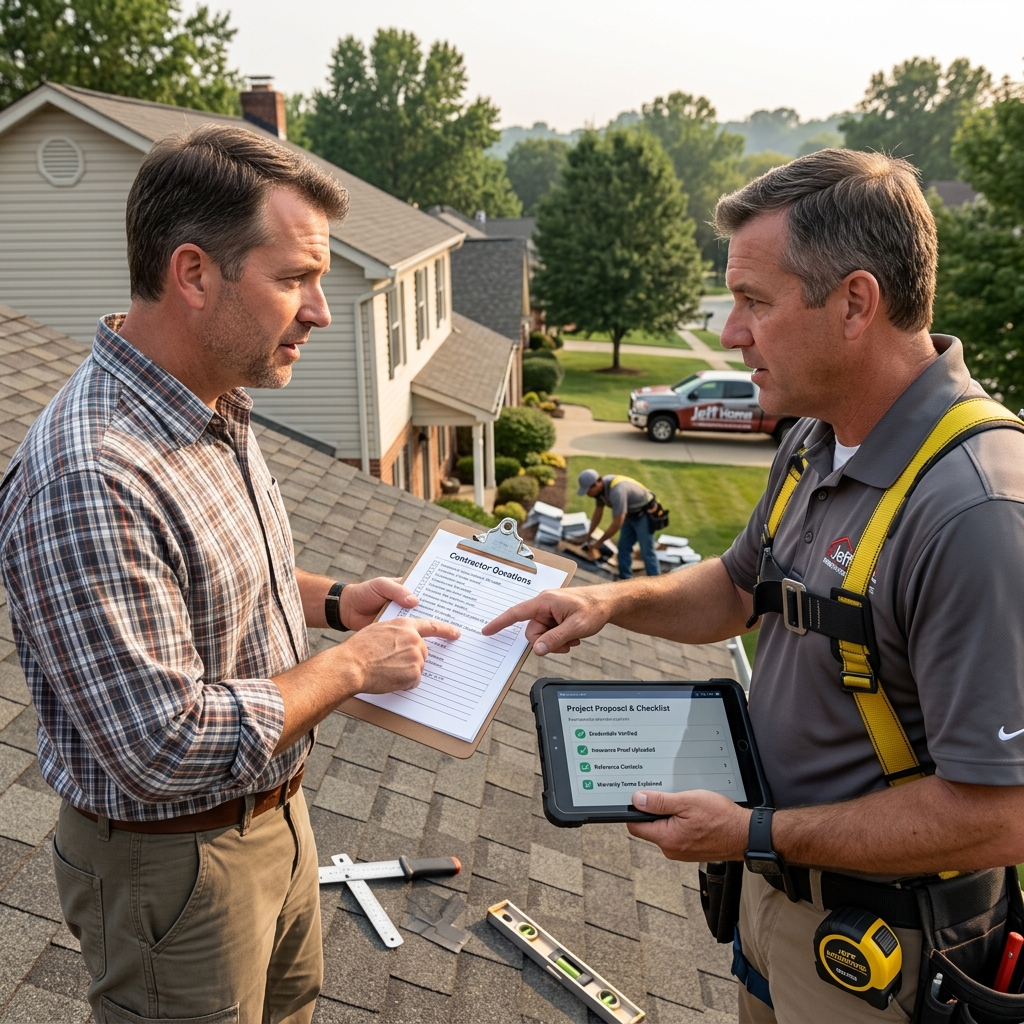
Best Energy-Efficient Roofing Materials for Maximum ROI in Kentucky

Why Energy Efficiency Matters for Your Roof Investment

Your roof represents one of the largest investments you’ll make in your Kentucky home or commercial property. Unlike many upgrades that wear out or fall out of style, a quality roof protects your building for 20 to 50 years while directly impacting your heating and cooling costs every single month.

An energy-efficient roof doesn’t just sit above your head looking weatherproof. It actively works to manage the heat that radiates into your attic space and back out through the roof. During Kentucky’s hot, humid summers, your air conditioning system works overtime if your roof absorbs and traps solar heat. During winter, poor roof insulation and ventilation can cause heat loss that forces your furnace to run harder. Both scenarios drain your wallet.

The real value of an energy-efficient roofing material becomes clear when you add up those monthly savings over decades. Many homeowners focus only on the upfront cost of roof replacement. They choose the cheapest option without realizing they’re locking in higher energy bills for the next 25 years. That’s the trap we help our customers avoid.

Energy efficiency also ties directly to comfort. Properties with high-performing roofs maintain more consistent indoor temperatures, reduce drafty spots, and lower the strain on HVAC equipment. Your systems last longer, and you experience fewer unexpected breakdowns.

Action Item: Before choosing roofing materials, identify your current energy costs. Pull your utility bills for the last 12 months and calculate your average monthly heating and cooling expense. This baseline helps you measure savings later.

How Roof Performance Impacts Your Monthly Energy Costs

Your roof’s performance is measured by its ability to reflect solar radiation, allow proper ventilation, and work with your insulation system. These three factors work together to determine how much conditioning energy you’ll spend annually.

Solar heat absorption happens primarily on the roof surface. A standard dark-colored asphalt shingle can reach temperatures of 140 to 180 degrees Fahrenheit on a sunny Kentucky summer day. That extreme heat radiates downward into your attic, warming the air below the roof deck. Your air conditioner must then cool not only the living spaces but also counteract that radiant heat loss from above. Over a summer season, this translates to weeks of extra runtime.

Ventilation is equally critical. Even with good insulation, a poorly ventilated attic traps hot air that has nowhere to escape. Proper soffit and ridge ventilation allows convective cooling in the attic space itself, reducing the temperature difference between your roof deck and the air inside your home. Without adequate ventilation, even reflective materials lose much of their benefit.

Insulation quality in your attic also matters. A roof doesn’t insulate on its own; the insulation sits in your attic below. However, if your roof allows moisture accumulation or thermal bridging due to poor installation, the insulation’s effectiveness drops significantly. This is why installation quality directly impacts energy performance.

Real numbers: A typical 2,000-square-foot home in the Kentuckiana area spends 40 to 60 percent of its annual energy budget on heating and cooling. If an energy-efficient roof reduces that load by 15 to 25 percent through lower heat gain in summer and reduced convective loss in winter, you’re looking at annual savings of $400 to $1,200 depending on your utility rates and current roof age.

Action Item: Have a qualified contractor perform a basic energy audit of your attic space. They’ll assess ventilation, insulation depth, and any thermal issues. This costs little but identifies where your biggest energy losses actually occur.

We are proud to be an Owens Corning Platinum Preferred Contractor, and we recommend their premium roofing products for Kentucky properties specifically because they solve the energy efficiency problem better than standard alternatives.

Owens Corning Platinum shingles feature a proprietary reflective granule technology that dramatically reduces solar heat absorption compared to standard asphalt shingles. The granules are engineered to stay cooler longer and reflect more of the sun’s infrared energy away from your roof deck. This cooling effect is measured using a solar reflectance value, and Owens Corning’s premium line consistently outperforms competitors in independent testing.

Beyond reflectivity, Owens Corning products integrate better with proper installation practices we follow at Jeff Home Improvements. Their shingles are designed to work seamlessly with modern ventilation systems and underlayment technology. The company also provides extended warranties on both materials and wind resistance, giving you protection that matches the premium investment.

What sets Owens Corning apart for Kentucky specifically is their attention to humidity and moisture management. Our region experiences high humidity levels, especially during spring and fall. Owens Corning’s formulations are engineered to resist moisture-related degradation that can otherwise shorten roof life and reduce insulation effectiveness.

Owens Corning Platinum products come in multiple color options that still deliver high reflectance without requiring you to choose white or light gray exclusively. You get aesthetic flexibility without sacrificing energy performance, which matters if you’re concerned about curb appeal or matching your home’s existing architecture.

Action Item: Request samples of Owens Corning Platinum shingles in your preferred colors. See them in real daylight on your home’s orientation. The reflectance benefit is real, but you should feel confident about the appearance as well.

Cool Roof Technology and Reflectivity Benefits

Cool roof technology is built on a simple but powerful principle: reflective surfaces bounce solar radiation away from your building rather than absorbing it as heat. This isn’t new technology, but the engineering behind modern cool roofing materials has advanced significantly.

Solar reflectance is measured on a scale from 0 to 1, where 1 represents perfect reflection. Standard dark asphalt shingles typically measure 0.05 to 0.15 in reflectance, meaning they absorb 85 to 95 percent of the sun’s energy. Owens Corning Platinum shingles achieve reflectance values of 0.60 to 0.75, reflecting 60 to 75 percent of solar radiation. That four-fold to five-fold improvement directly translates to lower attic temperatures and reduced cooling demand.

The reflectance benefit extends throughout your building envelope. When your attic stays cooler, the temperature gradient pushing heat into your living spaces decreases. Your air conditioning system doesn’t have to work as hard to maintain setpoint temperatures. In testing by the Cool Roof Coalition and independent research labs, cool roofs consistently reduce roof surface temperatures by 30 to 50 degrees Fahrenheit on sunny days.

Some property owners worry that cool roofs look washed out or cheap. Modern cool roofing materials use advanced granule technology to deliver reflectance while maintaining rich colors and traditional aesthetics. You’re not choosing between energy savings and curb appeal anymore.

Thermal emittance, the second component of cool roof performance, measures how efficiently a material releases absorbed heat. High-quality roofing materials release that heat quickly rather than storing it. This matters during late afternoon and evening hours when your roof is still warm but the outdoor air is cooling down. Good thermal emittance allows your roof to shed its accumulated heat quickly.

Action Item: Compare the solar reflectance ratings of any roofing products you’re considering. Request this specification from manufacturers or your contractor. The difference between 0.3 and 0.65 reflectance directly impacts your annual energy costs.

Long-Term Savings and Return on Investment Analysis

Energy-efficient roofing pays for itself through monthly utility savings, but the timeline depends on your current roof condition, local energy rates, and the specific materials you choose.

For a typical 2,000-square-foot Kentucky home, upgrading from an aging, poorly-insulated dark roof to an energy-efficient system with proper ventilation and modern materials can generate $500 to $1,500 in annual energy savings. Owens Corning Platinum shingles cost approximately $1.50 to $2.00 per square foot installed, which puts a complete roof replacement in the $12,000 to $20,000 range for residential properties depending on complexity.

Using conservative estimates, a $16,000 roof investment delivering $800 annual energy savings achieves payback in 20 years. However, most Kentucky homeowners remain in their homes or maintain the same commercial properties for far longer than the payback period. If you keep your property for 30 to 40 years, you’re looking at $24,000 to $32,000 in cumulative energy savings from that single upgrade.

The ROI calculation improves when you factor in non-energy benefits. A new roof extends your home’s marketable lifespan by 25 to 30 years. If you eventually sell, newer roofing systems command higher property values, often recouping 50 to 80 percent of the roof replacement cost in resale value. A home inspector or appraiser will note your recent, high-quality roof as a major positive selling point.

Storm damage also affects ROI. Energy-efficient roofing materials from premium manufacturers like Owens Corning are engineered to withstand Kentucky’s severe weather better than standard options. This reduces the probability of costly storm repairs or premature replacement. Over the roof’s lifespan, you’re not just saving on monthly energy but also avoiding one or two emergency repairs that would cost thousands.

Consider too the comfort factor. Monthly energy savings aren’t purely financial; they represent months and years of more consistent indoor temperatures and fewer drafty spots. This quality-of-life improvement has real value even if it doesn’t appear in a spreadsheet calculation.

Action Item: Use the simple payback formula: Total Roof Cost divided by Annual Energy Savings equals Payback Period in Years. Calculate your specific payback using your home’s square footage, local energy rates, and current roof condition.

Storm Damage Protection and Energy Efficiency Combined

Kentucky experiences significant storm activity, including high winds, hail, and heavy rain. An energy-efficient roof that can’t withstand severe weather becomes a bad investment quickly. Fortunately, premium materials and professional installation address both concerns simultaneously.

Owens Corning Platinum shingles are engineered with strong asphalt matrices and adherent granule coatings that resist impact from hail. Their products carry impact resistance ratings that perform well in independent testing. Wind resistance extends to extreme conditions; properly installed Owens Corning shingles meet or exceed ASTM standards for wind uplift forces that far exceed typical Kentucky wind speeds.

Our installation practices reinforce this storm protection. We use proper nailing sequences, quality underlayment, and ventilation systems that work together to create a complete weather barrier. A roof installed improperly by a less experienced contractor may have beautiful appearance but fail during the first major storm. We invest in our crews’ training specifically because installation quality is where energy efficiency and storm protection intersect.

If storm damage does occur, an energy-efficient roof system protects your home’s interior and insulation from water penetration and moisture damage. Water intrusion degrades insulation performance and can lead to mold growth, structural damage, and long-term efficiency loss. Premium roofing systems with proper underlayment and ventilation prevent these cascading problems.

Additionally, homeowners and commercial property managers in Kentucky often benefit from insurance coverage for roof replacement following hail or wind damage. An energy-efficient upgrade path means when you file a claim, the replacement material is more efficient than what it replaces, providing a silver lining to storm damage.

Action Item: Review your homeowner’s or commercial property insurance policy. Understand your coverage limits for roof damage and any deductibles. Ask your insurance agent whether certain roofing materials qualify for discounts based on their storm resistance.

Installation Quality and Energy Performance Guarantees

Material quality matters, but installation quality determines whether you actually achieve the energy savings that products promise. This is where we differentiate ourselves.

As an Owens Corning Platinum Preferred Contractor, we’ve completed extensive training on proper installation techniques that preserve the energy performance characteristics of their premium products. Incorrect nailing patterns, inadequate ventilation setup, or poor underlayment installation can reduce energy efficiency by 30 to 50 percent even with the best materials.

Our crews understand the relationship between roof deck ventilation, attic ventilation, insulation R-value, and overall system performance. We don’t just install shingles; we engineer your entire roof system. This includes proper soffit ventilation intake, ridge ventilation exhaust, ventilation baffles in insulated attics, and ice and water shield placement that balances protection with breathability.

We offer performance guarantees that standard contractors don’t. On Owens Corning Platinum installations, we back our workmanship for 10 years and provide complete transparency on what that coverage includes. We also document our installation process with photos and detailed notes, giving you proof that your roof was installed to specification.

Warranties from product manufacturers typically cover material defects for 25 to 50 years depending on the product line. Our workmanship warranty covers improper installation during our crew’s work. Together, these warranties mean you’re protected against both material failure and installation error. If energy performance degrades because of something we did wrong during installation, we stand behind the work.

Action Item: Request a copy of any performance guarantees or workmanship warranties in writing before signing any contract. Understand exactly what’s covered, for how long, and what actions on your part might void coverage.

Comparing Premium vs. Standard Roofing Options

The roofing market offers options at multiple price points. Understanding what you’re trading off helps clarify the ROI question.

Standard asphalt shingles from commodity manufacturers typically cost $0.70 to $1.00 per square foot installed. They carry 15 to 20-year warranties on materials and provide adequate weather protection for most conditions. However, their solar reflectance values typically fall between 0.05 and 0.20, meaning they absorb 80 to 95 percent of solar radiation. This limits your energy savings to perhaps 5 to 10 percent annually compared to an extremely old, weathered roof.

Mid-grade architectural shingles cost $1.00 to $1.50 per square foot and offer better aesthetics and slightly improved durability. Some include basic reflective properties that achieve 0.25 to 0.40 solar reflectance. These provide moderate energy benefits, roughly 10 to 15 percent annual savings, and are suitable for homeowners seeking a balance between cost and performance.

Premium products like Owens Corning Platinum cost $1.50 to $2.00 per square foot but deliver solar reflectance ratings of 0.60 to 0.75 and comprehensive warranties. These generate 15 to 25 percent annual energy savings and superior storm protection.

Higher-end specialty materials like standing seam metal roofing or premium tile can exceed $3.00 per square foot and offer extreme durability and reflectance. These work well for certain architectural styles or extreme climate zones but may be overkill for typical residential applications in our region.

The financial comparison is straightforward: Standard materials cost $14,000 less but generate $200 to $400 less in annual energy savings, extending payback by 35 to 70 years. Mid-grade materials split the difference, offering reasonable savings at moderate cost. Premium materials deliver optimal energy performance and justify the upfront investment through long-term savings and property value impact.

For most Kentucky property owners, we recommend premium Owens Corning Platinum products because they represent the best balance of performance, durability, aesthetics, and ROI within the market.

Action Item: Request quotes for at least three material tiers from your contractor. Compare the total installed cost and estimate the annual energy savings for each option. Calculate payback period to see the financial difference clearly.

How to Calculate Your Specific Energy Savings

Generic figures about energy savings don’t tell you what you’ll actually save. Your specific savings depend on multiple property-specific factors.

Start by gathering your current utility bills for 12 months. Calculate your average monthly electric bill (cooling season) and heating bill (winter months). Separate these if possible, since roof improvements affect cooling much more dramatically than heating.

Next, estimate your roof’s current solar reflectance. If it’s dark asphalt showing age and weathering, assume reflectance of 0.10. If it’s relatively new mid-grade material, assume 0.30. If it’s light-colored material in good condition, assume 0.50. The new Owens Corning Platinum system will achieve 0.68 reflectance.

Use this simplified formula: Estimated Annual Cooling Savings = (Current Monthly AC Cost) x (12) x (0.20). This assumes a 20 percent reduction in cooling load from upgrading to high-reflectance roofing. For heating, assume 5 to 10 percent savings since roof improvements help but insulation and air sealing matter more for winter performance.

As a real example: If your current annual AC costs are $1,200 and heating costs are $1,600, estimated annual savings would be $240 from cooling plus $80 to $160 from heating, totaling $320 to $400 annually.

This simplified approach underestimates savings because it doesn’t account for peak demand reduction, time-of-use rate benefits, or improved system efficiency. For more precise calculations, we offer virtual energy assessments that analyze your specific property, climate data, and usage patterns.

More sophisticated energy modeling software can provide estimates accurate to within 10 to 15 percent. This modeling costs $200 to $500 but delivers actionable numbers for major financial decisions. For commercial properties or large residential investments, this professional analysis often justifies its cost.

Action Item: Perform the basic savings calculation above using your actual utility bills. Then contact us for a free virtual consultation to refine these estimates based on your property’s specific characteristics.

Combining Roofing Upgrades with Siding and Ventilation

Your roof performs best as part of a coordinated home envelope strategy. Siding condition, ventilation adequacy, and insulation all interact with roofing performance to determine overall energy efficiency.

Poor siding allows air infiltration around windows and doors, undermining your roof’s heat management benefits. If cool outdoor air leaks out in summer or warm indoor air leaks out in winter, your HVAC system cancels out the roof’s energy benefits. Vinyl siding installation or replacement addresses this by creating a tighter thermal envelope while complementing your new roof’s appearance.

Attic ventilation is equally critical. A new high-reflectance roof works best with modern soffit-to-ridge ventilation that handles 1 square foot of ventilation opening per 150 square feet of attic area. Many older Kentucky homes have inadequate ventilation or blocked soffit openings. Addressing this during roof replacement captures the full energy benefit potential.

Insulation depth matters too, though it’s separate from roofing. If your attic has minimal insulation, even the best roof won’t deliver optimal energy savings. Coordinating insulation upgrades with roof replacement is cost-efficient since your attic is already open for roof work.

We handle roofing, siding, and ventilation as part of our service offerings. This allows us to design comprehensive exterior upgrades that work as a system rather than isolated improvements. A homeowner who upgrades only the roof but ignores poor siding and ventilation captures perhaps 60 to 70 percent of potential energy savings. A coordinated exterior improvement approach captures 85 to 95 percent.

Action Item: Walk your property’s exterior and note problem areas. Look for: dark or discolored siding (air leakage or moisture issues), blocked soffit vents, gaps around windows, and visible attic moisture staining if you can access the attic safely. These observations inform a comprehensive upgrade plan.

Our Financing Options for Qualified Homeowners

The upfront cost of premium roofing and coordinated exterior work can feel daunting. We offer several financing options to make these energy-saving upgrades accessible.

Most homeowners qualify for standard home improvement financing through our preferred lenders. These typically offer fixed rates between 5 and 8 percent with terms ranging from 5 to 20 years. Monthly payments fit within many budgets, and the monthly energy savings offset a meaningful portion of the financing cost.

Energy-efficient home improvements also qualify for federal and state tax incentives in many cases. The federal Residential Energy Efficient Property Credit provides up to $3,200 in credits for qualified energy-saving upgrades including roofing. Kentucky offers additional incentives for certain improvements. These credits reduce your tax liability dollar-for-dollar in the year the work is completed.

Property-Assessed Clean Energy (PACE) financing is available in some Kentucky jurisdictions. This attaches financing to the property rather than the homeowner personally, offering longer terms and potentially better rates. The repayment is attached to property tax bills.

For commercial properties, Energy Service Agreement (ESA) financing allows the energy savings themselves to fund the upgrade cost. You pay for the improvement over time using the money you save on utilities, often resulting in neutral or positive cash flow from year one.

We can guide you through available options and help you understand which financing approach makes sense for your situation. Our team has experience working with all major lending programs and can often pre-qualify you before you commit to a project.

Action Item: Gather recent utility bills and tax return information, then call for a financing consultation. We’ll identify which programs you likely qualify for and provide specific monthly payment estimates for your project.

Get Your Free Energy Efficiency Assessment Today

The best way to understand your specific energy-saving potential is to have a professional assess your property. We offer free virtual consultations and instant estimates that account for your home’s unique characteristics.

Our assessment process evaluates your current roof condition, existing insulation, ventilation adequacy, siding integrity, and usage patterns. We analyze your utility bills and discuss your comfort concerns. This information guides personalized recommendations rather than generic product suggestions.

The virtual consultation means you get expert evaluation without scheduling a crew visit or taking time away from work. You’ll receive a detailed report outlining: current energy inefficiencies, estimated savings from various upgrade options, specific material recommendations, financing estimates, and project timelines.

We’re confident in the value we deliver because we’ve served the Kentuckiana area since 1989, completing thousands of roofing and exterior projects. Our track record as an Owens Corning Platinum Preferred Contractor reflects our commitment to quality and energy performance.

Energy-efficient roofing isn’t a luxury upgrade; it’s a practical investment that saves money, improves comfort, and increases property value. The sooner you address an aging or inefficient roof, the sooner those monthly energy savings begin accumulating.

Starting is simple. Visit our website or call to schedule your free assessment. We’ll analyze your property, answer your questions, and provide a clear financial picture of your energy-saving potential. No obligation, no pressure, just expert guidance on one of the most important investments you’ll make in your Kentucky home or business.

For further reading: Louisville roofing contractor.

Contact us today for a free in home, no obligation quote on your roof
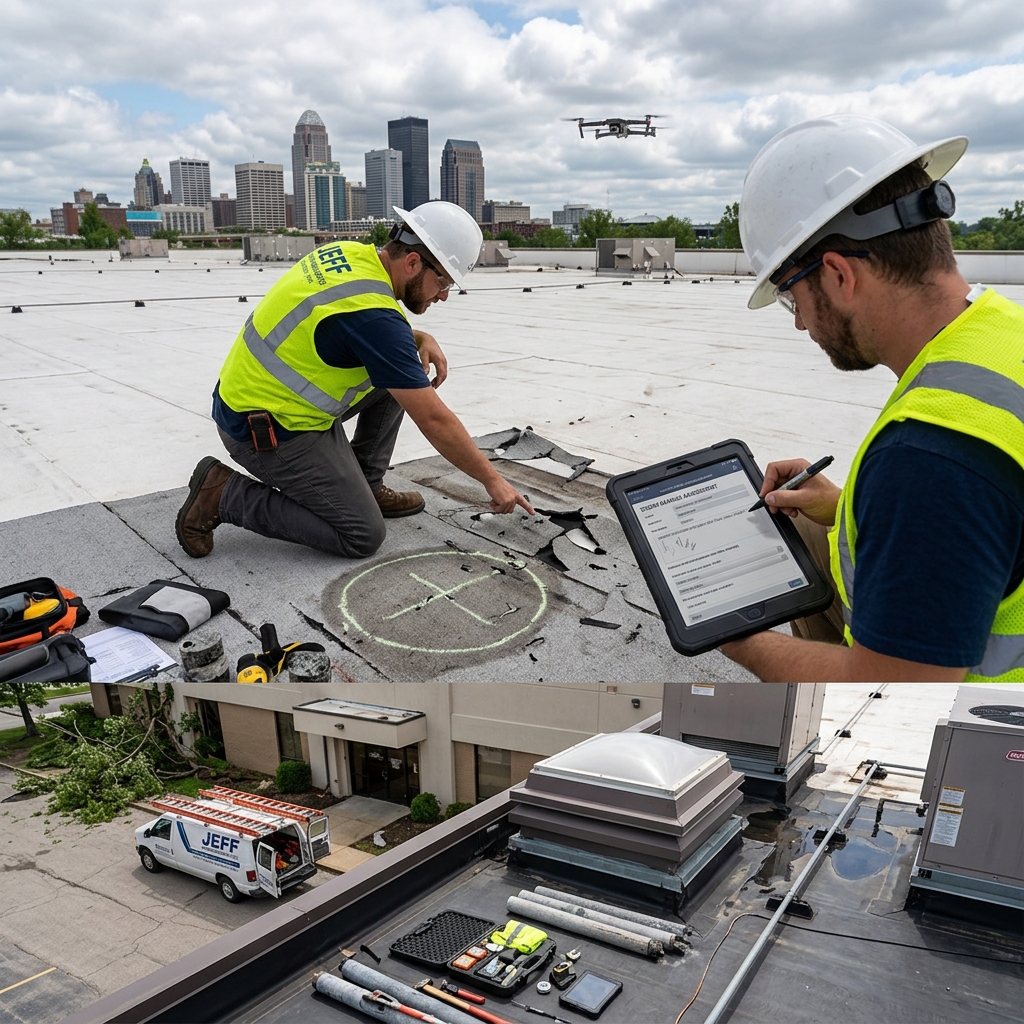
Request Estimate